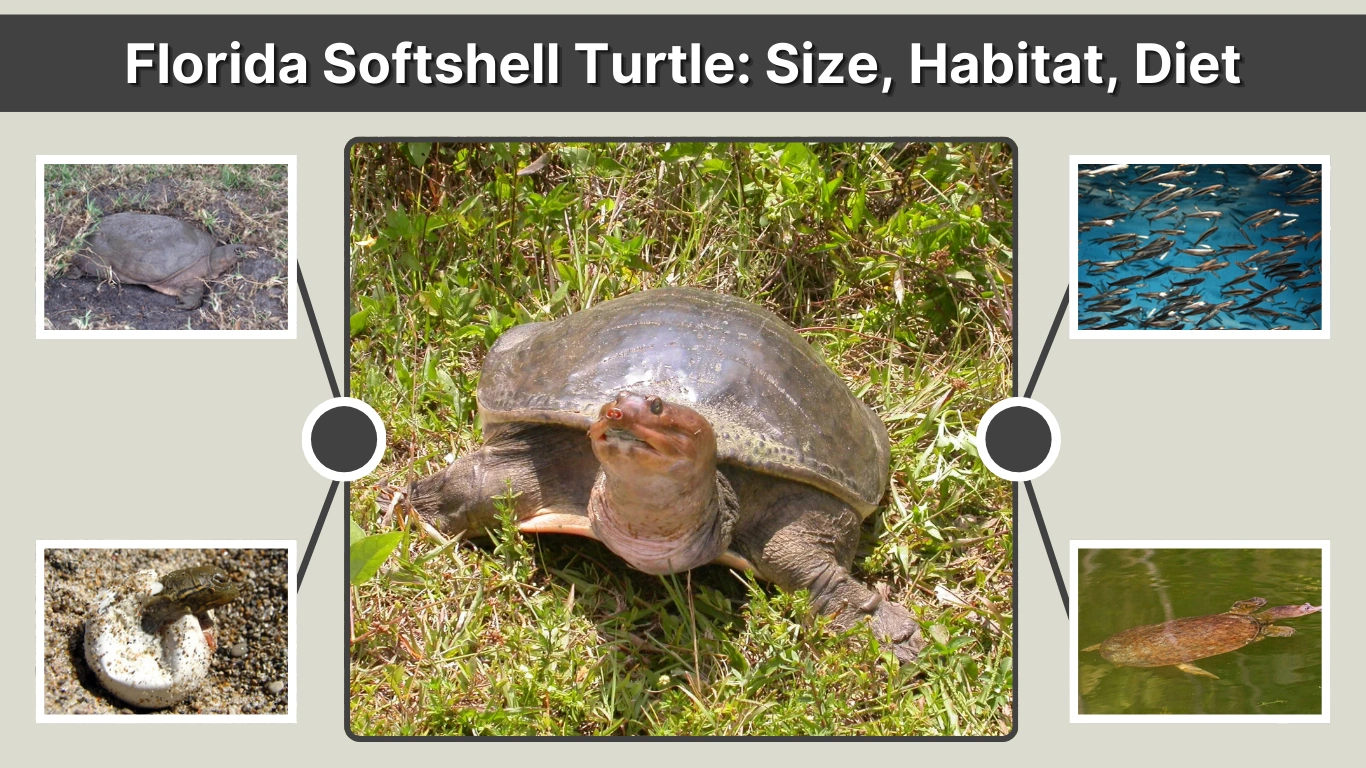
The Florida softshell turtle (Apalone ferox) is one of the most unique freshwater turtles in North America. Native primarily to Florida and parts of the southeastern United States, this species stands out for its flat, leathery shell and long, snorkel-like nose. Unlike hard-shelled turtles, the Florida softshell turtle is built for speed, agility, and life almost entirely in the water. Its unusual appearance and impressive size make it a fascinating reptile for wildlife enthusiasts, researchers, and anyone curious about Florida’s diverse ecosystems.
What Is a Florida Softshell Turtle?
Scientific Classification
The Florida softshell turtle belongs to the family Trionychidae, commonly known as softshell turtles. Its scientific name is Apalone ferox. Members of this family differ significantly from typical hard-shelled turtles because they lack the rigid, scute-covered shell most people associate with turtles. Instead, they have a flexible, leathery carapace.
Softshell turtles are highly adapted to aquatic environments. Their streamlined bodies and powerful limbs make them fast swimmers, which helps them catch prey and escape predators.
Key Identification Features
The Florida softshell turtle is easy to identify once you know what to look for. Its most distinctive feature is its flat, rubbery shell, which feels more like thick leather than bone. The shell is typically olive, brown, or tan and may have darker markings, especially in juveniles.
Another noticeable feature is its long neck and tubular snout. The snorkel-like nose allows the turtle to breathe while keeping most of its body submerged. It also has webbed feet with strong claws, making it an efficient swimmer and digger. Compared to other freshwater turtles, it appears more flattened and streamlined.
Florida Softshell Turtle Size and Physical Characteristics
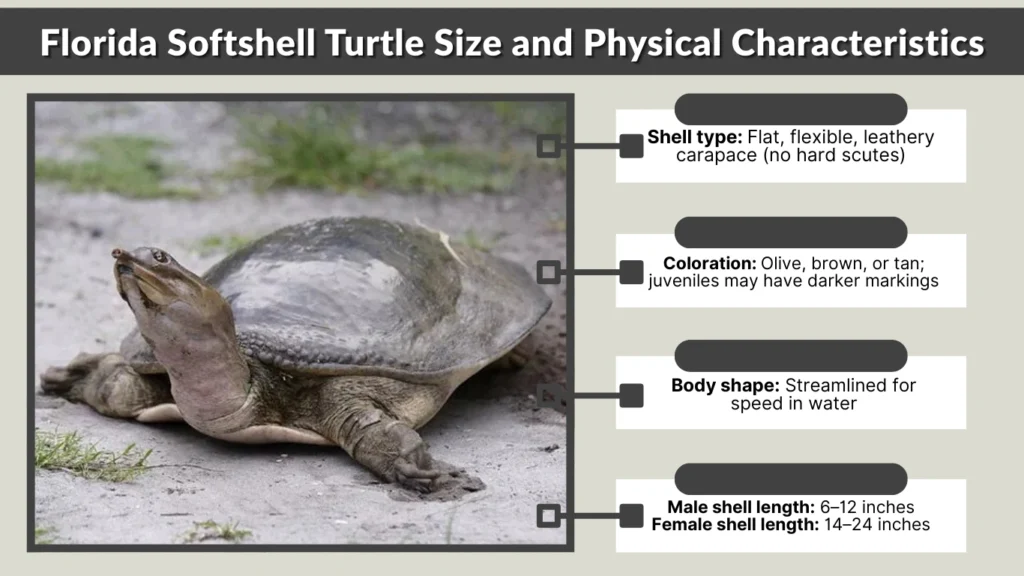
The Florida softshell turtle is the largest softshell species in North America and is easily recognized by its flattened body and smooth, leathery shell. Its streamlined shape, long neck, and powerful webbed feet make it highly adapted for aquatic life. One of the most notable traits of this species is the dramatic size difference between males and females.
Below is a quick overview of its size and key physical features:
Size Overview
- Male shell length: 6–12 inches
- Female shell length: 14–24 inches
- Maximum female weight: 40+ pounds
- Hatchling size: About 1.5 inches long
- Sexual dimorphism: Females significantly larger than males
Key Physical Characteristics
- Shell type: Flat, flexible, leathery carapace (no hard scutes)
- Coloration: Olive, brown, or tan; juveniles may have darker markings
- Neck: Long and highly extendable
- Snout: Tubular, snorkel-like nose for surface breathing
- Feet: Strongly webbed with sharp claws
- Body shape: Streamlined for speed in water
These physical adaptations allow the Florida softshell turtle to swim quickly, bury itself in sand or mud, and strike rapidly at prey. Its lightweight shell and flattened profile reduce water resistance, making it one of the most agile freshwater turtles in its range.
Florida Softshell Turtle Habitat
Natural Habitat Preferences
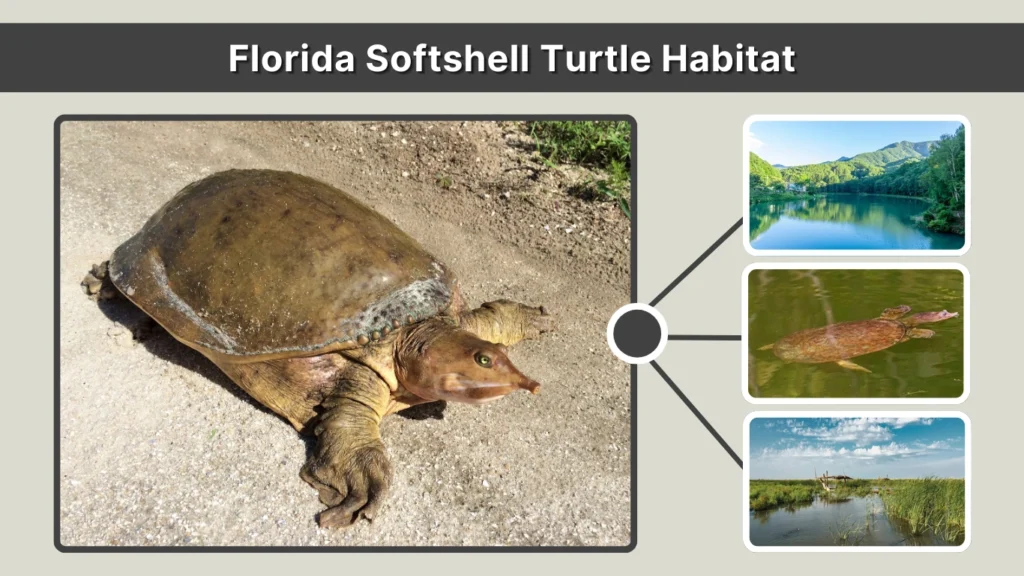
The Florida softshell turtle prefers freshwater environments with soft, sandy, or muddy bottoms. Common habitats include:
- Lakes
- Ponds
- Marshes
- Slow-moving rivers
- Drainage canals
These turtles spend most of their time in the water. Unlike many other turtle species, they rarely bask in large groups on logs. Instead, they often remain submerged or partially buried.
Clean water and abundant prey are important factors in suitable habitats. Areas with stable shorelines and minimal pollution tend to support healthier populations.
Geographic Distribution
As its name suggests, the Florida softshell turtle is found primarily throughout Florida. However, its range extends slightly beyond the state. Populations can also be found in:
- Southern Georgia
- Parts of Alabama
- South Carolina
Within Florida, it is widespread and can be found in both natural wetlands and man-made water bodies.
Behavior in the Wild
Florida softshell turtles are highly aquatic and are rarely seen far from water. They are known for burying themselves in the mud with only their eyes and snout exposed. This behavior helps them stay hidden from predators and makes hunting easier.
Although they can bask, they do so less frequently than other freshwater turtles. When threatened, they can move surprisingly fast on land and are capable of delivering a powerful defensive bite if handled.
What Do Florida Softshell Turtles Eat?
Diet in the Wild
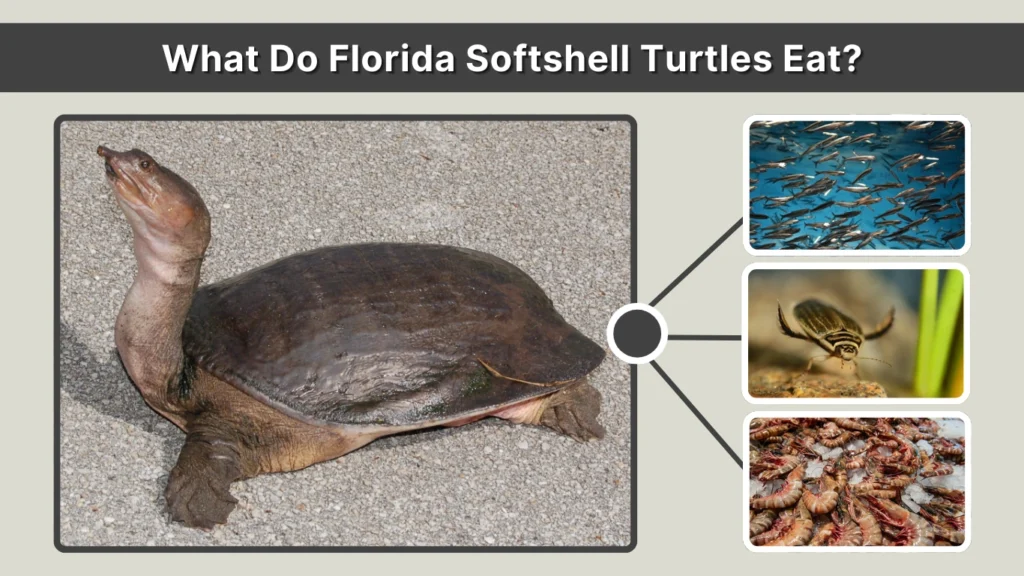
The Florida softshell turtle is primarily carnivorous. Its diet consists mainly of animal-based foods found in freshwater habitats. Common prey items include:
- Small fish
- Aquatic insects
- Crustaceans such as crayfish
- Tadpoles and small amphibians
- Occasionally small reptiles
Young turtles may eat more insects and smaller prey, while adults are capable of capturing larger animals.
Hunting Techniques
These turtles are skilled ambush predators. They often lie buried in sand or mud, waiting patiently for prey to swim by. When an unsuspecting fish or insect comes close, the turtle strikes quickly with its long neck.
Their streamlined bodies and strong webbed feet allow them to swim rapidly. Combined with their excellent camouflage, this makes them highly effective hunters.
Role in the Ecosystem
Florida softshell turtles play an important role in freshwater ecosystems. By feeding on fish, insects, and other small animals, they help regulate prey populations. This contributes to ecological balance within lakes, ponds, and rivers.
As both predator and prey, they are an essential part of the food web in southeastern wetlands.
Florida Softshell Turtle Lifespan
Lifespan in the Wild
The Florida softshell turtle has an average lifespan of 20 to 30 years in the wild, although some individuals may live longer under ideal conditions. Survival depends heavily on habitat quality, food availability, and predation pressure.
Young turtles face the greatest risks. Eggs and hatchlings are especially vulnerable to predators, and only a small percentage survive to adulthood. Once they reach maturity, their size and aquatic lifestyle offer better protection from many natural threats.
Lifespan in Captivity
In captivity, Florida softshell turtles may live slightly longer due to consistent food sources and protection from predators. However, they require specialized care, including large aquatic enclosures, clean water, and a protein-rich diet.
Because they grow large and can be aggressive, they are not ideal pets for beginners. Improper care can lead to health issues and a shortened lifespan.
Reproduction and Life Cycle
Breeding Season
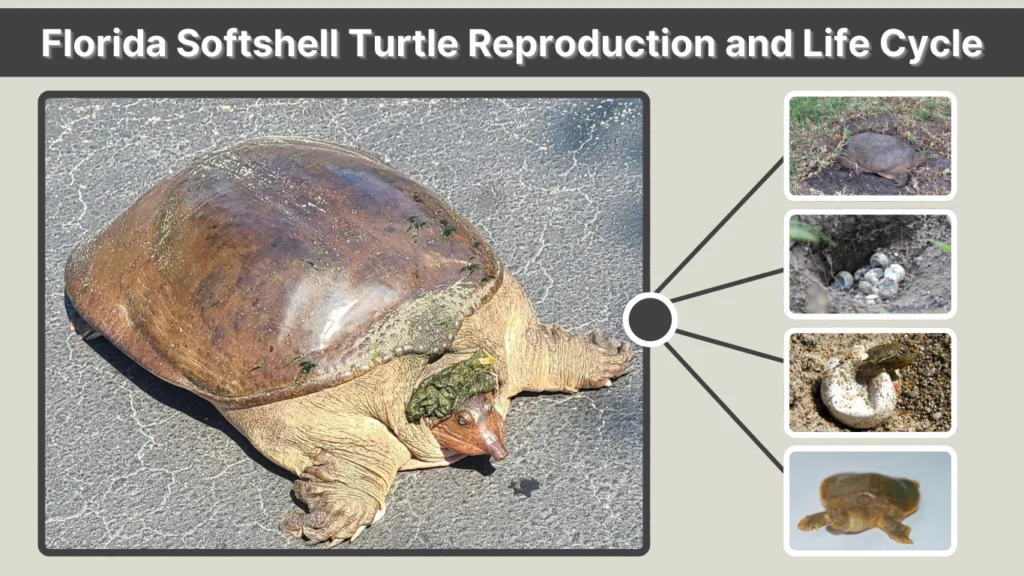
Florida softshell turtles typically breed in spring and early summer. Warmer temperatures trigger mating behavior, and males actively seek out females in shallow water.
Mating takes place in the water. After fertilization, females leave the water to find suitable nesting sites.
Nesting Behavior
Females usually choose sandy or loose soil areas near water to dig their nests. Using their hind legs, they create a hole where they deposit their eggs.
A single female may lay 10 to 30 eggs per clutch, and in some cases, she may lay multiple clutches in one breeding season. After covering the nest with soil, she leaves the eggs to incubate on their own.
Hatchlings and Survival
The incubation period generally lasts 60 to 90 days, depending on temperature and environmental conditions. Once the eggs hatch, baby turtles instinctively head toward the nearest water source.
Hatchlings are highly vulnerable to predators such as raccoons, birds, and large fish. Their small size and soft shells make survival challenging during the early stages of life.
Predators and Threats
Natural Predators
Despite their size and speed, Florida softshell turtles face natural predators at different stages of life. Eggs and young turtles are especially at risk from:
- Raccoons
- Skunks
- Large birds
- Snakes
Adult turtles have fewer predators, but they may still fall prey to alligators and other large carnivores.
Human-Related Threats
Human activities pose significant threats to Florida softshell turtle populations. Habitat destruction from urban development, pollution, and wetland drainage reduces available nesting and feeding areas.
Road mortality is another concern, especially when females cross roads to reach nesting sites. In some areas, softshell turtles have also been harvested for meat, which can impact local populations if not properly regulated.
Are Florida Softshell Turtles Dangerous?
Florida softshell turtles are not aggressive toward humans without reason, but they are highly defensive if threatened. They have a strong, sharp beak and an extremely flexible neck that can extend quickly to bite.
Unlike many hard-shelled turtles that retreat into their shells, softshell turtles rely on speed and biting for protection. Attempting to handle one can result in injury. It is best to observe them from a safe distance and avoid disturbing them, especially during nesting season.
Florida Softshell vs. Spiny Softshell Turtle
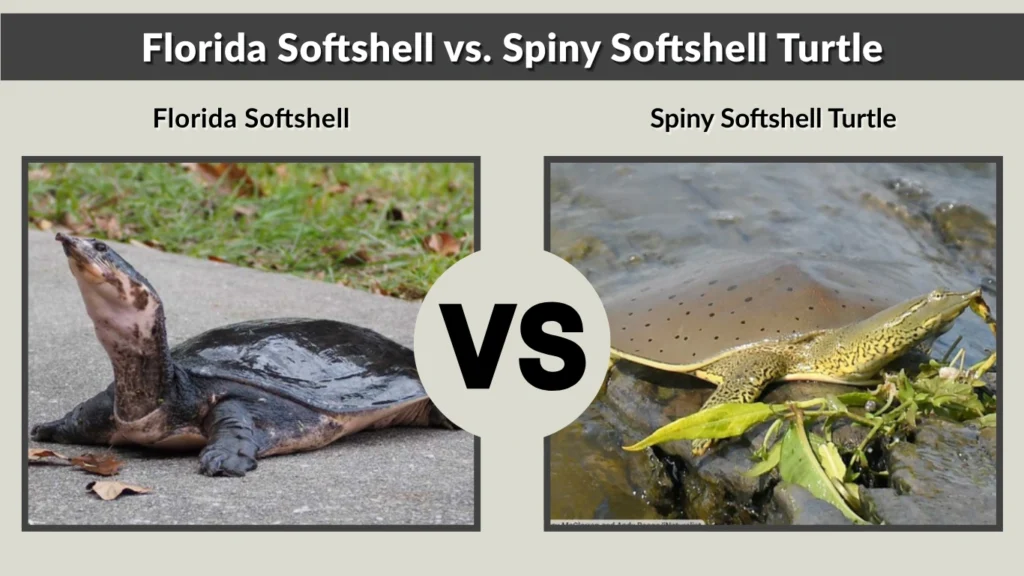
The Florida softshell turtle is sometimes confused with the spiny softshell turtle (Apalone spinifera). While they share similar features, there are clear differences.
The Florida softshell turtle is generally larger, especially the females. It also lacks the small spines or rough projections along the front edge of the shell that are characteristic of the spiny softshell turtle.
In terms of range, the Florida softshell is mostly limited to Florida and nearby southeastern states, while the spiny softshell has a much broader distribution across the United States.
Careful observation of shell texture, size, and geographic location can help with accurate identification.
Interesting Florida Softshell Turtle Facts
The Florida softshell turtle is full of fascinating adaptations. It is one of the fastest freshwater turtles, capable of quick bursts of speed both in water and on land.
It can remain submerged for long periods by absorbing small amounts of oxygen through specialized tissues in its throat, a process known as pharyngeal respiration. Its flattened body shape reduces water resistance, making it an efficient swimmer.
Despite its soft shell, it is a resilient species well adapted to life in warm, freshwater habitats.
Conservation Status and Protection
Currently, the Florida softshell turtle is considered relatively stable across much of its range. However, local populations can decline due to habitat loss, pollution, and overharvesting.
In Florida, wildlife regulations help manage harvesting and protect nesting habitats. Conservation efforts focused on wetland preservation and water quality improvement are essential to ensuring the long-term survival of this species.
Protecting freshwater ecosystems not only benefits the Florida softshell turtle but also supports countless other plants and animals that share its habitat.
FAQs
How big do Florida softshell turtles get?
Female Florida softshell turtles can grow up to 24 inches in shell length, while males typically reach 6 to 12 inches. Females are significantly larger than males, making them one of the largest freshwater turtles in North America.
What do Florida softshell turtles eat?
They are carnivorous and feed mainly on fish, aquatic insects, crustaceans, and small amphibians. They are ambush predators, often burying themselves in sand or mud before striking quickly at nearby prey.
Where do Florida softshell turtles live?
They live primarily in Florida but can also be found in southern Georgia, Alabama, and South Carolina. Their preferred habitats include lakes, ponds, marshes, and slow-moving rivers with sandy or muddy bottoms.
How long do Florida softshell turtles live?
In the wild, Florida softshell turtles typically live 20 to 30 years. With proper care and protection from predators, some individuals may live even longer in captivity.