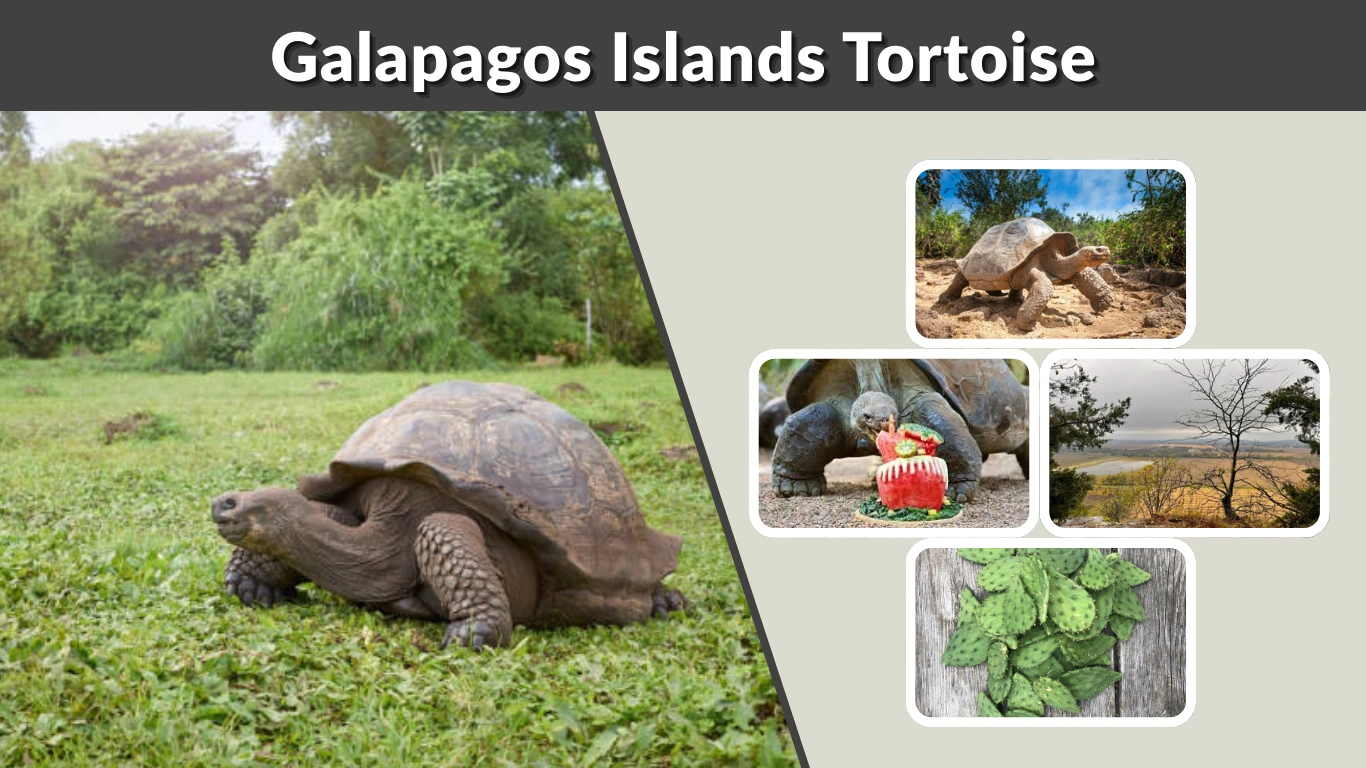
The Galapagos Islands tortoise is one of the most recognizable animals on Earth, famous for its massive shell, slow movements, and incredible lifespan. Found only in the Galapagos archipelago, these ancient reptiles played a major role in shaping early ideas about evolution. Each major island once supported its own form, adapted to unique landscapes and food sources. Today, Galapagos tortoises remain living symbols of the islands and powerful reminders of the importance of wildlife conservation.
Taxonomy and Scientific Background
The Galapagos Islands tortoise belongs to a complex group of closely related giant tortoises rather than a single uniform species. Scientists classify them under the Chelonoidis niger species complex. Over thousands of years, isolated island populations evolved into distinct forms, each adapted to local vegetation, climate, and terrain.
This island-driven evolution produced differences in shell shape, neck length, and body size. These variations were among the observations that helped Charles Darwin develop his theory of natural selection. Some historical island forms are now extinct, while others survive only through conservation programs.
Scientific Name and Family
The accepted scientific name is Chelonoidis niger. These tortoises belong to the family Testudinidae, which includes all land tortoises. Members of this family are characterized by heavy shells, thick limbs, and a fully terrestrial lifestyle.
Subspecies and Island Evolution
Each major island historically supported its own tortoise form. Some developed domed shells for grazing on low plants, while others evolved saddleback shells that allow the neck to stretch upward toward cactus and shrubs. These differences reflect how isolation and environment shaped their evolution.
Identification and Physical Characteristics
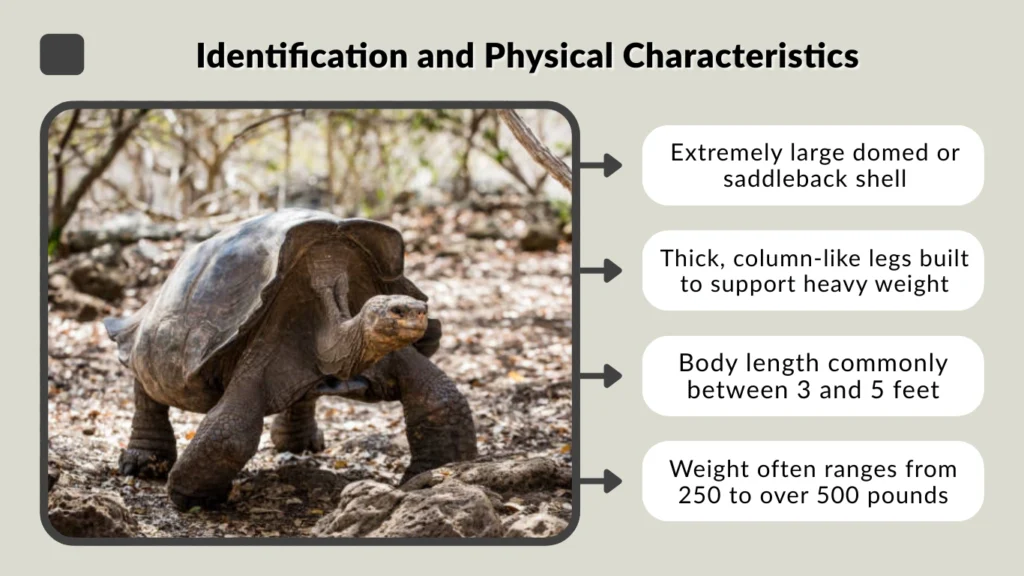
The Galapagos Islands tortoise is the largest living tortoise in the world. Its enormous shell, thick legs, and slow but steady movements make it instantly recognizable.
Identification
- Extremely large domed or saddleback shell
- Thick, column-like legs built to support heavy weight
- Wrinkled gray to black skin
- Small head with a blunt, beak-like mouth
- Long, flexible neck
- Body length commonly between 3 and 5 feet
- Weight often ranges from 250 to over 500 pounds
- Males are generally larger than females
Shell Types and Shape
Two main shell forms are found. Dome-shaped shells are rounded and common on wetter islands with abundant ground vegetation. Saddleback shells curve upward at the front, allowing tortoises to lift their necks higher to reach cactus pads and shrubs in dry environments.
Size and Growth Pattern
Galapagos tortoises grow very slowly. Hatchlings are small and vulnerable, but they continue growing throughout life. It can take several decades to reach full adult size. This slow development is closely linked to their long lifespan.
Natural Habitat and Island Distribution
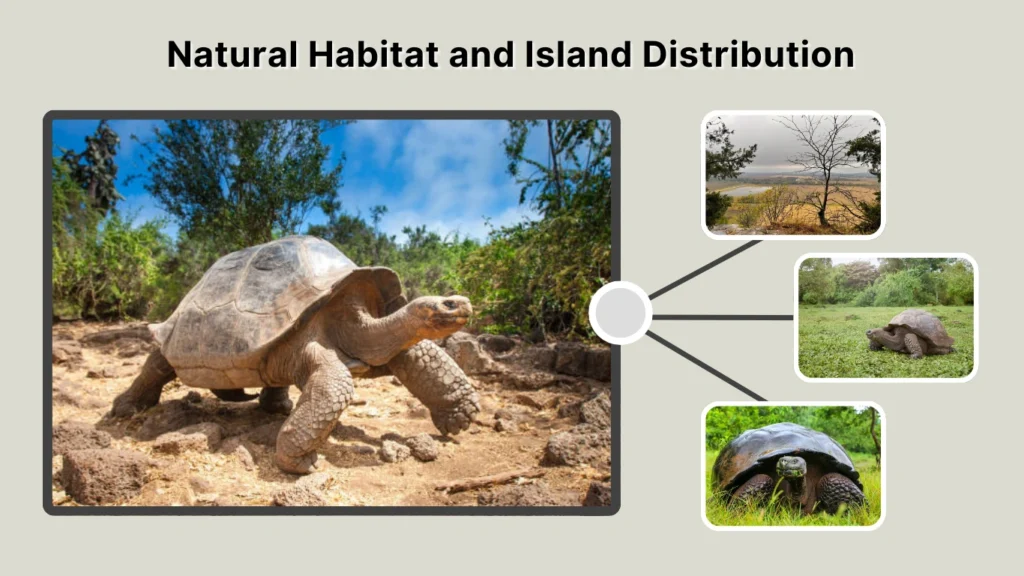
Galapagos Islands tortoises live only in the Galapagos archipelago, a volcanic island chain in the Pacific Ocean. Their habitat choice depends largely on rainfall, temperature, and vegetation.
Habitat
They occupy both dry coastal lowlands and cooler, humid highlands. During dry seasons, many tortoises migrate uphill in search of fresh plants and water. In wet seasons, they often return to lower elevations where grasses and fruits become abundant. Mud wallows are commonly used to cool the body and protect the skin.
Geographic Distribution
The largest populations live on islands such as Isabela, Santa Cruz, San Cristóbal, and Española. Each island’s environment influenced how local tortoises evolved, creating noticeable differences in appearance and behavior.
Behavior and Daily Life
Galapagos Islands tortoises are generally calm, slow-moving animals. Much of their day is spent feeding, resting, and regulating body temperature.
Behaviors
They frequently bask in the sun to warm their bodies and soak in muddy pools to cool down and reduce parasites. Males sometimes engage in dominance displays by stretching their necks upward and attempting to push rivals away. Seasonal movement between highlands and lowlands is common.
Communication and Social Interaction
Although not vocal animals, tortoises communicate through body posture, gentle nudging, and low sounds during mating. They often gather around feeding areas or water sources but are not strongly territorial.
Diet and Feeding Habits
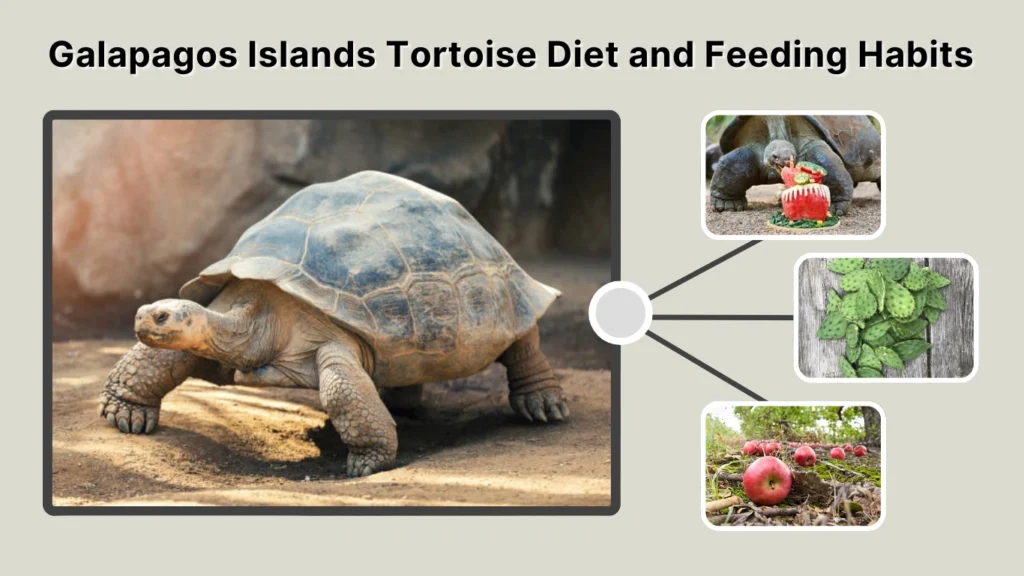
Galapagos Islands tortoises are strict herbivores and play a major role in shaping island vegetation.
Diet
Their diet includes grasses, leaves, cactus pads, fallen fruits, flowers, and shrubs. They can eat large amounts of vegetation and store water in their bodies, allowing them to survive long dry periods.
Feeding Strategy
Dome-shaped tortoises mainly graze on low-growing plants, while saddleback tortoises browse higher vegetation. Through feeding, they help control plant growth and spread seeds across the islands.
Lifecycle and Reproduction
The life cycle of the Galapagos Islands tortoise is extremely slow, reflecting its long lifespan.
Lifecycle
Females dig nests in sandy soil and lay several eggs, which incubate for months. Hatchlings emerge small and vulnerable, growing slowly over many years. Sexual maturity may take 20 to 40 years, after which tortoises can reproduce for decades.
Reproduction and Nesting
Mating usually occurs during warm seasons when food is plentiful. Males compete for females by stretching their necks high and attempting to push rivals away. The male that stands taller and stronger often gains access to breeding. After mating, females may store sperm and delay egg-laying for weeks or even months.
When ready to nest, females travel to dry, sandy areas, sometimes many miles from feeding grounds. Using their powerful hind legs, they dig deep holes and lay between 5 and 20 eggs. The nest is then carefully covered and left to incubate naturally. Incubation lasts four to eight months, depending on environmental conditions. Nest temperature influences hatchling sex, with warmer nests generally producing females and cooler nests producing males.
Lifespan and Longevity
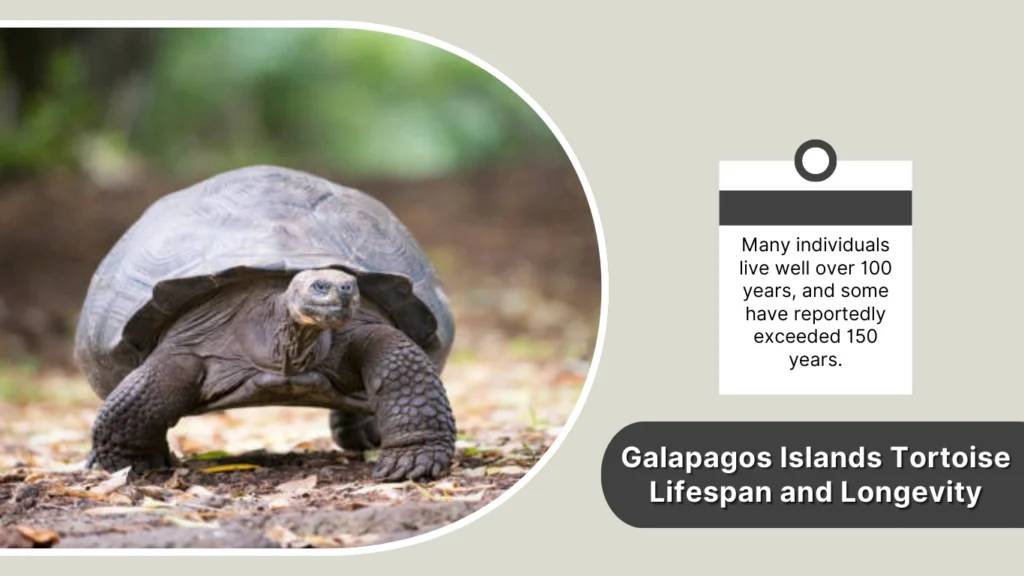
The Galapagos Islands tortoise is among the longest-living land animals in the world. Many individuals live well over 100 years, and some have reportedly exceeded 150 years. Their slow metabolism, steady growth, and low-stress lifestyle contribute significantly to their extraordinary longevity.
Unlike many animals, Galapagos tortoises continue growing slowly throughout life and remain reproductively active for decades. Scientists study them to understand aging, disease resistance, and genetic stability. Famous individuals such as “Lonesome George” helped draw global attention to both their remarkable lifespan and their conservation needs.
Ecological Importance
Galapagos Islands tortoises are considered keystone species because their presence shapes entire ecosystems. Through feeding, movement, and nesting, they influence plant growth, soil structure, and habitat availability for other organisms.
They disperse seeds over long distances in their droppings, helping many plant species spread across islands and elevations. Their grazing prevents overgrowth, maintains grasslands, and creates natural pathways used by birds, reptiles, and smaller mammals. Without tortoises, many island environments change dramatically.
Conservation Status and Threats
Although protected today, Galapagos Islands tortoises were once heavily exploited. Early sailors captured thousands for food, pushing several island populations to extinction. Introduced animals further worsened declines.
Major Threats
- Historic overhunting by humans
- Introduced predators such as rats, dogs, and pigs
- Habitat destruction and fragmentation
- Competition from invasive herbivores
- Climate change affecting nesting success
- Low hatchling survival rates
Conservation Programs
Modern conservation programs focus on captive breeding, nest protection, habitat restoration, and invasive species control. Breeding centers raise hatchlings until they are large enough to survive in the wild. Strict legal protections and continuous monitoring now allow many populations to slowly recover.
Galapagos Islands Tortoise vs Other Giant Tortoises
Galapagos Islands tortoises are often compared to Aldabra giant tortoises from the Indian Ocean. While both are enormous and long-lived, Galapagos tortoises show greater variation in shell shape due to the diversity of island environments. They also played a larger historical role in shaping evolutionary science.
Interesting Facts About Galapagos Islands Tortoises
These ancient reptiles continue to fascinate researchers and wildlife enthusiasts around the world.
Unique Facts
- They can survive many months without fresh food or water
- Their shell shape often reveals which island they originated from
- They helped inspire Darwin’s theory of evolution
- Some individuals outlive several human generations
- They are among the heaviest reptiles on Earth
FAQs
What is the Galapagos Islands tortoise?
The Galapagos Islands tortoise refers to a group of giant tortoises native only to the Galapagos archipelago. They belong to the Chelonoidis niger species complex and evolved into multiple island forms, making them one of the most important examples of adaptive evolution.
How long do Galapagos Islands tortoises live?
Most Galapagos Islands tortoises live between 80 and 120 years, with many individuals exceeding 100 years. Some have reportedly lived beyond 150 years, making them the longest-living land vertebrates reliably known.
What do Galapagos Islands tortoises eat?
They are strict herbivores that feed on grasses, leaves, cactus pads, fruits, and flowers. Their diet changes with season and habitat. Saddleback tortoises browse taller plants, while dome-shaped tortoises mainly graze on low vegetation.
Where do Galapagos Islands tortoises live?
They live only in the Galapagos Islands, occupying dry lowlands, humid highlands, and seasonal migration routes between these zones. Their distribution varies by island, reflecting differences in climate and vegetation.
Are Galapagos Islands tortoises endangered?
Their conservation status varies by subspecies, ranging from vulnerable to critically endangered. While past overhunting nearly wiped them out, modern conservation programs now protect nesting areas, control invasive species, and restore wild populations.