
Turtles are known for their long lifespans, often living much longer than many other animals. Depending on the species, habitat, and living conditions, turtles can survive for decades or even over a century. From small freshwater turtles to massive sea turtles and land tortoises, each type has a different lifespan. Understanding how long turtles live helps with proper care, conservation awareness, and realistic expectations for pet owners.
How Long Do Turtles Live? (Quick Answer)
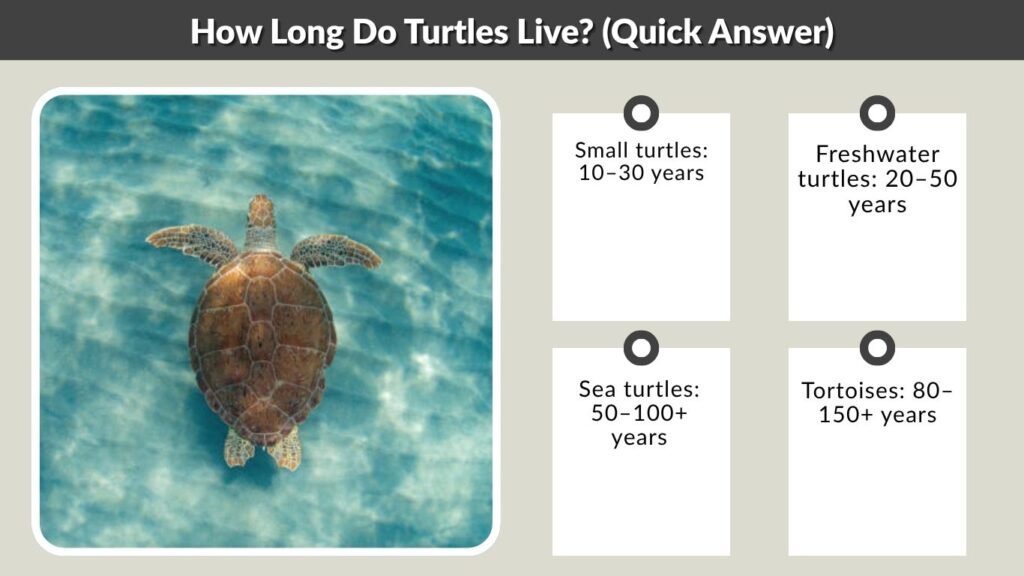
Turtle lifespans vary widely depending on species and environment. Some small turtles may live only a few decades, while larger species, especially tortoises, can live for over 100 years. In general, turtles are among the longest-living reptiles.
Average Lifespan Range:
- Small turtles: 10–30 years
- Freshwater turtles: 20–50 years
- Sea turtles: 50–100+ years
- Tortoises: 80–150+ years
Turtle Lifespan by Type
Turtles can be divided into three main groups: sea turtles, freshwater turtles, and land turtles (tortoises and box turtles). Each group has evolved differently, and this affects how long they live. Sea turtles often live long lives due to fewer natural predators as adults, while freshwater turtles have moderate lifespans depending on environmental conditions. Land turtles, especially tortoises, tend to live the longest due to their slow metabolism and protected lifestyles.
How Long Do Sea Turtles Live?
Sea turtles are among the longest-living marine animals, though their exact lifespan can be difficult to measure because they spend most of their lives in the ocean. Scientists estimate their ages based on growth patterns and long-term tracking studies.
Green Sea Turtles
Green sea turtles typically live between 60 and 80 years, and some may live even longer. They grow slowly and take decades to reach maturity, which contributes to their long lifespan.
Leatherback Sea Turtles
Leatherback turtles are unique and can live around 45 to 60 years or more. Because they live in deep oceans and migrate long distances, their lifespan is harder to study precisely.
Loggerhead Sea Turtles
Loggerhead turtles often live between 50 and 70 years. Their strong jaws and varied diet help them survive in different marine environments over long periods.
Hawksbill Sea Turtles
Hawksbill turtles are estimated to live around 30 to 50 years or longer. Their lifespan depends on environmental conditions and threats such as habitat loss.
How Long Do Freshwater Turtles Live?
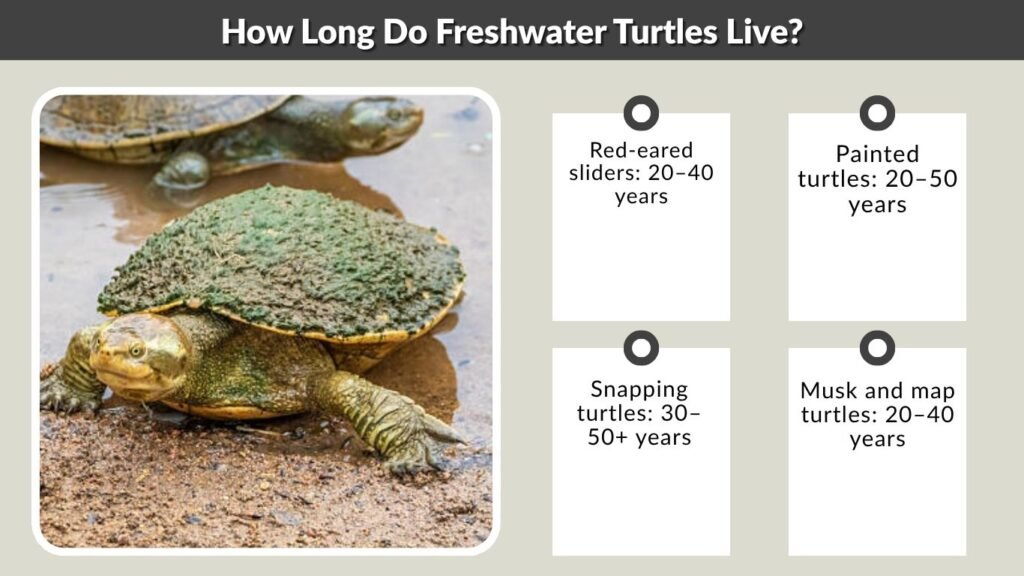
Freshwater turtles have moderate to long lifespans, especially when compared to many other reptiles. Their lifespan depends on species, habitat quality, and access to food. In the wild, they may face threats such as predators, pollution, and habitat destruction, which can affect how long they live.
Typical Lifespan Includes:
- Red-eared sliders: 20–40 years
- Painted turtles: 20–50 years
- Snapping turtles: 30–50+ years
- Musk and map turtles: 20–40 years
These turtles are commonly found in ponds, lakes, and rivers, where they adapt their behavior and diet to survive. Many freshwater turtles can live longer in captivity if they receive proper care and nutrition.
How Long Do Land Turtles Live? (Box Turtles & Tortoises)
Land turtles, especially tortoises, are famous for their incredible longevity. These turtles live slower-paced lives, which contributes to their extended lifespan. Their bodies are well adapted to conserve energy and resist environmental stress.
Lifespan Examples:
- Box turtles: 40–100 years
- Russian tortoises: 40–80 years
- Gopher tortoises: 50–80 years
- Giant tortoises: 100–150+ years
Some tortoises have even been recorded living beyond 150 years, making them one of the longest-living animals on Earth. Their long lifespan requires long-term commitment from owners if kept as pets.
How Long Do Pet Turtles Live?
Pet turtles can live for many years, often longer than people expect. Their lifespan depends heavily on how well they are cared for, including proper diet, clean habitat, correct temperature, and access to lighting such as UVB. Many common pet turtles, like red-eared sliders, can live several decades when properly maintained.
In captivity, turtles are protected from predators and harsh environmental conditions, which can increase their lifespan. However, poor care, such as inadequate nutrition or improper tank conditions, can significantly shorten their lives. This makes it important for owners to understand the long-term responsibility involved in keeping a turtle as a pet.
Turtles in the Wild vs Captivity

Turtles can live in both wild environments and captivity, but their lifespan often differs depending on these conditions. In the wild, turtles face many challenges such as predators, disease, pollution, and habitat loss. These factors can reduce their lifespan, even for species that are naturally long-lived.
Key Differences:
- Wild turtles face predators and environmental threats
- Captive turtles often live longer with proper care
- Diet and medical care improve lifespan
- Stress and poor care can shorten life
In captivity, turtles are usually protected from many dangers. With proper nutrition, clean environments, and veterinary care, they can live longer and healthier lives. However, captivity also comes with risks if their needs are not properly met.
How Do Turtles Live So Long?
Turtles are among the longest-living animals due to several biological and environmental factors. One of the main reasons is their slow metabolism, which reduces wear and tear on their bodies over time. They also grow slowly and take many years to reach maturity, which is often linked to longer lifespans in animals.
Another important factor is their strong shell, which provides protection from predators and injuries. Turtles also have efficient immune systems and can survive in a wide range of environments. These adaptations allow them to live for decades, and in some cases, over a century.
Factors That Affect Turtle Lifespan
A turtle’s lifespan is influenced by several key factors that determine how long it can survive in both the wild and captivity.
Key Factors:
- Species and genetics
- Diet and nutrition
- Habitat conditions
- Predators and threats
Turtles with access to proper food, safe habitats, and minimal stress tend to live longer. Environmental changes, pollution, and human interference can significantly impact their survival and longevity.
FAQs
How long do turtles live on average?
Most turtles live between 20 and 80 years depending on the species. Smaller turtles tend to have shorter lifespans, while larger species like sea turtles and tortoises can live much longer, sometimes exceeding 100 years.
Do turtles live longer in captivity or the wild?
Turtles often live longer in captivity when they receive proper care. In the wild, they face predators, environmental dangers, and food shortages, which can reduce their lifespan compared to well-cared-for pet turtles.
What is the longest-living turtle?
Giant tortoises are the longest-living turtles. Some individuals have lived for more than 150 years, making them one of the longest-living animals known.
How long do pet turtles live?
Pet turtles can live between 20 and 50 years or more depending on the species and level of care. Proper diet, clean habitat, and correct lighting all play a major role in extending their lifespan.
Why do turtles live so long?
Turtles live long lives because of their slow metabolism, protective shells, and ability to adapt to different environments. These features reduce physical stress and increase their chances of long-term survival.
Conclusion
Turtles are remarkable animals known for their long lifespans, which can range from a few decades to well over a century. Their longevity depends on species, habitat, and level of care. Whether living in the wild or as pets, turtles require proper conditions to thrive. Understanding how long turtles live helps people appreciate their unique biology and encourages responsible care and conservation efforts.