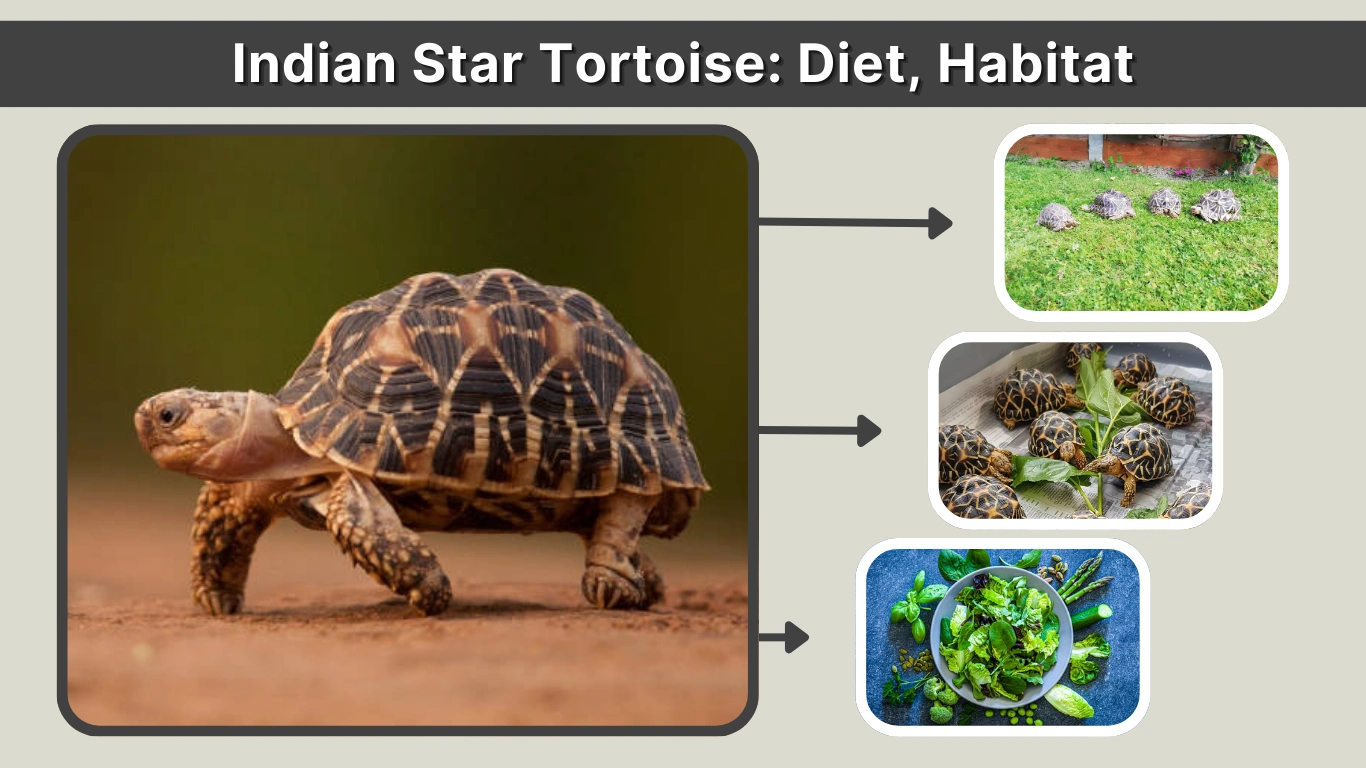
The Indian star tortoise is one of the most visually striking tortoise species in the world. Known for its beautiful star-patterned shell, this species has become popular among reptile enthusiasts. However, owning one requires proper knowledge of its diet, habitat, and long-term care needs. In this guide, you’ll learn essential Indian star tortoise facts, habitat requirements, dietary guidelines, and important lifespan information to help you provide the best possible care.
Indian Star Tortoise Facts and Overview
Scientific Classification and Origin
The Indian star tortoise (Geochelone elegans) is native to India, Sri Lanka, and parts of Pakistan. It thrives in dry regions that experience seasonal rainfall, particularly in grasslands, scrub forests, and semi-arid environments.
Unlike tortoises from colder regions, Indian star tortoises do not hibernate. They are active year-round in warm climates. Because they are adapted to specific environmental conditions, recreating a similar habitat in captivity is essential for their health.
In some areas, this species is protected due to illegal wildlife trade, so potential owners should always check local regulations before acquiring one.
Appearance and Unique Shell Pattern
The most recognizable feature of the Indian star tortoise is its high-domed shell decorated with radiating yellow or cream-colored lines that resemble stars. These patterns extend from the center of each scute, creating a stunning geometric design.
The star-like markings serve as natural camouflage in dry grasses, helping them blend into their surroundings. Shell coloration may vary slightly depending on the region they originate from.
Their domed shell shape also helps protect them from predators and allows them to right themselves if flipped over.
Size and Temperament
Indian star tortoises are considered medium-sized tortoises. Adults typically grow between 7 and 12 inches in length. Females are generally larger than males, while males often have longer tails.
In terms of personality, they are calm but somewhat shy. They may retreat into their shells when startled. While they can become accustomed to their owners, they are not highly interactive pets and prefer limited handling.
Indian Star Tortoise Habitat
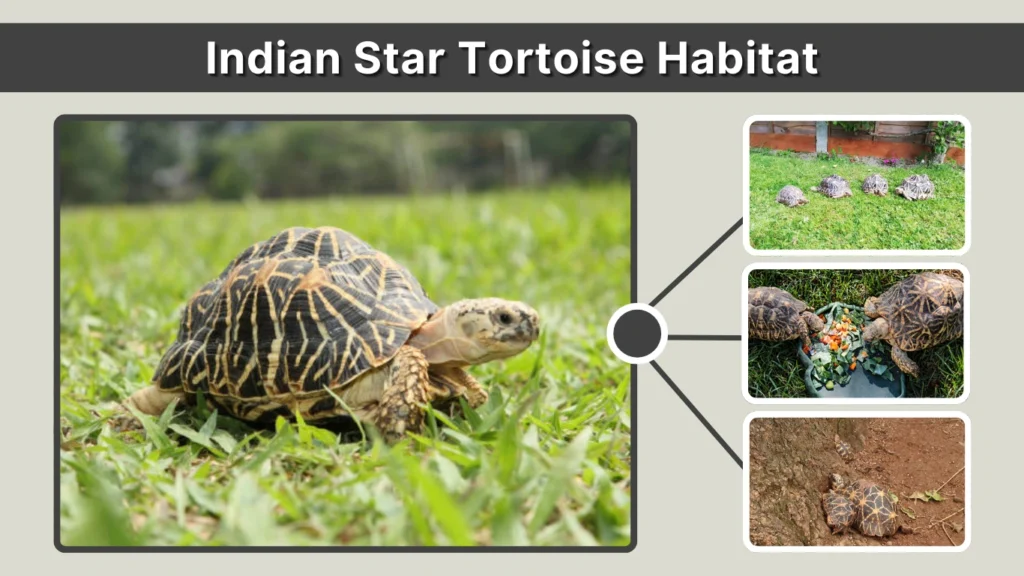
Creating a proper Indian star tortoise habitat is crucial for maintaining good health and preventing common issues like shell deformities and respiratory infections.
Natural Habitat in the Wild
In the wild, Indian star tortoises live in dry grasslands and thorn scrub forests. These regions experience warm temperatures most of the year, along with seasonal monsoon rains.
They often hide under bushes or vegetation during the hottest parts of the day. Their environment provides access to grasses, weeds, and leafy plants that make up their natural diet.
Because they are sensitive to prolonged damp or cold conditions, replicating a warm, stable environment in captivity is essential.
Ideal Indoor Enclosure Setup
For indoor housing, a spacious enclosure is necessary. Glass aquariums are usually too small for adults. A tortoise table or custom-built enclosure with ample floor space works best.
Important habitat requirements include:
- A basking area around 90–95°F (32–35°C)
- A cooler side ranging between 75–85°F
- High-quality UVB lighting for calcium absorption
- Substrate such as coconut coir, soil mix, or a dry grass layer
- Moderate humidity levels (higher for hatchlings)
UVB lighting is especially important. Without proper exposure, Indian star tortoises can develop metabolic bone disease due to poor calcium absorption.
Humidity must also be carefully balanced. While they prefer relatively dry conditions as adults, hatchlings benefit from slightly higher humidity to support smooth shell growth.
Outdoor Housing Considerations
In warm climates, outdoor enclosures can provide natural sunlight and grazing opportunities. However, safety is a priority.
Outdoor setups should include:
- Secure fencing to prevent escape
- Protection from predators
- Shaded areas for cooling
- A dry shelter for nighttime
Natural sunlight provides excellent UVB exposure, which can greatly benefit overall health.
Indian Star Tortoise Diet
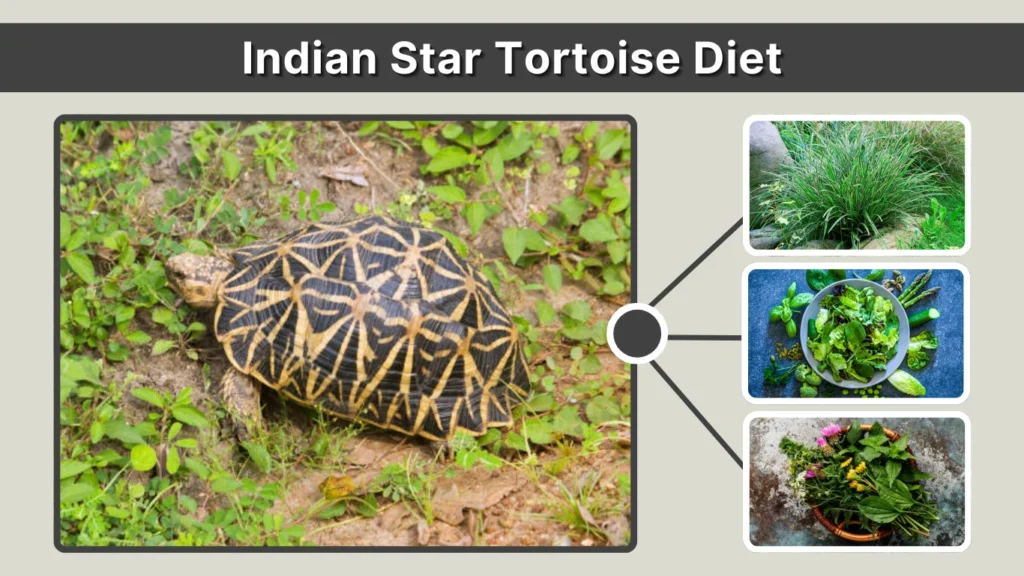
A proper Indian star tortoise diet plays a major role in long-term health. Many health problems in captivity are linked to incorrect feeding practices.
What Do Indian Star Tortoises Eat?
Indian star tortoises are strict herbivores. In the wild, they graze on grasses, weeds, and fibrous plants. Their digestive systems are designed to process high-fiber, low-protein foods.
So, what do Indian star tortoises eat in captivity? The goal is to mimic their natural grazing diet as closely as possible.
Their diet should consist mainly of:
- Grasses
- Leafy greens
- Edible weeds
- Occasional flowers
High-protein or sugary foods can disrupt their digestive system and lead to health complications.
Best Indian Star Tortoise Diet Plan
The foundation of an Indian star tortoise diet should be grass-based. Some excellent food choices include:
- Timothy grass
- Bermuda grass
- Orchard grass
- Dandelion greens
- Collard greens
- Mustard greens
- Hibiscus leaves and flowers
- Opuntia cactus pads
Variety is important, but grasses should form the majority of the diet. Fresh, pesticide-free plants are always recommended.
Foods to Avoid
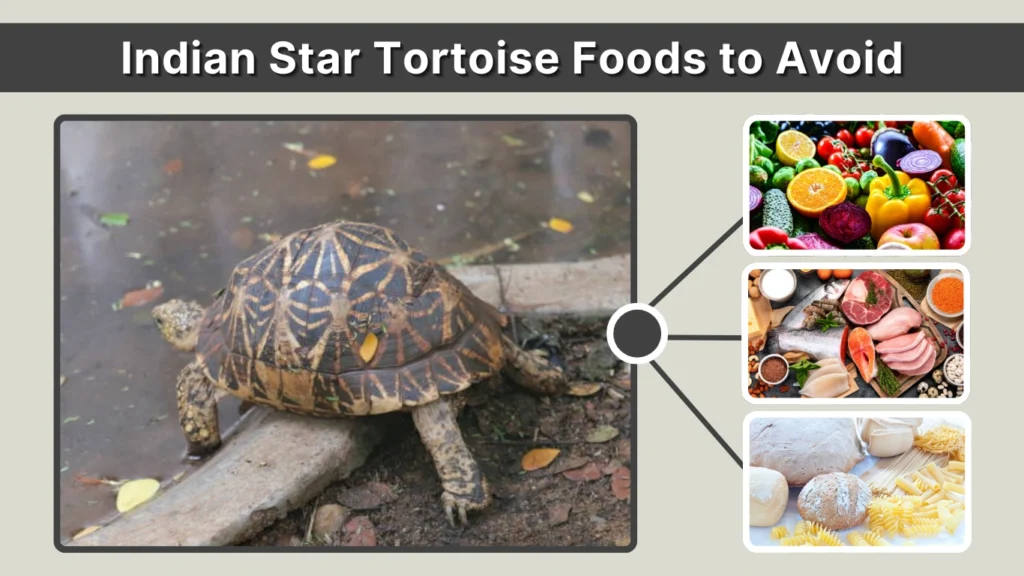
Understanding which foods to avoid is just as important as knowing what to feed. Indian star tortoises have sensitive digestive systems that are built for fibrous plant material, not sugary or protein-rich foods.
Avoid the following:
- Fruits – While small amounts may not cause immediate harm, fruit is high in sugar and can disrupt gut bacteria. It should be offered rarely, if at all.
- Animal protein – Meat, insects, dog food, or cat food can cause kidney damage and abnormal shell growth.
- Processed foods – Bread, pasta, or other human foods should never be given.
- High-oxalate greens – Spinach and beet greens can interfere with calcium absorption if fed frequently.
- Iceberg lettuce – Contains little nutritional value and mostly water.
A consistent, grass-heavy diet is the safest and healthiest approach.
Supplements and Calcium Needs
Calcium is essential for strong shell and bone development. Without adequate calcium and UVB exposure, Indian star tortoises can develop metabolic bone disease.
Most captive tortoises benefit from:
- Lightly dusting food with calcium powder several times per week
- Providing a cuttlebone in the enclosure
- Ensuring proper UVB lighting for vitamin D3 production
Hatchlings and growing juveniles typically require more frequent calcium supplementation than adults. Proper lighting and a balanced diet work together to support healthy shell growth.
Indian Star Tortoise Care Guide
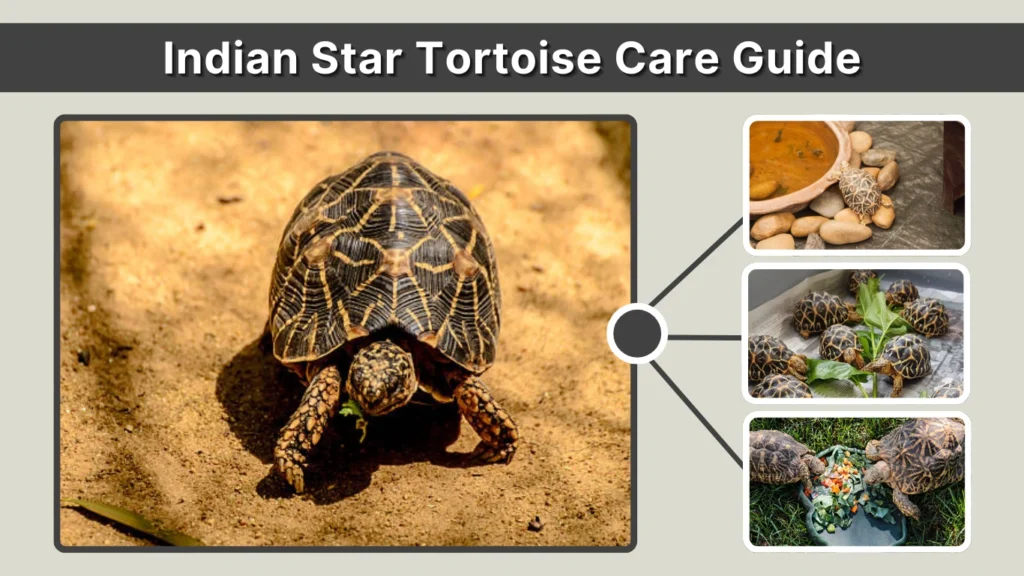
Providing proper daily care ensures your tortoise remains active and healthy for decades.
Daily Care Routine
Indian star tortoises should be fed daily, especially juveniles. Fresh food should be removed at the end of the day to maintain cleanliness.
They should always have access to shallow, clean water for drinking. Although they obtain moisture from their food, hydration remains important.
Young tortoises benefit from regular soaking several times per week. Soaking supports hydration and healthy shell development. Adults may soak less frequently but still benefit from occasional hydration sessions.
Health and Common Problems
When maintained in proper conditions, Indian star tortoises are relatively hardy. However, poor husbandry can lead to common health issues such as:
- Pyramiding – Uneven shell growth caused by improper humidity or diet
- Respiratory infections – Often due to cold or damp conditions
- Shell rot – Caused by prolonged exposure to moisture
Signs of illness may include nasal discharge, swollen eyes, lethargy, soft shell areas, or loss of appetite. Early detection and veterinary consultation are important for successful treatment.
Handling and Behavior
Indian star tortoises are naturally shy. Excessive handling can cause stress. It’s best to limit handling to enclosure cleaning or health checks.
Signs of stress include hiding frequently, refusing food, or withdrawing into the shell for long periods. With patience and gentle care, they can become comfortable with routine interaction, but they are not typically affectionate pets.
Indian Star Tortoise Lifespan
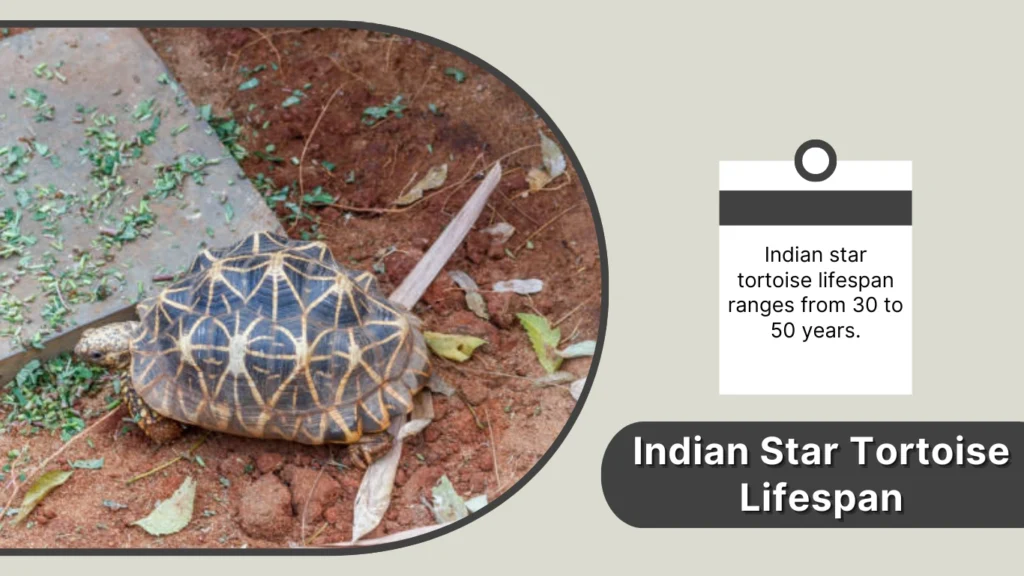
Before bringing one home, it’s important to understand the long-term commitment involved.
How Long Does an Indian Star Tortoise Live?
The average Indian star tortoise lifespan ranges from 30 to 50 years. With excellent care, some individuals may live even longer in captivity.
In the wild, lifespan can vary due to predators and environmental challenges. In captivity, proper diet, lighting, and habitat conditions significantly influence longevity.
Factors That Affect Lifespan
Several factors impact how long an Indian star tortoise lives:
- Balanced, high-fiber diet
- Proper UVB exposure
- Clean and appropriately sized habitat
- Consistent temperature control
- Access to veterinary care
Because of their long lifespan, owners should be prepared for decades of responsibility.
Growth and Development
Understanding growth stages helps ensure proper care throughout your tortoise’s life.
Hatchling Care Basics
Indian star tortoise hatchlings require slightly higher humidity than adults to prevent shell deformities. Their enclosure should maintain stable warmth and proper UVB lighting.
They should be monitored closely for consistent growth and steady weight gain. Frequent feeding of soft grasses and finely chopped greens supports healthy development.
Adult Growth Expectations
Indian star tortoises grow gradually and typically reach full size within several years. Females usually grow larger than males. Slow, steady growth supported by proper nutrition is healthier than rapid growth caused by excessive protein.
Pros and Cons of Owning an Indian Star Tortoise
Advantages
- Beautiful and unique star-patterned shell
- Moderate adult size compared to larger tortoise species
- Calm temperament
- Long lifespan with proper care
Challenges
- Specific temperature and humidity requirements
- Long-term commitment
- May require specialized lighting and heating equipment
- Legal restrictions in some countries due to conservation status
They are best suited for responsible owners willing to meet their environmental and dietary needs.
FAQs
What do Indian star tortoises eat daily?
Indian star tortoises eat mostly grasses and leafy greens each day. Timothy grass, Bermuda grass, dandelion greens, and collard greens are excellent staples. Their diet should be high in fiber and low in protein, with fruit offered rarely or avoided.
How long does an Indian star tortoise live in captivity?
In captivity, Indian star tortoises typically live between 30 and 50 years. With proper diet, UVB lighting, and a well-maintained habitat, some individuals may exceed this range.
What is the ideal Indian star tortoise habitat?
An ideal habitat includes a spacious enclosure, a basking area around 90–95°F, UVB lighting, moderate humidity, and a secure shelter. Outdoor housing works well in warm climates with proper predator protection.
How big does an Indian star tortoise get?
Most adults grow between 7 and 12 inches long. Females are generally larger than males and may weigh more as well.
Are Indian star tortoises good pets for beginners?
They can be suitable for beginners who are committed to proper research and care. However, their specific environmental needs and long lifespan require dedication and preparation.