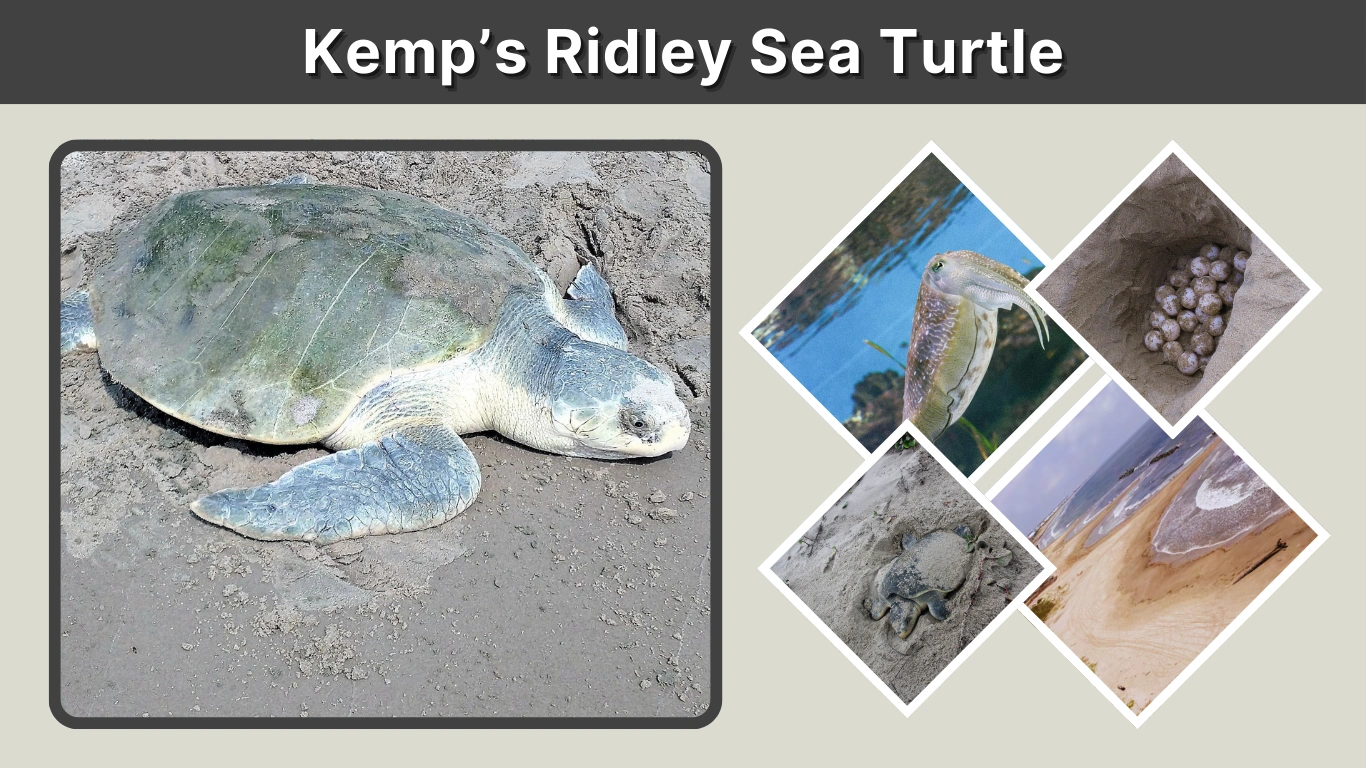
Kemp’s ridley sea turtles are the rarest and most endangered sea turtles on Earth. Known for their compact shape, rapid swimming ability, and unique mass nesting behavior, they play a vital role in coastal ecosystems. This guide explores their identification, habitat, size, diet, and behavior to help readers understand what makes this species so extraordinary—and why it urgently needs protection.
Overview of the Kemp’s Ridley Sea Turtle
The Kemp’s ridley sea turtle (Lepidochelys kempii) is the smallest and most threatened of the world’s seven sea turtle species. These turtles are famous for their unusual “arribada,” a synchronized mass nesting event in which hundreds of females crawl onto beaches at the same time. Their primary range centers around the Gulf of Mexico, with Texas and Mexico serving as essential feeding and nesting grounds.
Despite decades of conservation efforts, the species remains critically endangered due to habitat loss, fisheries bycatch, and environmental disturbances. Because they help regulate crab populations and support balanced coastal ecosystems, their survival is crucial for ecological health.
Identification, Description & Characteristics
General Description
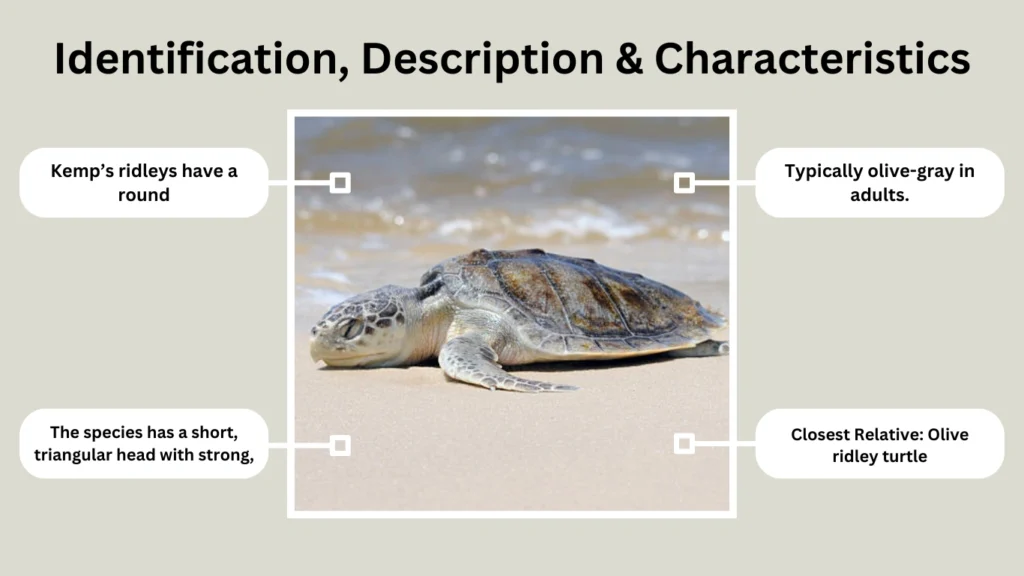
Kemp’s ridleys have a round, almost heart-shaped carapace that is typically olive-gray in adults. Their plastron (belly shell) is pale yellowish. The species has a short, triangular head with strong, curved jaws built to crush hard-shelled prey such as crabs. Their flippers are proportionally large with one claw on each.
Juveniles are much darker—nearly charcoal—and gradually lighten as they mature.
Taxonomy & Classification
- Scientific Name: Lepidochelys kempii
- Family: Cheloniidae
- Genus: Lepidochelys
- Closest Relative: Olive ridley turtle (Lepidochelys olivacea)
This species is the only sea turtle primarily restricted to the Gulf of Mexico, giving it one of the most limited ranges among all sea turtles.
Physical Characteristics
Unique traits include their compact body, wide curved carapace, and exceptionally strong jaws. They are also known for rapid, agile swimming in shallow waters. Juveniles are more oceanic, while adults stay mostly near the coastline.
Size, Weight & Physical Features
Average Adult Size
Kemp’s ridleys are the smallest of all sea turtles. Adults typically reach 24–28 inches (60–70 cm) in shell length. Their small size contributes to faster maneuverability in coastal shallows.
Weight Range
Adults weigh 70–100 pounds (32–45 kg) on average. Females tend to be slightly larger than males.
Shell Structure
Their carapace is broad and almost circular, with five pairs of costal scutes. The shell’s design allows quick turns in pursuit of prey along the ocean floor. Its muted olive tone provides camouflage, especially in seagrass and muddy-bottom habitats.
Growth from Hatchling to Adult
Hatchlings measure just 1.5 inches (4 cm) and weigh around 0.5 ounces. As they age, they undergo noticeable color changes—from dark gray to olive green—and gradually adopt the adult shape. They reach maturity between 10–15 years, depending on food availability and environmental conditions.
Habitat, Range & Geographic Location
Typical Habitat
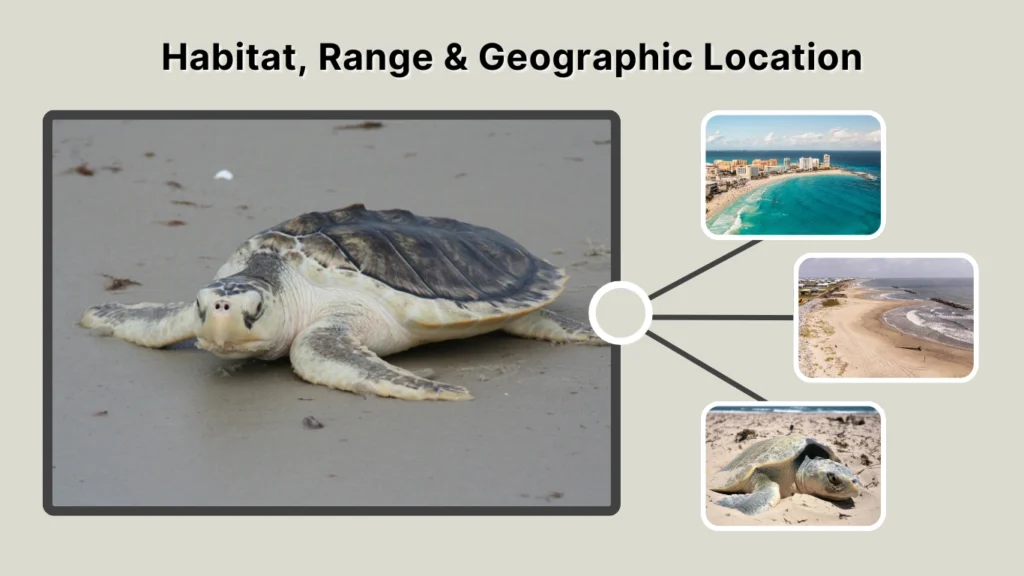
Kemp’s ridleys favor shallow coastal waters, especially areas rich in crabs—their preferred prey. They inhabit muddy or sandy bottoms, seagrass beds, estuaries, and nearshore zones. Juveniles spend time in open ocean “drift lines,” feeding on floating organisms.
Global & Regional Range
The species has one of the narrowest ranges of all sea turtles. Most individuals live in or near the Gulf of Mexico, especially:
- Mexico’s Gulf coast
- Texas and Louisiana coastal waters
- Nearshore areas along the U.S. Atlantic occasionally
Some migrate northward along the Atlantic Coast, reaching states like Florida, Georgia, and even New England before returning south.
Specific U.S. Locations
Important U.S. habitats include:
- Padre Island National Seashore, Texas – major nesting recovery site
- Galveston, Texas – research and rehab hub
- Florida’s Gulf Coast – foraging habitat for juveniles and adults
These locations are vital for feeding, rehabilitation, and nesting support.
Environmental Requirements
Kemp’s ridleys need warm-water environments, generally 68°F (20°C) or warmer. Nesting beaches must have fine sand, gentle slopes, and minimal human disturbance. Water quality strongly affects their foraging success, making pollution a major concern.
Diet, Feeding Behavior & Food Web
What They Eat
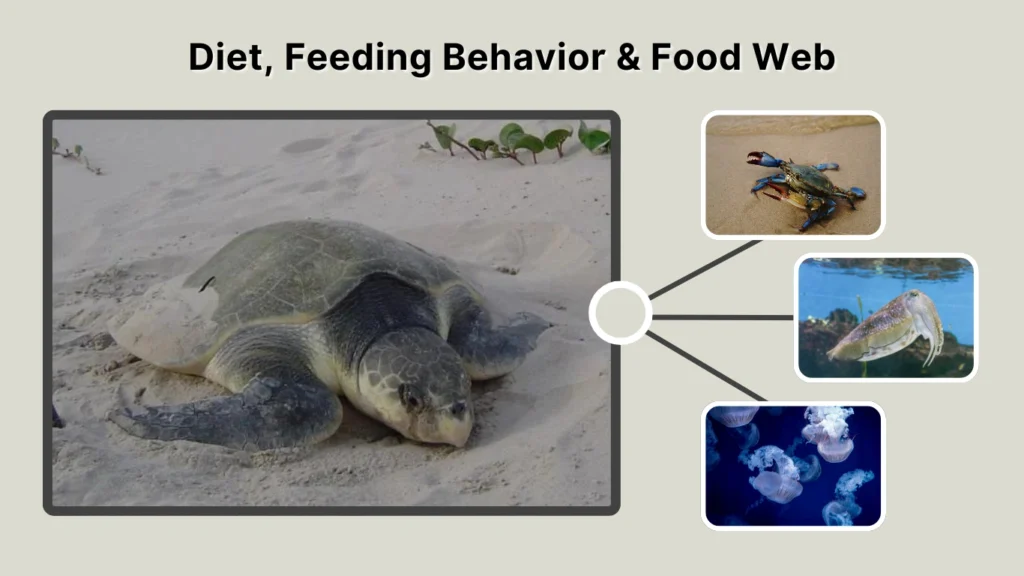
Their diet centers around:
- Blue crabs
- Mud crabs
- Mollusks
- Jellyfish
- Shrimp
- Small fish
Crabs make up the largest portion of their diet, which is why strong jaws are essential.
Feeding Behavior
Kemp’s ridleys are opportunistic bottom feeders. Adults primarily hunt along the seafloor, using quick bursts of movement to capture prey. Juveniles feeding in the open ocean consume floating organisms and small invertebrates.
Role in the Food Chain
As mid-level predators, they help balance populations of crustaceans, particularly crabs. This maintains healthy coastal ecosystems and prevents overgrazing of seagrasses.
Predators
Common predators include:
- Sharks
- Large fish (for juveniles)
- Raccoons and birds (for eggs and hatchlings)
Human-related threats indirectly increase predation risk, making conservation crucial.
Behavior, Adaptations & Life Cycle
Daily & Seasonal Behavior
Kemp’s ridleys spend most of their time foraging or resting in shallow waters. They are diurnal, feeding primarily during daylight. Seasonal migrations occur based on water temperature and reproductive cycles.
Adaptations
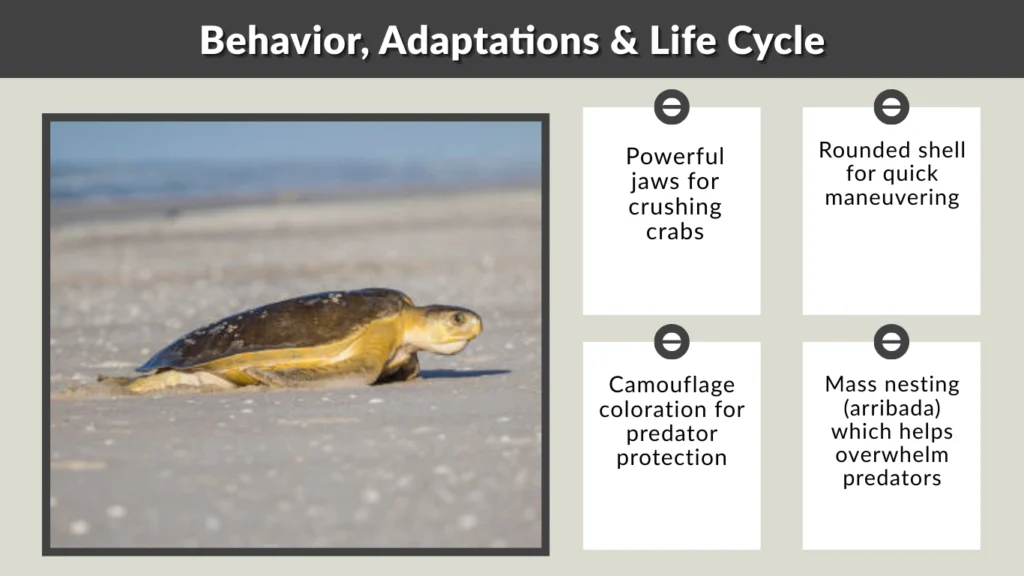
Key adaptations include:
- Powerful jaws for crushing crabs
- Rounded shell for quick maneuvering
- Camouflage coloration for predator protection
- Mass nesting (arribada) which helps overwhelm predators
These adaptations help them survive in complex coastal environments.
Life Cycle Stages
- Hatchlings emerge at night and rush to the sea
- Juveniles drift in ocean currents
- Sub-adults return to coastal zones
- Adults settle into feeding territories
- Mature females return to natal beaches to nest
Migration Patterns
Kemp’s ridleys migrate seasonally across the Gulf of Mexico and up the Atlantic Coast. They follow warm currents and food availability, demonstrating strong navigational instincts.
Nesting, Eggs & Hatchlings
Nesting Process
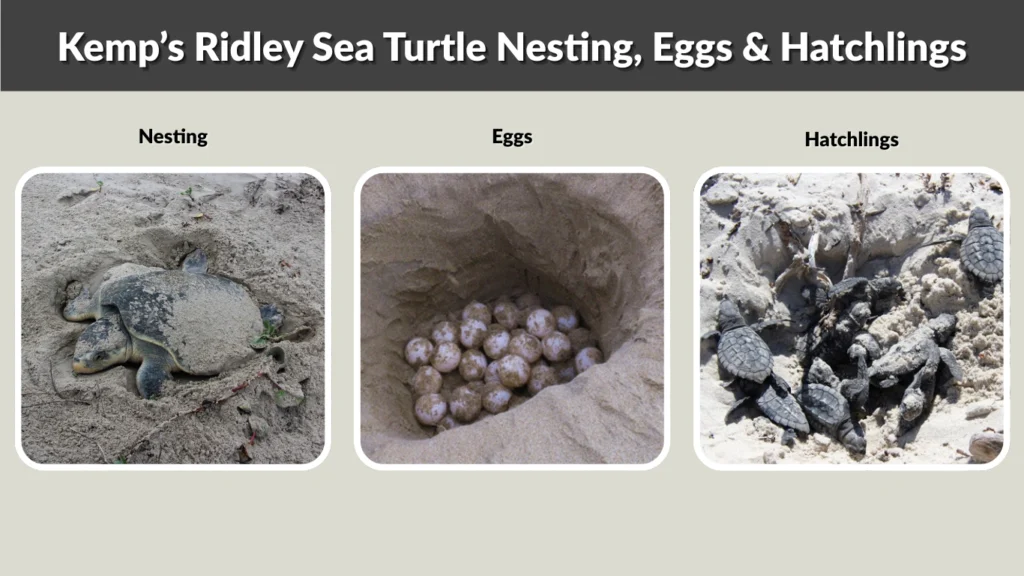
Kemp’s ridley sea turtles are famous for the arribada, a mass nesting event where dozens or even hundreds of females come ashore simultaneously. This synchronized nesting likely evolved as a defense mechanism—by overwhelming predators with sheer numbers, more eggs survive. Most nesting occurs during daylight, which is unusual compared to other sea turtle species. The primary nesting beaches are found along the Gulf of Mexico, especially in Mexico and Texas.
Egg Laying
Females nest every 1–3 years, typically laying 2–3 clutches per season. Each clutch contains approximately 90–110 eggs, buried about one foot deep. After covering the nest with sand, the mother returns to the ocean immediately, leaving the eggs to develop on their own.
Incubation Period
The incubation lasts about 45–60 days, depending on temperature. Like many reptiles, nest temperature determines hatchling sex:
- Warmer sand produces more females
- Cooler sand tends to produce more males
This sensitivity makes climate change a significant long-term threat to population stability.
Hatchling Challenges
Hatchlings face numerous obstacles on their journey from nest to ocean. Common threats include:
- Predatory birds
- Crabs
- Raccoons
- Fish waiting in the surf
- Artificial lighting that causes disorientation
Only an estimated 1 in 1,000 hatchlings reaches adulthood, making nest protection vital.
Hatchling Release Programs
Conservation programs in Texas—especially at Padre Island National Seashore—help protect nests, collect eggs at risk from storms, and ensure hatchlings reach the ocean safely. Public release events raise awareness and encourage community participation. Research centers in Galveston also monitor hatchling success rates and health.
Population Status, Conservation & Threats
Population Numbers
Kemp’s ridleys suffered catastrophic declines in the 20th century, dropping to just a few hundred nesting females. Conservation efforts helped the species rebound slightly, but numbers have plateaued or declined again in recent years. Current estimates place global population in the low thousands, making them critically endangered and highly vulnerable to environmental disturbance.
Why the Species Is Endangered
Multiple human-driven factors threaten the Kemp’s ridley:
- Fisheries bycatch, especially in shrimp trawls
- Coastal development, removing vital nesting habitat
- Pollution, including plastic ingestion
- Climate change, altering sand temperatures and food availability
- Oil spills, which devastate nearshore foraging grounds
Their small geographic range magnifies the impact of these threats.
Threat Analysis
Bycatch remains the most severe danger, despite regulations requiring turtle excluder devices (TEDs). Nesting beaches are also affected by erosion and rising sea levels, which reduce suitable nesting areas. Predation pressures have increased in some regions as human activity alters natural predator populations.
Conservation Efforts
Major conservation strategies include:
- Protecting nesting beaches with patrols and barriers
- Using TEDs in commercial fisheries
- Habitat restoration projects
- International cooperation between Mexico and the United States
- Public education on marine pollution and responsible tourism
Rescue and rehabilitation centers treat injured turtles—often victims of boat strikes or entanglement.
Ecological Role
Kemp’s ridleys help regulate populations of crabs and other benthic species, maintaining ecological balance along Gulf Coast ecosystems. Their presence also supports nutrient cycling when hatchlings and adults serve as prey for other marine species.
Research Centers & Release Programs
Major Research Facilities
Several organizations dedicate resources to studying and protecting Kemp’s ridleys:
- NOAA Fisheries – population monitoring
- Galveston Sea Turtle Research Center – rescue, rehab & study
- Padre Island National Seashore – nesting protection and hatchling releases
- Various universities – tracking migration and genetic diversity
These institutions are crucial in collecting long-term data and guiding conservation policy.
How Research Helps Conservation
Satellite tracking reveals migration routes, feeding hotspots, and interactions with fisheries. Long-term data guides improved management strategies, while genetic studies help determine population structure and reproduction success. Understanding nesting trends helps predict future reproductive seasons and threats.
Community & Volunteer Involvement
Volunteers play an important role in nest monitoring, data collection, public outreach, and beach patrols. Many hatchling release programs rely heavily on local support, increasing public awareness and generating long-term stewardship.
Facts, Fun Facts & Interesting Information
General Facts
- They are the smallest sea turtle species.
- The species nests mostly during daylight, unlike most sea turtles.
- Their shell is nearly circular and olive-colored.
Fun & Kid-Friendly Facts
- Kemp’s ridley hatchlings fit in the palm of your hand.
- Their favorite food is blue crab—basically the turtle version of a favorite snack.
Interesting Biological Facts
- Nest temperature controls whether hatchlings become male or female.
- Females return to the same beach where they hatched to lay their own eggs.
Notable Historical Events
A famous 1947 film documenting the arribada helped scientists realize the species’ nesting patterns and its extreme vulnerability—an event that inspired modern conservation efforts.
Species Comparisons
Kemp’s Ridley vs Green Sea Turtle
A comparison helps highlight why Kemp’s ridleys are distinct among sea turtles.
| Feature | Kemp’s Ridley | Green Sea Turtle |
| Size | 24–28 inches | 31–47 inches |
| Weight | 70–100 lbs | 200–500+ lbs |
| Shell Color | Olive-gray | Brown or green |
| Diet | Mostly crabs | Mostly seagrass (adults) |
| Range | Gulf of Mexico | Worldwide |
| Conservation Status | Critically endangered | Endangered |
Kemp’s ridleys stand out due to their smaller size, crab-heavy diet, and localized range.
FAQs
Why is the Kemp’s ridley sea turtle endangered?
The species is endangered primarily due to shrimp trawling bycatch, illegal egg harvesting, habitat loss, climate change, and pollution. Their small geographic range makes them more vulnerable to environmental changes and human activities compared to other sea turtles.
How many Kemp’s ridley sea turtles are left?
Current estimates suggest only a few thousand individuals remain globally. The number of nesting females is especially low, making the species one of the rarest turtles on Earth.
What do Kemp’s ridley sea turtles eat?
Their diet consists mainly of crabs, supported by shrimp, fish, mollusks, and jellyfish. Powerful jaws help them crush hard-shelled prey, which is one of their key adaptations.
Where do they live?
Most Kemp’s ridleys reside in the Gulf of Mexico, with some migrating along the U.S. Atlantic Coast. They prefer shallow coastal waters with sandy or muddy bottoms and abundant food sources.
How long do they live?
They can live 50 years or more under natural conditions. Longevity depends on food availability, habitat quality, and avoidance of human-caused threats.