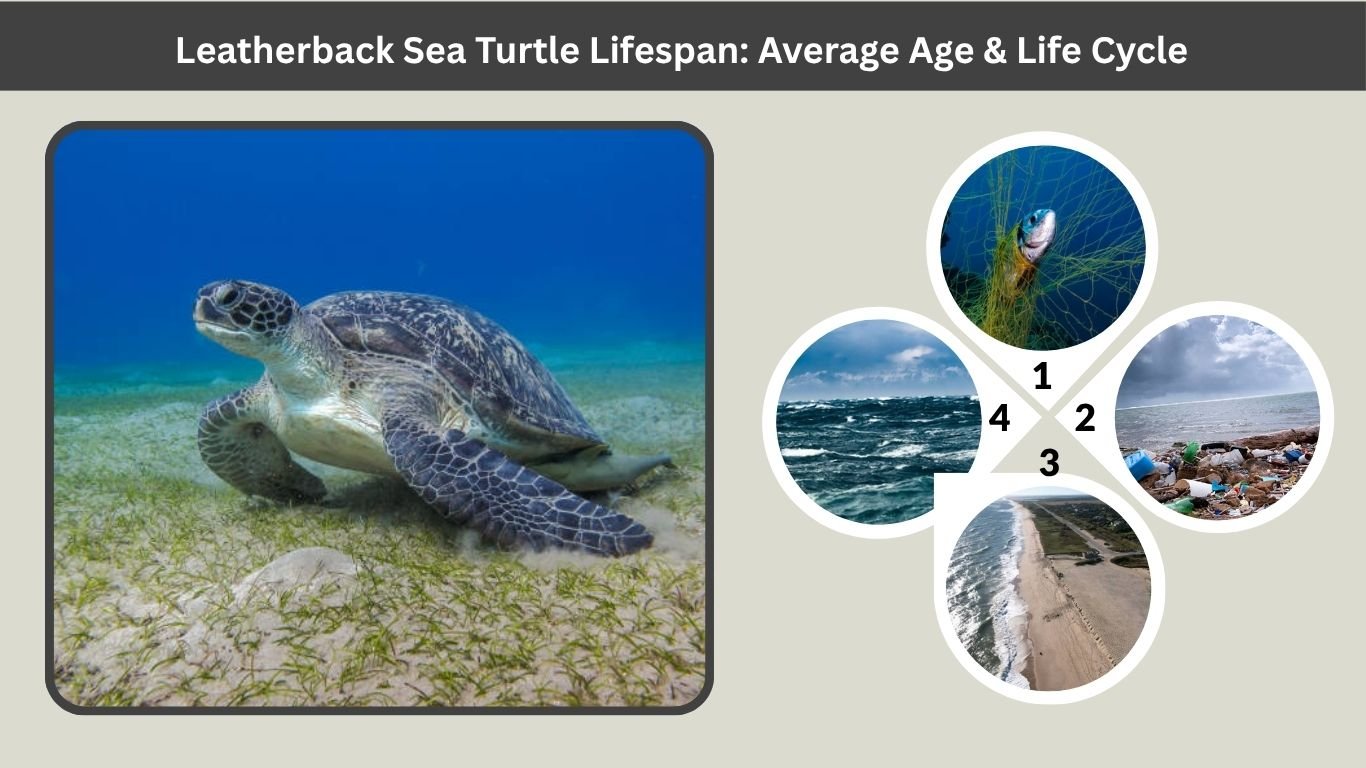
The leatherback sea turtle is the largest sea turtle species and one of the most fascinating marine animals. Because of its size, long migrations, and endangered status, many people ask questions like “what is the lifespan of a leatherback sea turtle” or “how long do leatherback sea turtles live?”
Understanding the lifespan of leatherback sea turtles is important not only for curiosity but also for conservation. In this guide, you’ll learn how long they live, their life cycle, and what factors affect their survival.
What Is the Lifespan of a Leatherback Sea Turtle
The lifespan of a leatherback sea turtle is estimated to range between 20 to 50 years or more. However, determining an exact lifespan is difficult because these turtles spend most of their lives in the open ocean.
Scientists rely on tracking data, growth patterns, and comparisons with other sea turtles to estimate their age. While some individuals may live longer, many do not reach their full lifespan due to environmental challenges and human threats.
Average Lifespan of Leatherback Sea Turtles
Lifespan in the Wild
In the wild, leatherback sea turtles typically live several decades. However, their survival is influenced by many factors, especially during early life stages.
Most turtles face high risks from predators, environmental changes, and human activities. Because of this, only a small number of individuals reach their full lifespan.
Lifespan in Captivity
Leatherback sea turtles are rarely kept in captivity because they require very specific ocean conditions to survive. As a result, there is limited data on their lifespan in controlled environments.
Unlike some other turtles, leatherbacks do not adapt well to captivity, making wild lifespan estimates more important.
Leatherback Sea Turtle Life Cycle
Life Stages
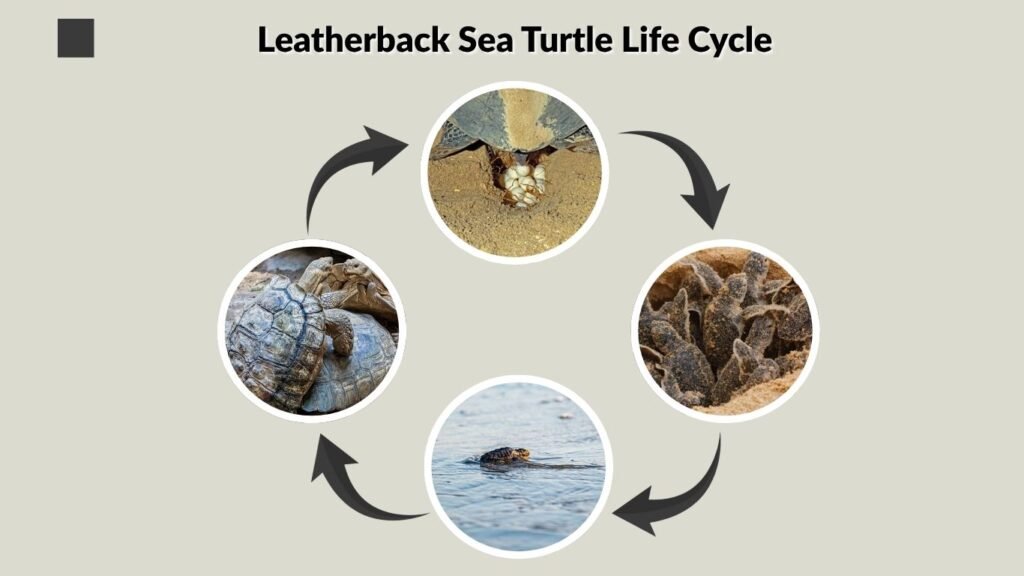
The life cycle of a leatherback sea turtle includes several important stages.
- Egg stage buried in sand
- Hatchling stage emerging and moving to the ocean
- Juvenile stage growing in open water
- Adult stage with full size and reproduction ability
Each stage comes with different survival challenges, especially for hatchlings.
Reproduction and Growth
Female leatherback sea turtles return to beaches to lay eggs. A single nesting event can produce dozens of eggs, but only a few hatchlings survive to adulthood.
After hatching, young turtles head toward the ocean, where they begin a long journey of growth. It can take many years—often over a decade—for them to reach maturity.
This slow growth rate is one reason why leatherback sea turtles have relatively long lifespans compared to many other marine animals.
How Long Do Leatherback Sea Turtles Live Compared to Other Turtles
Leatherback sea turtles have a lifespan similar to other sea turtles, but there are some differences. Many sea turtle species live between 30 and 80 years, depending on conditions.
Leatherbacks are unique because of their size and deep-diving behavior, but their lifespan tends to fall within the lower to mid-range compared to some other turtle species.
Freshwater turtles, on the other hand, can sometimes live even longer, especially in protected environments. However, marine turtles like leatherbacks face more environmental risks, which can affect their lifespan.
Factors That Affect Leatherback Sea Turtle Lifespan
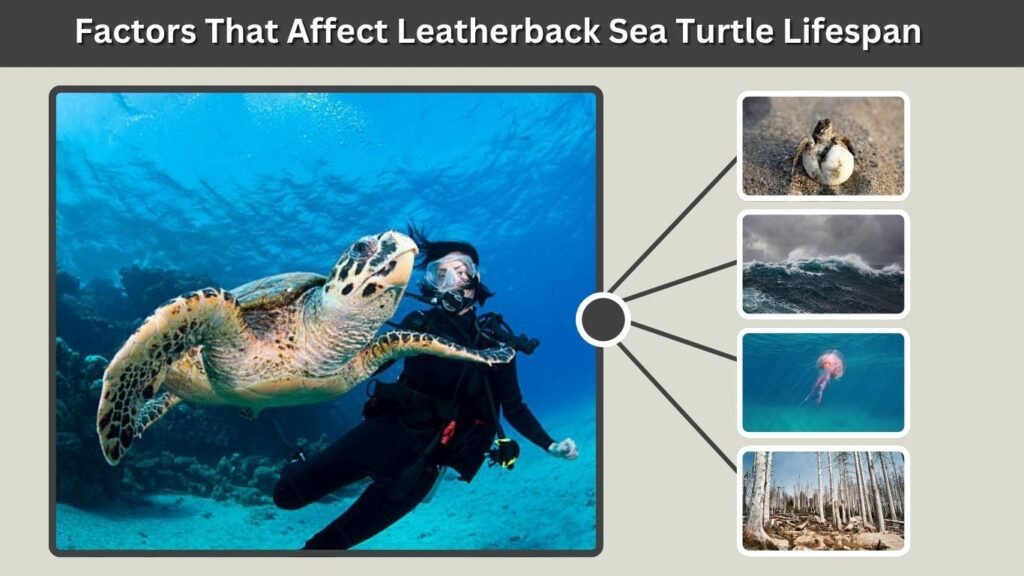
The lifespan of leatherback sea turtles is influenced by many natural and human-related factors. Even though they have the potential to live for decades, survival is not guaranteed due to various challenges throughout their life.
Natural Factors
- Predators, especially for eggs and hatchlings
- Ocean conditions such as temperature and currents
- Availability of food like jellyfish
- Natural diseases and health issues
These factors mainly impact younger turtles, as they are more vulnerable in early stages.
Human-Related Threats
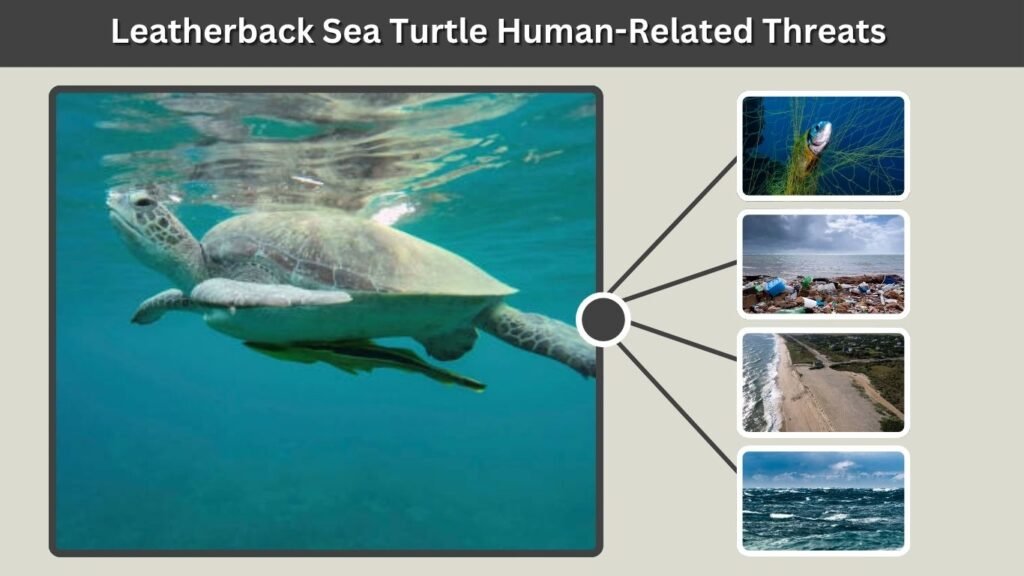
Human activities are one of the biggest threats to leatherback sea turtles.
- Fishing nets and bycatch
- Plastic pollution and ingestion
- Coastal development affecting nesting beaches
- Climate change altering ocean conditions
These threats significantly reduce the chances of reaching full lifespan.
Survival Rate from Birth to Adulthood
Leatherback sea turtles face extremely low survival rates early in life. Out of hundreds of eggs laid, only a small number of hatchlings survive to adulthood.
Many hatchlings are eaten by predators such as birds and fish before they even reach the ocean. Others may not survive due to environmental challenges.
This low survival rate is why long lifespans are important for maintaining their population.
Why Leatherback Sea Turtles Live So Long
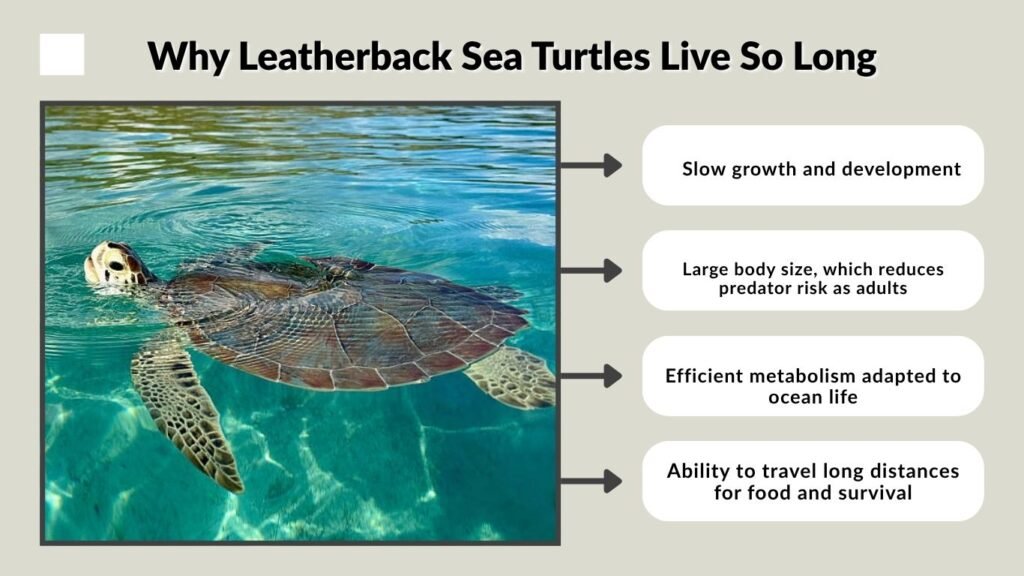
Despite the challenges, leatherback sea turtles have biological traits that support a long lifespan.
- Slow growth and development
- Large body size, which reduces predator risk as adults
- Efficient metabolism adapted to ocean life
- Ability to travel long distances for food and survival
These factors help them survive for decades when conditions are favorable.
Conservation and Lifespan Impact
Leatherback sea turtles are considered endangered, and conservation efforts play a major role in their survival. Protecting nesting beaches and reducing ocean pollution can help increase their lifespan.
Many organizations work to reduce bycatch, protect habitats, and raise awareness. These efforts are essential because even small improvements in survival rates can have a big impact over time.
Conservation directly influences how long these turtles live and how well their populations recover.
Interesting Lifespan Facts
Leatherback sea turtles are known for their incredible endurance and long-distance travel. They can migrate thousands of kilometers across oceans during their lifetime.
They are also the deepest-diving sea turtles, capable of reaching extreme depths in search of food. These abilities show how well they are adapted to long-term survival in marine environments.
Although exact ages are hard to confirm, their long life cycle and slow maturity make them one of the most fascinating ocean species.
FAQs
What is the lifespan of a leatherback sea turtle
The lifespan of a leatherback sea turtle is estimated to be between 20 and 50 years or more. However, exact lifespan data is limited because these turtles spend most of their lives in the open ocean, making long-term tracking difficult.
What is the average lifespan of a leatherback sea turtle
The average lifespan is believed to be around 30 to 50 years. Environmental conditions, food availability, and human-related threats can influence how long individual turtles live in the wild.
How long do leatherback sea turtles live in the wild
In the wild, leatherback sea turtles typically live several decades. However, many do not reach their full lifespan due to predators, environmental challenges, and human activities such as fishing and pollution.
Do leatherback sea turtles live longer than other turtles
Leatherback sea turtles have a lifespan similar to other sea turtles, though some species may live longer. Freshwater turtles often have longer lifespans due to fewer environmental threats compared to ocean-dwelling species.
What affects the lifespan of leatherback sea turtles
Their lifespan is affected by predators, climate conditions, pollution, fishing nets, and habitat loss. Human activities are one of the biggest factors reducing their survival and overall lifespan.