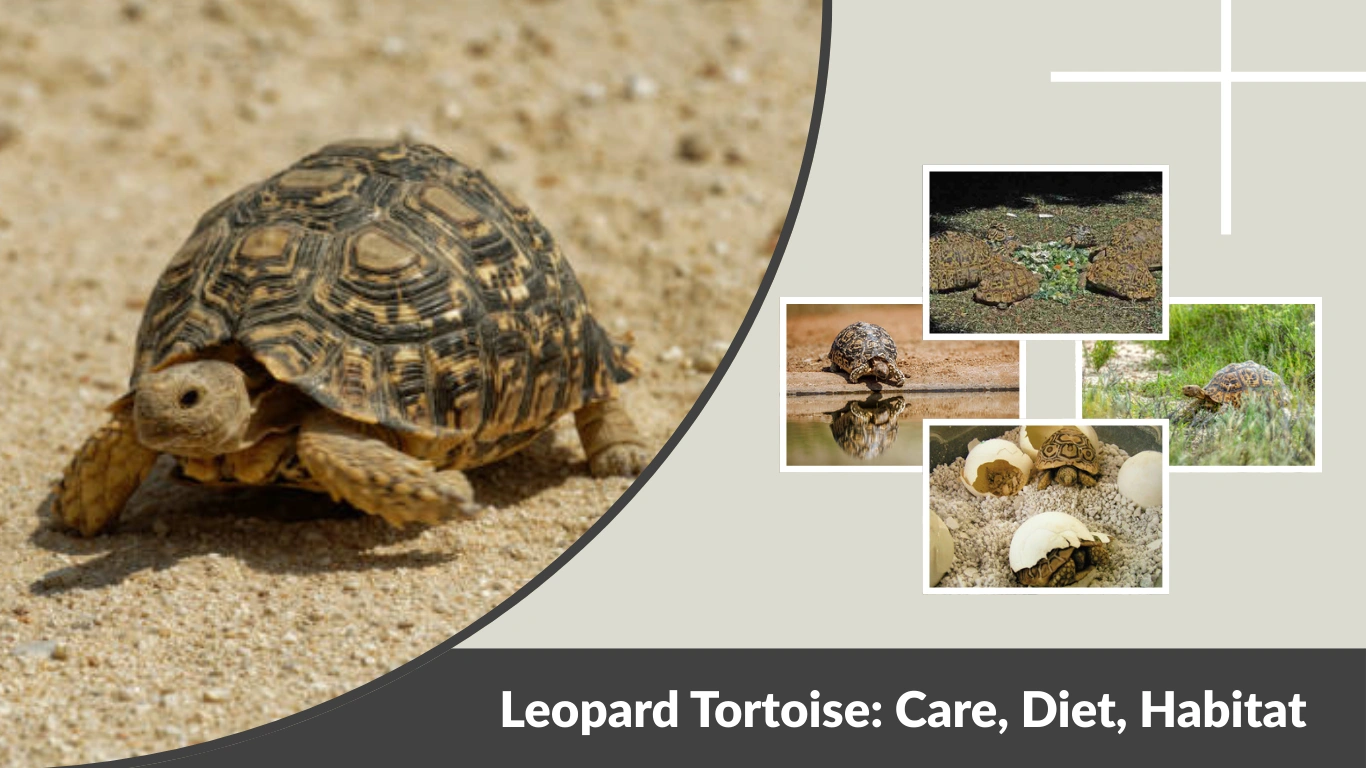
The leopard tortoise is one of the most popular pet tortoise species in the world. Known for its beautiful patterned shell and calm temperament, this African native can become a long-term companion when cared for properly. However, owning one requires space, proper nutrition, and a commitment that can last decades. In this guide, you’ll learn essential leopard tortoise facts, habitat requirements, care tips, and dietary needs to help your tortoise thrive.
Leopard Tortoise Facts and Overview
Scientific Classification and Origin
The leopard tortoise (Stigmochelys pardalis) is native to Eastern and Southern Africa. It inhabits warm, dry regions including grasslands, savannas, and semi-arid areas. Unlike some tortoise species, leopard tortoises do not hibernate. Instead, they remain active year-round in climates that stay relatively warm.
They are the fourth largest tortoise species in the world. Their ability to adapt to different African environments makes them hardy, but they still require proper care in captivity to remain healthy.
Appearance and Size
Leopard tortoises are named after the striking black and yellow patterns on their high-domed shells, which resemble a leopard’s spots. Hatchlings have bright, bold markings that may fade slightly as they age.
Adult leopard tortoises typically grow between 10 to 18 inches long, though some can exceed 20 inches. They can weigh anywhere from 25 to over 50 pounds depending on size and gender. Females are often slightly larger than males.
Their strong, sturdy legs are designed for walking long distances in search of food, making space an important consideration for owners.
Temperament and Behavior
In general, leopard tortoises are calm and docile. They are not aggressive and can become accustomed to their owners over time. However, they are not cuddly pets and prefer limited handling.
They are natural grazers, spending much of their day slowly moving around and eating. In captivity, you’ll notice similar behavior—constant grazing, basking under heat, and exploring their enclosure.
Leopard Tortoise Habitat
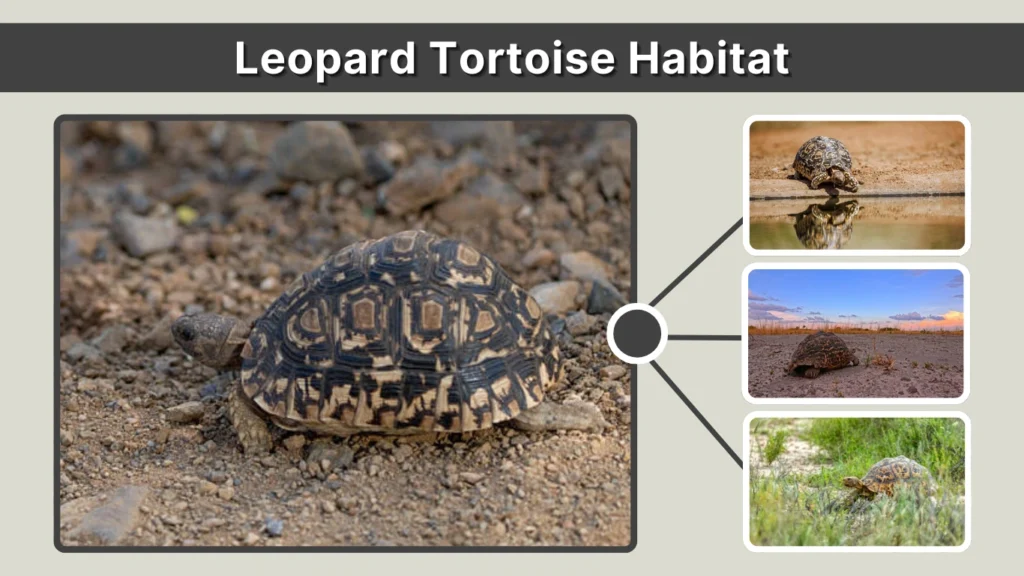
Providing the right leopard tortoise habitat is essential for long-term health. Their enclosure should replicate their natural environment as closely as possible.
Natural Habitat in the Wild
In the wild, leopard tortoises live in grasslands and savannas with warm temperatures and moderate rainfall. They often seek shelter under bushes or in shallow scrapes they dig into the ground. These environments provide plenty of grasses and vegetation, which make up the majority of their diet.
They are used to temperature fluctuations between warm days and cooler nights, but they do not tolerate prolonged cold or damp conditions.
Ideal Indoor Enclosure Setup
If kept indoors, leopard tortoises require a large enclosure. Small tanks are not suitable for adults. A tortoise table or custom-built enclosure with ample floor space works best.
Key requirements include:
- A temperature gradient with a basking area around 95°F (35°C)
- Cooler side temperatures around 75–85°F
- Proper UVB lighting to support calcium absorption
- Safe substrate such as coconut coir, topsoil mix, or grass hay
UVB lighting is critical. Without it, tortoises can develop metabolic bone disease and shell deformities. Lights should be replaced regularly according to manufacturer guidelines.
Outdoor Housing Requirements
Outdoor enclosures are ideal in warm climates. A secure, fenced yard area allows them to graze naturally and exercise.
Important considerations include:
- Strong fencing to prevent escape
- Protection from predators
- Access to shade
- A dry shelter area for nighttime
Outdoor housing often promotes healthier growth because of natural sunlight and access to real grasses.
Leopard Tortoise Care Guide
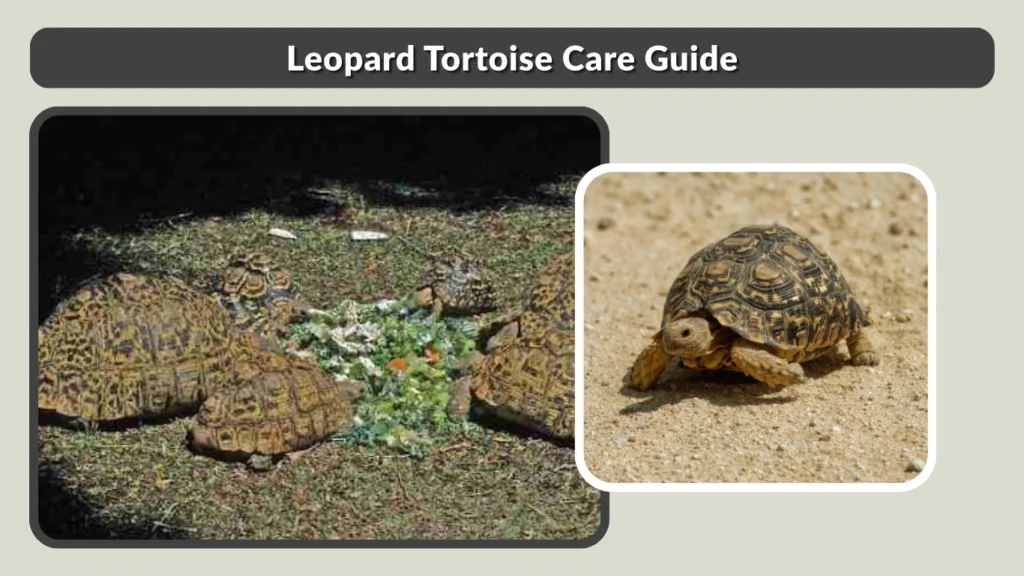
Proper leopard tortoise care goes beyond feeding and housing. Daily attention and monitoring are essential.
Daily Care Routine
Leopard tortoises should have access to fresh water at all times. Although they get much of their hydration from food, a shallow water dish allows drinking and soaking.
Young tortoises benefit from regular soaking several times a week to prevent dehydration and promote healthy shell growth. Adults may soak less frequently but still appreciate occasional hydration sessions.
Feeding should occur daily, especially for juveniles, as they are constant grazers.
Health and Common Issues
When properly cared for, leopard tortoises are hardy animals. However, poor husbandry can lead to several health problems.
Common issues include:
- Pyramiding (uneven shell growth due to improper humidity or diet)
- Respiratory infections from cold or damp conditions
- Shell rot caused by excessive moisture
Signs of illness may include lethargy, nasal discharge, swollen eyes, soft shell areas, or lack of appetite. Regular observation helps catch problems early.
Leopard Tortoise Diet and Food
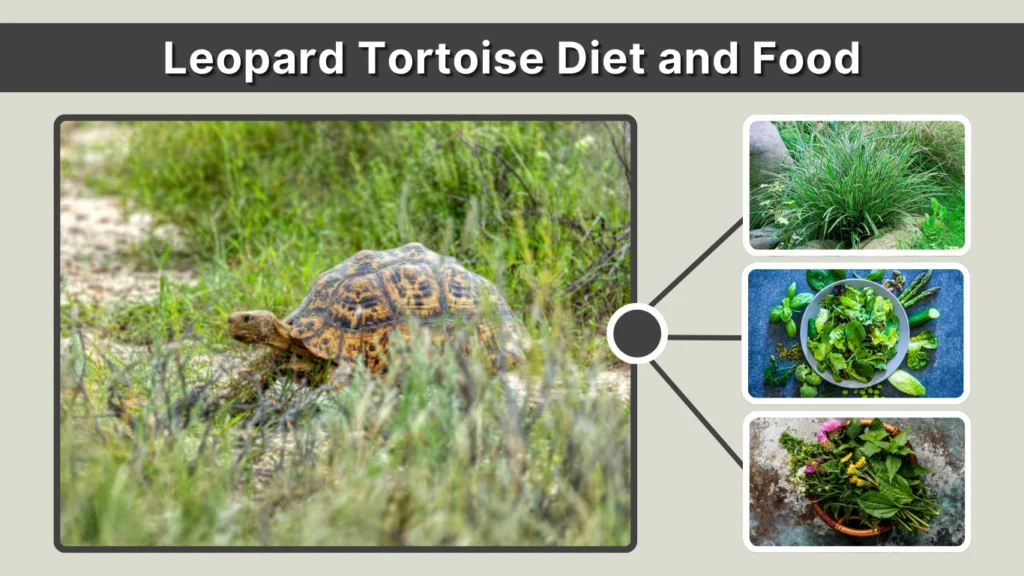
Diet plays one of the most important roles in leopard tortoise health. In fact, most health problems stem from improper feeding.
What Do Leopard Tortoises Eat?
Leopard tortoises are strict herbivores and natural grazers. In the wild, they consume mostly grasses and fibrous plants. Their digestive systems are designed for high-fiber, low-protein foods.
A proper leopard tortoise diet should consist primarily of:
- Grasses
- Leafy greens
- Edible weeds
- Occasional flowers
High-protein foods or excessive fruit can disrupt digestion and cause long-term health issues.
Best Leopard Tortoise Food List
Some of the best leopard tortoise food options include:
- Timothy grass
- Bermuda grass
- Orchard grass
- Dandelion greens
- Collard greens
- Mustard greens
- Hibiscus leaves and flowers
- Opuntia cactus pads
Variety is important, but grasses should make up the majority of the diet.
Foods to Avoid
Knowing what not to feed is just as important as choosing the right leopard tortoise food. Their digestive systems are specialized for fibrous plant material, and improper foods can cause serious health problems.
Avoid the following:
- Fruits – While leopard tortoises may eat fruit in the wild occasionally, it should be extremely limited in captivity. Too much sugar can disrupt gut bacteria and cause diarrhea.
- Animal protein – Dog food, cat food, or insects are harmful and can lead to kidney damage and rapid, unhealthy growth.
- Processed foods – Bread, pasta, or human leftovers should never be offered.
- High-oxalate vegetables – Spinach and beet greens can interfere with calcium absorption if fed too often.
- Iceberg lettuce – Low nutritional value and mostly water.
A grass-based, high-fiber diet is always the safest approach.
Supplements and Calcium Needs
Calcium is critical for proper shell and bone development. Without enough calcium and UVB exposure, leopard tortoises can develop metabolic bone disease.
Most captive tortoises benefit from:
- Lightly dusting food with calcium powder several times per week
- Providing a cuttlebone inside the enclosure
- Ensuring proper UVB lighting for vitamin D3 synthesis
Supplement frequency may vary depending on age and diet quality. Hatchlings and juveniles typically require more frequent supplementation than adults.
Leopard Tortoise Hatchling Care
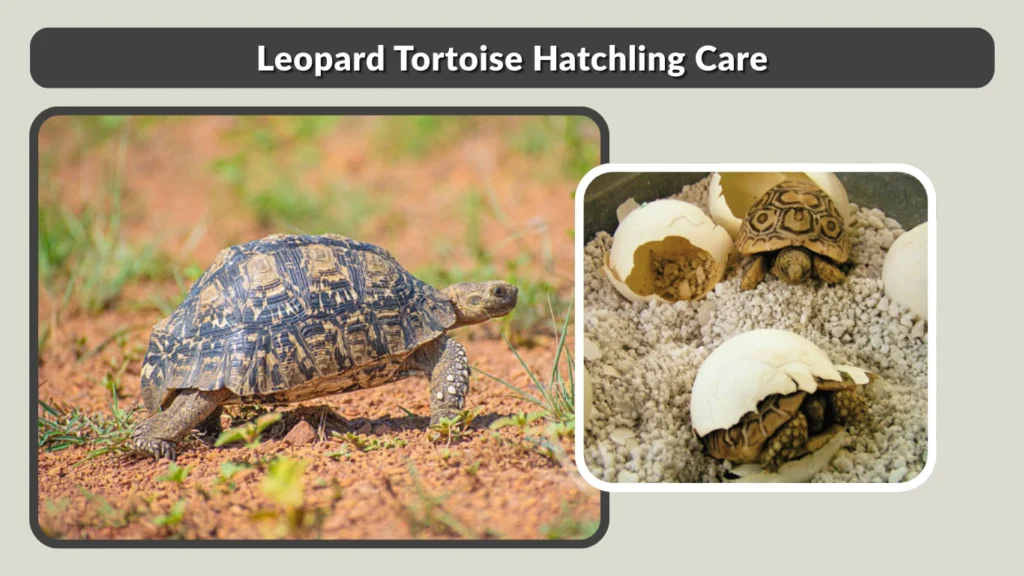
A leopard tortoise hatchling requires slightly different care compared to adults. Early growth stages are critical for proper shell formation and long-term health.
Hatchling Enclosure Setup
Hatchlings need a smaller, secure enclosure that maintains stable temperature and humidity. Unlike adults, young tortoises benefit from slightly higher humidity levels to support smooth shell growth and prevent pyramiding.
Key elements include:
- Basking spot around 95°F
- Warm ambient temperatures
- Consistent UVB lighting
- Moist but not wet substrate
Regular monitoring of temperature and humidity is essential during this stage.
Hatchling Diet and Feeding
The leopard tortoise hatchling diet should mirror that of adults but in smaller, finely chopped portions. Soft grasses and tender leafy greens are ideal.
Hatchlings should be fed daily and allowed to graze throughout the day. Because they are growing rapidly, consistent access to nutritious, high-fiber foods supports healthy development.
Growth and Development
Leopard tortoises grow steadily when provided with proper nutrition and lighting. Rapid growth caused by high-protein diets can lead to shell deformities, so slow and steady growth is healthier.
Weighing your hatchling regularly helps track development and ensures they are thriving.
Leopard Tortoise Life Span
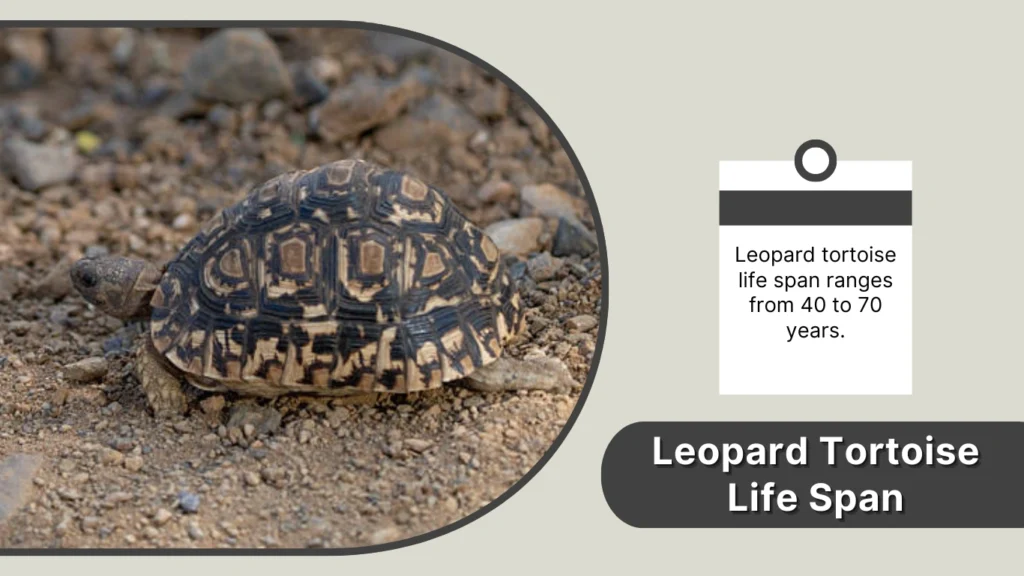
One of the most important considerations before getting a leopard tortoise is its longevity.
How Long Does a Leopard Tortoise Live?
Many people ask, how long does a leopard tortoise live? On average, a leopard tortoise life span ranges from 40 to 70 years. With excellent care, some individuals may live even longer.
In captivity, lifespan often depends on proper husbandry. Tortoises kept in ideal conditions with balanced diets and UVB lighting typically live longer than those exposed to poor care.
Factors That Affect Longevity
Several factors influence how long a leopard tortoise lives:
- Quality of diet
- Adequate UVB exposure
- Proper enclosure size
- Clean environment
- Access to veterinary care
Because of their long life span, owning a leopard tortoise is a long-term commitment that may span generations.
Pros and Cons of Owning a Leopard Tortoise
Before bringing one home, it’s important to weigh the advantages and challenges.
Advantages
- Hardy and adaptable species
- Beautiful shell patterns
- Calm and generally easygoing temperament
- Can thrive outdoors in warm climates
Challenges
- Require large enclosures
- Long life span commitment
- Specific dietary needs
- Heating and lighting setup costs
They are best suited for owners prepared to provide proper space and long-term care.
FAQs
What do leopard tortoises eat daily?
Leopard tortoises eat primarily grasses and leafy greens every day. Their diet should be high in fiber and low in protein. Timothy grass, Bermuda grass, dandelion greens, and collard greens are excellent staples. Fruit should be offered rarely, if at all.
How long does a leopard tortoise live in captivity?
In captivity, leopard tortoises commonly live between 40 and 70 years. With proper care, balanced nutrition, UVB lighting, and regular monitoring, some individuals may live even longer. Their long lifespan makes them a serious lifelong commitment.
Do leopard tortoises need UVB light?
Yes, UVB lighting is essential for indoor leopard tortoises. It helps them synthesize vitamin D3, which allows proper calcium absorption. Without UVB exposure, they are at risk of metabolic bone disease and shell deformities.
How big does a leopard tortoise get?
Most leopard tortoises grow between 10 and 18 inches in length, though some can exceed 20 inches. Adults may weigh 25 to 50 pounds or more depending on gender and genetics.
Are leopard tortoises good pets for beginners?
They can be suitable for beginners who are willing to research and provide proper housing, lighting, and diet. However, their long lifespan and space requirements mean they are best for committed and prepared owners.