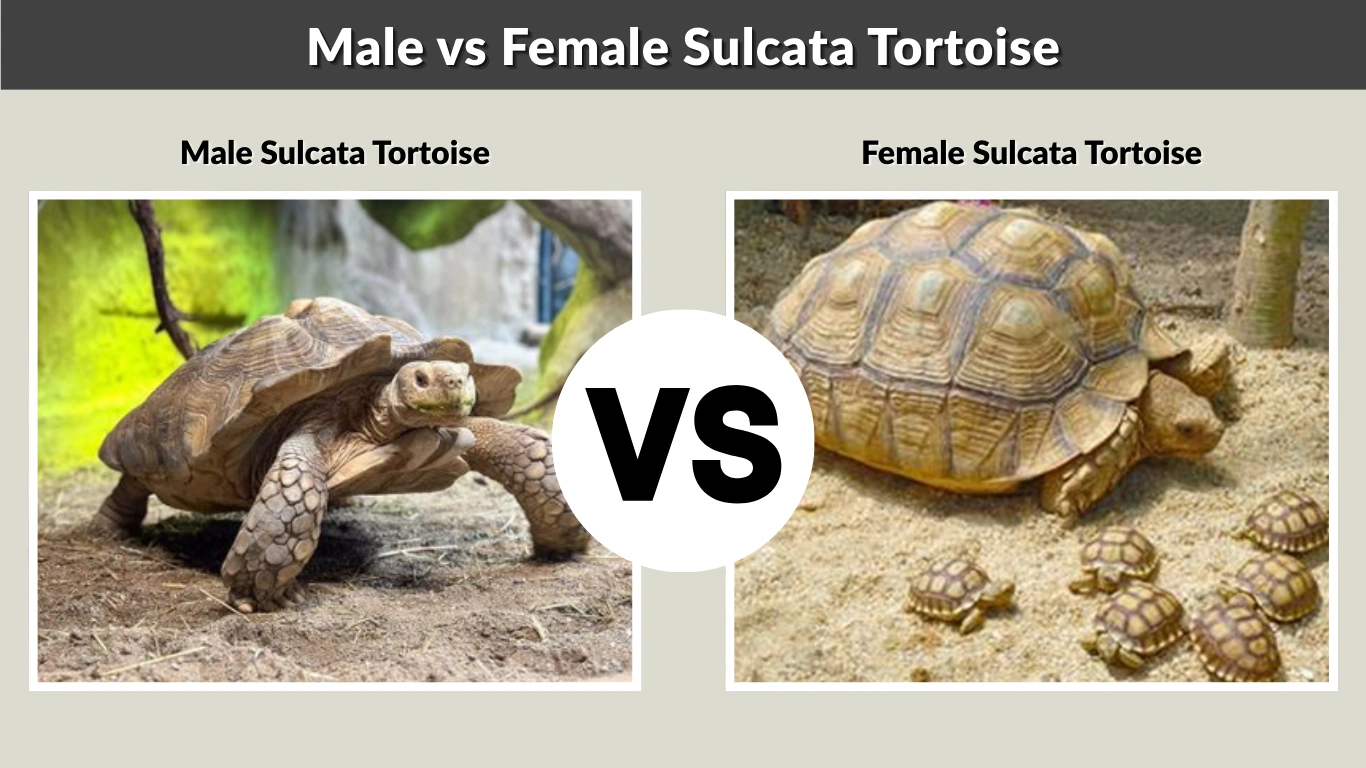
Understanding the differences between male and female Sulcata tortoises is essential for proper care, habitat planning, and long-term ownership. Although hatchlings appear nearly identical, sexual dimorphism becomes clear as they reach maturity. These differences affect not only their physical characteristics but also their behavior, space requirements, and compatibility with other tortoises. This guide covers the major distinctions, identification tips, and helpful insights owners need to confidently determine the sex of their Sulcata tortoise.
Overview of Sulcata Tortoise Sex Differences
As Sulcata tortoises mature, they develop several physical and behavioral traits that distinguish males from females. Early in life, these differences are nearly impossible to detect. However, by the time they reach five to eight years of age, noticeable distinctions begin to appear.
These differences aren’t just visual—they influence habitat requirements, social behaviors, and breeding considerations. Males often become more territorial as they age, while females focus more on nesting instincts.
Recognizing these variations helps owners prepare appropriate enclosures, manage interactions between tortoises, and avoid conflicts. Additionally, accurate sex identification is crucial for breeders who need to maintain proper male-to-female ratios.
Physical Differences Between Male & Female Sulcatas
Size Comparison
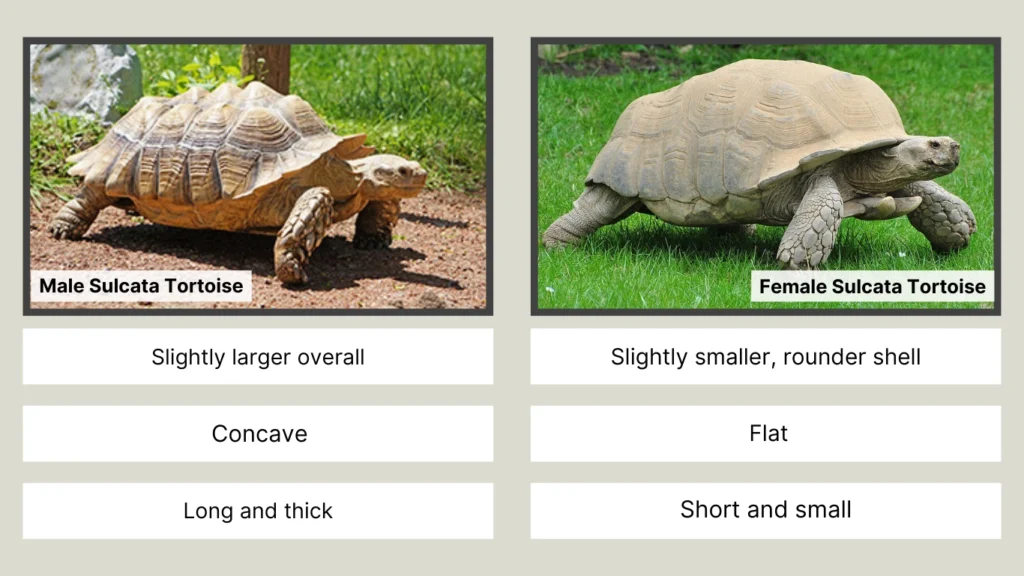
Male Sulcata tortoises generally grow slightly larger than females, although the difference is not as dramatic as in some tortoise species. An adult male often develops a bulkier body structure and may display more pronounced gular extensions. Females tend to have a rounder, broader shell shape, especially around the rear, which supports egg-laying.
Plastron Shape
One of the most reliable identification points is the plastron—the underside of the shell. Males typically have a concave plastron that helps them mount females during mating. Females, on the other hand, have a flat plastron that provides stability while nesting or walking.
Tail and Anal Scutes
Another clear difference lies in tail length and shape. Males have longer, thicker tails that extend further beyond the carapace. Their anal scutes (the plates near the tail) are more open and V-shaped to accommodate mating. Females have shorter tails and closer-set anal scutes designed to protect their nesting area.
Behavioral Differences
Behavior offers additional clues when determining whether a Sulcata tortoise is male or female:
- Males often display territorial ramming.
- Females tend to remain calmer and less reactive.
- Males may vocalize during mating attempts.
- Male dominance displays include circling and nudging.
- Females dig test nests as part of pre-laying behavior.
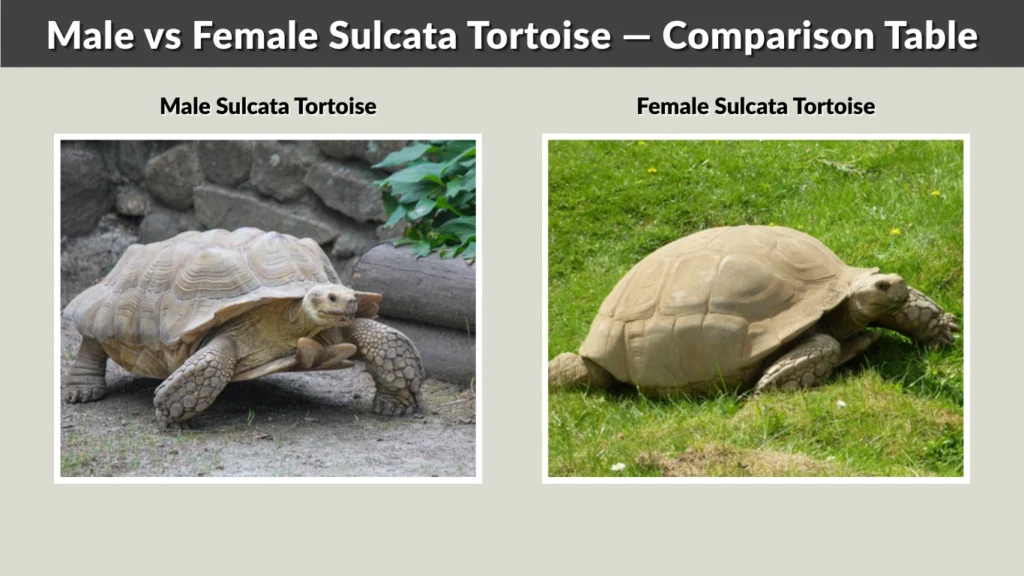
Male vs Female Sulcata Tortoise — Comparison Table
| Feature | Male | Female |
| Size | Slightly larger overall | Slightly smaller, rounder shell |
| Plastron Shape | Concave | Flat |
| Tail | Long and thick | Short and small |
| Behavior | Territorial, dominant | Calm, nesting-focused |
| Reproductive Traits | Mounting & vocalizing | Nest digging & egg laying |
Identification Guide
To confidently determine your Sulcata tortoise’s sex, use multiple indicators together:
- Check if the plastron is concave (male) or flat (female).
- Observe tail length—long for males, short for females.
- Inspect gular scutes for extended protrusion in males.
- Look for territorial or dominance behaviors in males.
- Confirm using multiple traits as single signs can be misleading.
Breeding and Reproductive Differences
Mating Behavior
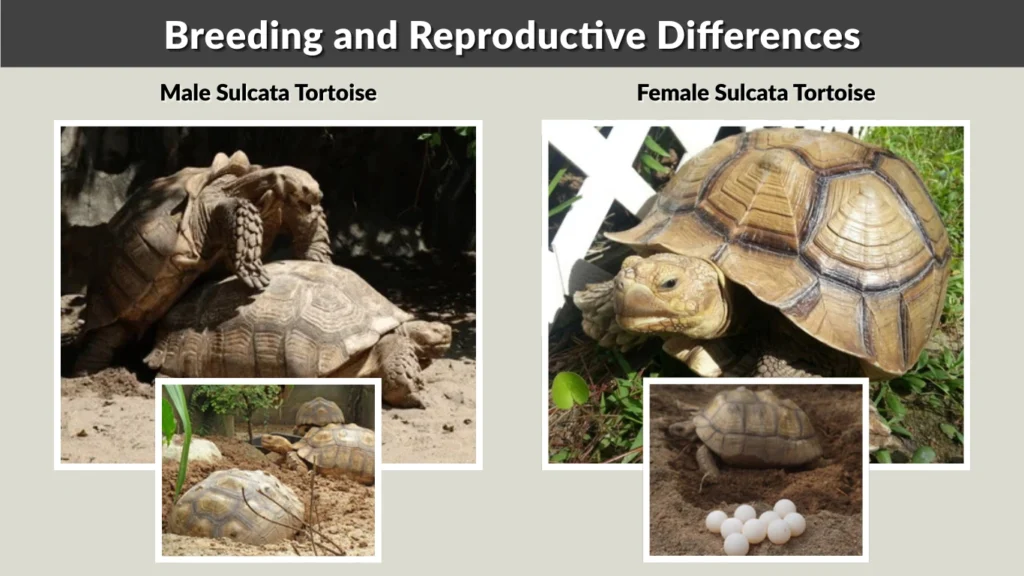
Male Sulcata tortoises become significantly more active and vocal during the breeding season. They may chase, ram, and circle females as part of their courtship ritual. These behaviors are normal but can appear aggressive to new owners. The concave plastron in males helps them mount females more efficiently, making mating easier.
Nesting Behavior
Females engage in extensive digging behavior when preparing to lay eggs. They often test several sites before selecting the final nesting spot. Once chosen, the female digs a deep burrow and lays a clutch of eggs. Owners must closely monitor females during this period to prevent calcium deficiency and egg-binding issues.
Habitat Needs Based
Male and female Sulcata tortoises share similar core habitat requirements, but sex-specific differences can influence enclosure design. Males tend to be more territorial and may require larger spaces, especially if housed near other males. Providing visual barriers or separate zones can reduce aggression and stress.
Females, while calmer, need layouts that support their nesting instincts. Adequate loose soil or a designated nesting area is essential for egg-laying season. Without proper space, females may retain eggs, which can result in serious health concerns.
If keeping multiple tortoises, sex ratios matter. A single male with several females usually creates a stable social environment, whereas two males together often results in persistent fighting. Owners should plan long-term enclosures with these dynamics in mind.
Health Differences
- Female tortoises face a higher risk of egg-binding.
- Males may injure themselves during aggressive confrontations.
- Reproductive females require increased calcium intake.
- Hormonal cycles can affect appetite and energy levels.
Choosing Between a Male or Female Sulcata
Selecting the right sex depends on your experience, available space, and long-term goals. Females are generally easier for beginners due to their calmer nature and lower territorial instincts. They integrate better with groups and are less likely to challenge other tortoises.
Males, while visually impressive and active, demand more space and careful monitoring. Their dominance behaviors can cause stress in small enclosures or multi-male setups. Prospective owners should consider their commitment to managing male aggression.
Long-term housing plans also matter. A single male with limited space can thrive in a properly designed enclosure, but keeping multiple males is often impractical. Meanwhile, females, though easier to house, may require nesting accommodations during certain seasons.
FAQs
How can I tell if my Sulcata tortoise is male or female?
You can determine the sex by examining tail size, plastron shape, and gular scutes. Males have longer tails and a concave plastron, while females have shorter tails and a flat underside. Observing behavior such as dominance displays or nesting habits can also help confirm your assessment.
At what age do Sulcata tortoises show clear sex differences?
Sulcata tortoises typically reveal clear sexual characteristics between ages five and eight. Before this period, most visible features are unreliable for sexing. As they mature, differences in tail shape, plastron structure, and behavior become more distinct, making identification much more accurate.
Are male Sulcata tortoises more aggressive than females?
Yes. Male Sulcata tortoises tend to be more territorial and may ram or flip other tortoises to assert dominance. Females generally show calmer behavior. Understanding these tendencies is important when housing multiple tortoises together, as improper grouping can lead to injury.
Which is better for beginners: a male or a female Sulcata?
Females are often easier for new owners because they exhibit fewer territorial behaviors and integrate better in shared enclosures. Males require more space and careful monitoring, especially during breeding season. However, both sexes need proper diet, space, and care due to their large size and long lifespan.
Do male and female Sulcata tortoises need different habitats?
Their basic environment is similar, but males may need more space to prevent territorial stress, while females need areas suitable for nesting. Providing visual barriers, deep substrate, and separate zones can help accommodate the specific needs of each sex and reduce aggressive behavior.