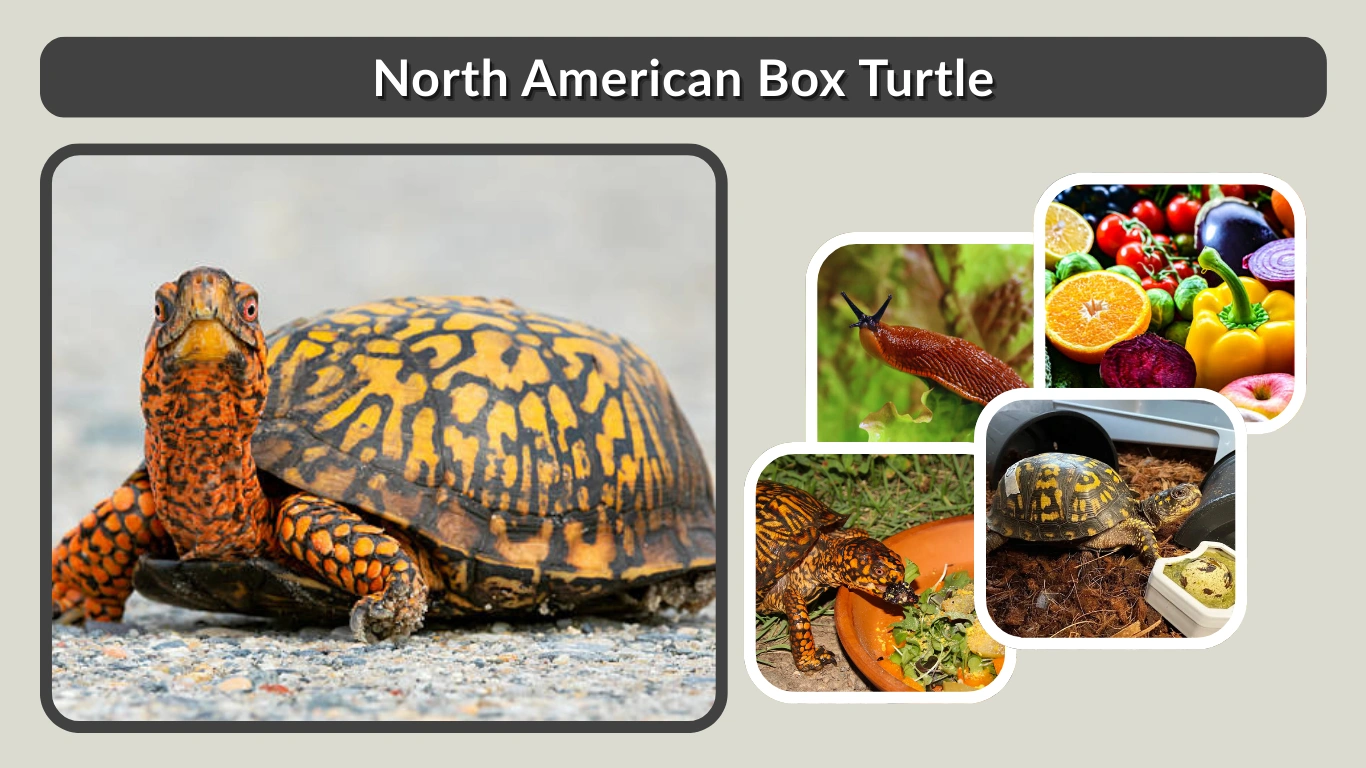
The North American box turtle is one of the most recognizable and beloved reptiles on the continent. Known for its highly domed shell, hinged plastron, and remarkable longevity, this turtle has long fascinated both scientists and pet keepers. Found in forests, meadows, humid woodlands, and even arid grasslands, box turtles occupy a surprisingly wide range. This guide introduces the species’ natural history, habitat, behavior, diet, identification, and essential care, while also addressing common health issues and conservation concerns.
North American Box Turtle
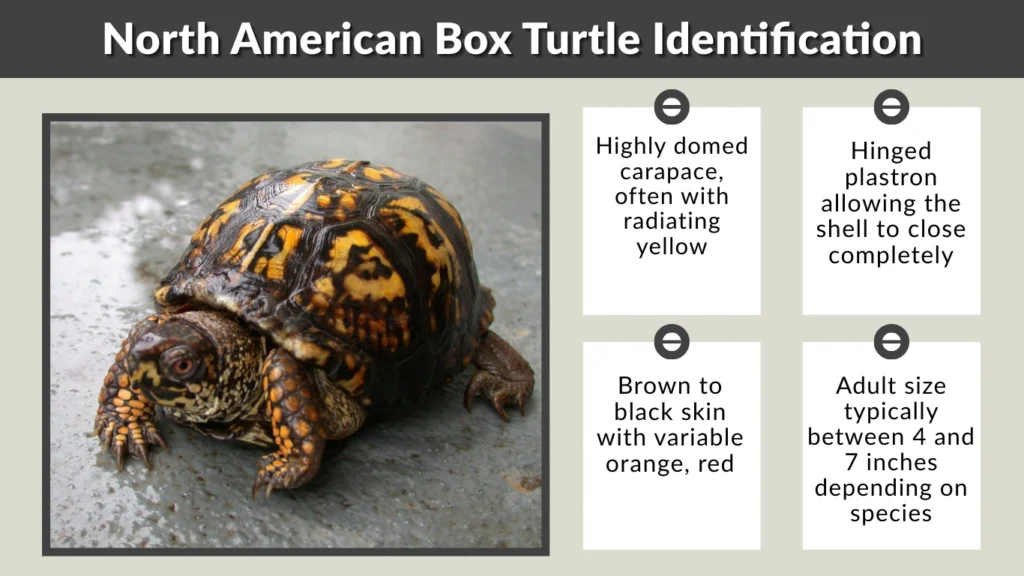
North American box turtles belong to the genus Terrapene, a group with several species and subspecies across the United States and parts of Mexico. Their most defining trait is the hinged plastron—a feature that allows them to close their shell tightly, protecting them from predators. This adaptation, combined with a long lifespan that can exceed 60 years, makes them unique among small terrestrial reptiles.
Identification
- Highly domed carapace, often with radiating yellow or orange markings
- Hinged plastron allowing the shell to close completely
- Brown to black skin with variable orange, red, or yellow mottling
- Adult size typically between 4 and 7 inches depending on species
- Males often have red eyes, thicker tails, and concave plastrons
- Subspecies differences include shell patterns, foot coloration, and habitat preference
Species of North American Box Turtles
Several species make up the North American box turtle group, each with its own distribution and ecological niche.
Eastern Box Turtle (Terrapene carolina carolina)
Found throughout the eastern United States, this species is known for its ornate shell patterns, high humidity needs, and strong homing instinct. It is one of the most studied and widely recognized box turtles.
Three-Toed Box Turtle (T. c. triunguis)
Native to the south-central states, this turtle typically has three toes on its hind feet and a smoother, more muted shell coloration. It is a favorite in captivity due to its adaptable nature.
Ornate Box Turtle (Terrapene ornata)
This plains-dwelling species features striking yellow radiating lines across its shell. Compared to woodland species, ornate box turtles are more active and thrive in open, sunny environments.
Florida and Gulf Coast Box Turtles
These southeastern subspecies prefer warm, moist habitats and often grow larger than their inland relatives. Their shells can be darker and more uniform in pattern.
Desert Box Turtle (Terrapene ornata luteola)
Adapted to arid environments of the Southwest, the desert box turtle tolerates higher temperatures and lower humidity. Its coloration is lighter, blending with sandy terrain.
Natural History & Ecology
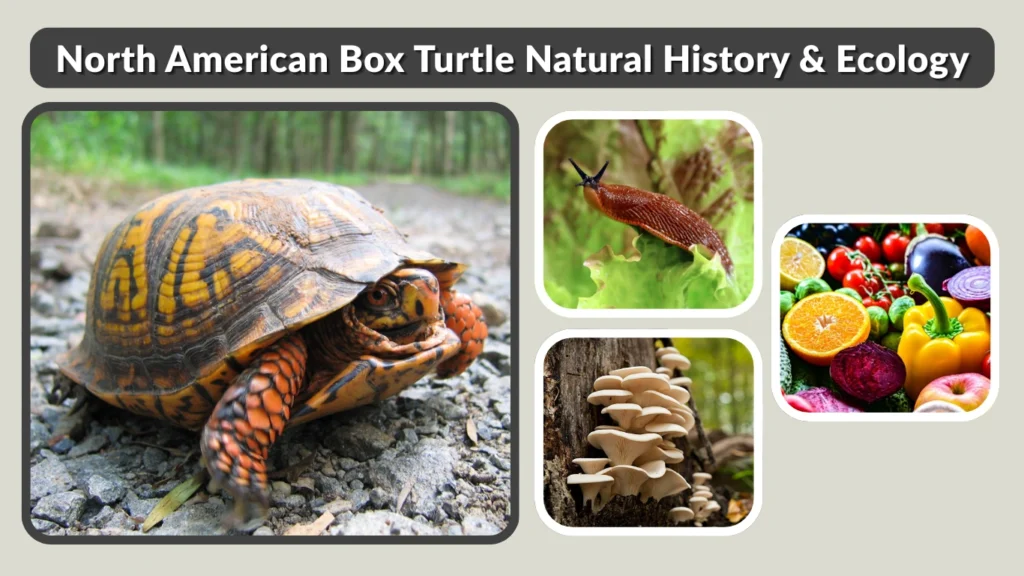
North American box turtles inhabit forests, mixed woodlands, prairies, river bottoms, and semi-arid scrublands. Their distribution reflects their resilience, though most species prefer moderately warm, humid environments with ample vegetation for cover. Seasonal behavior is a key part of their ecology: during hot dry summers, they may aestivate to conserve moisture; in colder climates, they brumate underground from late autumn to early spring.
Their omnivorous diet shifts throughout the year, allowing them to take advantage of seasonal food sources. Insects, slugs, fungi, berries, small fruits, flowers, and carrion all play roles in their nutrition. Juveniles tend to eat more protein, while adults incorporate more plant matter.
Despite their adaptability, box turtles face modern threats including habitat fragmentation, vehicle collisions, and illegal collection. Because individuals may remain in the same territory for decades, interrupting a local population can have irreversible effects.
Habitat Setup (Captive Care)
A proper habitat is the foundation of long-term box turtle health. Outdoor enclosures are ideal whenever climate allows, as they provide natural sunlight, soil, humidity cycles, and space for exploration. Indoors, care must replicate those same conditions as closely as possible. Box turtles require deep substrate for burrowing, shaded retreats, and a water source suitable for soaking.
The enclosure must maintain a temperature gradient to support natural thermoregulation. Proper humidity—especially for woodland species—is critical for preventing dehydration, shell deformities, and skin problems. UVB lighting is essential for calcium metabolism, even for turtles kept near windows, since glass blocks UVB rays.
Enclosure Requirements
- Outdoor pens minimum 8×4 ft; larger for multiple turtles
- Indoor setups with deep substrate: soil, coconut fiber, or leaf litter
- UVB lighting 10–12 hours daily if indoors
- Shaded hides, logs, and leaf piles for enrichment
- Shallow soaking dish with clean water
- Secure fencing to prevent escape and deter predators
Captive Habitat Table
| Feature | Requirement | Notes |
| Temperature | 75–85°F daytime | Basking area 88–92°F |
| Humidity | 50–70% average | Higher for Eastern/Three-Toed |
| Substrate | Soil, coco fiber, leaf litter | Keep moist, not saturated |
| Enclosure Size | 8×4 ft minimum outdoors | Indoors: largest possible |
Diet & Feeding Guide
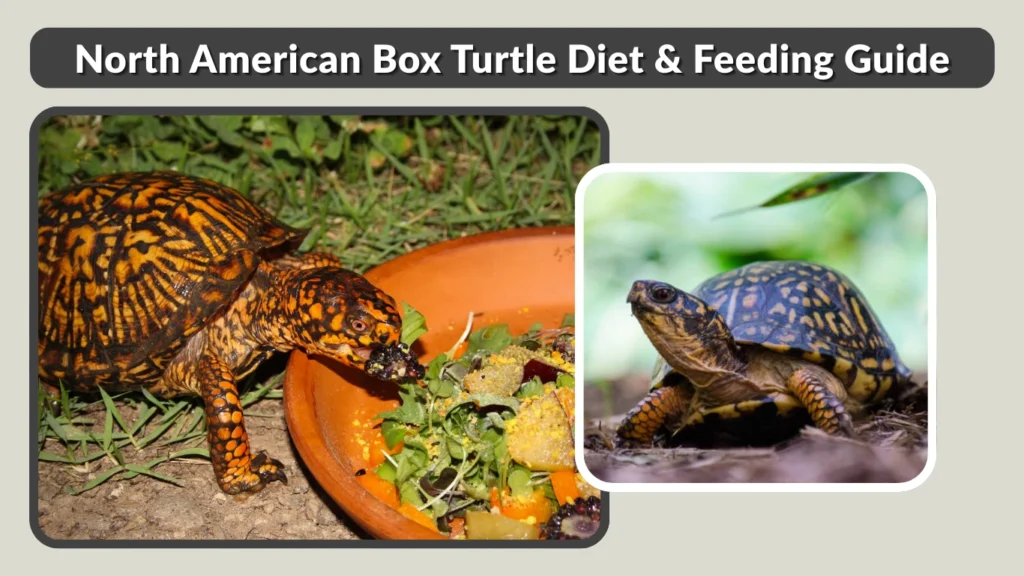
Box turtles are omnivorous, thriving on variety. Their diet in captivity should resemble their wild feeding patterns, containing both plant and animal matter. Protein sources help maintain muscle tone and growth, while plant-based foods provide fiber, hydration, and essential micronutrients.
Feeding should follow natural rhythms: juveniles require more insects, while adults balance fruits and greens with occasional protein. Calcium supplementation is vital, especially for indoor-kept turtles lacking natural sunlight.
What Do North American Box Turtles Eat?
Their wild diet includes earthworms, slugs, beetles, grasshoppers, mushrooms, berries, flowers, soft fruits, and occasionally carrion. In captivity, keepers can offer earthworms, mealworms, roaches, dark leafy greens, squash, hibiscus flowers, strawberries, blueberries, and commercial pellet diets formulated for box turtles.
Diet List
- Insects: earthworms, roaches, crickets, grubs
- Greens: dandelion, collards, mustard greens
- Vegetables: squash, carrots (grated), bell peppers
- Fruits: berries, melon, banana (sparingly)
- Others: mushrooms, safe flowers, commercial pellets
- Avoid: onions, avocado, tomato leaves, processed meats
Lifespan and Growth
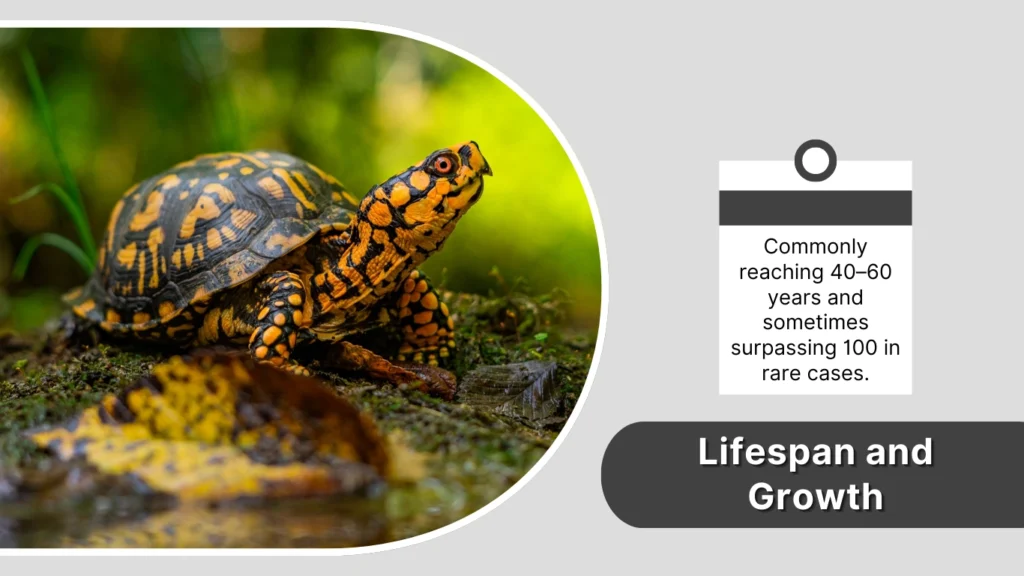
How Big Do They Get?
Most North American box turtles reach 4–7 inches in adult shell length. Some Gulf Coast individuals may grow slightly larger. Growth slows significantly after maturity, but they continue adding scute layers, resulting in unique shell textures and wear patterns.
Lifespan Factors
Box turtles are exceptionally long-lived, commonly reaching 40–60 years and sometimes surpassing 100 in rare cases. Captive longevity depends heavily on enclosure size, nutrition, hydration, UVB exposure, stress, and veterinary care. Because they mature slowly and reproduce infrequently, wild populations cannot withstand heavy collection.
Hibernation / Brumation
In colder regions, many box turtle species undergo brumation. This physiological slowdown allows survival through winter months. In captivity, brumation must be managed carefully: only healthy turtles should participate, and temperatures must remain stable between 40–50°F.
Turtles burrow deeply into soil or leaf litter to maintain insulation and hydration. Improper brumation can lead to respiratory infections, dehydration, or fatal cold stress.
Health & Common Problems
Box turtles can develop issues when their environment deviates from natural conditions. Shell rot from excessive moisture, respiratory infections from low temperatures, and parasitic infestations are among the most common ailments. Nutritional deficiencies, especially low vitamin A, can cause swelling around the eyes and respiratory trouble.
Why Are My Turtle’s Scales Rubbing Off?
Scute or skin abrasion is often caused by dry conditions, abrasive substrate, fungal or bacterial infections, improper humidity, vitamin deficiencies, or excessive handling. Chronic dehydration is a leading cause. If scales appear to flake, peel, or expose raw tissue, veterinary evaluation is essential to rule out shell rot or dermatitis.
North American Box Turtles in Captivity
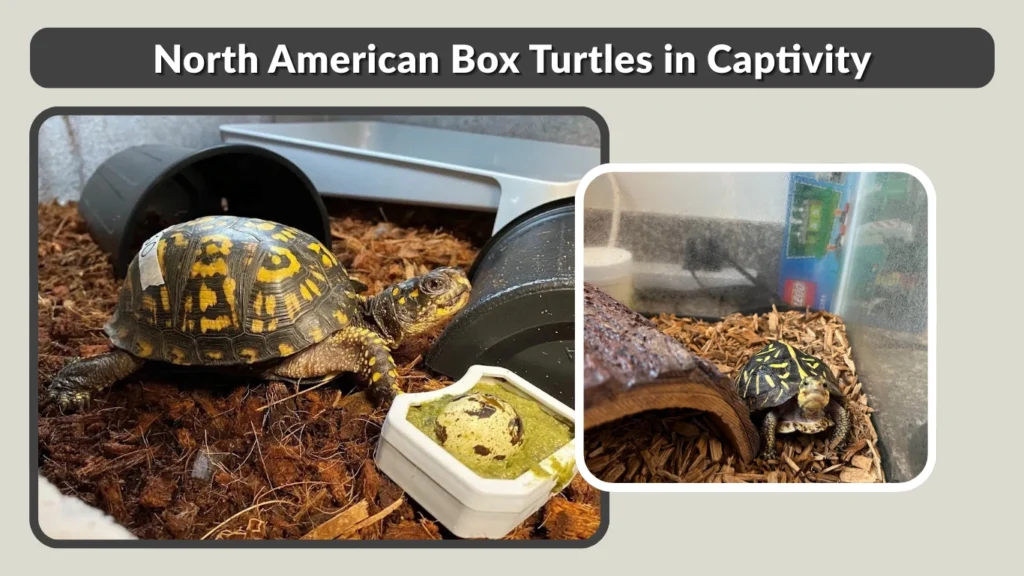
Captive box turtles require consistent care and environment stability. Enrichment—such as leaf piles, logs, edible plants, and variable terrain—encourages natural foraging and reduces stress. Outdoor habitats produce the healthiest long-term outcomes whenever climate permits.
Care Sheet (Concise)
- Large, secure enclosure
- UVB lighting or natural sunlight
- Moist, deep substrate
- Varied omnivorous diet
- Clean soaking water
- Seasonal temperature cycling
- Routine health checks
“For Sale” Considerations
Purchasing wild-caught box turtles contributes to population decline and often results in sick, stressed animals. Captive-bred turtles are healthier and adapt better to human care. Buyers should verify breeding records, examine shell condition, ensure bright eyes and alert behavior, and follow state wildlife regulations.
Comparison Table (Species Differences)
| Species | Size | Range | Habitat | Notes |
| Eastern | 4.5–7 in | Eastern US | Forest | Common pet species |
| Three-Toed | 4.5–6.5 in | South-central US | Woodlands | Mild temperament |
| Ornate | 4–6 in | Plains | Grassland | High UVB needs |
| Desert | 4–5.5 in | Southwest | Arid scrub | Dry, sandy habitats |
FAQs
What is the scientific name of the North American box turtle?
North American box turtles belong primarily to Terrapene carolina and Terrapene ornata, with multiple subspecies. These terrestrial turtles share the characteristic hinged plastron that allows full shell closure, offering strong protection against predators and harsh environmental conditions throughout their long lifespans.
How big do North American box turtles get?
Most adults reach 4–7 inches in shell length, though certain subspecies vary slightly. Growth is slow, especially after maturity, and individuals continue developing subtle scute rings over time. Environmental factors such as diet, space, and hydration significantly influence growth rate and final adult size.
What do North American box turtles eat in captivity vs. the wild?
Wild turtles forage on insects, worms, fungi, fruits, and vegetation. In captivity, a balanced mix of insects, dark greens, vegetables, and limited fruit works best. Calcium supplementation and varied food choices help replicate natural nutritional cycles and maintain shell, bone, and immune health.
Why are my turtle’s scales rubbing off?
Scales may rub off due to low humidity, dehydration, abrasive substrate, infection, shedding irregularities, or nutrient deficiency. Chronic dryness is one of the most common causes. Ensure proper moisture levels, evaluate the enclosure setup, and consult a reptile veterinarian if the condition persists or worsens.
How long do North American box turtles live?
Many live 40–60 years, with some surpassing 80 or even 100. Their longevity depends on stable habitat conditions, high-quality diet, safe temperatures, and veterinary care. Long-term commitment is essential for keepers, as turtles often outlive their owners.