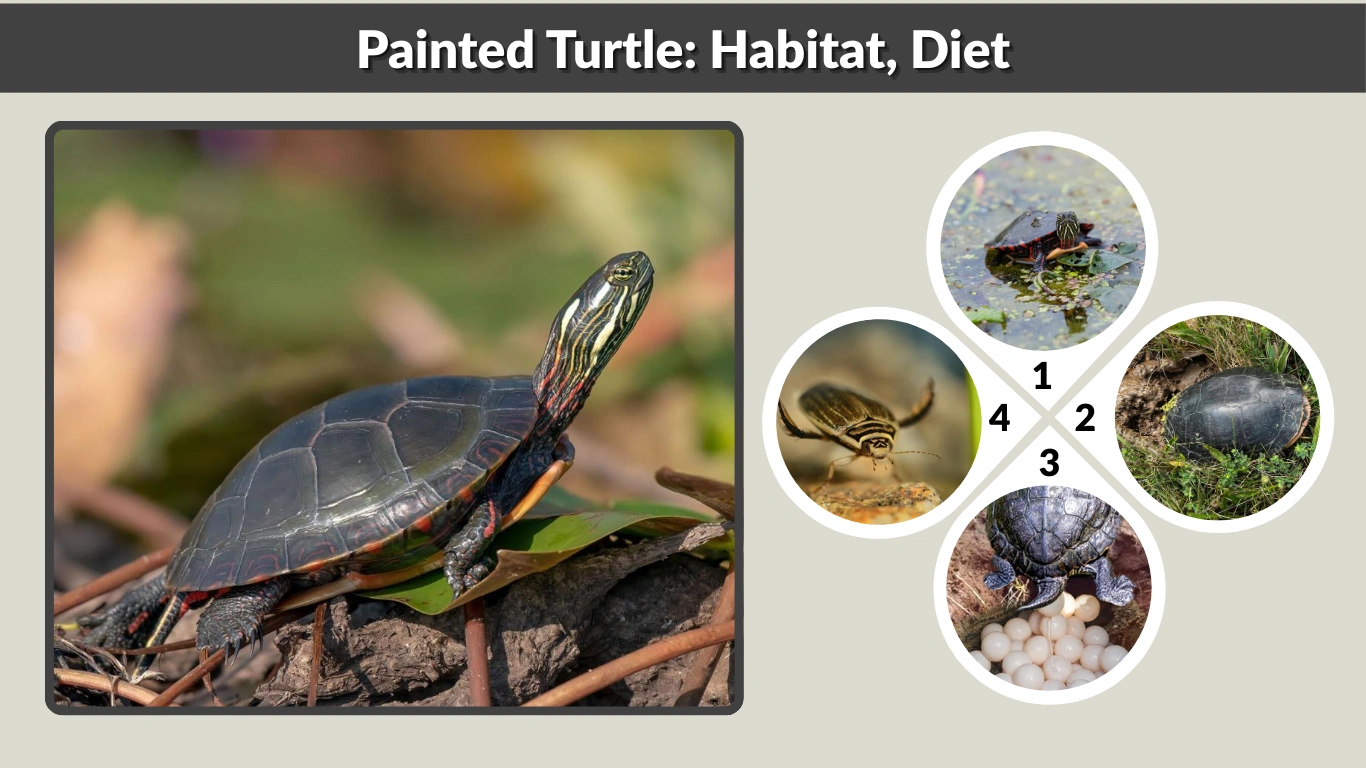
The painted turtle (Chrysemys picta) is one of the most widespread and recognizable freshwater turtles in North America. Known for its smooth shell decorated with red and yellow markings, this colorful reptile is commonly seen basking on logs in ponds and lakes. Painted turtles are highly adaptable, thriving in a variety of aquatic environments. In this guide, you’ll learn about painted turtle habitat, species differences, diet, eggs and nesting behavior, lifespan, and how they compare to red-eared sliders.
What Is a Painted Turtle?
The painted turtle belongs to the species Chrysemys picta and is part of the family Emydidae. It is the only species within its genus, making it unique among North American turtles. The name “painted turtle” comes from the bright red, orange, and yellow streaks that appear along its legs, neck, and shell edges.
Painted turtles are semi-aquatic, meaning they spend most of their time in freshwater but frequently leave the water to bask in the sun. Basking helps regulate body temperature and supports shell health. Unlike land turtles, painted turtles are strong swimmers and rely heavily on aquatic habitats for feeding and protection.
They are found across southern Canada, the United States, and parts of northern Mexico, making them one of the most widely distributed turtle species on the continent.
Painted Turtle Species
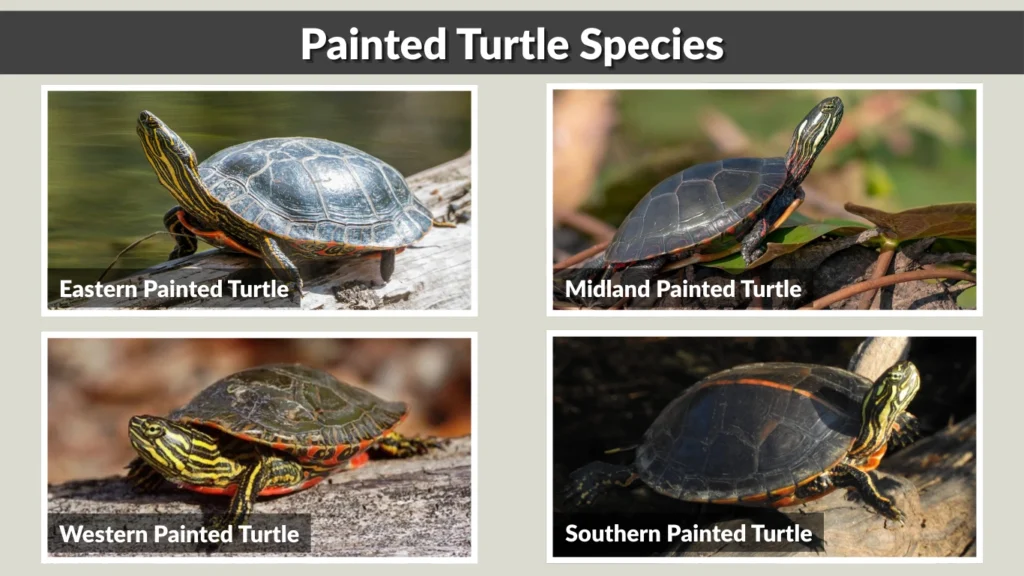
There are four recognized painted turtle subspecies. While they share similar behaviors and habitats, they differ slightly in size, markings, and geographic range.
Eastern Painted Turtle (Chrysemys picta picta)
The eastern painted turtle is found along the Atlantic coast and eastern United States. It typically has a smooth, dark shell with lighter edging and minimal plastron (bottom shell) markings.
Midland Painted Turtle (Chrysemys picta marginata)
Common in the central United States and parts of Canada, the midland painted turtle has darker central plastron markings and slightly more noticeable patterns compared to the eastern subspecies.
Western Painted Turtle (Chrysemys picta bellii)
The western painted turtle is the largest and most colorful subspecies. It has a striking plastron with red and black patterns that almost look painted by hand. It is commonly found west of the Mississippi River.
Southern Painted Turtle (Chrysemys picta dorsalis)
The smallest subspecies, the southern painted turtle, is easily identified by a distinct red or orange stripe running down the center of its shell. It is found primarily in the southern United States.
Painted Turtle Habitat
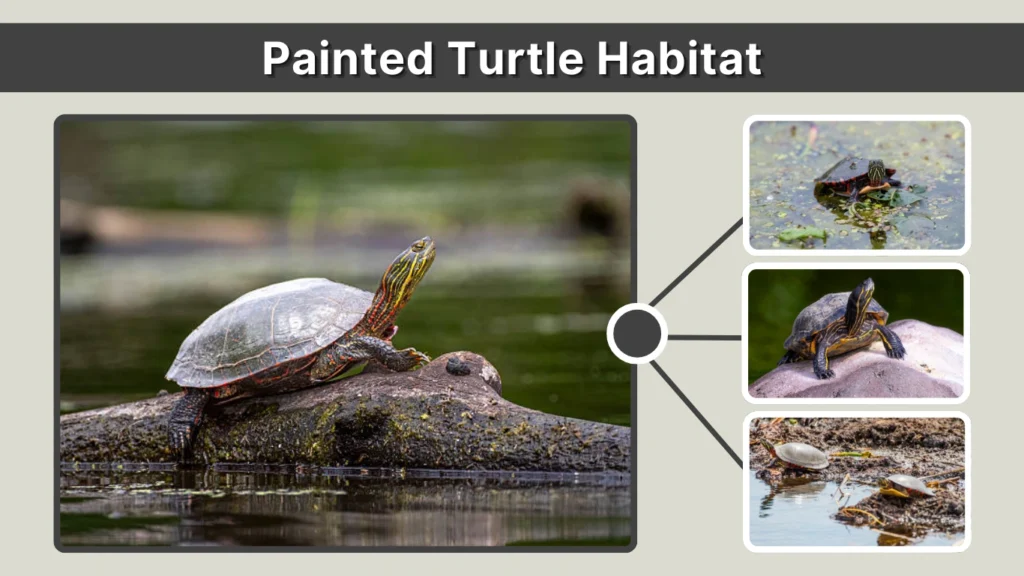
Painted turtles prefer calm freshwater environments. Their ideal habitat includes ponds, lakes, marshes, slow-moving rivers, and wetlands with soft bottoms and plenty of vegetation.
Key habitat features include:
- Shallow water for feeding
- Basking logs or rocks
- Muddy or sandy bottoms for overwintering
- Dense aquatic plants for shelter
These turtles are highly adaptable and can tolerate a range of temperatures. They are most active during warm months but slow down as temperatures drop.
Brumation and Winter Survival
During winter, painted turtles undergo brumation. In colder climates, they settle into the mud at the bottom of ponds and enter a state of dormancy. Remarkably, they can survive for months with little oxygen by absorbing it through specialized tissues near their cloaca. This adaptation allows them to endure frozen ponds where other reptiles could not survive.
Painted Turtle Diet
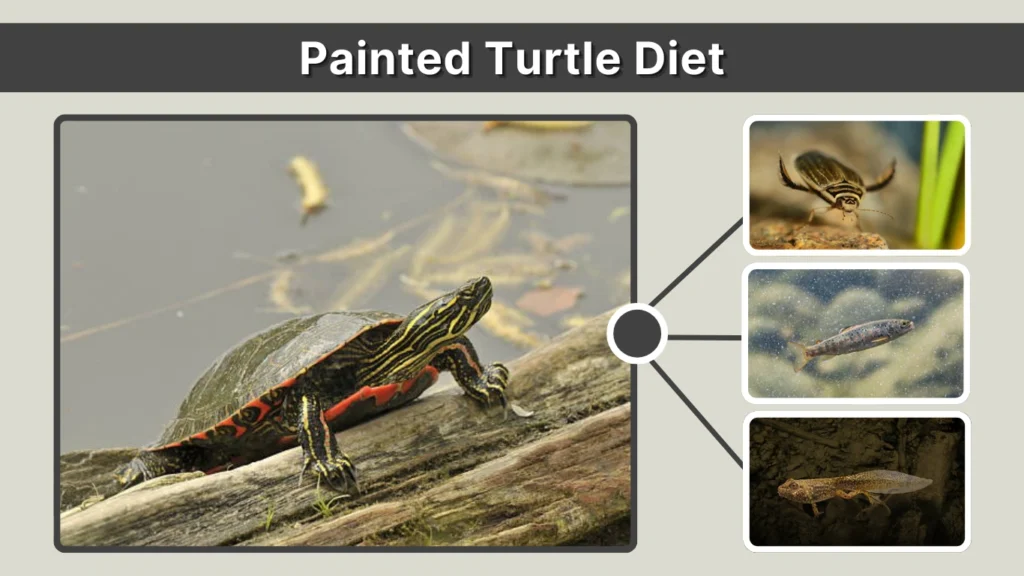
The painted turtle diet is omnivorous and changes with age. Young painted turtles consume more protein, while adults gradually incorporate more plant material.
What Do Painted Turtles Eat in the Wild?
In their natural habitat, painted turtles feed on:
- Aquatic insects
- Small fish
- Tadpoles
- Snails and crustaceans
- Algae
- Aquatic plants
- Decaying vegetation
They are opportunistic feeders and often hunt underwater, using their strong jaws to capture prey.
Juveniles rely heavily on animal protein for growth, while adults eat a more balanced diet of plants and animal matter. Their varied diet helps them adapt to seasonal food availability.
Painted Turtle Diet in Captivity
In captivity, painted turtles require a balanced and varied diet to stay healthy. High-quality commercial aquatic turtle pellets can serve as a staple food, but they should not be the only source of nutrition.
Owners should also provide:
- Leafy greens such as romaine lettuce, dandelion greens, and collard greens
- Aquatic plants like duckweed or water lettuce
- Protein sources including earthworms, crickets, and feeder fish
- Occasional fruits in small amounts
Calcium supplementation is important, especially for growing turtles and egg-laying females. A cuttlebone placed in the tank can help maintain proper shell strength. Feeding frequency depends on age: hatchlings should eat daily, while adults can be fed every other day.
Painted Turtle Eggs and Nesting
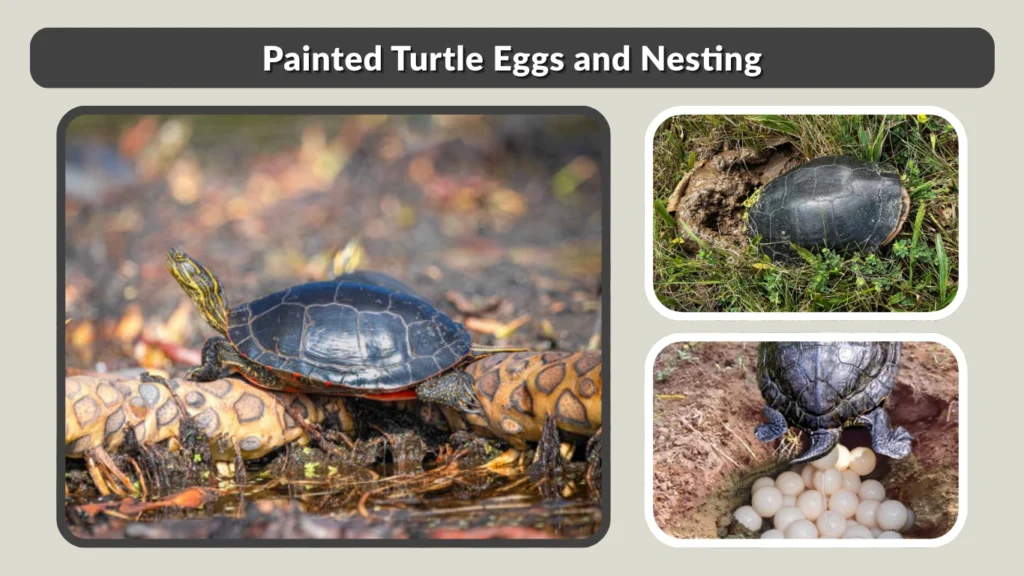
Painted turtle nesting season typically occurs from late spring to early summer. During this time, females leave the water to find suitable nesting sites. They often travel several yards away from ponds or lakes to locate sandy or soft soil areas exposed to sunlight.
Using their hind legs, females dig a flask-shaped nest in the ground. Once the eggs are laid, the nest is carefully covered, and the female returns to the water. Painted turtles do not provide parental care after laying eggs.
Painted Turtle Eggs
A female painted turtle usually lays between 4 and 20 eggs per clutch, depending on her size and age. The eggs are small, oval, and soft-shelled when first laid.
The incubation period generally lasts 70 to 80 days, though this can vary based on temperature. Painted turtles exhibit temperature-dependent sex determination. Warmer nest temperatures tend to produce more females, while cooler temperatures often result in more males.
In colder climates, some hatchlings remain in the nest through winter and emerge in the spring.
Painted Turtle Nest Survival Challenges
Painted turtle nests face many threats. Common predators include raccoons, skunks, foxes, birds, and even ants. Many nests are destroyed before the eggs have a chance to hatch.
Flooding, habitat destruction, and human activity also reduce nest survival rates. Roads near nesting areas are particularly dangerous, as females often cross them to reach suitable nesting sites.
Painted Turtle Lifespan
Many people ask, how long do painted turtles live? In the wild, painted turtles commonly live 20 to 30 years. However, some individuals may live longer under ideal conditions.
In captivity, with proper care, painted turtles can live 30 to 40 years or more. Lifespan depends on several factors, including diet quality, habitat conditions, access to UVB lighting, and protection from predators or disease.
Compared to some larger turtle species, painted turtles have a moderate lifespan. Still, owning one requires a long-term commitment, as they can live for decades.
Painted Turtle vs Red-Eared Slider
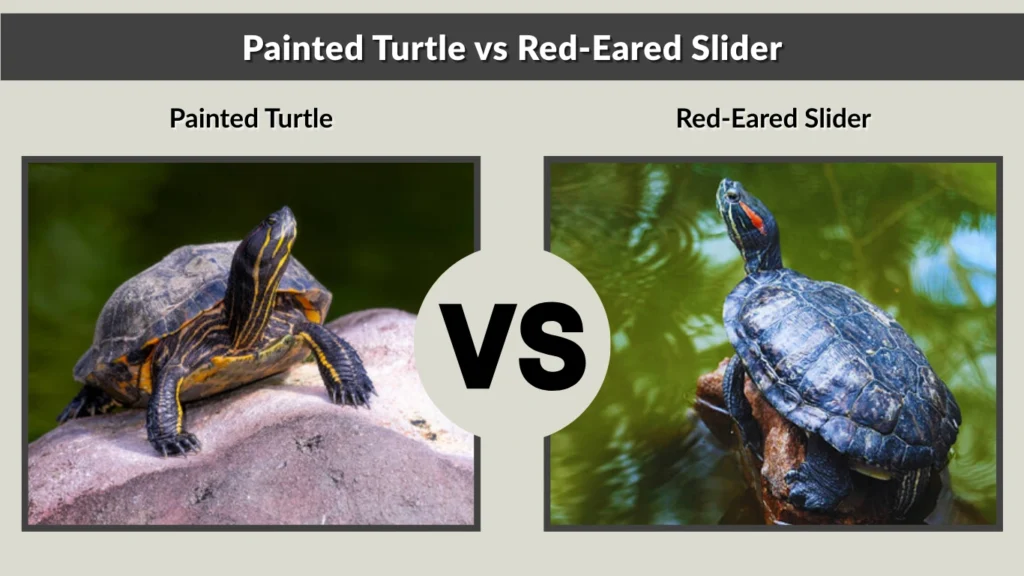
Painted turtles are often compared to red-eared sliders because both are common freshwater turtles and popular pets.
Similarities:
- Both are aquatic and strong swimmers
- Both require basking areas and UVB lighting
- Both are omnivorous
- Both prefer calm freshwater habitats
Differences:
- Red-eared sliders grow larger, often reaching 8–12 inches, while painted turtles typically stay between 4–10 inches depending on subspecies
- Red-eared sliders have a distinctive red stripe behind their eyes; painted turtles have red and yellow striping along the shell edges and limbs
- Sliders tend to be more aggressive and competitive than painted turtles
- Painted turtles are native across a wider range of North America
When choosing between the two as pets, tank size and long-term care requirements should be carefully considered.
Painted Turtle Facts
Here are some interesting painted turtle facts:
- They are one of the most widespread turtles in North America.
- Painted turtles are excellent swimmers and rarely stray far from water.
- They can survive freezing winters by slowing their metabolism dramatically.
- Their bright markings help distinguish subspecies.
- Hatchlings may overwinter in their nests before emerging.
- They are frequently seen basking in groups on logs or rocks.
- Despite their calm appearance, they are skilled hunters underwater.
FAQs
How long do painted turtles live?
Painted turtles typically live 20–30 years in the wild. In captivity, with proper care and nutrition, they may live 30–40 years or longer.
What do painted turtles eat?
Painted turtles eat a mix of aquatic insects, small fish, crustaceans, plants, and algae. In captivity, they should receive turtle pellets, leafy greens, and occasional protein sources.
Where do painted turtles lay eggs?
Females lay eggs in sandy or soft soil areas near water during late spring or early summer. The nest is dug with their hind legs and carefully covered after laying.
How can you tell painted turtle species apart?
Subspecies differ mainly in shell markings, plastron patterns, size, and geographic location. The western painted turtle, for example, has the brightest plastron markings.
Are painted turtles aggressive?
Painted turtles are generally not aggressive toward humans but may compete with other turtles for basking space or food.