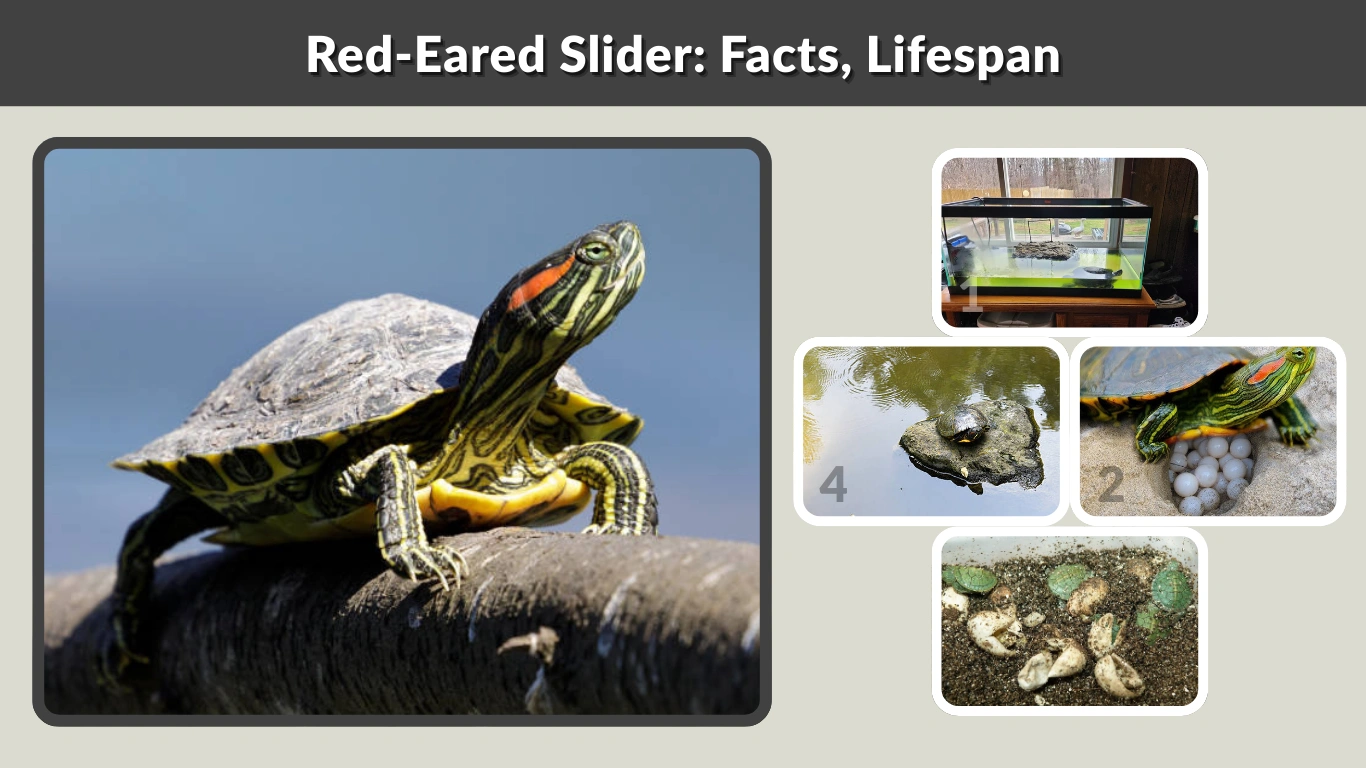
The red-eared slider is one of the most popular pet turtles in the world. Known for the bright red stripe behind its eyes and its hardy nature, this freshwater turtle is often chosen by beginners and reptile enthusiasts alike. However, owning one is a long-term commitment. Red-eared sliders can live for decades with proper care. In this guide, you’ll learn about their lifespan, natural habitat, diet, and essential care requirements.
What Is a Red-Eared Slider Turtle?
The red-eared slider turtle (Trachemys scripta elegans) is a freshwater turtle native to the southern United States and northern Mexico. Over time, it has been introduced to many parts of the world, sometimes becoming an invasive species.
Identifying Features
Red-eared sliders are easy to recognize. Their most distinctive feature is the red or orange stripe located just behind each eye. Their shells (carapace) are usually olive to brown with yellow streaks, while the underside (plastron) is yellow with dark markings.
Males are typically smaller than females. Adult males usually grow to about 7–9 inches long, while females can reach 10–12 inches.
Red-Eared Slider Lifespan
How Long Do Red-Eared Sliders Live?
One of the most common questions owners ask is: how long do red-eared sliders live?
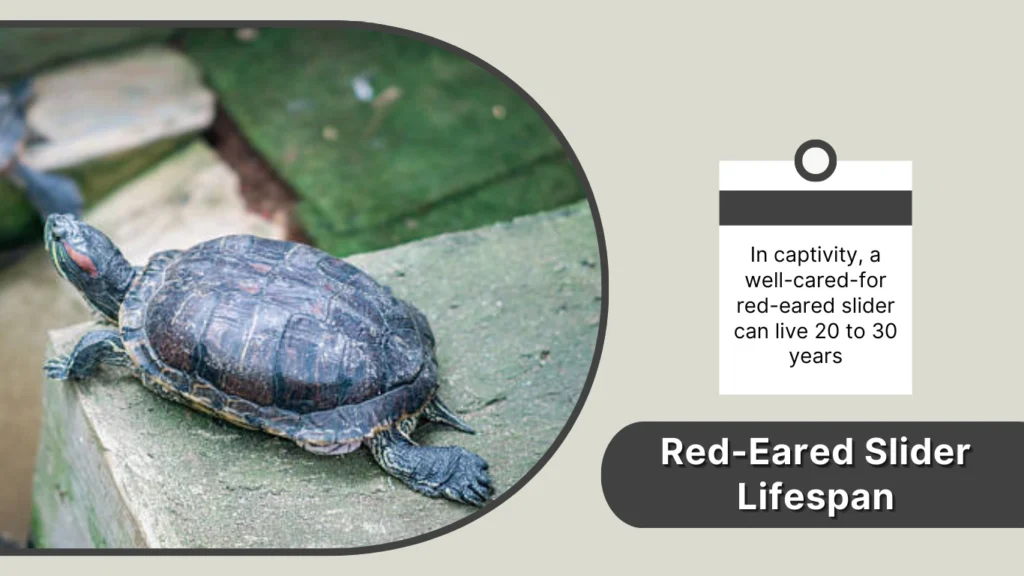
In captivity, a well-cared-for red-eared slider can live 20 to 30 years, and some even exceed 35 years. In the wild, their lifespan is generally shorter, often ranging between 10 and 20 years, due to predators, disease, and environmental challenges.
Because of their long lifespan, these turtles should never be considered short-term pets.
Factors That Affect Lifespan
Several factors directly influence how long a red-eared slider lives:
- Diet quality
- Proper UVB lighting
- Clean water
- Adequate tank size
- Regular health checks
Poor water quality is one of the leading causes of illness in captive turtles. A strong filtration system and regular tank cleaning are essential for maintaining long-term health.
Red-Eared Slider Habitat
Natural Habitat
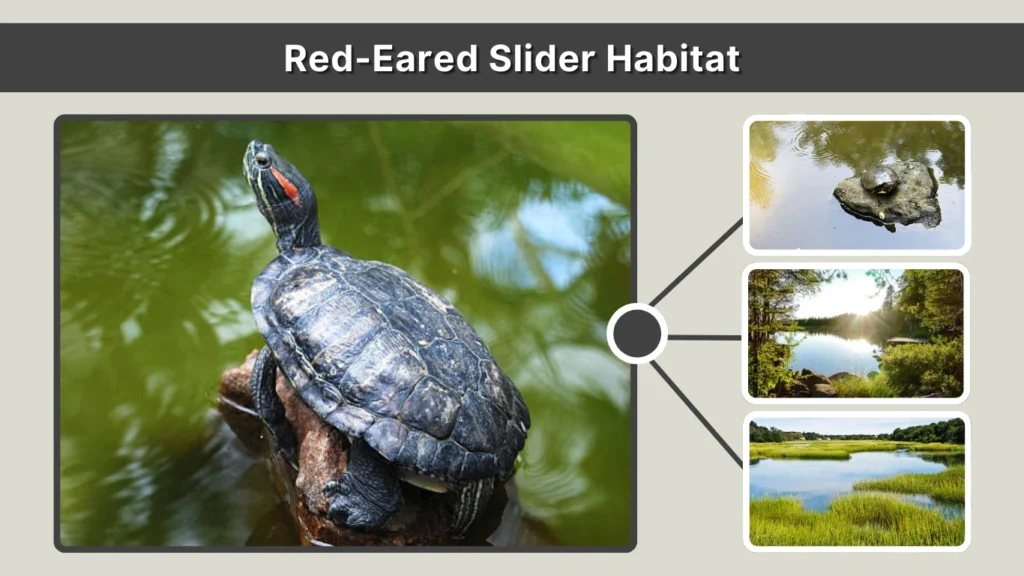
In the wild, red-eared sliders live in slow-moving freshwater environments such as ponds, lakes, marshes, and calm river areas. They prefer warm climates and areas with plenty of vegetation.
Basking is an important behavior. You’ll often see them resting on logs or rocks above the water to absorb sunlight. Sun exposure helps regulate body temperature and supports shell health.
Ideal Tank Setup (Captive Habitat)
Creating the right habitat is crucial for proper red-eared slider care.
Tank Size:
A common rule is 10 gallons of water per inch of shell length. Adult females may require tanks of 75–120 gallons.
Water Depth:
The water should be deep enough for the turtle to swim comfortably. Red-eared sliders are strong swimmers and need space to move.
Filtration:
Because turtles produce a lot of waste, a powerful external filter is recommended. Clean water reduces the risk of shell rot and infections.
Basking Area:
Provide a dry basking platform where the turtle can completely leave the water.
Lighting:
UVB lighting is essential for calcium absorption and preventing metabolic bone disease. A heat lamp should also maintain a basking temperature of around 85–95°F.
Red-Eared Slider Diet
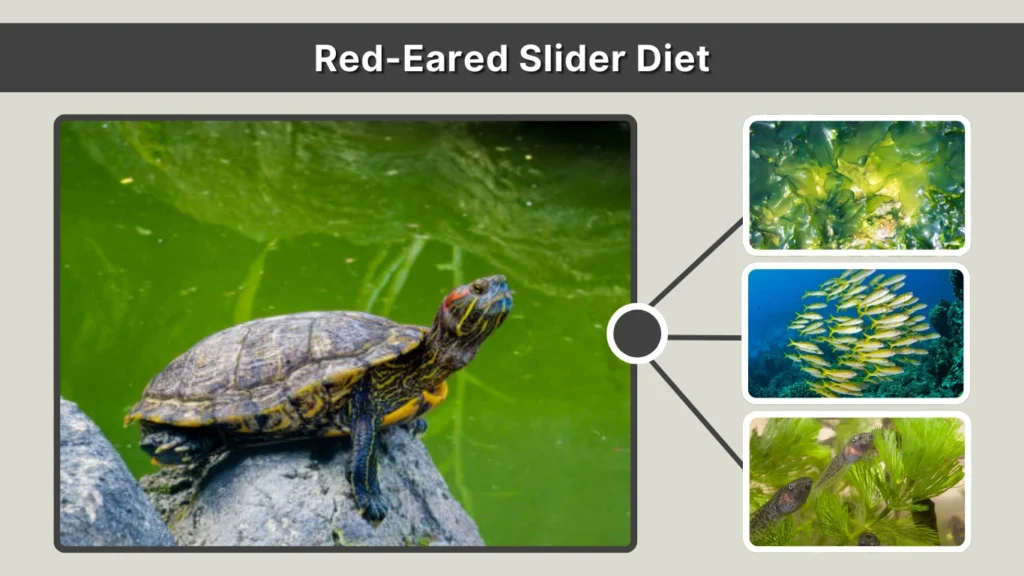
Red-eared sliders are omnivores, meaning they eat both plant and animal matter. Their diet changes as they grow.
What Do Red-Eared Sliders Eat?
In the wild, they consume:
- Aquatic plants
- Algae
- Insects
- Small fish
- Tadpoles
- Crustaceans
In captivity, a balanced diet typically includes:
- Commercial turtle pellets (as a staple)
- Leafy greens like romaine lettuce and dandelion greens
- Occasional protein sources such as mealworms or feeder fish
Avoid feeding iceberg lettuce, as it has very little nutritional value.
Feeding Schedule by Age
Hatchlings and juveniles require more protein to support rapid growth. They may eat daily.
Adults should have a more plant-based diet and can be fed every other day. Overfeeding can lead to obesity and shell deformities.
Red-Eared Slider Care Guide
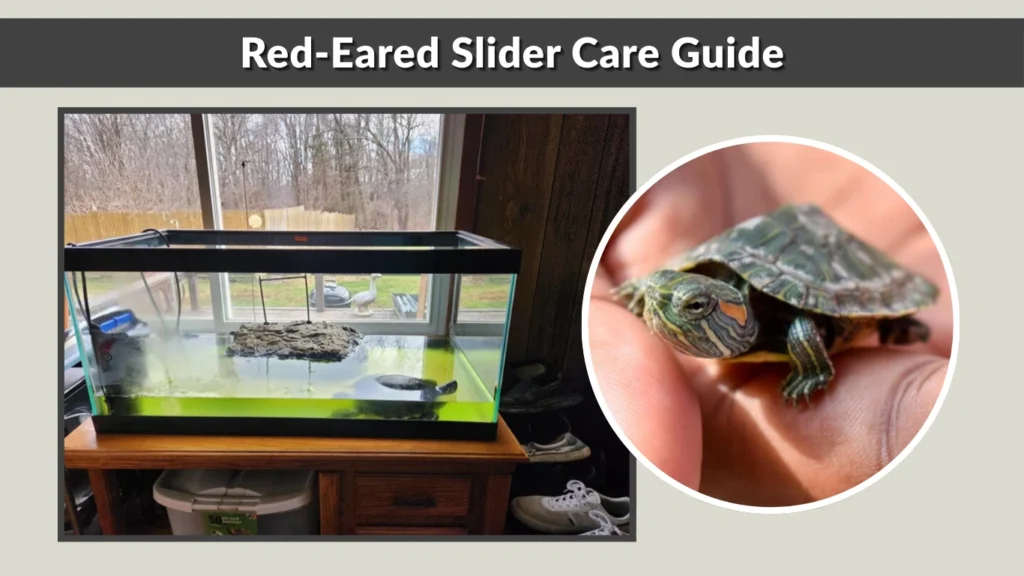
Proper red-eared slider care requires consistency and attention to detail. These turtles are hardy, but they thrive only when their environment closely matches their natural needs.
Daily Care Requirements
Daily tasks are simple but important:
- Check water temperature (75–80°F for adults, slightly warmer for hatchlings).
- Ensure basking temperature remains between 85–95°F.
- Observe your turtle’s behavior for signs of illness.
- Remove uneaten food to prevent water contamination.
Healthy red-eared sliders are active swimmers, alert, and eager to bask.
Weekly & Monthly Maintenance
Routine cleaning prevents most common health problems.
- Perform partial water changes weekly (25–30%).
- Clean and inspect the filter regularly.
- Scrub algae buildup from tank surfaces.
- Replace UVB bulbs every 6–12 months, even if they still produce light.
Neglecting tank hygiene often leads to shell rot, respiratory infections, and skin problems.
Common Health Problems
Even with proper care, red-eared sliders can develop health issues.
- Shell rot: Soft, foul-smelling shell patches caused by bacteria or fungi.
- Respiratory infections: Wheezing, floating unevenly, or mucus around the nose.
- Vitamin A deficiency: Swollen eyes and poor appetite.
If you notice unusual behavior or symptoms, consult a reptile veterinarian promptly.
Red-Eared Slider Hatchling Guide
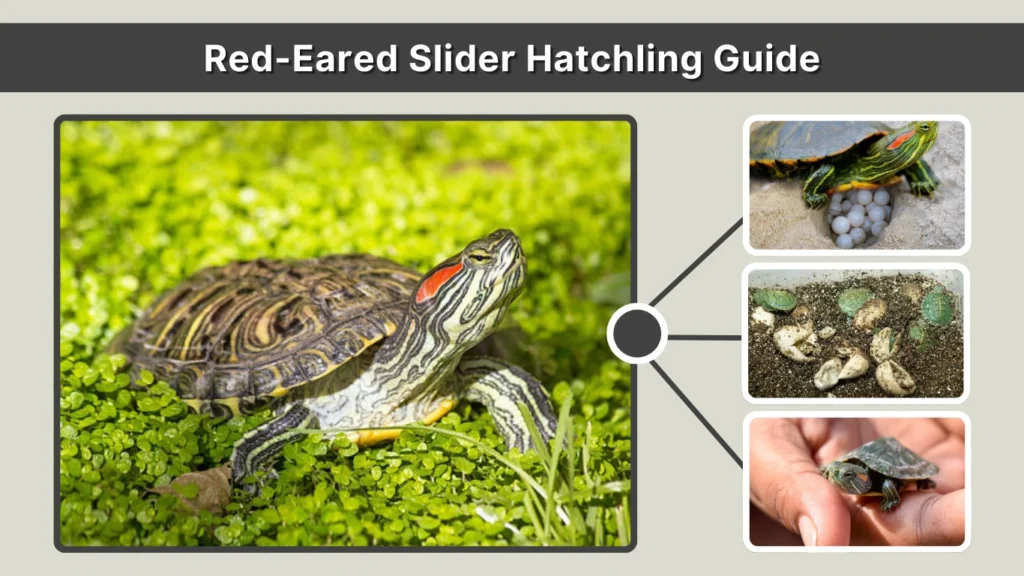
Baby red-eared sliders require slightly different care than adults.
Size and Appearance
A red-eared slider hatchling is typically about 1 to 1.5 inches long. Their colors are often brighter and more vivid than adults, with a noticeable green shell and clear red ear markings.
Because they are small and fragile, hatchlings are more sensitive to environmental mistakes.
Hatchling Care Tips
- Provide shallow water so they can easily reach the surface.
- Maintain slightly warmer water temperatures (around 78–82°F).
- Offer a protein-rich diet to support growth.
- Ensure strong UVB lighting for healthy shell development.
Hatchlings grow quickly during their first year if fed and housed properly.
Growth Stages
Red-eared sliders go through three main stages:
- Hatchling (0–1 year) – Rapid growth and higher protein needs.
- Juvenile (1–3 years) – Steady growth and balanced diet.
- Adult (3+ years) – Slower growth and more plant-based diet.
Females generally grow larger than males and may require significantly bigger tanks as they mature.
Red-Eared Slider vs Painted Turtle
Many beginners confuse red-eared sliders with painted turtles because of their similar appearance.
Visual Differences
- Red-eared sliders have a bold red stripe behind each eye.
- Painted turtles lack the red “ear” patch and usually display bright red and yellow markings along the shell edges.
- Painted turtles often have smoother, more colorful shells.
Size and Behavior
Red-eared sliders typically grow larger than painted turtles. They are also known to be slightly more aggressive when competing for basking spots.
Both species enjoy swimming and basking, but sliders tend to adapt more easily to captivity.
Care Differences
Care requirements are very similar, including UVB lighting, basking areas, and strong filtration. However, sliders usually need larger enclosures due to their bigger adult size.
Red-Eared Slider Facts
Here are some interesting red-eared slider facts:
- They are one of the most widely kept pet turtles worldwide.
- They can live over 30 years with proper care.
- Their gender is determined by incubation temperature.
- They are powerful swimmers and spend most of their time in water.
- In many countries, they are considered invasive due to pet releases.
FAQs
How long do red-eared sliders live in captivity?
With proper care, red-eared sliders commonly live 20 to 30 years in captivity. Some individuals even exceed 35 years. Their lifespan depends heavily on diet, tank size, water quality, and proper UVB lighting. Poor care can significantly shorten their life expectancy.
What do red-eared slider turtles eat daily?
Red-eared sliders eat a mix of turtle pellets, leafy greens, and occasional protein sources like insects or feeder fish. Hatchlings require more protein, while adults need more vegetables. A balanced diet helps prevent obesity, shell deformities, and vitamin deficiencies.
How big do red-eared sliders get?
Adult males usually grow between 7 and 9 inches long, while females can reach 10 to 12 inches. Females are noticeably larger and require bigger tanks. Growth rate depends on diet, genetics, and overall care quality.
Are red-eared sliders good pets for beginners?
They can be suitable for beginners, but they require large tanks, strong filtration, and long-term commitment. Many new owners underestimate their size and lifespan. Proper research and preparation are essential before bringing one home.
Do red-eared sliders need UVB light?
Yes, UVB lighting is essential for calcium absorption and healthy shell development. Without UVB exposure, turtles can develop metabolic bone disease and shell deformities. Replace UVB bulbs every 6 to 12 months for optimal effectiveness.