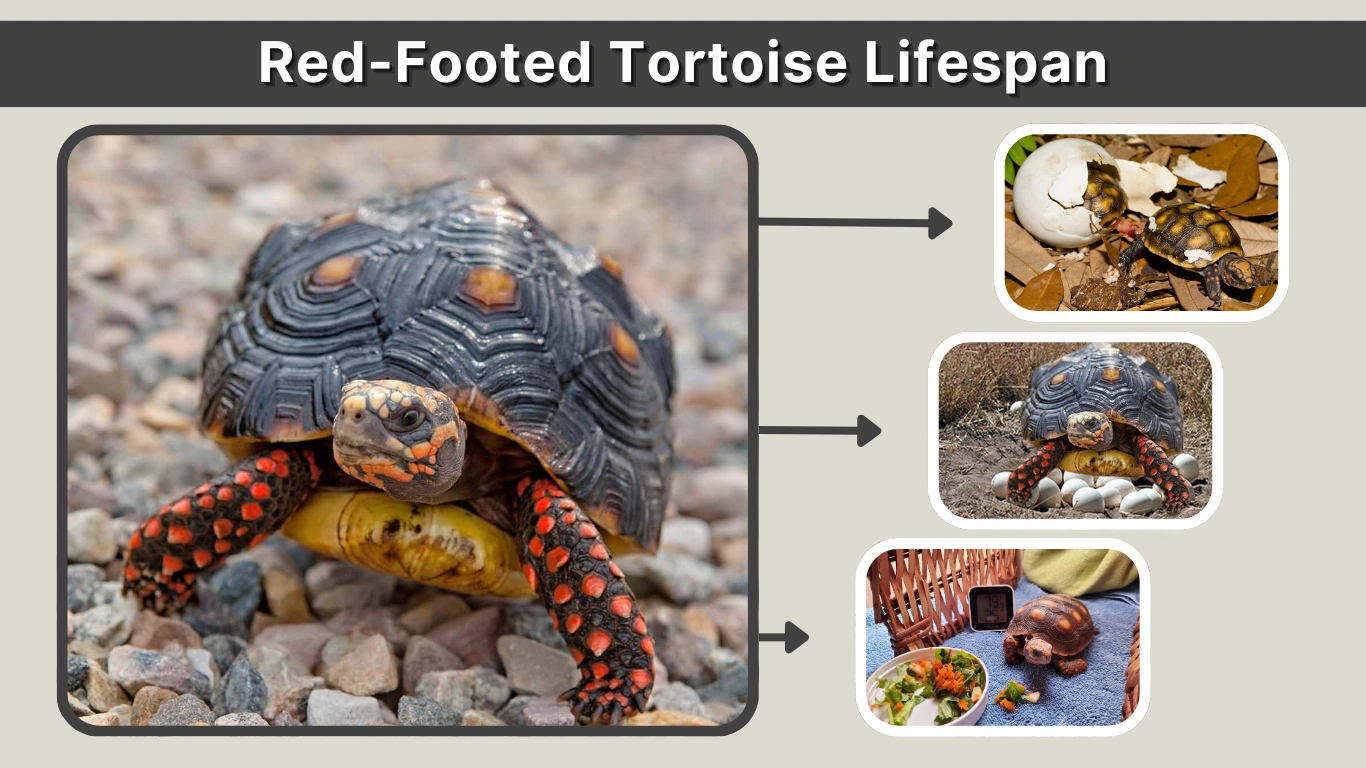
Red-footed tortoises are known for their impressive longevity, steady growth rate, and unique tropical habitat needs. Understanding how long they live, how fast they grow, and their natural behaviors—such as sleeping patterns and fasting limits—is essential for giving them a healthy life in captivity. This guide explores everything from lifespan and maturity age to hydration needs, outdoor living conditions, and the plants that thrive in a red-foot’s enclosure. It provides reliable, owner-friendly facts based on real husbandry experience.
Red-Footed Tortoise Lifespan Overview
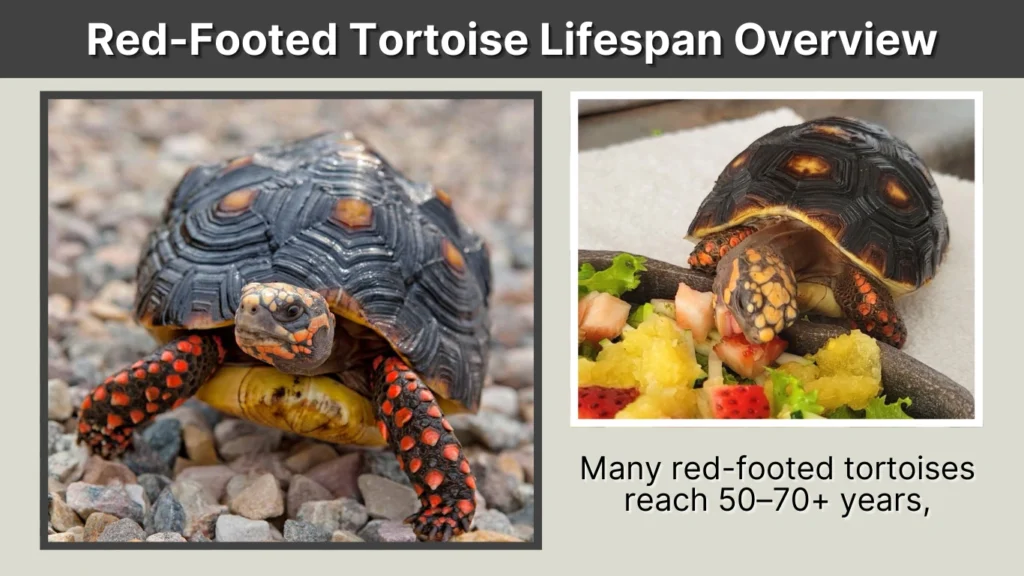
Red-footed tortoises are long-lived reptiles capable of thriving for decades when kept properly. Their average lifespan is highly dependent on diet, humidity, enclosure space, and access to UVB light. In their natural habitats—dense South American forests and savannas—these tortoises often live 40–50 years under challenging conditions.
In captivity, however, their lives can extend significantly thanks to consistent care. When provided with stable heat, good nutrition, and protection from predators, many red-footed tortoises reach 50–70+ years, and some individuals have reportedly lived even longer. Their slow metabolism and hardy digestive system contribute to their ability to age gracefully, making them one of the most family-friendly pet tortoise species for long-term keepers.
How Long Do Red-Footed Tortoises Live in Captivity?
In captivity, red-footed tortoises usually live longer than in the wild because they have access to medical care, controlled diets, and safe enclosures. A typical captive lifespan ranges from 40–60 years, though it is not unusual for them to exceed 70 years with exceptional care.
Several factors influence their lifespan:
- Humidity & temperature stability – essential for breathing, hydration, and shell health.
- Balanced diet – prevents kidney issues and shell deformities.
- Adequate space – reduces stress and promotes natural movement.
- UVB exposure – critical for proper calcium metabolism.
- Clean water & hydration – crucial for a species adapted to humid rainforest environments.
Improper care—such as low humidity, poor diet, or lack of UVB—shortens lifespan dramatically. With proper husbandry, however, red-foots are among the longest-living commonly kept tortoises.
Wild Habitat & Natural Distribution
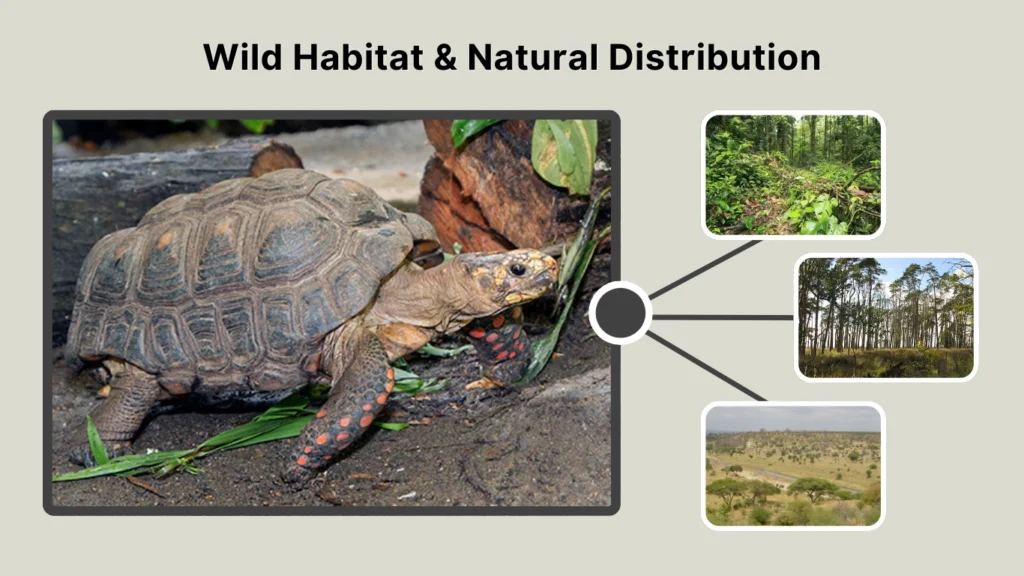
Red-footed tortoises originate from tropical regions of South America, including:
- Brazil
- Venezuela
- Guyana
- Colombia
- Suriname
- The Amazon basin
They inhabit humid forest floors, woodlands, and savanna edges where the ground is rich with fallen fruit, mushrooms, leaf litter, and scattered vegetation. These ecosystems are warm, moist, and shaded, offering a perfect environment for tortoises that rely on humidity for hydration and digestion.
Their natural habitat explains several key behaviors:
- High tolerance for fruit – fallen fruit is abundant in the rainforest.
- Preference for shade and leaf litter – provides hiding and moisture.
- Slow but steady growth – supported by consistent food availability.
- Long lifespan – natural protection from predators and a humid climate.
Understanding their origin helps owners recreate a more natural, health-supportive environment in captivity.
How Long Can Red-Footed Tortoises Go Without Food?
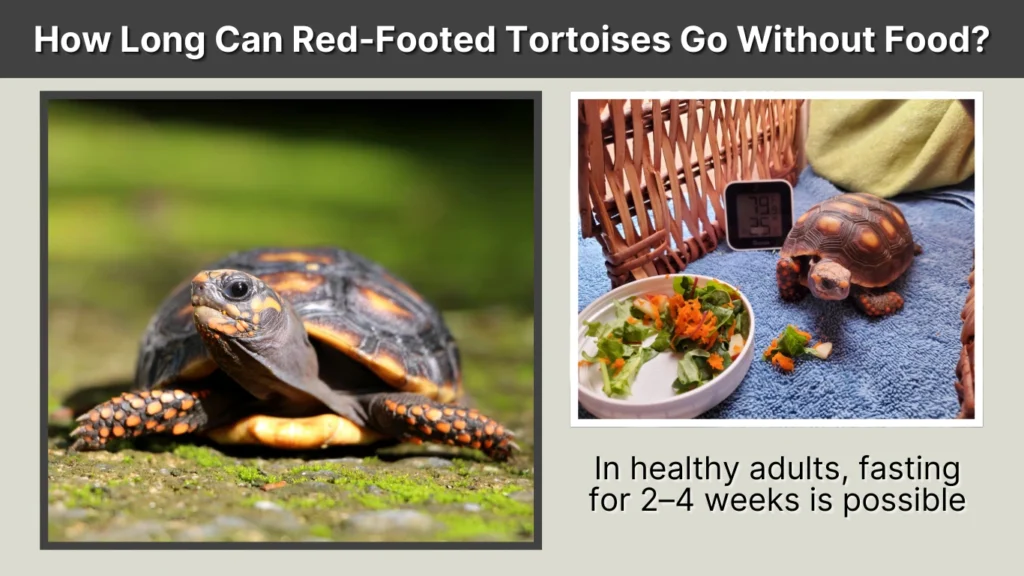
Red-footed tortoises are resilient animals capable of going without food for longer than many pets due to their slow metabolism. In healthy adults, fasting for 2–4 weeks is possible, though not recommended unless it’s natural seasonal behavior or part of a medical diet under veterinary guidance.
Key factors affecting fasting tolerance include:
- Age – babies should never fast more than a few days.
- Health condition – underweight tortoises cannot tolerate long fasts.
- Temperature and humidity – colder temps slow metabolism but can be dangerous.
- Hydration – a tortoise can survive longer without food than without water.
While adults can occasionally handle long gaps, any tortoise refusing food for over a week should be monitored for stress, dehydration, or illness.
How Long Can Red-Footed Tortoises Go Without Water?
Hydration is critical for red-footed tortoises. Although they absorb much moisture from food and humidity, they still need access to clean water at all times. A healthy adult may survive 5–10 days without direct drinking, but this varies based on humidity levels.
In dry conditions, dehydration can begin within 48–72 hours. Babies dehydrate much faster and should never go without water for more than a day. Early signs of dehydration include sunken eyes, thick saliva, lethargy, and dry stool. Maintaining humidity above 70% dramatically reduces hydration stress.
Growth Timeline & Size Milestones
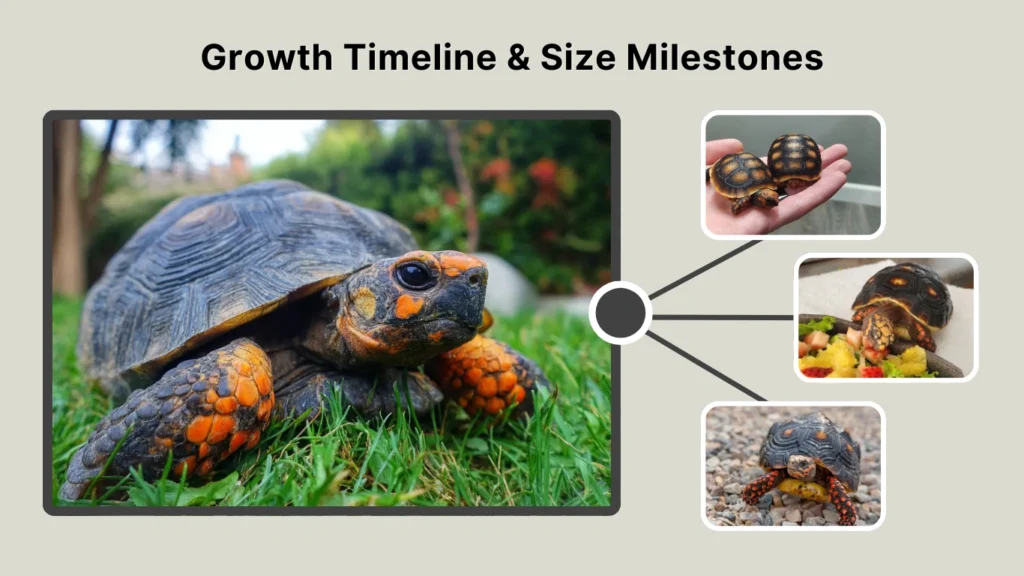
Red-footed tortoises grow steadily but not rapidly, reaching full adult size over several years. Hatchlings begin at around 1.5–2 inches and typically grow 1–2 inches per year, depending on diet, humidity, and genetics. They are considered “small” for the first 2–3 years of life, gradually transitioning into their juvenile phase.
Red-foots usually reach their full size—12–14 inches for most localities—between 10–15 years. Some cherry-head varieties may stay slightly smaller, while some northern variants grow larger. Proper humidity and a balanced diet play the biggest role in preventing growth deformities.
How Long Red-Footed Tortoises Take to Mature
Sexual maturity in red-footed tortoises is slow, reflecting their long natural lifespan. Most individuals reach reproductive maturity at 5–8 years, though some take up to 10 years depending on their growth rate and environmental conditions.
Factors affecting maturity include:
- Diet quality
- Temperature consistency
- Hydration levels
- Stress and enclosure space
Female tortoises often take longer to mature because they must accumulate more body mass and internal resources to produce eggs safely.
Red-Footed Tortoise Egg Hatching Timeline
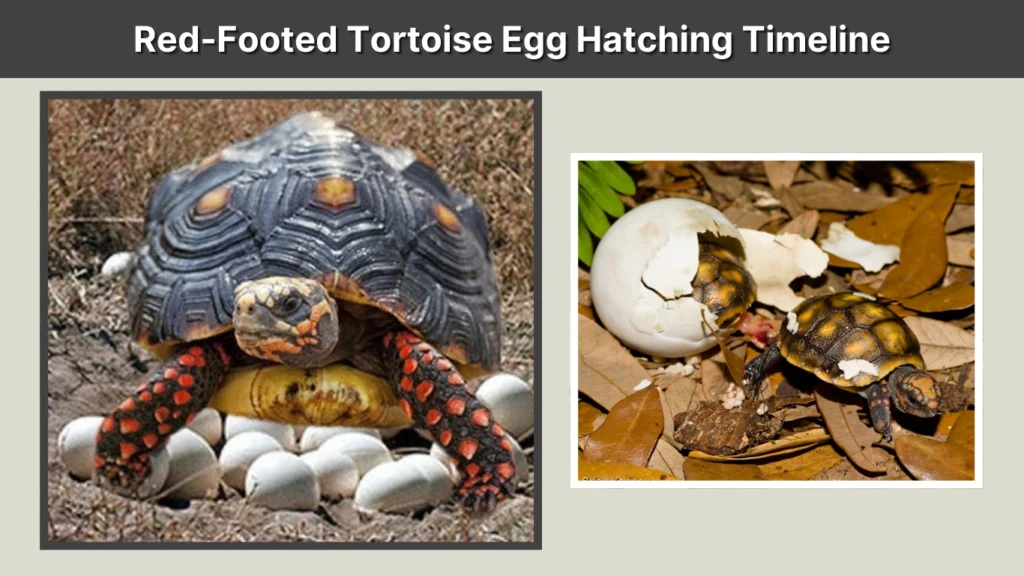
Red-foot eggs have an incubation range of 90–150 days, influenced strongly by temperature and humidity. At temperatures around 84–86°F (28.8–30°C), hatching tends to occur nearer the lower end of the range. Cooler incubation extends the timeline and can influence hatchling size and behavior.
Eggs must be kept on a stable substrate with high humidity (70–85%) and minimal disturbance. After hatching, babies remain in their shells for 1–2 days absorbing yolk, then transition into active feeding and hydration.
Sleep Patterns of Red-Footed Tortoises
Red-footed tortoises are naturally crepuscular, meaning they are most active during early morning and late afternoon. They typically sleep 10–14 hours per day, influenced by temperature, humidity, and lighting.
Adult Sleep Behavior
- Often rest in shaded or humid hides
- Sleep longer in cooler weather
- May nap briefly during the day
Baby and Juvenile Sleep
Baby red-foots sleep even more—often 14–16 hours daily—due to rapid growth. Their enclosures must remain warm and humid to support proper rest and shell development.
Weight Guide: Example for a 3.5-inch Red-Footed Tortoise
A healthy juvenile measuring around 3.5 inches typically weighs 90–150 grams, depending on hydration level and body condition. Weight outside this range does not automatically mean illness but should prompt monitoring. Gradual, steady weight gain is ideal, while sudden drops can indicate dehydration or dietary issues.
Can Red-Footed Tortoises Live Outside?
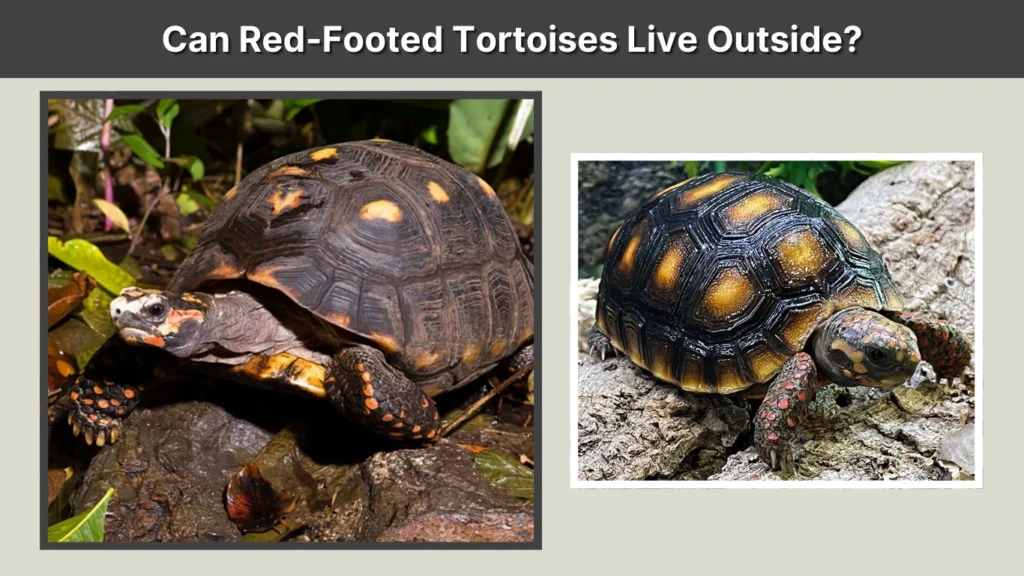
Red-foots can live outdoors successfully in warm, humid climates, especially regions similar to their native South American environment. However, they require:
- Minimum nighttime temperatures above 70°F (21°C)
- High humidity (60–80%)
- Large shaded areas
- Secure fencing from predators
Can They Live Outside Year-Round?
Only in tropical or subtropical climates. In temperate regions, outdoor time should be seasonal or limited to warm months.
Can Red-Footed Tortoises Live Indoors?
Yes—many keepers successfully house red-foots indoors year-round. Indoor enclosures should include:
- A large footprint (minimum 8×4 ft for adults)
- Stable 80–86°F temperatures
- Humidity above 70%
- UVB lighting
- Deep substrate for digging
Indoor setups offer precise climate control, which is essential in cooler countries.
Can Red-Footed Tortoises Live Together?
Red-foots are one of the few tortoise species that can often be kept in small groups. They are generally more social and tolerant than Mediterranean or African species.
Key Rules
- Provide ample space to prevent stress
- Avoid keeping two males together
- Monitor for bullying or food guarding
- Quarantine any new tortoises for 60–90 days
Can They Live With Other Animals?
In most cases, no. Mixing species increases risks of disease, injury, and stress. Safe cohabitation is limited to multiple red-footed tortoises or compatible females.
Live Plants for a Red-Foot Enclosure
Adding live plants helps create a naturalistic, humid environment.
Safe, Non-Toxic Plants
- Pothos
- Spider plant
- Hibiscus
- Ferns
- Wandering Jew
- Fittonia
Humidity-Boosting Tropical Plants
- Philodendron
- Bromeliads
- Monstera (safe if nibbling is minimal)
Plants to Avoid
- Oleander
- Azalea
- Ivy
- Any sharp or spiny species
Always ensure plants are pesticide-free before adding them to the enclosure.
FAQs
How long do red-footed tortoises live?
Red-footed tortoises typically live 40–60 years, but with excellent care, many exceed 70–80+ years in captivity. Their long lifespan depends on proper humidity, a balanced diet, UVB lighting, and a spacious enclosure that mimics their natural South American environment.
How long can a red-footed tortoise go without eating?
Healthy adults may go 2–4 weeks without food due to their slow metabolism, though this should never be routine. Babies should not fast more than a few days. Any tortoise refusing food for a week may be stressed, dehydrated, or ill and should be monitored closely.
How long can a red-footed tortoise go without water?
Most adults cannot go more than 5–10 days without water, especially in low humidity. Babies dehydrate much faster and must drink or soak frequently. Signs of dehydration include sunken eyes, thick saliva, dry stool, and lethargy, requiring immediate hydration support.
How long does it take for red-footed tortoises to mature?
Red-footed tortoises usually reach sexual maturity between 5–8 years, though some take up to 10 years depending on growth rate and environmental conditions. Females often mature later because they need more body mass to safely produce and carry eggs.
How long do red-footed tortoise eggs take to hatch?
Eggs generally hatch in 90–150 days depending on incubation temperature and humidity. Warmer temperatures lead to faster development, while cooler temperatures prolong the hatching period. Stable humidity and minimal disturbance are essential for healthy hatchlings.