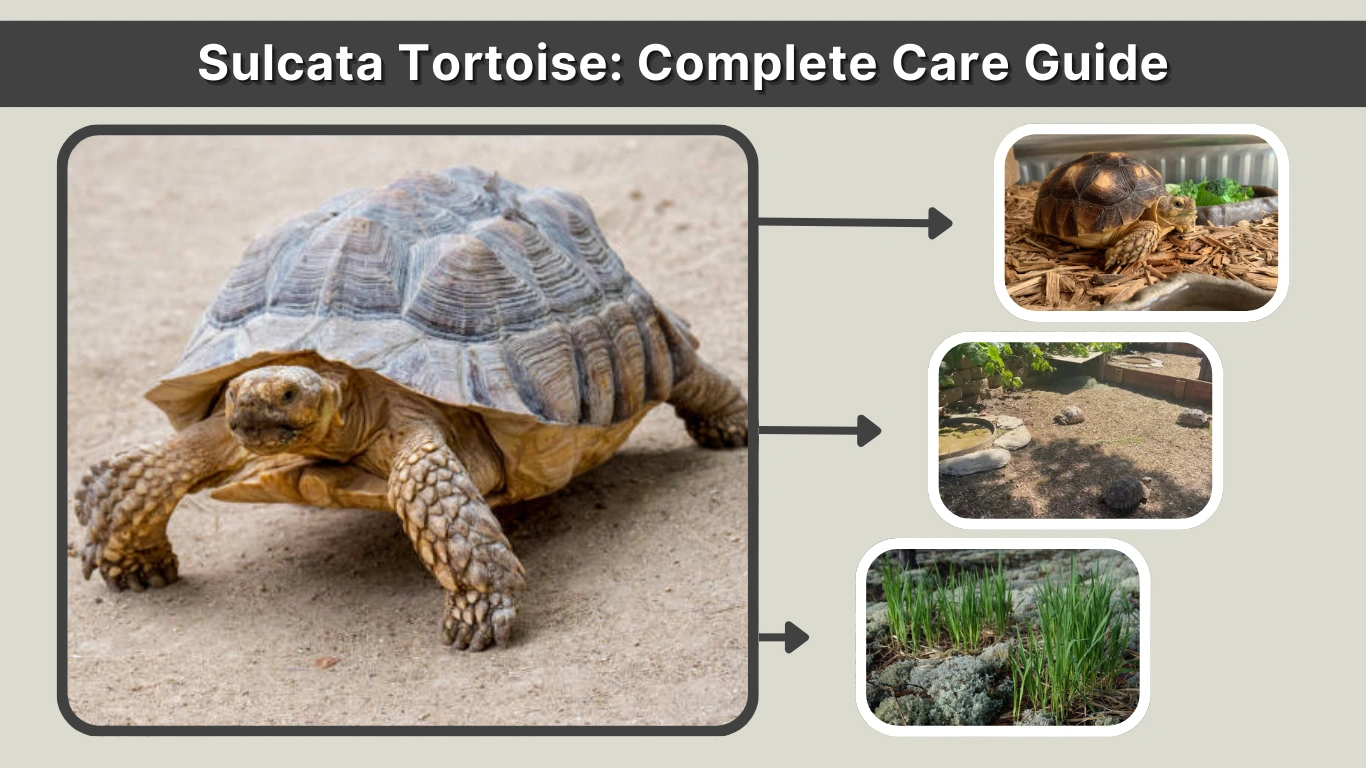
The sulcata tortoise is one of the most popular large tortoise species kept as a pet. Known for its impressive size, long lifespan, and hardy nature, this African spurred tortoise can live for decades with proper care. However, owning one is a serious, lifelong commitment. Understanding the sulcata tortoise habitat, diet, food requirements, and life span is essential before bringing one home. This guide covers everything beginners need to know to provide proper care and create a healthy environment.
What Is a Sulcata Tortoise?
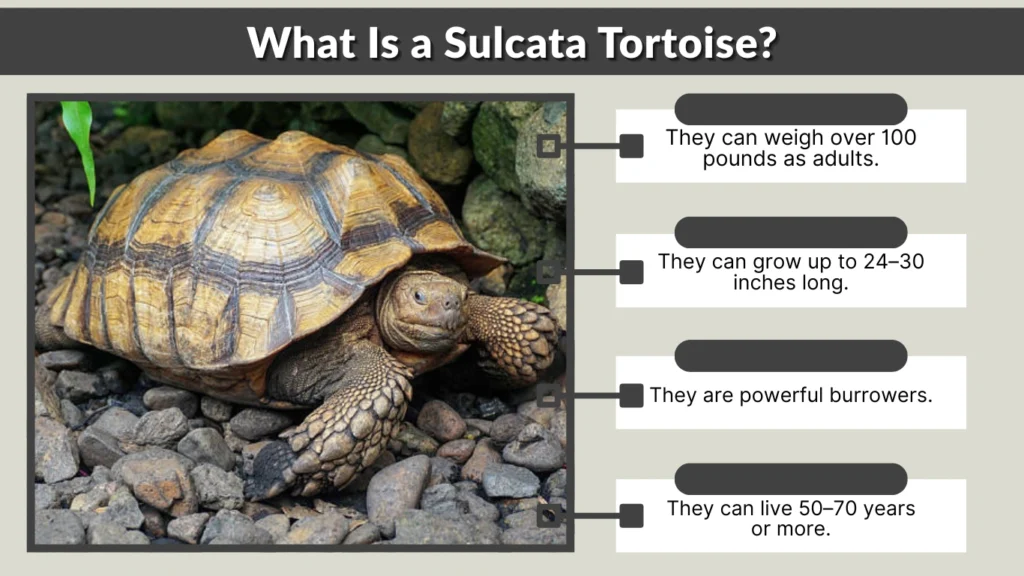
The sulcata tortoise (Centrochelys sulcata), also known as the African spurred tortoise, is native to the dry regions of Sub-Saharan Africa. It is the third-largest tortoise species in the world and the largest mainland tortoise species.
Scientific Background
Sulcata tortoises originate from countries along the southern edge of the Sahara Desert, including Sudan, Senegal, Ethiopia, and Mali. These areas are known for hot temperatures, dry climates, and seasonal rainfall. Their natural environment has shaped their hardy and resilient nature.
Unlike tropical tortoises, sulcatas are adapted to semi-arid grasslands and savannas. They are built for heat, digging, and grazing.
Key Sulcata Tortoise Facts
Here are some important sulcata tortoise facts every potential owner should know:
- They can weigh over 100 pounds as adults.
- They can grow up to 24–30 inches long.
- They are powerful burrowers.
- They grow quickly during their early years.
- They can live 50–70 years or more.
Because of their size and lifespan, sulcatas are not ideal for small homes or temporary pet owners. They require long-term planning and proper space.
Sulcata Tortoise Natural Habitat
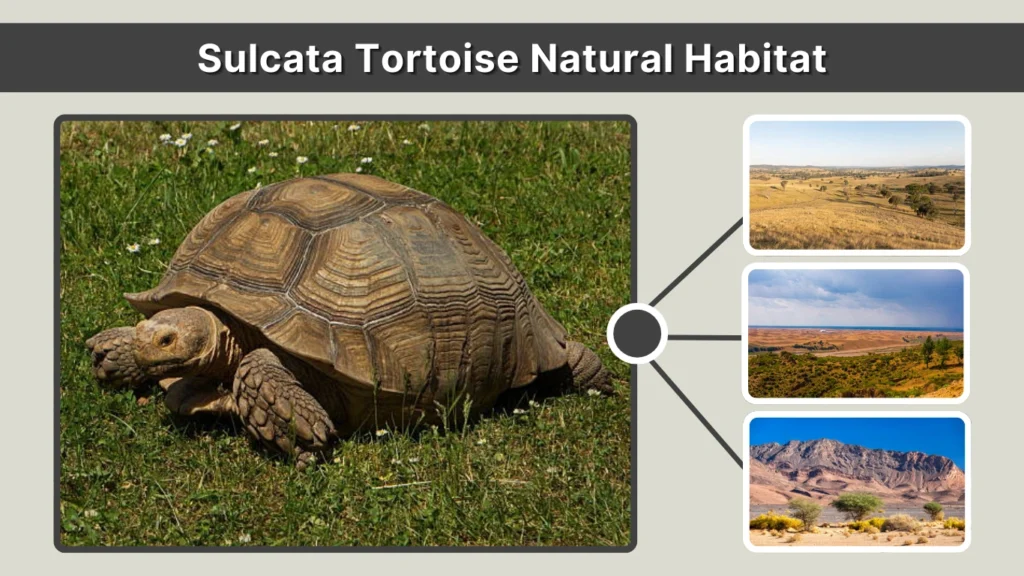
Understanding the sulcata tortoise habitat in the wild helps owners recreate suitable living conditions in captivity.
Where Do Sulcata Tortoises Live in the Wild?
Sulcata tortoises live in:
- Dry grasslands
- Semi-desert environments
- Scrub savannas
- Regions near the Sahara Desert
These areas experience extremely hot daytime temperatures, often exceeding 100°F (38°C), followed by cooler nights. Rainfall is limited and seasonal.
Unlike rainforest species, sulcatas thrive in dry, open areas with plenty of sunlight.
Natural Behaviors in Their Habitat
In their natural habitat, sulcata tortoises display several survival behaviors:
Burrowing:
Sulcatas dig deep burrows that can reach several feet underground. These burrows help regulate body temperature and protect them from extreme heat.
Grazing:
They spend most of their day grazing on grasses and low-growing plants.
Heat Adaptation:
They are most active during cooler parts of the day, such as early morning and late afternoon.
Recreating these environmental conditions in captivity is crucial for their health and longevity.
Sulcata Tortoise Habitat in Captivity
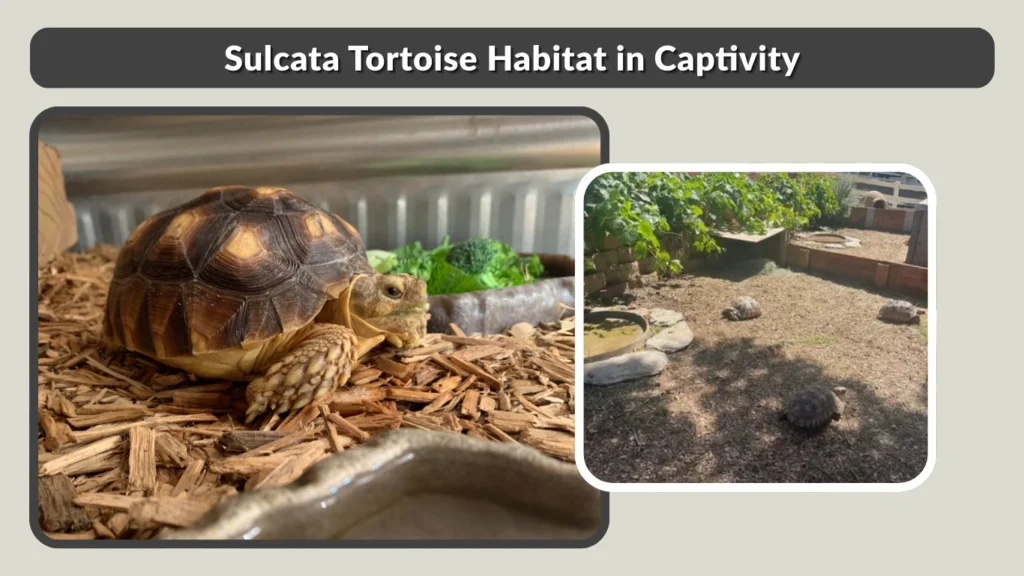
Providing the correct sulcata tortoise habitat at home is one of the most important parts of care.
Indoor vs Outdoor Enclosures
Because of their size, adult sulcata tortoises are best kept outdoors in warm climates.
Outdoor Enclosures:
- Large, secure yard space
- Strong fencing (they push and dig)
- Access to shade
- Dry, well-drained ground
An adult sulcata may require several hundred square feet of space.
Indoor Enclosures (for hatchlings or cold climates):
- Large tortoise table or custom enclosure
- Proper lighting and heating
- Adequate ventilation
- Enough room to move comfortably
Small glass tanks are not suitable for sulcatas long term.
Temperature & Lighting Requirements
Proper heating and lighting are essential for digestion, shell health, and overall well-being.
Basking Area Temperature:
95–105°F (35–40°C)
Ambient Day Temperature:
80–90°F (27–32°C)
Night Temperature:
Should not drop below 70°F (21°C) for juveniles.
UVB lighting is critical. Without UVB exposure, sulcata tortoises cannot properly metabolize calcium, which can lead to metabolic bone disease. Natural sunlight is ideal, but high-quality UVB bulbs are necessary for indoor setups.
Substrate and Shelter Setup
The right substrate helps maintain comfort and allows natural behaviors.
Recommended substrates include:
- Topsoil (chemical-free)
- Coconut coir
- Cypress mulch (dry areas)
Sulcatas also need:
- A shaded hide box
- Access to a dry sleeping area
- Space to dig or burrow
Avoid damp, humid environments for adults, as excessive moisture can cause shell issues.
Sulcata Tortoise Diet
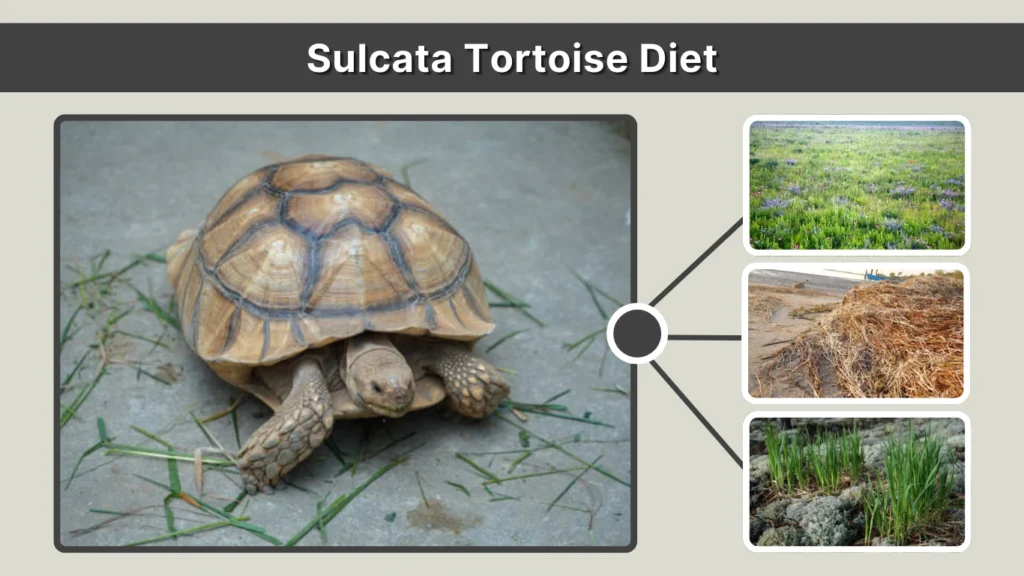
The sulcata tortoise diet is one of the most important factors affecting growth, shell health, and life span.
What Do Sulcata Tortoises Eat in the Wild?
In their natural environment, sulcatas primarily eat:
- Native grasses
- Dry weeds
- Fibrous plants
- Low-protein vegetation
Their diet is extremely high in fiber and very low in sugar and protein. This grazing diet supports steady growth and healthy shell development.
Unlike some other tortoise species, sulcatas do not naturally consume fruit or animal protein.
Sulcata Tortoise Diet in Captivity
In captivity, owners should aim to replicate this high-fiber diet.
A proper sulcata tortoise diet should consist of:
- 70–80% grass or hay
- Timothy hay
- Bermuda grass
- Orchard grass
- Dandelion greens
- Collard greens
- Mustard greens
Leafy greens should supplement the grass-based diet, not replace it.
High-protein foods can cause rapid growth and shell deformities, so they must be avoided.
Sulcata Tortoise Food List
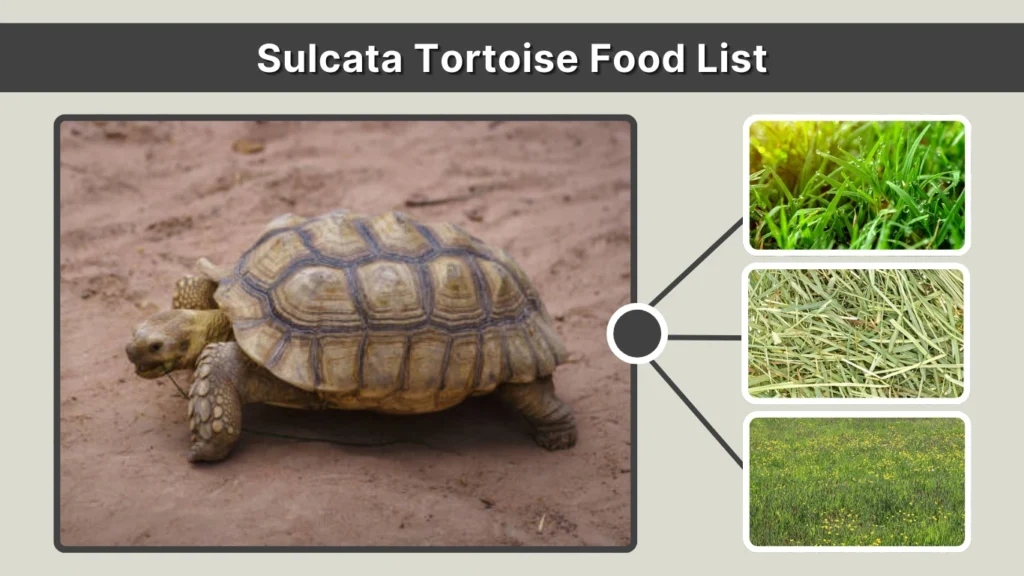
Choosing the right sulcata tortoise food is essential for preventing shell problems, digestive issues, and unhealthy growth. Their diet should always be high in fiber and low in sugar and protein.
Best Foods for Sulcata Tortoises
The majority of a sulcata’s diet should come from grasses and hay. These mimic what they would naturally graze on in the wild.
Staple Foods:
- Bermuda grass
- Timothy hay
- Orchard grass
- Meadow hay
Nutritious Greens (in rotation):
- Dandelion greens
- Collard greens
- Mustard greens
- Turnip greens
- Endive
- Escarole
Occasional Additions:
- Hibiscus leaves and flowers
- Prickly pear cactus pads (nopales)
Offering a wide variety of safe plants ensures balanced nutrition and prevents picky eating habits.
Foods to Avoid
Some foods may seem healthy but are harmful to sulcata tortoises.
Avoid:
- Fruit (too much sugar)
- Spinach (high oxalates that bind calcium)
- Iceberg lettuce (low nutrition)
- Animal protein
- Dog or cat food
- Processed or cooked vegetables
High-sugar and high-protein diets can lead to shell pyramiding, kidney problems, and shortened life span.
Feeding Schedule by Age
Feeding frequency changes as sulcatas grow.
Hatchlings:
Feed daily with fresh grasses and leafy greens.
Juveniles:
Daily feeding is recommended, focusing on high-fiber foods.
Adults:
Feed daily or allow continuous grazing if housed outdoors with safe grass.
Fresh, clean water should always be available, even though sulcatas come from dry regions.
Sulcata Tortoise Life Span
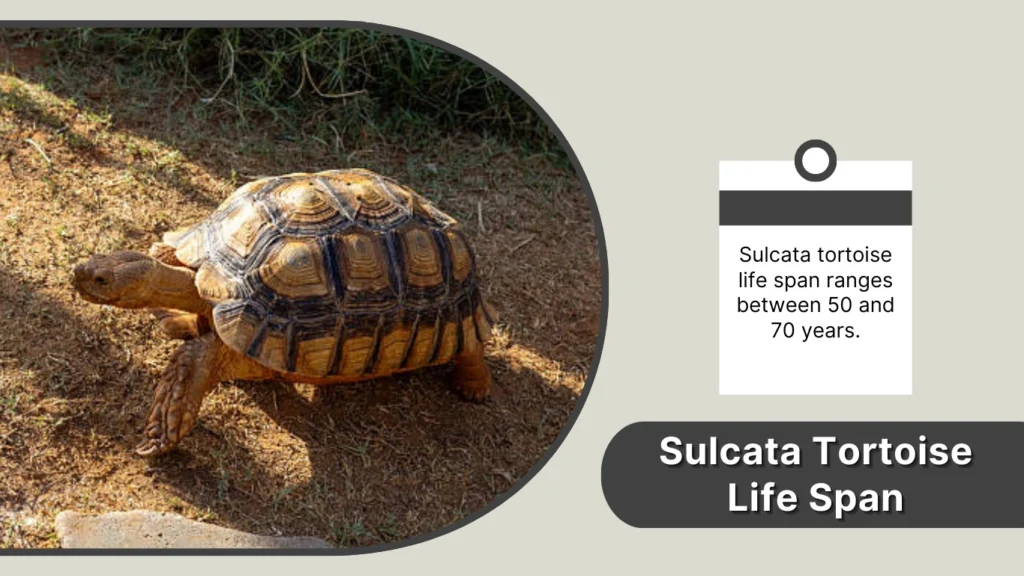
One of the most important sulcata tortoise facts is their impressive longevity. Owning one is a decades-long commitment.
How Long Do Sulcata Tortoises Live?
The average sulcata tortoise life span ranges between 50 and 70 years. With excellent care, some individuals have lived even longer.
Because they can outlive their owners, future planning is extremely important. Prospective owners should consider long-term housing, financial responsibility, and even succession planning.
Factors That Affect Life Span
Several factors influence how long a sulcata tortoise will live:
Proper Diet:
High-fiber, low-protein nutrition supports steady, healthy growth.
UVB Exposure:
Adequate UVB prevents metabolic bone disease and supports shell strength.
Space and Exercise:
Large enclosures promote natural movement and reduce stress.
Veterinary Care:
Routine reptile checkups help detect problems early.
Poor care, improper diet, or lack of UVB can significantly shorten a sulcata’s life.
Growth Rate and Adult Size
Sulcata tortoises grow surprisingly fast, especially during their first few years.
- Hatchlings start at just 2–3 inches long.
- Within five years, they may weigh 25–50 pounds.
- Adults commonly reach 80–120+ pounds.
Males are typically larger than females. Their rapid growth is one reason proper diet and enclosure planning are critical. Many owners underestimate how quickly a small hatchling becomes a very large tortoise.
Their strength also increases with size. Adult sulcatas can push through weak fencing and dig under barriers, so enclosures must be sturdy and secure.
Common Health Problems
Like all reptiles, sulcata tortoises are prone to certain health issues, especially if their habitat or diet is incorrect.
Metabolic Bone Disease (MBD):
Caused by calcium deficiency or lack of UVB light. Symptoms include soft shell, deformities, and weakness.
Shell Pyramiding:
Raised, uneven shell growth is often linked to improper diet or excessive protein.
Respiratory Infections:
Can occur if temperatures are too low or the enclosure is too damp.
Preventative care is far easier than treatment. Maintaining proper habitat conditions and diet greatly reduces health risks.
Pros and Cons of Owning a Sulcata Tortoise
Before committing, it’s important to weigh the benefits and challenges.
Pros
- Hardy and resilient species
- Generally calm temperament
- Long life span
- Fascinating natural behaviors
Cons
- Require large outdoor space
- Extremely long-term commitment
- Can be destructive diggers
- Expensive enclosure setup
- Difficult to rehome once large
Sulcatas are rewarding pets for experienced or well-prepared owners, but they are not beginner-friendly in small living spaces.
Is a Sulcata Tortoise Right for You?
A sulcata tortoise is best suited for someone who:
- Has a large outdoor area
- Lives in a warm climate or can provide heated housing
- Understands reptile care
- Is prepared for a 50+ year commitment
If space is limited or long-term care planning is uncertain, a smaller tortoise species may be a better choice.
Conclusion
The sulcata tortoise is a remarkable reptile known for its large size, hardy nature, and impressive life span. However, proper care requires a spacious habitat, a high-fiber diet, correct lighting, and long-term dedication. Understanding sulcata tortoise habitat needs, food requirements, and growth expectations is essential before bringing one home. With responsible ownership and proper planning, these gentle giants can thrive for decades and become a truly unique companion.