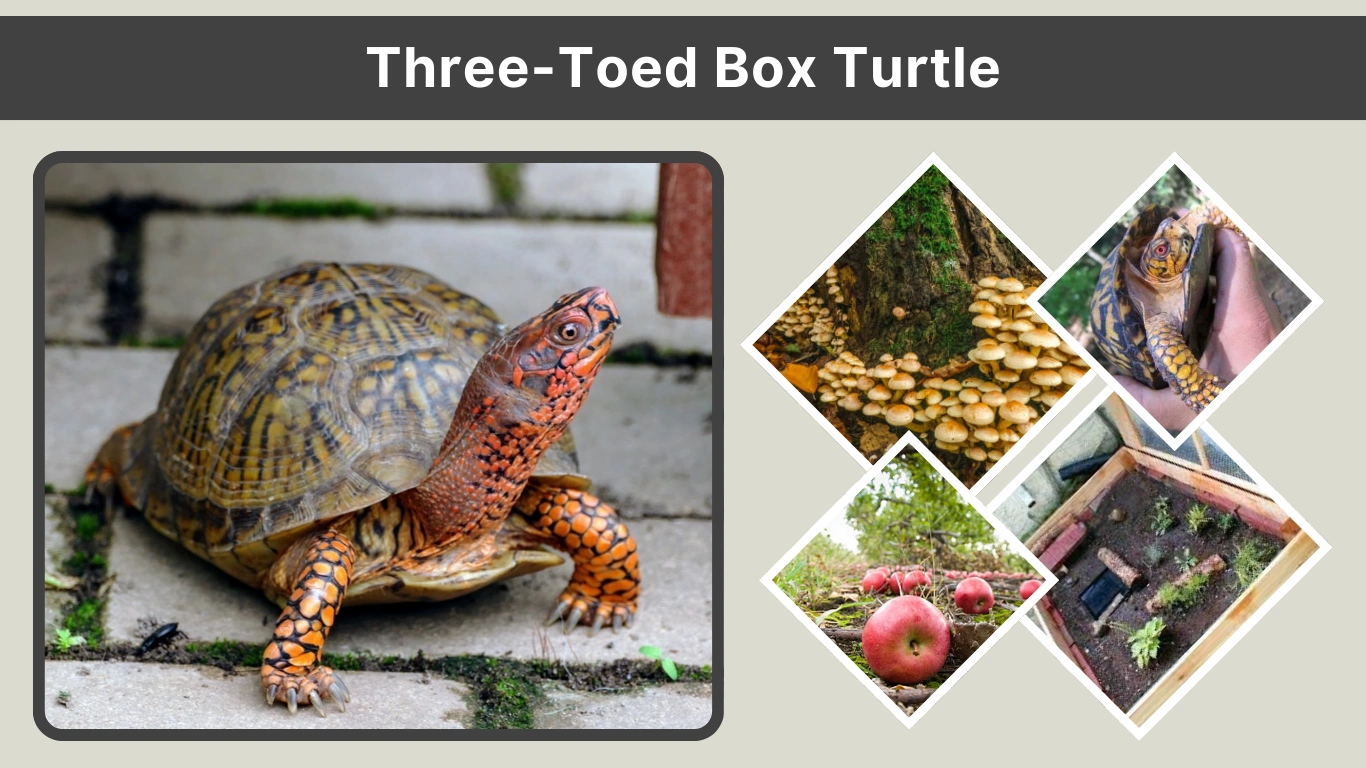
The three-toed box turtle (Terrapene carolina triunguis) is a fascinating land-dwelling reptile native to the southern United States. Known for its high-domed shell and unique hinged plastron that allows it to completely close itself inside, this turtle is both resilient and charming. Unlike aquatic turtles, the three-toed box turtle spends most of its life on land in forests and grasslands. Its manageable size and calm nature make it popular among reptile enthusiasts. In this guide, you’ll learn about its habitat, diet, lifespan, and essential care requirements.
What Is a Three-Toed Box Turtle?
The three-toed box turtle is a subspecies of the common box turtle and belongs to the family Emydidae. Its scientific name, Terrapene carolina triunguis, reflects its classification within North American box turtles. The name “three-toed” comes from a distinctive trait: most individuals have three toes on each hind foot, unlike other subspecies that typically have four.
This turtle is entirely terrestrial, meaning it lives primarily on land rather than in water. While it may soak in shallow water, it is not built for swimming like aquatic turtles. Three-toed box turtles are generally shy, slow-moving, and non-aggressive. When threatened, they use their hinged plastron (the bottom part of the shell) to close themselves tightly inside, providing excellent protection from predators.
Physical Characteristics and Identification
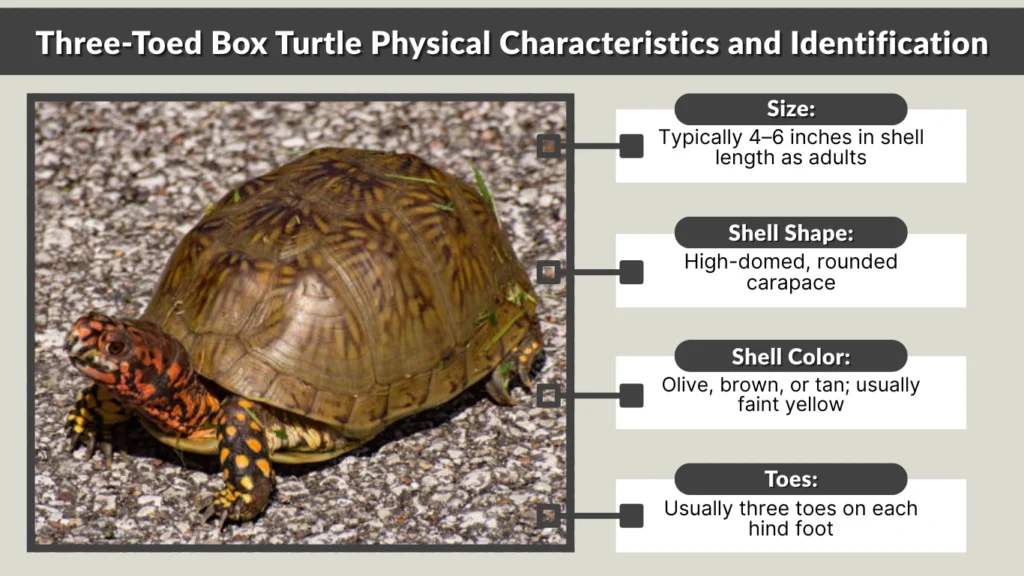
The three-toed box turtle is a small, terrestrial turtle known for its high-domed shell and sturdy, compact body. While coloration can vary from one individual to another, most share similar structural features that make them easy to identify. Compared to other box turtle subspecies, they often have plainer shell patterns and a smoother overall appearance. Below are the key physical traits that help with proper identification.
Key Identification Features:
- Size: Typically 4–6 inches in shell length as adults
- Shell Shape: High-domed, rounded carapace
- Shell Color: Olive, brown, or tan; usually faint yellow or orange markings
- Plastron (Bottom Shell): Fully hinged, allowing complete closure
- Toes: Usually three toes on each hind foot
- Head Color: Often olive or brown; some males show brighter facial tones
- Eyes: Males often have red or orange eyes; females usually have brown or yellow eyes
- Tail: Males have longer, thicker tails than females
- Lifespan: 30–50+ years with proper care
These physical traits make the three-toed box turtle relatively easy to distinguish from other North American box turtle subspecies.
Natural Habitat and Geographic Range
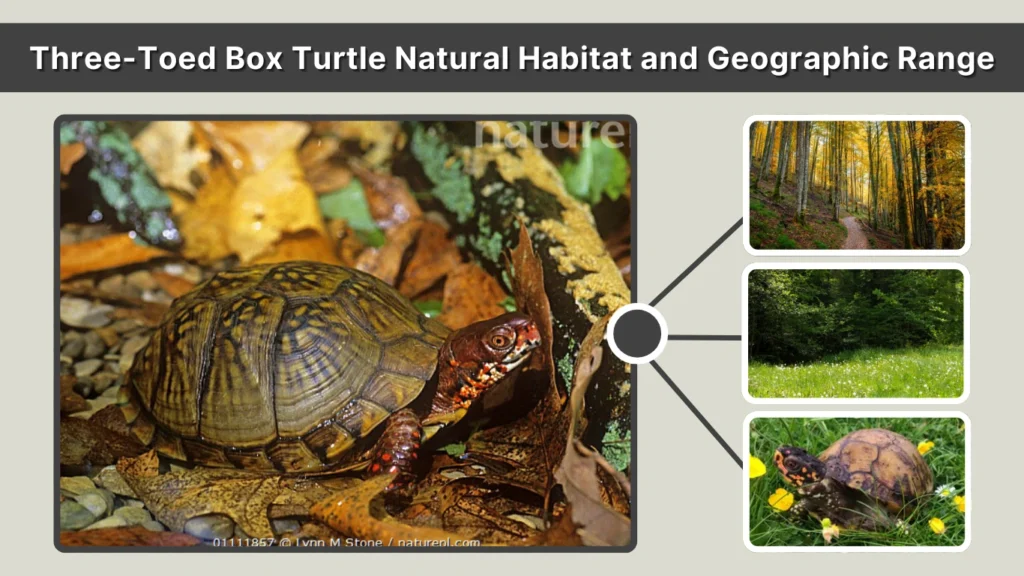
Three-toed box turtles are primarily found in the south-central United States. Their range includes states such as Texas, Missouri, Arkansas, Oklahoma, Louisiana, Mississippi, and parts of Alabama. They prefer warm, humid climates with access to both sunlight and shaded areas.
Their natural habitats include woodlands, forest edges, grasslands, and even suburban areas with suitable vegetation. They are especially fond of moist environments where leaf litter, fallen logs, and dense undergrowth provide hiding spots and food sources.
These turtles are most active during spring and early summer when temperatures are moderate and food is abundant. During very hot weather, they may become less active and seek shelter to prevent dehydration.
Brumation Behavior
In colder regions of their range, three-toed box turtles undergo brumation, which is similar to hibernation in mammals. During late fall and winter, they bury themselves in soil or leaf litter to escape freezing temperatures. Their metabolism slows significantly during this period. Brumation is a natural and important process that supports long-term health and reproductive cycles.
Three-Toed Box Turtle Diet
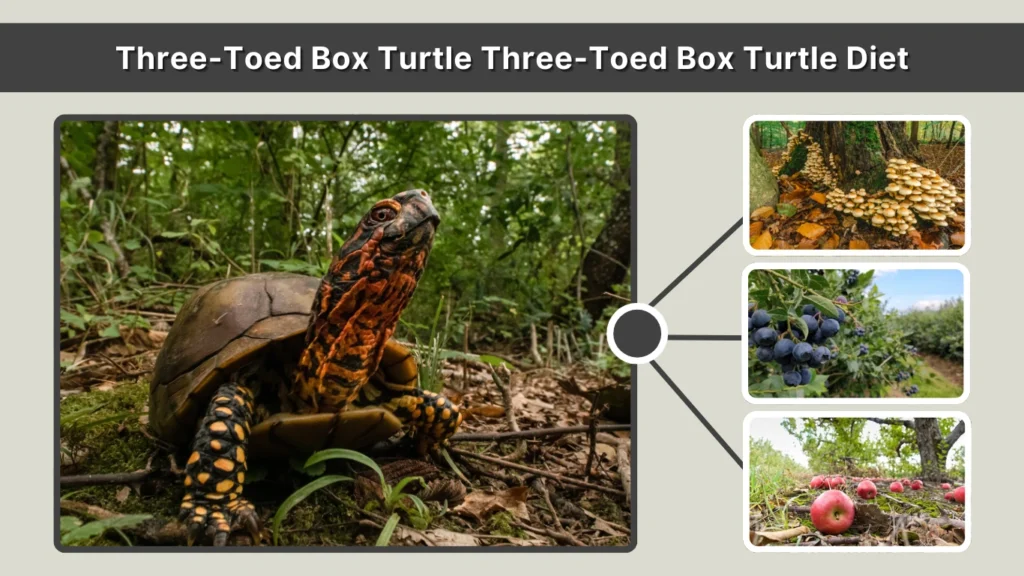
Three-toed box turtles are omnivores, meaning they eat both animal and plant matter. In the wild, their diet is diverse and seasonal. They commonly feed on insects, earthworms, slugs, snails, and beetles. They also consume mushrooms, berries, fallen fruits, and leafy vegetation.
Younger turtles tend to eat more protein-rich foods, such as insects and worms, which support rapid growth. As they mature, they gradually include more plant matter in their diet. This dietary flexibility helps them survive in a variety of habitats.
A varied diet is essential for maintaining proper nutrition. In the wild, they instinctively balance their intake based on seasonal availability. Replicating this variety in captivity is crucial to ensure long-term health and prevent nutritional deficiencies.
Three-Toed Box Turtle Care Guide
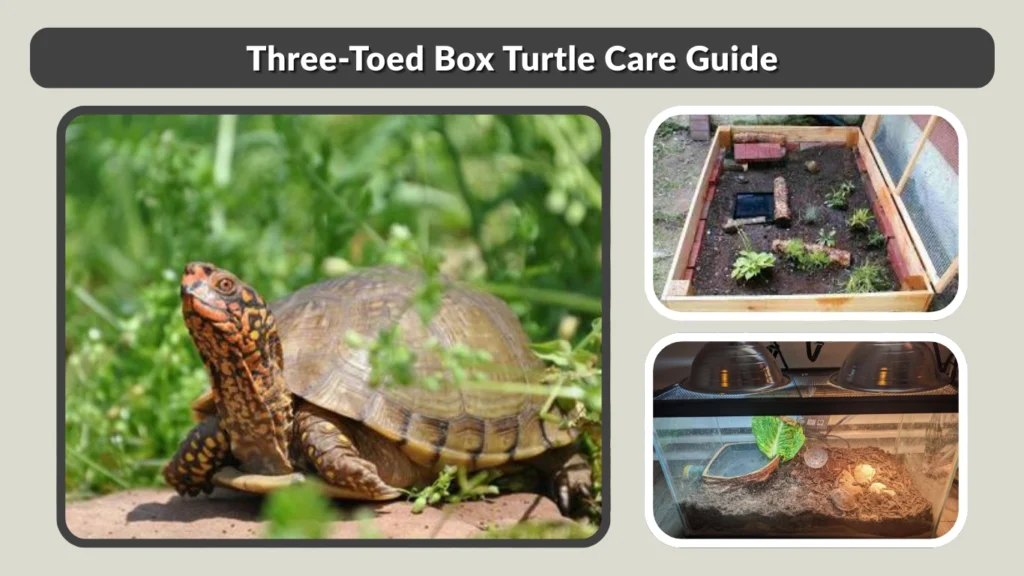
Proper care is essential for keeping a three-toed box turtle healthy in captivity. Because they can live for several decades, their enclosure and daily care routine must be carefully planned to meet their long-term needs.
Enclosure Setup
Three-toed box turtles can be kept in indoor or outdoor enclosures, depending on climate. Outdoor enclosures are often ideal in warm regions because they allow natural sunlight exposure and seasonal cycles. However, the enclosure must be secure, with walls at least 12 inches high and partially buried to prevent digging escapes.
For indoor setups, a large tortoise table or enclosure measuring at least 4 feet by 2 feet is recommended for one adult. Glass aquariums are usually not ideal because they restrict airflow and can cause stress due to reflections.
A natural substrate such as organic topsoil, coconut fiber, or a mix of soil and leaf litter works best. The substrate should be deep enough to allow light burrowing. Include hiding spots like logs, cork bark, and plants to help your turtle feel secure.
Temperature and Humidity
Maintaining proper temperature and humidity is critical. The enclosure should have a temperature gradient, with a warm basking area around 85–90°F and a cooler side around 70–75°F. Night temperatures can safely drop slightly but should not fall below 65°F.
Humidity levels should remain between 60–80%, as these turtles naturally thrive in moist environments. Low humidity can lead to dehydration and respiratory issues. Light misting and slightly damp substrate help maintain appropriate moisture levels.
UVB lighting is essential for indoor turtles. It allows proper calcium absorption and prevents metabolic bone disease. The UVB bulb should be replaced every 6–12 months, depending on manufacturer recommendations.
Water and Hydration
Although they are terrestrial, three-toed box turtles require regular access to fresh water. Provide a shallow water dish large enough for the turtle to soak in but shallow enough to prevent drowning.
Many keepers soak their turtles in lukewarm water for 15–20 minutes several times per week. This supports hydration, aids digestion, and helps prevent shell problems. Clean water should always be available and changed daily.
Are Three-Toed Box Turtles Good Pets?
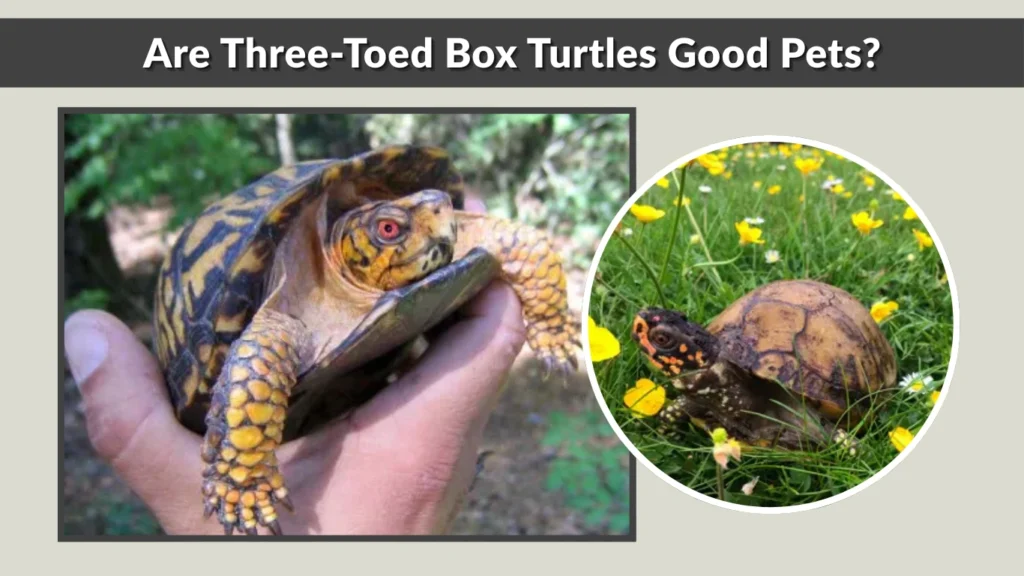
Three-toed box turtles can make rewarding pets, but they are not ideal for everyone. They are generally calm and quiet animals, but they do not enjoy frequent handling. Excessive handling can cause stress and weaken their immune system.
One of the biggest considerations is lifespan. With proper care, these turtles can live 40–50 years or longer. Prospective owners must be prepared for a lifelong commitment.
They are best suited for patient reptile keepers who are willing to maintain proper humidity, temperature, and diet. In some states, collecting wild box turtles is illegal, and permits may be required. Purchasing captive-bred individuals is strongly recommended for both ethical and conservation reasons.
Common Health Issues
Like all reptiles, three-toed box turtles can experience health problems if care requirements are not met.
Respiratory infections are common when humidity is too low or temperatures are too cold. Symptoms may include wheezing, nasal discharge, or lethargy.
Shell rot can occur in overly damp, unsanitary conditions. It appears as soft, discolored, or foul-smelling patches on the shell.
Vitamin A deficiency is another concern, especially if the diet lacks variety. Swollen eyes and poor appetite are possible signs.
Parasites may affect wild-caught turtles, which is another reason captive-bred individuals are preferable. Regular checkups with a reptile veterinarian can help detect and prevent serious issues.
Conservation Status and Legal Considerations
While the three-toed box turtle is not currently listed as endangered nationwide, local populations have declined due to habitat destruction, road mortality, and illegal collection for the pet trade.
Many states have laws protecting native box turtles. Removing them from the wild can disrupt local ecosystems and reduce breeding populations. Choosing a captive-bred turtle supports responsible reptile keeping and helps preserve wild populations for future generations.
FAQs
How long do three-toed box turtles live?
Three-toed box turtles commonly live 30–40 years in the wild. With proper captive care, they can exceed 50 years. Their long lifespan makes them a serious commitment, often comparable to adopting a long-lived parrot or tortoise.
How big do three-toed box turtles get?
Most adults reach 4–6 inches in shell length. Males and females are similar in size, though males may appear slightly larger due to thicker tails and broader features.
Do three-toed box turtles need UVB light?
Yes. UVB lighting is essential for indoor turtles because it helps them synthesize vitamin D3, which is necessary for calcium absorption and healthy shell growth. Without UVB, turtles may develop metabolic bone disease.
Can three-toed box turtles swim?
They can wade and soak in shallow water but are not strong swimmers like aquatic turtles. Deep water can be dangerous, so water dishes should always be shallow and safe.
What do three-toed box turtles eat in captivity?
In captivity, they should eat a balanced mix of insects (such as worms and crickets), leafy greens, vegetables, and occasional fruits. Calcium supplementation is recommended to support shell and bone health.