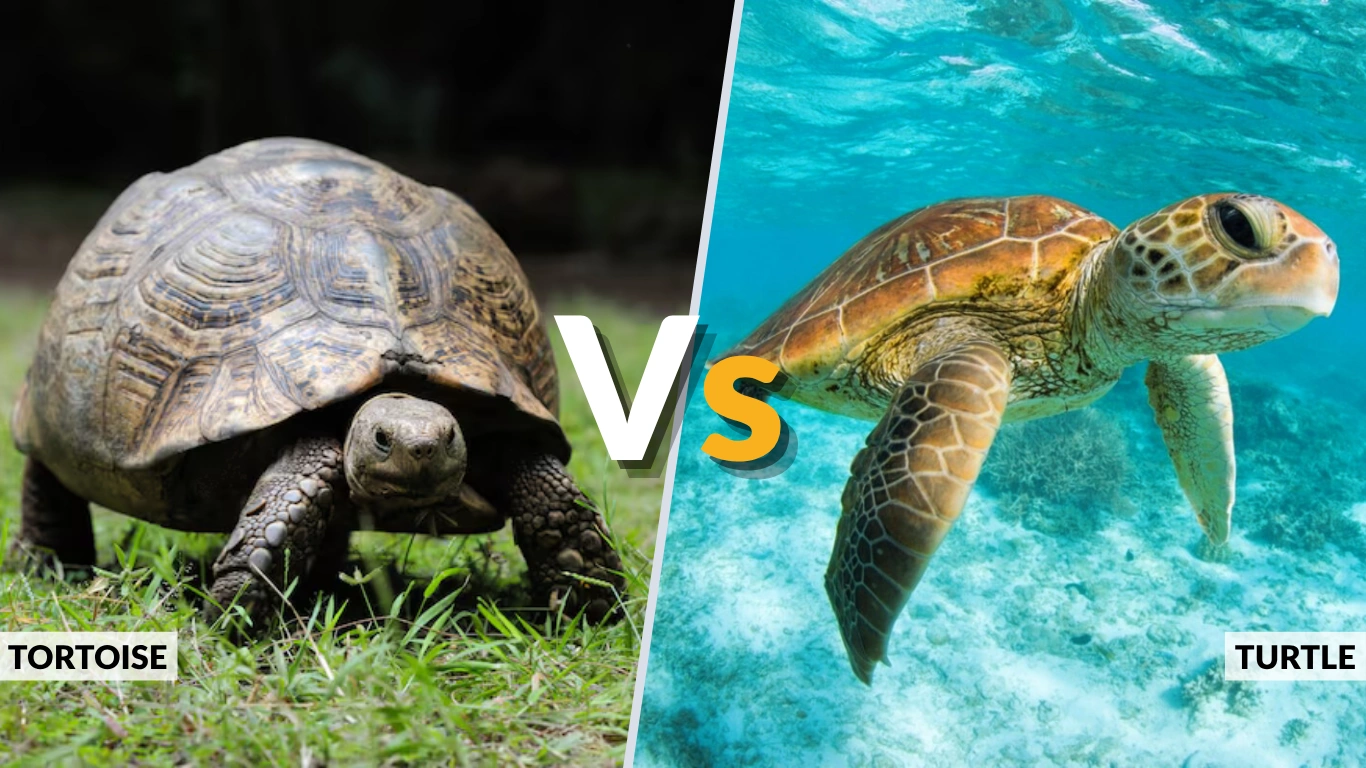
Tortoises and turtles are often confused because they both belong to the reptile order Testudines, but these shelled creatures live very different lives. Their habitats, diets, body structures, and behaviors vary in ways that directly influence how they survive and adapt. Whether you’re a pet owner, wildlife lover, or simply curious, understanding these distinctions helps you identify them easily and appreciate how unique each species truly is. Below, we explore the first half of the key differences in detail.
1. Habitat
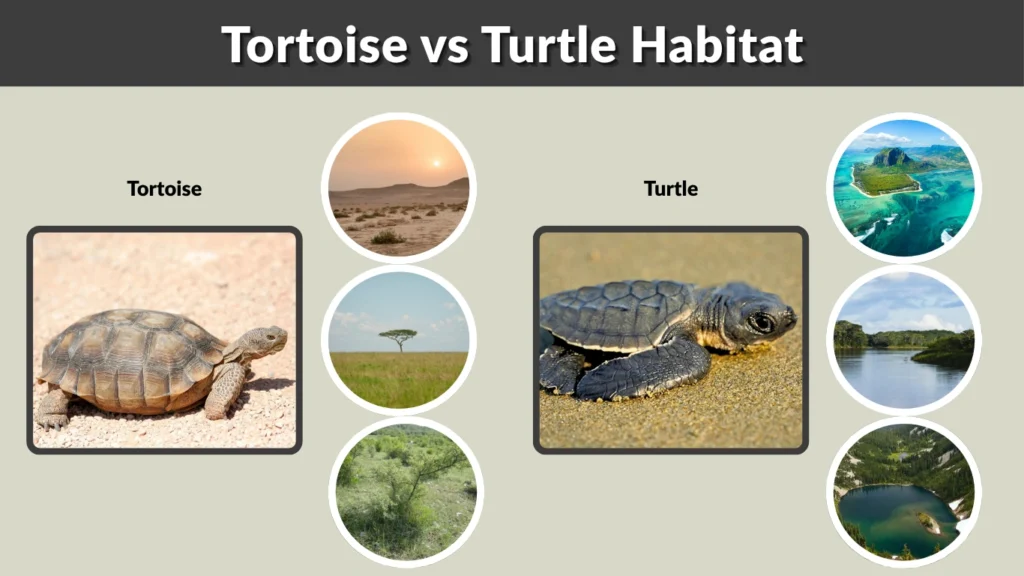
One of the most noticeable distinctions between tortoises and turtles is where they live.
Tortoises are strictly land animals. They prefer dry environments such as deserts, grasslands, and scrub forests. Their physiology is not designed for swimming, and they avoid deep water.
Turtles, on the other hand, are aquatic or semi-aquatic. Many species spend most of their lives in oceans, rivers, lakes, and ponds. Their bodies are built for buoyancy and water mobility, allowing them to glide through water with minimal effort.
Quick Points
- Tortoises: Dry land only
- Turtles: Water or water-adjacent habitats
- Habitat shapes their anatomy and lifestyle
2. Shell Shape & Structure
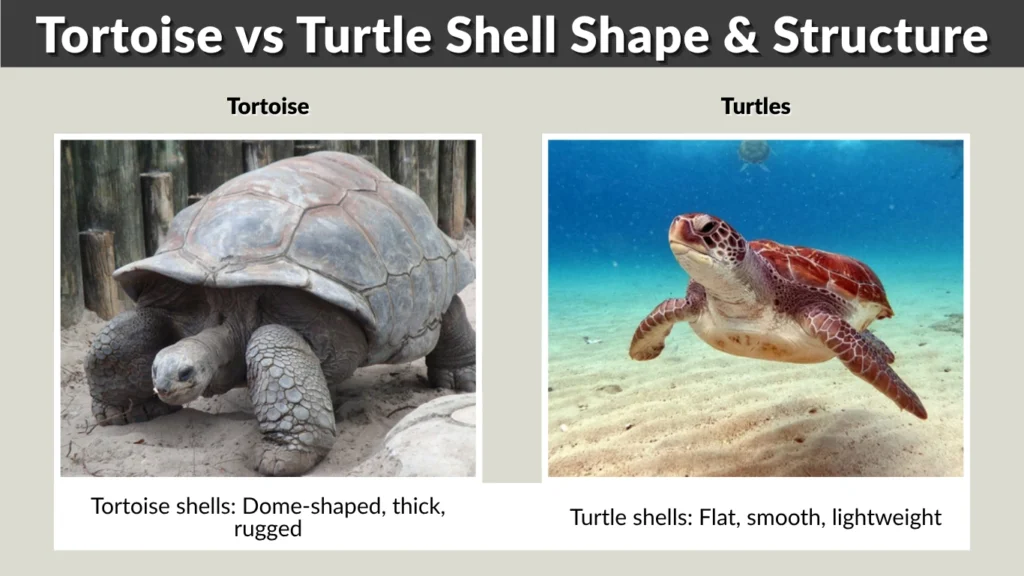
A tortoise’s shell is built for protection on land. It is usually high-domed, rounded, and heavy. This shape acts like a shield, providing defense from predators. The weight also adds stability, helping them stay grounded in rugged terrain.
Turtles have flatter, lighter, streamlined shells. This design reduces drag, making them more efficient swimmers. Sea turtles especially have thin, hydrodynamic shells that allow fast movement through ocean currents.
Key Differences
- Tortoise shells: Dome-shaped, thick, rugged
- Turtle shells: Flat, smooth, lightweight
- Shell structure is directly related to mobility needs
3. Feet & Limbs
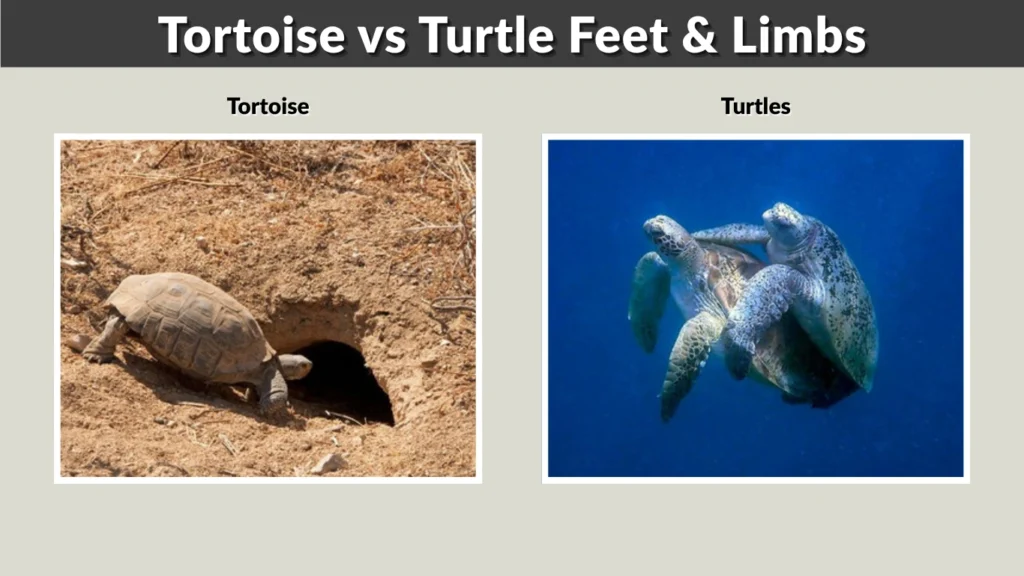
The feet of tortoises and turtles reveal almost everything about their lifestyle.
Tortoises have stumpy, elephant-like feet that provide strong support for walking on land. Their claws help them dig burrows, navigate uneven ground, and forage for food.
Turtles possess webbed feet or flippers, depending on their species. Freshwater turtles use webbed toes for swimming and crawling onto logs or riverbanks. Sea turtles have long, powerful flippers that work like paddles, enabling them to travel long distances across oceans.
Why This Matters
- Limb structure determines how they move
- Water dwellers need speed; land dwellers need stability
- Tortoises are not built for swimming, while turtles excel in it
4. Diet
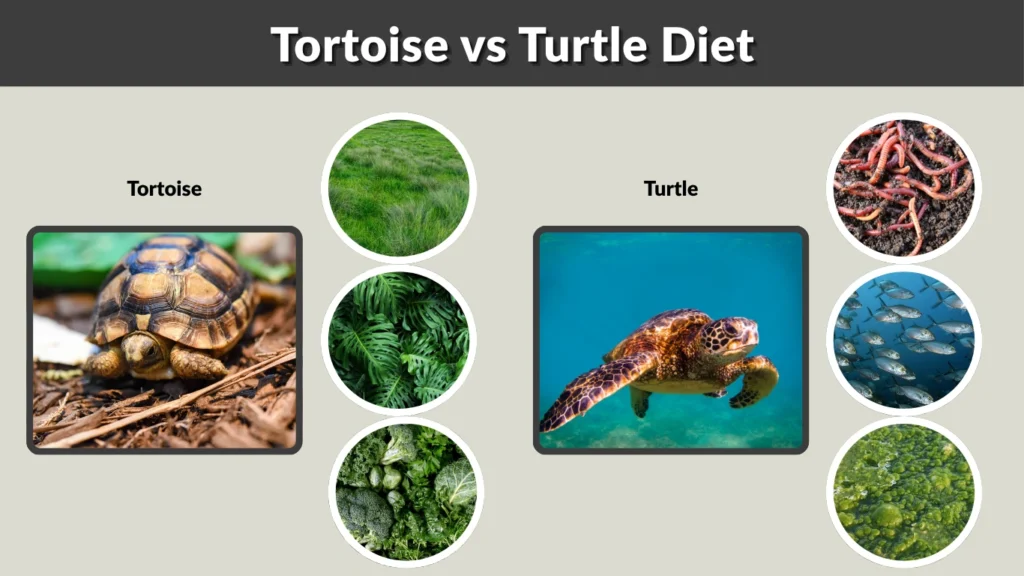
Tortoises are primarily herbivores, feeding on grasses, leaves, vegetables, and fruits. Their beaks are shaped for grinding tough plant matter. Because they live on land, vegetation is abundant and forms the basis of their diet.
Turtles are typically omnivores, which means they eat both plants and animals. Depending on the species, their diet may include insects, worms, fish, algae, and aquatic plants. Sea turtles have more specialized diets—some eat jellyfish, while others prefer seagrass.
Diet Patterns
- Tortoises: Mostly plant-based
- Turtles: Mix of meat and plants
- Adapted to match available food sources in their habitats
5. Lifespan
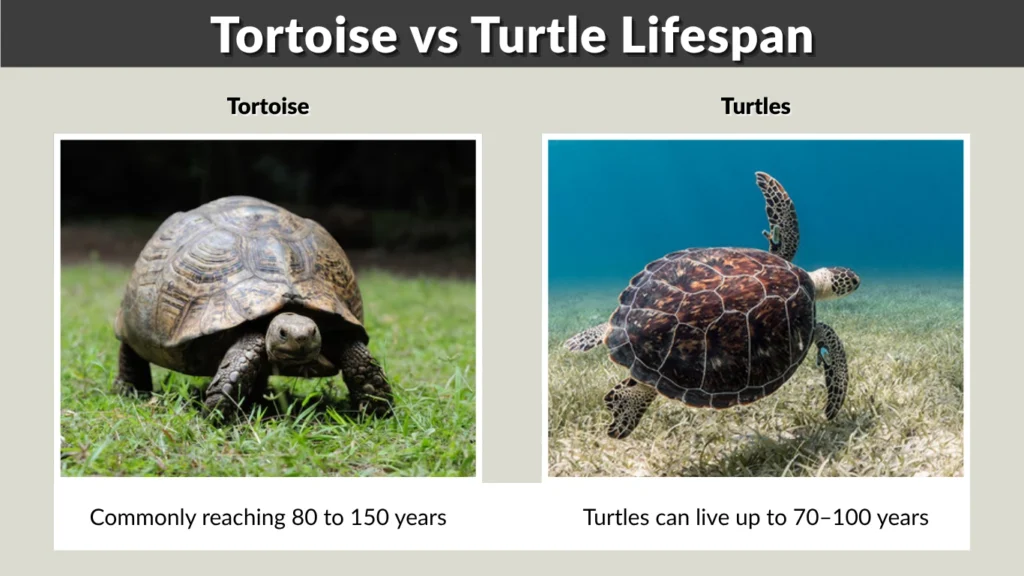
A significant difference between the two is how long they live.
Tortoises are famous for their incredibly long lifespans, commonly reaching 80 to 150 years, with some even surpassing 200. Their slow metabolism and calm lifestyle contribute to their longevity.
Turtles generally live 20 to 40 years, although larger species like sea turtles can live up to 70–100 years. Their shorter lifespan compared to tortoises is influenced by environmental threats, predators, and more active lifestyles.
Longevity Highlights
- Tortoises: Among the longest-living animals
- Turtles: Shorter lifespan but still impressive
- Lifestyle and habitat influence lifespan heavily
6. Behavior & Activity
Tortoises tend to live slow, steady, and mostly solitary lives. They prefer a quiet environment and spend their time walking, grazing, and occasionally digging burrows to stay cool. Their movements are deliberate because their heavy shells and land-adapted bodies limit speed. Tortoises rarely interact socially except during mating seasons, and they conserve energy by maintaining a calm, predictable routine.
Turtles, however, are far more active and alert. Aquatic turtles often swim for hours at a time, explore their environments, and quickly dive underwater when threatened. Sea turtles migrate thousands of miles throughout their lives, navigating vast oceans with remarkable precision. Their behavior is shaped by survival needs—finding food, avoiding predators, and seeking suitable nesting areas. Compared to tortoises, turtles exhibit more dynamic and varied activity patterns.
7. Size Differences
While size varies across species, tortoises are generally heavier, thicker, and more robust. Many species reach 100–200 pounds, and giants like the Galápagos tortoise can exceed 500 pounds. Their large frames support their powerful shells and land-based lifestyle. Even smaller tortoise species tend to be dense and muscular.
Turtles, by contrast, have more variety in size. Freshwater turtles are commonly 5–12 inches in shell length, making them lighter and easier to maneuver. Sea turtles are the exception—some can weigh several hundred pounds—but even then, their bodies remain streamlined for swimming rather than bulk. Turtles are built for agility in water, while tortoises are built for stability on land.
Tortoise vs Turtle Comparison Table
| Feature | Tortoise | Turtle |
| Habitat | Land-only | Aquatic/semi-aquatic |
| Shell Shape | Dome-shaped, heavy | Flat, lightweight |
| Feet/Limbs | Elephant-like, sturdy | Webbed feet or flippers |
| Diet | Herbivore | Omnivore |
| Lifespan | 80–150+ years | 20–40+ years |
| Behavior | Slow, solitary | Active, migratory |
| Size | Generally larger and heavier | Smaller (except sea turtles) |
FAQs
1. How can you tell a tortoise from a turtle at a glance?
You can quickly identify them by habitat and shell shape. Tortoises have high, rounded shells and live exclusively on land. Turtles have flatter, streamlined shells and usually stay in or near water. Their feet also differ—tortoises have sturdy, elephant-like limbs, while turtles have webbed feet or flippers.
2. Do tortoises swim at all?
Tortoises cannot swim and should never be placed in deep water. Their heavy shells and thick legs are designed for land, making them poor swimmers and vulnerable to drowning. At most, tortoises may wade shallow water for drinking or cooling off, but they do not swim like turtles.
3. Which one lives longer—tortoises or turtles?
Tortoises typically live much longer than turtles. Many tortoise species reach 80–150 years, and some even surpass 200. Turtles usually live between 20 and 40 years, although sea turtles may live up to 70–100 years. Longevity largely depends on species, habitat safety, and lifestyle.
4. Can tortoises and turtles live together as pets?
It’s not recommended. Tortoises and turtles have very different habitat needs, diets, and temperature requirements. Mixing them can cause stress, illness, or injury. Tortoises need dry, warm environments, while turtles require water access. Keeping them separately ensures their health and well-being.
5. Are all turtles aquatic?
Most turtles are aquatic or semi-aquatic, but a few species spend more time on land. Still, all turtles rely on water for at least some part of their life cycle. Unlike tortoises, which avoid deep water, turtles are naturally adapted for swimming thanks to their streamlined shells and webbed limbs.