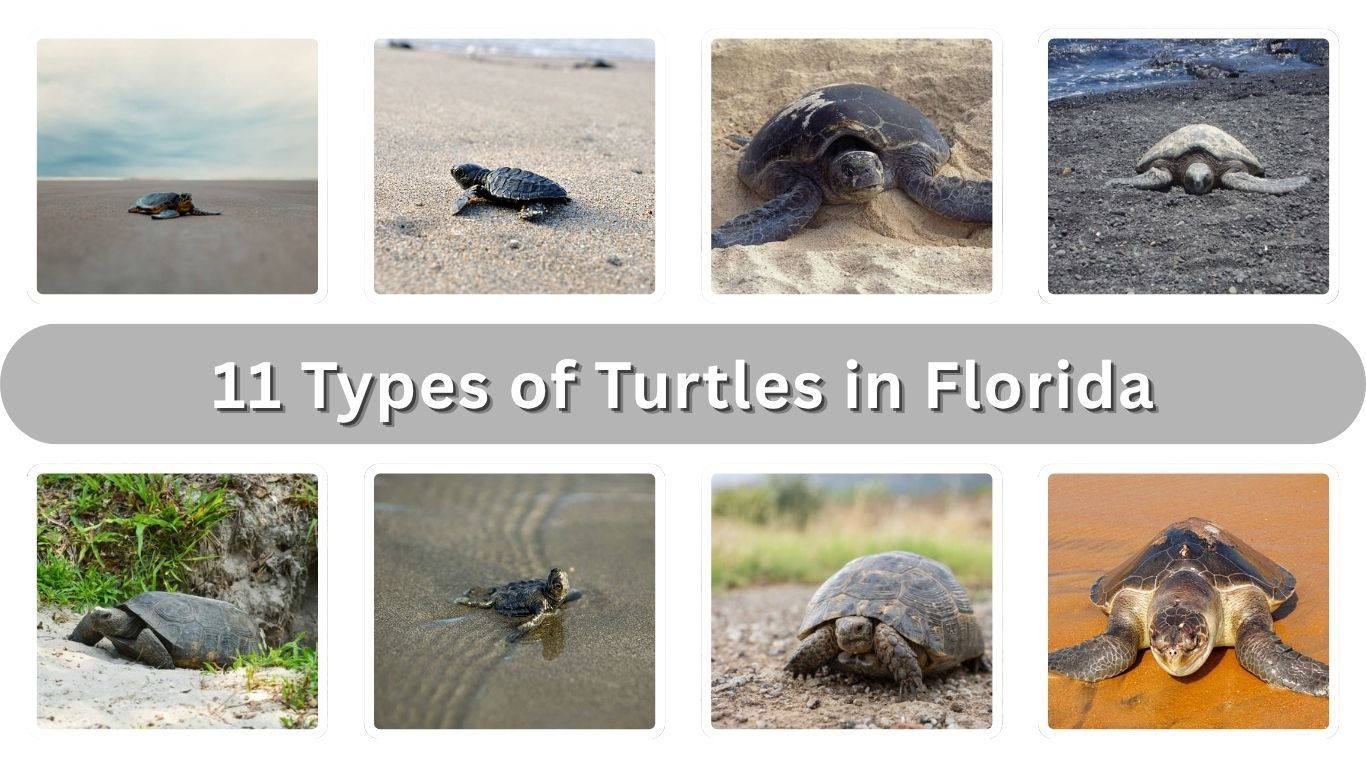
Florida is home to a diverse range of turtles, from massive ocean-going sea turtles to small freshwater and land-dwelling species. Thanks to its warm climate, abundant wetlands, and extensive coastline, the state provides ideal habitats for many different types of turtles. These reptiles play important roles in maintaining healthy ecosystems, whether by grazing on seagrass, controlling insect populations, or supporting other wildlife through their habitats.
In this guide, you’ll discover 11 types of turtles found in Florida, along with key details about their identification, habitat, diet, and conservation status.
1. Loggerhead Sea Turtle
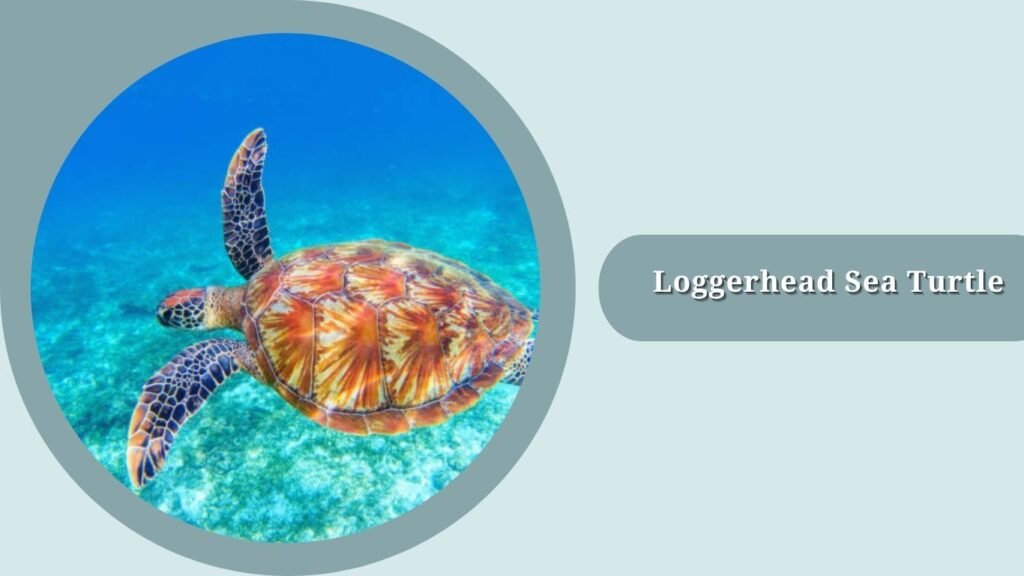
The loggerhead sea turtle is one of the most common sea turtles found in Florida, especially along its coastal waters and nesting beaches. Known for its large head and powerful jaws, it plays an important role in maintaining marine ecosystems.
Identification
- Large, reddish-brown shell (carapace)
- Broad, triangular head with strong jaws
- Yellow to light brown underside (plastron)
- Typically weighs between 200–350 pounds
Habitat
Loggerhead sea turtles are mainly found in coastal and offshore waters, including bays, estuaries, and the open ocean. In Florida, they frequently nest on sandy beaches, especially along the Atlantic coast.
Diet
They primarily feed on hard-shelled prey such as crabs, conchs, and mollusks. Their strong jaws allow them to crush shells easily.
Conservation Status
Loggerhead sea turtles are considered threatened. Major threats include habitat loss, boat strikes, accidental capture in fishing gear, and climate change affecting nesting sites.
2. Green Sea Turtle
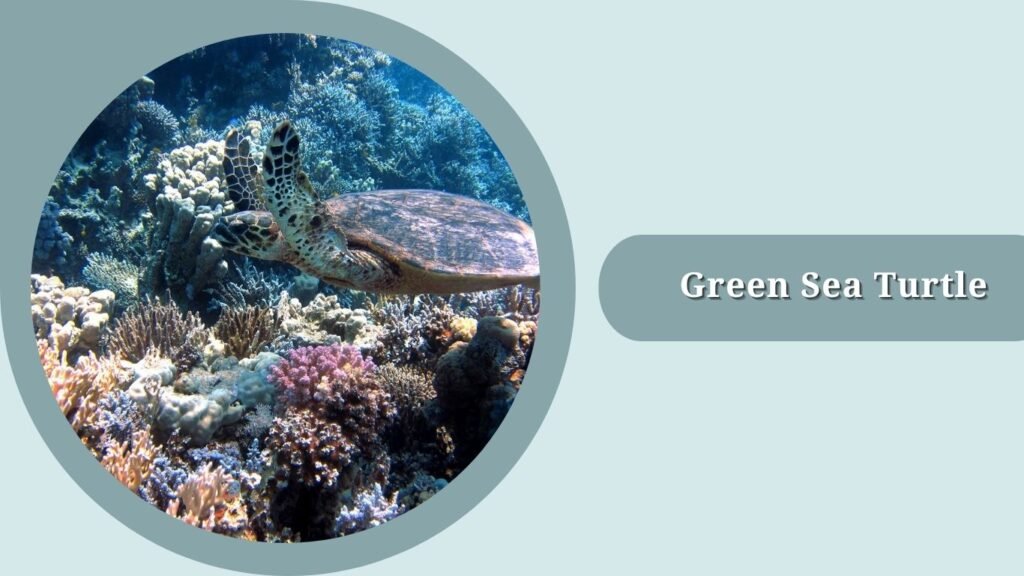
The green sea turtle is one of the largest sea turtle species found in Florida waters. It gets its name not from its shell color, but from the greenish fat beneath its shell. These turtles are important for maintaining healthy seagrass beds and marine ecosystems.
Identification
- Smooth, heart-shaped shell with shades of green, brown, or olive
- Small head compared to body size
- Single pair of scales in front of the eyes
- Adults can weigh between 240–420 pounds
Habitat
Green sea turtles prefer shallow coastal waters, including lagoons, bays, and seagrass beds. In Florida, they are commonly seen along both the Atlantic and Gulf coasts, where seagrass is abundant. They also nest on sandy beaches throughout the state.
Diet
Unlike many other sea turtles, adult green sea turtles are mostly herbivores. They primarily feed on seagrass and algae, which helps keep seagrass ecosystems healthy and balanced.
Conservation Status
Green sea turtles are listed as threatened. They face risks from coastal development, pollution, boat strikes, and entanglement in fishing gear. Conservation efforts in Florida have helped increase their nesting populations in recent years.
3. Leatherback Sea Turtle
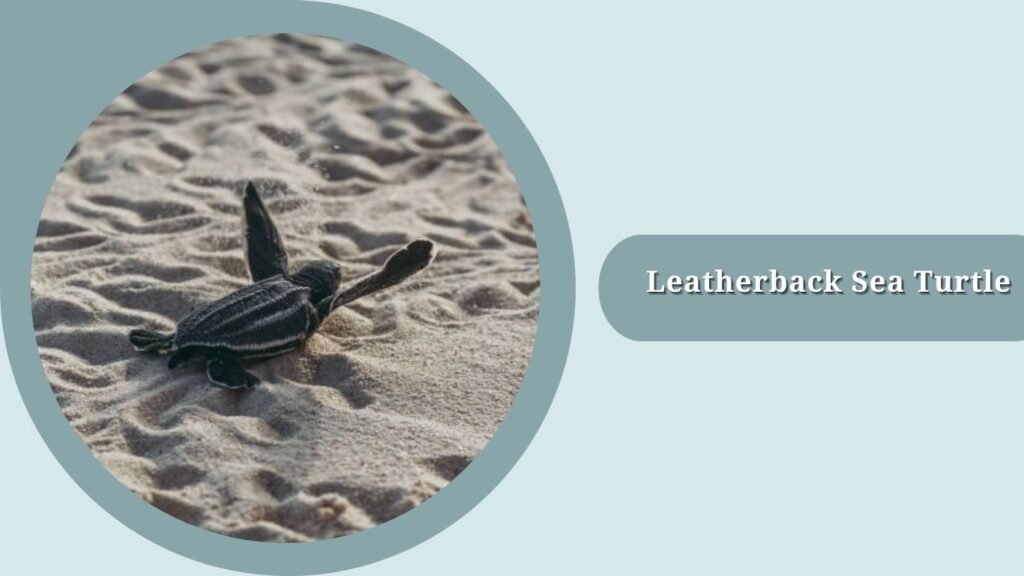
The leatherback sea turtle is the largest of all sea turtles and one of the most unique. Unlike other turtles, it does not have a hard shell but instead has a leathery, flexible carapace. These turtles are highly migratory and can travel vast distances across oceans.
Identification
- Large, elongated body with a ridged, leathery shell
- Dark gray or black coloration with white spots
- Seven distinct ridges running along the back
- Can weigh up to 2,000 pounds
Habitat
Leatherback sea turtles are typically found in deep, open ocean waters but also come closer to shore during nesting season. In Florida, they nest mainly along the Atlantic coast on wide, sandy beaches.
Diet
They primarily feed on jellyfish and other soft-bodied organisms. Their diet helps control jellyfish populations in the ocean.
Conservation Status
Leatherback sea turtles are considered vulnerable globally. Threats include plastic pollution (which they may mistake for jellyfish), fishing gear entanglement, and habitat disturbance. Conservation programs focus on protecting nesting beaches and reducing ocean pollution.
4. Hawksbill Sea Turtle
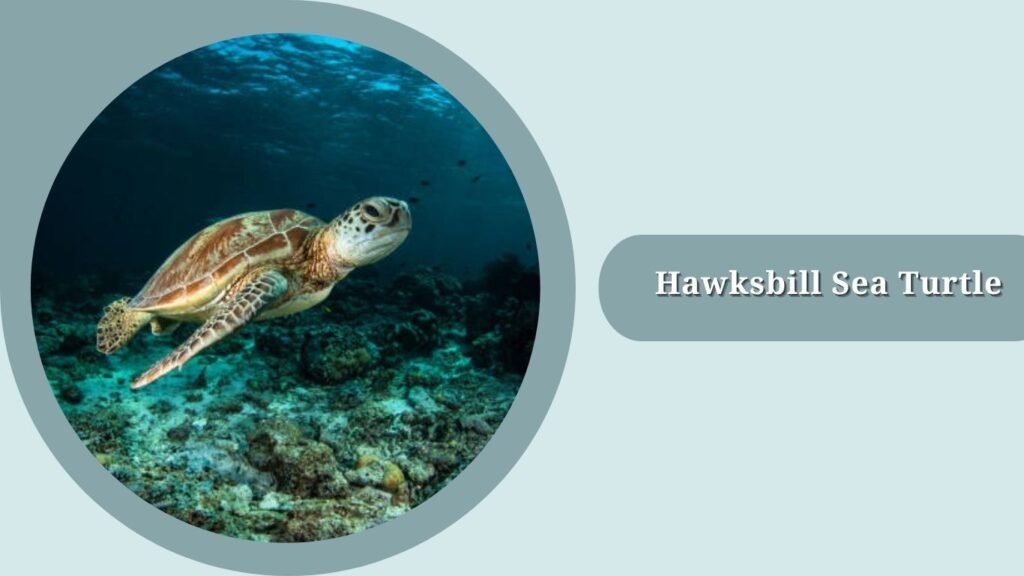
The hawksbill sea turtle is a beautifully patterned species known for its narrow, pointed beak that resembles a hawk’s bill. Although less commonly seen than other sea turtles in Florida, it plays a vital role in maintaining the health of coral reef ecosystems.
Identification
- Distinctive pointed, bird-like beak
- Overlapping (imbricated) shell scutes with amber and brown patterns
- Relatively small size compared to other sea turtles
- Serrated edges on the shell
Habitat
Hawksbill sea turtles are most often found in tropical coral reefs, rocky areas, and coastal lagoons. In Florida, they are mainly spotted in the Florida Keys and southeastern coastal waters where coral reefs are present.
Diet
Their diet mainly consists of sponges, along with algae and small invertebrates. By feeding on sponges, they help prevent these organisms from overgrowing and damaging coral reefs.
Conservation Status
Hawksbill sea turtles are critically endangered. Major threats include illegal shell trade, habitat loss, coral reef degradation, and marine pollution. Conservation efforts focus on habitat protection and strict legal protections.
5. Kemp’s Ridley Sea Turtle
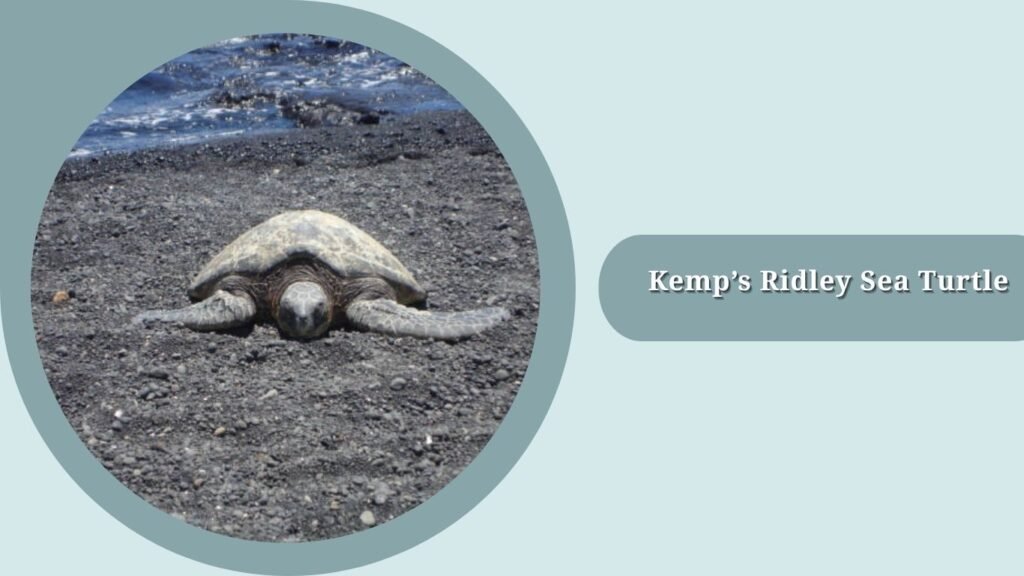
The Kemp’s ridley sea turtle is the rarest and most endangered sea turtle species in the world. It is also the smallest sea turtle found in Florida waters. Despite its rarity, it can occasionally be seen along Florida’s coasts, especially in the Gulf of Mexico.
Identification
- Small, nearly circular shell
- Grayish-green carapace
- Triangular head with a slightly hooked beak
- Adults typically weigh between 75–100 pounds
Habitat
Kemp’s ridley sea turtles prefer shallow coastal waters, especially in the Gulf of Mexico. Juveniles may also be found in bays and estuaries. While most nesting occurs in Mexico, some nesting activity has been recorded in Florida.
Diet
They primarily feed on crabs, but also eat fish, mollusks, and other small marine animals. Their diet helps regulate populations of bottom-dwelling species.
Conservation Status
Kemp’s ridley sea turtles are critically endangered. Threats include accidental capture in fishing gear, habitat loss, and pollution. Intensive conservation programs, including nest protection and international cooperation, have helped improve their numbers, but they remain at risk.
6. Gopher Tortoise
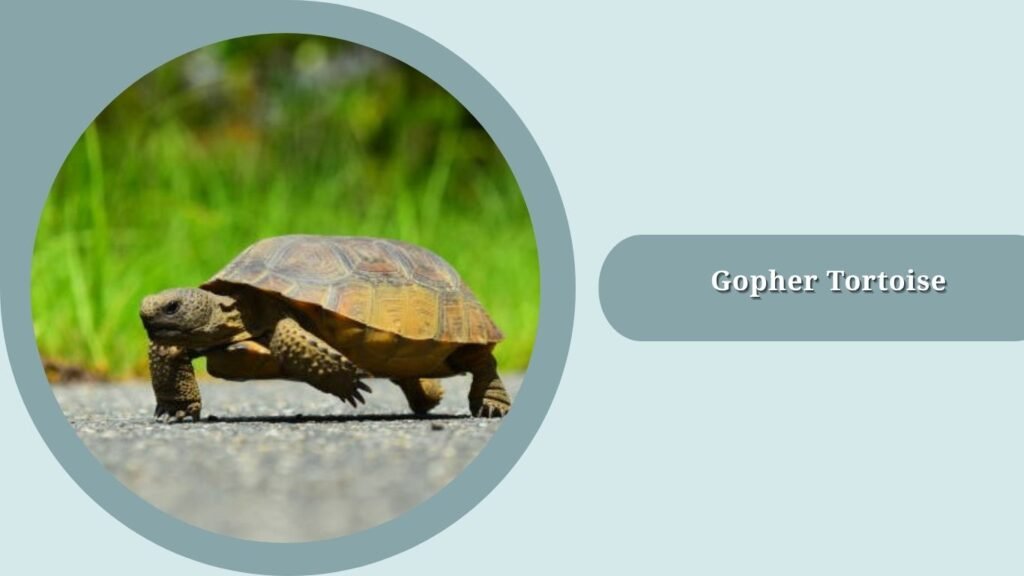
The gopher tortoise is a land-dwelling species and one of the most important reptiles in Florida’s ecosystems. It is known as a “keystone species” because its burrows provide shelter for hundreds of other animals.
Identification
- Dome-shaped, brown or gray shell
- Sturdy, elephant-like hind legs
- Flat, shovel-like front legs for digging
- Typically 9–15 inches in shell length
Habitat
Gopher tortoises live in dry, sandy habitats such as pine forests, scrublands, and coastal dunes. They dig long burrows in well-drained soil, which protect them and other species from extreme weather and predators.
Diet
They are herbivores and feed on grasses, fruits, flowers, and low-growing plants. Their grazing helps maintain plant diversity in their habitats.
Conservation Status
Gopher tortoises are listed as threatened in Florida. Habitat loss due to development is the biggest threat. They are protected by law, and relocation or harm without permits is illegal.
7. Florida Box Turtle
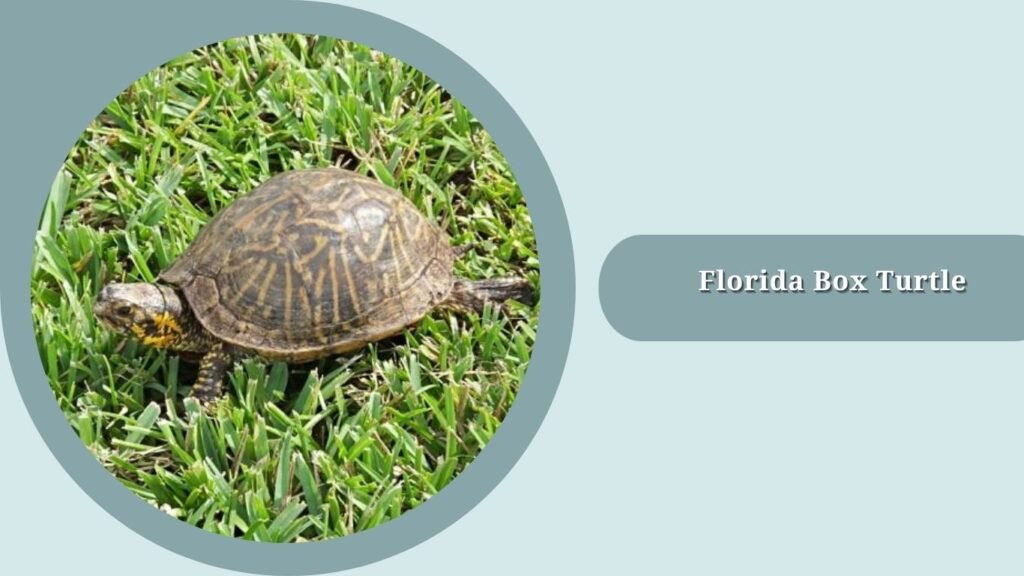
The Florida box turtle is a subspecies of the eastern box turtle and is commonly found in Florida’s forests and wetlands. It is known for its ability to completely close its shell for protection.
Identification
- High-domed shell with yellow or orange markings
- Hinged plastron that allows full shell closure
- Dark skin with yellow stripes or spots
- Usually 4–6 inches in length
Habitat
Florida box turtles inhabit moist environments such as forests, marsh edges, and grassy fields. They prefer areas with plenty of cover and access to water.
Diet
They are omnivores, eating a wide variety of foods including insects, fruits, mushrooms, and small animals. Their flexible diet helps them adapt to different environments.
Conservation Status
Florida box turtles are not currently endangered, but their populations are declining due to habitat destruction, road mortality, and collection as pets. Protecting their natural habitats is essential for their survival.
8. Eastern Mud Turtle
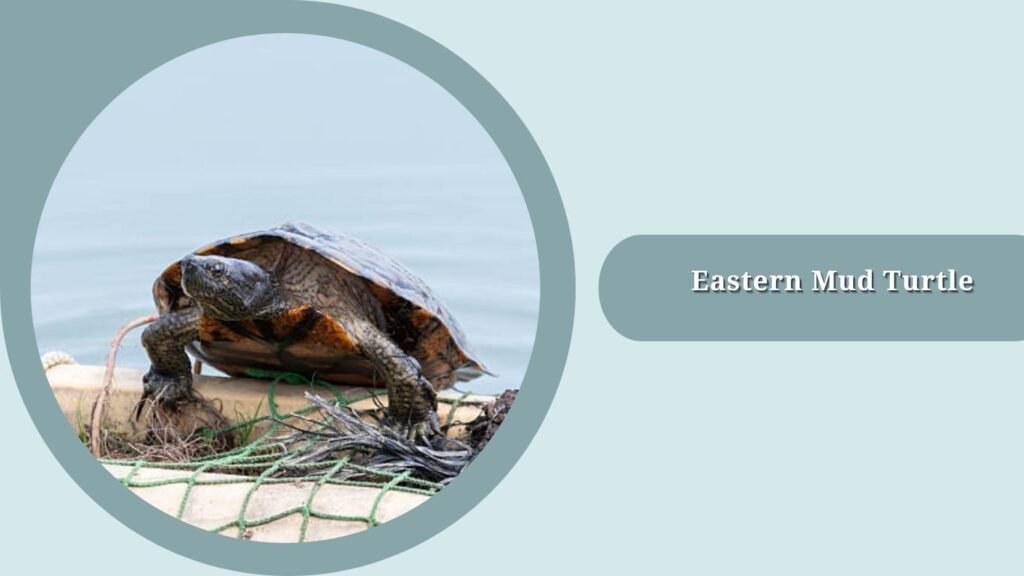
The eastern mud turtle is a small, semi-aquatic species commonly found in Florida’s freshwater habitats. Despite its modest size, it is well adapted to life both in water and on land.
Identification
- Small, smooth, dark brown or black shell
- Low, oval-shaped carapace
- Light-colored chin and throat with possible stripes
- Typically grows up to 3–5 inches
Habitat
Eastern mud turtles prefer shallow freshwater environments such as ponds, marshes, ditches, and slow-moving streams. They often bury themselves in mud during dry periods or cold weather.
Diet
They are omnivores and feed on insects, small fish, snails, aquatic plants, and carrion. Their varied diet helps them survive in changing conditions.
Conservation Status
Eastern mud turtles are not currently considered threatened, but they can be affected by habitat loss, pollution, and road mortality when moving between water sources.
9. Striped Mud Turtle
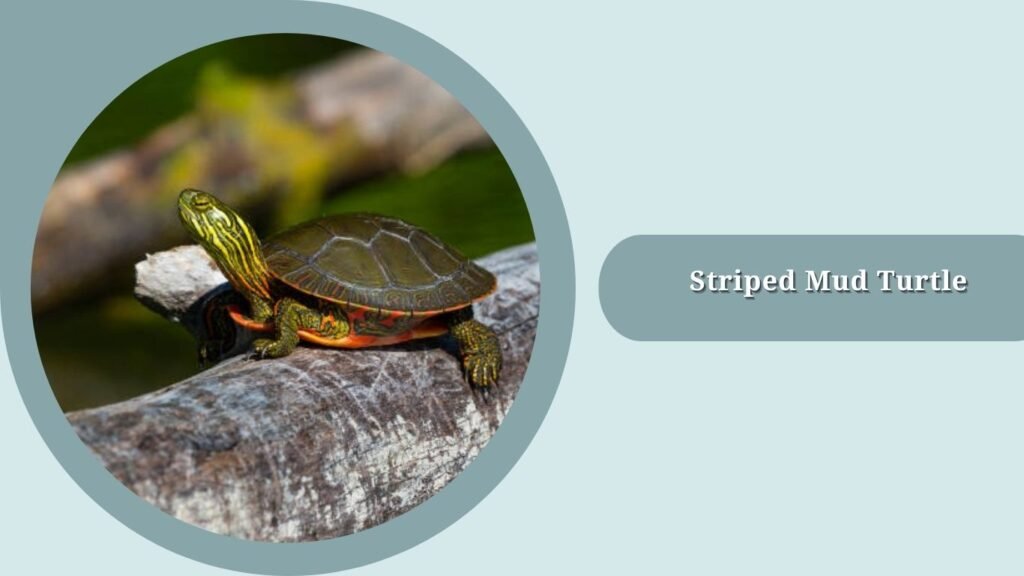
The striped mud turtle is another small freshwater species found in Florida, easily recognized by the light stripes running along its shell. It is more aquatic than its close relatives.
Identification
- Dark shell with three light-colored stripes running lengthwise
- Small, smooth, oval-shaped carapace
- Barbels (small whisker-like structures) on the chin
- Usually about 3–4 inches long
Habitat
Striped mud turtles inhabit freshwater environments such as ponds, wetlands, canals, and slow-moving streams. They prefer areas with soft, muddy bottoms where they can easily hide.
Diet
They feed on a variety of aquatic organisms including insects, crustaceans, snails, and plant matter. Their feeding habits help control small aquatic populations.
Conservation Status
Striped mud turtles are generally stable in population but still face threats from water pollution, habitat destruction, and human disturbance. Protecting wetland habitats is key to their long-term survival.
10. Florida Softshell Turtle
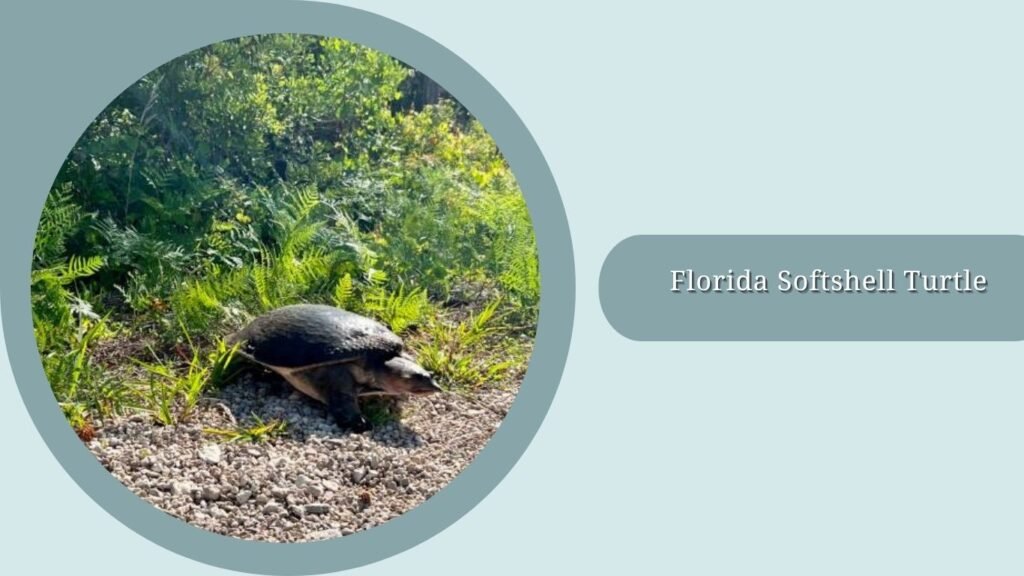
The Florida softshell turtle is a unique freshwater species known for its flat, leathery shell and long, snorkel-like nose. It is one of the largest freshwater turtles in Florida and is highly adapted to aquatic life.
Identification
- Flat, leathery shell without hard scutes
- Long neck and pointed, snorkel-like snout
- Olive to brown coloration
- Females are much larger, reaching up to 24 inches
Habitat
Florida softshell turtles live in a variety of freshwater habitats including lakes, rivers, ponds, and canals. They prefer sandy or muddy bottoms where they can bury themselves and remain hidden.
Diet
They are carnivorous and feed on fish, insects, crustaceans, and other small aquatic animals. They are active hunters and can move quickly both in water and on land.
Conservation Status
Florida softshell turtles are not currently endangered, but they face threats from water pollution, habitat destruction, and hunting in some areas. Conservation efforts focus on maintaining clean freshwater ecosystems.
11. Peninsula Cooter
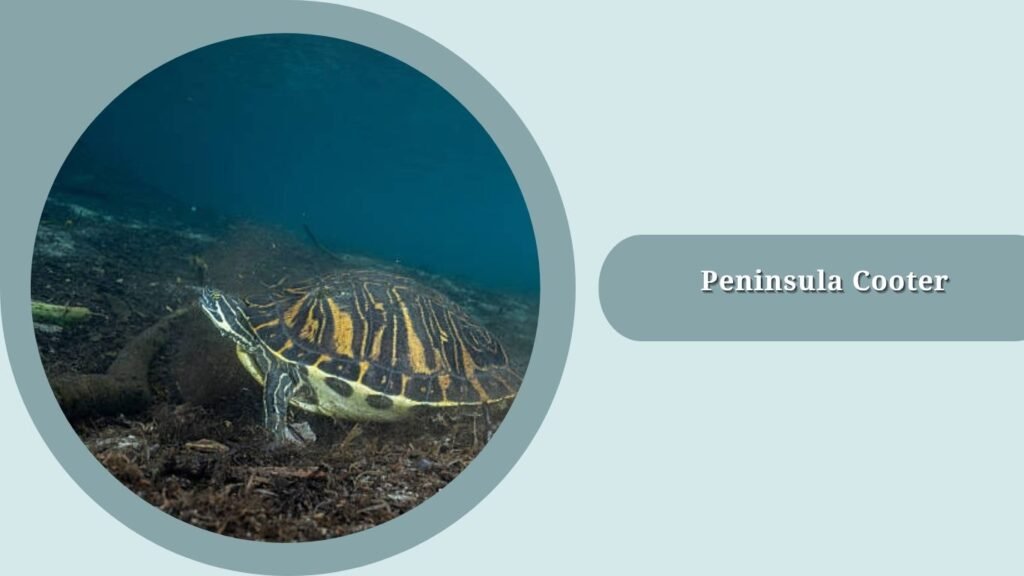
The peninsula cooter is a large freshwater turtle commonly found throughout Florida. It is often seen basking in the sun on logs or rocks near water bodies.
Identification
- Dark shell with yellow or light-colored markings
- Oval-shaped, slightly domed carapace
- Yellow stripes on the head, neck, and limbs
- Can grow up to 12–16 inches in length
Habitat
Peninsula cooters inhabit freshwater environments such as rivers, lakes, marshes, and ponds. They prefer areas with plenty of vegetation and basking sites.
Diet
They are primarily herbivores, feeding on aquatic plants, algae, and occasionally small invertebrates. Their feeding helps maintain healthy aquatic vegetation.
Conservation Status
Peninsula cooters are generally stable in Florida, but they can be impacted by habitat degradation, pollution, and boat traffic. Protecting freshwater habitats is essential for their continued survival.
FAQs
1. How many types of turtles live in Florida?
Florida is home to over 30 species of turtles, including sea turtles, freshwater turtles, and land-dwelling tortoises. This guide highlights 11 of the most common and well-known species.
2. Which turtle is most common in Florida?
The loggerhead sea turtle is one of the most common sea turtles in Florida, especially during nesting season along the state’s beaches.
3. Are all turtles in Florida protected?
Many turtle species in Florida are protected by state or federal laws, especially sea turtles and the gopher tortoise. It is illegal to harm, harass, or collect them without proper permits.
4. Where can you see turtles in Florida?
Turtles can be found in a variety of places, including beaches, oceans, rivers, lakes, wetlands, and forests. Coastal areas are best for sea turtles, while freshwater turtles are common inland.
5. What do turtles in Florida eat?
Their diet varies by species. Some are herbivores that eat plants and algae, while others are omnivores or carnivores that feed on insects, fish, shellfish, or small animals.