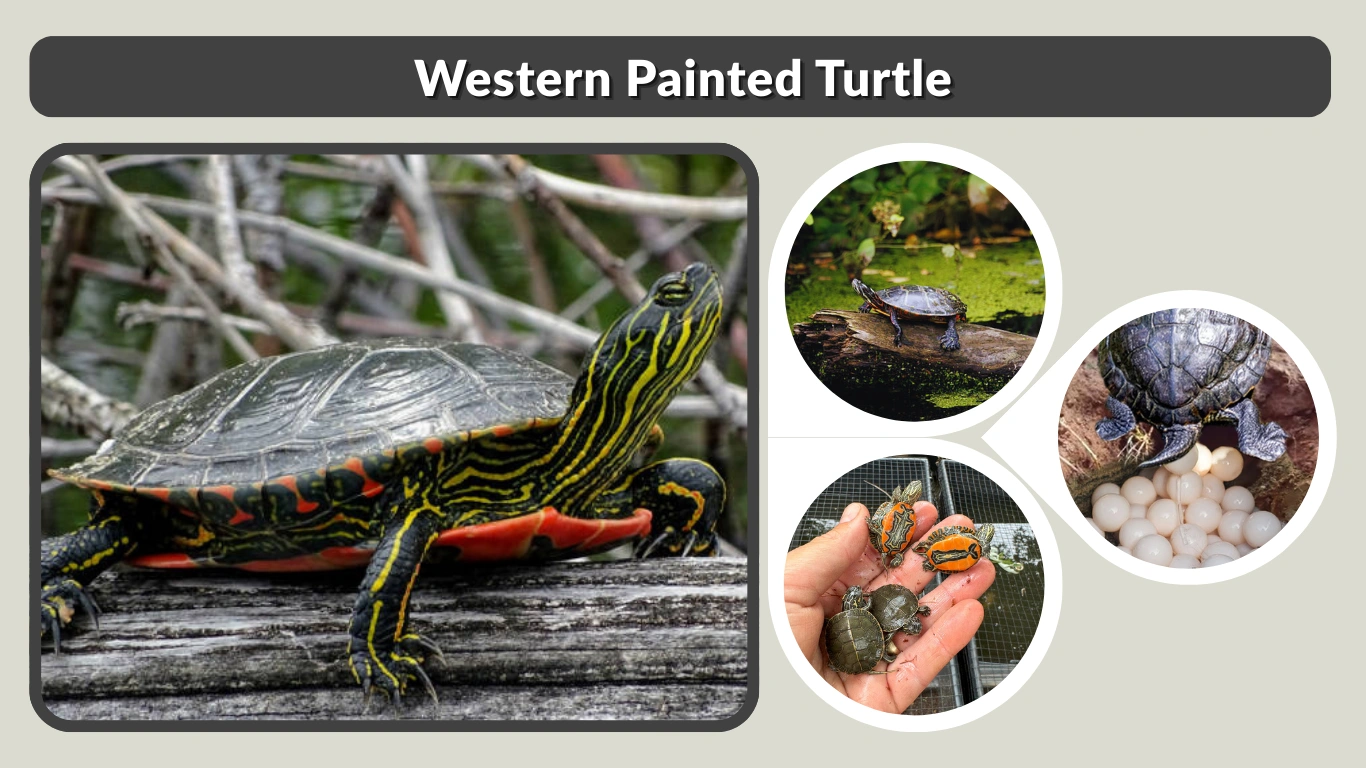
The western painted turtle is one of the most colorful freshwater turtles in North America. Recognized for its bright red plastron and smooth olive shell, this turtle thrives in ponds, lakes, and slow-moving rivers across central and western regions. Many people search for information about western painted turtle habitat, size, diet, lifespan, and care, especially when considering one as a pet. This guide covers everything you need to know about western painted turtles, from their natural range to how long they live.
What Is a Western Painted Turtle?
The western painted turtle (Chrysemys picta bellii) is the largest subspecies of the painted turtle. It is known for its bold coloring and adaptability to colder climates. Western painted turtles are especially famous for their striking red markings along the edges of their shell and their bright, patterned underside.
These turtles are semi-aquatic, meaning they spend most of their time in water but regularly bask in the sun on logs and rocks. Basking helps them regulate body temperature and stay healthy.
Western Painted Turtle Habitat
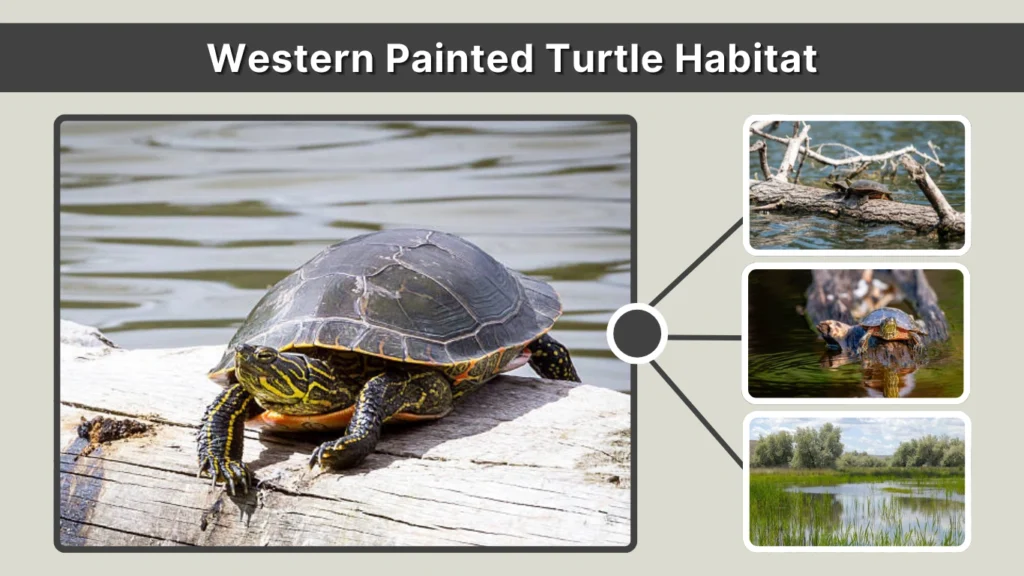
The western painted turtle habitat typically includes calm freshwater environments. They prefer areas with soft, muddy bottoms and plenty of aquatic vegetation.
Common habitats include:
- Ponds
- Lakes
- Marshes
- Slow-moving rivers
- Wetlands
Western painted turtles thrive in areas where there are logs or rocks available for basking. They also prefer shallow water where they can easily find food and escape predators.
One fascinating feature of their habitat adaptation is their ability to survive cold winters. In northern regions, they hibernate underwater in mud at the bottom of ponds. They can tolerate extremely low temperatures, making them one of the most cold-hardy turtles in North America.
Western Painted Turtle Range
The western painted turtle range stretches across central and western North America. In Canada, they are found in:
- Ontario
- Manitoba
- Saskatchewan
- Alberta
- British Columbia
In the United States, they live in states such as:
- Montana
- Idaho
- Washington
- Colorado
- North Dakota
Their wide range is one reason western painted turtles are not considered endangered.
Western Painted Turtle Size
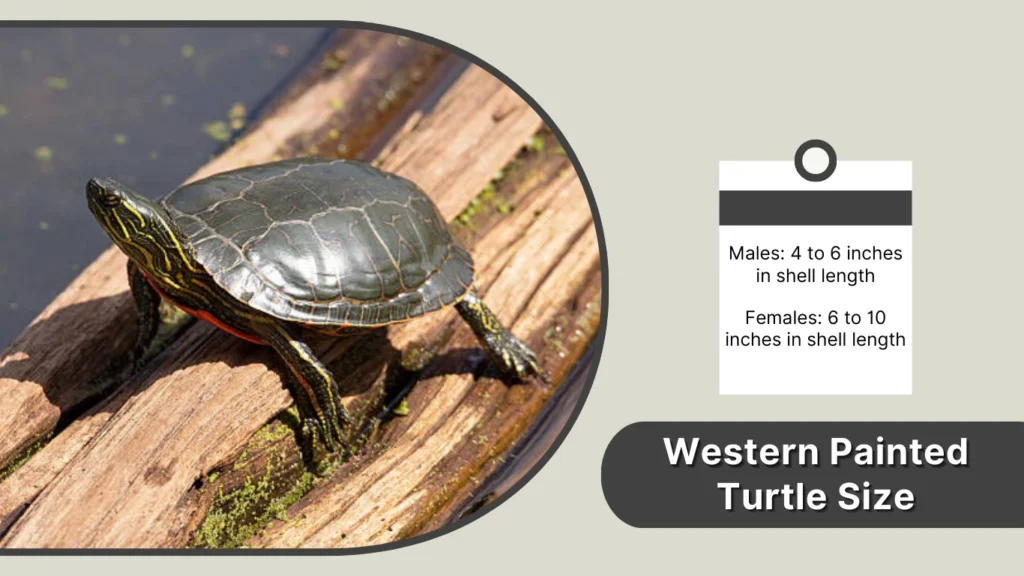
Western painted turtle size depends on age and sex. Like many turtle species, females grow larger than males.
- Males: 4 to 6 inches in shell length
- Females: 6 to 10 inches in shell length
How Big Do Western Painted Turtles Get?
On average, adult western painted turtles grow between 6 and 10 inches long. Large females can sometimes exceed 10 inches, though this is less common.
Growth rate depends on several factors:
- Diet quality
- Water temperature
- Habitat conditions
- Overall health
In captivity, turtles with proper nutrition and lighting often grow steadily during their first few years before reaching full size.
Western Painted Turtle Shell
The western painted turtle shell is smooth, flat, and oval-shaped. The upper shell, called the carapace, is usually olive green to dark brown with red markings along the edges. These red streaks make western painted turtles especially easy to identify.
The underside of the shell, known as the plastron, is bright red or orange with dark symmetrical patterns. This vibrant underside is one of the key differences between eastern vs western painted turtle subspecies.
The shell serves multiple important purposes:
- Protection from predators
- Support for the turtle’s body
- Temperature regulation
- Camouflage in aquatic environments
A healthy shell should feel firm and smooth, without soft spots or unusual discoloration.
Western Painted Turtle Diet
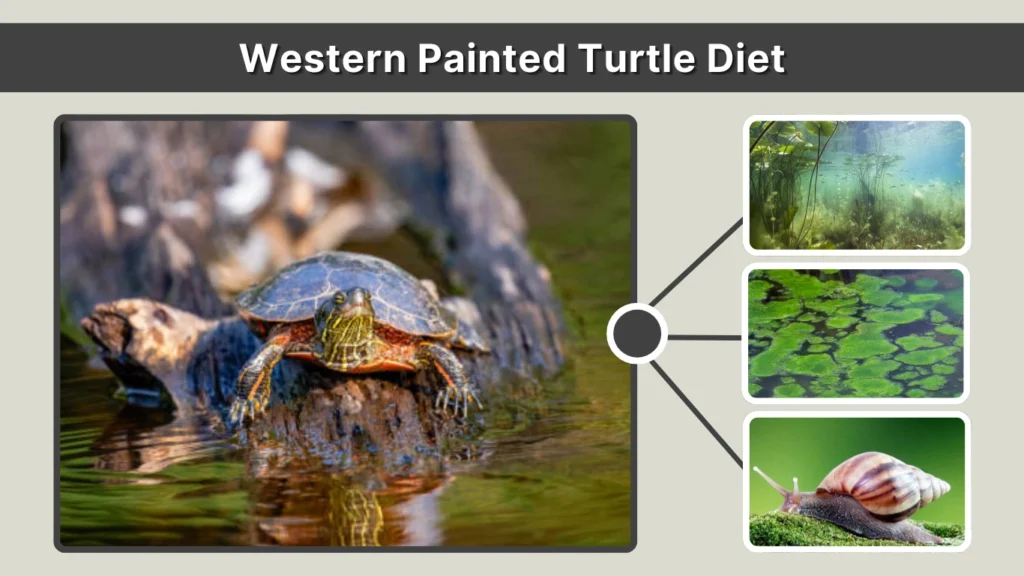
The western painted turtle diet is omnivorous, meaning they eat both plants and animals.
In the Wild
Wild western painted turtles commonly eat:
- Aquatic plants
- Algae
- Insects
- Snails
- Small fish
- Tadpoles
- Crustaceans
Young turtles tend to eat more protein because it helps support rapid growth. As they mature, they gradually consume more plant matter.
In Captivity
If kept as a western painted turtle pet, their diet should include:
- Commercial turtle pellets
- Leafy greens such as romaine lettuce or dandelion greens
- Earthworms or mealworms
- Occasional small feeder fish
A balanced diet helps ensure proper growth, strong shell development, and a long western painted turtle lifespan.
Western Painted Turtle Lifespan
Western painted turtle lifespan is relatively long compared to many other reptiles.
- In the wild: 20 to 30 years
- In captivity: 30 to 40 years or more
How Long Do Western Painted Turtles Live?
With proper care, western painted turtles can live for several decades. In captivity, good filtration, proper UVB lighting, and a balanced diet significantly increase their life expectancy.
Because of their long lifespan, owning a western painted turtle is a serious commitment that may last 30 years or more.
Western Painted Turtle Eggs
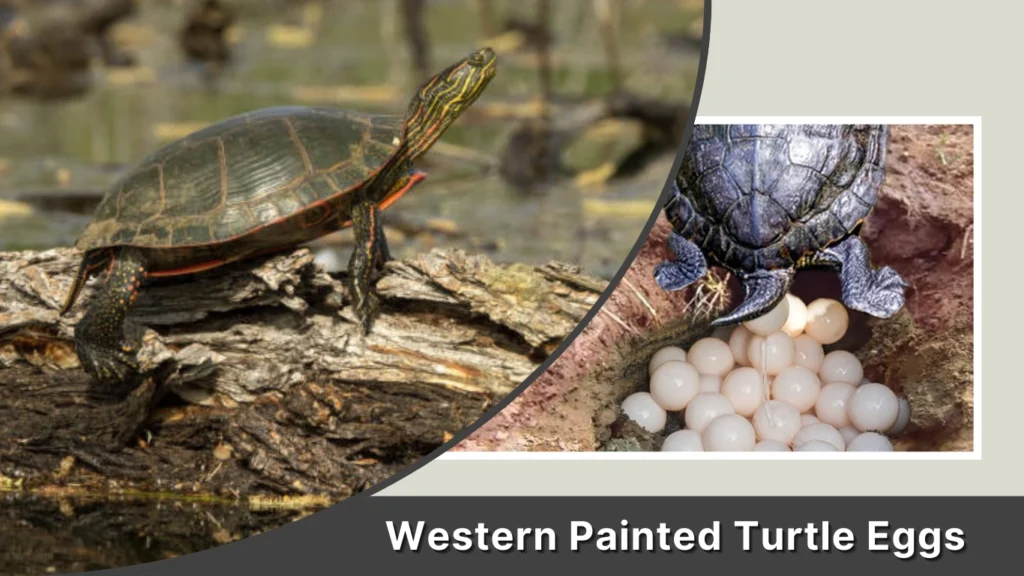
Western painted turtles breed in late spring and early summer. After mating, the female searches for a suitable nesting site on land, often choosing sandy or soft soil near water.
A female may lay:
- 4 to 20 eggs per clutch
- One to two clutches per year
She digs a small nest using her hind legs, deposits the eggs, and carefully covers them before returning to the water. The eggs are left to incubate naturally.
Incubation usually lasts between 60 and 80 days, depending on temperature. Interestingly, nest temperature determines the sex of the hatchlings:
- Warmer temperatures typically produce more females
- Cooler temperatures produce more males
This temperature-dependent sex determination is common among turtles.
Western Painted Turtle Baby
A western painted turtle baby, also called a hatchling, is about 1 inch long at birth. Hatchlings have brighter colors than adults, including vivid red markings and a smooth, glossy shell.
Baby western painted turtles rely heavily on protein during early growth. In the wild, they feed on small insects, larvae, and tiny aquatic organisms.
Many hatchlings face serious survival challenges. Predators such as birds, raccoons, snakes, and fish prey on young turtles. As a result, only a small percentage survive to adulthood.
In colder climates, hatchlings may remain in the nest through winter and emerge in spring. They can tolerate freezing conditions by slowing their metabolism dramatically.
Baby Western Painted Turtles for Sale
You may occasionally see baby western painted turtles for sale through reptile breeders or specialty pet stores. However, it is important to understand local laws before purchasing one.
In the United States, federal law generally prohibits the sale of turtles with shells smaller than 4 inches due to public health concerns. Some exceptions apply for educational or scientific purposes.
Before buying, make sure:
- The breeder is licensed and reputable
- The turtle is captive-bred, not wild-caught
- You understand long-term care requirements
Because western painted turtles live for decades, purchasing one should never be an impulse decision.
Western Painted Turtle Care
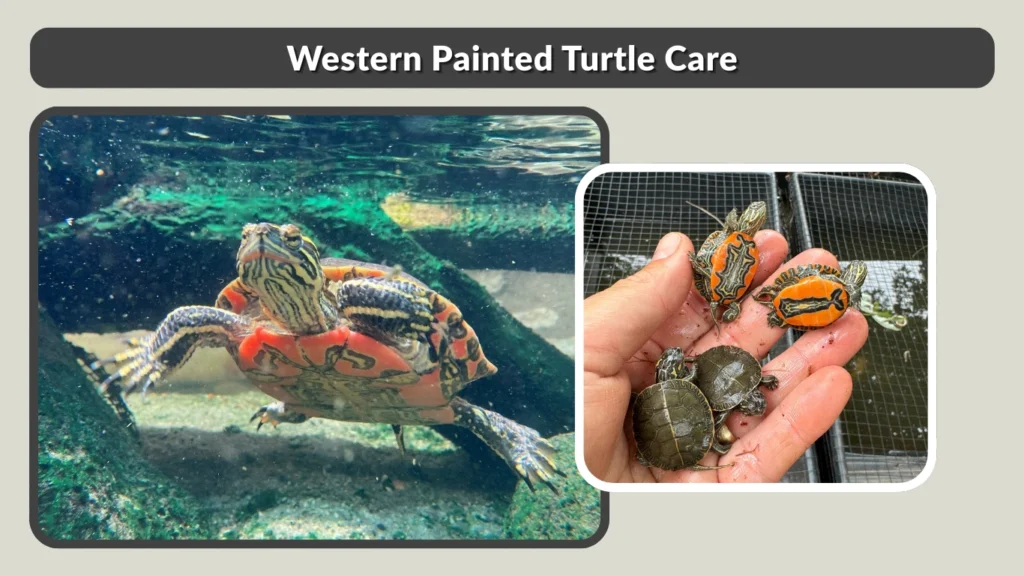
Providing proper western painted turtle care is essential for health and longevity.
Tank Size
Adult turtles require a large enclosure:
- Minimum 40–75 gallons for one adult
- Larger tanks for females due to their bigger size
A common rule is 10 gallons of water per inch of shell length.
Filtration
Western painted turtles are messy eaters. A strong filtration system is necessary to maintain clean water and prevent bacterial buildup.
Lighting and Heat
Proper lighting is critical:
- UVB lighting for calcium absorption
- Basking area temperature: 85–90°F
- Water temperature: 75–80°F
Without UVB exposure, turtles may develop shell deformities or metabolic bone disease.
Diet in Captivity
A healthy captive diet includes:
- High-quality turtle pellets
- Leafy greens
- Occasional live or frozen insects
- Calcium supplements if needed
Regular veterinary checkups are also recommended for pet turtles.
Eastern vs Western Painted Turtle
The eastern vs western painted turtle comparison often confuses beginners. While both are subspecies of painted turtles, there are noticeable differences.
Western Painted Turtle:
- Largest painted turtle subspecies
- Bright red plastron with bold dark pattern
- Found in central and western North America
Eastern Painted Turtle:
- Slightly smaller in size
- Yellow plastron with fewer markings
- Found primarily in the eastern United States
The most obvious difference is the bright red underside of the western painted turtle.
Are Western Painted Turtles Endangered?
Are western painted turtles endangered? Currently, they are not listed as endangered and are classified as a species of least concern in most regions.
However, they still face environmental threats, including:
- Wetland destruction
- Road mortality
- Water pollution
- Illegal pet collection
Habitat protection and responsible wildlife practices are essential to maintaining stable populations.
Western Painted Turtle Fun Facts
Here are some interesting western painted turtle fun facts:
- They can survive months underwater during winter hibernation.
- They absorb small amounts of oxygen through specialized tissues while dormant.
- They often bask in groups on the same log.
- Their bright plastron helps distinguish them from other subspecies.
- They are among the most cold-tolerant turtles in North America.
Is a Western Painted Turtle a Good Pet?
A western painted turtle pet can be rewarding, but they require space, equipment, and long-term care. They are not low-maintenance animals.
Pros:
- Long lifespan
- Hardy species
- Attractive appearance
Cons:
- Large tank requirements
- Strong filtration needs
- Long-term commitment of 30+ years
Prospective owners should carefully evaluate whether they can provide consistent care for decades.