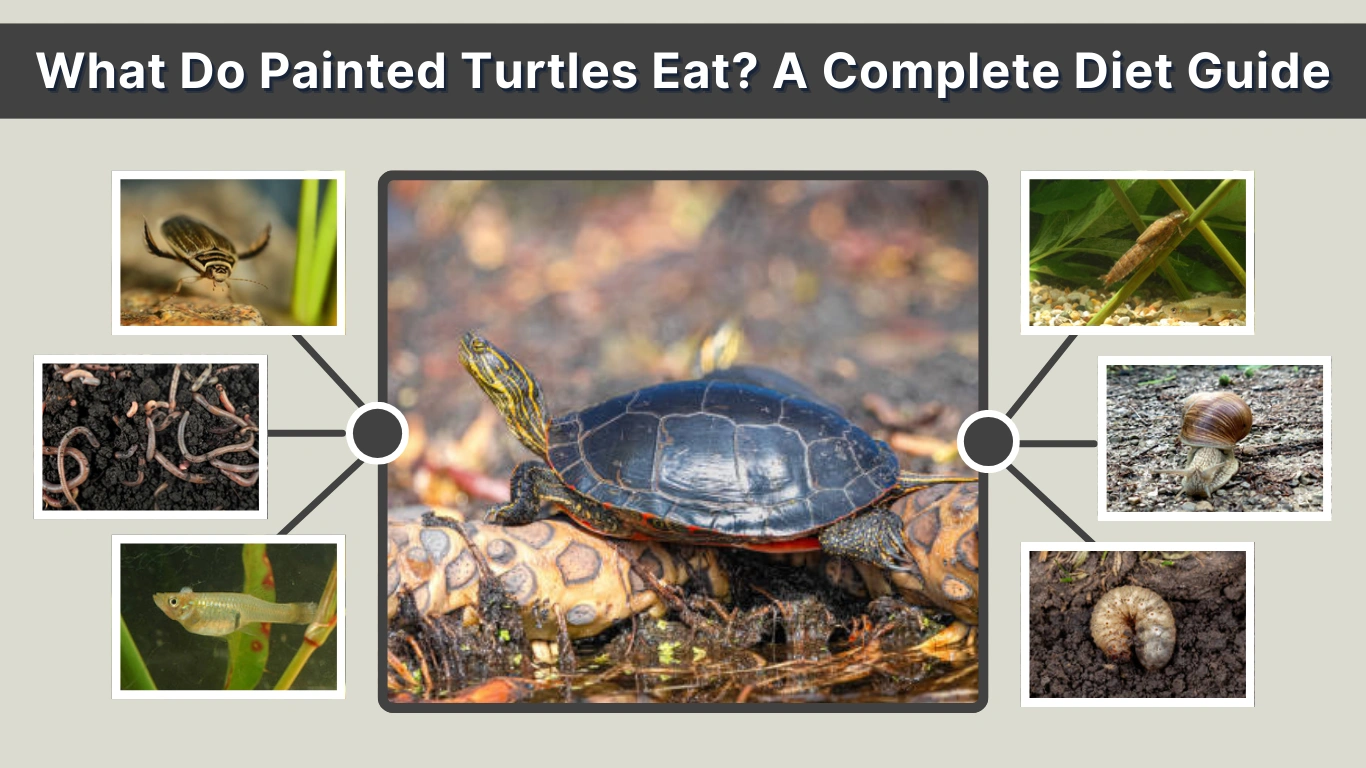
Painted turtles are one of the most widespread freshwater turtles in North America. Known for the colorful red and yellow markings on their shells and skin, these turtles are commonly found in ponds, lakes, marshes, and slow-moving streams. If you’ve ever spotted one basking on a log, you may have wondered what painted turtles eat to stay healthy. Their diet varies based on age, habitat, and season. Understanding what painted turtles eat is essential for wildlife enthusiasts and pet owners alike.
What Do Painted Turtles Eat? (Quick Overview)
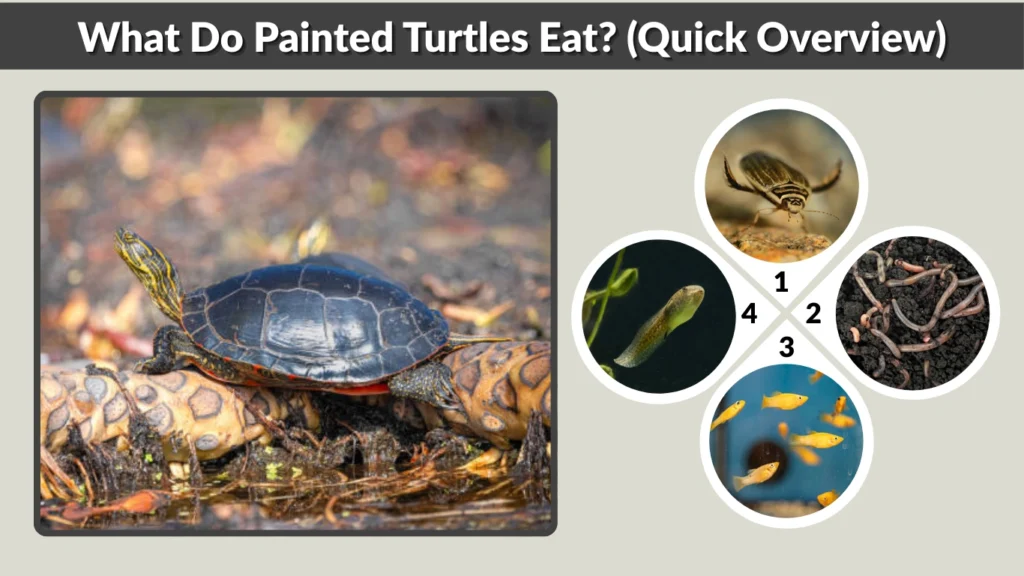
Painted turtles are omnivores, meaning they eat both animal matter and plant material. However, their diet is not evenly balanced throughout their lives. Young painted turtles tend to eat more protein-rich foods, while adults gradually consume more vegetation.
In general, a painted turtle’s diet includes:
- Aquatic insects
- Worms
- Small fish
- Tadpoles
- Snails
- Aquatic plants
- Algae
Their food choices depend heavily on what is available in their environment. Wild painted turtles eat what they can catch or forage, while pet turtles rely on a carefully managed diet provided by their owners.
What Do Painted Turtles Eat in the Wild?
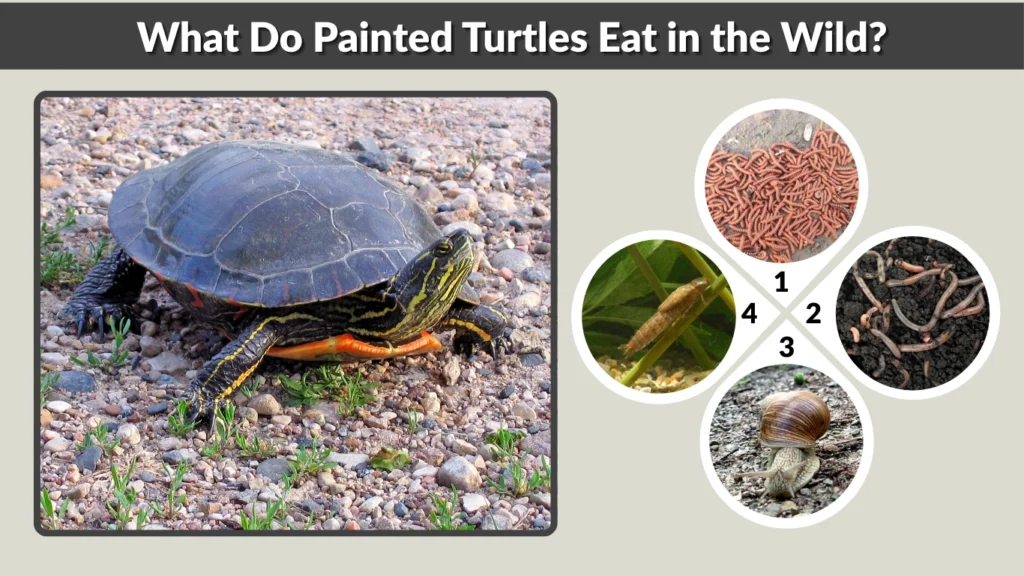
In their natural habitat, painted turtles are opportunistic feeders. They live in freshwater environments rich in plant and animal life, which gives them access to a wide variety of food sources.
Animal-Based Foods in Their Natural Habitat
Wild painted turtles consume a significant amount of animal protein, especially when they are young. Common animal-based foods include:
- Aquatic insects such as dragonfly larvae and water beetles
- Earthworms and small worms found near shorelines
- Small fish and minnows
- Tadpoles and amphibian larvae
- Snails and small crustaceans
They are active hunters in the water, using quick movements to catch prey. Painted turtles may also scavenge on dead fish or other decaying animal matter if available. This opportunistic feeding behavior helps them survive in changing conditions.
Plant-Based Foods in Ponds and Lakes
As painted turtles mature, plant material becomes a larger part of their diet. In the wild, they commonly eat:
- Aquatic vegetation
- Algae
- Duckweed
- Water lilies
- Pond weeds
They often graze on plants growing underwater or floating on the surface. Plant matter provides important fiber and nutrients that support digestion and long-term health.
Seasonal Feeding Habits
Painted turtles are cold-blooded reptiles, so their feeding habits change with the seasons. During spring and summer, when temperatures are warm, they are more active and eat frequently. This is the time when food is abundant, and turtles build up energy reserves.
In fall, their appetite begins to decrease as temperatures drop. During winter, painted turtles enter a state similar to hibernation called brumation. While brumating underwater, their metabolism slows dramatically, and they may go months without eating.
What Do Baby Painted Turtles Eat?
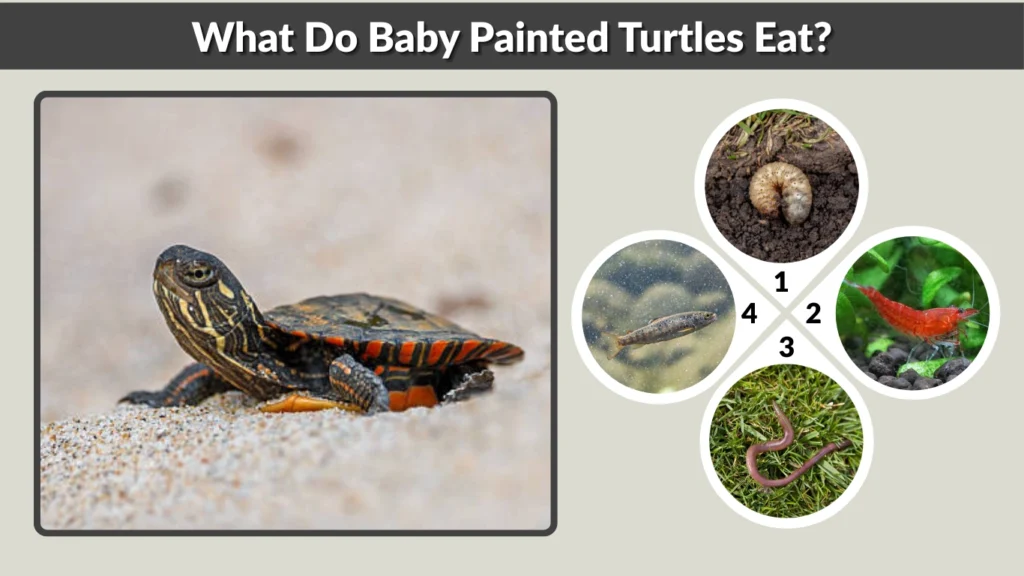
Baby painted turtles, also called hatchlings, have different dietary needs compared to adults. During the early stages of life, they require more protein to support rapid growth and shell development.
Unlike adults, hatchlings are mostly carnivorous. They instinctively seek out small, moving prey in the water.
Best Natural Foods for Hatchlings
In the wild, baby painted turtles typically eat:
- Insect larvae
- Tiny aquatic invertebrates
- Small worms
- Very small fish
Protein plays a crucial role in helping young turtles develop strong shells and healthy muscles. Because they are small and vulnerable, hatchlings prefer prey they can easily catch and swallow.
How Often Do Baby Painted Turtles Eat?
Baby painted turtles eat more frequently than adults. In warm weather, they may feed daily. Since they are growing quickly, consistent access to food is important.
Their small stomach size means they eat in modest portions, but they require regular feeding opportunities. In the wild, they spend much of their time searching for edible prey in shallow water areas where food is easier to find.
Clean water is also essential, as turtles often swallow water along with their food. Healthy aquatic environments directly impact their overall growth and survival.
What Do Adult Painted Turtles Eat?
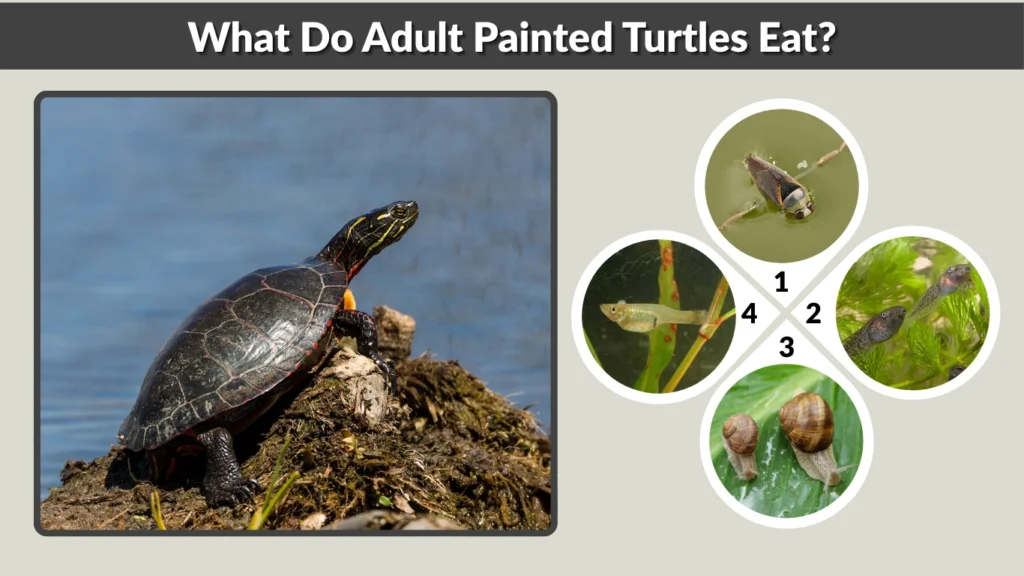
As painted turtles grow into adulthood, their diet gradually shifts. While they still eat animal protein, adults consume a larger proportion of plant matter compared to hatchlings. This dietary change helps support long-term health and reflects their slower growth rate.
Adult painted turtles remain opportunistic feeders. They eat what is readily available in their freshwater environment, balancing protein intake with vegetation.
Protein Sources for Adults
Even though plant matter increases in importance, animal-based foods still provide essential nutrients. Common protein sources for adult painted turtles include:
- Aquatic insects
- Earthworms
- Small fish
- Tadpoles
- Snails and small crustaceans
Protein supports muscle maintenance and overall energy levels. However, adults do not require as much protein as growing hatchlings. In fact, too much protein over time can contribute to health problems in captive turtles.
Vegetation in an Adult Turtle’s Diet
Plant material becomes a major component of an adult painted turtle’s diet. In the wild, they often graze on:
- Aquatic plants
- Algae
- Duckweed
- Soft submerged vegetation
These foods provide fiber and essential vitamins. Adult painted turtles may spend long periods slowly grazing underwater, especially during warm months when plant growth is abundant.
What Do Painted Turtles Eat in Captivity?
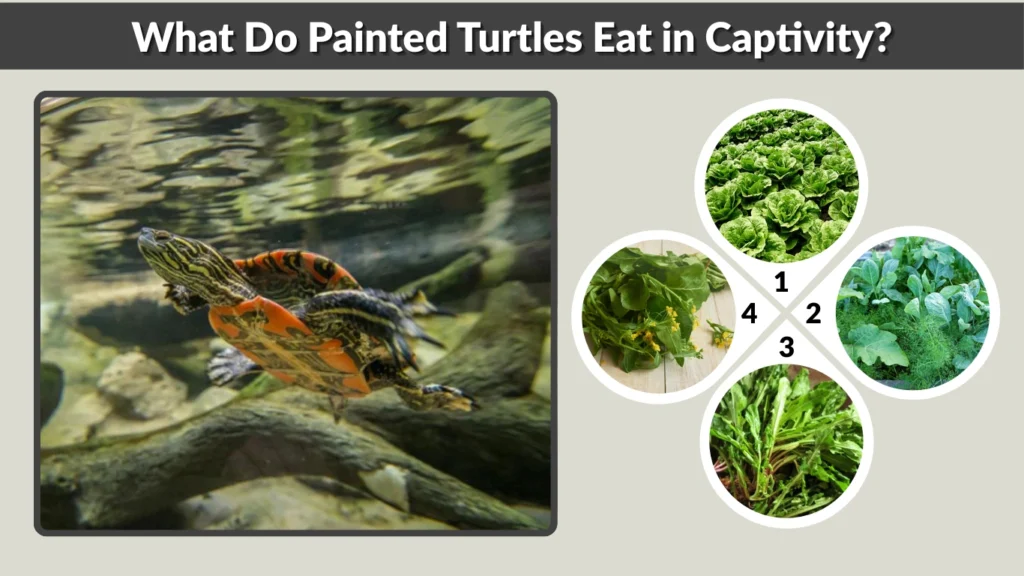
Painted turtles kept as pets depend entirely on their owners for proper nutrition. While their natural diet offers guidance, feeding a captive turtle requires balance, portion control, and variety.
A healthy captive diet should mimic what painted turtles eat in the wild while ensuring they receive essential nutrients that may not naturally occur in a tank environment.
Commercial Turtle Pellets
High-quality commercial turtle pellets are often recommended as a staple food for pet painted turtles. These pellets are specially formulated to include:
- Balanced protein levels
- Vitamins and minerals
- Calcium for shell health
Pellets simplify feeding and help prevent nutritional deficiencies. However, they should not be the only food offered. Variety remains important for enrichment and balanced nutrition.
Safe Vegetables for Pet Painted Turtles
Vegetables should make up a significant portion of an adult painted turtle’s captive diet. Safe options include:
- Romaine lettuce
- Collard greens
- Dandelion greens
- Mustard greens
- Shredded carrots (in moderation)
Leafy greens provide important vitamins and fiber. Avoid iceberg lettuce, as it contains very little nutritional value.
Safe Protein Options
Protein should still be offered, especially for young turtles. Suitable protein sources for captive painted turtles include:
- Mealworms
- Crickets
- Earthworms
- Occasional feeder fish
Feeder fish should be offered sparingly to prevent excessive fat intake and water contamination.
Calcium and Supplements
Calcium is critical for shell and bone development. In captivity, turtles may require supplementation through:
- Cuttlebone placed in the tank
- Calcium powder dusted on food
Proper UVB lighting is also essential, as turtles need it to metabolize calcium effectively. Without adequate UVB exposure, even a well-balanced diet may lead to shell problems.
How Often Should Painted Turtles Eat?
Feeding frequency depends largely on the turtle’s age.
Hatchlings and Juveniles
Young painted turtles should be fed daily. Their diet should emphasize protein while gradually introducing leafy greens. Portions should be small enough that the turtle can finish the meal within a few minutes.
Adults
Adult painted turtles generally eat every two to three days. Overfeeding adults can lead to obesity and poor water quality in the tank. A good rule of thumb is to offer an amount of food roughly equal to the size of the turtle’s head (excluding the neck).
Monitoring body condition helps ensure proper portion control.
Foods Painted Turtles Should Avoid
Not all foods are safe for painted turtles. Feeding inappropriate items can cause digestive issues, nutritional imbalances, or long-term health problems.
Harmful Human Foods
Painted turtles should never be fed:
- Bread
- Dairy products
- Salty or processed snacks
- Sugary foods
These items offer no nutritional benefit and may harm their digestive system.
Unsafe or Toxic Foods
Certain foods can be dangerous or should only be given in strict moderation. These include:
- Avocado
- Rhubarb
- Excess spinach (can interfere with calcium absorption)
Always research new foods before offering them to your turtle.
Risks of Overfeeding
Overfeeding is one of the most common mistakes in captive turtle care. It can lead to:
- Obesity
- Shell deformities
- Poor water quality
- Increased risk of disease
Maintaining a consistent feeding schedule helps prevent these issues.
Feeding Tips for Painted Turtle Owners
Providing proper nutrition goes beyond choosing the right foods. Good feeding practices help maintain both turtle health and tank cleanliness.
Helpful tips include:
- Remove uneaten food promptly
- Maintain clean, filtered water
- Offer a variety of foods for balanced nutrition
- Observe eating behavior for signs of illness
- Keep a consistent feeding routine
Some owners choose to feed their turtles in a separate container to reduce tank mess, although this is optional.
Conclusion
Painted turtles are adaptable omnivores whose diets change with age and environment. In the wild, they eat a mix of insects, small fish, worms, aquatic plants, and algae. Hatchlings rely more heavily on protein, while adults consume more vegetation.
For pet owners, providing a balanced diet that includes quality pellets, leafy greens, and appropriate protein sources is essential. By understanding what painted turtles eat and how their needs evolve over time, you can help ensure a healthy, active life for these fascinating freshwater reptiles.