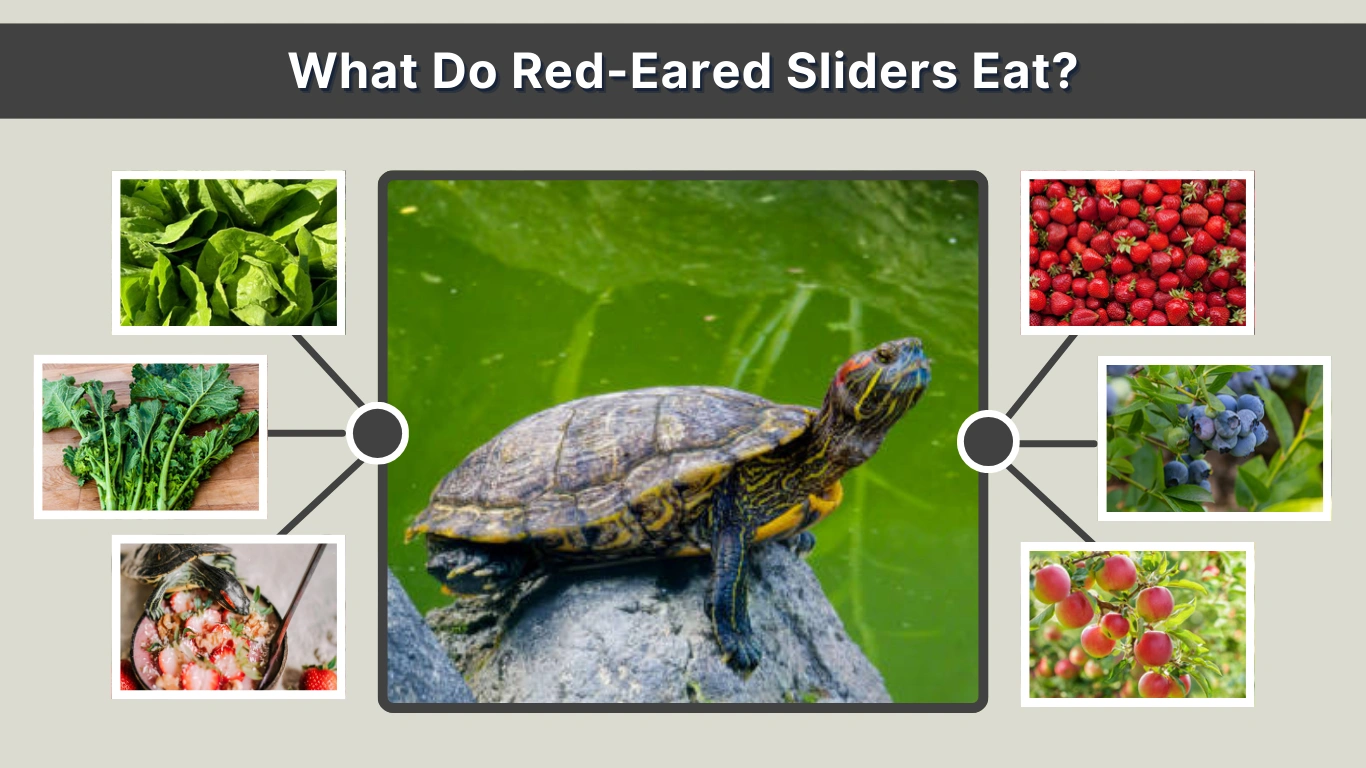
Red-eared sliders are one of the most popular pet turtles in the world, but many owners are unsure about what they should actually eat. These aquatic turtles are omnivores, meaning they require both animal protein and plant matter to stay healthy. However, their dietary needs change as they grow. Feeding the right balance of foods is essential for strong shell development, healthy growth, and a long lifespan. In this guide, you’ll learn exactly what red-eared sliders eat and how to feed them properly.
Are Red-Eared Sliders Carnivores or Omnivores?
Red-eared sliders are omnivores, which means they eat both animal-based and plant-based foods. In the wild, they are opportunistic feeders. They will eat whatever is available in their habitat, from insects to aquatic vegetation.
One important thing to understand is that their diet changes with age. Young red-eared sliders eat more protein to support rapid growth. As they mature, they gradually shift toward a diet that includes more leafy greens and aquatic plants.
What Do Red-Eared Sliders Eat in the Wild?
In their natural habitat—ponds, lakes, and slow-moving rivers—red-eared sliders eat a variety of foods, including:
- Small fish
- Tadpoles
- Aquatic insects
- Snails
- Worms
- Algae
- Aquatic plants
Because they live in water, they usually eat underwater. Their strong jaws allow them to crush small prey and tear plant material. This natural variety is important to mimic when feeding them in captivity.
What Do Baby Red-Eared Sliders Eat?
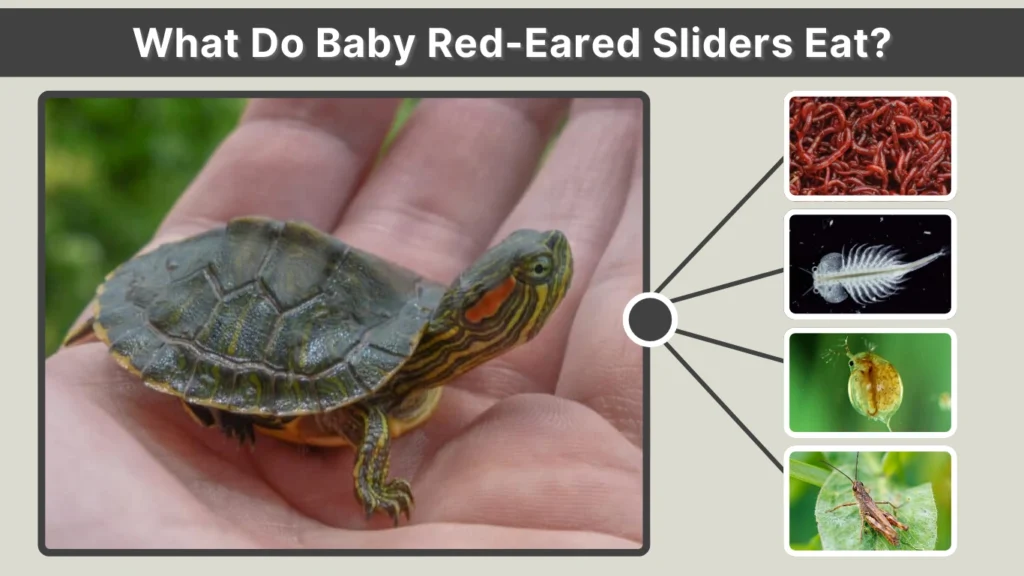
Baby red-eared sliders (hatchlings and juveniles under one year old) need a diet that is higher in protein than adults. Protein supports rapid growth and shell development during their early life stages.
At this age, they are more carnivorous than herbivorous.
Best Foods for Baby Red-Eared Sliders
Here are some of the best food options for baby sliders:
- High-quality commercial turtle pellets (formulated for aquatic turtles)
- Bloodworms
- Brine shrimp
- Daphnia
- Small crickets
- Occasional small feeder fish
Commercial turtle pellets should form the foundation of their diet because they are nutritionally balanced. Live or frozen protein sources can be added to provide variety and enrichment.
Although babies prefer protein, you can begin introducing small amounts of leafy greens early so they get used to eating vegetables as they grow.
How Often Should You Feed Baby Sliders?
Baby red-eared sliders should be fed once daily.
A simple portion guide is the “head-size rule.” Offer an amount of food roughly the size of the turtle’s head (excluding the neck). This helps prevent overfeeding while ensuring they get enough nutrients.
Remove uneaten food after feeding to keep the water clean.
What Do Adult Red-Eared Sliders Eat?
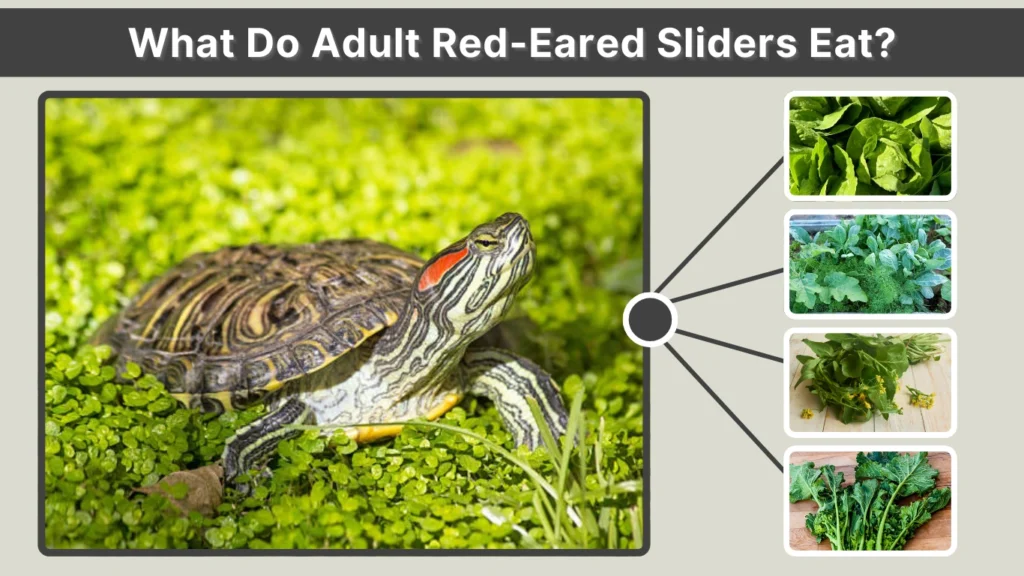
As red-eared sliders mature (around one year old and older), their dietary needs change significantly. Adults require more plant matter and slightly less protein compared to babies.
In fact, adult red-eared sliders should eat a diet that is mostly vegetables, with protein offered in moderation.
Best Vegetables for Adult Red-Eared Sliders
Leafy greens should make up a large portion of an adult slider’s diet. Good choices include:
- Romaine lettuce
- Collard greens
- Dandelion greens
- Mustard greens
- Turnip greens
- Zucchini
- Squash
These vegetables provide essential vitamins and minerals. Dark, leafy greens are especially important because they contain calcium, which supports shell health.
Avoid iceberg lettuce, as it contains very little nutritional value.
Protein Sources for Adult Sliders
Although adults eat more plants, they still need some protein. Suitable protein sources include:
- Earthworms
- Crickets
- Cooked shrimp (plain, no seasoning)
- Occasional small fish
Protein should not dominate the diet. Too much protein can lead to rapid growth, shell deformities, and health problems.
Feeding Frequency for Adults
Adult red-eared sliders should generally be fed every other day.
Leafy greens can be offered more frequently, even daily in small amounts. Protein foods should be given two to three times per week.
As with babies, portion control is important. Overfeeding is one of the most common mistakes turtle owners make.
Best Commercial Food for Red-Eared Sliders
High-quality commercial turtle pellets are one of the most convenient and reliable food options. They are specially formulated to provide balanced nutrition, including:
- Protein
- Vitamins
- Minerals
- Calcium
- Vitamin D3
Pellets can serve as a dietary base, especially when combined with fresh vegetables and occasional protein sources.
When choosing pellets, look for products labeled specifically for aquatic turtles. Avoid generic reptile food that may not meet a red-eared slider’s nutritional needs.
Can Red-Eared Sliders Eat Fruit?
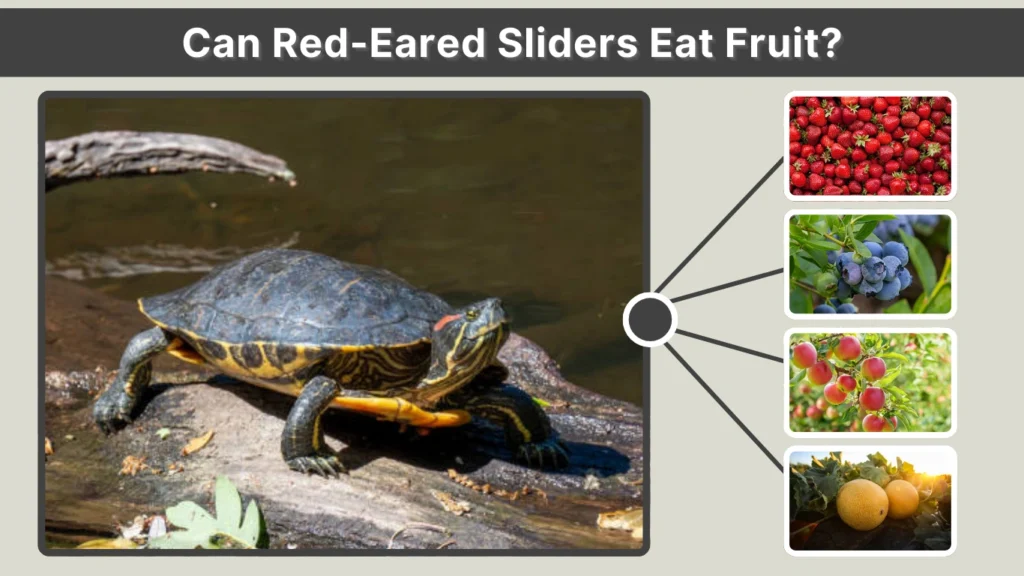
Yes, red-eared sliders can eat fruit, but only in small amounts and not very often. Fruit should be considered an occasional treat rather than a regular part of their diet. While turtles may enjoy the sweetness, fruit contains natural sugars that can upset their digestive balance if fed too frequently.
Safe Fruits for Red-Eared Sliders
If you decide to offer fruit, choose small portions of:
- Strawberries
- Blueberries
- Apples (remove seeds)
- Melon
- Mango (in tiny amounts)
Cut fruit into small, manageable pieces and offer it once every week or two at most.
Why Too Much Fruit Is Harmful
Fruit is high in sugar compared to leafy greens. Feeding too much fruit can:
- Cause digestive problems
- Lead to unhealthy weight gain
- Encourage picky eating habits
- Disrupt natural gut bacteria
For optimal health, vegetables should always make up a larger portion of the diet than fruit.
Foods Red-Eared Sliders Should Not Eat
Not all foods are safe for turtles. Some items can cause serious health issues or provide little nutritional value.
Avoid feeding your red-eared slider:
- Iceberg lettuce (very low nutrients)
- Bread
- Dairy products
- Processed human food
- Salty or seasoned meats
- Chocolate
- Avocado
These foods can cause digestive issues, nutritional imbalances, or even toxicity. Turtles have very specific dietary needs, and human food is generally not appropriate for them.
How Much Should You Feed a Red-Eared Slider?
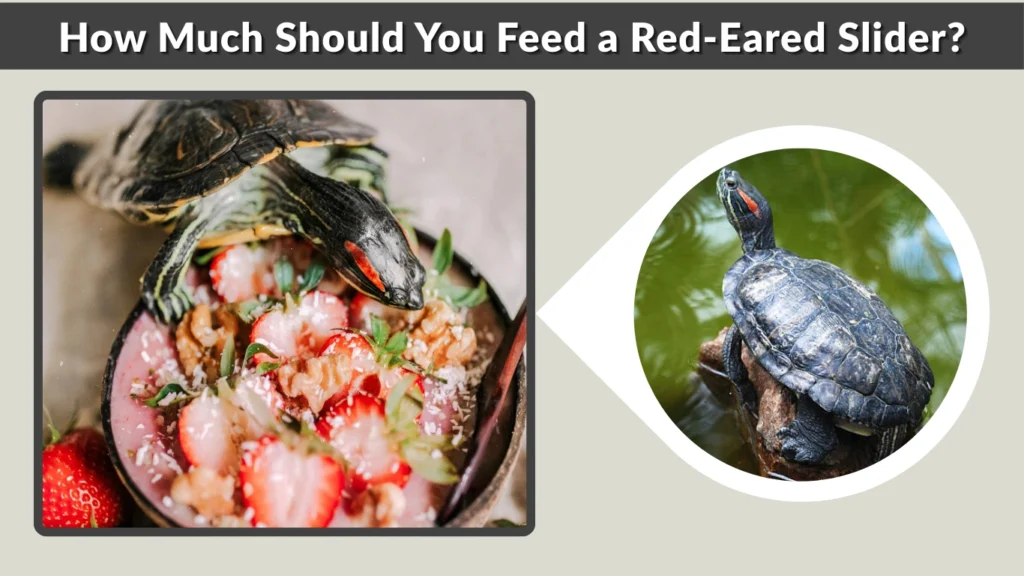
Feeding the right amount is just as important as choosing the right foods. Overfeeding is extremely common among turtle owners and can lead to obesity and water quality problems.
A helpful guideline is the head-size rule: offer an amount of food equal to the size of your turtle’s head (excluding the neck). This applies especially to pellets and protein items.
Leafy greens can be offered more generously, but avoid leaving excessive food in the tank.
Signs of Overfeeding
Watch for these signs that your turtle may be eating too much:
- Fat bulging around the legs
- Rapid or uneven shell growth
- Constant begging behavior
- Dirty or cloudy tank water
Overfeeding not only affects your turtle’s health but also makes tank maintenance more difficult.
Signs of Nutritional Deficiency
On the other hand, poor nutrition can also cause problems. Signs include:
- Soft or misshapen shell
- Lethargy
- Poor appetite
- Weak growth in young turtles
If you notice these symptoms, review the diet and ensure your turtle is receiving balanced nutrition with adequate calcium.
The Importance of Calcium and UVB Lighting
Calcium plays a critical role in shell and bone development. Without enough calcium, turtles can develop metabolic bone disease, a serious condition that weakens bones and shells.
You can support calcium intake by:
- Feeding calcium-rich leafy greens
- Offering a cuttlebone in the tank
- Using calcium supplements when needed
However, calcium alone is not enough. Red-eared sliders also require UVB lighting to properly absorb and use calcium. UVB helps them produce vitamin D3, which is essential for healthy shell growth.
Without proper UVB exposure, even a well-balanced diet may not prevent shell problems.
Sample Feeding Schedule for Red-Eared Sliders
Here’s a simple guideline to help structure feeding:
Baby (0–1 year):
- Feed daily
- Mostly pellets and protein
- Small amounts of greens
Juvenile (1–2 years):
- Feed every other day
- Balanced mix of greens and protein
- Pellets regularly
Adult (2+ years):
- Feed every other day
- Mostly leafy greens
- Protein 2–3 times per week
- Pellets as a base supplement
Adjust portions depending on activity level and overall health.
FAQs
What do red-eared sliders eat every day?
Red-eared sliders eat a mix of commercial turtle pellets, leafy greens, and occasional protein sources. Babies require daily feeding with more protein, while adults eat mostly vegetables every other day. A balanced diet helps support healthy shell growth and overall development.
Can red-eared sliders eat lettuce?
Yes, but only certain types. Romaine lettuce and dark leafy greens are good choices. Avoid iceberg lettuce because it contains very little nutritional value and does not provide essential vitamins or minerals your turtle needs.
How often should I feed my red-eared slider?
Baby sliders should be fed once daily. Adults should generally be fed every other day, with leafy greens offered regularly and protein provided two to three times per week. Portion control is important to prevent overfeeding.
Do red-eared sliders need pellets?
Yes, high-quality aquatic turtle pellets are recommended because they provide balanced nutrition, including essential vitamins and minerals. Pellets should be combined with fresh vegetables and occasional protein for a complete diet.
Can red-eared sliders eat carrots?
Yes, carrots can be offered occasionally in small, shredded pieces. They contain beneficial vitamins but should not replace leafy greens. Moderation is key to maintaining a balanced and healthy diet.