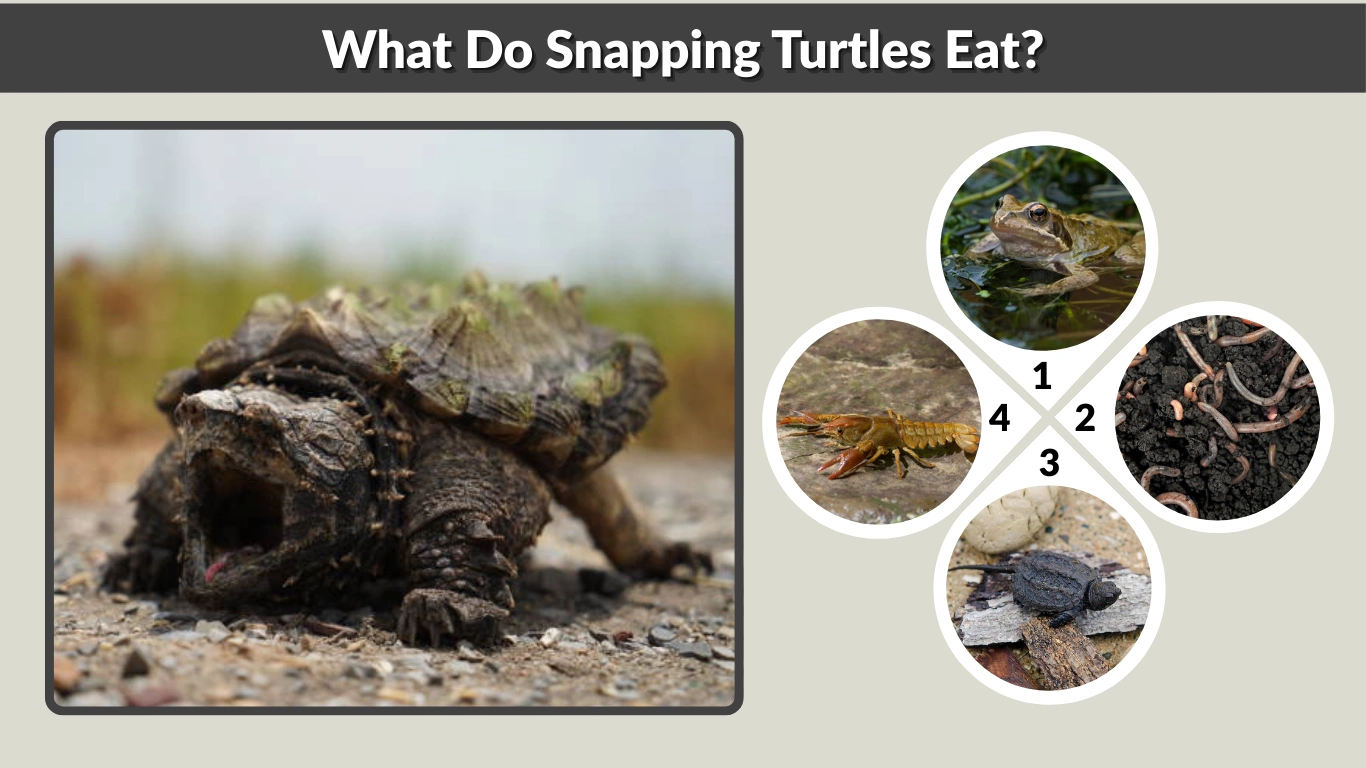
Snapping turtles are among the most adaptable freshwater reptiles in North America. Known for their powerful jaws and opportunistic feeding habits, these turtles play an important role in aquatic ecosystems. Many people wonder what snapping turtles actually eat and whether they are strictly carnivorous or more flexible in their diet. The truth is that snapping turtles consume a wide range of foods depending on their age, habitat, and availability of prey. Understanding their diet helps explain how they survive in diverse environments and why they are considered essential scavengers and predators in freshwater systems.
What Are Snapping Turtles?
Snapping turtles are large freshwater turtles belonging mainly to two species: the common snapping turtle (Chelydra serpentina) and the alligator snapping turtle (Macrochelys temminckii). While both species share similar feeding behaviors, the alligator snapping turtle is more specialized in ambush hunting, whereas the common snapping turtle is more active and versatile.
Both species are primarily aquatic and spend much of their lives submerged in ponds, lakes, rivers, and wetlands. Their strong jaws, sharp beaks, and muscular necks allow them to capture and consume a wide variety of prey. Snapping turtles are not picky eaters, which is one of the reasons they thrive in many different freshwater environments.
What Do Snapping Turtles Eat in the Wild?
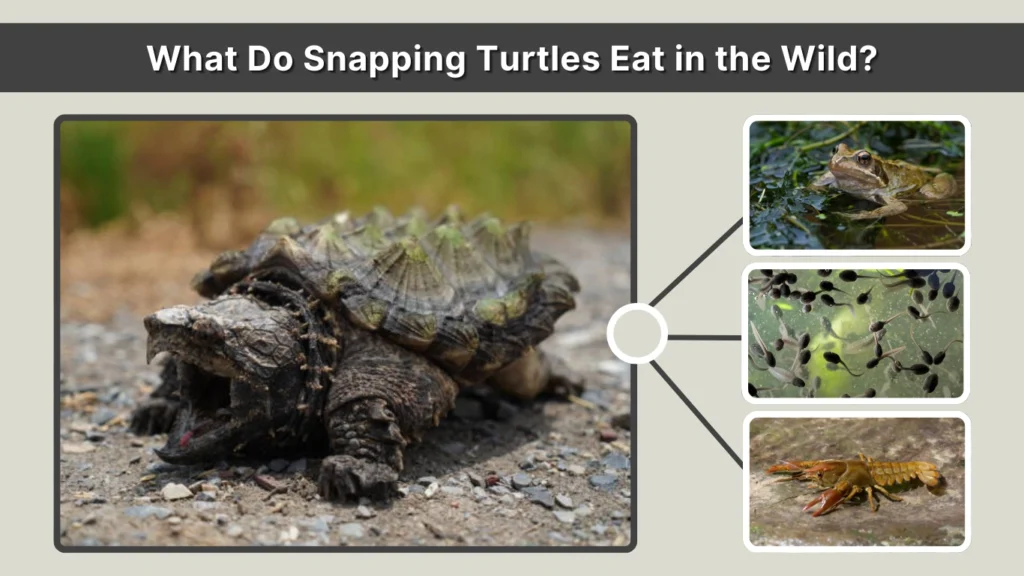
Snapping turtles are omnivorous, meaning they eat both animal and plant matter. However, animal-based foods make up the majority of their diet, especially in adulthood.
Animal-Based Foods
In the wild, snapping turtles consume many types of animal prey. Fish are a major part of their diet, including slow-moving or injured fish that are easier to catch. They also feed on frogs, tadpoles, and other amphibians, particularly during breeding seasons when these animals are abundant.
Snapping turtles frequently eat aquatic invertebrates such as crayfish, snails, insects, and insect larvae. These smaller prey items are especially important for younger turtles. They are also known scavengers and will readily consume dead animals, including fish, birds, and mammals that fall into the water. This scavenging behavior helps keep waterways clean by removing decaying organic matter.
Plant-Based Foods
Although snapping turtles prefer animal prey, they also eat plant material. Aquatic plants, algae, and submerged vegetation are commonly consumed, particularly when animal food is scarce. They may also eat fallen fruits, seeds, and soft plant matter found near shorelines.
Plant-based foods tend to play a larger role in the diet of older snapping turtles, whose slower metabolism allows them to digest a wider range of food sources. This flexibility makes snapping turtles highly resilient in changing environments.
Are Snapping Turtles Carnivores or Omnivores?
Snapping turtles are best described as omnivores with strong carnivorous tendencies. While they are capable of digesting plant matter, they rely heavily on animal protein for growth and energy. Young snapping turtles are especially carnivorous, feeding mostly on insects, small fish, and invertebrates.
As snapping turtles mature, their diet becomes more varied. Adults continue to eat animal prey but increasingly include vegetation in their meals. This dietary shift helps them survive during periods when prey availability is low. Their ability to adapt their feeding habits is one of the key reasons snapping turtles have remained successful for millions of years.
What Do Baby Snapping Turtles Eat?
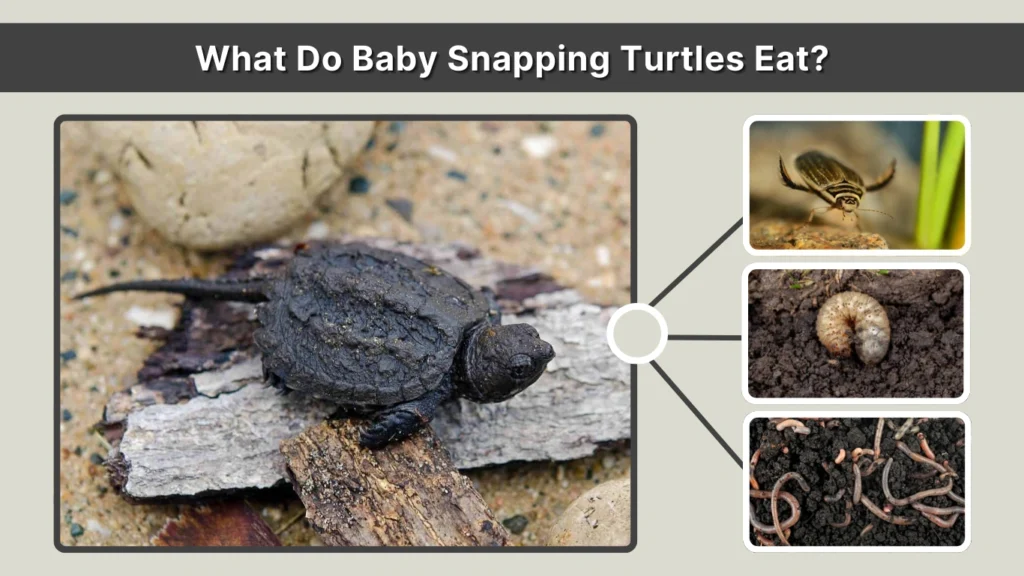
Baby snapping turtles have different dietary needs than adults. Because they are small and vulnerable, hatchlings focus on foods that are easy to catch and rich in protein. Common foods include aquatic insects, insect larvae, worms, small crustaceans, and tiny fish.
At this stage, plant matter plays a very minor role in their diet. High-protein animal food supports rapid growth and development, helping young snapping turtles reach a size where they are less vulnerable to predators.
How Diet Changes as Snapping Turtles Grow
As snapping turtles mature, their diet becomes broader and more opportunistic. Juveniles gradually move from feeding almost exclusively on small invertebrates to consuming larger prey such as fish, frogs, and crustaceans. Their increased size and stronger jaws allow them to tackle tougher food sources, including snails and mussels.
Adult snapping turtles are capable of eating nearly anything they can overpower or scavenge. This includes dead animals, injured birds, and even small mammals that enter the water. Their ability to switch between hunting and scavenging ensures survival during periods when live prey is scarce.
What Do Snapping Turtles Eat in Ponds and Lakes?
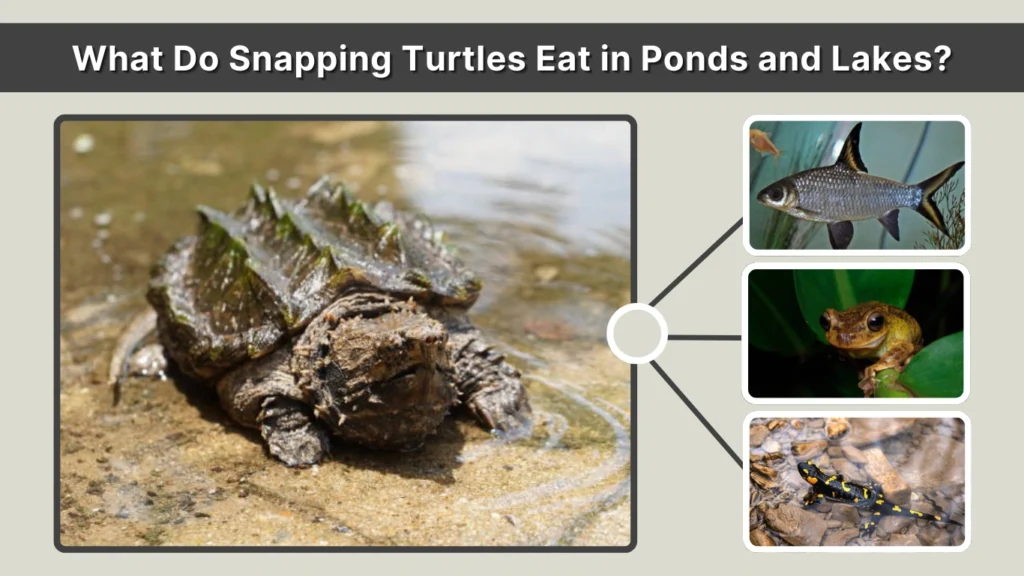
In ponds and lakes, snapping turtles take advantage of the most readily available food sources. Fish make up a large portion of their diet, especially species that swim slowly or remain close to the bottom. Amphibians such as frogs and salamanders are also common prey, particularly in shallow waters.
Snapping turtles in these environments often consume aquatic plants and algae, especially in heavily vegetated ponds. They also feed on dead fish and other animals, acting as natural cleaners within the ecosystem. Because they eat such a wide variety of foods, snapping turtles can thrive in both natural and man-made bodies of water.
What Do Snapping Turtles Eat in Captivity?
Common Foods Given in Captivity
In captivity, snapping turtles are usually fed a controlled and balanced diet. Commercial turtle pellets provide essential nutrients and are commonly used as a staple food. These pellets are often supplemented with fresh fish, shrimp, earthworms, and insects to mimic natural feeding habits.
Leafy greens and vegetables such as lettuce, kale, and aquatic plants may also be offered, particularly for adult turtles. A varied diet helps prevent nutritional deficiencies and supports long-term health.
Foods to Avoid
Certain foods should never be given to snapping turtles. Processed human foods, bread, and salty or sugary items can cause serious health problems. Excessive red meat should also be avoided, as it can lead to digestive issues and abnormal growth.
Toxic plants and spoiled food can be dangerous and should be kept out of their enclosures. Providing a clean feeding environment is just as important as choosing the right foods.
How Often Do Snapping Turtles Eat?
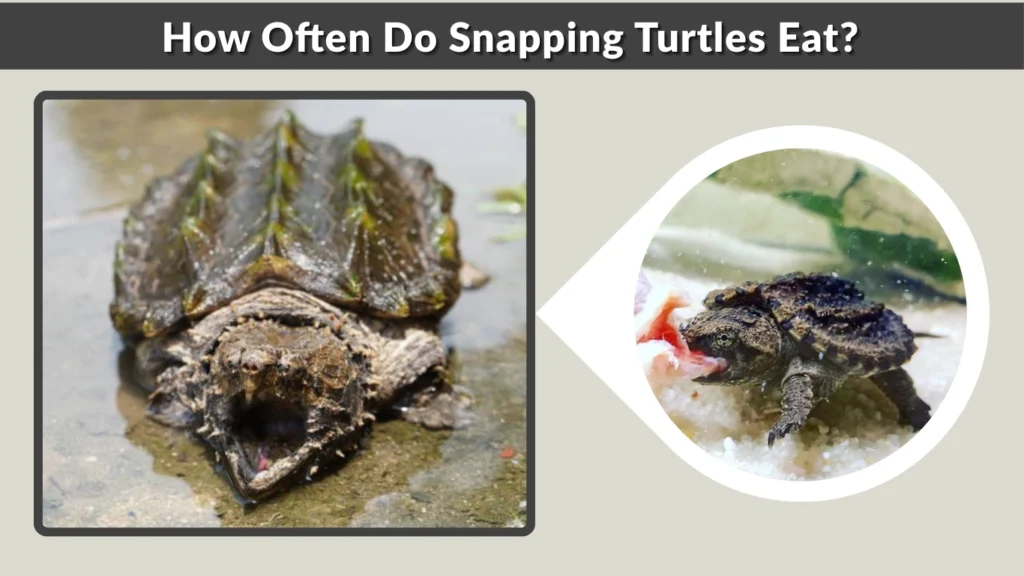
In the wild, snapping turtles do not eat on a strict schedule. Their feeding frequency depends on water temperature, food availability, and age. During warmer months, they may feed several times a week, while in colder conditions their appetite decreases significantly.
In captivity, young snapping turtles are usually fed every day or every other day. Adults require less frequent feeding, often two to three times per week. Overfeeding should be avoided, as it can lead to obesity and health problems.
How Snapping Turtles Hunt and Feed
Snapping turtles use a combination of ambush hunting and scavenging. They often remain motionless on the bottom of a pond or river, waiting for prey to approach. When an animal comes within range, the turtle strikes quickly, snapping its jaws shut with remarkable speed.
Alligator snapping turtles use a specialized hunting method that involves a worm-like lure on their tongue, which attracts fish directly into their mouths. Common snapping turtles are more active hunters but also rely heavily on scavenging.
Do Snapping Turtles Eat Other Turtles or Pets?
Snapping turtles may occasionally eat smaller turtles, particularly hatchlings, but this behavior is not common. They are more likely to feed on fish and amphibians than actively hunt other turtles.
While they are capable of catching small pets such as fish or ducks, attacks are rare and usually occur only when animals enter their immediate feeding area. Most snapping turtles prefer easy meals and avoid unnecessary confrontation.
Conclusion
Snapping turtles are highly adaptable feeders with diets that include both animal and plant matter. From insects and fish to aquatic plants and carrion, their flexible eating habits allow them to thrive in a wide range of freshwater environments. By acting as both predators and scavengers, snapping turtles help maintain ecological balance. Understanding what snapping turtles eat provides valuable insight into their behavior, survival, and importance within aquatic ecosystems.
FAQs
What do snapping turtles eat most often?
Snapping turtles eat mostly animal-based foods such as fish, frogs, crayfish, insects, and carrion. While they do consume plants, animal protein makes up the majority of their diet, especially in the wild.
Do snapping turtles eat fish regularly?
Yes, fish are a major part of a snapping turtle’s diet. They often catch slow-moving or injured fish and will also scavenge dead fish when available.
Do snapping turtles eat plants or vegetables?
Snapping turtles do eat aquatic plants, algae, and vegetation, particularly as adults. However, plant matter usually plays a secondary role compared to animal food.
What do baby snapping turtles eat?
Baby snapping turtles primarily eat insects, insect larvae, small crustaceans, worms, and tiny fish. Their diet is highly carnivorous to support rapid growth.
How often do snapping turtles need to eat?
In the wild, snapping turtles eat whenever food is available. In captivity, juveniles are typically fed daily or every other day, while adults are fed two to three times per week.