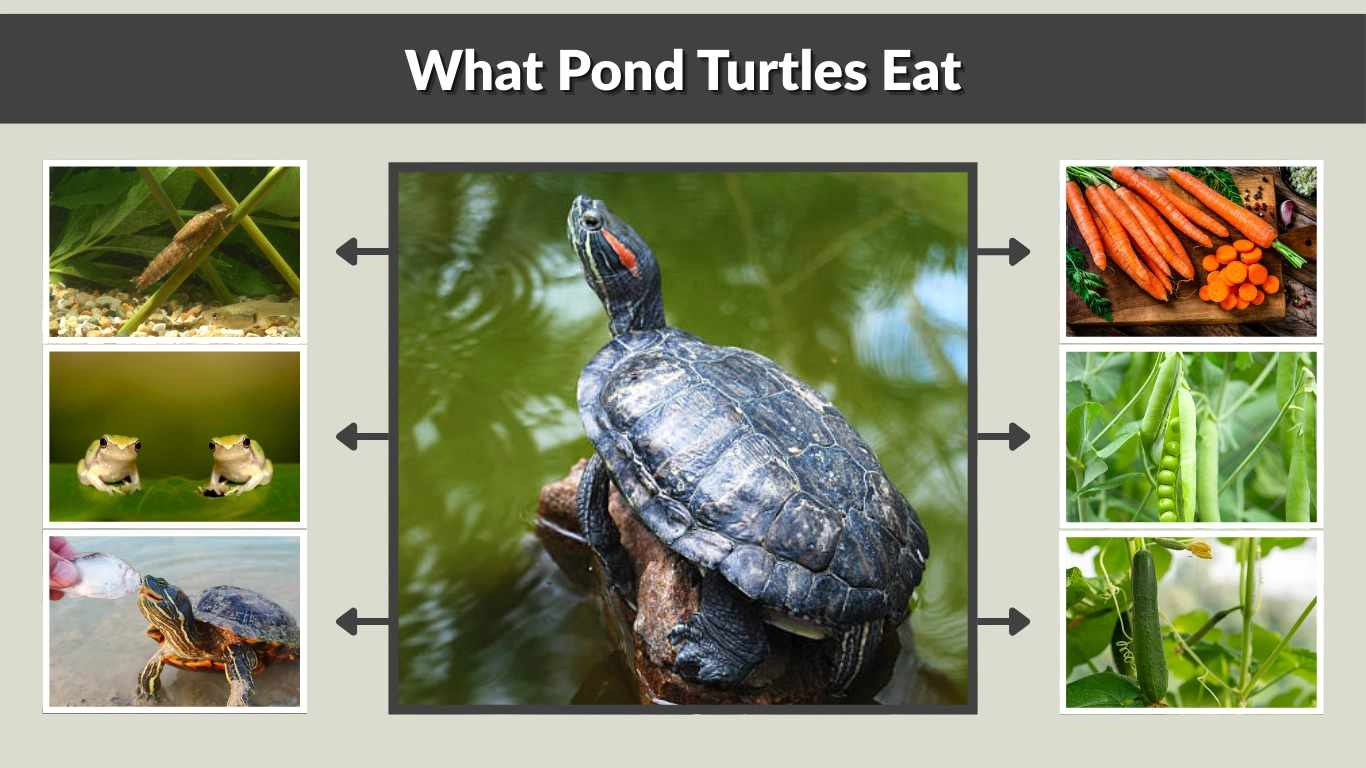
Pond turtles are opportunistic omnivores that feed on a wide range of aquatic plants, insects, and small animals. Their diet varies by species, age, season, and environment, making them highly adaptable across lakes, wetlands, and man-made ponds. This guide explains what pond turtles eat in the wild, what they can safely eat in captivity, which foods they should avoid, and how diet differs among species such as painted turtles, sliders, western pond turtles, and snapping turtles.
Pond Turtle Diet Overview
Pond turtles thrive by eating whatever is most abundant in their environment. In the wild, this means a mixture of aquatic insects, worms, crustaceans, vegetation, carrion, and occasionally small fish or amphibians. Juveniles tend to be more carnivorous, relying heavily on protein for growth, while adults shift toward a plant-heavy diet as their metabolism changes and they require more fiber and moisture.
What Pond Turtles Commonly Eat
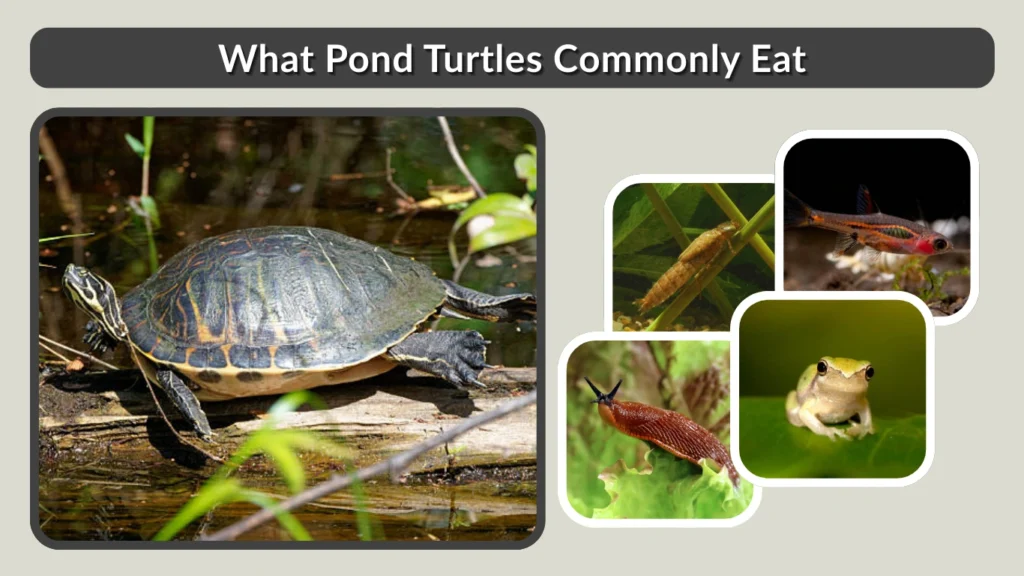
- Aquatic insects and larvae
- Small fish, minnows, or weak/dying fish
- Tadpoles and young frogs
- Snails, clams, and crustaceans
- Aquatic plants and algae
- Fruits and floating vegetation
- Mushrooms and decaying plant matter
- Carrion and dead fish
- Commercial pellets (captive turtles)
Diet by Species
Painted Turtles
Painted turtles are primarily omnivores with a strong preference for aquatic insects, snails, and vegetation. Juveniles consume mostly insects and small invertebrates, while adults eat more plants such as duckweed, pondweed, and algae. They may eat very small fish but rarely hunt healthy, fast-moving species.
Pond Slider Turtles (Red-Eared & Yellow-Bellied)
Sliders shift their diet dramatically as they age. Hatchlings and juveniles eat mostly protein—worms, insects, snails, and occasional fish—while adults consume more leafy vegetation, floating plants, fruits, and algae. Sliders are known to sample a wide variety of foods in ponds, making them one of the most flexible feeders.
Western Pond Turtles
Western pond turtles eat aquatic insects, snails, beetle larvae, earthworms, and occasional frogs or fish. Their diet depends heavily on seasonal insect blooms. They are opportunistic and rarely chase fish unless the prey is slow or injured. Native vegetation, such as waterweed and pond grasses, also makes up a portion of their diet.
Snapping Turtles (Diet Contrast Section)
Snapping turtles are the dominant predators among pond turtles. They eat fish, frogs, ducklings, crayfish, snakes, insects, and carrion. Unlike most pond turtles, snappers can and will consume larger fish, including perch or sunfish, especially if the fish is weakened or trapped in shallow water. This species has the greatest impact on fish populations.
Do Pond Turtles Eat Fish?
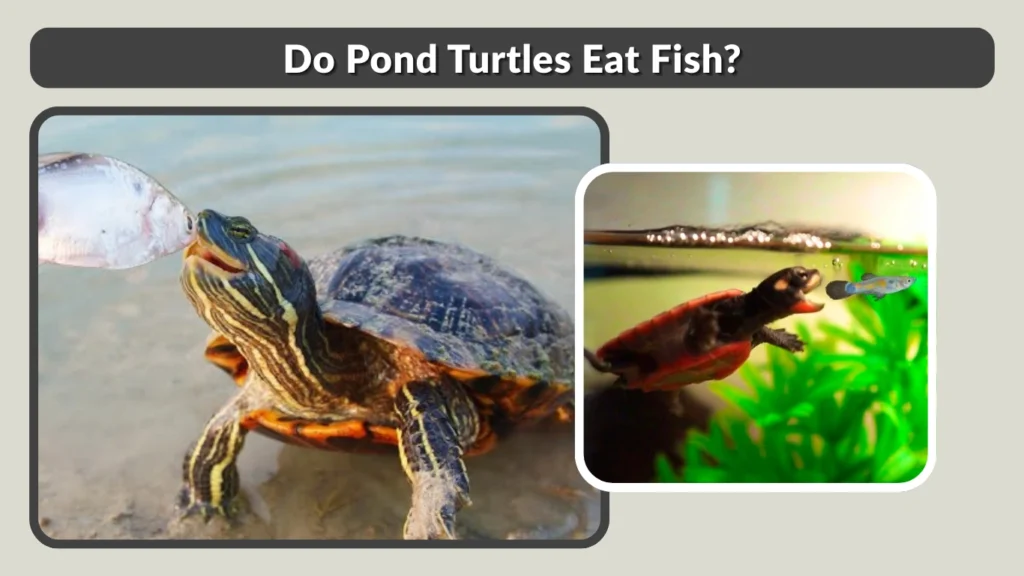
Yes, most pond turtles can eat fish—but with major differences between species. Painted turtles, sliders, and western pond turtles mainly consume very small or weak fish, and they do not typically reduce healthy fish populations. They are slow swimmers, making it difficult to catch agile species. Fish often make up only a small percentage of their natural diet.
Snapping turtles, however, are capable hunters. Their powerful jaws and ambush strategy allow them to capture larger fish with ease. While they rarely wipe out entire fish populations, they can noticeably impact smaller or crowded pond ecosystems if food is scarce.
Do Pond Turtles Eat Frogs, Ducklings, or Tadpoles?
Pond turtles often eat amphibians, especially when they are young and protein-hungry. Tadpoles and frog eggs are common seasonal foods, and juveniles will readily capture small, slow-moving prey. Adult pond turtles may occasionally take a small frog, but they are not efficient predators and usually focus on insects and vegetation.
Ducklings and duck eggs are rarely consumed by most pond turtles. The exception is the snapping turtle, which is capable of capturing small waterfowl when given the opportunity. However, this is not typical behavior for sliders, painted turtles, or western pond turtles.
What Pond Turtles Do NOT Eat (and Should Never Be Fed)
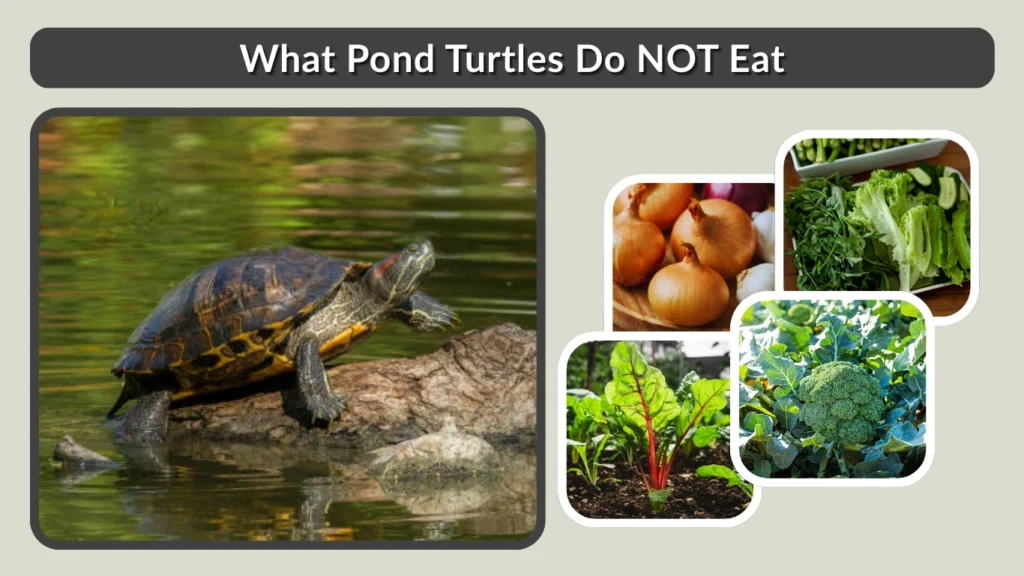
Bread
Bread is harmful and can be fatal. It causes digestive blockage, malnutrition, and fungal infections.
Unsafe Vegetables
Some vegetables contain harmful compounds or disrupt digestion:
- Onions
- Rhubarb leaves
- Excess broccoli or cauliflower
- Bitter lettuce varieties
Poor Nutrition or Risky Foods
- Dog/cat food
- Processed meats
- Sugary fruits in large amounts
- Goldfish flakes
- Anything salted or seasoned
Safe Foods for Captive Pond Turtles
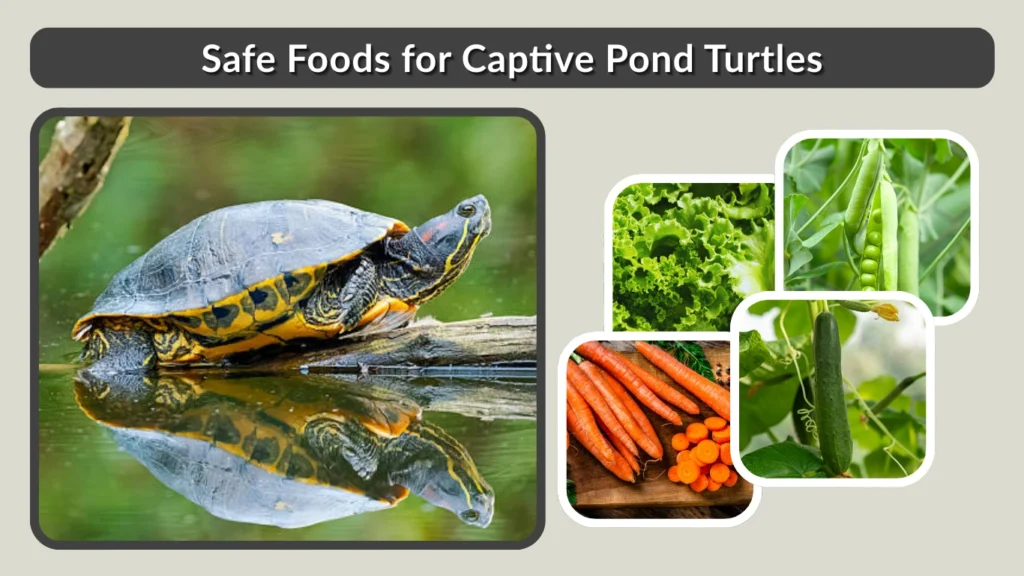
Pond turtles in captivity thrive on a balanced mix of proteins, pellets, and vegetables. The following list covers commonly asked items from your keywords.
Vegetables & Greens
- Lettuce (romaine, green leaf—not iceberg)
- Carrots (shredded or thin slices)
- Cucumber
- Peas (fresh or thawed)
- Squash and zucchini
- Collard, mustard, and turnip greens
Fruits (Occasional Treats)
- Strawberries
- Melon
- Blueberries
Protein Sources
- Earthworms
- Crickets, roaches
- Feeder fish (optional, not required)
- Bloodworms, krill, shrimp
Pellets
Many pond turtles accept high-quality pellets, including:
- Wardley pond pellets
- Mazuri turtle diet
- ReptoMin floating sticks
How Often Do Pond Turtles Eat?
Feeding frequency changes with age and temperature.
- Hatchlings: daily, heavy protein
- Juveniles: every 1–2 days
- Adults: 2–4 times per week
- Cool weather: turtles in outdoor ponds may eat less
Wild turtles feed opportunistically, often consuming small meals several times per day depending on prey availability.
Plants Pond Turtles Usually Won’t Eat
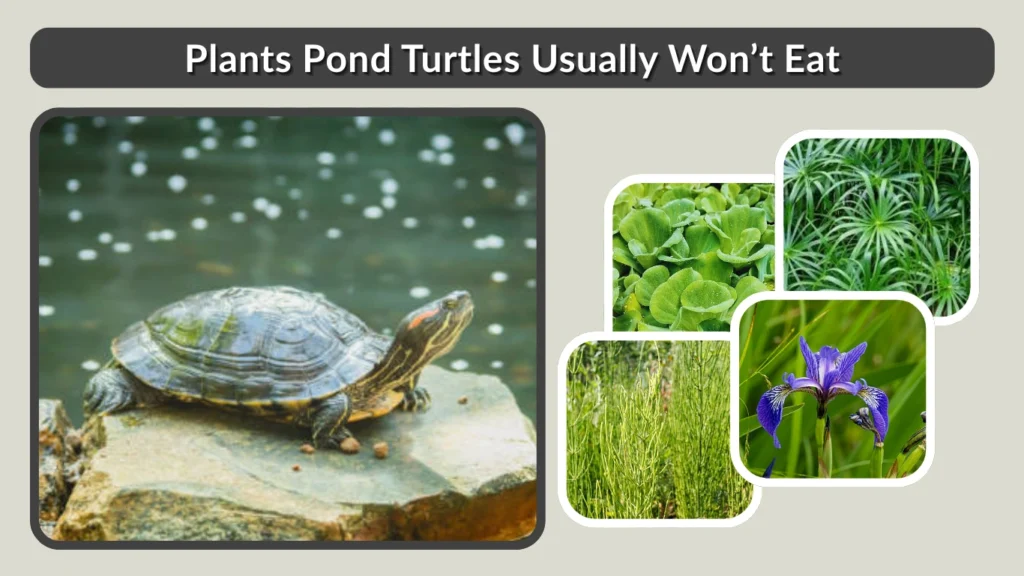
These plants survive better in turtle ponds:
- Water lettuce (large varieties)
- Cattails
- Horsetail reed
- Blue flag iris
- Umbrella palm
- Water lilies (turtles may nibble occasionally but rarely destroy)
Predators: What Eats Pond Turtles?
Many animals prey on pond turtles—especially eggs and hatchlings, which have low survival rates.
Common Turtle Predators
- Raccoons
- Otters
- Herons and egrets
- Snakes
- Large fish (bass, pike)
- Coyotes and foxes
- Alligators (southern regions)
- Humans (in some areas)
Because hatchlings are small and soft-shelled, more than 80% may be eaten before reaching adulthood. Adults have fewer predators but still face threats from raccoons and large predators.
Troubleshooting: Why Is My Pond Turtle Not Eating?
Turtles may refuse food for several reasons:
- Cold water or low temperatures
- Stress from relocation
- Illness (respiratory, parasitic, digestive)
- Poor water quality
- Incorrect food types
- Seasonal slowdown in outdoor ponds
Black Pond Turtle Not Eating
Often caused by improper temperature or insufficient UVB. Other causes include shell infections, intestinal parasites, or poor-quality water. Ensuring warmth, sunlight (or UVB), and clean habitat conditions usually restores appetite—otherwise, veterinary care is required.
Western Pond Turtle Eating Habits
Western pond turtles feed primarily on insects and other invertebrates such as snails, beetle larvae, aquatic worms, and crustaceans. They occasionally eat small frogs or slow fish but rely more on abundance rather than active hunting. This species also consumes aquatic vegetation such as waterweed and floating grasses. Their diet shifts seasonally, with heavy insect feeding in spring and more plant consumption in late summer.
Baby Pond Turtle Diet
Baby pond turtles (hatchlings) need high-protein, nutrient-rich foods to support rapid growth.
Safe Hatchling Foods
- Bloodworms
- Earthworms (cut)
- Small crickets
- Tiny snails
- Aquatic insect larvae
- Micro pellets
- Finely shredded greens
Hatchlings should be offered food daily and require shallow water for easy feeding.
FAQs
What do pond turtles eat in the wild?
They eat insects, snails, tadpoles, aquatic vegetation, algae, worms, small fish, carrion, and seasonal plant matter. Their diet varies with habitat, season, and species, allowing them to survive in almost any freshwater environment from ponds to marshlands.
Do pond turtles eat fish?
Yes, but most species eat only very small or sick fish. Painted turtles, sliders, and western pond turtles rarely impact healthy fish populations. Snapping turtles, however, can catch and consume medium to large fish using ambush tactics.
Can pond turtles eat bread?
No. Bread causes digestive problems, swelling, malnutrition, and can be fatal. Pond turtles cannot process processed grains or preservatives. Feeding bread also pollutes water and encourages harmful bacterial growth.
What animals eat turtles in a pond?
Raccoons, otters, herons, large fish, foxes, coyotes, alligators, and occasionally humans consume pond turtles. Eggs and hatchlings suffer the highest predation rates, while adults face fewer—but still significant—threats.
What do baby pond turtles eat?
Baby pond turtles eat small insects, bloodworms, tiny snails, earthworms, micro pellets, and soft aquatic plants. Protein-rich food is essential for healthy shell development and early growth.