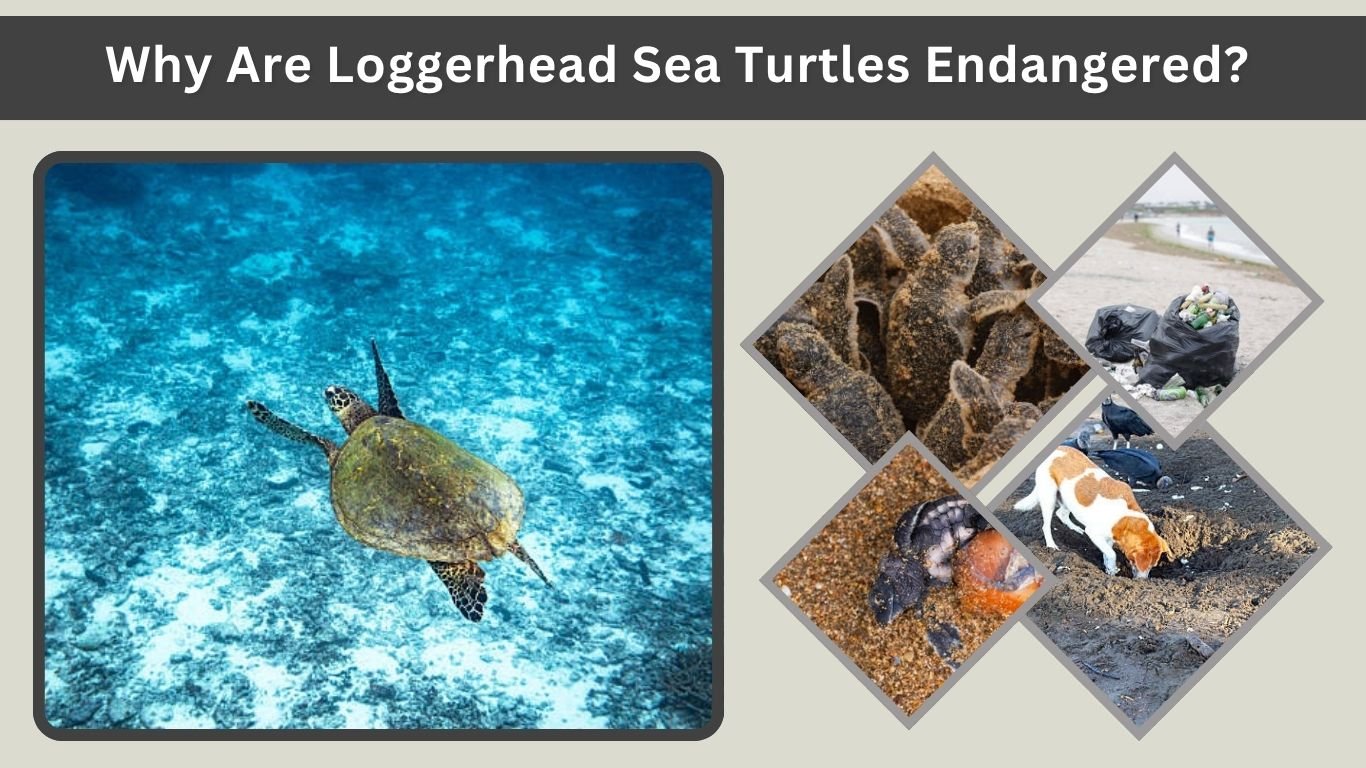
Hawksbill sea turtles are one of the most unique and important species in marine ecosystems, especially in coral reef environments. Known for their distinctive beak-like mouths and beautifully patterned shells, these turtles play a vital role in maintaining the health of reefs. However, their populations have declined dramatically, and they are now considered one of the most endangered sea turtle species in the world.
Many people ask, “Why are hawksbill sea turtles endangered?” The answer lies in a combination of human activities, environmental changes, and long-term ecological pressures. Understanding these threats is essential for protecting this species and preserving ocean biodiversity.
Are Hawksbill Sea Turtles Endangered? (Quick Answer)
| Category | Details |
| Scientific Name | Eretmochelys imbricata |
| Conservation Status | Critically Endangered |
| Population Trend | Declining |
| Main Threats | Human activity, climate change |
Hawksbill sea turtles are classified as critically endangered globally. This means they face an extremely high risk of extinction in the wild if current threats are not addressed.
What Is the Hawksbill Sea Turtle?
The hawksbill sea turtle (Eretmochelys imbricata) is a marine reptile found mainly in tropical coral reef regions. It is easily recognized by its narrow head and sharp, curved beak, which allows it to feed on sponges and other organisms found in reef crevices.
Unlike other sea turtles, hawksbills are closely tied to coral reef ecosystems. Their feeding habits help maintain the balance of reef environments, making them an essential species for ocean health.
Why Are Hawksbill Sea Turtles Endangered?
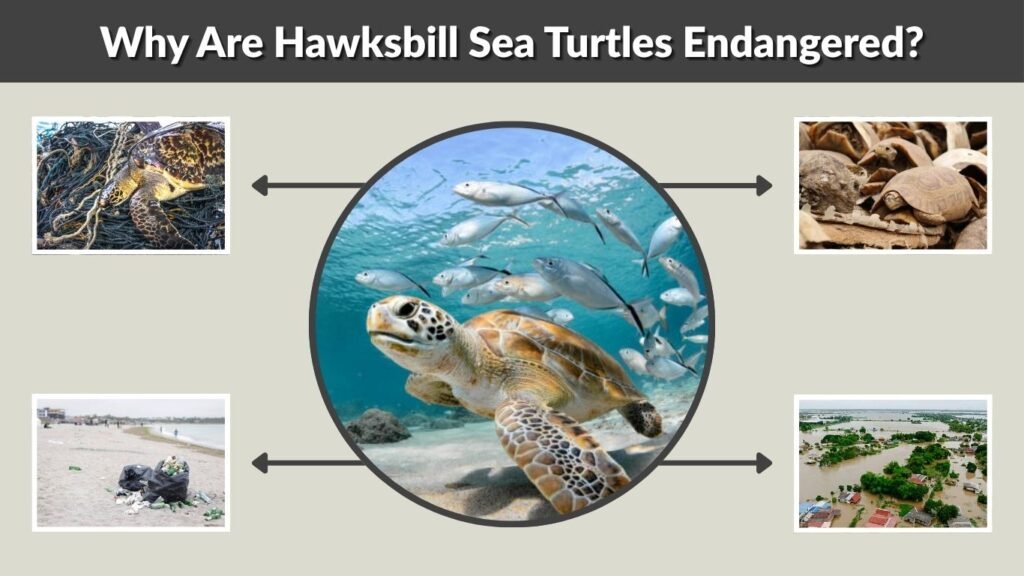
Hawksbill sea turtles are endangered due to several major threats, most of which are caused by human activity. These threats affect them at every stage of life, from eggs to adults.
Main Reasons Behind Their Decline
- Illegal hunting for tortoiseshell products
- Loss of nesting beaches and coral reef habitats
- Climate change affecting reproduction and survival
- Pollution, especially plastic waste in oceans
These factors combine to reduce survival rates and slow population recovery, making conservation efforts more challenging.
Major Threats to Hawksbill Sea Turtles
| Threat | Impact |
| Illegal Trade | Shell used for jewelry and ornaments |
| Coral Reef Loss | Reduces food sources and habitat |
| Plastic Pollution | Causes ingestion and injury |
| Climate Change | Disrupts nesting and hatchling survival |
Each of these threats plays a significant role in the decline of hawksbill populations worldwide.
How Human Activity Affects Hawksbill Sea Turtles
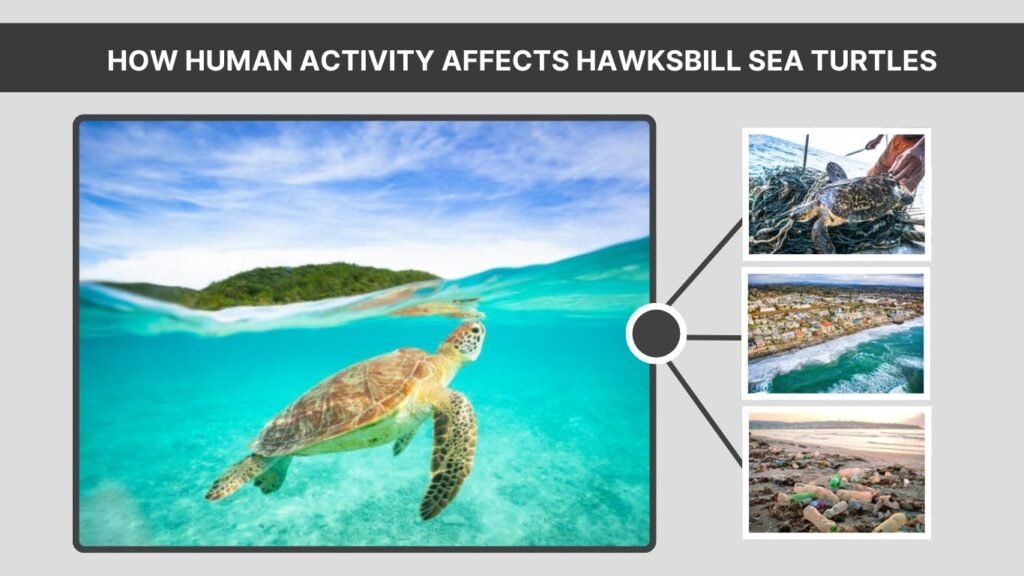
Illegal Hunting and Trade
One of the biggest threats to hawksbill sea turtles is illegal hunting for their shells, often referred to as “tortoiseshell.” These shells are used to make jewelry, ornaments, and decorative items. Despite international bans, illegal trade still exists in some regions, putting pressure on already declining populations.
Coastal Development
Coastal development for tourism, housing, and infrastructure has destroyed many nesting beaches. Artificial lighting near beaches can also confuse hatchlings, causing them to move away from the ocean instead of toward it.
This significantly reduces the survival rate of young turtles.
Pollution and Marine Debris
Plastic pollution is a serious issue for hawksbill turtles. They can mistake plastic for food, leading to internal injuries or death. Pollution also damages coral reefs, which are essential feeding grounds for these turtles.
Natural Threats and Environmental Factors
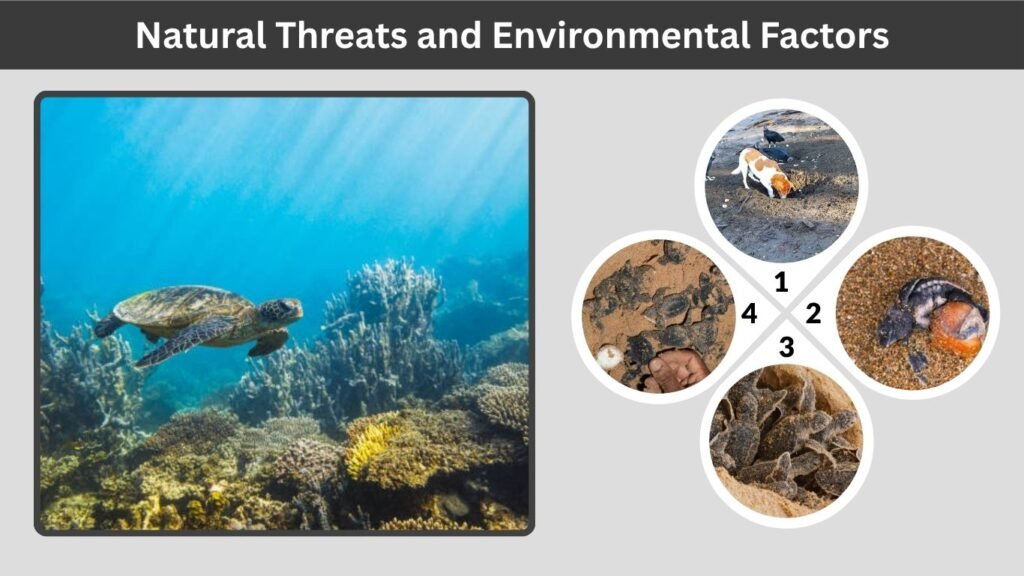
Predators and Egg Loss
Even without human impact, hawksbill turtles face natural threats. Eggs and hatchlings are often preyed upon by birds, crabs, and other animals. Only a small number of hatchlings survive to adulthood.
Climate Change Impact
Climate change is an increasing concern. Rising temperatures affect the sex ratio of hatchlings, with warmer sand producing more females. Extreme weather and rising sea levels can also damage nesting sites and reduce available habitat.
Hawksbill Sea Turtle Endangered Status
Global Status (Critically Endangered)
Hawksbill sea turtles are classified as critically endangered, which means they face an extremely high risk of extinction in the wild. This classification is based on significant population declines over time due to human activities and environmental threats.
Their numbers have dropped sharply in many regions, and although conservation efforts have helped in some areas, the species remains at serious risk globally.
Regional Status
Hawksbill sea turtles are found in tropical regions around the world, including areas like the Philippines, Costa Rica, the Great Barrier Reef, and parts of the United States such as Florida.
In some regions, local conservation programs have improved nesting success, but illegal hunting and habitat loss continue to threaten populations in many parts of the world.
When Did Hawksbill Sea Turtles Become Endangered?
Timeline of Decline
The decline of hawksbill sea turtles began decades ago, particularly during the 20th century when demand for tortoiseshell products increased. Large numbers of turtles were hunted for their shells, leading to a rapid decrease in population.
Over time, additional threats such as coastal development and pollution worsened the situation, pushing the species closer to extinction.
How Long Have They Been Endangered?
Hawksbill sea turtles have been considered endangered for several decades. Their critically endangered status reflects long-term population declines and ongoing threats that continue to affect their survival.
Recovery is slow because these turtles take many years to mature and reproduce.
Laws Protecting Hawksbill Sea Turtles
Endangered Species Act (ESA)
In the United States, hawksbill sea turtles are protected under the Endangered Species Act. This law makes it illegal to harm, capture, or disturb these turtles or their habitats.
These protections also extend to nesting areas, helping ensure that eggs and hatchlings are safeguarded.
International Laws
Hawksbill sea turtles are also protected by international agreements that ban the trade of tortoiseshell products. These laws aim to reduce illegal hunting and protect turtle populations worldwide.
Since hawksbill turtles migrate across oceans, global cooperation is essential for their protection.
Conservation Efforts and Recovery
Current Protection Programs
Conservation programs focus on protecting nesting beaches, reducing illegal trade, and preserving coral reef habitats. Volunteers and organizations monitor nests, relocate eggs when necessary, and help hatchlings safely reach the ocean.
Efforts are also being made to restore coral reefs, which are critical feeding areas for hawksbill turtles.
Population Recovery Trends
In some regions, conservation efforts have led to improvements in nesting numbers. However, overall recovery remains slow and uneven across different parts of the world.
Continued protection and awareness are necessary to ensure long-term survival.
Why Protecting Hawksbill Sea Turtles Matters
Role in Coral Reef Ecosystem
Hawksbill sea turtles play a key role in maintaining coral reef health. They feed on sponges that can otherwise overgrow and damage coral reefs. By controlling sponge populations, they help keep reefs balanced and healthy.
Impact on Marine Biodiversity
Healthy coral reefs support a wide variety of marine life. By protecting hawksbill turtles, we also protect the ecosystems that depend on them, helping maintain biodiversity in the oceans.
What You Can Do to Help
Simple Actions
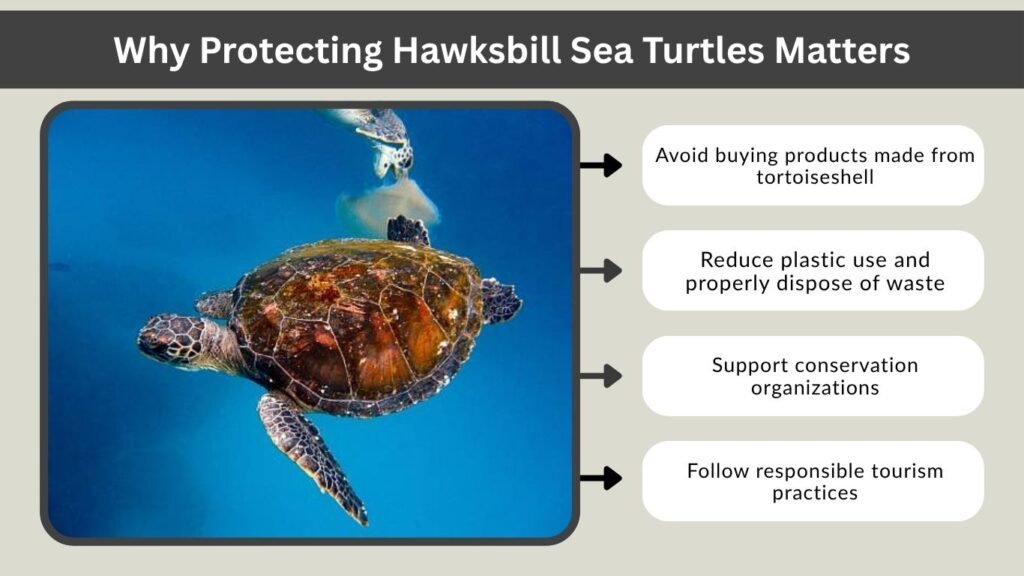
- Avoid buying products made from tortoiseshell
- Reduce plastic use and properly dispose of waste
- Support conservation organizations
- Follow responsible tourism practices
These actions can help reduce threats and support conservation efforts worldwide.
Hawksbill vs Other Sea Turtles (Status Comparison)
| Feature | Hawksbill Sea Turtle | Other Sea Turtles |
| Status | Critically Endangered | Varies by species |
| Habitat | Coral reefs | Open ocean & coastal |
| Threat Level | Very high | Varies |
| Diet | Sponges, reef organisms | Varies |
This comparison highlights how hawksbill turtles are among the most endangered sea turtle species, largely due to their dependence on coral reefs and historical exploitation.
Key Facts About Hawksbill Sea Turtle Endangerment
- They are critically endangered worldwide
- Illegal trade has been a major cause of decline
- They are essential for coral reef health
- They take many years to reach maturity
FAQs
Why are hawksbill sea turtles endangered?
Hawksbill sea turtles are endangered due to illegal hunting for their shells, habitat loss, pollution, and climate change. These threats reduce survival rates at all life stages, making it difficult for populations to recover.
Are hawksbill sea turtles critically endangered?
Yes, hawksbill sea turtles are classified as critically endangered globally. This means they face a very high risk of extinction if current threats are not reduced.
What is the biggest threat to hawksbill sea turtles?
The biggest threat is illegal hunting for tortoiseshell. Even though it is banned in many places, demand still exists, leading to continued exploitation.
When did hawksbill sea turtles become endangered?
Their decline began in the 20th century due to heavy exploitation and habitat loss. Over time, they became classified as endangered and later critically endangered.
How can we help protect hawksbill sea turtles?
You can help by avoiding products made from tortoiseshell, reducing plastic use, supporting conservation programs, and following guidelines when visiting marine environments.