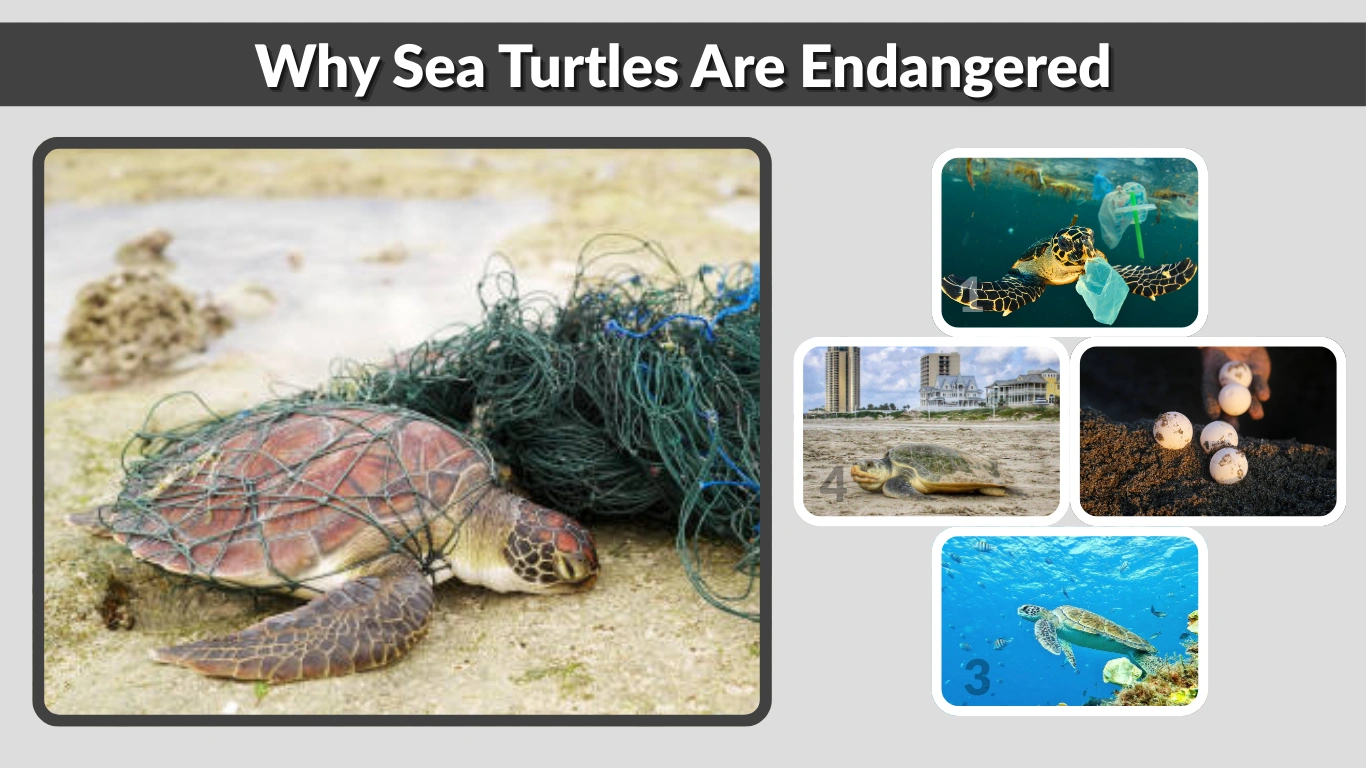
Sea turtles have survived on Earth for more than 100 million years, yet several species now face an uncertain future. Rising global temperatures, loss of nesting beaches, marine pollution, and human activities all contribute to their declining populations. Many people wonder why sea turtles are endangered, how climate change affects them, and what we can do to help. This guide breaks down every major threat, explains why sea turtles are important, and highlights the solutions that can protect them.
Identification of the Issue
- Seven species of sea turtles exist worldwide
- Many are listed as endangered or critically endangered
- Main threats include climate change, pollution, and habitat loss
- Human activity is the leading cause of decline
- Conservation efforts are improving some populations, but risks remain
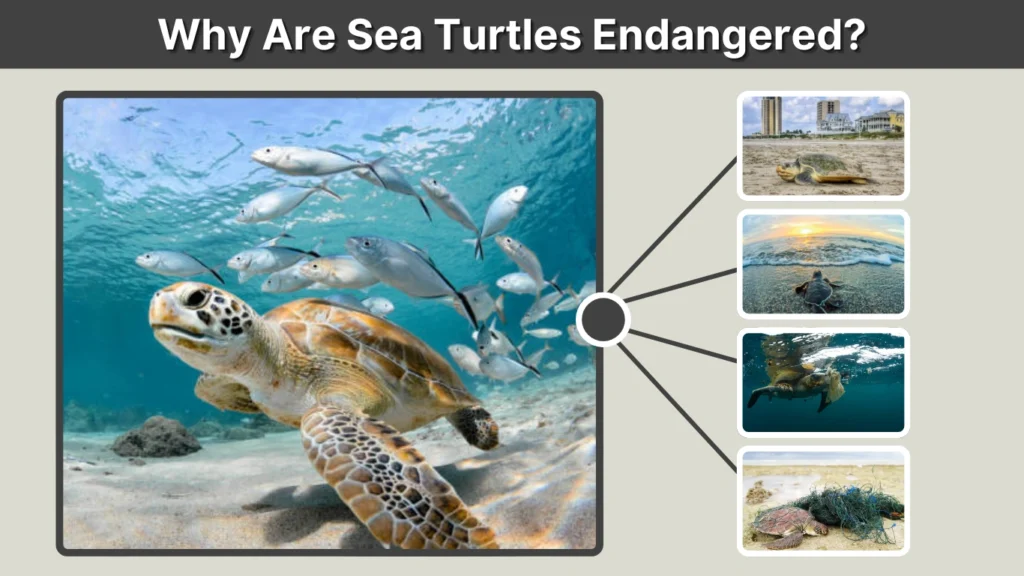
Why Are Sea Turtles Endangered?
1. Habitat Loss
One of the most significant causes of sea turtle endangerment is the destruction of nesting beaches. Coastal development for tourism, housing, and commercial activity reduces the number of safe places where females can lay their eggs. Beach erosion, artificial structures, and foot traffic disturb nests and prevent successful hatching. Without secure nesting grounds, future generations of turtles struggle to survive.
2. Climate Change
Climate change affects sea turtles in several ways—many of them long-term and severe. Temperature determines the sex of hatchlings: hotter sand produces mostly females. As global temperatures rise, many beaches now produce female-dominant generations, creating unsustainable population imbalances. Sea-level rise erodes nesting habitat, and stronger storms wash away nests more frequently. Climate change also alters ocean currents, migration routes, and food availability, placing additional stress on turtle populations.
3. Plastic Pollution & Marine Debris
Millions of tons of plastic enter the oceans each year, and sea turtles are among the animals most affected. They often mistake floating plastic bags for jellyfish, one of their favorite foods. Ingested plastic can block their digestive systems, cause internal injuries, or lead to starvation. “Ghost nets”—abandoned fishing nets—are another deadly threat, entangling turtles and limiting their ability to swim or surface for air.
4. Illegal Poaching & Egg Harvesting
Despite laws protecting them, sea turtles and their eggs are still illegally harvested in parts of Asia, Central America, Africa, and island nations. Turtle shells are used to make jewelry and ornaments, while eggs and meat are consumed traditionally or sold on the black market. This exploitation removes adults and future hatchlings from already fragile populations.
5. Bycatch (Accidental Capture)
Commercial fishing is one of the biggest threats to sea turtles worldwide. Longline hooks, shrimp trawl nets, and gillnets unintentionally capture turtles, often drowning them when they cannot reach the surface to breathe. Even when released, injuries from hooks or stress can reduce their ability to survive.
6. Boat Strikes
In areas with heavy tourism and boating activity, sea turtles face increased danger from vessel collisions. Because they surface often to breathe, turtles are vulnerable to fast-moving boats. Shell fractures, internal injuries, and death are common outcomes.
Why Are Sea Turtles Endangered by Climate Change?
Climate change is not just a contributing threat—it is one of the fastest-growing dangers to sea turtles. Increasing temperatures skew hatchling sex ratios toward females, threatening long-term population stability. Rising sea levels and stronger storms destroy nesting beaches. Coral bleaching reduces critical food sources. Warmer oceans can force turtles to migrate farther for food, using more energy and increasing exposure to predators. These combined effects create a cycle of stress that makes recovery more difficult.
Why Are Green Sea Turtles Endangered?
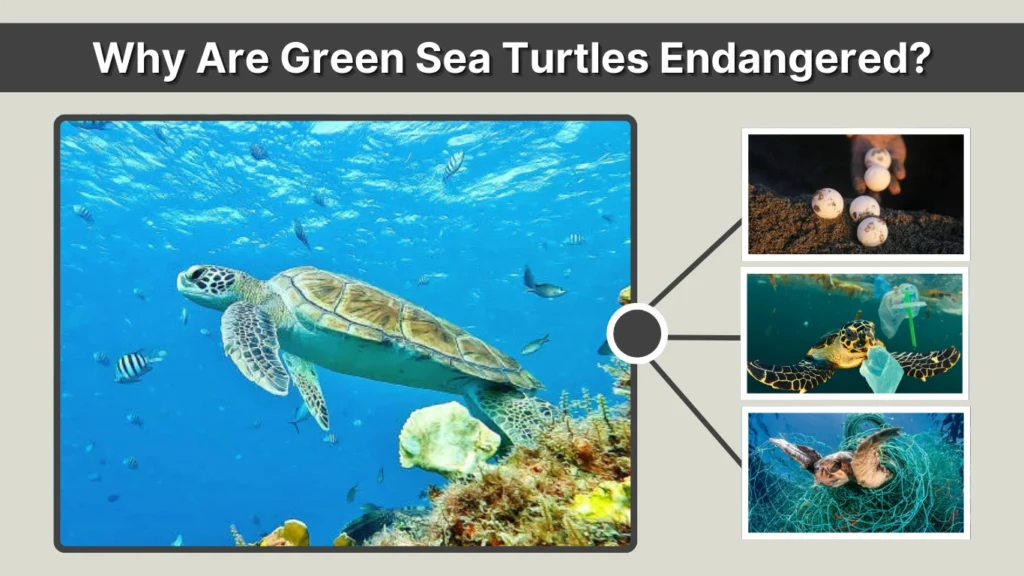
Green sea turtles face many of the same threats as other species, but they are especially affected by:
- Egg harvesting and poaching
- Seagrass habitat destruction
- Marine plastic pollution
- A tumor-causing disease called fibropapillomatosis, linked to polluted waters
Although some populations have shown improvement, green sea turtles remain endangered in many regions due to continued habitat loss, pollution, and illegal hunting.
Are Sea Turtles No Longer Endangered?
Some sea turtle populations are improving thanks to decades of conservation work, but most species are still endangered. For example, certain green sea turtle populations in Hawaii and Australia have increased, while Kemp’s ridley turtles remain critically endangered. The label “no longer endangered” applies only to specific local populations, not entire species. Long-term threats—especially climate change and pollution—continue to place sea turtles at risk.
Why Are Sea Turtles Important?
Sea turtles play several vital roles in marine ecosystems:
- Maintain seagrass beds, which support fish, manatees, and ocean health
- Control jellyfish populations, preventing harmful blooms
- Support coral reefs by grazing on algae
- Add nutrients to beaches through unhatched eggs
- Boost coastal economies via ecotourism and conservation programs
Without sea turtles, ocean ecosystems become unbalanced, affecting countless species—including humans.
Threats to Sea Turtles (Overview)
The primary threats to sea turtles include:
- Habitat loss
- Climate change
- Plastic pollution
- Illegal hunting and egg poaching
- Bycatch from fishing gear
- Ship strikes
- Light pollution affecting hatchlings
- Marine diseases like fibropapillomatosis
Sea Turtle Threats and Solutions
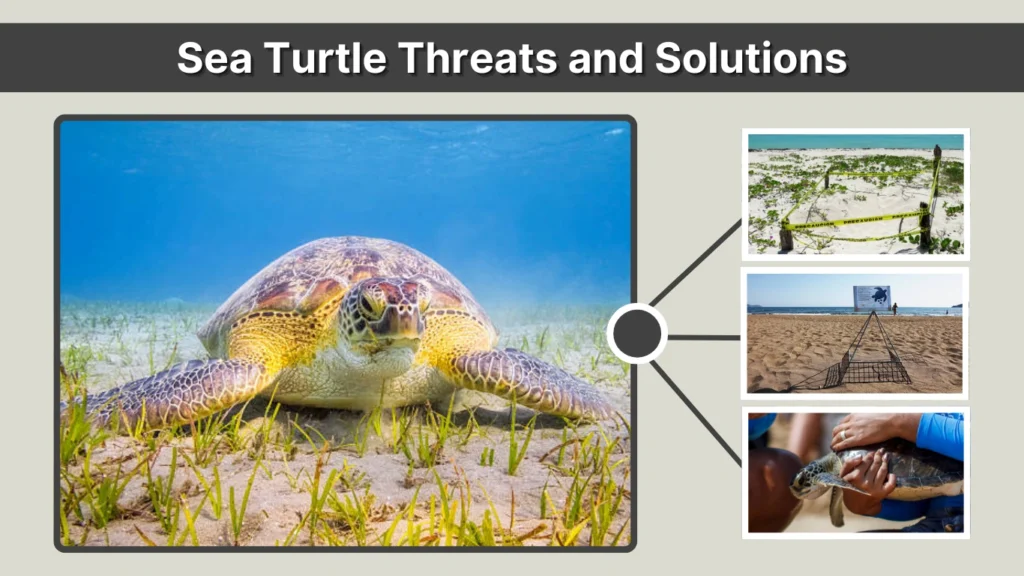
Understanding the problems is only half the story—solutions exist and are improving survival rates. Many conservation organizations work globally to protect nesting beaches, reduce bycatch, and rescue injured turtles.
Threats & Solutions Table
| Threat | Impact | Solution |
| Plastic pollution | Choking, starvation, entanglement | Reduce single-use plastics, organize cleanups |
| Habitat loss | Fewer nesting sites, lower hatch rates | Protect beaches, control development |
| Climate change | Skewed sex ratios, beach loss | Climate action, nest shading, relocation programs |
| Bycatch | Injury or drowning | Turtle-excluder devices (TEDs), sustainable fishing |
| Poaching | Removal of adults & eggs | Community education, stronger enforcement |
| Boat strikes | Injury, death | Slow-speed zones, wildlife-safe boating |
What Can We Do to Help Sea Turtles?
Practical Steps for Everyone
You don’t need to live near a beach to help sea turtles. Anyone can support conservation by:
- Reducing single-use plastics
- Supporting turtle rescue and conservation groups
- Participating in beach or waterway cleanups
- Choosing sustainable seafood (certified sources)
- Following dark-sky lighting rules near beaches
- Never disturbing nests or hatchlings
- Sharing awareness on social media and in communities
What Kids Can Do (Simple Actions)
- Recycle and reduce plastic usage
- Pick up trash safely at beaches or parks
- Learn about sea turtles and share with classmates
- Protect sand dunes and marked nests during family trips
- Support conservation clubs or school projects
Kids often drive family-level change, making them powerful conservation partners.
FAQs
Why are sea turtles endangered?
Sea turtles are endangered because of habitat destruction, climate change, plastic pollution, poaching, and accidental capture in fishing gear. These combined threats reduce adult survival rates and limit the number of healthy hatchlings that reach adulthood.
What is the biggest threat to sea turtles?
While multiple threats overlap, climate change and plastic pollution are two of the most significant. Climate change affects sex ratios and destroys nesting beaches, while plastic waste causes choking, entanglement, and starvation in all sea turtle species.
How does climate change affect sea turtles?
Climate change increases sand temperatures—producing mostly female hatchlings—leading to long-term population imbalance. Rising sea levels erode nesting beaches, and stronger storms destroy nests. Warming oceans also alter migration routes and reduce food availability.
Are any sea turtles no longer endangered?
A few regional populations have improved, but most sea turtle species remain endangered globally. While conservation programs have helped stabilize some groups, threats like climate change, marine pollution, and illegal harvesting continue to endanger sea turtles overall.
How can kids help save sea turtles?
Kids can help by reducing plastic use, recycling, joining beach cleanups, learning about conservation, and teaching others why sea turtles are important. Even small actions—like picking up trash or turning off lights near beaches—can make a meaningful difference.