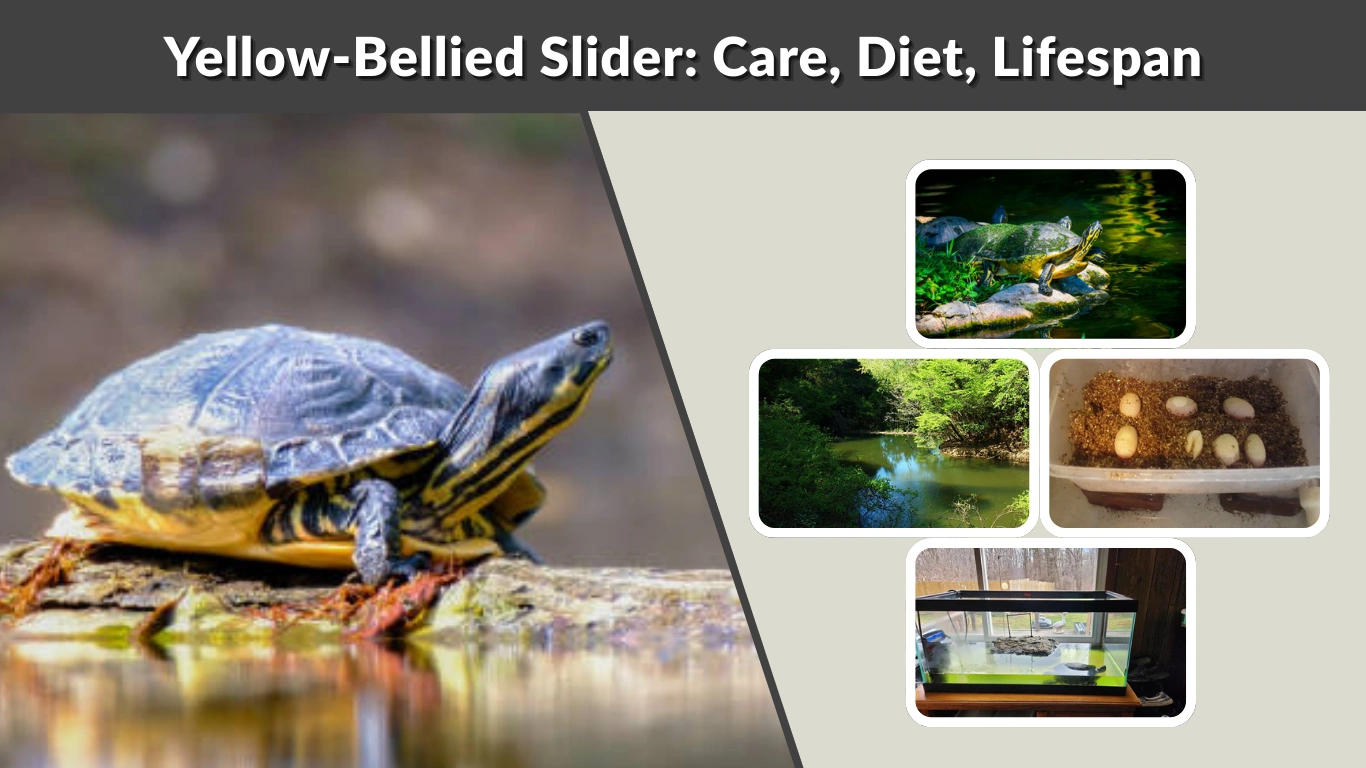
The yellow-bellied slider is one of the most popular freshwater turtles in North America. Known for its bright yellow plastron and bold head stripes, this semi-aquatic species is both fascinating in the wild and commonly kept as a pet. Whether you’re researching basic yellow-bellied slider facts, comparing it to a red-eared slider, or learning about proper care, this guide covers everything you need to know about habitat, diet, lifespan, and hatchling care.
Yellow-Bellied Slider Overview
Scientific Classification
- Scientific name: Trachemys scripta scripta
- Family: Emydidae
- Common name: Yellow-bellied slider
- Native range: Southeastern United States
The yellow-bellied slider is a subspecies of the pond slider and closely related to the red-eared slider (Trachemys scripta elegans). Both share similar behaviors and care needs, but they differ in physical markings.
Quick Yellow-Bellied Slider Facts
- Adult size: 8–13 inches long
- Lifespan: 20–30+ years in captivity
- Diet: Omnivorous
- Habitat: Freshwater ponds, lakes, marshes
- Behavior: Active basker and strong swimmer
The most recognizable feature is its bright yellow underside (plastron), which gives the species its name.
Yellow-Bellied Slider Habitat
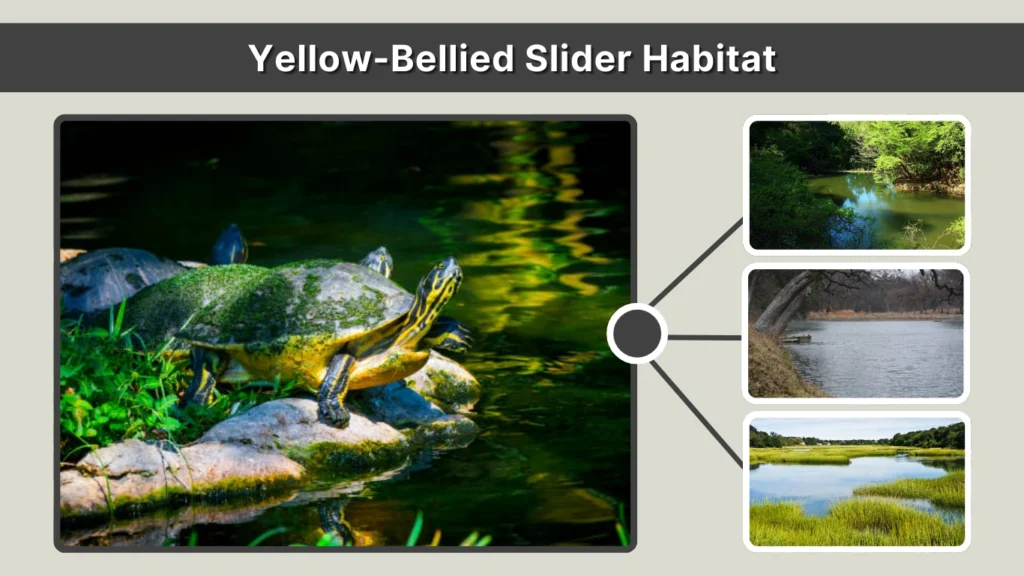
Understanding the yellow-bellied slider habitat is essential for both wildlife education and proper captive care.
Natural Habitat in the Wild
In the wild, yellow-bellied sliders thrive in:
- Slow-moving rivers
- Freshwater ponds
- Lakes
- Marshes and wetlands
They prefer calm waters with soft, muddy bottoms and plenty of vegetation. Basking areas like logs, rocks, and branches are critical because these turtles spend hours sunning themselves to regulate body temperature.
They are commonly found throughout the southeastern United States, including Florida, Georgia, Alabama, and the Carolinas. Due to the pet trade, introduced populations now exist in other regions as well.
Yellow Bellied Slider Turtle Habitat in Captivity
To replicate their natural environment, a proper tank setup must include:
- Large aquatic space
- A dry basking platform
- Strong filtration system
- UVB lighting
- Proper heating
A common rule is 10 gallons of water per inch of shell length, meaning an adult female may require a 75–125 gallon tank. Water depth should allow full swimming while providing easy access to the basking dock.
Ideal temperatures:
- Water: 75–80°F
- Basking area: 85–95°F
UVB lighting is crucial for calcium absorption and shell health.
Yellow Bellied Slider Care Guide
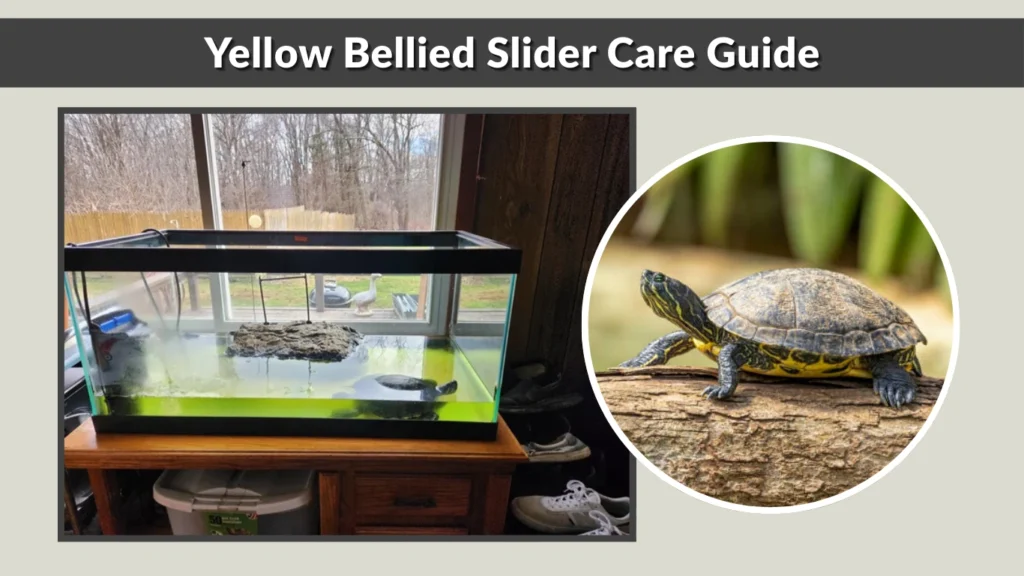
Proper yellow bellied slider care requires attention to space, lighting, diet, and water quality.
Tank Size Requirements
Hatchlings can temporarily live in a 20-gallon tank, but they quickly outgrow small enclosures. Adult females grow larger than males and require significantly more space.
Outdoor ponds can work in warm climates, provided predators are excluded and temperature ranges are safe.
Lighting & Heating Needs
These turtles depend on two types of lighting:
- UVB light (for vitamin D3 synthesis)
- Heat lamp (to create a basking temperature gradient)
Without UVB, turtles can develop metabolic bone disease and shell deformities.
Filtration & Maintenance
Yellow-bellied sliders are messy eaters and produce substantial waste. A high-quality canister filter is strongly recommended.
Maintenance routine:
- Partial water changes weekly
- Full tank cleaning monthly
- Regular filter checks
Clean water reduces the risk of shell rot and respiratory infections.
Yellow Bellied Slider Diet
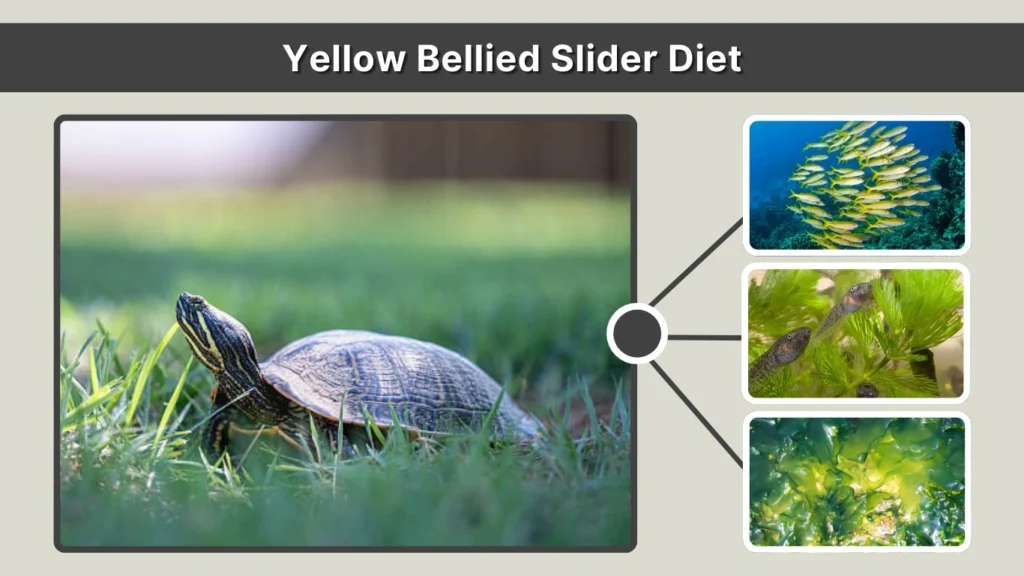
The yellow bellied slider diet changes as the turtle matures.
What Do Yellow-Bellied Sliders Eat in the Wild?
In their natural habitat, they consume:
- Aquatic plants
- Algae
- Small fish
- Tadpoles
- Insects and larvae
They are opportunistic omnivores, adjusting their intake based on availability.
Best Diet for Captive Sliders
In captivity, their diet should include:
- High-quality commercial turtle pellets (staple food)
- Leafy greens like romaine lettuce and collard greens
- Occasional protein sources such as mealworms or shrimp
- Calcium supplements or cuttlebone
Juveniles require more protein for growth, while adults should eat more plant matter to prevent obesity.
Feeding Schedule by Age
- Hatchlings: Daily feeding, protein-heavy
- Juveniles: Daily or every other day
- Adults: Every 2–3 days, mostly vegetables
Overfeeding is a common mistake and can shorten lifespan.
Yellow Bellied Slider Lifespan
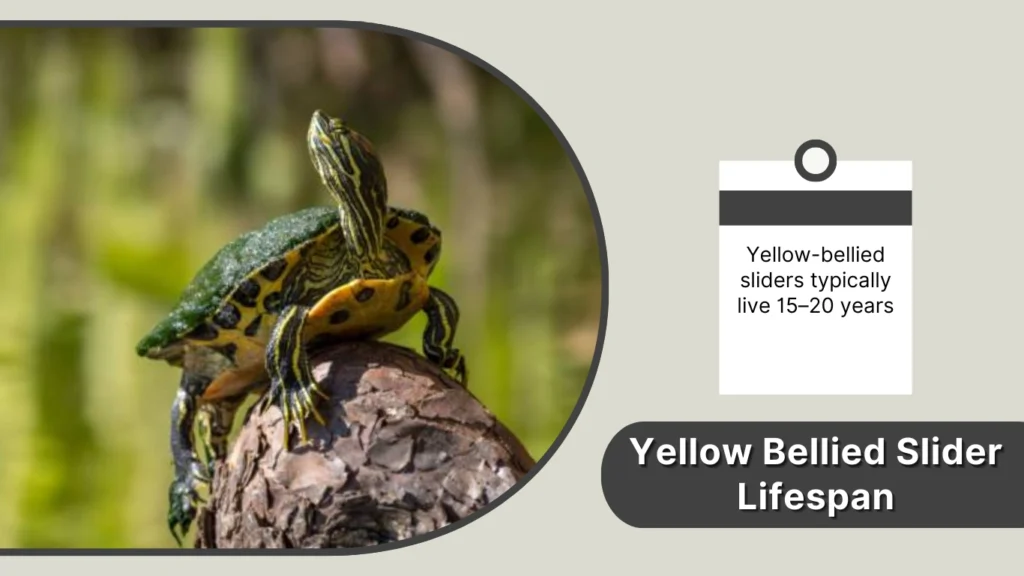
One of the most important yellow bellied slider facts for potential owners is their long lifespan. These turtles are not short-term pets — they require decades of commitment.
Lifespan in the Wild
In their natural habitat, yellow-bellied sliders typically live 15–20 years. Survival depends on factors such as:
- Predators (raccoons, birds, large fish)
- Water pollution
- Habitat destruction
- Climate conditions
Hatchlings have the highest mortality rate, as many are eaten before reaching adulthood.
Lifespan in Captivity
With proper yellow bellied slider care, they can live 20–30+ years, and some individuals exceed 40 years.
Key factors that influence lifespan:
- Correct UVB lighting
- Balanced diet
- Clean, filtered water
- Adequate tank size
- Regular veterinary care
Poor husbandry — especially lack of UVB or improper diet — is the most common reason for early health decline.
Yellow Bellied Slider Hatchling Guide
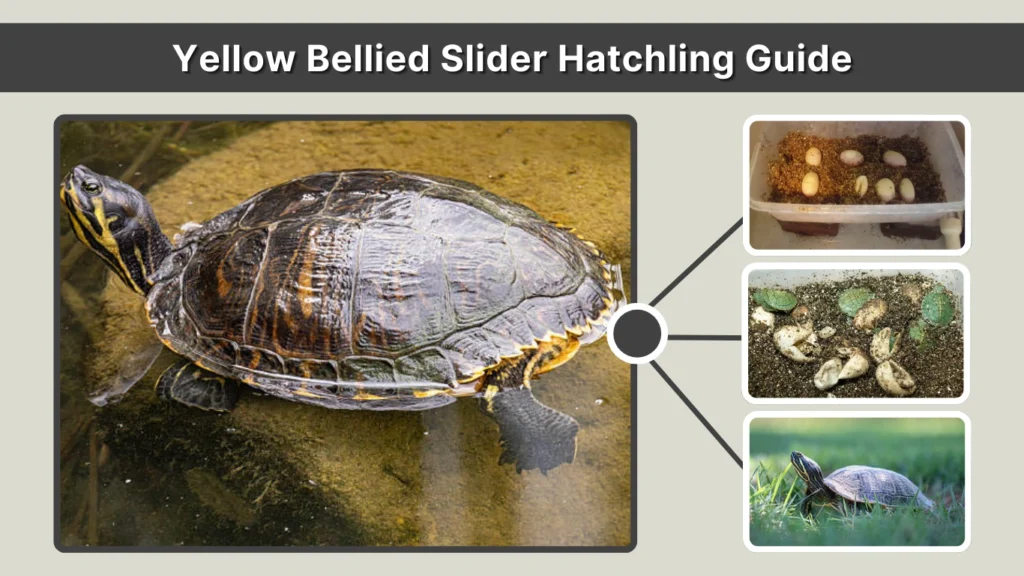
A yellow bellied slider hatchling requires slightly different care than an adult.
Hatchling Size & Appearance
Hatchlings usually measure 1–1.5 inches in shell length. They tend to have:
- Brighter green shells
- More vivid yellow markings
- Softer, more delicate shells
As they mature, their coloration darkens.
Hatchling Care Tips
Because hatchlings are smaller and more fragile, their setup should include:
- Shallow water with easy access to land
- Stable temperatures (no fluctuations)
- Strong but gentle filtration
- Daily protein-rich feeding
Avoid excessive handling, as young turtles stress easily. Clean water is especially important at this stage to prevent infections.
Red Eared Slider vs Yellow Bellied Slider
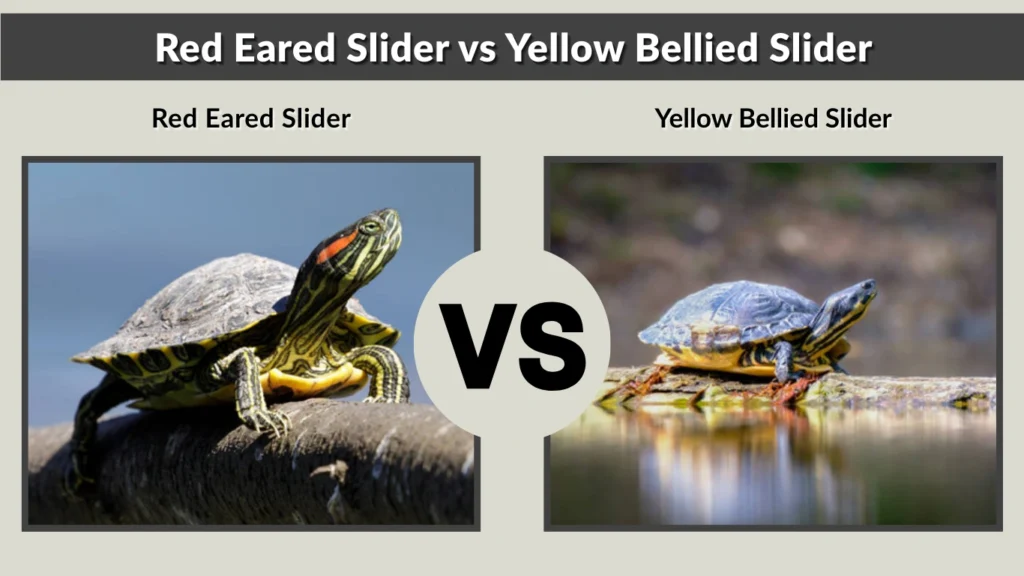
Many people researching pond sliders compare the red eared slider vs yellow bellied slider to determine which is right for them.
Physical Differences
The main visual distinction is the head marking:
- Red-eared slider: Bright red stripe behind each eye
- Yellow-bellied slider: Large yellow patch behind each eye
Other differences include subtle shell coloration variations, but overall body shape and size are similar.
Care & Temperament Comparison
In terms of care, they are nearly identical:
- Same tank size requirements
- Same UVB and heating needs
- Same omnivorous diet
Both species are active, intelligent, and strong swimmers. Neither is considered a “hands-on” pet, as frequent handling causes stress.
Legal Considerations
Because both species are widely sold in the pet trade, some states and countries restrict ownership or sales, particularly of hatchlings under four inches. Always check local wildlife regulations before purchasing.
Behavior & Temperament
Yellow-bellied sliders are known for their alert and cautious nature.
Basking Habits
They are enthusiastic baskers and often stack on top of one another on logs or docks in the wild. Basking helps them:
- Regulate body temperature
- Absorb UVB
- Dry their shells to prevent fungal growth
If startled, they quickly slide back into the water — which is how they earned the name “slider.”
Handling & Interaction
While they may recognize their owners during feeding time, they generally do not enjoy handling. Signs of stress include:
- Hiding excessively
- Refusing food
- Attempting to bite
They are best appreciated as observational pets.
Common Health Issues
Even hardy turtles can develop health problems if care is inadequate.
Shell Rot
Often caused by dirty water or injuries, shell rot appears as soft, discolored, or foul-smelling patches. Prevention includes strong filtration and proper basking access.
Respiratory Infections
Symptoms may include:
- Wheezing
- Bubbles from the nose
- Lethargy
- Tilting while swimming
Cold water temperatures are a common cause.
Metabolic Bone Disease
This condition results from lack of UVB exposure or calcium deficiency. Signs include:
- Soft shell
- Deformed growth
- Weakness
Proper lighting and diet are critical for prevention.
FAQs
How big does a yellow-bellied slider get?
Adult females typically grow between 10–13 inches, while males remain smaller at 8–10 inches. Females are almost always larger than males.
Are yellow-bellied sliders good pets?
They can be good pets for experienced owners who understand their long lifespan and large space requirements. They are not ideal for small children due to care complexity.
What do yellow-bellied sliders eat?
They are omnivores that eat turtle pellets, leafy greens, aquatic plants, insects, and small protein sources. Adults require more vegetation than juveniles.
How long do yellow-bellied sliders live?
With proper care, they commonly live 20–30 years in captivity, sometimes longer.
What’s the difference between a red-eared slider and a yellow-bellied slider?
The main difference is the colored patch behind the eye — red in red-eared sliders and yellow in yellow-bellied sliders. Care requirements are nearly identical.