
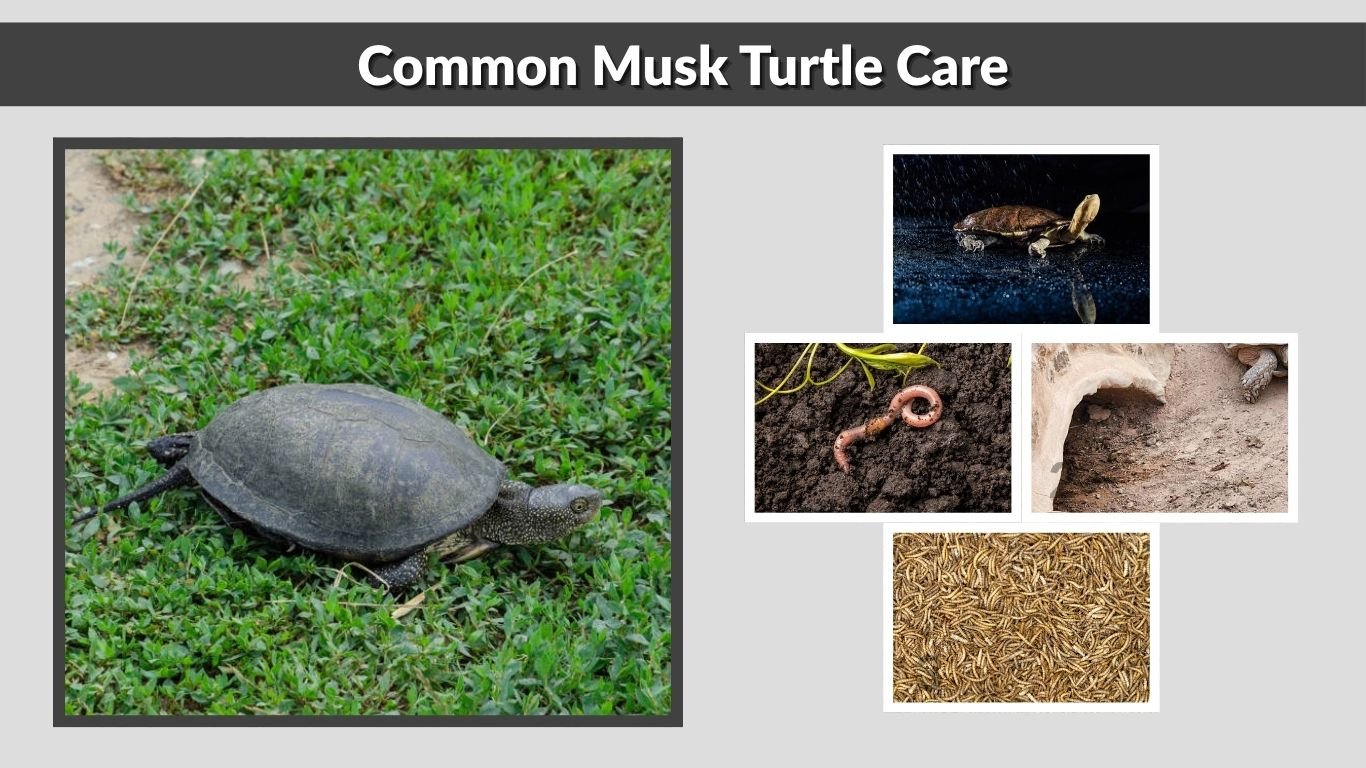
The common musk turtle (Sternotherus odoratus), often called the stinkpot turtle, is a small and hardy aquatic species popular among reptile enthusiasts. Known for its manageable size and simple care needs, it’s an excellent choice for beginners. Despite its reputation for releasing a strong odor when stressed, this turtle is fascinating to observe and relatively easy to maintain. In this guide, you’ll learn about its size, lifespan, habitat, and essential care requirements to help you provide a healthy and comfortable environment.
What Is a Common Musk Turtle?
The common musk turtle is a freshwater turtle native to North America, commonly found in slow-moving waters like ponds, lakes, and streams. It gets its nickname “stinkpot” from glands that release a musky odor as a defense mechanism when threatened.
These turtles are recognized for their dark, domed shells and light stripes running along their heads. Unlike many other turtles, they spend most of their time walking along the bottom rather than swimming actively. Their small size and unique behavior make them a favorite among pet owners who want a low-maintenance aquatic reptile.
Common Musk Turtle Size and Growth
One of the main reasons people choose this species is its compact size. Common musk turtles stay relatively small compared to many other aquatic turtles, making them easier to house in smaller aquariums.
How Big Do Common Musk Turtles Get?
- Hatchlings are typically about 1 inch long
- Adult males grow to around 3–4 inches
- Adult females can reach up to 5 inches
- Growth depends on diet, water quality, and overall care
They grow steadily during their first few years and usually reach full size within 4 to 5 years. Proper feeding and a clean environment play a major role in healthy growth.
Common Musk Turtle Lifespan
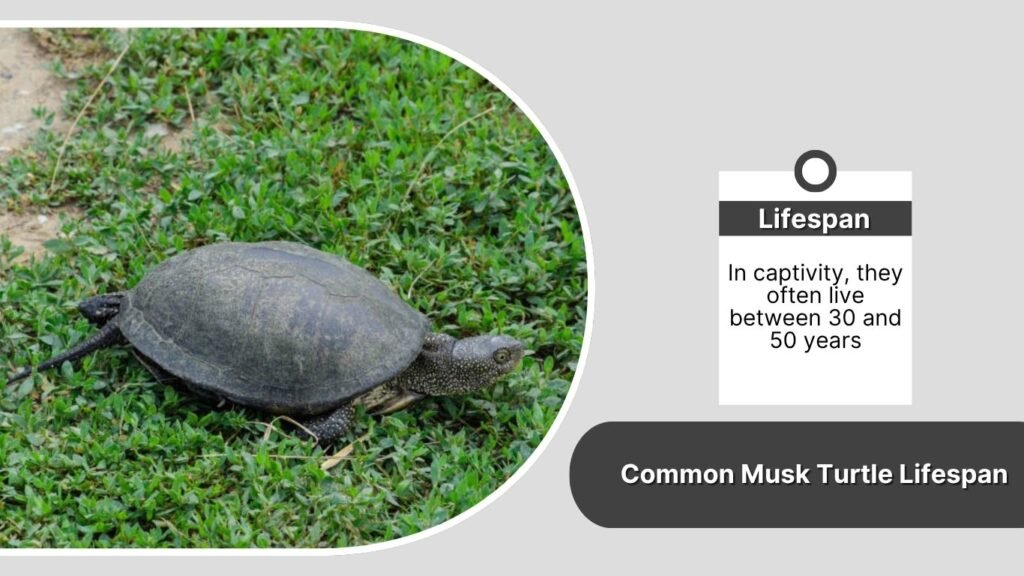
The common musk turtle is a long-lived reptile, which makes it a serious commitment for pet owners. With proper care, these turtles can live for decades.
In captivity, they often live between 30 and 50 years. This is significantly longer than many other small pets, so owners should be prepared for long-term responsibility. Clean water, balanced nutrition, and proper lighting conditions are essential factors that influence their lifespan.
Natural Habitat vs Captive Habitat
In the wild, common musk turtles inhabit slow-moving freshwater environments with soft, muddy bottoms and plenty of vegetation. These areas provide shelter, food, and protection from predators.
In captivity, replicating this natural environment is key to keeping your turtle healthy. A well-maintained tank with clean water, hiding spots, and stable temperatures helps reduce stress and encourages natural behavior. While they are adaptable, poor habitat conditions can quickly lead to health problems.
Common Musk Turtle Tank Setup
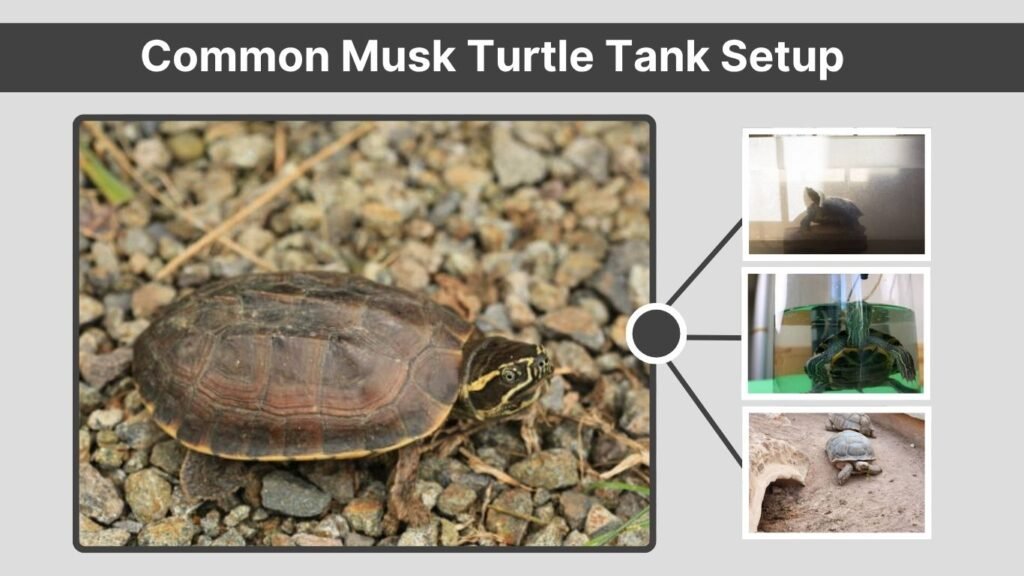
Setting up the right tank is essential for keeping a common musk turtle healthy and stress-free. These turtles prefer shallow water, stable temperatures, and a clean environment that mimics their natural habitat. A well-planned setup not only supports their physical health but also encourages natural behaviors like exploring and hiding.
- Tank size: Minimum 20 gallons for babies, 29–40 gallons for adults
- Water depth: Shallow to moderate, as they prefer bottom walking
- Filtration: Strong filter to handle waste and keep water clean
- Heating: Maintain water temperature between 72–78°F
- Lighting: UVB light for shell health and a heat lamp if basking area is provided
- Basking spot: Optional but beneficial for drying and warmth
- Substrate: Sand or bare bottom for easy cleaning
- Hiding spots: Rocks, driftwood, or caves for security
Common Musk Turtle Care Guide
Caring for a common musk turtle is relatively straightforward, but consistency is key. These turtles thrive in clean, stable environments where their basic needs are met regularly.
Daily care involves checking water temperature, ensuring the filter is working properly, and observing the turtle for any unusual behavior. Weekly maintenance includes partial water changes and cleaning debris from the tank. Maintaining water temperatures between 72–78°F and providing a warm basking area helps support digestion and overall health.
Handling should be kept to a minimum, as these turtles are not very social and may become stressed. When threatened, they can release a strong odor or attempt to bite. For this reason, they are best appreciated as observation pets rather than interactive ones.
Common Musk Turtle Diet and Feeding

A proper diet is crucial for the health and longevity of a common musk turtle. These turtles are primarily carnivorous and rely on protein-rich foods to support growth and energy. In captivity, offering a varied diet helps ensure they receive all necessary nutrients while also keeping them active and engaged during feeding.
- Main diet: Insects, worms, snails, and small aquatic animals
- Pellets: High-quality turtle pellets for balanced nutrition
- Live food: Mealworms, crickets, and feeder fish (occasionally)
- Frozen food: Bloodworms and shrimp as convenient options
- Feeding frequency: Daily for babies, every 1–2 days for adults
- Portion control: Avoid overfeeding to prevent obesity
- Variety: Mix different foods to maintain proper nutrition
Are Common Musk Turtles Good Pets?
Common musk turtles are often considered one of the best beginner turtles due to their small size and hardy nature. They don’t require extremely large tanks and can adapt well to captivity if their basic needs are met. However, they are not interactive pets and prefer to be left alone.
Their defensive behavior, including biting or releasing a musky odor, makes them less suitable for frequent handling. Owners who enjoy observing natural behaviors rather than handling their pets will find them especially rewarding. With proper care, they can live for decades, making them a long-term companion.
Common Musk Turtle Behavior and Facts

Common musk turtles are known for their unique and somewhat shy behavior. Unlike many aquatic turtles, they prefer walking along the bottom rather than swimming actively. They are mostly nocturnal and tend to stay hidden during the day, making them more of an observation pet than an interactive one.
- Bottom dwellers: Spend most time walking instead of swimming
- Nocturnal: More active during evening and night
- Shy nature: Prefer hiding spots and low disturbance
- Musk defense: Release strong odor when threatened
- Climbing ability: Can climb decorations and tank structures
- Low basking habit: Rarely bask compared to other turtles
Common Musk Turtle Price and Buying Guide
Buying a common musk turtle is relatively affordable, but it’s important to choose a healthy, captive-bred animal from a trusted source. Prices can vary depending on age, size, and rarity, and additional costs like tank setup and equipment should also be considered before purchase.
- Price range: Typically $20 to $100 for common turtles
- Higher prices: $90 to $180+ for captive-bred or premium specimens
- Rare types: Albino or special morphs cost more
- Where to buy: Pet stores, online breeders, reptile expos
- Captive-bred vs wild: Always choose captive-bred turtles for better health
- Shipping: Many online sellers offer live arrival guarantees and overnight delivery
- Legal check: Some regions restrict turtle ownership or shipping
Before buying, make sure your tank is fully set up and ready. A healthy turtle should be active, have clear eyes, and a clean, firm shell. Investing in the right setup and a reputable seller ensures a better start for your pet.
Conclusion
The common musk turtle is a small, hardy, and fascinating aquatic reptile that makes a great pet for the right owner. Its compact size and simple care requirements make it beginner-friendly, while its unique behavior keeps it interesting to observe. By providing a proper tank setup, balanced diet, and consistent care, you can ensure your musk turtle lives a long and healthy life.
FAQs
How big do common musk turtles get?
Common musk turtles usually grow between 3 and 5 inches in length. Females are generally larger than males. Their small size makes them ideal for medium-sized aquariums, but they still need enough space to move and explore comfortably.
How long do common musk turtles live?
With proper care, common musk turtles can live between 30 and 50 years in captivity. Factors like diet, water quality, and proper lighting all play a major role in determining their lifespan.
What do common musk turtles eat?
They mainly eat a carnivorous diet that includes insects, worms, snails, and small fish. In captivity, they also eat pellets and frozen foods, which help provide balanced nutrition.
Are common musk turtles good pets?
Yes, they are good pets for beginners due to their hardy nature and small size. However, they are not very interactive and prefer minimal handling, making them better suited for observation.
Can common musk turtles live with fish?
They can live with fish, but it is risky. Musk turtles may eat smaller fish or attack slow-moving species, so it’s generally safer to keep them alone or choose tank mates carefully.