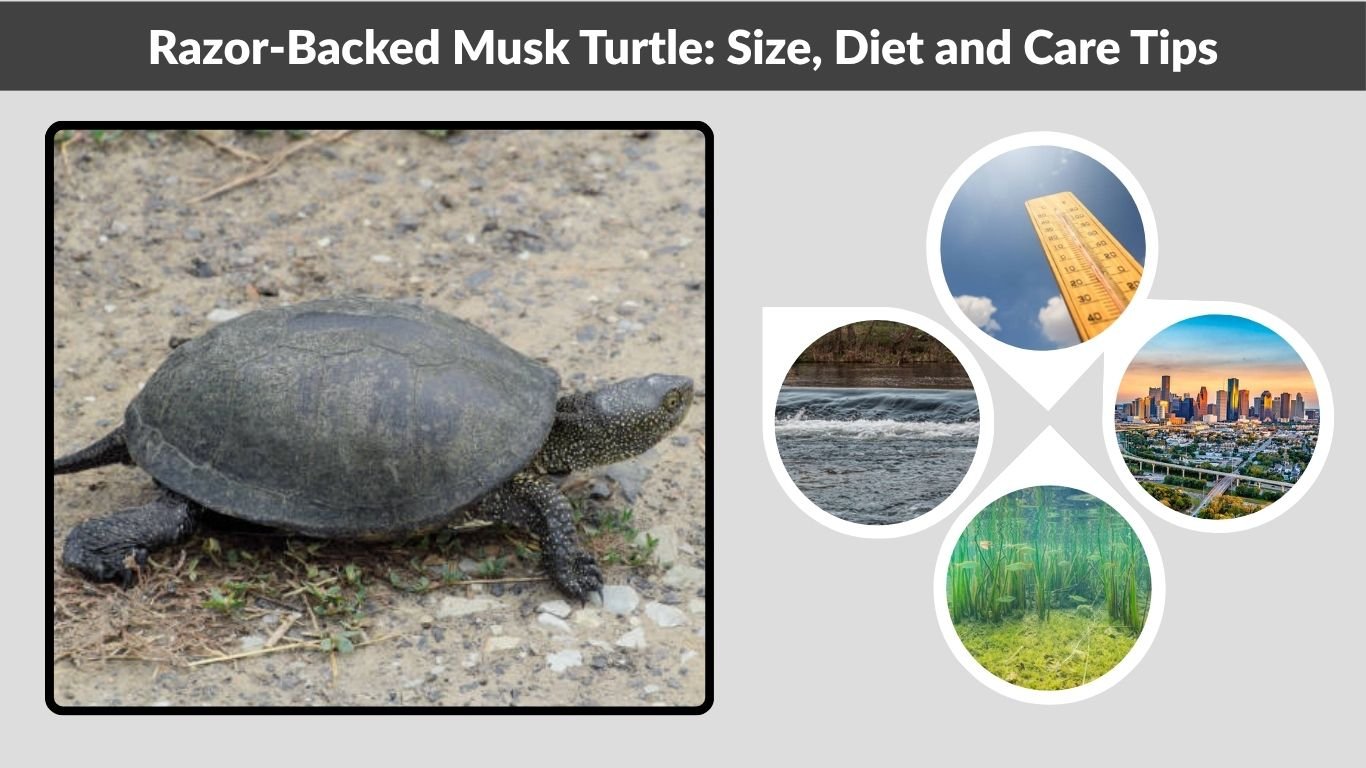
The razor-backed musk turtle is a small freshwater species known for its distinctive ridged shell and calm behavior. Scientifically called Sternotherus carinatus, it is native to the southern United States and is popular among reptile keepers due to its manageable size and unique appearance. Unlike many turtles, it spends most of its time underwater and prefers walking along the bottom rather than swimming actively. This guide covers its key traits, size, habitat, and diet to help you better understand and care for this fascinating turtle.
What Is a Razor-Backed Musk Turtle?
The razor-backed musk turtle gets its name from the sharp, raised keel running along the center of its shell. This feature gives it a “razor-like” appearance and helps distinguish it from other musk turtle species.
Key Characteristics
- Prominent ridge (keel) along the shell
- Dark brown or gray coloration
- Small, compact body size
- Strong legs adapted for walking underwater
Appearance and Identification
- Shell is more peaked compared to other musk turtles
- Head may have subtle striping
- Body shape is slightly more elevated than flat-shelled species
Razor-Backed Musk Turtle Size and Growth
Razor-backed musk turtles are considered small turtles, making them suitable for compact setups. Their growth is gradual and influenced by diet and environmental conditions.
How Big Do Razor-Backed Musk Turtles Get?
- Adults typically reach 4 to 6 inches in length
- Males are often slightly smaller than females
- Growth slows significantly after reaching maturity
Growth Stages
- Hatchlings are tiny and fragile
- Juveniles grow steadily with proper feeding
- Adults maintain a stable size over time
Razor-Backed Musk Turtle Lifespan
Razor-backed musk turtles can live for many years, especially when kept in a well-maintained environment. In captivity, they often live longer than in the wild due to reduced threats and consistent care. Their lifespan depends on factors such as water quality, diet, and habitat conditions. With proper care, these turtles can become long-term companions, making them a commitment for responsible pet owners.
Razor-Backed Musk Turtle Habitat and Natural Range
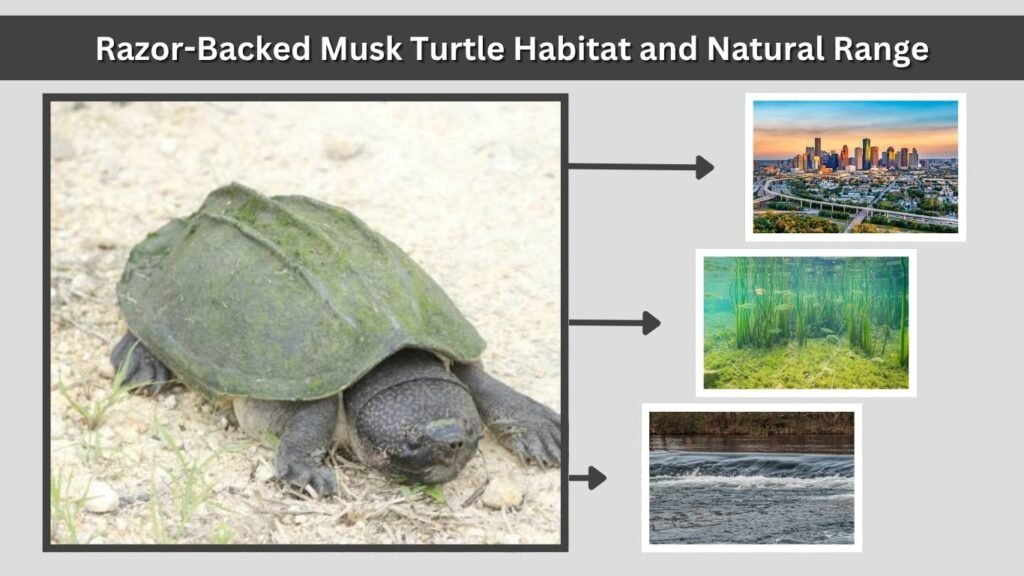
Razor-backed musk turtles are native to slow-moving freshwater environments. They prefer rivers, streams, and swamps where the water is calm and the bottom is soft.
Geographic Range
- Found in Texas, Louisiana, and Oklahoma
- Common in southern United States waterways
- Occasionally seen in nearby regions with similar habitats
Habitat Behavior
- Spend most of their time on the bottom
- Climb on submerged logs or branches
- Rarely bask compared to other turtles
Razor-Backed Musk Turtle Diet
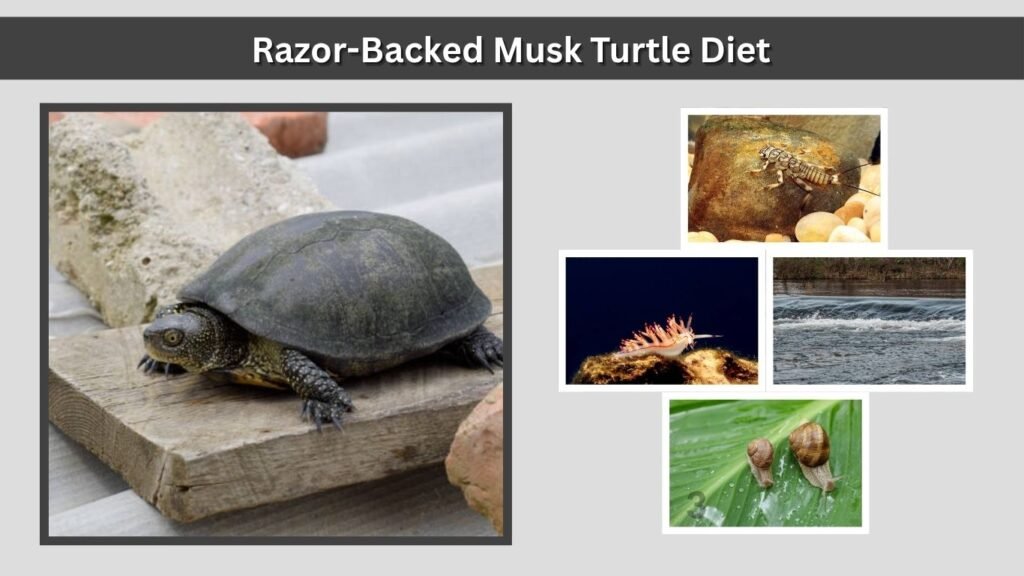
These turtles are primarily carnivorous, feeding on a variety of small aquatic organisms. Their feeding habits are well adapted to their bottom-dwelling lifestyle.
What Do Razor-Backed Musk Turtles Eat?
- Insects and aquatic larvae
- Worms and snails
- Small fish and crustaceans
Feeding Behavior
- Prefer to forage along the tank or river bottom
- Use smell and movement to locate food
- Eat slowly compared to more aggressive species
Behavior and Personality
Razor-backed musk turtles are generally shy and peaceful. They tend to avoid confrontation and are more likely to hide when disturbed. Unlike more active turtle species, they do not spend much time basking and instead prefer staying submerged. Their calm nature makes them suitable for observation, though they are not ideal for frequent handling. They may release a mild musky odor when stressed, but this is uncommon in well-maintained environments.
Razor-Backed Musk Turtle Care Guide
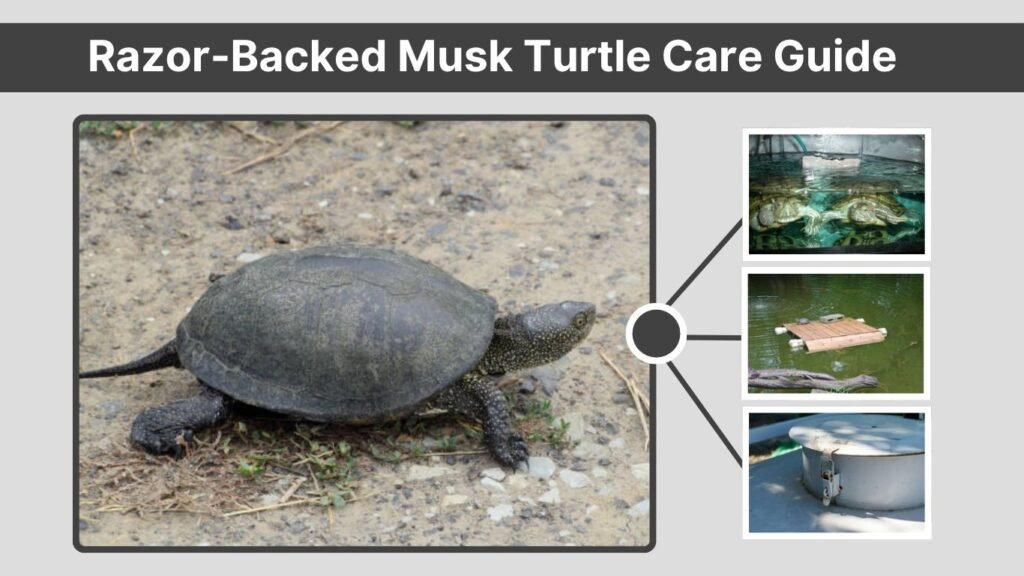
Caring for a razor-backed musk turtle requires maintaining a clean aquatic environment and providing the right balance of space, temperature, and nutrition. While they are relatively low-maintenance compared to larger turtles, they still need consistent care to stay healthy.
Tank Setup and Enclosure
- Minimum tank size of 20–40 gallons for one turtle
- Moderate water depth (not too deep for easy movement)
- Hiding spots like driftwood or rocks
- Secure lid to prevent escape
Water Conditions
- Water temperature between 72–78°F
- Strong filtration system to maintain cleanliness
- Regular partial water changes
Lighting and Heating
- UVB lighting recommended for health
- Basking area optional but beneficial
- Maintain a natural day and night cycle
Razor-Backed Musk Turtle Tank Mates and Compatibility
Razor-backed musk turtles can sometimes live with other aquatic animals, but careful consideration is needed. Their feeding habits and temperament influence compatibility.
Tank Mate Considerations
- May eat small fish if given the chance
- Can live with peaceful, similarly sized turtles
- Avoid aggressive or overly active species
Common Health Issues
Like all aquatic turtles, razor-backed musk turtles are prone to health issues if their environment is not properly maintained. Clean water and proper diet are essential to prevent disease.
Common Problems
- Shell rot caused by bacteria in dirty water
- Skin infections from poor water quality
- Nutritional deficiencies from improper diet
Prevention Tips
- Maintain clean, filtered water
- Provide a balanced, protein-rich diet
- Ensure proper lighting and temperature
Breeding Razor-Backed Musk Turtles
Breeding razor-backed musk turtles in captivity can be achieved with the right conditions. Mating typically occurs in water, and females will lay eggs on land in soft substrate.
Eggs and Hatchlings
- Females lay small clutches of eggs
- Incubation lasts several weeks depending on temperature
- Hatchlings require shallow water and gentle care
Buying a Razor-Backed Musk Turtle
If you are planning to purchase a razor-backed musk turtle, it is important to choose a healthy specimen from a trusted source. Availability may vary depending on your location, and prices can differ based on age and rarity.
Things to Consider Before Buying
- Check local laws regarding turtle ownership
- Choose captive-bred turtles over wild-caught
- Prepare a proper tank setup before purchase
Razor-Backed Musk Turtle vs Other Turtles
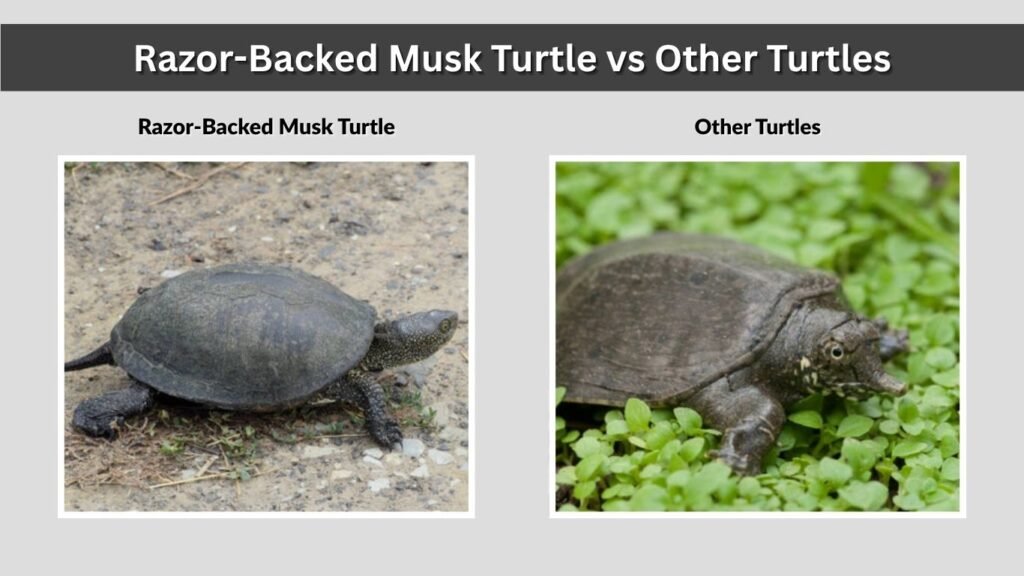
Razor-backed musk turtles differ from many other pet turtles in behavior and care needs. They are less active swimmers and spend more time on the bottom. Compared to larger species like sliders, they require less space but more attention to water quality. Their calm and shy nature also sets them apart, making them better suited for quiet environments.
Interesting Facts About Razor-Backed Musk Turtles
Razor-backed musk turtles are named for the sharp ridge running along their shell. Despite being aquatic, they are surprisingly good climbers and often rest on submerged branches. They can release a musky odor as a defense mechanism, though this is rare in captivity. Their ability to stay underwater for long periods makes them well adapted to slow-moving aquatic habitats.
FAQs
How big do razor-backed musk turtles get?
They typically grow to about 4–6 inches in length. Their small size makes them one of the more manageable turtle species for home aquariums.
What do razor-backed musk turtles eat?
They mainly eat insects, worms, snails, and small fish. A balanced diet with protein and commercial turtle food helps maintain good health.
Do razor-backed musk turtles smell?
They can release a musky odor when stressed, but in clean environments, this is rarely noticeable and not a common issue.
Are razor-backed musk turtles good pets?
Yes, they are suitable for beginners due to their size and relatively simple care needs, though they still require proper tank maintenance.
How long do razor-backed musk turtles live?
With proper care, they can live 20–30 years in captivity, making them a long-term commitment for responsible owners.