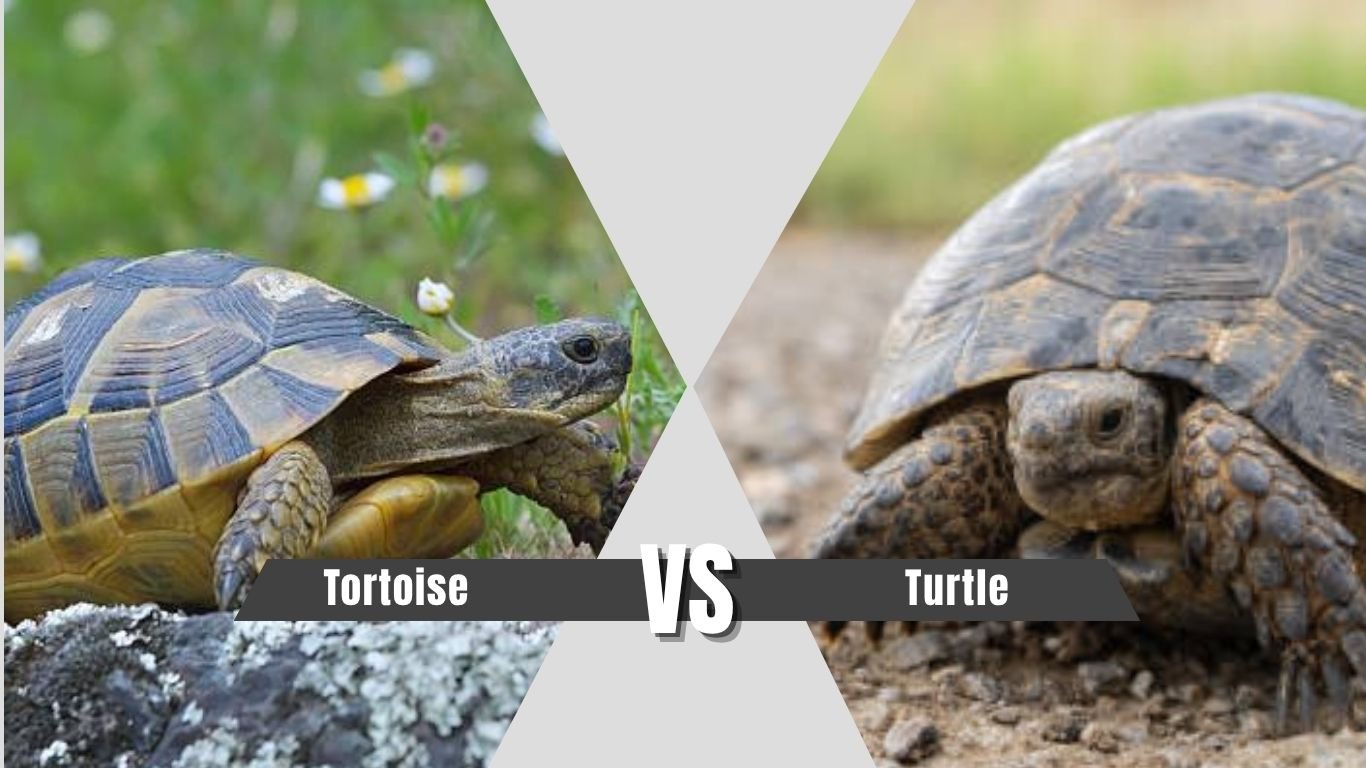
Tortoises and turtles are often confused because they share a similar appearance and belong to the same reptile order, Testudines. However, they differ significantly in their habitat, body structure, and behavior. Understanding these differences helps in proper identification and care. In this article, you will learn what sets tortoises and turtles apart, along with their key traits and similarities.
What Is a Tortoise?
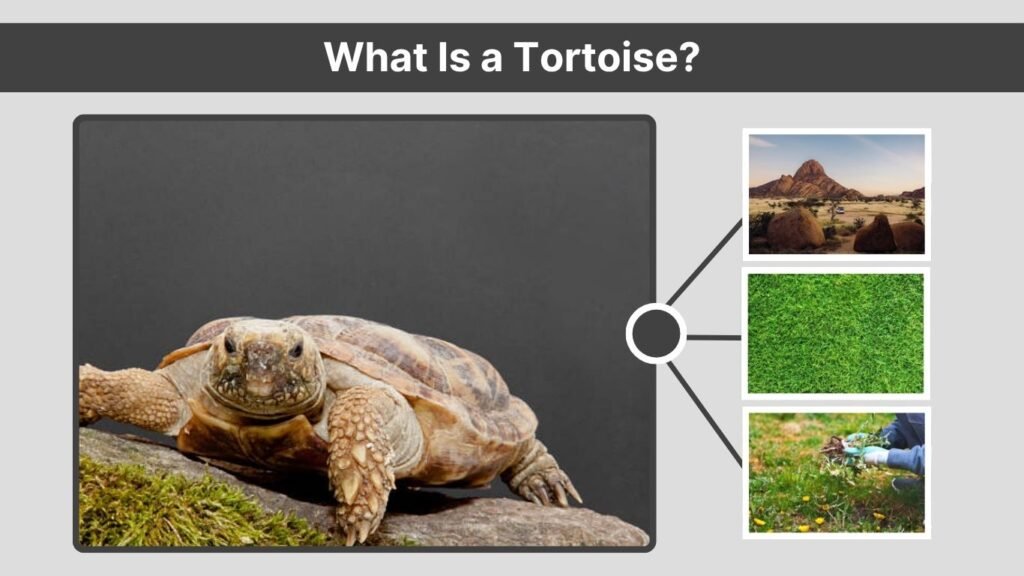
A tortoise is a land-dwelling reptile that is fully adapted to life on land. Unlike turtles, tortoises do not depend on water for survival. They are known for their slow movement, strong build, and ability to live in dry environments. Tortoises are commonly found in warm regions and are built to handle harsh climates.
Physical Features of Tortoises
Tortoises have a very distinct body structure. Their shells are large, heavy, and dome-shaped, which provides strong protection against predators. This high dome also helps them retain moisture in dry conditions.
Their legs are thick and sturdy, often compared to elephant legs. These legs are designed for walking on land rather than swimming. They also have short, clawed feet that help them dig burrows or search for food. Overall, their body is built for strength and stability instead of speed.
Habitat and Lifestyle
Tortoises live entirely on land and prefer dry, warm environments such as deserts, grasslands, and scrublands. They are commonly found in regions like Africa, Asia, and parts of the Americas.
To survive in these conditions, tortoises have developed ways to conserve water. Some species can go long periods without drinking by absorbing moisture from their food. They may also dig burrows to escape extreme heat and maintain a stable body temperature.
Diet and Feeding
Tortoises are mostly herbivores, meaning they eat plant-based foods. Their diet includes grasses, leafy greens, weeds, and sometimes fruits and flowers. This type of diet provides both nutrients and hydration.
Because of their slow metabolism, tortoises eat gradually and spend much of their time grazing. Their feeding habits match their calm and slow-moving lifestyle.
What Is a Turtle?
Turtles are reptiles that are mostly aquatic or semi-aquatic. While the term “turtle” can sometimes be used broadly, it commonly refers to species that live in water. These animals are specially adapted for swimming and spend most of their lives in aquatic environments.
Physical Features of Turtles
Turtles have bodies that are designed for movement in water. Their shells are generally flatter and lighter than those of tortoises. This streamlined shape reduces resistance and helps them swim efficiently.
Instead of thick legs, turtles have webbed feet or flippers. Freshwater turtles use webbed feet for paddling, while sea turtles have long flippers for powerful swimming. Their limbs are not suited for long-distance movement on land.
Habitat and Lifestyle
Turtles are found in a wide range of water environments, including oceans, seas, rivers, lakes, and wetlands. Some species live in freshwater, while others are marine and travel across large distances.
Even though turtles live in water, they still come onto land for certain activities, especially laying eggs. Female turtles often return to sandy or soft soil areas to nest, which is essential for reproduction.
Diet and Feeding
Turtles have more varied diets compared to tortoises. Depending on the species, they may be herbivores, carnivores, or omnivores. Some turtles eat aquatic plants and algae, while others feed on fish, insects, or small animals.
This flexibility allows turtles to adapt to different environments. Their feeding habits depend on their habitat and the availability of food sources.
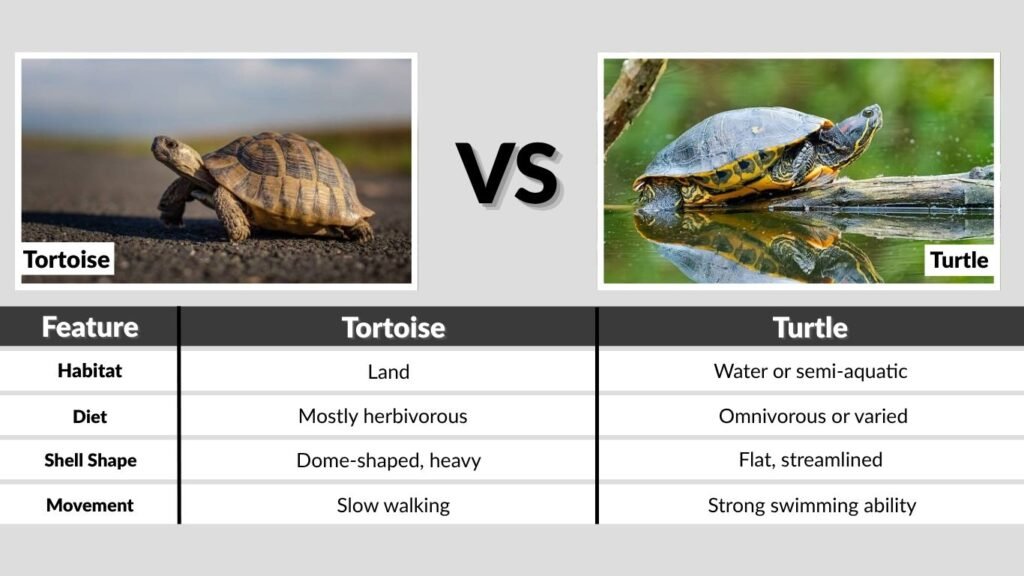
Tortoise vs Turtle (Quick Comparison Table)
| Feature | Tortoise | Turtle |
| Habitat | Land | Water or semi-aquatic |
| Shell Shape | Dome-shaped, heavy | Flat, streamlined |
| Limbs | Thick, sturdy legs | Webbed feet or flippers |
| Diet | Mostly herbivorous | Omnivorous or varied |
| Movement | Slow walking | Strong swimming ability |
Key Differences Between Tortoise and Turtle
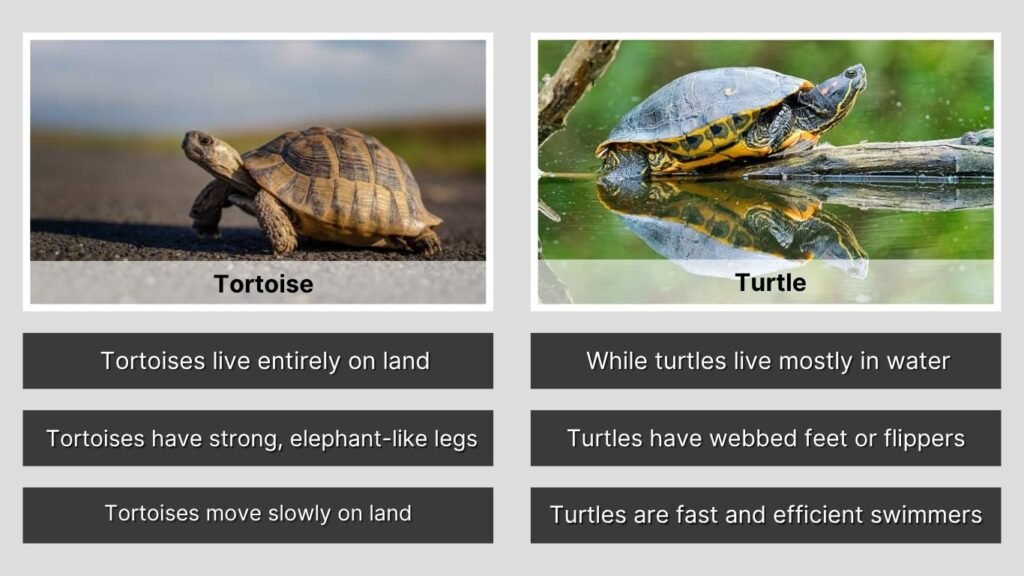
- Habitat: Tortoises live entirely on land, while turtles live mostly in water.
- Shell Design: Tortoises have high, dome-shaped shells, while turtles have flatter shells that help in swimming.
- Limbs: Tortoises have strong, elephant-like legs, while turtles have webbed feet or flippers.
- Diet: Tortoises are primarily herbivores, while turtles can eat both plants and animals.
- Mobility: Tortoises move slowly on land, whereas turtles are fast and efficient swimmers.
Key Similarities
- Both belong to the reptile order Testudines.
- Both have hard protective shells fused with their ribs.
- Both are cold-blooded animals that rely on external heat sources.
- Both lay eggs on land, even if they live in water.
- Both can live for many decades depending on species and care.
Tortoise vs Turtle: Habitat and Behavior (Table)
| Aspect | Tortoise Behavior | Turtle Behavior |
| Living Style | Fully terrestrial | Aquatic or semi-aquatic |
| Activity | Slow and steady | Active swimmers |
| Adaptation | Dry climate survival | Water-based survival |
| Nesting | Land nesting | Land nesting (from water) |
| Movement Type | Walking | Swimming + limited walking |
Which One Makes a Better Pet?
- Space Requirements: Tortoises need dry enclosures, while turtles require both water and land setups.
- Maintenance Level: Turtles need water filtration and cleaning, making them higher maintenance.
- Diet Needs: Tortoises mainly eat plants, while turtles require a more varied diet.
- Lifespan Commitment: Both live long lives, often several decades, requiring long-term care.
- Environment Setup: Tortoises need heat and dry space, while turtles need balanced aquatic systems.
Common Misconceptions
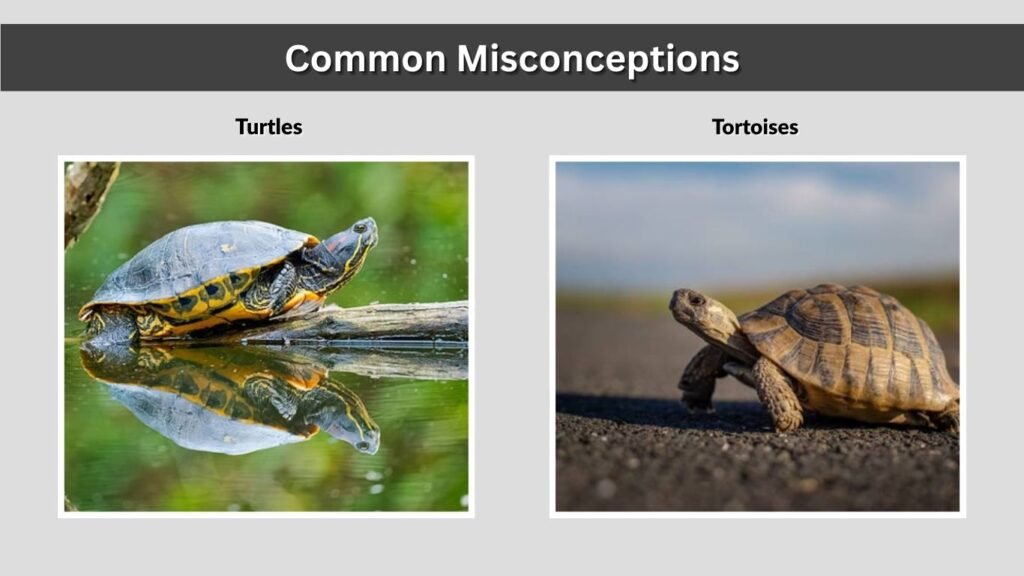
- Many people think tortoises and turtles are the same animal.
- It is often believed that all turtles live in oceans, which is incorrect.
- Some assume tortoises can swim easily, but they are not built for water.
- People may think turtles can live fully on land, which is not true for most species.
- Naming differences across regions cause confusion between the two.
How to Identify a Tortoise or Turtle
- Check Habitat: Land indicates tortoise; water indicates turtle.
- Look at Shell Shape: Dome-shaped shells suggest tortoise; flatter shells suggest turtle.
- Observe Limbs: Thick legs mean tortoise; webbed feet or flippers mean turtle.
- Watch Movement: Slow walking points to tortoise; swimming ability indicates turtle.
- Notice Behavior: Burrowing and grazing suggest tortoise; diving and swimming suggest turtle.
FAQs
What is the main difference between a tortoise and a turtle?
The main difference is their habitat and physical adaptation. Tortoises live on land and have sturdy legs with dome-shaped shells, while turtles live mostly in water and have flatter shells with webbed feet or flippers that help them swim efficiently.
Can a tortoise survive in water?
Tortoises are not adapted for swimming and cannot survive in deep water for long periods. Their heavy shells and land-based limbs make it difficult for them to stay afloat, which means they can easily drown if placed in water.
Are turtles and tortoises related?
Yes, turtles and tortoises are closely related. They both belong to the reptile order Testudines and share features like protective shells and egg-laying reproduction, but they differ in habitat, behavior, and physical adaptations.
Which lives longer, a tortoise or a turtle?
Both tortoises and turtles can live long lives, often several decades. Some tortoise species can exceed 100 years, while many turtles also have long lifespans depending on their species, environment, and level of care.