
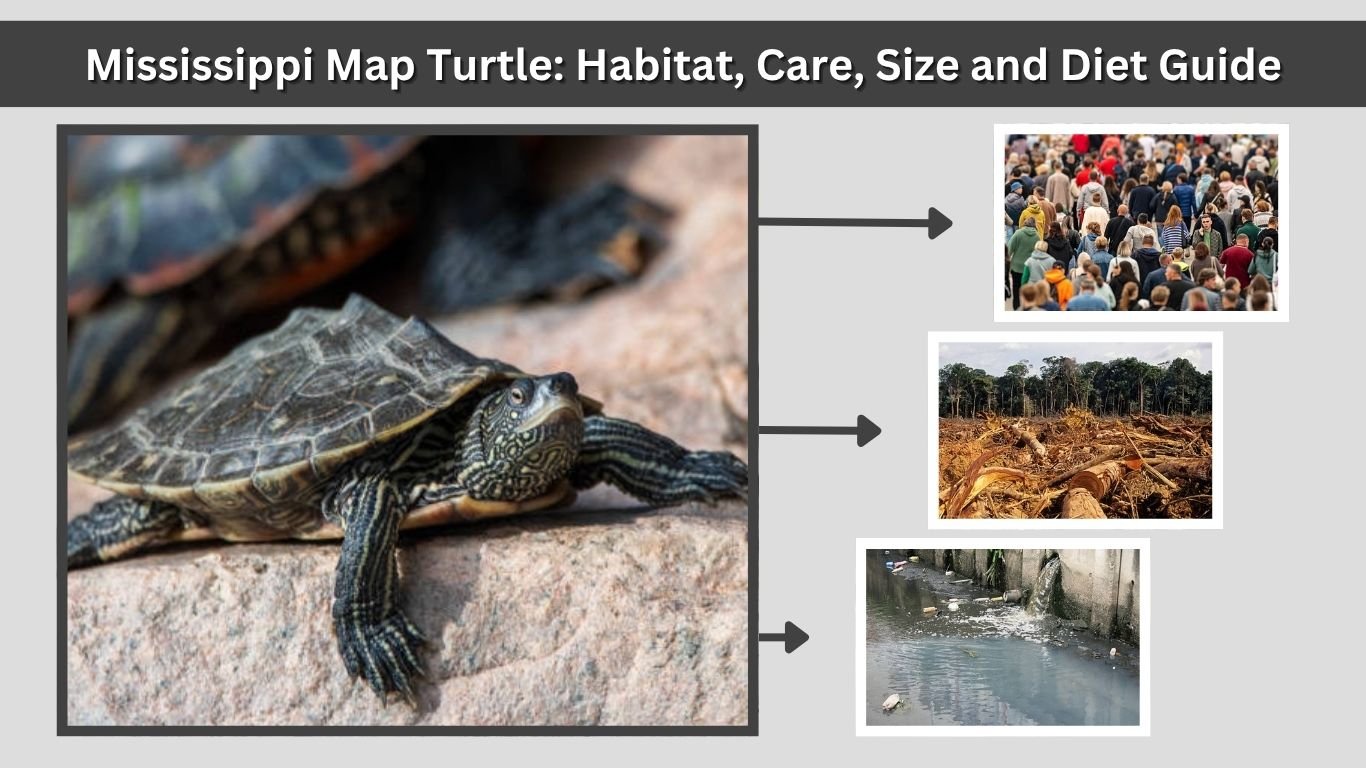
The Mississippi map turtle is a popular freshwater species known for its striking shell patterns and active swimming behavior. Scientifically called Graptemys pseudogeographica kohnii, this turtle is native to the central United States and thrives in rivers and lakes. It is especially favored by reptile enthusiasts due to its unique appearance and manageable size. In this guide, you’ll learn about its characteristics, size, habitat, and dietary needs to better understand how to care for and identify this fascinating turtle.
What Is a Mississippi Map Turtle?
The Mississippi map turtle is a semi-aquatic turtle recognized for the map-like lines on its shell, which resemble topographic patterns. These turtles are strong swimmers and spend most of their time in water, often basking on logs or rocks.
Key Characteristics
- Olive or brown shell with yellow map-like markings
- Prominent ridge (keel) along the back
- Yellow stripes on the head and limbs
- Distinct marking behind the eyes
Types and Variations
- Standard Mississippi map turtle commonly found in the wild
- Albino Mississippi map turtle with pale coloration
- High-orange or white variations seen in captive breeding
Mississippi Map Turtle Size and Growth
Mississippi map turtles show noticeable differences in size between males and females. Their growth depends on diet, habitat, and environmental conditions.
How Big Do Mississippi Map Turtles Get?
- Males usually grow between 4 to 6 inches
- Females can reach 10 to 12 inches or more
- Females are significantly larger than males
Growth Stages
- Hatchlings are small and delicate
- Juveniles grow rapidly with proper nutrition
- Adults reach full size over several years
Mississippi Map Turtle Lifespan
Mississippi map turtles can live for a long time when kept in proper conditions. In the wild, their lifespan is often shorter due to predators and environmental factors. However, in captivity, they can live much longer with good care. Proper diet, clean water, and adequate space all contribute to a healthy life. Owners who provide consistent care can expect these turtles to live for decades, making them a long-term commitment as pets.
Mississippi Map Turtle Habitat and Range
In the wild, Mississippi map turtles prefer freshwater environments with plenty of basking spots. They are commonly found in rivers, lakes, and large streams with slow to moderate currents.
Geographic Range
- Native to the Mississippi River basin
- Found in states like Missouri, Illinois, and Louisiana
- Common in central and southern United States
Habitat Behavior
- Spend most of their time swimming
- Bask frequently to regulate body temperature
- Prefer areas with logs or rocks for resting
Mississippi Map Turtle Diet
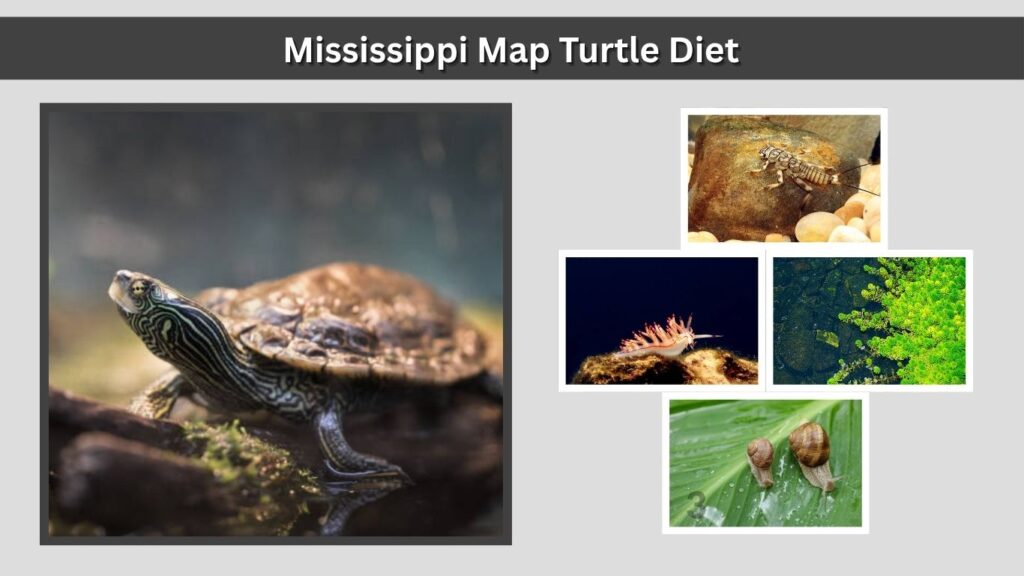
Mississippi map turtles are omnivores, meaning they eat both animal and plant-based foods. Their diet changes as they grow older, with younger turtles eating more protein and adults including more vegetation.
What Do Mississippi Map Turtles Eat?
- Insects and aquatic invertebrates
- Small fish and snails
- Aquatic plants and algae
Feeding Guide
- Feed juveniles daily for proper growth
- Adults can be fed every other day
- Provide a balanced mix of protein and greens
Mississippi Map Turtle Behavior and Personality
Mississippi map turtles are generally shy and prefer to avoid human interaction. They are active swimmers and can be seen quickly diving into the water when disturbed. While they are not aggressive, they can become stressed if handled too often. Their behavior makes them more suitable for observation rather than frequent handling, especially for beginner turtle owners.
Mississippi Map Turtle Care Guide
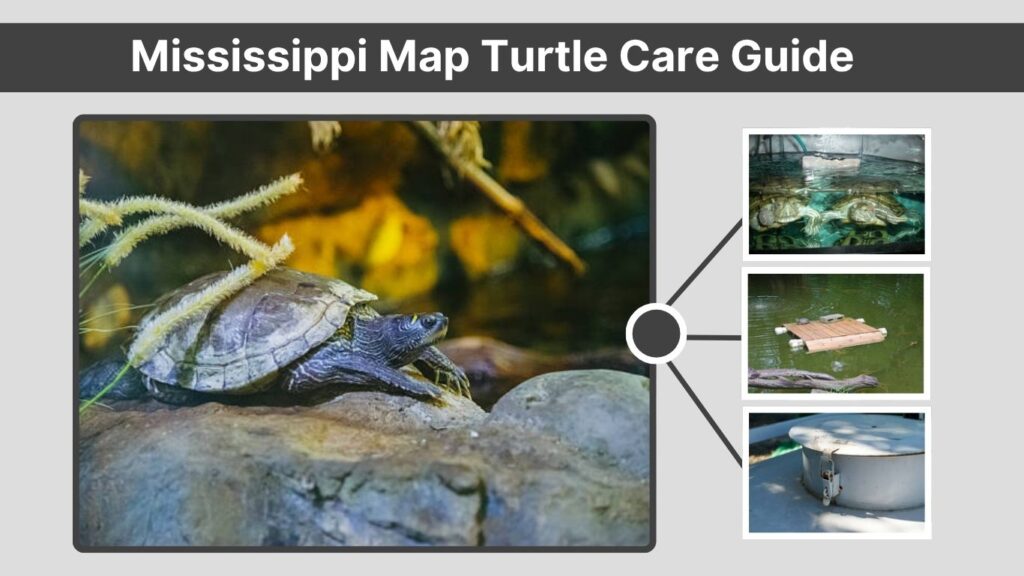
Caring for a Mississippi map turtle requires attention to its aquatic needs, water quality, and proper environment. These turtles are more sensitive than some other species, so maintaining a clean and stable habitat is essential for their health.
Tank Setup and Enclosure
- Minimum tank size of 40–75 gallons for one turtle
- Deep water for swimming (at least 2–3 times shell length)
- Basking platform with easy access
- Soft lighting and secure tank cover
Water Conditions
- Water temperature between 75–80°F
- Strong filtration system to keep water clean
- Regular water changes to prevent buildup of waste
Lighting and Heating
- UVB lighting for shell and bone health
- Basking temperature around 85–90°F
- Consistent day and night cycle
Tank Mates and Compatibility
Mississippi map turtles can sometimes live with other aquatic turtles, but compatibility depends on space, temperament, and proper tank conditions.
Tank Mate Considerations
- Can live with other map turtles in large tanks
- May coexist with red-eared sliders if space is sufficient
- Avoid overcrowding to reduce stress and aggression
Common Health Issues
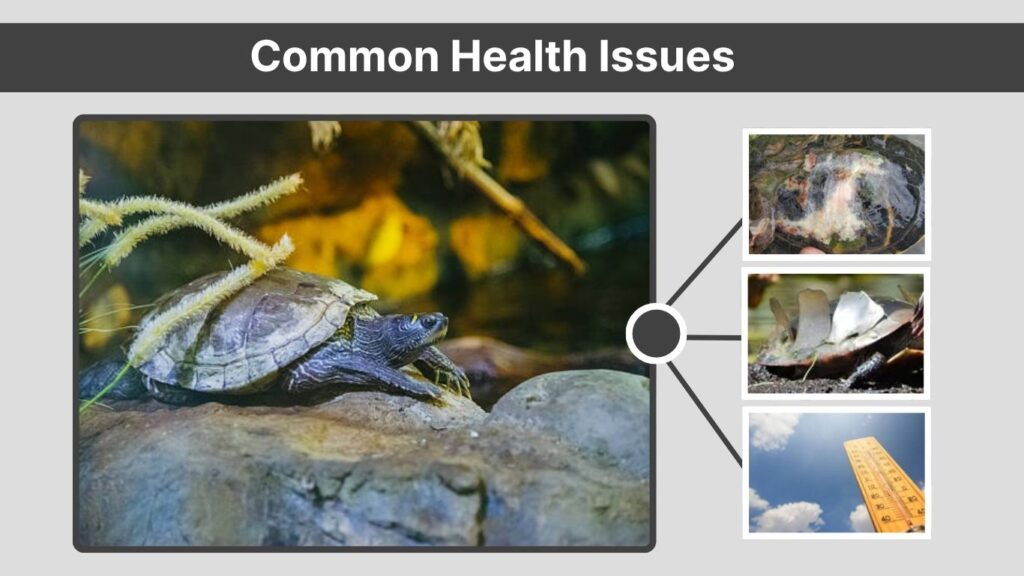
Mississippi map turtles can develop health problems if their environment is not properly maintained. Clean water, proper diet, and correct lighting play a major role in preventing illness.
Common Problems
- Shell rot caused by bacteria in dirty water
- Shell peeling due to improper shedding or poor nutrition
- Respiratory infections from incorrect temperatures
Prevention Tips
- Keep water clean and well-filtered
- Provide balanced nutrition
- Maintain proper temperature and lighting
Breeding Mississippi Map Turtles
Breeding Mississippi map turtles in captivity requires careful preparation and the right environmental conditions. Mating typically occurs in water, while egg-laying happens on land.
Eggs and Hatchlings
- Females lay eggs in sandy or soft soil
- Incubation period lasts around 60–75 days
- Hatchlings are small and require special care
Buying a Mississippi Map Turtle
If you are considering purchasing a Mississippi map turtle, it’s important to choose a healthy animal from a reliable source. Many pet stores and breeders offer them, but conditions and legality may vary by location.
Things to Consider Before Buying
- Check local laws and regulations
- Ensure the turtle is captive-bred
- Be prepared for long-term care commitment
Mississippi Map Turtle vs Other Turtles
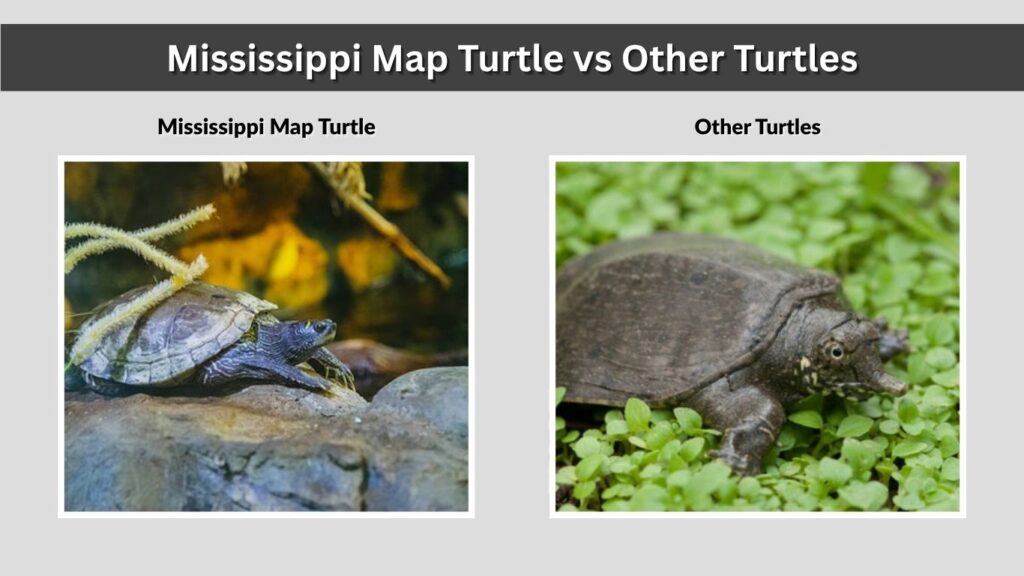
Mississippi map turtles are often compared to other popular pet turtles. They differ in behavior, size, and care requirements.
Key Comparisons
- More sensitive to water quality than red-eared sliders
- Smaller males compared to many turtle species
- Less tolerant of frequent handling
Interesting Facts About Mississippi Map Turtles
Mississippi map turtles are named for the intricate lines on their shells that resemble map patterns. They are excellent swimmers and can stay underwater for long periods. Unlike many turtles, they prefer basking in groups and are often seen stacked on logs in the wild. Their keen eyesight helps them detect predators quickly, allowing them to escape into the water with impressive speed.
FAQs
How big do Mississippi map turtles get?
Females can grow up to 10–12 inches, while males usually reach only 4–6 inches. This size difference is significant and helps distinguish between genders easily.
What do Mississippi map turtles eat?
They eat a mix of insects, fish, snails, and aquatic plants. A balanced diet with both protein and vegetation is important for their overall health and growth.
Are Mississippi map turtles good pets?
They can be good pets for experienced owners who can maintain clean water and proper tank conditions. They are best suited for observation rather than handling.
Do Mississippi map turtles bite?
They may bite if they feel threatened, but they are generally shy turtles. Avoid handling them frequently to reduce stress and the chance of defensive behavior.
How long do Mississippi map turtles live?
With proper care, they can live 15 to 25 years or more in captivity. Clean water, good nutrition, and a proper environment greatly influence their lifespan.