

The Cumberland slider turtle is a popular freshwater turtle known for its attractive markings, active behavior, and relatively easy care requirements. Native to the Cumberland River system in the United States, this turtle belongs to the slider family and is closely related to red-eared sliders and yellow-bellied sliders. Many reptile enthusiasts choose Cumberland sliders as pets because they are hardy, adaptable, and fascinating to observe. Understanding their size, habitat, diet, and care needs is essential for providing a healthy environment and ensuring a long lifespan.
What Is a Cumberland Slider Turtle?
The Cumberland slider turtle (Trachemys scripta troostii) is a semi-aquatic turtle native to rivers, lakes, ponds, and slow-moving waterways. It is a subspecies of the pond slider and is recognized by its olive to brown shell, yellow markings, and distinctive head stripes. These turtles spend much of their time swimming, basking, and searching for food in freshwater environments.
Physical Appearance
Cumberland sliders have a streamlined shell that helps them move efficiently through the water. Their shell color typically ranges from olive green to brown, often featuring intricate yellow patterns. Unlike red-eared sliders, they lack the bright red patch behind the eyes and instead display yellow to orange markings.
Scientific Classification
The Cumberland slider belongs to the reptile family Emydidae and is classified as a freshwater turtle. Its scientific name, Trachemys scripta troostii, distinguishes it from other slider subspecies commonly kept as pets.
Cumberland Slider Turtle Size
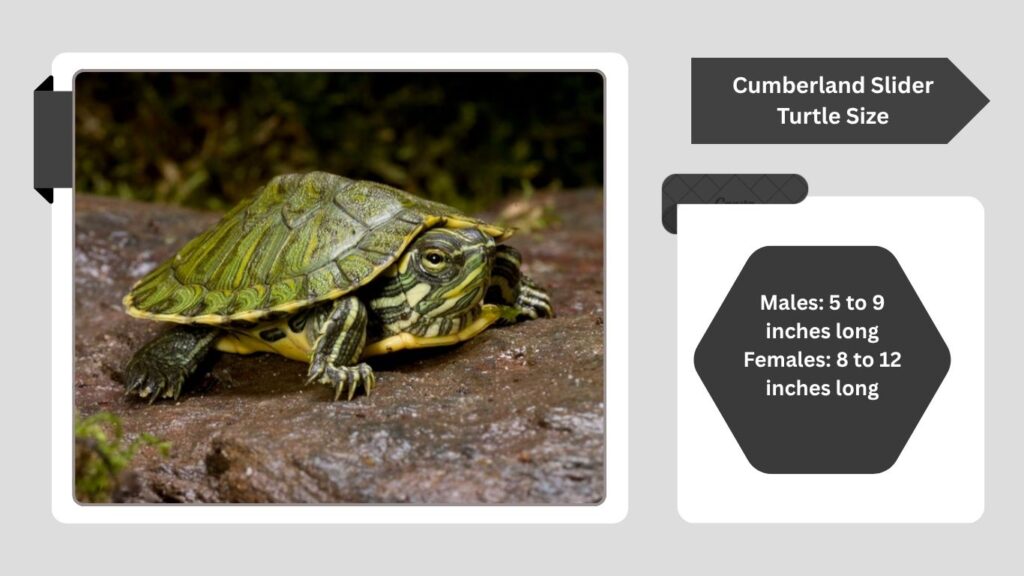
Cumberland sliders grow steadily throughout their juvenile years and eventually reach a substantial adult size. Their final size depends on genetics, diet, habitat conditions, and overall health.
How Big Do Cumberland Slider Turtles Get?
Most hatchlings emerge from their eggs measuring only about 1 to 1.5 inches in shell length. As they mature, growth becomes more noticeable during the first several years of life.
Adult Cumberland sliders generally reach:
- Males: 5 to 9 inches long
- Females: 8 to 12 inches long
- Hatchlings: 1 to 1.5 inches long
- Juveniles: 2 to 6 inches long
Females typically grow larger than males, a trait commonly seen among aquatic turtle species.
Full-Grown Cumberland Slider Size
A fully grown Cumberland slider may reach up to 12 inches in shell length when provided with proper nutrition and care. Captive turtles often achieve larger sizes than wild turtles due to consistent feeding and favorable living conditions.
Cumberland Slider Lifespan
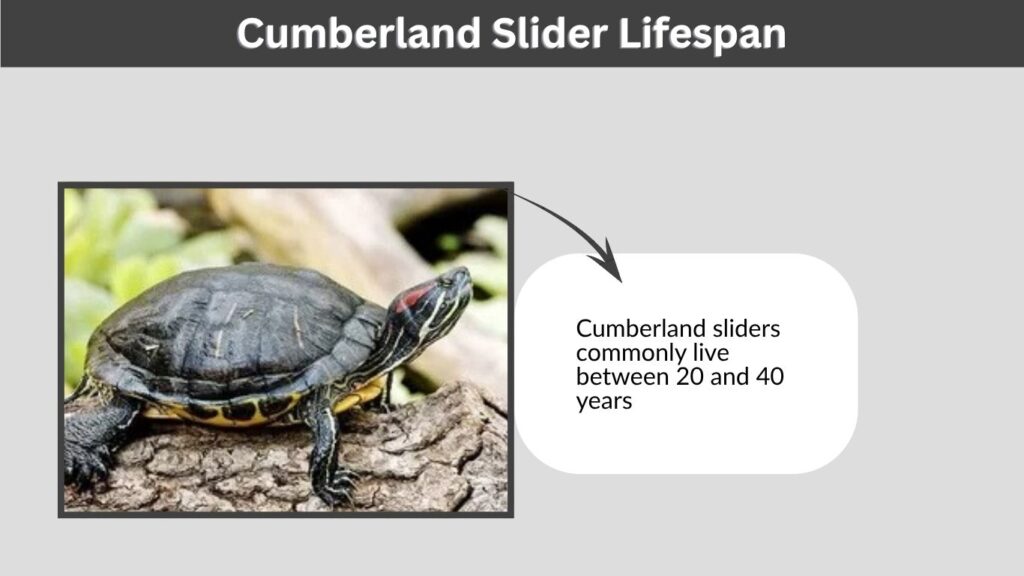
With proper husbandry, Cumberland sliders can become long-term companions. Their lifespan is influenced by water quality, nutrition, lighting, and veterinary care.
How Long Do Cumberland Slider Turtles Live?
In captivity, Cumberland sliders commonly live between 20 and 40 years. Some individuals may exceed this range when kept in ideal conditions. Wild turtles generally face more threats from predators, disease, and environmental changes, which can reduce their average lifespan.
Factors That Affect Lifespan
Several factors play a significant role in determining how long a Cumberland slider will live:
- Proper UVB lighting
- Balanced diet
- Clean water conditions
- Adequate tank size
- Routine health monitoring
- Stable water temperature
Providing these essentials helps prevent many common health issues and promotes healthy growth throughout the turtle’s life.
Cumberland Slider Natural Habitat

In the wild, Cumberland sliders inhabit freshwater ecosystems with abundant vegetation and basking opportunities. Their natural range is centered around the Cumberland River drainage basin in Tennessee and Kentucky.
Native Environment
These turtles thrive in slow-moving bodies of water where they can easily swim, forage, and bask. Aquatic plants, fallen logs, and shoreline vegetation provide shelter and protection from predators.
Basking Behavior
Basking is a critical part of a Cumberland slider’s daily routine. They frequently climb onto rocks, logs, or floating platforms to absorb heat and ultraviolet light from the sun. This behavior supports shell development, digestion, and overall health.
Are Cumberland Slider Turtles Good Pets?
Cumberland sliders are often recommended for reptile keepers who can commit to long-term care and provide sufficient space. Their active nature and striking appearance make them enjoyable pets for many households.
Advantages of Keeping a Cumberland Slider
Many owners appreciate Cumberland sliders for several reasons:
- Attractive shell patterns
- Active swimming behavior
- Long lifespan
- Hardy nature
- Readily available care supplies
These qualities make them one of the more popular aquatic turtle species among reptile enthusiasts.
Challenges of Ownership
While Cumberland sliders are rewarding pets, they require significant commitment. Their large adult size means they need spacious enclosures and powerful filtration systems. Regular tank maintenance and proper lighting are also necessary to keep them healthy.
Potential owners should understand that these turtles can live for decades and require ongoing care throughout their lives.
Cumberland Slider Turtle Care Guide
Providing proper care is essential for keeping a Cumberland slider healthy and active. These turtles require a suitable aquatic environment, proper lighting, clean water, and a nutritious diet. When their basic needs are met, they can thrive for decades in captivity and display natural behaviors such as swimming, basking, and foraging.
Daily Care Requirements
Cumberland sliders need consistent attention to maintain their well-being. Owners should focus on:
- Monitoring water temperature
- Checking filtration equipment
- Providing fresh food
- Removing uneaten food
- Observing for signs of illness
Daily observation helps identify health concerns before they become serious problems.
Water Conditions
Clean water is one of the most important aspects of turtle care. Poor water quality can lead to infections, shell problems, and respiratory illnesses.
A healthy setup should include proper filtration, regular water changes, and stable temperatures. Adult Cumberland sliders generally thrive in water temperatures between 75°F and 80°F, while hatchlings often require slightly warmer conditions.
Cumberland Slider Turtle Tank Setup
A well-designed enclosure mimics the turtle’s natural habitat and provides enough space for swimming and basking. Since Cumberland sliders spend most of their lives in water, their tank should prioritize aquatic space while also offering a dry basking area.
Recommended Tank Size
The enclosure should grow with the turtle. A common guideline is to provide at least 10 gallons of water for every inch of shell length.
Typical recommendations include:
- Hatchlings: 20–30 gallon tank
- Juveniles: 40–75 gallon tank
- Adult males: 75–90 gallon tank
- Adult females: 100–120+ gallon tank
Larger tanks are always beneficial because they improve water quality and provide more room for natural activity.
Essential Tank Equipment
Several pieces of equipment are necessary for a successful turtle habitat:
- High-quality canister filter
- UVB lighting
- Heat lamp
- Basking dock or platform
- Water heater
- Thermometer
- Water conditioner
These components help create a stable environment that supports growth and long-term health.
Cumberland Slider Diet

Cumberland sliders are omnivores, meaning they consume both plant and animal matter. Their dietary needs change as they mature, with younger turtles requiring more protein and adults consuming more vegetation.
What Do Cumberland Slider Turtles Eat?
A balanced diet should include a variety of foods to provide essential nutrients. Commercial turtle pellets can serve as a foundation, but fresh foods should also be offered regularly.
Common food choices include:
- Turtle pellets
- Leafy greens
- Aquatic plants
- Earthworms
- Crickets
- Mealworms
- Small fish
- Shrimp
Offering a varied diet helps prevent nutritional deficiencies and keeps turtles interested in feeding.
Foods to Avoid
Certain foods should never become a regular part of a Cumberland slider’s diet. Processed human foods, dairy products, and sugary snacks can cause digestive issues and poor health. Feeding only one type of food may also lead to nutritional imbalances over time.
Baby Cumberland Slider Turtle Care
Hatchlings require special attention because they are more vulnerable than adults. Proper housing, nutrition, and water conditions are crucial during the first months of life.
Caring for Baby Cumberland Sliders
Young turtles should be housed in a secure tank with shallow water and easy access to a basking area. Water temperatures should remain stable, and strong currents should be avoided.
Baby turtles benefit from:
- Warm water conditions
- High-protein foods
- Daily feeding
- Clean habitat maintenance
- Consistent UVB exposure
These factors support healthy growth and shell development during the early stages of life.
Baby Cumberland Slider Diet
Hatchlings are naturally more carnivorous than adults. Protein-rich foods help fuel rapid growth and development. As they mature, plant matter can gradually become a larger portion of their diet.
Male vs Female Cumberland Slider
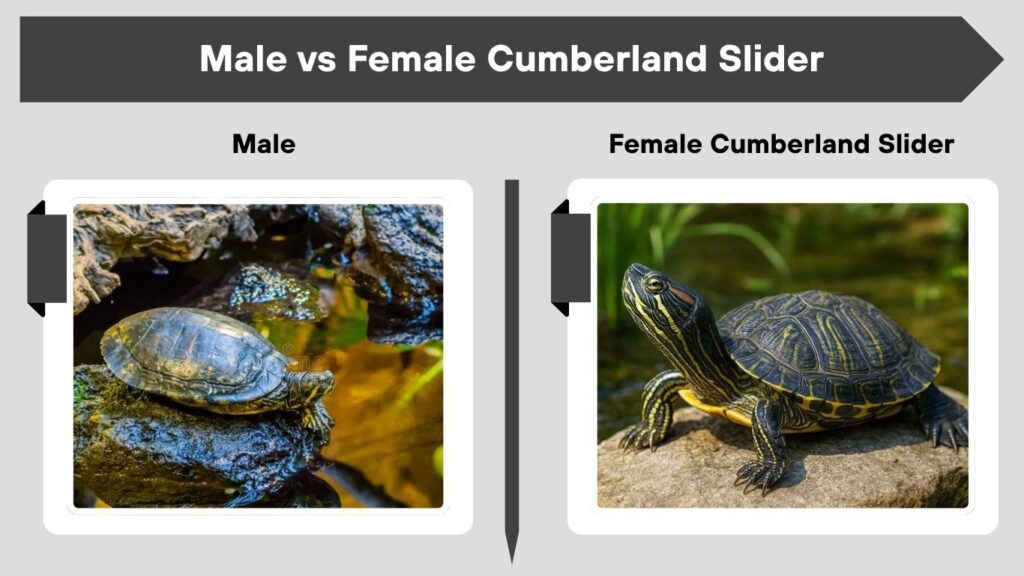
Determining a Cumberland slider’s gender becomes easier as the turtle matures. Several physical characteristics can help owners distinguish males from females.
Male Cumberland Slider Characteristics
Male Cumberland sliders generally have:
- Longer front claws
- Longer and thicker tails
- Smaller body size
- Cloaca positioned farther from the shell
These features are especially noticeable in mature adults.
Female Cumberland Slider Characteristics
Females typically display:
- Larger body size
- Shorter front claws
- Broader shell shape
- Shorter tail
Their larger size helps accommodate egg production during breeding seasons.
Cumberland Slider vs Red-Eared Slider
Many turtle enthusiasts compare Cumberland sliders to red-eared sliders because both belong to the same species complex. Although they share similar care requirements, several physical differences set them apart.
Key Differences
The most noticeable distinction is head coloration. Red-eared sliders have bright red patches behind their eyes, while Cumberland sliders display yellow to orange markings. Cumberland sliders also tend to have more intricate shell patterns and slightly different striping on the head and neck.
Despite these visual differences, both turtles require similar habitats, diets, and environmental conditions.
FAQs
How often should I feed a Cumberland slider turtle?
The feeding schedule depends on the turtle’s age. Baby Cumberland sliders should be fed daily because they require extra nutrients for growth. Juveniles can be fed once a day, while adults typically do well with feeding every other day. A balanced diet that includes turtle pellets, vegetables, and occasional protein sources is recommended.
Do Cumberland slider turtles need UVB lighting?
Yes, UVB lighting is essential for Cumberland slider turtles kept indoors. UVB helps them produce vitamin D3, which allows proper calcium absorption and supports healthy shell and bone development. Without UVB exposure, turtles can develop serious health problems such as metabolic bone disease.
Can Cumberland slider turtles live with other turtles?
Cumberland sliders can sometimes live with other aquatic turtles of similar size and temperament, but cohabitation is not always recommended. Competition for food, basking spots, and territory can lead to stress or aggression. If multiple turtles are housed together, the enclosure should be large enough to provide adequate space for each animal.
How can I tell if my Cumberland slider turtle is healthy?
A healthy Cumberland slider is active, alert, and has clear eyes, a hard shell, and a strong appetite. Healthy turtles bask regularly and swim normally. Signs of illness may include swollen eyes, wheezing, shell discoloration, lethargy, loss of appetite, or difficulty swimming. Veterinary care should be sought if any of these symptoms appear.
Do Cumberland slider turtles hibernate?
In the wild, Cumberland slider turtles may enter a period of brumation during colder months when temperatures drop significantly. Pet turtles kept indoors in controlled environments usually do not brumate because they experience stable temperatures year-round. Owners should avoid intentionally inducing brumation unless they have experience and proper guidance from a reptile specialist.