

The Malayan Box Turtle is a semi-aquatic turtle species native to Southeast Asia. Known scientifically as Cuora amboinensis, this turtle is popular among reptile enthusiasts because of its unique shell, calm behavior, and adaptability to wetland environments. It is commonly found in ponds, swamps, rice fields, and slow-moving rivers across tropical regions.
Although the Malayan Box Turtle is often kept as a pet, it requires proper care, balanced nutrition, and suitable living conditions to remain healthy. Habitat destruction and illegal wildlife trade have also affected wild populations in some regions. Learning about its habitat, diet, lifespan, and care needs is important for both conservation and responsible ownership.
What Is the Malayan Box Turtle?
The Malayan Box Turtle is one of the most recognized box turtle species in Southeast Asia. It belongs to the Geoemydidae family and is known for its dome-shaped shell and yellow facial markings. Unlike fully terrestrial box turtles, this species spends much of its time in water and thrives in humid tropical habitats.
Scientific Classification
- Scientific name: Cuora amboinensis
- Family: Geoemydidae
- Common names: Malayan Box Turtle, Southeast Asian Box Turtle
- Type: Semi-aquatic turtle
- Native region: Southeast Asia
Physical Appearance
- Dark brown or black shell
- Yellow stripes on the head and neck
- High-domed carapace
- Webbed feet for swimming
- Hinged plastron that closes tightly
Types and Subspecies
Several regional forms of the Malayan Box Turtle exist across Southeast Asia. Some populations show slight differences in shell color, markings, and size depending on their habitat and geographic location. However, all share the same semi-aquatic lifestyle and protective hinged shell structure.
Malayan Box Turtle Habitat and Distribution

The Malayan Box Turtle lives in warm tropical environments with abundant freshwater sources. It prefers slow-moving water and muddy wetlands where food and shelter are easy to find. Because it adapts well to different aquatic habitats, the species can survive in both natural wetlands and human-made environments like rice paddies.
Natural Habitat
- Swamps
- Marshes
- Rice fields
- Slow-moving rivers
- Freshwater ponds
These turtles often hide among aquatic plants and muddy banks during the hottest parts of the day.
Countries Where It Is Found
The Malayan Box Turtle is widely distributed throughout Southeast Asia, including:
- Malaysia
- Indonesia
- Thailand
- Singapore
- Vietnam
- Philippines
Malayan Box Turtle in Singapore
In Singapore, the species can sometimes be found in wetlands, reservoirs, and nature reserves. Urbanization has reduced some natural habitats, but protected green areas continue to support local populations. Wildlife authorities also monitor illegal turtle trade to help protect native reptiles.
Malayan Box Turtle Size and Lifespan
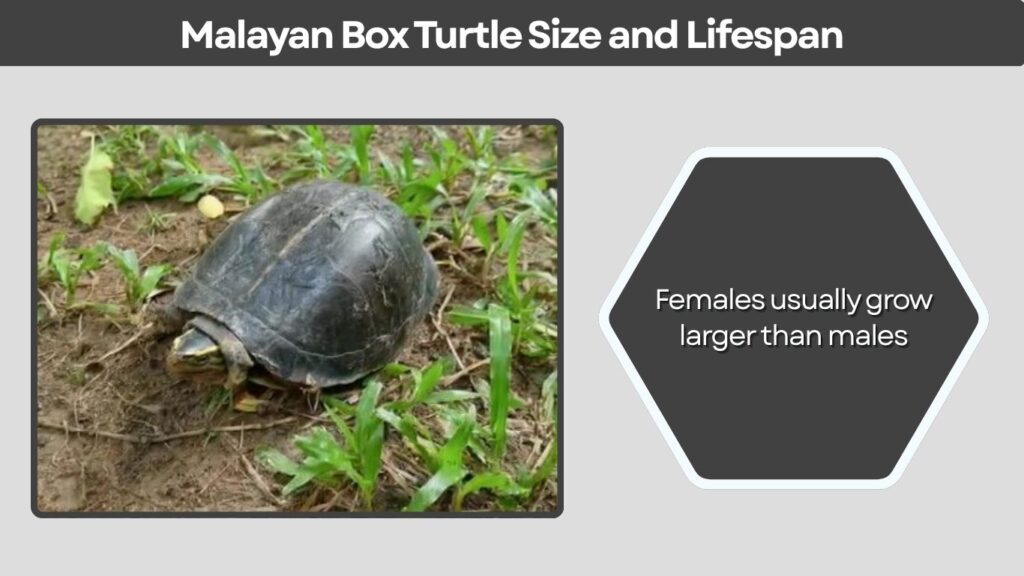
The Malayan Box Turtle grows steadily throughout its life and can survive for several decades when cared for properly. Diet, enclosure quality, and environmental conditions all influence growth and lifespan. Females are generally larger than males, especially during adulthood.
Average Size
- Hatchlings: 2 to 3 inches long
- Juveniles: 4 to 5 inches long
- Adults: 7 to 9 inches long
- Females usually grow larger than males
Maximum Size
Some fully mature Malayan Box Turtles may exceed 10 inches in shell length under excellent conditions. Wild turtles usually remain slightly smaller because of environmental pressures and food availability.
Lifespan Expectations
With proper care, a Malayan Box Turtle can live for several decades. Healthy captive turtles often survive between 25 and 40 years. In stable natural habitats, some individuals may live even longer.
Malayan Box Turtle Diet

The Malayan Box Turtle is an omnivorous species that eats both plant and animal matter. Its diet changes slightly with age, as younger turtles usually require more protein while adults consume more vegetation. A balanced diet is important for shell growth, energy, and overall health.
What Do Malayan Box Turtles Eat?
- Leafy greens
- Fruits
- Aquatic plants
- Earthworms
- Insects
- Small fish
- Commercial turtle pellets
Feeding Schedule
Young turtles generally eat daily because they are still growing rapidly. Adults can be fed every other day with properly balanced portions. Fresh food and clean water should always be available to maintain good health.
Malayan Box Turtle Care Guide

Proper care is extremely important for keeping a Malayan Box Turtle healthy in captivity. Because this species is semi-aquatic, it needs both land and water areas inside its enclosure. Clean water, UVB lighting, and correct temperatures help prevent shell disease and other health problems. A well-maintained habitat also encourages natural behavior and reduces stress.
Tank and Enclosure Setup
- Semi-aquatic tank with swimming space
- Secure basking platform
- Water depth suitable for swimming
- Soft substrate for resting
- Hiding spots using plants or logs
A spacious enclosure helps the turtle stay active and healthy. Water should be shallow enough for easy surfacing but deep enough for comfortable swimming.
Temperature and Lighting
Malayan Box Turtles require warm conditions throughout the year. UVB lighting is essential because it supports calcium absorption and healthy shell growth. Without proper lighting and heating, turtles may develop metabolic bone disease or weakened immune systems.
Cleaning and Maintenance
Regular cleaning keeps harmful bacteria from building up inside the enclosure. Water filters are highly recommended because these turtles spend much of their time in water. Uneaten food should also be removed quickly to maintain water quality and prevent odors.
Malayan Box Turtle Gender Differences
Male and female Malayan Box Turtles have several physical differences that become more visible as they mature. Identifying gender correctly is useful for breeding projects and long-term care planning. However, young turtles can be difficult to sex accurately before adulthood.
Male vs Female Characteristics
| Feature | Male | Female |
| Tail | Longer and thicker | Shorter and thinner |
| Body Size | Smaller | Larger |
| Plastron | Slightly concave | Flat |
| Claw Size | Longer front claws | Shorter claws |
How to Identify Gender in Young Turtles
Young Malayan Box Turtles usually lack obvious gender traits. As they grow older, differences in tail size, shell shape, and body size become easier to notice. Full maturity may take several years depending on diet and habitat conditions.
Threats and Conservation Status
Although the Malayan Box Turtle remains widespread in some areas, its population has declined because of habitat destruction and overcollection. Wetland drainage, pollution, and illegal wildlife trade continue to threaten wild populations throughout Southeast Asia.
Main Threats
- Illegal pet trade
- Habitat destruction
- Water pollution
- Wetland loss
- Overharvesting for food markets
Conservation Efforts
Conservation programs now focus on habitat protection and reducing illegal trade. Wildlife authorities in several countries monitor exports and support breeding projects to maintain healthy turtle populations.
Is the Malayan Box Turtle Endangered?
The Malayan Box Turtle is considered vulnerable in many areas because wild populations continue to decline. Although the species is still relatively common in some wetlands, long-term survival depends on habitat conservation and stronger wildlife protection laws.
Interesting Facts About Malayan Box Turtles
The Malayan Box Turtle has several unique features that make it different from many other freshwater turtles. Its ability to close its shell tightly provides excellent protection against predators. The species is also highly adaptable and can survive in a variety of wetland habitats.
Amazing Facts
- Can completely close its shell for defense
- Excellent swimmer despite heavy shell
- Active during warm and humid weather
- Uses both land and water habitats
- One of the most common Asian box turtles
- Omnivorous and highly adaptable feeder
Why Malayan Box Turtles Are Popular Pets
Malayan Box Turtles are popular among reptile keepers because of their manageable size and calm nature. Their attractive shell markings and semi-aquatic lifestyle also make them interesting to observe. However, they require long-term commitment because of their long lifespan and specific environmental needs.
Potential owners should research proper turtle care before bringing one home. Responsible ownership includes providing a large enclosure, balanced nutrition, clean water, and regular veterinary care. Supporting captive-bred turtles instead of wild-caught individuals also helps reduce pressure on natural populations.
FAQs
How long do Malayan Box Turtles live?
Malayan Box Turtles commonly live between 25 and 40 years in captivity when provided with proper care, nutrition, and clean living conditions.
What do Malayan Box Turtles eat?
They eat a mix of fruits, vegetables, insects, worms, aquatic plants, and commercial turtle pellets. Younger turtles usually require more protein than adults.
How big can a Malayan Box Turtle get?
Most adults reach around 7 to 9 inches in shell length, although some large individuals may exceed 10 inches under ideal conditions.
Are Malayan Box Turtles good pets?
They can make good pets for experienced reptile keepers who can provide proper lighting, water quality, and long-term care.
Where are Malayan Box Turtles found?
This species naturally occurs in Southeast Asian countries such as Malaysia, Indonesia, Thailand, Singapore, and the Philippines.