
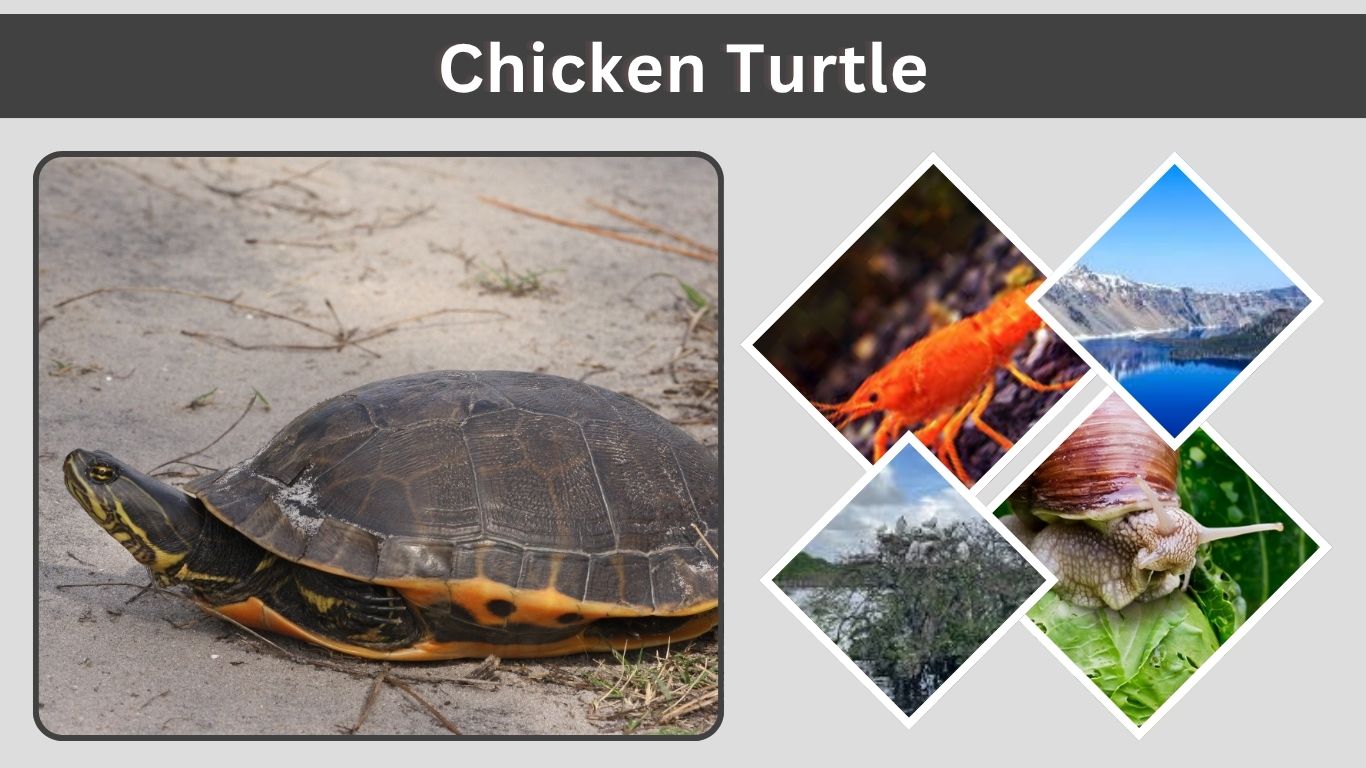
The chicken turtle is one of the most unique freshwater turtles in North America. Known for its unusually long neck and distinctive shell pattern, this species differs from many other aquatic turtles. Chicken turtles inhabit wetlands, ponds, and marshes throughout the southeastern United States. Their fascinating behavior, specialized habitat needs, and relatively uncommon appearance make them a favorite among turtle enthusiasts. Learning about their size, lifespan, diet, and natural environment can help both wildlife lovers and potential owners better understand this remarkable reptile.
What Is a Chicken Turtle?
Chicken turtles are freshwater turtles belonging to the species Deirochelys reticularia. They are easily recognized by their elongated necks and net-like shell markings. Unlike many common pet turtles, chicken turtles spend time both in water and on land throughout the year. Their unique appearance and behavior have made them an interesting subject for reptile enthusiasts, researchers, and conservationists across their native range.
Scientific Classification
The chicken turtle belongs to the family Emydidae, which includes many well-known pond and marsh turtles. Its scientific name, Deirochelys reticularia, translates roughly to “net-patterned turtle,” referring to the markings commonly found on its shell.
Why Is It Called a Chicken Turtle?
The origin of the name “chicken turtle” is often linked to the taste of its meat, which early settlers reportedly compared to chicken. While this historical connection gave the turtle its common name, today the species is more appreciated for its unique appearance and ecological importance.
Chicken Turtle Appearance
Chicken turtles have several physical features that distinguish them from other freshwater turtles. Their long necks, streamlined shells, and colorful markings make identification relatively easy. Although coloration varies slightly among subspecies, most individuals share a similar overall appearance.
Shell Characteristics
The shell is typically oval-shaped and ranges from olive to dark brown. Fine yellow or orange lines often create a net-like pattern across the shell surface. This pattern becomes more visible in younger turtles.
Distinctive Features
Several characteristics help identify a chicken turtle:
- Exceptionally long neck
- Oval, streamlined shell
- Net-like shell markings
- Yellow or orange stripes on the neck
- Relatively small head compared to neck length
These features make the species one of the most recognizable freshwater turtles in North America.
Chicken Turtle Size
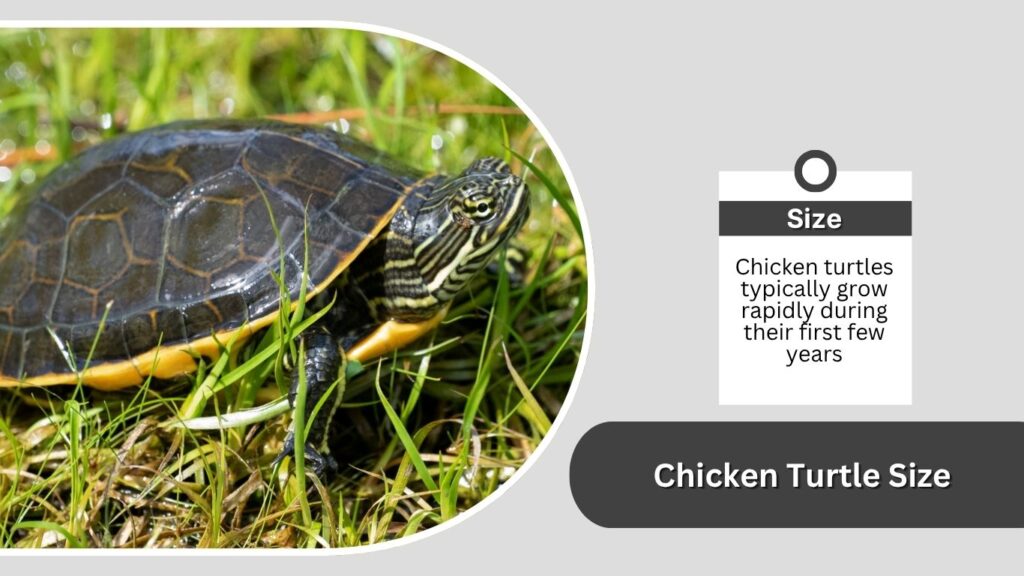
Chicken turtles are medium-sized turtles that continue growing throughout their juvenile years. Their final size depends on factors such as genetics, nutrition, habitat quality, and overall health. Females generally grow larger than males.
How Big Do Chicken Turtles Get?
Most hatchlings measure only about 1 to 1.5 inches in shell length. As they mature, growth gradually slows until adulthood is reached.
Average size ranges include:
- Hatchlings: 1–1.5 inches
- Juveniles: 2–5 inches
- Adult males: 4–7 inches
- Adult females: 6–10 inches
Because females are larger, they require additional body space for egg production and nesting activities.
Growth Rate
Chicken turtles typically grow rapidly during their first few years. Proper nutrition and healthy environmental conditions play a major role in supporting steady development and overall wellness.
Chicken Turtle Lifespan
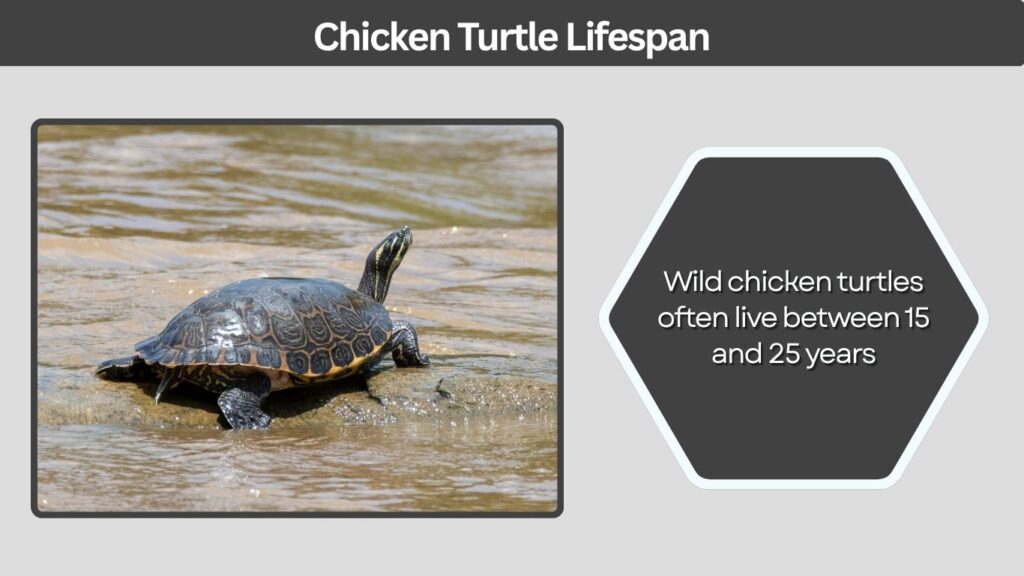
Like many freshwater turtles, chicken turtles can live for many years when environmental conditions are favorable. Lifespan varies between wild and captive populations due to differences in predation, habitat quality, and access to resources.
How Long Do Chicken Turtles Live?
Wild chicken turtles often live between 15 and 25 years. Individuals protected from predators and environmental hazards may survive even longer. In captivity, proper care can sometimes extend lifespan beyond what is commonly observed in natural habitats.
Factors That Affect Lifespan
Several important factors influence longevity:
- Habitat quality
- Access to food
- Water conditions
- Predator exposure
- Disease prevention
- Climate conditions
Healthy habitats and consistent care contribute significantly to long-term survival.
Types of Chicken Turtles
Three recognized subspecies of chicken turtle exist in North America. Each occupies a different geographic region and displays slight differences in appearance and distribution. Although their care and behavior are similar, understanding these subspecies helps provide a more complete picture of the species.
Eastern Chicken Turtle
The Eastern chicken turtle is found throughout portions of the southeastern United States. It is considered the most widespread subspecies and commonly inhabits freshwater wetlands and marshes.
Florida Chicken Turtle
The Florida chicken turtle occurs primarily within Florida and nearby coastal regions. It often displays brighter coloration and more distinct shell markings than some other populations.
Western Chicken Turtle
The Western chicken turtle inhabits areas farther west, including parts of Texas, Oklahoma, Arkansas, and Louisiana. Its range overlaps with various wetland ecosystems that provide suitable feeding and nesting opportunities.
Chicken Turtle Habitat
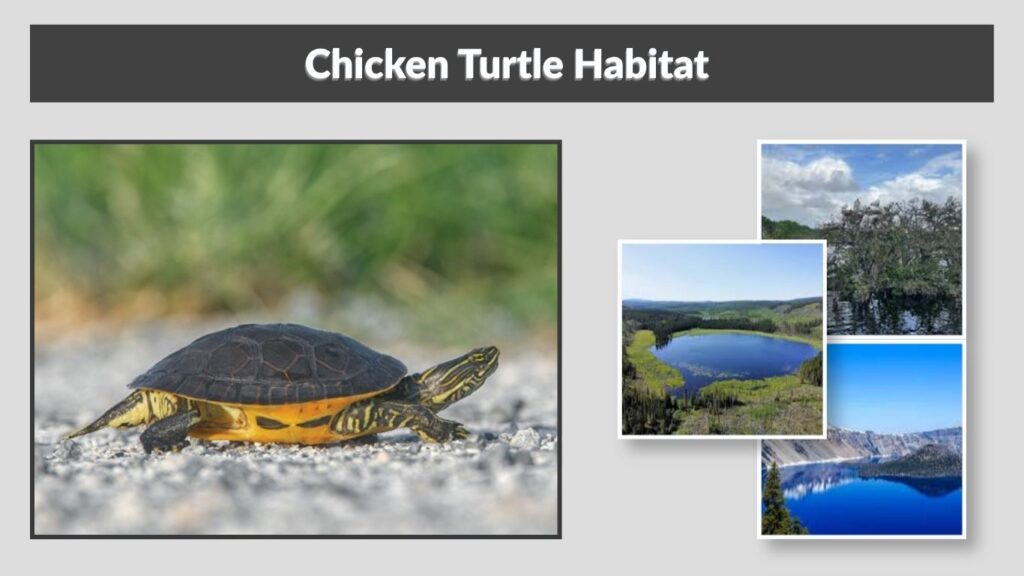
Chicken turtles depend on healthy wetland ecosystems for survival. They are commonly found in ponds, marshes, swamps, ditches, and shallow lakes with abundant vegetation. Unlike many aquatic turtles, they frequently travel over land between water sources, especially during seasonal changes. Their ability to use both aquatic and terrestrial environments helps them adapt to changing conditions and locate suitable feeding, nesting, and shelter areas throughout the year.
Where Do Chicken Turtles Live?
Chicken turtles are native to the southeastern United States and occur in a variety of freshwater habitats. Their distribution includes coastal plains, wetlands, and flood-prone regions that provide access to food and breeding sites.
Preferred Habitat Features
Chicken turtles thrive in environments that offer:
- Shallow freshwater areas
- Dense aquatic vegetation
- Soft muddy bottoms
- Basking opportunities
- Nearby nesting sites
These habitat characteristics provide protection, food resources, and suitable conditions for reproduction.
Chicken Turtle Adaptations
Chicken turtles possess several unique adaptations that allow them to survive in dynamic wetland environments. These traits help them find food, avoid predators, and endure seasonal environmental changes.
Long Neck Adaptation
One of the most distinctive features of a chicken turtle is its exceptionally long neck. This adaptation allows the turtle to capture prey quickly and efficiently in shallow water. The extended reach also helps it search for food among aquatic plants and muddy substrates.
Seasonal Survival Strategies
Chicken turtles often move considerable distances across land in search of temporary wetlands or more favorable habitat conditions. During droughts, they may burrow into soil or seek sheltered areas until water levels improve.
Chicken Turtle Diet
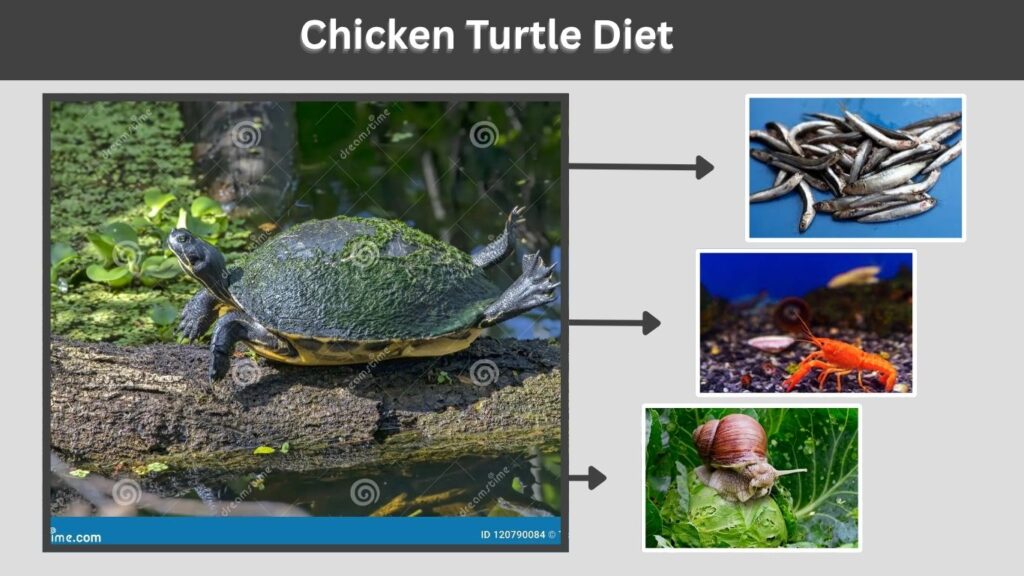
Chicken turtles are primarily carnivorous, especially during their younger years. Their diet consists mainly of small aquatic animals and invertebrates found in wetland habitats. As they mature, some plant matter may also be consumed.
What Do Chicken Turtles Eat?
In the wild, chicken turtles feed on a variety of prey items that provide essential nutrients and energy.
Common food sources include:
- Insects
- Earthworms
- Tadpoles
- Small fish
- Crayfish
- Snails
- Aquatic invertebrates
Their opportunistic feeding habits allow them to take advantage of whatever prey is readily available in their habitat.
Can Chicken Turtles Eat Chicken?
Many people wonder whether chicken turtles can eat chicken meat because of their name. Small amounts of cooked, unseasoned chicken may occasionally be offered in captivity, but it should not become a regular part of their diet. A varied diet based on natural food sources is much healthier and more nutritionally balanced.
Chicken Turtle Care Guide
Chicken turtles require proper housing, nutrition, and environmental conditions to remain healthy in captivity. While they are fascinating reptiles, they are generally better suited for experienced keepers who can provide specialized care.
Are Chicken Turtles Good Pets?
Chicken turtles can make interesting pets for dedicated reptile enthusiasts. However, they are less common in captivity than many slider species and may require more attention to habitat design and environmental quality.
Basic Care Requirements
Successful care involves providing:
- Clean water
- UVB lighting
- Proper basking area
- Nutritious diet
- Adequate enclosure space
Meeting these requirements helps support healthy growth and natural behavior.
Chicken Turtle Behavior
Chicken turtles display a variety of behaviors that reflect their active lifestyle. They spend much of their time swimming, foraging, basking, and exploring their surroundings. Their behavior often changes with seasonal conditions and habitat availability.
Daily Activity
Most chicken turtles are active during the day. They search for food in shallow water, bask to regulate body temperature, and occasionally travel across land to locate new habitats.
Defensive Behavior
When threatened, chicken turtles often retreat into vegetation or quickly enter the water. Their alert nature and strong swimming ability help them avoid predators in the wild.
Chicken Turtle Reproduction
Breeding occurs during specific times of the year, depending on local climate conditions. Female chicken turtles leave the water to find suitable nesting sites where they can deposit their eggs.
Nesting Process
After selecting a nesting location, the female digs a small chamber in soft soil and lays her eggs. She then covers the nest before returning to nearby water.
Hatchlings
Young turtles emerge after an incubation period and must immediately begin searching for food and shelter. Hatchlings face numerous challenges, including predators and environmental hazards, making survival difficult during their first year.
FAQs
What is a chicken turtle?
A chicken turtle is a freshwater turtle species (Deirochelys reticularia) known for its unusually long neck and net-like shell pattern.
Why is it called a chicken turtle?
The name reportedly comes from early settlers who compared the taste of its meat to chicken.
How big do chicken turtles get?
Adult chicken turtles generally reach 4–10 inches in shell length, with females growing larger than males.
What do chicken turtles eat?
They primarily eat insects, worms, tadpoles, small fish, snails, and other aquatic invertebrates.
How long do chicken turtles live?
Chicken turtles typically live 15–25 years in the wild, though some may live longer under favorable conditions or in captivity.