
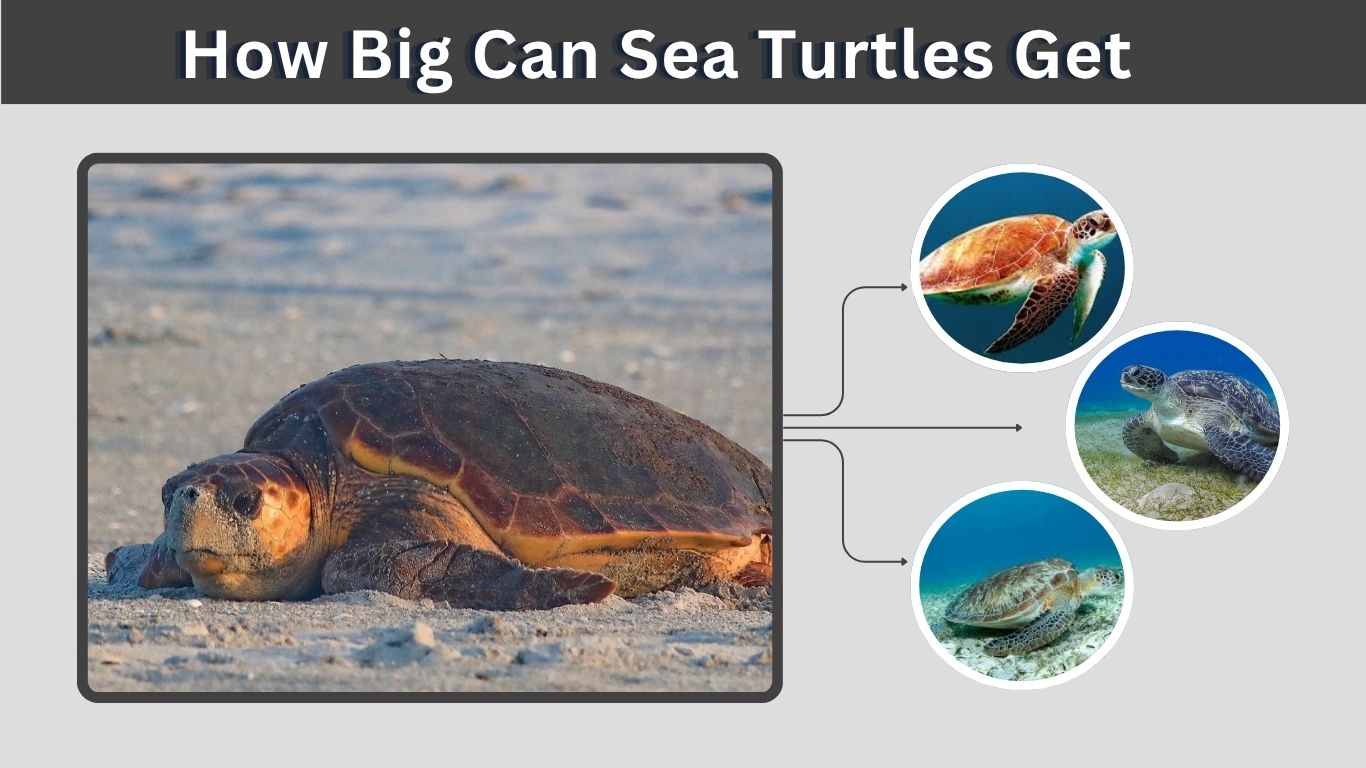
Sea turtles are among the most fascinating creatures in the ocean, known for their impressive size, long migrations, and ancient lineage. While some sea turtles remain relatively small, others grow into true giants that can weigh more than a small car. Their size varies greatly depending on the species, habitat, age, and diet. Understanding how big sea turtles can get helps us appreciate these remarkable marine reptiles and highlights why protecting them is essential for maintaining healthy ocean ecosystems.
How Big Can Sea Turtles Get?
Sea turtles come in a wide range of sizes, from smaller species weighing less than 100 pounds to enormous leatherback sea turtles exceeding 2,000 pounds. The size of a sea turtle depends on its species, age, food availability, and environmental conditions. While all sea turtles begin life as tiny hatchlings, some grow into some of the largest reptiles on Earth.
Average Size of Adult Sea Turtles
Most adult sea turtles measure between 2 and 8 feet in length. Their weight can range from around 75 pounds to more than 2,000 pounds. Larger species typically inhabit vast ocean regions and require significant food resources to support their growth.
How Big Are Baby Sea Turtles?
Sea turtle hatchlings are surprisingly small compared to adults. Most are only 1.5 to 2.5 inches long when they emerge from their nests. Despite their tiny size, these hatchlings immediately begin a dangerous journey toward the ocean, where they will spend years growing and developing.
Factors That Affect Sea Turtle Size
Several factors influence how large a sea turtle can become:
- Species genetics
- Food availability
- Habitat quality
- Age and maturity
- Environmental conditions
These factors work together to determine the final size a sea turtle reaches during its lifetime.
Which Sea Turtle Species Gets the Biggest?
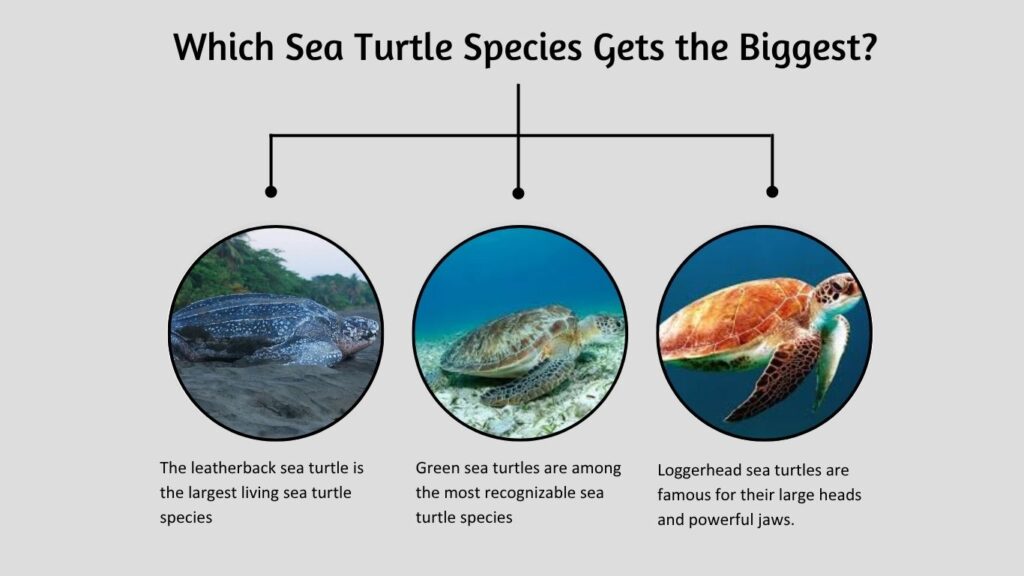
The seven species of sea turtles vary significantly in size. Some remain relatively small throughout adulthood, while others become true ocean giants. Among all sea turtle species, the leatherback sea turtle holds the record as the largest.
Leatherback Sea Turtle
The leatherback sea turtle is the largest living sea turtle species. Adults commonly reach lengths of 5 to 7 feet and can weigh between 600 and 1,500 pounds. Exceptional individuals may grow even larger.
Unlike other sea turtles, leatherbacks do not have a hard shell. Instead, they possess a flexible, leathery carapace that helps them swim efficiently through deep ocean waters.
Green Sea Turtle
Green sea turtles are among the most recognizable sea turtle species. Adult green turtles typically grow to lengths of 3 to 5 feet and weigh between 250 and 500 pounds.
Some exceptionally large green sea turtles can exceed 700 pounds. Their herbivorous diet of seagrasses and algae contributes to their healthy growth and supports important coastal ecosystems.
Loggerhead Sea Turtle
Loggerhead sea turtles are famous for their large heads and powerful jaws. Most adults measure between 3 and 4 feet in length and weigh 200 to 400 pounds.
Although less common, some loggerheads have been recorded at nearly 1,000 pounds, making them one of the larger sea turtle species.
Sea Turtle Size Comparison
Comparing the major sea turtle species helps illustrate the remarkable differences in size among these marine reptiles. While all sea turtles share similar life cycles, their growth patterns and adult dimensions vary greatly.
Largest to Smallest Sea Turtle Species
- Leatherback Sea Turtle
- Green Sea Turtle
- Loggerhead Sea Turtle
- Flatback Sea Turtle
- Hawksbill Sea Turtle
- Kemp’s Ridley Sea Turtle
- Olive Ridley Sea Turtle
Length Comparison
The average adult length of sea turtles ranges from approximately 2 feet to more than 8 feet. Leatherbacks dominate in overall size, while olive ridleys are among the smallest sea turtle species.
Weight Comparison
Weight differences are even more dramatic. A large leatherback may weigh twenty times more than an adult olive ridley turtle. These differences reflect unique feeding habits, habitats, and evolutionary adaptations.
How Big Can Leatherback Sea Turtles Get?
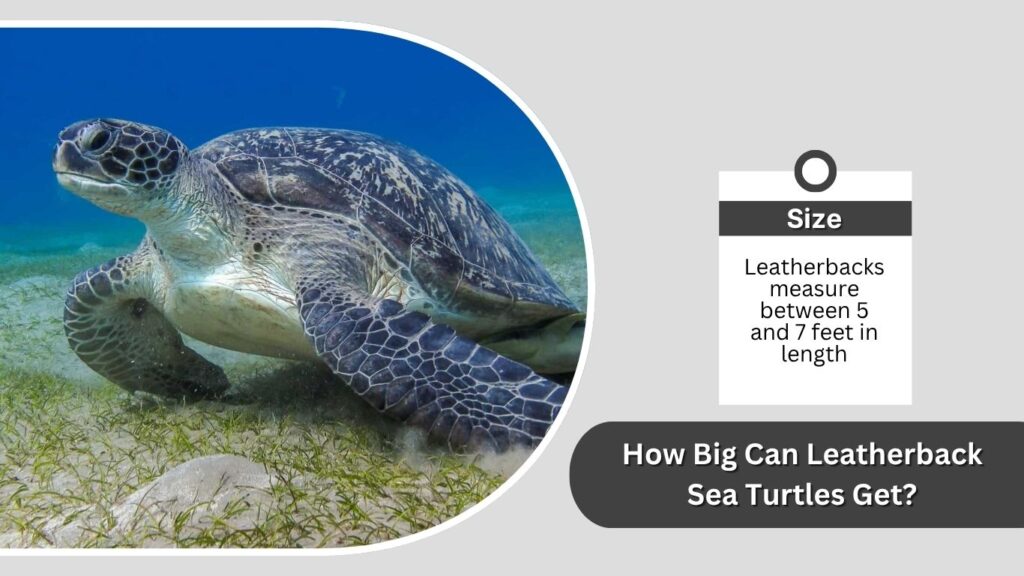
Leatherback sea turtles are often considered the giants of the marine reptile world. Their enormous size allows them to travel across entire oceans and dive to incredible depths in search of food.
Average Leatherback Size
Most adult leatherbacks measure between 5 and 7 feet in length and weigh between 600 and 1,500 pounds. Males are generally slightly larger than females, although both sexes can reach impressive sizes.
Largest Leatherback Ever Recorded
Some of the largest leatherback sea turtles ever documented measured more than 8 feet long and weighed over 2,000 pounds. These enormous turtles are among the largest reptiles alive today.
Their massive size helps them conserve body heat, allowing them to survive in colder waters than most other sea turtle species.
Why Leatherbacks Grow So Large
Several characteristics contribute to the extraordinary size of leatherback sea turtles:
- Abundant jellyfish diet
- Wide-ranging ocean migrations
- Unique body structure
- Efficient energy use
- Long lifespan
These traits enable leatherbacks to achieve sizes unmatched by any other sea turtle species.
How Big Can Green Sea Turtles Get?
Green sea turtles are the second-largest sea turtle species and are found throughout tropical and subtropical oceans. Their growth is strongly influenced by diet and habitat quality.
Average Green Sea Turtle Size
Most adult green sea turtles measure between 3 and 5 feet in length and weigh 250 to 500 pounds. Their streamlined bodies make them efficient swimmers despite their substantial size.
Maximum Recorded Size
The largest green sea turtles can weigh more than 700 pounds and reach lengths exceeding 5 feet. These individuals are uncommon but demonstrate the impressive growth potential of the species.
Growth From Hatchling to Adult
Green sea turtles begin life as tiny hatchlings only a few inches long. Over several decades, they gradually grow into large adults capable of long-distance migrations and successful reproduction.
How Big Can Loggerhead Sea Turtles Get?
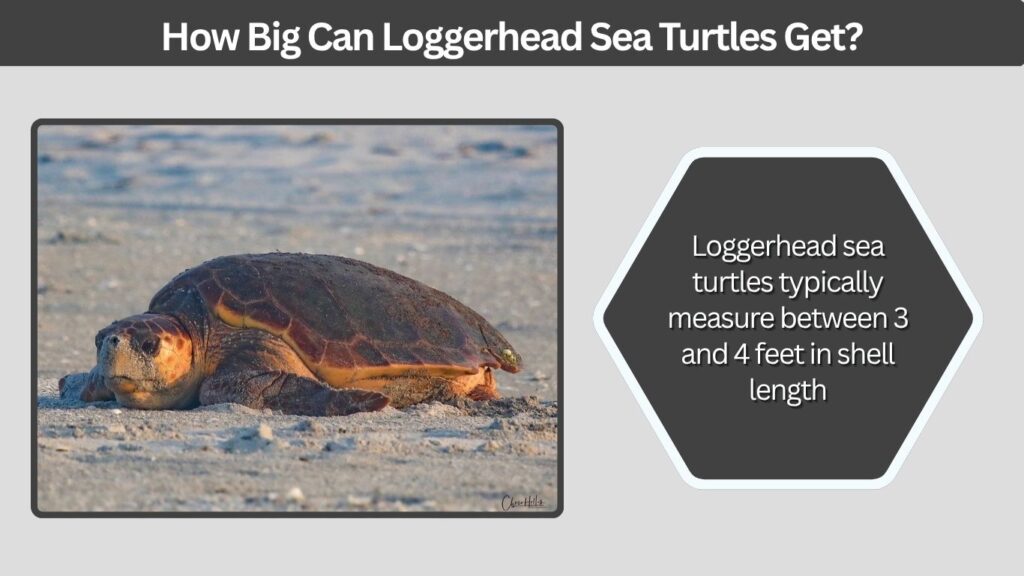
Loggerhead sea turtles are among the most widespread sea turtle species and are easily recognized by their large heads and powerful jaws. Although they are smaller than leatherbacks, they can still reach impressive sizes and weights.
Average Loggerhead Size
Adult loggerhead sea turtles typically measure between 3 and 4 feet in shell length. Most individuals weigh between 200 and 400 pounds, making them significantly larger than many other marine reptiles.
Their strong jaws allow them to crush hard-shelled prey such as crabs, clams, and mollusks, providing the nutrition needed to support their growth.
Maximum Recorded Loggerhead Size
While uncommon, some loggerhead sea turtles have been recorded weighing nearly 1,000 pounds. These exceptional individuals demonstrate the species’ ability to grow much larger than average under favorable conditions.
Large loggerheads are often found in productive feeding areas where food is abundant and environmental conditions support long-term survival.
Why Loggerheads Become So Large
Several factors contribute to loggerhead growth:
- Protein-rich diet
- Long lifespan
- Healthy marine habitats
- Low competition for resources
- Favorable environmental conditions
These factors help certain individuals reach exceptional sizes during adulthood.
What Determines How Big a Sea Turtle Gets?
Sea turtle size is influenced by a combination of biological and environmental factors. Even within the same species, individual turtles can vary significantly in size depending on where they live and what resources are available.
Genetics
Genetics play a major role in determining a turtle’s growth potential. Some populations naturally grow larger than others due to inherited characteristics passed down through generations.
Diet and Nutrition
Access to quality food is essential for healthy growth. Sea turtles that live in areas with abundant prey or vegetation often grow larger than those in habitats with limited food resources.
A consistent food supply supports strong shell development, muscle growth, and overall health throughout a turtle’s life.
Habitat Quality
Healthy marine ecosystems provide the resources sea turtles need to thrive. Clean waters, productive feeding grounds, and protected habitats all contribute to better growth and survival rates.
Age and Maturity
Sea turtles continue growing for many years before reaching adulthood. Larger individuals are often older turtles that have had decades to develop and accumulate body mass.
How Old and Big Can Sea Turtles Get?
Sea turtles are known not only for their impressive size but also for their remarkable longevity. Many species live for several decades, allowing them to continue growing throughout much of their lives.
Lifespan of Major Sea Turtle Species
Different sea turtle species have varying life expectancies:
- Green sea turtle: 60–80+ years
- Loggerhead sea turtle: 50–70 years
- Leatherback sea turtle: 45–60+ years
- Hawksbill sea turtle: 30–50 years
- Olive ridley sea turtle: 40–50 years
Long lifespans provide sea turtles with ample time to reach their maximum size.
Do Sea Turtles Keep Growing?
Sea turtles grow rapidly during their early years and continue to grow more slowly after reaching maturity. Although growth rates decrease with age, many turtles continue gaining size throughout adulthood.
This gradual growth explains why some older turtles become much larger than average members of their species.
Interesting Facts About Giant Sea Turtles
Sea turtles possess many fascinating characteristics that contribute to their reputation as some of the ocean’s most remarkable animals.
Leatherbacks Are the Largest Living Sea Turtles
No other sea turtle species comes close to matching the size of a leatherback. Their massive bodies allow them to travel thousands of miles across oceans while maintaining body heat in cooler waters.
Sea Turtles Start Tiny
Despite reaching hundreds or even thousands of pounds, every sea turtle begins life as a hatchling only a few inches long. This dramatic transformation is one of nature’s most impressive growth stories.
Some Sea Turtles Cross Entire Oceans
Large sea turtles regularly migrate between feeding and nesting grounds. These journeys may cover thousands of miles and span multiple countries and ocean basins.
Deep Diving Giants
Leatherback sea turtles can dive deeper than most other reptiles. Their large bodies help them withstand the pressures of deep ocean environments while searching for jellyfish and other prey.
Sea Turtle Conservation and Growth Challenges
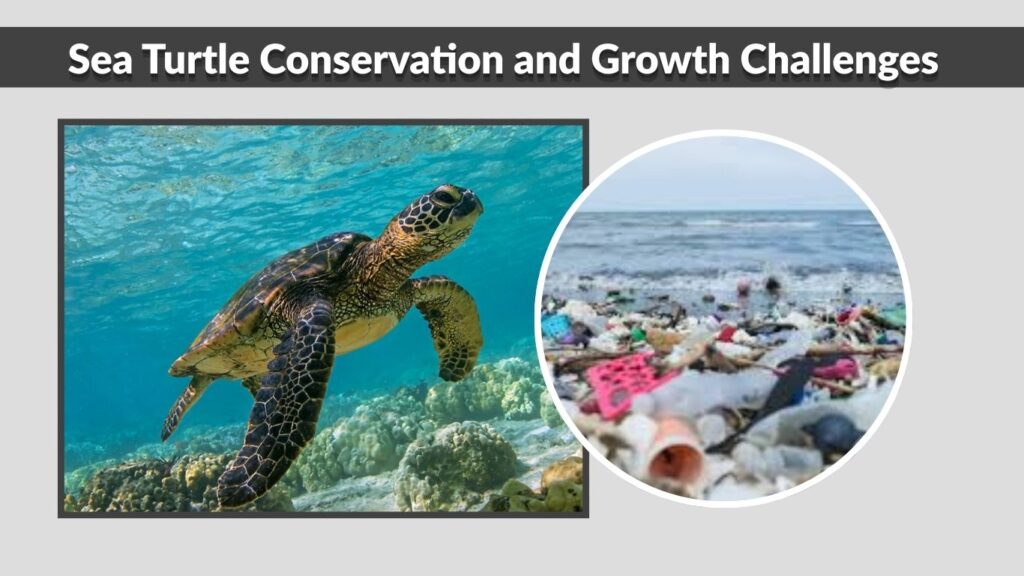
Although sea turtles have survived for millions of years, modern threats make it difficult for many individuals to reach their full size and lifespan. Conservation efforts play a critical role in protecting these ancient marine reptiles.
Pollution
Plastic pollution remains one of the greatest dangers to sea turtles. Turtles often mistake floating plastic for food, which can lead to injury, illness, or death.
Fishing Gear Entanglement
Many sea turtles become trapped in fishing nets, lines, and other equipment. Entanglement can restrict movement, cause injuries, and prevent turtles from reaching maturity.
Habitat Loss
Coastal development, beach erosion, and habitat destruction reduce the availability of nesting and feeding areas. Without suitable habitats, sea turtles struggle to survive and reproduce successfully.
Climate Change
Rising temperatures, changing ocean currents, and sea-level rise affect sea turtle populations worldwide. These environmental changes can influence food availability, nesting success, and overall growth patterns.
FAQs
How big can sea turtles get in feet?
Most sea turtles grow between 2 and 5 feet long, while the largest leatherback sea turtles can exceed 8 feet in length.
What is the biggest sea turtle species?
The leatherback sea turtle is the largest sea turtle species and can weigh more than 2,000 pounds.
How much does a fully grown sea turtle weigh?
Adult sea turtles can weigh anywhere from 75 pounds to over 2,000 pounds, depending on the species.
How big can a green sea turtle get?
Green sea turtles typically reach 3 to 5 feet in length and can weigh up to 700 pounds in exceptional cases.
Do sea turtles continue growing throughout their lives?
Sea turtles grow rapidly when young and continue growing slowly after reaching adulthood, although growth rates decrease with age.