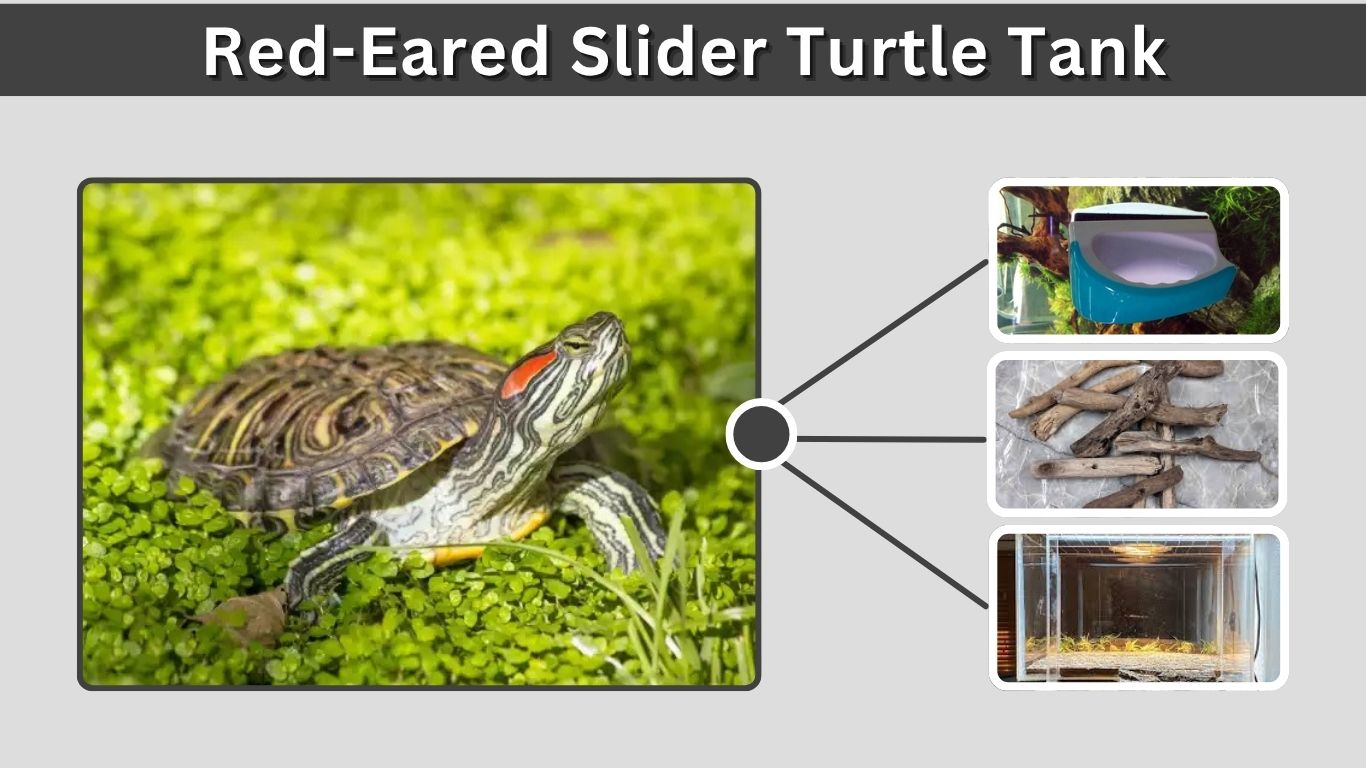
A proper red-eared slider turtle tank is essential for your turtle’s health, comfort, and longevity. These aquatic turtles spend most of their lives in water but also require a dry basking area to regulate body temperature and maintain shell health. Creating the right habitat involves choosing the correct tank size, maintaining water quality, and installing proper lighting and filtration. Whether you’re a first-time owner or upgrading an existing setup, understanding the basics of a red-eared slider turtle tank will help your pet thrive for many years.
Choosing the Right Tank for a Red-Eared Slider
Selecting the right tank is one of the most important decisions for turtle owners. Red-eared sliders grow much larger than many people expect, and they need plenty of space to swim and explore. A properly sized tank reduces stress, improves water quality, and supports healthy growth throughout the turtle’s life.
Minimum Tank Size Requirements
Many owners make the mistake of purchasing a small aquarium for their turtle. While hatchlings can temporarily live in smaller enclosures, adult red-eared sliders require significantly more space. A larger tank provides better swimming opportunities and makes it easier to maintain stable water conditions.
Tank Size by Age
Tank requirements increase as the turtle grows. Hatchlings and juveniles may start in smaller setups, but owners should plan for future upgrades. Adult turtles need spacious habitats that accommodate their full size and active behavior.
Glass Aquarium vs Turtle Tub
Both glass aquariums and turtle tubs can provide excellent habitats. Glass tanks offer better visibility and are popular for indoor displays. Turtle tubs and stock tanks often provide more swimming space at a lower cost, making them attractive options for larger turtles.
What Size Tank Does a Red-Eared Slider Need?
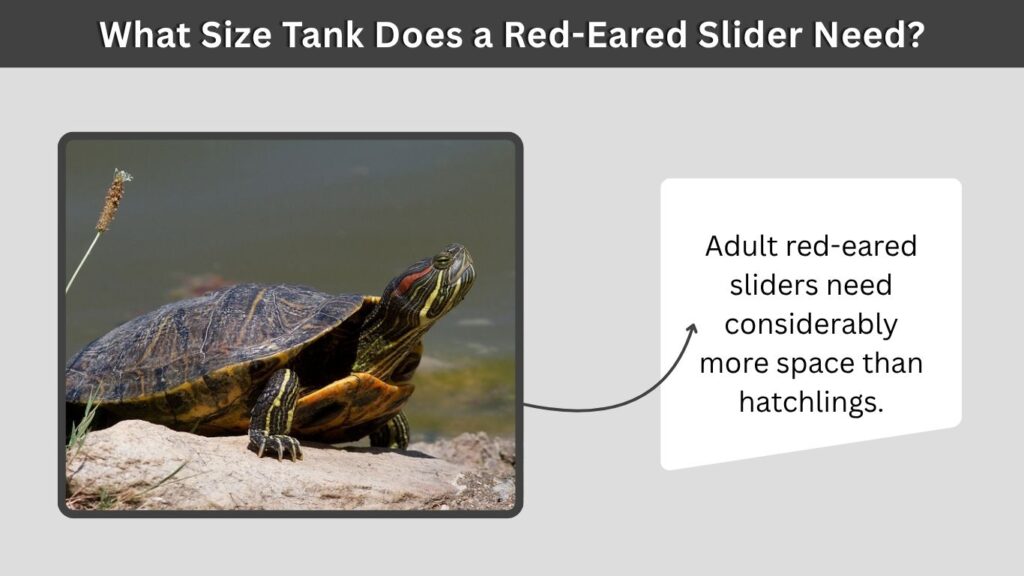
Tank size directly affects a turtle’s quality of life. Red-eared sliders are active swimmers that require ample room to move freely. Following recommended tank size guidelines helps prevent overcrowding and promotes healthier living conditions.
Tank Size for Hatchlings
Young turtles do not require massive enclosures immediately, but they still benefit from adequate swimming space. A properly sized habitat encourages exercise and supports healthy development during the early stages of life.
Tank Size for Adult Turtles
Adult red-eared sliders need considerably more space than hatchlings. Many owners underestimate how large these turtles can become. Larger enclosures help maintain cleaner water and provide enough room for natural behaviors.
The 10-Gallon-Per-Inch Rule
A commonly used guideline for turtle owners includes:
- 10 gallons of water per inch of shell length
- Additional swimming space whenever possible
- Larger tanks for multiple turtles
- Future growth considerations when purchasing a tank
- Extra room for equipment and basking areas
While this rule serves as a useful starting point, bigger habitats are generally better for red-eared sliders.
How to Set Up a Red-Eared Slider Turtle Tank
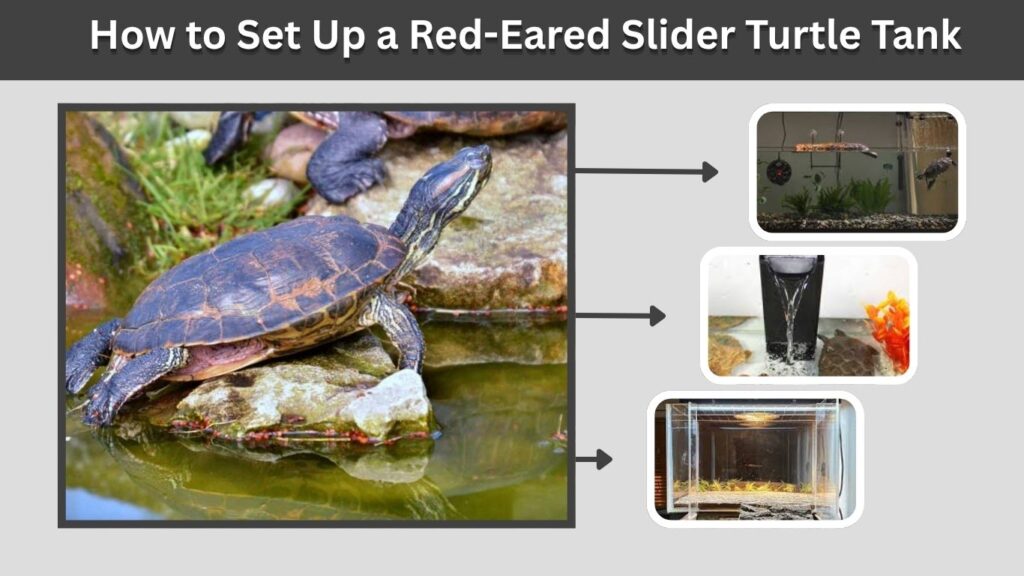
A successful turtle habitat requires more than just a tank filled with water. Proper setup involves creating an environment that mimics natural conditions while providing safety and comfort. Every component of the tank contributes to the turtle’s overall health and well-being.
Select the Appropriate Tank
Start by choosing a tank that can accommodate both the turtle’s current size and future growth. Investing in a larger enclosure from the beginning often saves money and reduces the need for frequent upgrades.
Add the Correct Water Depth
Red-eared sliders are strong swimmers and enjoy deeper water. The water should be deep enough for the turtle to swim comfortably while still allowing easy access to the surface for breathing.
Install a Filtration System
Turtles produce more waste than most aquarium fish, making filtration especially important. A powerful filter helps maintain water clarity and reduces the buildup of harmful substances that can affect turtle health.
Create a Basking Area
Every red-eared slider tank needs a dry platform where the turtle can leave the water completely. Basking helps regulate body temperature and supports healthy shell development.
Essential Red-Eared Slider Tank Equipment
Proper equipment creates a stable and healthy environment for your turtle. Investing in quality equipment reduces maintenance problems and helps prevent many common health issues associated with poor habitat conditions.
Tank Equipment Checklist
A complete red-eared slider setup should include:
- High-capacity filtration system
- UVB lighting fixture
- Heat lamp for basking
- Secure basking dock
- Water heater when necessary
- Thermometer for temperature monitoring
Each item plays a specific role in maintaining ideal living conditions.
Importance of UVB Lighting
UVB lighting allows turtles to process calcium effectively and maintain strong bones and shells. Without adequate UVB exposure, turtles can develop serious health problems that may impact their quality of life.
Choosing a Reliable Filter
The filter is one of the most important components of any turtle tank. Since turtles create significant waste, selecting a filter rated for a larger aquarium than the actual tank size often produces the best results.
Red-Eared Slider Tank Water Requirements
Water quality is one of the most critical factors in turtle care. Poor water conditions can contribute to illness, shell problems, and stress. Maintaining clean, properly conditioned water helps create a healthier environment and reduces the likelihood of disease.
Ideal Water Depth
Red-eared sliders spend most of their time swimming, making adequate water depth essential. Deeper water encourages natural movement and provides enrichment that supports both physical and mental well-being.
Water Quality Standards
Regular maintenance helps preserve healthy water conditions. Clean water not only improves the appearance of the tank but also protects the turtle from infections and other health concerns commonly associated with poor water quality.
Best Temperature for a Red-Eared Slider Tank
Maintaining the correct temperature is essential for a red-eared slider’s health. Since turtles are cold-blooded animals, they rely on external heat sources to regulate their body temperature. Proper heating supports digestion, activity levels, immune function, and overall well-being.
Water Temperature
Water temperature requirements vary depending on the turtle’s age. Younger turtles generally benefit from slightly warmer water, while adults can thrive in moderately warm conditions. Consistent temperatures help reduce stress and lower the risk of illness.
Basking Area Temperature
The basking area should be warmer than the water to encourage regular basking behavior. This dry, heated space allows turtles to dry their shells completely and regulate their body temperature effectively.
Monitoring Temperature
Using reliable thermometers helps ensure stable conditions throughout the habitat. Temperature fluctuations can negatively affect a turtle’s health, making routine monitoring an important part of tank maintenance.
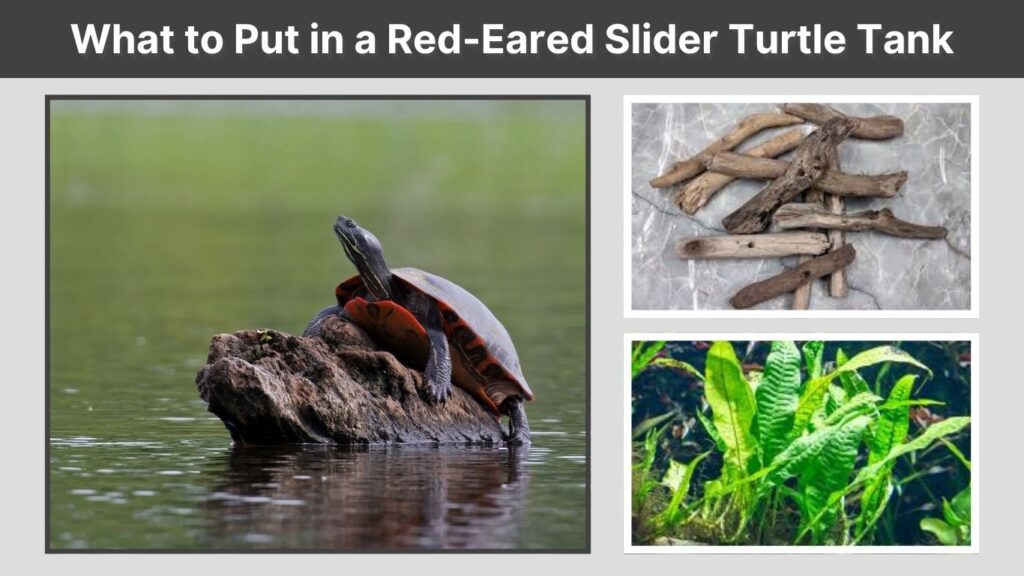
A well-designed turtle habitat should provide both functionality and enrichment. Decorations and habitat features can create a more natural environment while supporting healthy behaviors. However, all tank additions should be safe and easy to clean.
Safe Tank Decorations
Decorations should not have sharp edges or small parts that could injure the turtle. Durable materials that withstand constant exposure to water are usually the best choice.
Natural Habitat Features
Many owners include natural elements such as:
- Smooth river rocks
- Driftwood pieces
- Turtle-safe aquatic plants
- Floating basking platforms
- Hiding areas and shelters
These additions create a more engaging environment while maintaining safety.
Items to Avoid
Some decorations can pose risks to turtles. Sharp objects, unstable structures, and small gravel pieces should generally be avoided. Choosing turtle-safe materials helps prevent injuries and accidental ingestion.
Red-Eared Slider Tank Accessories
Accessories can improve both the functionality and appearance of a turtle habitat. While some accessories are essential, others provide convenience and enrichment. Selecting quality accessories can simplify maintenance and enhance the turtle’s living environment.
Essential Accessories
Certain accessories help support daily care and habitat management. Useful additions include thermometers, water conditioners, and timers for lighting systems.
Optional Enhancements
Owners who want to improve their setups may consider:
- Automatic feeding devices
- Decorative tank backgrounds
- Additional basking platforms
- Aquarium stands
- Live aquatic plants
These accessories are not required but can make the habitat more attractive and convenient.
Best Filters for Red-Eared Slider Turtle Tanks
A powerful filtration system is one of the most important investments for turtle owners. Because red-eared sliders generate significant waste, standard aquarium filters are often insufficient. Choosing the right filter helps maintain cleaner water and reduces maintenance requirements.
Why Strong Filtration Matters
Dirty water can quickly lead to health problems, unpleasant odors, and excessive algae growth. A high-capacity filter removes waste particles and helps maintain healthier water conditions for the turtle.
Canister Filters
Canister filters are often considered the best option for large turtle tanks. They provide excellent filtration capacity and can handle the heavy biological load produced by turtles.
Filter Maintenance Tips
Even the best filter requires regular maintenance. Cleaning filter media and checking equipment performance helps ensure efficient operation and consistent water quality.
DIY Red-Eared Slider Turtle Tank Ideas
DIY turtle habitats can be cost-effective alternatives to traditional aquariums. Many owners create custom setups that offer more space while reducing overall expenses. With proper planning, DIY habitats can provide excellent living conditions for red-eared sliders.
Stock Tank Setups
Large stock tanks are popular among experienced turtle keepers because they provide generous swimming space and are often less expensive than large glass aquariums.
Indoor Pond Systems
Indoor ponds can create a more natural environment for larger turtles. These systems often allow for greater water volume, which helps maintain stable water quality.
Custom Basking Platforms
Homemade basking areas can be designed to fit specific tank dimensions. A sturdy platform provides the turtle with a comfortable place to rest, warm up, and dry its shell.
How to Clean a Red-Eared Slider Turtle Tank
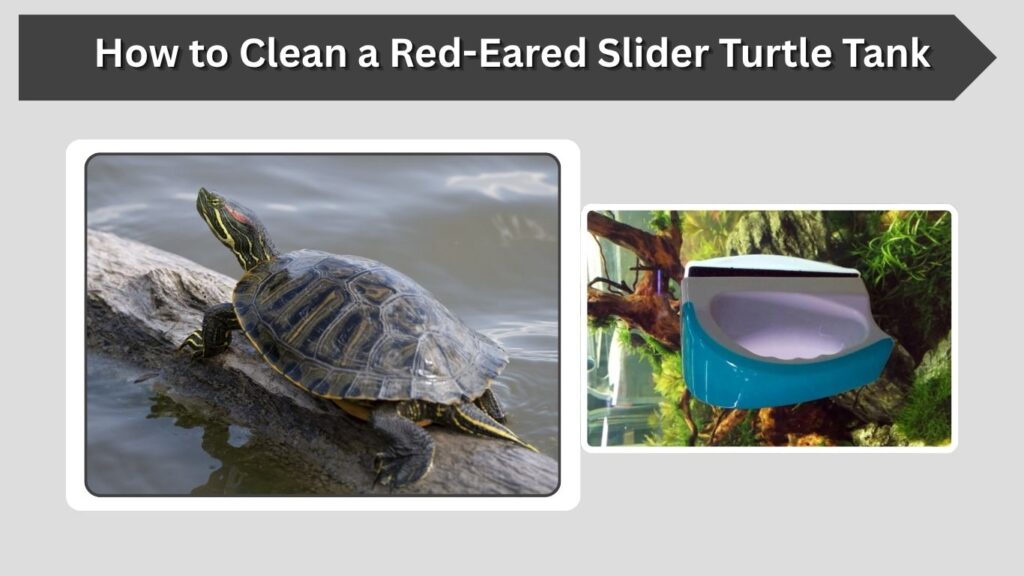
Regular cleaning is necessary to maintain a healthy habitat. Consistent maintenance prevents waste buildup and helps preserve water quality. Establishing a cleaning routine makes tank care easier and more effective over time.
Daily Maintenance
Simple daily tasks help keep the habitat clean and reduce the need for extensive cleaning later. Removing leftover food and checking equipment are important parts of routine care.
Weekly Cleaning Routine
Weekly maintenance may include partial water changes, glass cleaning, and inspection of filtration equipment. These tasks help prevent water quality issues from developing.
Monthly Deep Cleaning
A thorough cleaning should be performed periodically to remove accumulated debris and ensure all equipment functions properly. Deep cleaning helps maintain a safe and hygienic environment.
Common Red-Eared Slider Tank Setup Mistakes
Many turtle owners unintentionally make mistakes that affect their pet’s health. Understanding these common errors can help create a more suitable habitat and prevent unnecessary problems.
Using a Tank That Is Too Small
One of the most common mistakes is underestimating the amount of space a red-eared slider requires. Small tanks can contribute to poor water quality and increased stress.
Inadequate Filtration
Weak filtration systems often struggle to handle turtle waste. Insufficient filtration can lead to cloudy water, unpleasant odors, and health concerns.
Lack of Proper Lighting
Without UVB lighting and a suitable basking lamp, turtles may develop shell and bone problems. Proper lighting is essential for long-term health and development.
FAQs
Do red-eared sliders need a filter?
Yes. Because turtles produce a large amount of waste, a powerful filtration system is essential for maintaining water quality.
How often should I clean a turtle tank?
Daily spot cleaning, weekly partial water changes, and monthly deep cleaning are generally recommended for most turtle tanks.
Can a red-eared slider live in a 20-gallon tank?
A 20-gallon tank may be suitable for a very young hatchling temporarily, but adult red-eared sliders require much larger enclosures.
What is the best temperature for a red-eared slider tank?
Water temperatures typically range from 75–80°F (24–27°C), while basking areas should be maintained around 85–95°F (29–35°C).
Can two red-eared sliders live in the same tank?
While it is possible, cohabitation can lead to aggression, competition, and stress. A larger tank and close monitoring are necessary.
What is the best filter for a red-eared slider turtle tank?
Canister filters are generally considered the best option because they provide strong mechanical, biological, and chemical filtration for large turtle habitats.