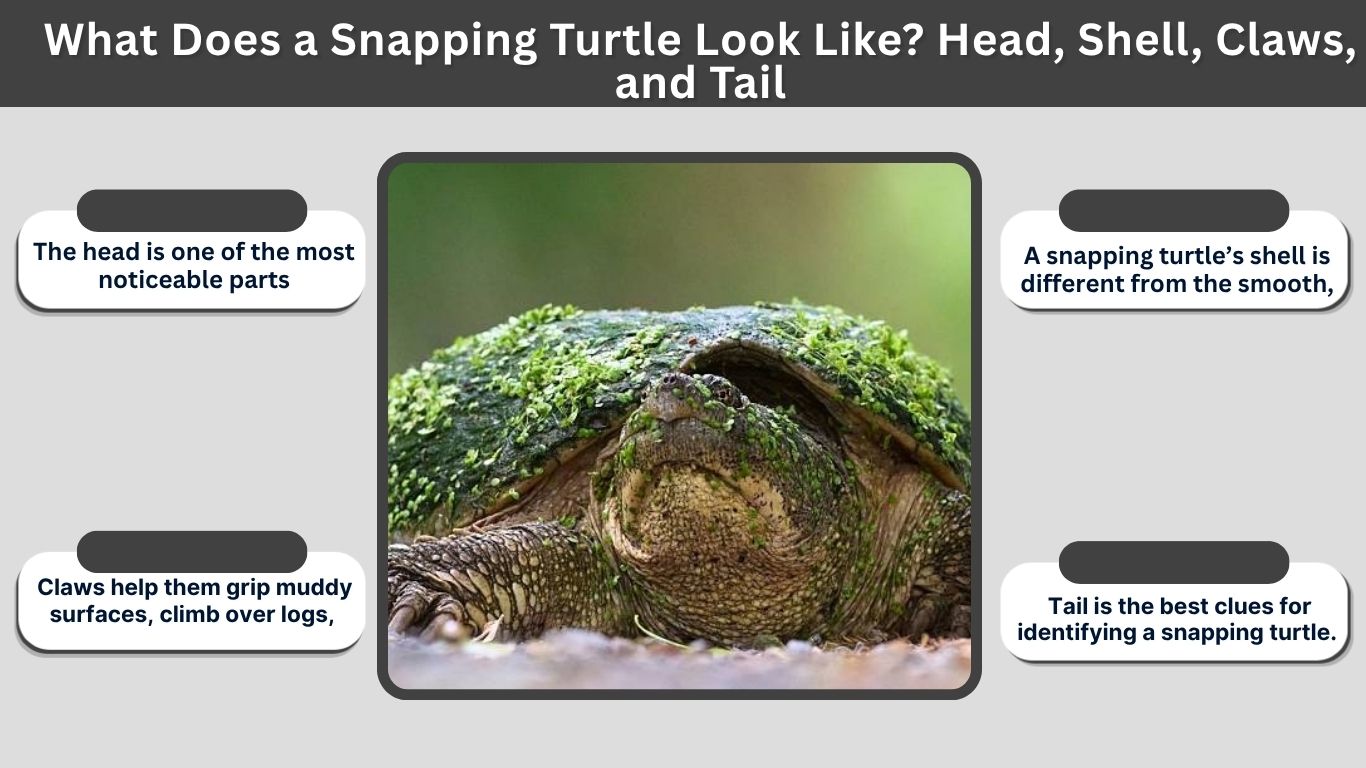
A snapping turtle has a rugged, prehistoric appearance that makes it easy to recognize once you know what to look for. It has a large head, powerful jaws, a rough shell, thick legs, sharp claws, and a long tail with saw-toothed ridges. Unlike many gentle-looking pond turtles, a snapping turtle looks tough, alert, and built for survival in muddy freshwater habitats.
General Appearance of a Snapping Turtle
Snapping turtles are large freshwater turtles with strong bodies and rough features. Their appearance often looks less smooth and polished than many other turtles. They may appear muddy, dark, algae-covered, or almost rock-like, especially when resting near ponds, lakes, rivers, or swamps.
A Rugged, Ancient-Looking Turtle
The first thing many people notice is that a snapping turtle looks almost prehistoric. Its shell may be dark brown, tan, olive, gray, or nearly black. Its skin is usually rough and wrinkled, and its head looks large compared with many other freshwater turtles. The overall body shape is broad, heavy, and muscular.
Common snapping turtles usually have a shell length of about 8 to 18.5 inches, and their tail may be nearly as long as the shell. Their shells can range from dark brown to tan or black, and the tail has saw-toothed keels along it.
Built for Freshwater Life
A snapping turtle’s body is designed for life in slow-moving water. It often lives in ponds, marshes, swamps, lakes, and streams. Because it spends much of its time in muddy or vegetated water, its color helps it blend into the environment. From above, a snapping turtle may look like a dark rock, clump of mud, or piece of submerged wood.
Head and Face
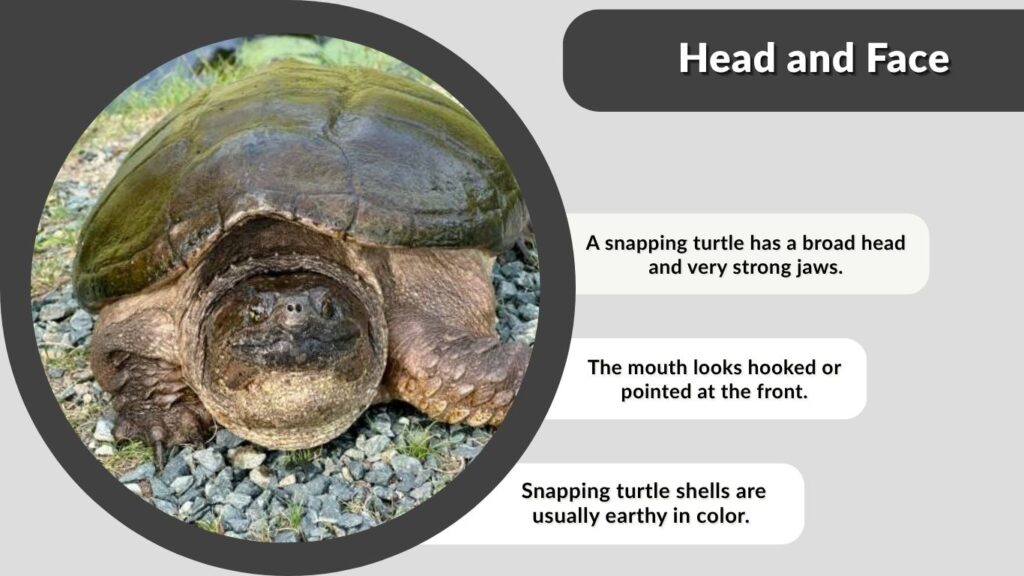
The head is one of the most noticeable parts of a snapping turtle. It is usually much larger and more powerful-looking than the head of a typical pond turtle.
Large Head With Strong Jaws
A snapping turtle has a broad head and very strong jaws. Its mouth has a sharp, beak-like edge rather than teeth. This beak helps the turtle grip food and defend itself when threatened. The jaw shape is one reason the turtle has the name “snapping” turtle.
Snapping turtles are known for large heads, powerful jaws, and strong necks. Their shell does not fully protect the head and limbs, so they depend heavily on their jaws for defense.
Sharp Beak-Like Mouth
The mouth looks hooked or pointed at the front. This gives the turtle a serious, almost fierce expression. When the turtle is calm, the mouth may stay closed and blend into its wrinkled face. When threatened, however, the head may extend forward quickly, showing the strength and reach of the jaws.
Small, Alert Eyes
The eyes of a snapping turtle are usually small compared with the size of its head. They may appear dark, golden, yellowish, or brownish depending on the individual and lighting. The eyes sit high enough on the head to help the turtle watch its surroundings while much of the body remains hidden in water.
Shell Shape and Texture
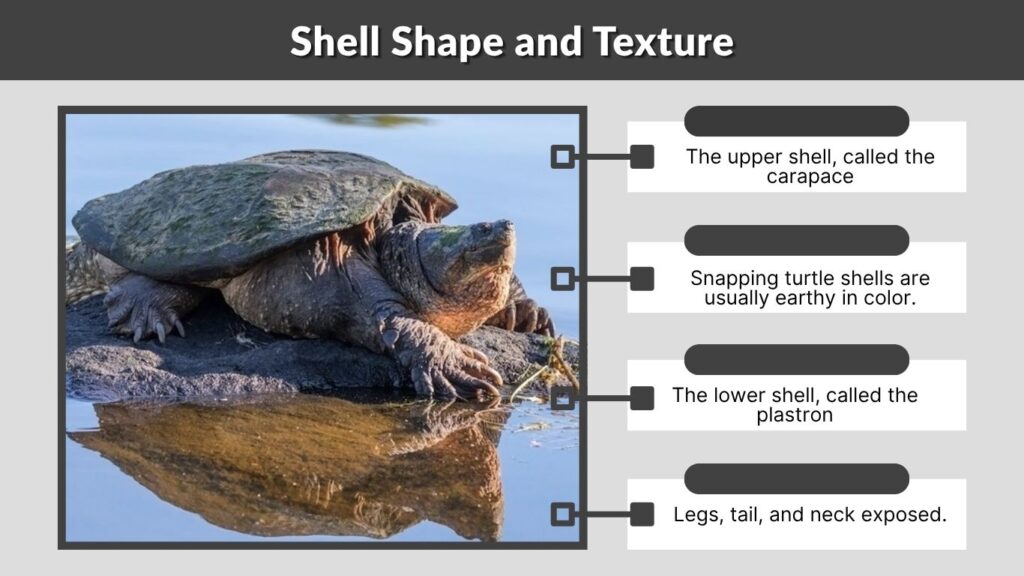
A snapping turtle’s shell is different from the smooth, rounded shells people often imagine when they think of turtles. It is rougher, flatter, and more irregular-looking.
Rough Upper Shell
The upper shell, called the carapace, is usually dark and rugged. In younger snapping turtles, the shell often has raised ridges or keels running lengthwise. These ridges may become less obvious as the turtle ages, but many adults still have a rough, worn, or uneven shell surface.
The carapace may have a jagged rear edge and three lengthwise keels, especially in younger turtles.
Dark, Muddy Colors
Snapping turtle shells are usually earthy in color. They may be brown, olive, tan, gray, or black. The shell is often covered with mud, algae, or plant material, which makes the turtle harder to spot in natural habitats. This camouflage helps it hide from predators and approach prey.
Smaller Lower Shell
The lower shell, called the plastron, is relatively small compared with the turtle’s body. This is one important feature that makes snapping turtles look different from many other turtles. Their smaller lower shell leaves more of the legs, tail, and neck exposed.
The plastron is often described as small and cross-shaped. Because it gives less coverage than the lower shell of many other turtles, the animal cannot close itself tightly inside its shell for protection.
Legs, Feet, and Claws
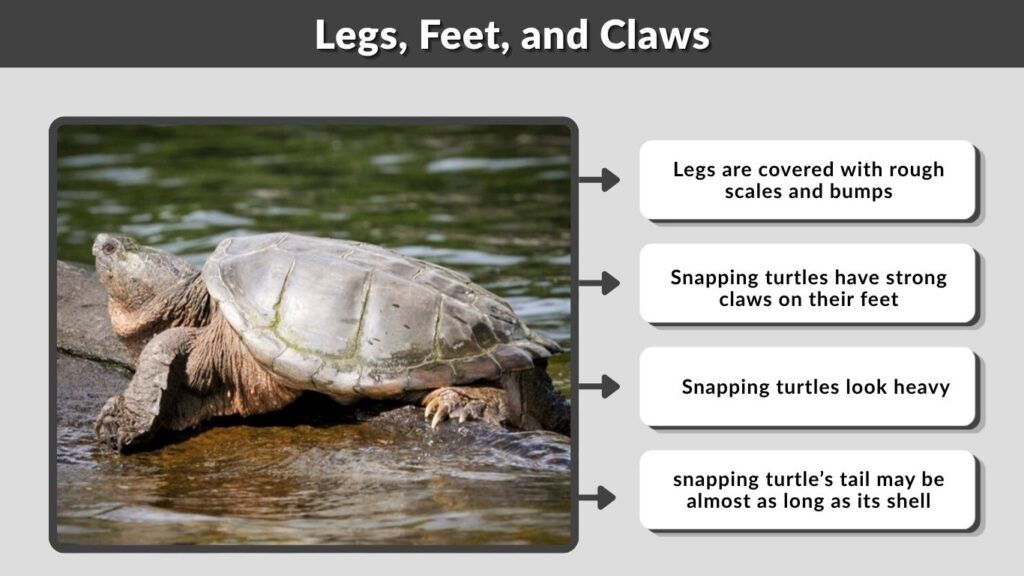
A snapping turtle’s legs look strong, thick, and rough. They are not delicate or smooth. The feet and claws are useful for walking along muddy bottoms, digging nests, and pushing through aquatic vegetation.
Thick, Scaly Legs
The legs are covered with rough scales and bumps. These textured areas can make the turtle look armored. The skin may be dark brown, gray, olive, yellowish, or almost black. The neck and legs often have small raised bumps, also called tubercles.
Long, Curved Claws
Snapping turtles have strong claws on their feet. These claws help them grip muddy surfaces, climb over logs, dig into soil, and move through shallow water. When seen on land, the claws can look surprisingly long and sharp.
Webbed Feet for Swimming
Although snapping turtles look heavy, their feet are suited for aquatic life. The toes have webbing that helps them move through water. They are not graceful swimmers like sea turtles, but they are very capable in ponds, marshes, and slow-moving streams.
Tail Appearance
The tail is one of the best clues for identifying a snapping turtle. It is long, thick at the base, and covered with rough ridges.
Long Tail With Saw-Toothed Ridges
A snapping turtle’s tail may be almost as long as its shell. Along the top of the tail, there are raised, saw-toothed scales that form a jagged ridge. This feature gives the tail a dinosaur-like look.
The tail has large, saw-toothed scales and is much longer than the tail of many other freshwater turtles.
A Dinosaur-Like Feature
Because of the long ridged tail, many people describe snapping turtles as looking like tiny dinosaurs. This tail is often visible when the turtle is walking on land. In water, it may trail behind the body as the turtle moves through mud or vegetation.
Size and Body Shape
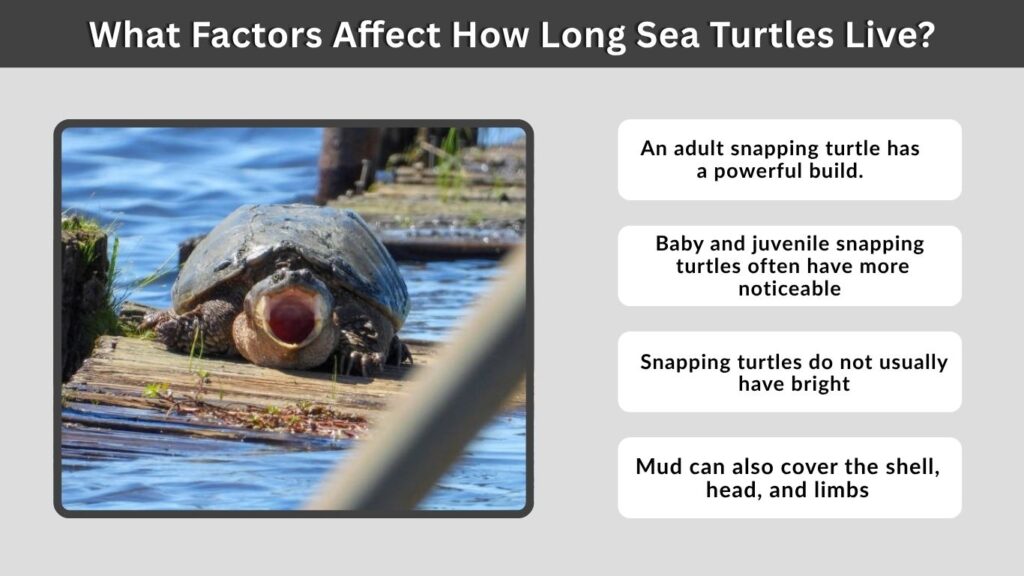
Snapping turtles are usually larger and heavier-looking than many common pond turtles. Their bodies look wide, strong, and low to the ground.
Heavy and Muscular Build
An adult snapping turtle has a powerful build. The body is broad, and the legs are strong enough to move the turtle across land when necessary. Even when the turtle is not especially large, it often looks heavier than other turtles because of its thick neck, large head, and rough shell.
Young Snapping Turtles Look More Ridged
Baby and juvenile snapping turtles often have more noticeable shell ridges than adults. Their tails may look especially long compared with their small shells. Young snappers may appear spiky, dark, and sharply patterned, while older individuals often look smoother, muddier, and more worn.
Color Patterns
Snapping turtles do not usually have bright, colorful markings like some painted turtles or sliders. Their colors are more natural and earthy.
| Body Part | Common Appearance |
|---|---|
| Head | Large, rough, dark, with a hooked beak |
| Eyes | Small, alert, sometimes yellowish or dark |
| Upper shell | Brown, tan, olive, gray, or black; rough and ridged |
| Lower shell | Smaller, lighter, often yellowish or whitish |
| Legs | Thick, scaly, bumpy, and muscular |
| Feet | Webbed toes with long claws |
| Tail | Long, rough, with saw-toothed ridges |
| Overall look | Rugged, muddy, prehistoric, and powerful |
Brown, Olive, Gray, or Black
Most snapping turtles have muted colors that help them blend into their surroundings. Their upper body is usually darker, while the lower side may be whitish or yellowish.
Algae and Mud Can Change the Look
A snapping turtle may look greener or darker than usual if algae is growing on its shell. Mud can also cover the shell, head, and limbs, making the animal appear like part of the pond bottom. This natural camouflage is very useful in shallow water.
How Snapping Turtles Look on Land
A snapping turtle on land often looks more intimidating than one in water. This is because it cannot hide as easily and may feel more exposed.
Low, Heavy Walking Style
On land, snapping turtles walk with a low, heavy movement. Their shell sits close to the ground, and their legs push outward and downward. They may move slowly, but they can react quickly with their head and neck if they feel threatened.
Extended Neck and Defensive Posture
When alarmed, a snapping turtle may raise its body slightly, stretch its neck, open its mouth, hiss, or snap. Its neck is surprisingly long and flexible, allowing it to reach farther than many people expect. This is why it is best to observe snapping turtles from a safe distance.
How Snapping Turtles Look in Water
In water, a snapping turtle may look much calmer and less aggressive. It often avoids conflict by hiding in mud, plants, or deeper water.
Mostly Hidden Underwater
A snapping turtle may sit buried in mud with only its eyes and nostrils visible. Its nostrils are positioned near the tip of the snout, helping it breathe while most of the body stays hidden. In shallow water, it may stretch its neck upward to breathe without fully exposing itself.
Blending With Mud and Plants
The turtle’s dark colors, rough shell, and algae-covered body make it difficult to notice underwater. It may look like a rock, log, or patch of mud until it moves.
Common Snapping Turtle vs Alligator Snapping Turtle
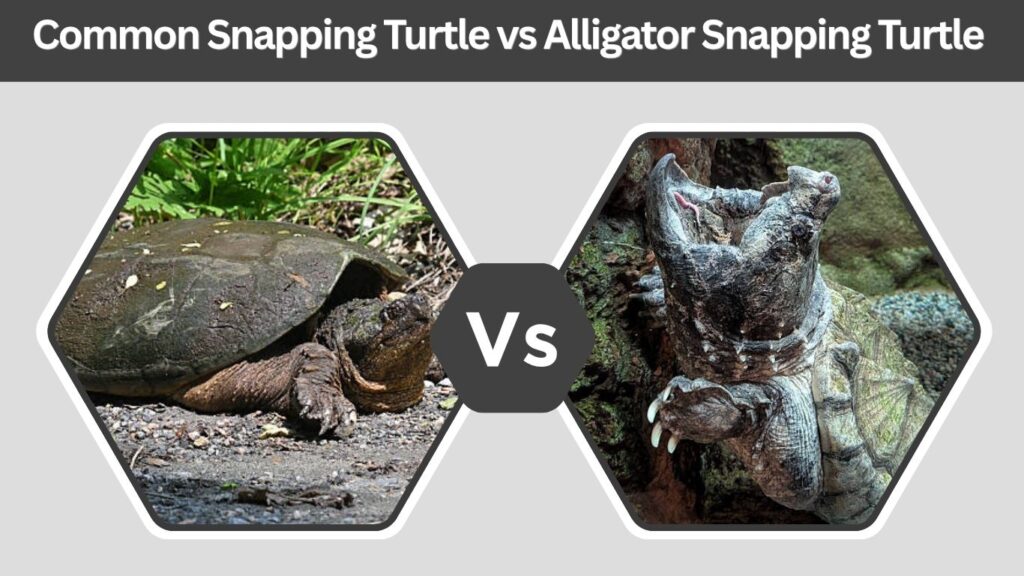
People often confuse common snapping turtles with alligator snapping turtles. Both look rugged, but they are not identical.
Common Snapping Turtle
The common snapping turtle usually has a smoother shell than the alligator snapping turtle, especially as an adult. It still looks rough, but the shell does not usually have the extremely high, spiky ridges seen in alligator snapping turtles.
Alligator Snapping Turtle
The alligator snapping turtle often looks more heavily armored. It has a very large head and a shell with bold, raised ridges that can look like rocky plates. It is often described as more massive and more prehistoric-looking than the common snapping turtle.
Quick Identification Tips
A snapping turtle is easiest to identify by looking at the head, shell, tail, and overall body shape. You do not need to touch or disturb the turtle to recognize it.
Look for these signs:
- A large head with a hooked beak
- A rough, dark, muddy shell
- A long tail with saw-toothed ridges
- Thick legs with long claws
- Small lower shell compared with body size
- A rugged, prehistoric appearance
- Strong defensive behavior when on land
FAQs
What is the easiest way to recognize a snapping turtle?
The easiest way is to look for a large head, strong beak-like jaws, rough shell, thick legs, sharp claws, and a long ridged tail. Snapping turtles also have a rugged, muddy appearance that makes them look more prehistoric than many other freshwater turtles.
Are snapping turtles always dark in color?
Most snapping turtles are dark or earthy in color, such as brown, olive, gray, tan, or black. Their shells may also look greenish if covered in algae. These dull colors help them blend into muddy ponds, lakes, marshes, and streams.
Do snapping turtles have teeth?
No, snapping turtles do not have teeth. Instead, they have powerful beak-like jaws with sharp edges. These jaws help them catch food, tear plant or animal matter, and defend themselves when they feel threatened.
Why does a snapping turtle have such a long tail?
The long tail is a natural feature of snapping turtles and helps with balance and movement. Its saw-toothed ridges also make the turtle easy to identify. The tail is especially noticeable when the turtle is walking on land.
Is it safe to pick up a snapping turtle?
It is best not to pick up a snapping turtle unless absolutely necessary. They have strong jaws and long, flexible necks. If one is crossing a road, it is safer to keep distance and contact local wildlife help if you are unsure what to do.