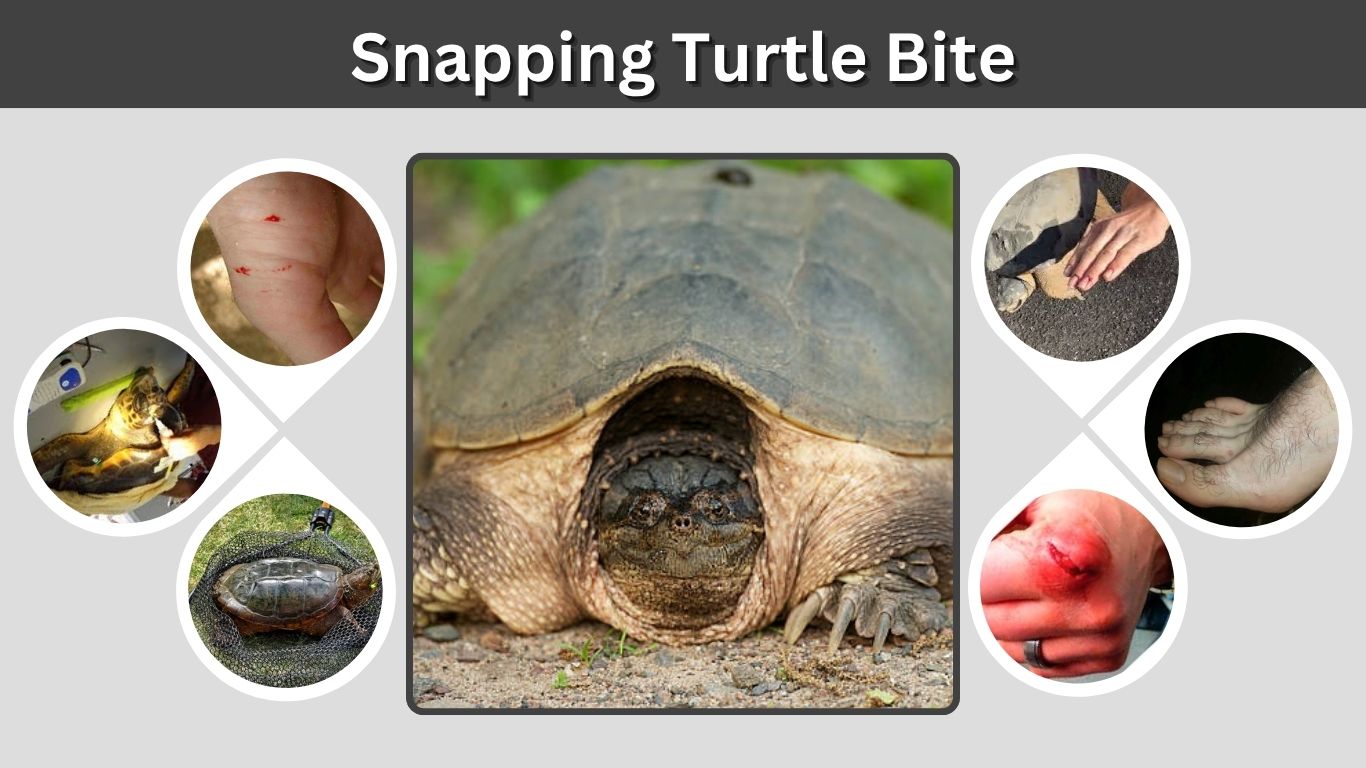
A snapping turtle bite can be painful, frightening, and sometimes serious. Snapping turtles have powerful jaws, sharp beak-like mouths, and long flexible necks that allow them to strike quickly when they feel threatened. While they do not usually chase people, they may bite if handled, cornered, stepped on, or picked up incorrectly. Knowing what a bite can do and how to respond helps prevent complications.
What Is a Snapping Turtle Bite?
A snapping turtle bite happens when the turtle closes its strong jaws on skin, fingers, toes, or another body part. These turtles do not have teeth, but their beak-like jaws can still cause cuts, bruising, punctures, and tissue damage.
Why Snapping Turtles Bite
Snapping turtles usually bite for defense, not aggression. In water, they often choose to swim away or hide in mud. On land, however, they feel more exposed because they cannot escape quickly. If a person gets too close, touches them, or tries to lift them, they may snap.
Common reasons snapping turtles bite include:
- Being picked up by hand
- Feeling trapped or cornered
- Being stepped on accidentally
- Defending themselves on roads or trails
- Mistaking fingers for food
- Being handled by inexperienced people
Are Snapping Turtles Aggressive?
Snapping turtles are often described as aggressive, but that is not completely accurate. They are defensive animals. They do not normally attack humans without reason. Most bites happen because someone tries to touch, move, feed, or catch the turtle.
How Strong Is a Snapping Turtle Bite?
A snapping turtle’s bite can be strong enough to cause real injury. The severity depends on the turtle’s size, the bite location, and how long the turtle holds on.
Powerful Jaws and Beak-Like Mouth
Snapping turtles have strong jaw muscles and a sharp mouth edge. Instead of chewing like mammals, they clamp down with force. Their mouth works like a cutting beak, which can pinch, tear, or slice skin.
A small snapping turtle may only leave a painful mark or small cut. A large adult can cause deeper wounds, bleeding, and serious damage, especially if it bites a finger or toe.
Bite Strength Varies by Species
Common snapping turtles have powerful bites, but alligator snapping turtles are usually larger and heavier. An alligator snapping turtle may cause more severe injuries because of its massive head and stronger build. Both should be treated with caution.
What Does a Snapping Turtle Bite Feel Like?
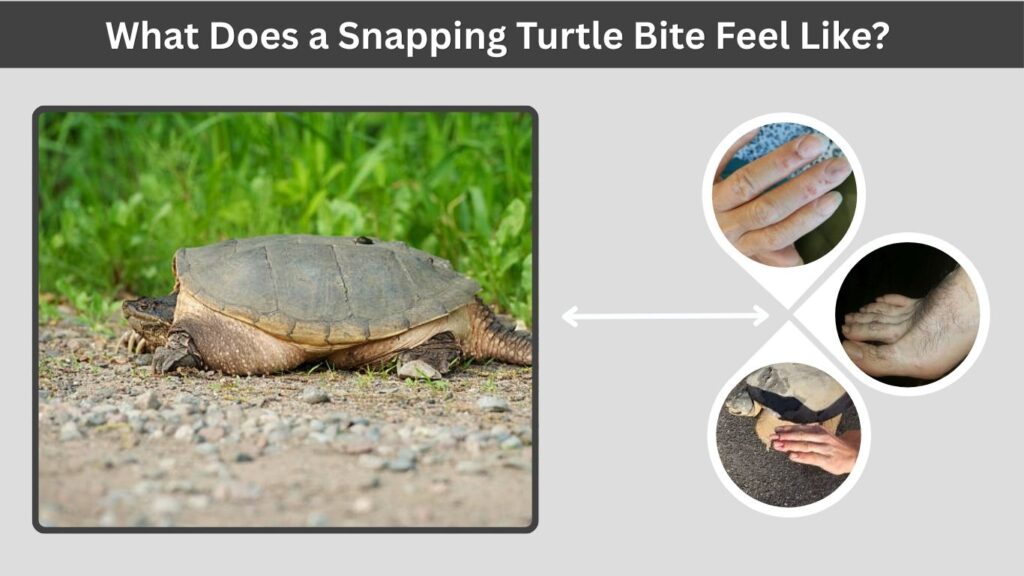
A snapping turtle bite can feel like a sudden, sharp clamp. Some people describe it as a strong pinch, while deeper bites may feel like crushing pressure mixed with cutting pain.
Pain Level
The pain depends on the bite depth. A light bite may sting and bruise. A harder bite may cause intense pain, swelling, bleeding, and difficulty moving the affected area.
Pain may be worse if the turtle bites:
- A finger
- A toe
- The hand
- The foot
- Soft skin between fingers
- Areas near joints or nails
What the Bite May Look Like
A snapping turtle bite may leave red marks, bruises, cuts, or puncture wounds. If the turtle’s jaws break the skin, the wound may bleed. In some cases, the bite can tear the skin unevenly because the turtle clamps and pulls.
Main Risks of a Snapping Turtle Bite
A snapping turtle bite should not be ignored. Even if the injury looks small, animal bites can introduce bacteria and cause infection.
| Risk | What It Means |
|---|---|
| Pain | The bite may cause sharp pain, pressure, or throbbing |
| Bleeding | Deeper bites can break skin and bleed |
| Bruising | A strong bite may damage small blood vessels |
| Infection | Bacteria from the turtle, water, or dirt may enter the wound |
| Swelling | The area may become swollen or tender |
| Tissue damage | Severe bites can injure skin, nails, or soft tissue |
| Tetanus concern | Dirty wounds may require a tetanus booster depending on vaccine history |
| Finger injury | Bites on fingers can be more serious due to tendons, joints, and nerves |
Infection
Infection is one of the biggest concerns after any animal bite. Snapping turtles often live in muddy ponds, lakes, marshes, and rivers. Their mouths and claws may carry bacteria from water, soil, and food sources.
Signs of infection may include redness, warmth, swelling, pus, worsening pain, fever, or red streaks spreading from the wound.
Tissue and Nerve Damage
A deep bite to the hand or finger can affect more than the surface of the skin. It may injure tendons, nerves, nails, or joints. This is why deep bites, numbness, or difficulty moving the finger should be taken seriously.
What to Do After a Snapping Turtle Bite
Quick first aid can reduce the risk of infection and help the wound heal properly. If the bite is severe, bleeding heavily, or affects movement, seek medical care right away.
Step-by-Step First Aid
For a minor bite that breaks the skin lightly, start by cleaning the wound. Wash your hands first if possible, then rinse the bite area under clean running water.
Basic first-aid steps include:
- Move away from the turtle safely.
- Do not try to pull the turtle off forcefully if it is still attached.
- Wash the wound with soap and running water.
- Apply gentle pressure if there is bleeding.
- Use a clean bandage to cover the wound.
- Watch for swelling, redness, pus, or increasing pain.
- Contact a healthcare provider if the bite is deep or dirty.
Do Not Ignore Small Wounds
Even a small snapping turtle bite can become infected if dirt or bacteria enter the skin. A wound that looks minor at first may become more painful over the next day or two. Keep it clean and covered, and monitor it closely.
When to Seek Medical Help
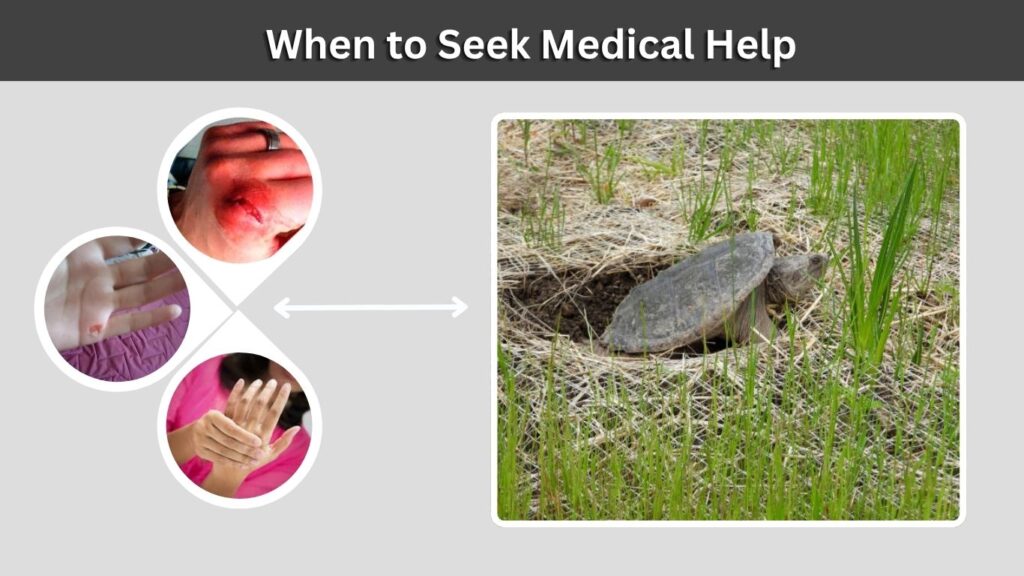
Some snapping turtle bites need professional medical attention. This is especially true if the wound is deep, dirty, painful, or located on the hand.
Get Medical Care If You Notice These Signs
You should contact a healthcare provider if the bite causes deep bleeding, severe pain, or swelling. Medical care is also important if your tetanus shots are not up to date or you are unsure about your vaccination history.
Seek help if:
- The bite is deep or wide
- Bleeding does not stop
- The wound is on a finger, hand, toe, or joint
- You cannot move the affected area normally
- You feel numbness or tingling
- The wound becomes red, hot, swollen, or filled with pus
- You develop fever or red streaks near the bite
- You have diabetes, poor circulation, or a weak immune system
Tetanus Consideration
A snapping turtle bite may be considered a dirty wound if it involves mud, pond water, or soil. A doctor may ask when you last had a tetanus shot. Depending on your vaccine history and the wound type, you may need a booster.
How to Prevent a Snapping Turtle Bite
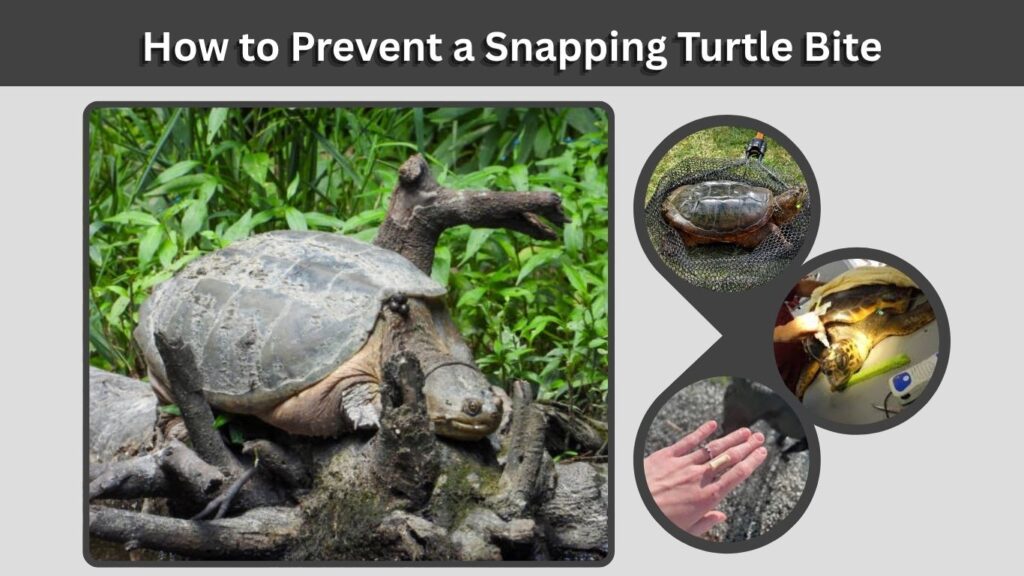
The best way to avoid a bite is to respect the turtle’s space. Snapping turtles are wild animals and should not be handled for fun.
Keep a Safe Distance
If you see a snapping turtle near a pond, road, or yard, do not touch its head, mouth, tail, or legs. Watch from a distance and allow it to move on its own when possible.
Prevention tips include:
- Do not pick up a snapping turtle with bare hands.
- Never place fingers near its mouth.
- Do not tease, poke, or feed it.
- Keep children and pets away.
- Be careful when walking near muddy water.
- Do not assume a turtle is harmless because it is still.
- Contact local wildlife help if the turtle is in danger.
Be Careful When Helping One Cross a Road
Many people get bitten while trying to move a snapping turtle from a road. Helping wildlife is kind, but it can be risky. If you do not know the safe method, it is better to contact a local wildlife rescue or animal control service.
Never pick up a snapping turtle by the tail. This can injure the turtle and put you at risk of being bitten.
What Not to Do After a Bite
Some reactions can make the situation worse. Staying calm is important, especially if the turtle is still nearby.
Avoid These Mistakes
Do not panic and jerk your hand violently if the turtle bites and holds on. Sudden pulling may tear the skin more. Also, do not try unsafe methods to force the turtle to release.
Avoid doing these things:
- Do not hit or harm the turtle.
- Do not burn the turtle or use chemicals.
- Do not ignore a deep bite.
- Do not cover a dirty wound without washing it.
- Do not assume infection cannot happen.
- Do not delay care if the bite affects movement or feeling.
Do Not Treat It Like a Simple Scratch
A snapping turtle bite may look smaller than it really is. Because bacteria can enter the wound, cleaning and monitoring are important. Deep bites may need medical evaluation even if the bleeding stops.
Are Snapping Turtle Bites Dangerous?
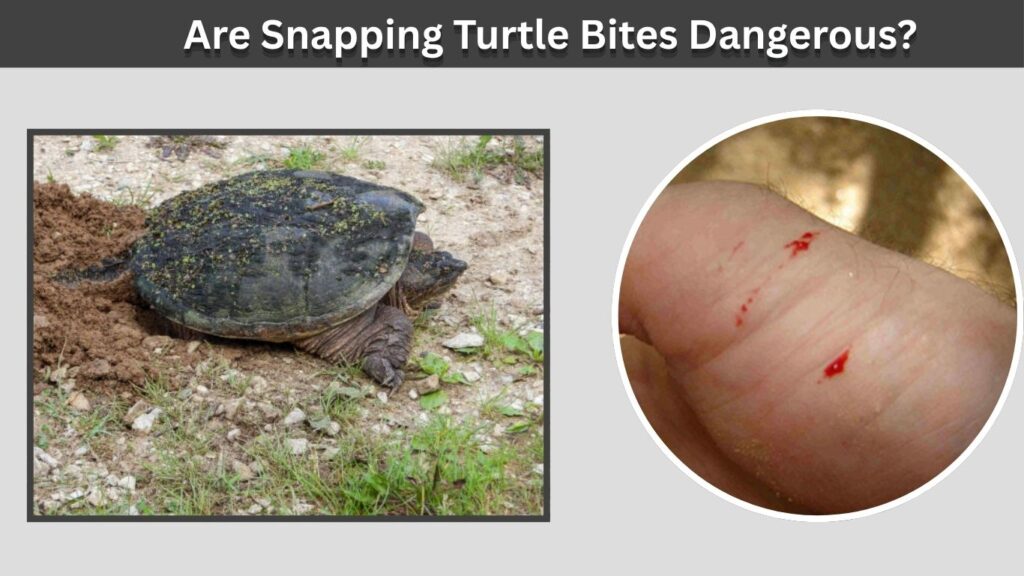
A snapping turtle bite can be dangerous, but most bites are preventable. The greatest danger comes from handling the turtle carelessly or underestimating its reach.
Most Bites Happen During Handling
Snapping turtles have long necks and can reach farther than many people expect. Holding one near the sides of the shell does not always keep your hands safe. Their head can extend quickly, especially when they feel threatened.
Serious Injuries Are Possible
Large snapping turtles can cause strong bites. Fingers and toes are most vulnerable because they are small and easy for the turtle to clamp. Severe bites may need stitches, antibiotics, imaging, or other medical care depending on the injury.
FAQs
Can a snapping turtle bite off a finger?
A large snapping turtle can cause serious finger injuries, but complete finger loss is uncommon. The risk is higher with large adults, deep bites, or bites near joints. Any serious finger bite should be checked by a healthcare provider.
Do snapping turtles bite underwater?
Yes, snapping turtles can bite underwater, especially if they are disturbed or mistake something for food. However, they usually prefer to avoid people in water. Most bites happen when humans try to touch, catch, or handle them.
Do snapping turtles have teeth?
No, snapping turtles do not have teeth. They have sharp, strong, beak-like jaws. These jaws can still cut skin, cause bruising, and create painful wounds.
Should I go to the doctor for a snapping turtle bite?
You should seek medical advice if the bite breaks the skin deeply, bleeds heavily, becomes swollen, or is on the hand, finger, toe, or joint. You should also ask about tetanus if your vaccination status is unclear.
How can I avoid being bitten by a snapping turtle?
Keep your distance, never place your fingers near its mouth, and do not pick it up with bare hands. If a snapping turtle is crossing a road or trapped, contact local wildlife help instead of handling it yourself.