
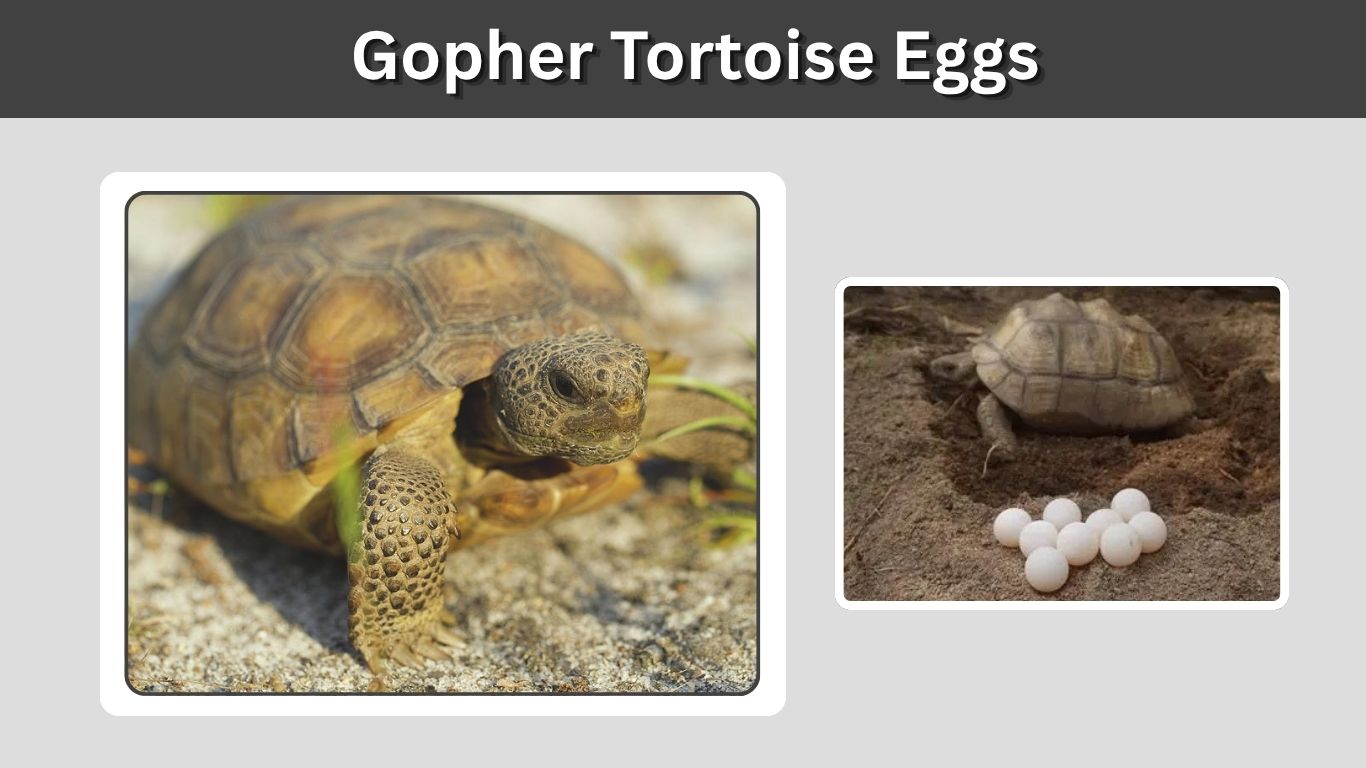
Gopher tortoise eggs are a small but important part of the life cycle of one of the Southeast’s most valuable reptiles. These eggs are usually hidden in sandy soil near a burrow, where warmth, sunlight, and protection help them develop. Many people see a female gopher tortoise digging or notice a fresh sand mound and wonder if eggs are nearby. Understanding when eggs are laid, how long they take to hatch, and why they should never be disturbed helps protect this threatened species.
Gopher Tortoise Eggs at a Glance
Gopher tortoise reproduction is slow compared with many animals. A mature female usually lays only one clutch per year, and many eggs or hatchlings do not survive because of predators and habitat problems.
| Egg Fact | Details |
|---|---|
| Egg appearance | White, round, and about ping-pong-ball sized |
| Typical clutch size | Often 5–9 eggs in Florida; broader reports range from 3–15 eggs |
| Main laying season | Usually May through July in Florida |
| Incubation time | About 80–110 days, depending on location and temperature |
| Hatching period | Often late summer to fall |
| Parental care | No guarding or care after nesting |
FWC notes that female gopher tortoises in Florida typically lay one clutch of 5–9 ping-pong-ball-sized eggs per year, usually between May and July. Eggs are often placed in sunny, sandy areas, especially the loose mound of sand at the burrow entrance, called the burrow apron.
What Do Gopher Tortoise Eggs Look Like?
Gopher tortoise eggs are usually white, round, and smooth. They are often compared to ping-pong balls because of their size and shape. Unlike bird eggs, they are not long or pointed. They are buried in sand, so most people never see them unless a nest has been disturbed by weather, predators, or human activity.
A fresh nest may look like loose or recently moved sand near the mouth of a burrow. However, not every sand mound contains eggs, and not every nest is easy to recognize. Because gopher tortoises are protected, it is best to avoid digging or checking the mound.
How Many Eggs Do Gopher Tortoises Lay?
Most female gopher tortoises lay a small clutch. In Florida, 5–9 eggs is commonly reported, while the Gopher Tortoise Council gives a broader range of 3–15 eggs depending on region and individual female size. A mature female generally produces only one clutch each year.
This low reproductive rate is one reason gopher tortoise conservation matters. Even if a female lays eggs every year, successful nesting is not guaranteed. Predators, flooding, poor nest conditions, and habitat disturbance can reduce survival.
When and Where Do Gopher Tortoises Lay Eggs?
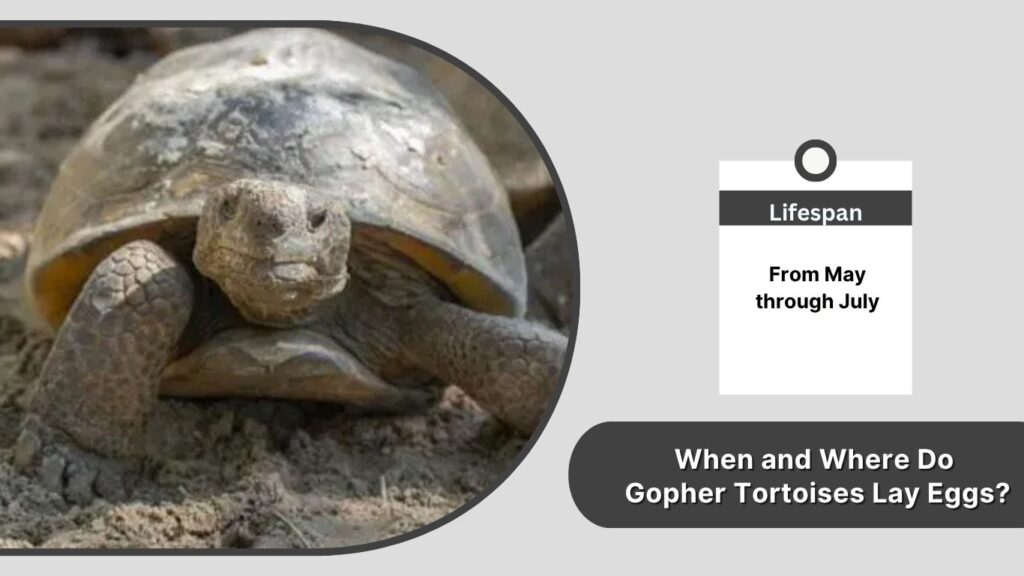
Female gopher tortoises choose warm, open, sandy areas for nesting. These places help the eggs incubate naturally under the sun.
Gopher Tortoise Egg Laying Season
In Florida, egg laying usually happens from May through July, while breeding activity can begin earlier in spring and continue into warmer months. The Gopher Tortoise Council says females often lay eggs during May and June, though timing can vary by region.
This is why people often notice more tortoise activity in spring and summer. A female may travel or spend time near a burrow entrance while looking for the right nesting spot. Road mortality can be a risk during this period because females may move across roads while searching for suitable nesting areas.
Where Do Gopher Tortoises Lay Their Eggs?
Gopher tortoises commonly lay eggs in the sandy apron at the entrance of their burrow. This mound is made when the tortoise digs and pushes sand out of the tunnel. It is usually loose, sunny, and well-drained, which makes it a suitable place for incubation.
They may also lay eggs in another nearby sunny area with sandy soil. Good nesting habitat usually has open sunlight, sparse canopy cover, and dry, well-drained soil. These conditions help keep eggs warm and reduce the chance of waterlogged nests.
Do Gopher Tortoises Guard Their Eggs?
No, gopher tortoises do not guard their eggs. After laying and covering the clutch, the female leaves the nest. The eggs develop on their own, and hatchlings must survive without help from their parents. UF/IFAS explains that gopher tortoise parents do not provide parental care for the nest or young.
This behavior is normal for the species. A female may still live nearby and use the same burrow system, but she is not protecting the eggs in the way birds guard a nest.
Gopher Tortoise Egg Incubation and Hatching
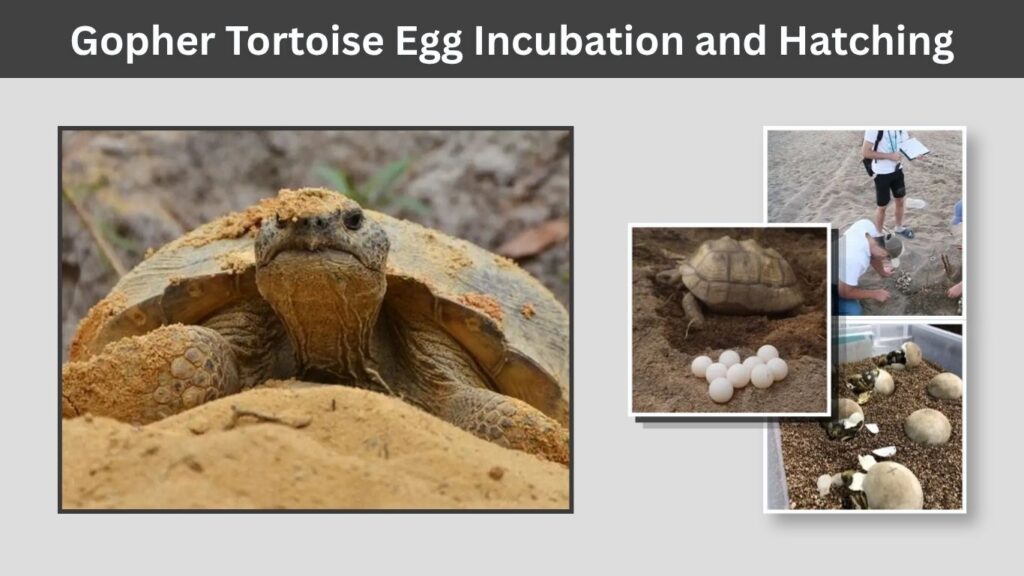
Incubation is the period between egg laying and hatching. During this time, temperature, moisture, sunlight, and nest location all affect development.
How Long Before Gopher Tortoise Eggs Hatch?
Gopher tortoise eggs usually take about 80–100 days to hatch, though FWC gives a wider range of 80–110 days. The Gopher Tortoise Council notes that incubation may be about 80–90 days in Florida and more than 100 days in Georgia and Alabama.
Because of this, eggs laid in late spring or early summer often hatch from late summer into fall. In Florida, hatchlings commonly emerge between August and November.
What Happens When Gopher Tortoise Eggs Hatch?
When the young tortoises hatch, they are small, soft-shelled, and vulnerable. Hatchlings are often yellow-orange and brown, with brighter markings than adults. Their shells darken as they age.
A hatchling may use an adult burrow or dig a small burrow of its own. Young gopher tortoises are especially vulnerable until their shell becomes harder, which can take several years.
Why Many Eggs Do Not Survive
Gopher tortoise eggs face many natural risks. Nest predators include raccoons, foxes, skunks, armadillos, and fire ants. The Gopher Tortoise Council notes that nest predation can be high, and a female may produce a successful nest only rarely.
Other threats include habitat loss, compacted soil, flooding, lawn work, construction, and off-road vehicles. Even well-meaning people can cause harm by digging near burrows or trying to move eggs.
What to Do If You Find Gopher Tortoise Eggs
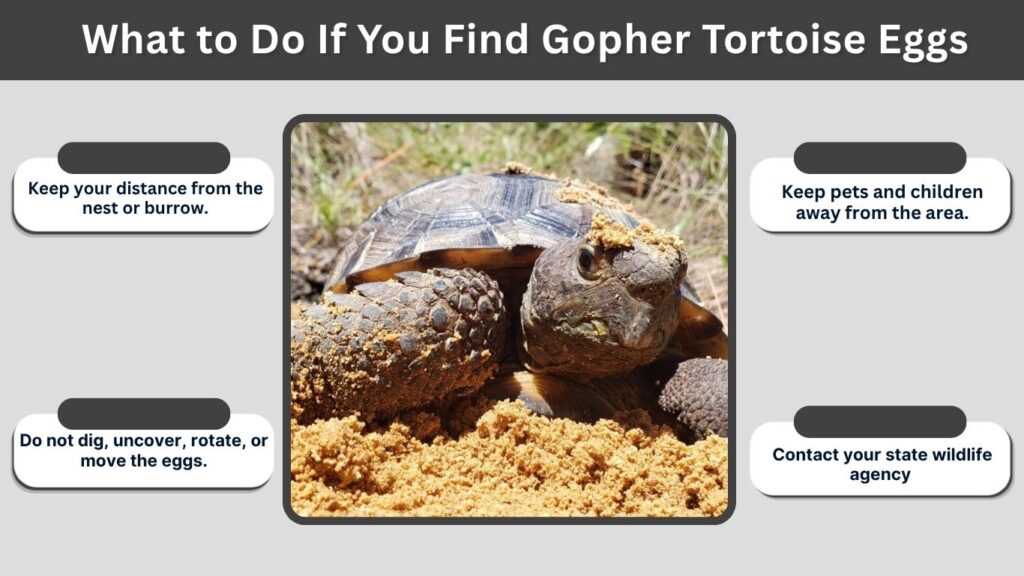
Finding possible gopher tortoise eggs can be exciting, but the safest response is to leave them alone. Gopher tortoises are protected, and disturbing eggs, burrows, or tortoises can harm the animals and may be illegal depending on your location.
Safe Actions to Take
If you think you have found gopher tortoise eggs:
- Keep your distance from the nest or burrow.
- Do not dig, uncover, rotate, or move the eggs.
- Keep pets and children away from the area.
- Avoid mowing, driving, or placing heavy objects near the burrow apron.
- Contact your state wildlife agency or a permitted wildlife professional if the nest is in danger.
In Florida, gopher tortoises are state-designated threatened, and FWC says handling or relocating them without a valid permit is illegal except for limited safety situations, such as moving a tortoise across a road in the same direction it was traveling.
What Not to Do Around a Nest
Do not try to incubate gopher tortoise eggs at home. Incubation requires proper temperature, humidity, orientation, and permits. Turning reptile eggs after development has begun can damage embryos. Also, taking eggs from the wild can remove protected wildlife from its habitat.
You should also avoid “protecting” a nest with homemade cages, buckets, boards, or barriers unless directed by a wildlife professional. A poorly placed cover can trap hatchlings, attract predators, change nest temperature, or block the adult tortoise from using its burrow.
Why Gopher Tortoise Eggs Matter
Each successful clutch helps support future gopher tortoise populations. This matters because the species grows slowly, matures late, and produces relatively few eggs. Females may take 10–21 years to reach maturity depending on local conditions, and adults can live for decades.
Gopher tortoises are also considered a keystone species because their burrows provide shelter for hundreds of other animals. FWC says more than 350 species use gopher tortoise burrows, including burrowing owls, Florida mice, indigo snakes, rabbits, gopher frogs, and many invertebrates.
Protecting eggs is not only about one tortoise nest. It helps protect an entire upland ecosystem that depends on sandy soil, native plants, open sunlight, and healthy burrow systems.
FAQs
When Do Gopher Tortoise Eggs Hatch?
Gopher tortoise eggs usually hatch about 80–100 days after they are laid, though incubation can last up to around 110 days depending on weather and location. In Florida, many hatchlings emerge from August through November.
When Do Gopher Tortoises Lay Eggs?
In Florida, gopher tortoises usually lay eggs from May through July. In many areas, nesting is most common in May and June, but timing can vary with climate and region.
How Many Eggs Does a Gopher Tortoise Lay?
A female commonly lays one clutch per year. In Florida, the clutch is often 5–9 eggs, while broader reports list 3–15 eggs. Larger mature females may produce larger clutches than younger or smaller females.
Do Armadillos Eat Gopher Tortoise Eggs?
Yes, armadillos are known nest predators of gopher tortoise eggs. Other predators include raccoons, foxes, skunks, and fire ants.
Can I Move Gopher Tortoise Eggs to Protect Them?
No, you should not move gopher tortoise eggs yourself. Gopher tortoises are protected, and moving eggs can harm the developing embryos. If a nest is at risk from construction, pets, flooding, or lawn work, contact your state wildlife agency or a permitted gopher tortoise professional.