
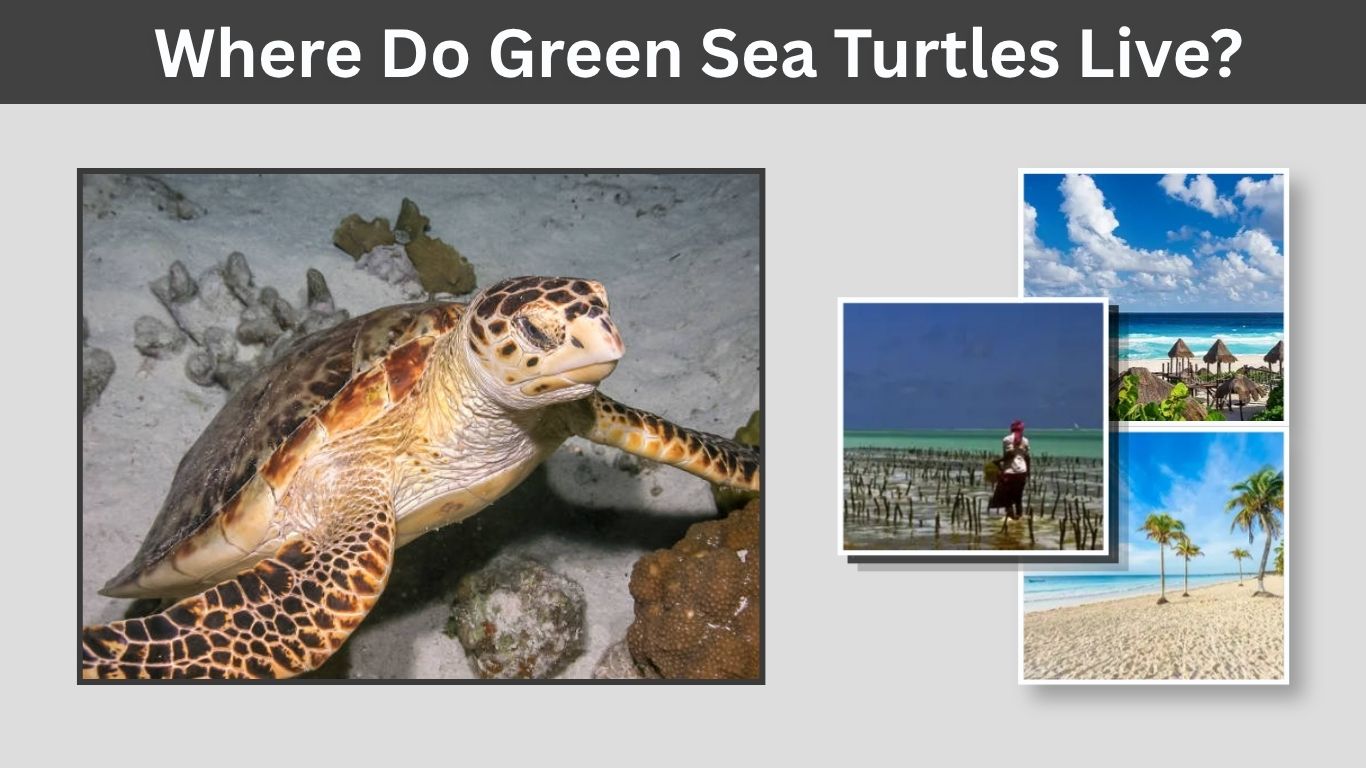
Green sea turtles live in warm tropical and subtropical oceans around the world. They are found near coastlines, islands, coral reefs, lagoons, bays, and seagrass beds. Young turtles often drift in open ocean habitats, while adults spend more time in shallow coastal feeding areas. Their habitat changes with age, food needs, migration routes, and nesting behavior.
Green Sea Turtle Habitat
Green sea turtle habitat includes several ocean and coastal environments. They do not live in one single place throughout life. Instead, they move between nesting beaches, open ocean areas, shallow feeding grounds, coral reefs, and seagrass beds.
Green turtles are highly adapted for marine life, but they still depend on land for reproduction. Females must come ashore to lay eggs on sandy beaches. After hatching, young turtles move into the ocean and begin a long life of feeding, growing, and migrating.
NOAA describes green turtles as living in tropical and subtropical waters worldwide, with adults commonly feeding on seagrasses and algae.
Main Places Green Sea Turtles Live
Green sea turtles are usually found in warm marine habitats, especially where there is enough food and safe resting space.
- Tropical and subtropical oceans
- Shallow coastal waters
- Coral reefs
- Seagrass beds
- Lagoons and bays
- Island coastlines
- Sandy nesting beaches
- Open ocean areas during early life
These habitats help green turtles feed, rest, hide from predators, migrate, and reproduce.
Where Are Green Sea Turtles Found?
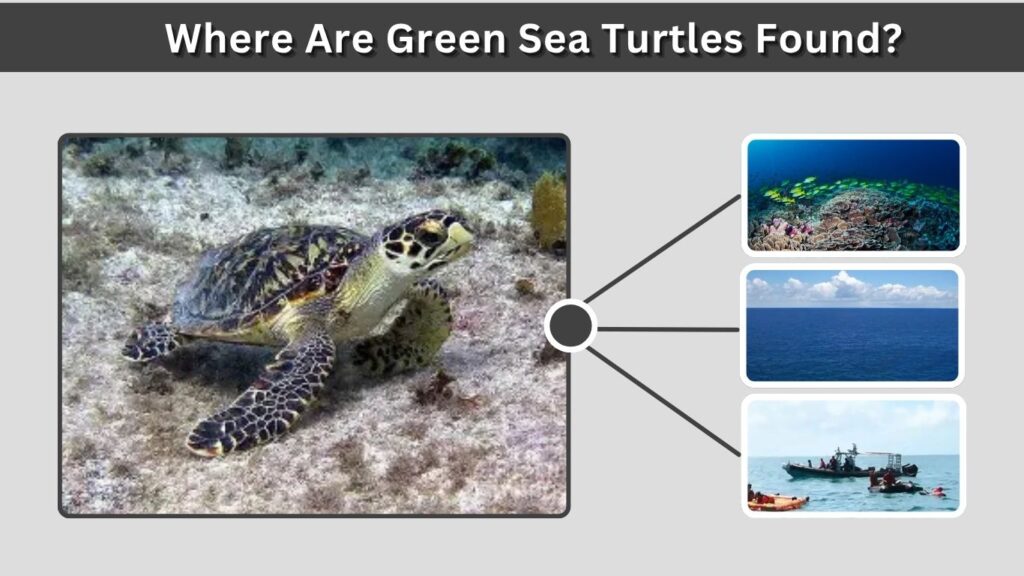
Green sea turtles are found across the Atlantic, Pacific, and Indian Oceans. They live mainly in tropical and subtropical waters, although some may travel into warmer temperate areas. WWF notes that green turtles are found mainly in tropical and subtropical waters.
They are wide-ranging animals, meaning they may travel long distances between feeding areas and nesting beaches. A turtle that feeds in one country may nest in another country hundreds or even thousands of miles away.
| Region | Common Green Sea Turtle Habitat | Examples |
|---|---|---|
| Atlantic Ocean | Reefs, seagrass beds, beaches | Florida, Caribbean, Brazil, West Africa |
| Pacific Ocean | Islands, reefs, lagoons, coastal waters | Hawaii, Galápagos, Australia, Mexico |
| Indian Ocean | Tropical coasts, islands, seagrass beds | Maldives, Seychelles, East Africa |
| Caribbean Sea | Seagrass beds, reefs, nesting beaches | Costa Rica, Puerto Rico, Bahamas |
Global Distribution
Green sea turtles have one of the widest ranges among sea turtles. They can be found near many island and coastal systems around the world. Their distribution is strongly connected to warm water, nesting beaches, and healthy feeding areas.
Important green turtle regions include:
- Florida and the southeastern United States
- The Caribbean
- Mexico and Central America
- Brazil and parts of South America
- Hawaii and other Pacific islands
- The Galápagos Islands
- Australia and the Great Barrier Reef
- East Africa and the Indian Ocean islands
- Southeast Asia and parts of the western Pacific
Even though they are widespread, green turtle numbers vary greatly by region. Some populations are recovering, while others still face serious threats.
Do Green Sea Turtles Live in the Open Ocean?
Yes, green sea turtles can live in the open ocean, especially when they are young. After hatchlings leave the beach, they often spend their early years in pelagic habitats, which means open ocean areas away from shore.
During this stage, young turtles may drift with currents and floating seaweed. These open ocean areas provide small food items and some cover from predators. As they grow larger, many green turtles move into coastal waters where seagrass and algae are more available.
Life Stage Habitat
Green sea turtle habitat changes as the turtle grows.
- Eggs: Buried in sandy beach nests
- Hatchlings: Crawl from nest to ocean
- Young juveniles: Drift in open ocean habitats
- Older juveniles: Move toward coastal feeding areas
- Adults: Live mostly in shallow seagrass beds, reefs, bays, and lagoons
- Nesting females: Return to sandy beaches to lay eggs
This life-stage habitat shift helps green turtles use different food sources and avoid some predators as they grow.
Coastal Waters and Seagrass Beds
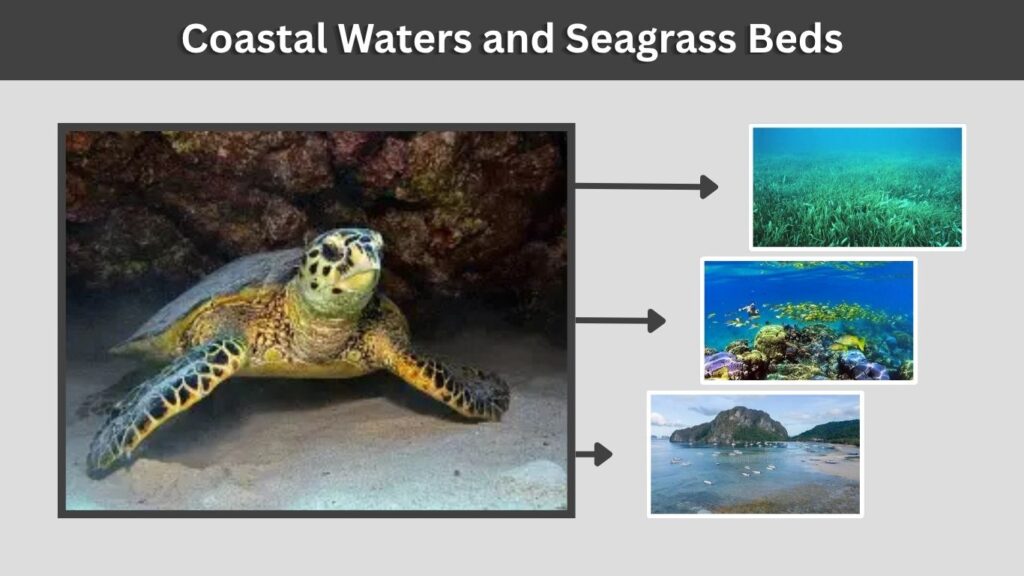
Adult green sea turtles spend much of their time in shallow coastal waters. These areas often contain seagrass beds, algae-covered rocks, reefs, and calm lagoons. Seagrass is especially important because adult green turtles are mostly herbivores.
Green turtles help keep seagrass beds healthy by grazing on older blades. This encourages fresh growth and supports many other marine animals. WWF Australia highlights the importance of coastal seagrass beds where green turtles live and feed, especially around the Great Barrier Reef.
Why Seagrass Beds Matter
Seagrass beds are one of the most important habitats for adult green sea turtles.
They provide:
- Food for adult turtles
- Shelter for young marine animals
- Feeding areas close to reefs and lagoons
- Resting areas in shallow water
- Important habitat for fish, crabs, shrimp, and rays
When seagrass beds are damaged by pollution, boat anchors, storms, or coastal development, green turtles lose a major food source.
Coral Reefs, Lagoons, and Bays
Green sea turtles also live around coral reefs, lagoons, and sheltered bays. These habitats offer food, resting places, and protection from rough ocean conditions. Turtles may rest under reef ledges or near rocky areas between feeding trips.
Lagoons and bays are especially useful because they are often calmer than open ocean waters. They may contain seagrass, algae, and other food sources. In many tropical islands, green turtles use reefs and lagoons as regular feeding and resting zones.
Reef and Lagoon Benefits
Coral reefs, lagoons, and bays help green sea turtles by offering:
- Calm water for resting
- Algae growing on rocks and reef surfaces
- Shelter from strong waves
- Nearby seagrass beds
- Cleaning stations where fish remove algae or parasites
- Protection for juveniles in some areas
These habitats are common in places such as Hawaii, Australia, the Caribbean, and the Indian Ocean islands.
Where Do Green Sea Turtles Nest?
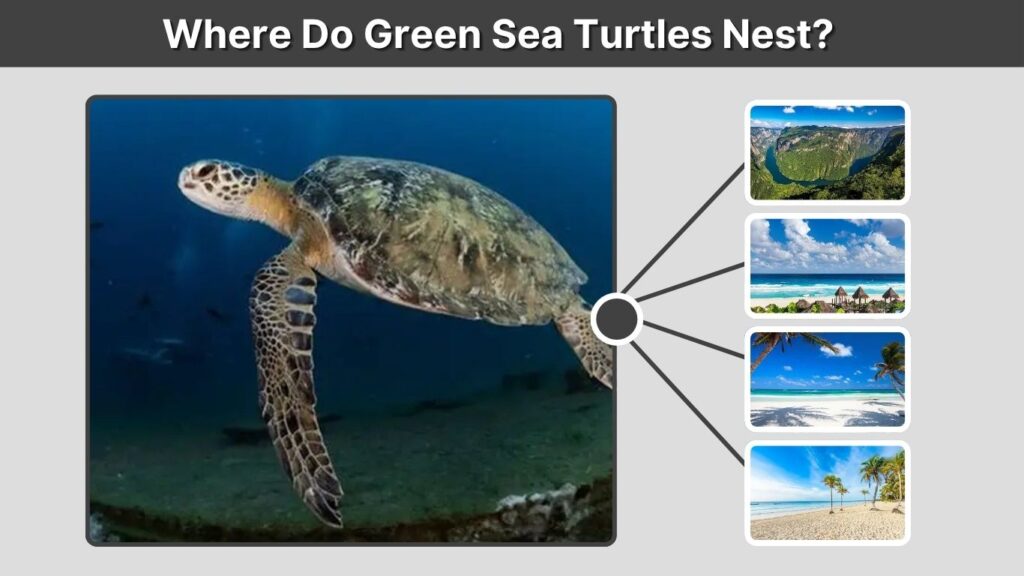
Green sea turtles nest on sandy beaches in tropical and subtropical regions. Females come ashore, usually at night, to dig nests and lay eggs. After covering the nest with sand, the female returns to the ocean and does not care for the eggs.
Nesting beaches are a critical part of green turtle habitat. Without safe nesting beaches, females cannot successfully produce hatchlings. NOAA and the U.S. Fish and Wildlife Service share sea turtle protection responsibilities, with nesting beaches handled by the Fish and Wildlife Service and marine areas by NOAA Fisheries in the United States.
Important Nesting Areas
Green sea turtles nest in many parts of the world, including:
- Florida
- Costa Rica
- Mexico
- Hawaii
- Galápagos Islands
- Australia
- Caribbean islands
- Seychelles
- Oman
- Indonesia
- Malaysia
- East African coasts
Some beaches support thousands of nests in strong nesting years, while others may only receive a few nests.
Green Sea Turtles in Florida
Green sea turtles live in Florida’s coastal waters and nest on many Florida beaches. They are especially associated with the Atlantic coast, where warm waters, seagrass beds, and sandy beaches provide suitable habitat.
Florida is one of the most important green turtle nesting areas in the United States. Green turtles feed in seagrass habitats, coastal bays, reefs, and nearshore waters. Nesting females come ashore during nesting season to lay eggs in sandy nests.
Florida Habitats
In Florida, green sea turtles may use:
- Atlantic beaches for nesting
- Seagrass beds for feeding
- Nearshore reefs for resting
- Coastal bays and lagoons
- Warm shallow waters
- Protected marine areas
Florida’s nesting beaches are closely monitored because they are important for long-term population recovery.
Green Sea Turtles in Hawaii
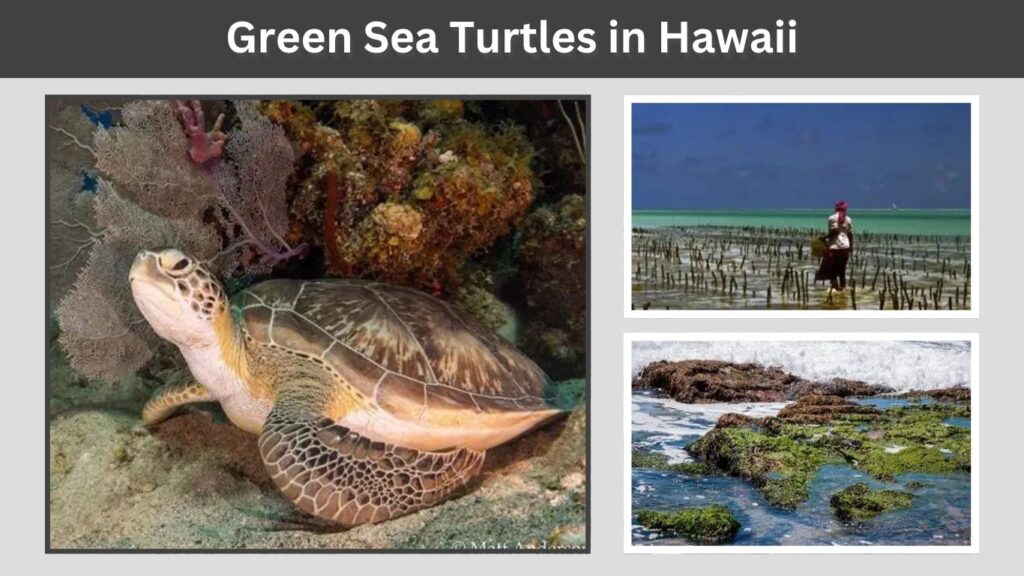
Green sea turtles also live around the Hawaiian Islands. In Hawaii, they are often called honu and are culturally important. Hawaiian green turtles use coastal waters, coral reefs, and sandy beaches.
One special behavior seen in Hawaii is basking. Green turtles may rest on beaches during the day, which is less common in many other parts of the world. They also feed in nearshore areas where algae and seagrass are available.
Hawaiian Green Sea Turtle Habitat
Hawaiian green turtles commonly live around:
- Coral reefs
- Rocky shorelines
- Sandy beaches
- Coastal feeding areas
- Algae-rich waters
- Resting beaches
- Offshore islands
People should always keep a respectful distance from green turtles in Hawaii because they are protected wildlife.
Green Sea Turtles in Australia and the Great Barrier Reef
Australia is one of the most important regions for green sea turtles. The Great Barrier Reef provides feeding, resting, and nesting habitats. Green turtles use coral reefs, seagrass meadows, islands, and sandy beaches across northern and eastern Australia.
The Great Barrier Reef region is important because it contains both feeding areas and nesting sites. Many green turtles rely on seagrass meadows there for food. Pollution and climate change can damage these habitats, making conservation especially important.
Australian Habitat Features
Green sea turtles in Australia may live in:
- Seagrass meadows
- Coral reef systems
- Island lagoons
- Sandy nesting beaches
- Shallow coastal waters
- Marine protected areas
Healthy reef and seagrass habitats are essential for the survival of green turtles in this region.
Why Green Sea Turtles Choose Warm Waters
Green sea turtles live mostly in warm waters because they are reptiles. Their body temperature is influenced by the environment. Cold water can slow their movement, reduce feeding ability, and create health problems.
They are most common in tropical and subtropical waters where food is available year-round. Warm beaches are also necessary for egg incubation. Sand temperature affects embryo development and can even influence the sex of hatchlings.
Warm-Water Needs
Warm habitats support green sea turtles by providing:
- Suitable body temperature
- Good feeding conditions
- Healthy seagrass growth
- Proper egg incubation on beaches
- Safe migration routes
- Productive coastal ecosystems
This is why green sea turtles are strongly linked to warm ocean regions.
Threats to Green Sea Turtle Habitat
Green sea turtles depend on healthy oceans and beaches, but many habitats are under pressure. Coastal development can destroy nesting beaches. Pollution can damage seagrass beds. Artificial lights can confuse hatchlings. Fishing gear can injure or kill turtles in feeding and migration areas.
Climate change is also a major threat. Rising seas can flood nesting beaches, while warmer sand can affect hatchling development. Strong storms may wash away nests, and ocean changes can damage seagrass and reef habitats.
Major Habitat Threats
Green sea turtle habitats are threatened by:
- Beach development
- Artificial lighting near nesting beaches
- Plastic pollution
- Fishing gear and bycatch
- Boat strikes
- Seagrass loss
- Coral reef damage
- Climate change
- Sea level rise
- Beach erosion
- Water pollution
Protecting both ocean feeding areas and sandy nesting beaches is necessary for long-term green turtle survival.
FAQs
Where do green sea turtles live?
Green sea turtles live in tropical and subtropical oceans around the world. They are found in coastal waters, coral reefs, seagrass beds, lagoons, bays, islands, and sandy nesting beaches. Young turtles may spend their early years drifting in open ocean habitats before moving closer to shore.
Do green sea turtles live in coral reefs?
Yes, green sea turtles often live around coral reefs, especially in tropical regions. Reefs provide resting areas, shelter, and algae-covered surfaces for feeding. Many green turtles also use nearby seagrass beds and lagoons connected to reef systems.
Do green sea turtles live in the open ocean?
Yes, young green sea turtles often live in the open ocean after leaving the nest. They may drift with ocean currents and floating seaweed. As they grow, they usually move into coastal feeding areas such as seagrass beds, reefs, bays, and lagoons.
Where do green sea turtles live in the United States?
In the United States, green sea turtles live mainly in warm coastal waters around Florida, Hawaii, Puerto Rico, the U.S. Virgin Islands, Guam, and other Pacific island territories. Florida and Hawaii are especially important for green turtle feeding, nesting, and conservation.
Why do green sea turtles live near seagrass beds?
Adult green sea turtles live near seagrass beds because seagrass is one of their main foods. These areas also provide habitat for many marine animals. By grazing, green turtles help keep seagrass beds healthy and encourage fresh plant growth.