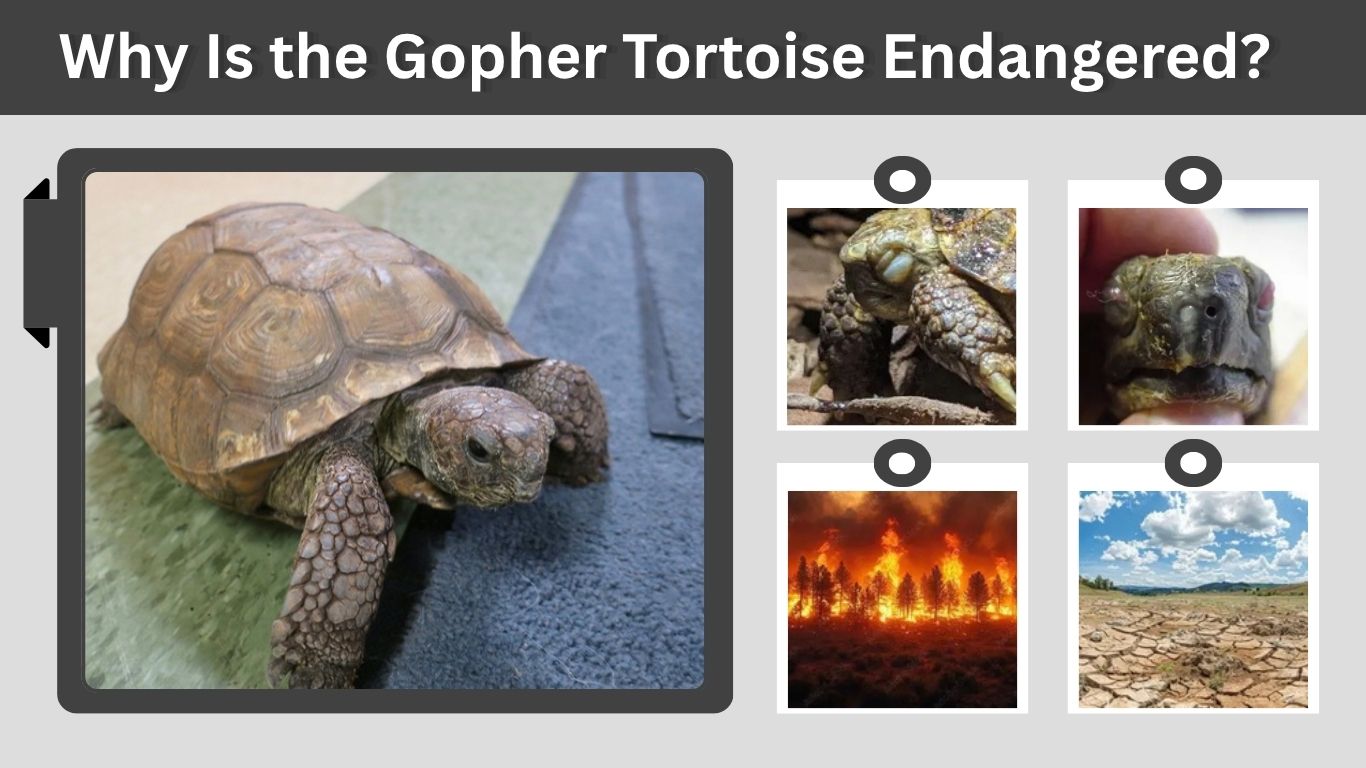
The gopher tortoise is one of the most important reptiles in the southeastern United States, but its future is under pressure. Although it is not federally listed as endangered across its entire range, the western population is federally listed as threatened, and the species has state-level protection in every state where it occurs. Its decline is mainly caused by habitat loss, road deaths, poor land management, disease, and slow reproduction.
Is the Gopher Tortoise Really Endangered?
The word “endangered” is often used generally to describe animals at risk, but the legal status of the gopher tortoise depends on location.
The U.S. Fish and Wildlife Service recognizes two distinct population segments: the eastern population and the western population. In 2022, the agency found that the eastern population did not need federal listing under the Endangered Species Act at that time. However, the western population, found west of the Mobile and Tombigbee Rivers in parts of Alabama, Mississippi, and Louisiana, remains federally listed as threatened.
At the state level, the gopher tortoise is still protected across its range. It is state-listed as threatened in Florida, Georgia, Louisiana, and Mississippi, state-listed as endangered in South Carolina, and protected as a non-game species in Alabama.
| Area | Conservation Status |
|---|---|
| Western population | Federally threatened |
| Eastern population | Not federally listed at this time |
| Florida | State-designated threatened |
| South Carolina | State-listed endangered |
| Alabama | Protected as non-game species |
Habitat Loss Is the Biggest Reason
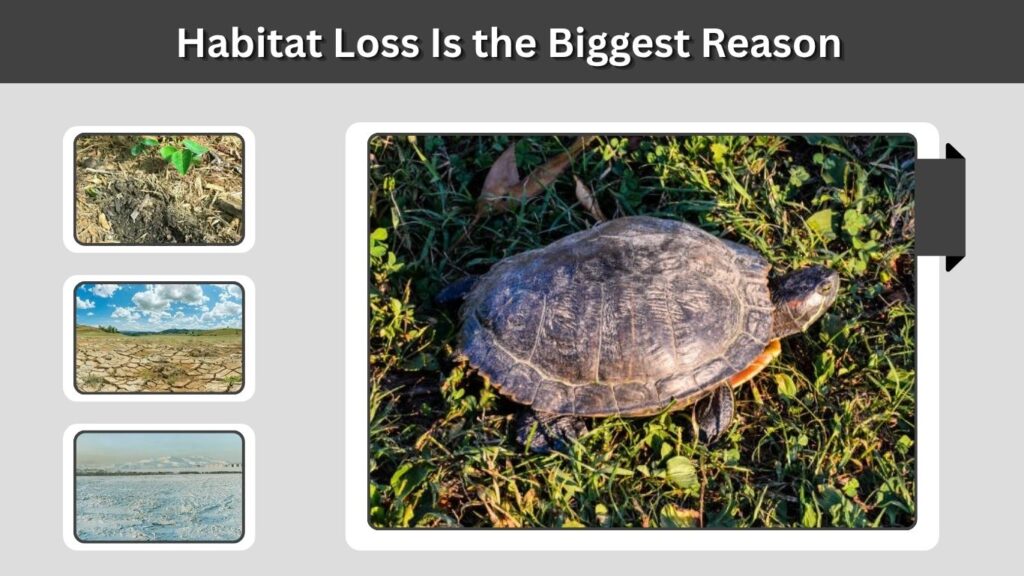
The main reason gopher tortoises are declining is habitat loss. These tortoises live in dry, open habitats with sandy soil, such as longleaf pine sandhills, scrub, pine flatwoods, dry prairies, and coastal dunes. They need loose soil to dig burrows, sunny openings for nesting and basking, and low-growing plants for food.
Unfortunately, these same high, dry areas are also attractive for human development. As cities expand, land is cleared for houses, roads, shopping centers, farms, and other projects. When this happens, tortoise burrows may be destroyed, feeding areas disappear, and tortoises are forced into smaller patches of habitat.
Development Destroys Burrows
Gopher tortoises spend much of their lives in underground burrows. These burrows protect them from heat, cold, fire, drought, and predators. When land is cleared without proper surveys and permits, burrows can collapse, trapping or killing tortoises inside.
In Florida, gopher tortoises and their burrows are protected by law. They must be relocated before land clearing or development begins, and property owners need permits before moving them.
Fragmentation Separates Populations
Habitat loss does not always remove all habitat at once. Sometimes it breaks large natural areas into small, isolated patches. This is called fragmentation.
Fragmentation is dangerous because tortoises may be unable to find mates, nesting areas, or enough food. Small, isolated populations are also more vulnerable to disease, storms, drought, and local extinction. The U.S. Fish and Wildlife Service notes that western gopher tortoise populations are often small and isolated, making them less resilient.
Fire Suppression Makes Habitat Unhealthy
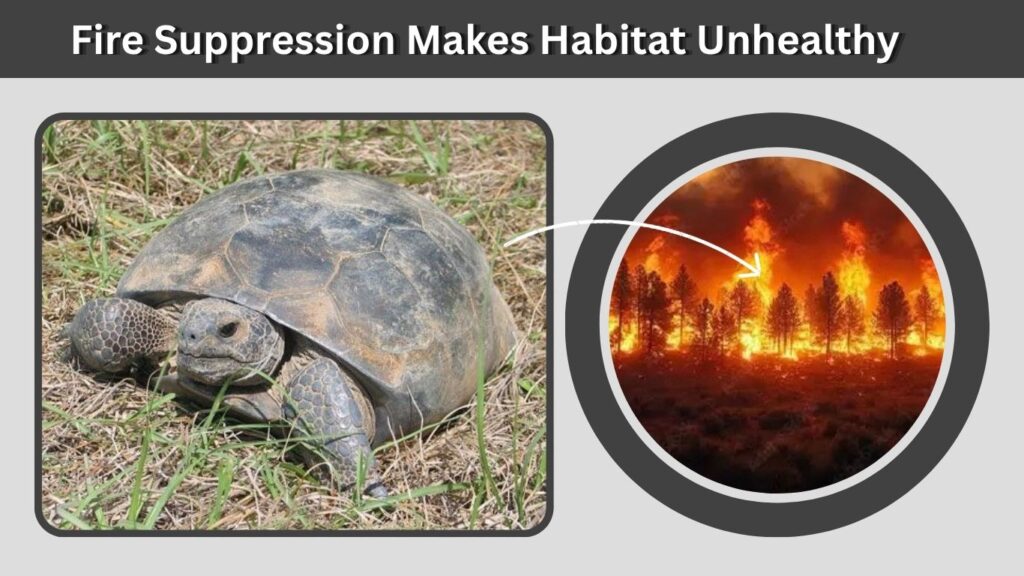
Gopher tortoises need open, sunny habitats with plenty of low-growing plants. Historically, natural fires helped maintain these habitats by reducing thick shrubs and tree cover. Fire also encouraged the growth of grasses, wildflowers, and other plants that tortoises eat.
When people suppress fire for long periods, the habitat changes. Trees and shrubs grow too thick, sunlight no longer reaches the ground, and food plants decline. Even if the land is not developed, it can become unsuitable for tortoises.
Prescribed fire is now an important management tool. Wildlife managers use controlled burns to restore open habitat, improve food availability, and create better nesting and basking areas. However, drought, high temperatures, urban growth, and safety concerns can make prescribed burning more difficult.
Road Mortality Is a Serious Threat
Roads are another major reason gopher tortoises are at risk. As development spreads through tortoise habitat, roads cut through the landscapes they use. Tortoises may cross roads while searching for food, mates, nesting sites, or new burrow locations.
Because gopher tortoises move slowly, they are easily hit by vehicles. Female tortoises can be especially vulnerable when looking for suitable nesting sites. Losing adult females is a serious problem because the species reproduces slowly.
Roads also increase habitat fragmentation. Even when a tortoise survives, a road can separate it from other tortoises and reduce gene flow between populations.
Slow Reproduction Makes Recovery Difficult
Gopher tortoises do not recover quickly from population losses. They are long-lived animals, but they mature slowly. In Florida, males usually reach adulthood around 9 to 12 years old, while females may take 10 to 21 years to mature. Females usually lay only one clutch of 5 to 9 eggs per year.
This slow life cycle means every adult tortoise is important. If many adults are killed by cars, development, disease, or illegal collection, it can take decades for a population to rebuild.
Eggs and Hatchlings Face Many Dangers
Even after eggs are laid, survival is not guaranteed. Eggs and young tortoises are vulnerable to predators such as raccoons, foxes, armadillos, snakes, and birds. Hatchlings are small, soft-shelled, and exposed to many dangers during their first months of life.
Because gopher tortoises produce relatively few eggs and young tortoises have low survival rates, adult survival is critical. Protecting mature tortoises is one of the most important parts of conservation.
Disease Can Weaken Populations
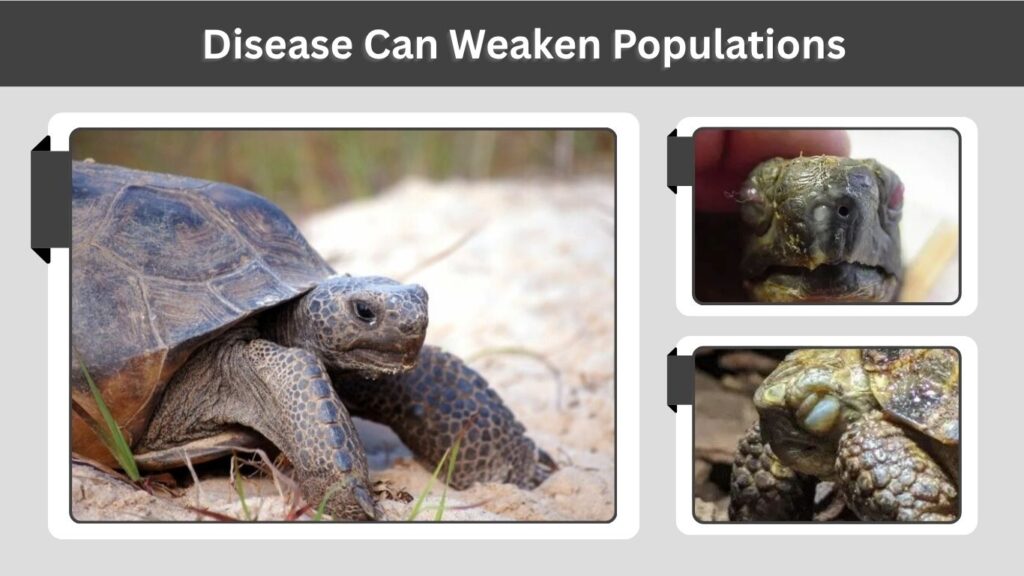
Disease is another concern for gopher tortoises. Upper respiratory tract disease, often called URTD, has been linked to declines in some populations. It can cause symptoms such as nasal discharge, swollen eyes, weakness, and reduced activity.
Disease becomes more serious when populations are already stressed by habitat loss, poor nutrition, crowding, or relocation. Small populations may have a harder time recovering after disease outbreaks.
Wildlife agencies often warn people not to move tortoises from one place to another without authorization. Moving tortoises can spread disease, separate them from their home burrows, and create legal problems.
Relocation Helps, But It Is Not a Perfect Solution
When development threatens gopher tortoise habitat, tortoises may be moved to approved recipient sites. This can save individual tortoises from being killed during construction. However, relocation is not the same as protecting natural habitat.
Relocated tortoises must adjust to new areas, compete for burrows and food, and survive the stress of being moved. Recipient sites also need enough space, proper soils, good vegetation, and long-term management.
Relocation is often necessary when development is already approved, but it should not replace habitat protection. The best conservation strategy is to preserve and restore large, connected areas of suitable habitat before they are destroyed.
Why Gopher Tortoises Matter to Other Wildlife
The gopher tortoise is a keystone species. This means it has an unusually important role in its ecosystem. Its burrows provide shelter for more than 350 other species, including insects, frogs, snakes, small mammals, and other reptiles.
These burrows offer stable temperatures and protection from fire, drought, heat, cold, and predators. Some animals depend heavily on tortoise burrows for survival. When gopher tortoise populations decline, many other species may also suffer.
This is why protecting the gopher tortoise is not only about saving one reptile. It is also about protecting an entire community of animals that share its habitat.
What Can Help Save the Gopher Tortoise?
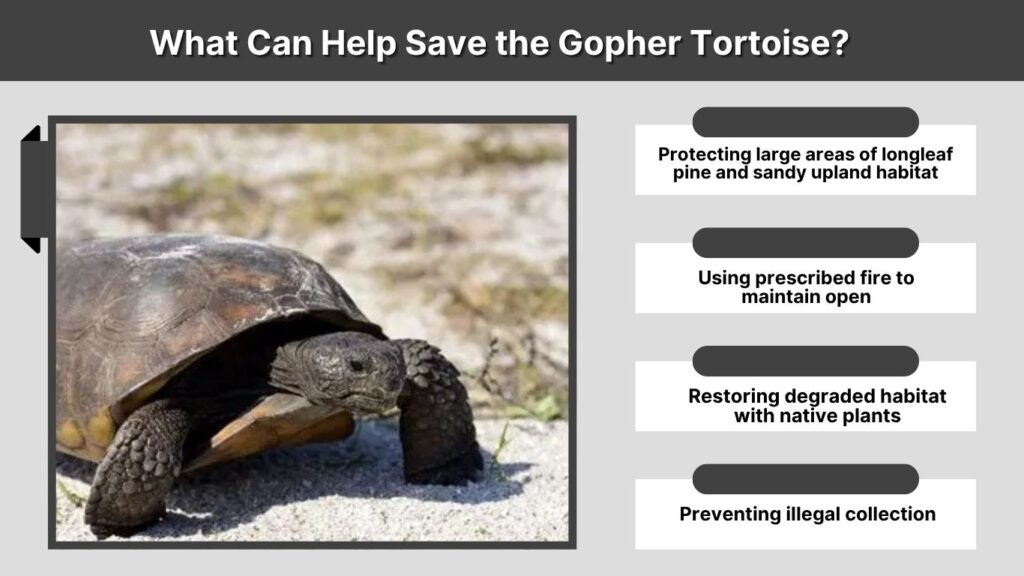
Protecting gopher tortoises requires a mix of habitat protection, smart development planning, public education, and long-term land management.
Important conservation actions include:
- Protecting large areas of longleaf pine and sandy upland habitat
- Using prescribed fire to maintain open, sunny conditions
- Creating wildlife crossings or reducing road risks in key areas
- Requiring surveys and permits before construction
- Restoring degraded habitat with native plants
- Preventing illegal collection, harassment, or killing
- Reporting sick, injured, or displaced tortoises to wildlife authorities
- Teaching landowners how to manage tortoise habitat safely
In Florida, it is illegal to kill, harass, capture, possess, transport, or destroy gopher tortoises, their eggs, or their burrows without proper authorization.
FAQs
Why is the gopher tortoise endangered?
The gopher tortoise is at risk mainly because of habitat loss, habitat fragmentation, road mortality, fire suppression, disease, and slow reproduction. Development is one of the biggest threats because it destroys the dry, sandy habitats tortoises need.
Is the gopher tortoise federally endangered?
No, the gopher tortoise is not federally listed as endangered across its whole range. The western population is federally listed as threatened, while the eastern population is not federally listed at this time.
Why are gopher tortoise burrows important?
Gopher tortoise burrows protect tortoises from heat, cold, predators, fire, and drought. They also provide shelter for more than 350 other species, making the gopher tortoise a keystone species.
Can you move a gopher tortoise?
In most cases, you should not move a gopher tortoise. In Florida, handling or relocating one without a permit can be illegal. If a tortoise is crossing a road, you may help it cross in the same direction only if it is safe, but you should not take it to another location.
What happens if gopher tortoises disappear?
If gopher tortoises disappear, many other animals that use their burrows could lose important shelter. Their decline would also signal the loss of healthy longleaf pine and sandy upland ecosystems across the southeastern United States.