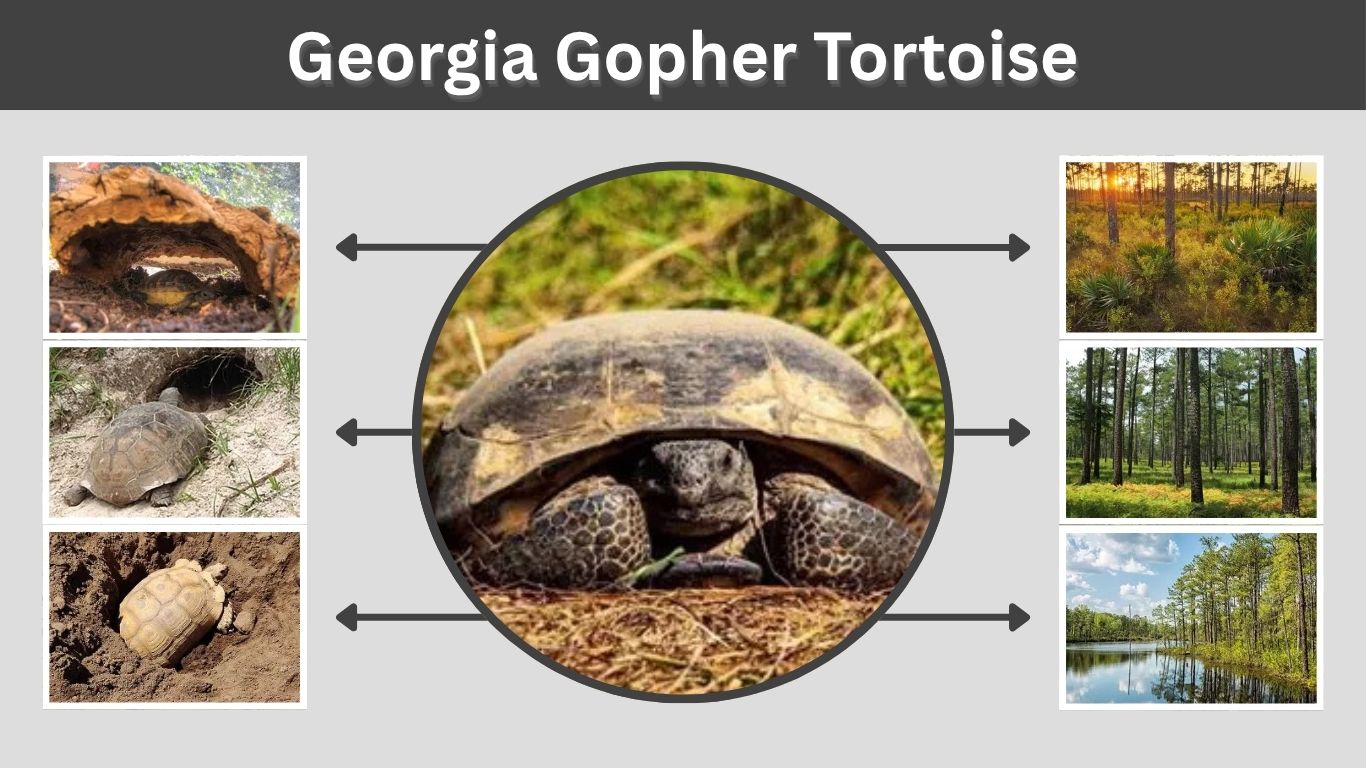
The Georgia gopher tortoise is one of the most important reptiles in the state’s sandy upland ecosystems. It is Georgia’s official state reptile and a protected species under state law. Although the Georgia population is not federally listed as endangered, it is still considered a conservation priority because of habitat loss, development, road mortality, and declining longleaf pine habitat. The gopher tortoise also matters because its burrows shelter hundreds of other animals.
What Is the Gopher Tortoise in Georgia?
The gopher tortoise is a land-dwelling tortoise found across parts of the southeastern United States. In Georgia, it lives mainly in the southern part of the state where sandy soils, open pine woods, scrubby areas, and sunny groundcover provide the right conditions for burrowing and feeding.
Many people call it a “gopher turtle,” but the correct name is gopher tortoise. Unlike aquatic turtles, gopher tortoises are not built for swimming. They have strong digging legs, thick claws, and a heavy domed shell. Their bodies are designed for life on dry land.
Gopher tortoises are herbivores. They eat grasses, legumes, fruits, wildflowers, and other low-growing plants. They spend much of their time near burrows, which they dig into sandy soil. These burrows protect them from heat, cold, drought, predators, and fire.
Georgia Gopher Tortoise Status
In Georgia, the gopher tortoise is state-listed as threatened. It is also protected throughout its range by state laws, even though only the western population in Louisiana, Mississippi, and western Alabama is federally listed as threatened. The eastern population, which includes Georgia, was reviewed by the U.S. Fish and Wildlife Service in 2022 and was not listed under the federal Endangered Species Act at that time.
| Question | Answer |
|---|---|
| Is the gopher tortoise protected in Georgia? | Yes |
| Is it state-listed in Georgia? | Yes, threatened |
| Is it federally endangered in Georgia? | No |
| Is it Georgia’s state reptile? | Yes |
| Main threat | Habitat loss and fragmentation |
The species remains a priority because tortoises need large areas of connected habitat. Even when a population is stable in one area, development and habitat fragmentation can isolate groups of tortoises and make long-term survival harder.
Are Gopher Tortoises Protected in Georgia?
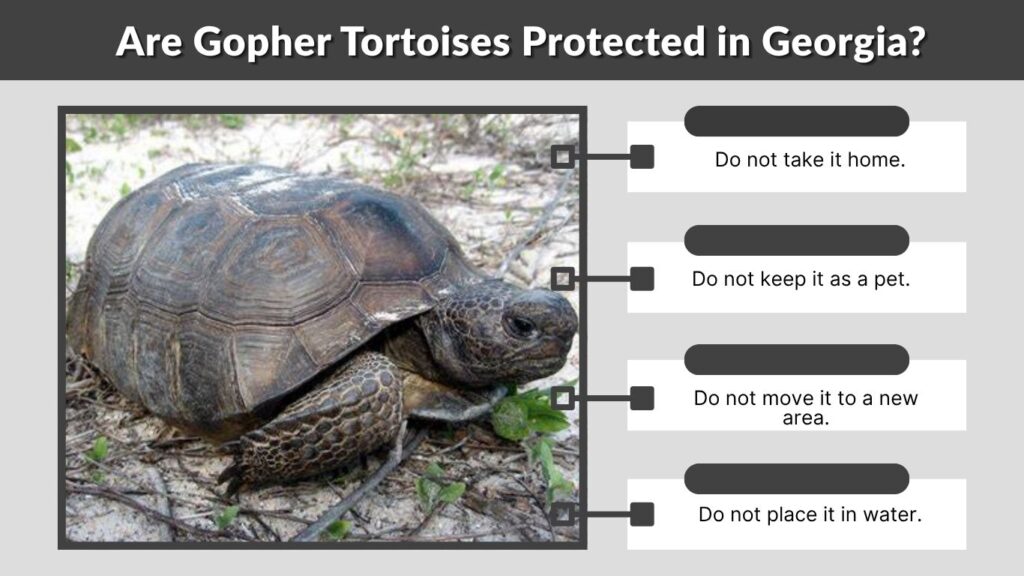
Yes. Gopher tortoises are protected by Georgia law. The Gopher Tortoise Council explains that Georgia law prohibits keeping most native wildlife species as pets, including gopher tortoises. It also generally prohibits possessing parts of protected non-game wildlife, such as tortoise shells.
This means you should not collect, keep, sell, harm, or move a gopher tortoise without proper authorization. You also should not disturb its burrow. If you find one on your property, near a construction site, or crossing a road, the safest choice is to contact Georgia DNR or follow official wildlife guidance.
What to Do If You See One
If you see a gopher tortoise in Georgia:
- Do not take it home.
- Do not keep it as a pet.
- Do not move it to a new area.
- Do not block or damage its burrow.
- Do not place it in water.
- If it is crossing a road, help it cross only in the same direction if it is safe.
- Report concerns to Georgia wildlife officials if the tortoise appears injured or threatened.
A common mistake is moving a tortoise far away because someone thinks they are “saving” it. This can harm the animal because gopher tortoises have home ranges and may try to return, exposing them to roads, predators, or unsuitable habitat.
Georgia Gopher Tortoise Habitat
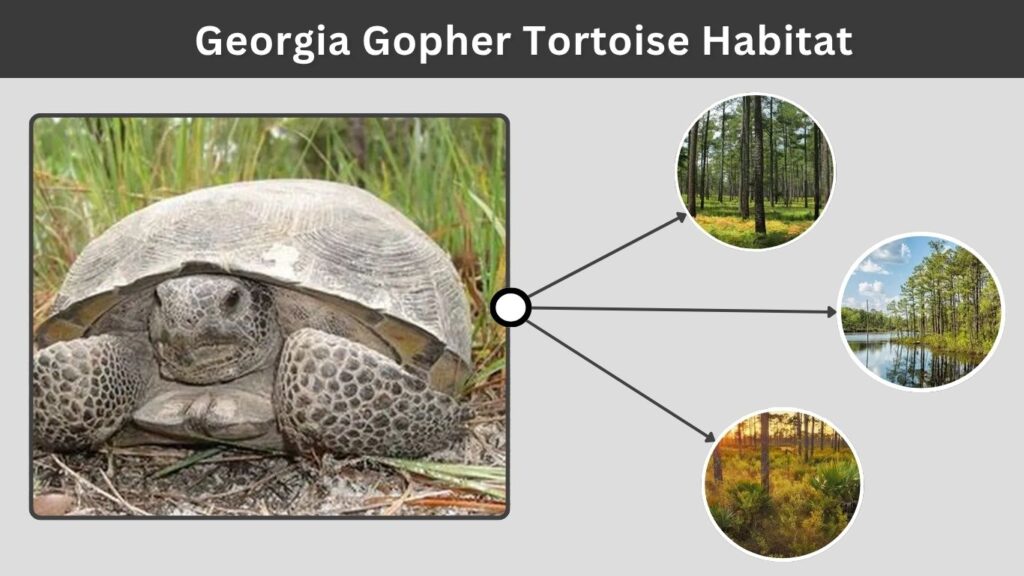
Gopher tortoises in Georgia need dry, sandy, well-drained soils. Their ideal habitat includes open pine forests, especially longleaf pine ecosystems, with plenty of sunlight reaching the ground. This sunlight supports grasses, wildflowers, and other low-growing plants that tortoises eat.
The Georgia Biodiversity Portal recommends protecting remaining natural longleaf pine forests and using periodic controlled burns to reduce hardwood growth and promote grasses and forbs.
Common Habitat Types
Gopher tortoises in Georgia may live in:
- Longleaf pine forests
- Sandhills
- Pine flatwoods
- Dry open woodlands
- Scrub and sandy uplands
- Powerline rights-of-way with suitable soil
- Pastures and open areas near natural habitat
The key features are sandy soil for burrowing, open sunny ground, and enough native plants for food. Dense, shaded forests are usually poor habitat because they lack the low-growing vegetation tortoises need.
Georgia Gopher Tortoise Range
In Georgia, gopher tortoises are mostly found in the Coastal Plain, especially in the southern half of the state. This region has the sandy soils and open pine habitats that support burrowing tortoises.
They are not evenly distributed everywhere in Georgia. Some counties have stronger populations, while others have only scattered or isolated groups. Habitat quality matters more than county lines. A large open longleaf pine site with sandy soil may support tortoises, while a nearby shaded or heavily developed area may not.
Why Southern Georgia Is Important
Southern Georgia is important because it still contains some of the best remaining habitat for the eastern gopher tortoise population. Conservation groups and state agencies have worked to protect viable tortoise populations before further development makes recovery more difficult.
Georgia Gopher Tortoise Conservation Initiative
The Georgia Gopher Tortoise Conservation Initiative is a major partnership focused on protecting gopher tortoise habitat and preventing the need for federal listing in Georgia. In September 2025, Georgia DNR announced that the initiative had reached its goal of permanently protecting 65 viable tortoise populations. The 65th site was a conservation easement protecting more than 250 tortoises and 1,210 acres of pineland habitat near Cordele.
This is important because protecting viable populations means protecting not just individual tortoises, but the landscapes they need to survive. It also benefits many other animals that depend on the same ecosystem.
Why Conservation Easements Matter
Conservation easements allow land to remain privately owned while limiting development that would destroy important habitat. This is useful in Georgia because many good gopher tortoise habitats are on private land.
The initiative uses a mix of land purchases, easements, public-private partnerships, and habitat management. The Georgia Conservancy notes that the broader effort has aimed to protect more than 100,000 acres of habitat for tortoises and other species.
Why the Gopher Tortoise Matters
The gopher tortoise is a keystone species. This means it has a major impact on the ecosystem around it. Its burrows are used by more than 300 animal species, including insects, frogs, snakes, lizards, small mammals, and other invertebrates.
Some species use the burrows to escape heat. Others use them during wildfires or cold weather. The eastern indigo snake, a federally threatened species, may use gopher tortoise burrows as winter shelter.
When gopher tortoises disappear, many other animals lose shelter. That is why conserving this tortoise helps protect an entire wildlife community.
Georgia Gopher Tortoise Burrows
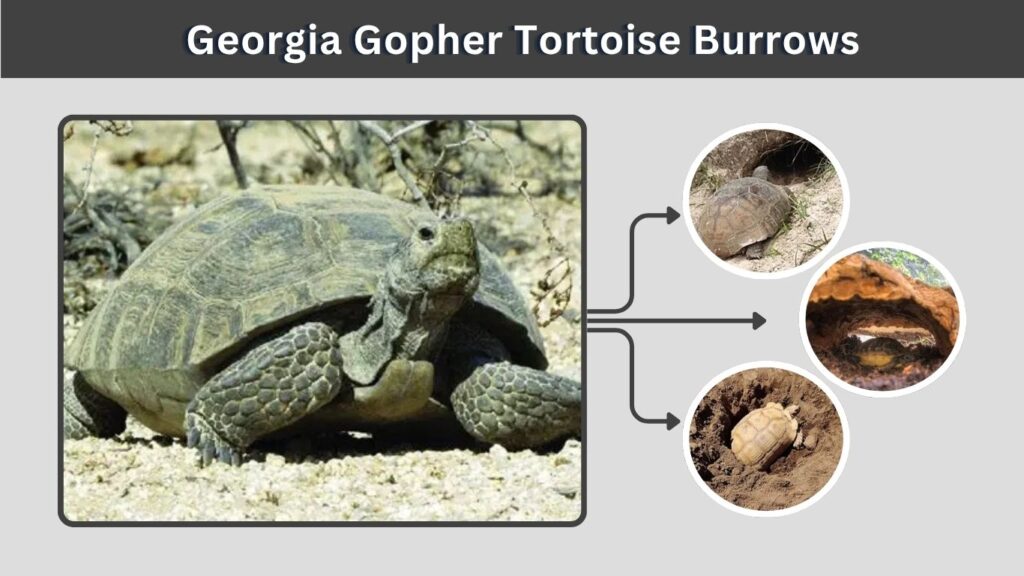
Gopher tortoise burrows are one of the easiest signs of the species. A burrow usually has a half-moon-shaped entrance and a sandy apron of loose soil in front. The tunnel slopes into the ground and may extend many feet underground.
Burrows help tortoises survive Georgia’s hot summers, cool winters, droughts, and fires. They also provide refuge for other wildlife.
How to Identify a Burrow
A gopher tortoise burrow may have:
- A half-moon-shaped opening
- Loose sandy soil at the entrance
- A smooth sloping tunnel
- Tortoise tracks nearby
- Cropped plants around the entrance
- A sunny open area nearby
You should never dig into, collapse, block, or disturb a burrow. Even if you do not see the tortoise, the burrow may still be active or used by other wildlife.
Threats to Gopher Tortoises in Georgia
The biggest threat to gopher tortoises in Georgia is habitat loss. Longleaf pine ecosystems have declined across the Southeast, and many sandy upland habitats have been converted to development, agriculture, roads, or dense unmanaged forests.
Fire suppression is another major problem. Without periodic fire, shrubs and hardwood trees grow thicker. This shades the ground and reduces the grasses and wildflowers tortoises need for food.
Road mortality also affects tortoises. They often cross roads while searching for mates, nesting areas, or new burrow sites. Because they move slowly, they are easily hit by vehicles.
| Threat | How It Hurts Gopher Tortoises |
|---|---|
| Development | Destroys burrows and feeding areas |
| Road mortality | Kills adults, especially wandering tortoises |
| Fire suppression | Makes habitat too shady and overgrown |
| Fragmentation | Isolates populations |
| Illegal collection | Removes protected wildlife from the wild |
Gopher Tortoise and Solar Development in Georgia
Some people search for “gopher tortoise Georgia solar” because solar farms and other land-use projects can overlap with tortoise habitat. Any land-disturbing activity near gopher tortoise burrows can create concerns.
The important point is that development should be planned carefully. Surveys, avoidance, permitting, habitat protection, and relocation guidance may be required depending on the site and activity. Because laws and project rules can vary, landowners and developers should contact Georgia DNR before disturbing areas where gopher tortoises or burrows are present.
Why Is the Gopher Tortoise Georgia’s State Reptile?
The gopher tortoise is Georgia’s state reptile because it is native, ecologically important, and strongly connected to the state’s longleaf pine and sandy upland habitats. Its role as a burrow builder makes it especially valuable.
Unlike many reptiles that only affect their immediate food web, the gopher tortoise creates shelter used by hundreds of species. That makes it a symbol of healthy southern Georgia ecosystems.
FAQs
Are gopher tortoises endangered in Georgia?
Gopher tortoises are not federally endangered in Georgia, but they are state-listed as threatened and protected under Georgia law. The eastern population, which includes Georgia, was not federally listed after a 2022 federal review.
Are gopher tortoises protected in Georgia?
Yes. Gopher tortoises are protected in Georgia. You should not harm, collect, keep, sell, or move them without proper authorization. Georgia law also prohibits keeping most native wildlife, including gopher tortoises, as pets.
What part of Georgia does the gopher tortoise live in?
Gopher tortoises mainly live in southern Georgia, especially in the Coastal Plain. They need dry sandy soils, open pine habitat, and sunny areas with low-growing plants.
What does a Georgia gopher tortoise burrow look like?
A gopher tortoise burrow usually has a half-moon-shaped entrance, loose sandy soil in front, and a sloping tunnel. The burrow may be active even if the tortoise is not visible.
Why is gopher tortoise conservation important in Georgia?
Gopher tortoise conservation is important because the species is a keystone animal. Its burrows shelter more than 300 other species, and protecting tortoise habitat also helps preserve longleaf pine ecosystems and other rare wildlife.