
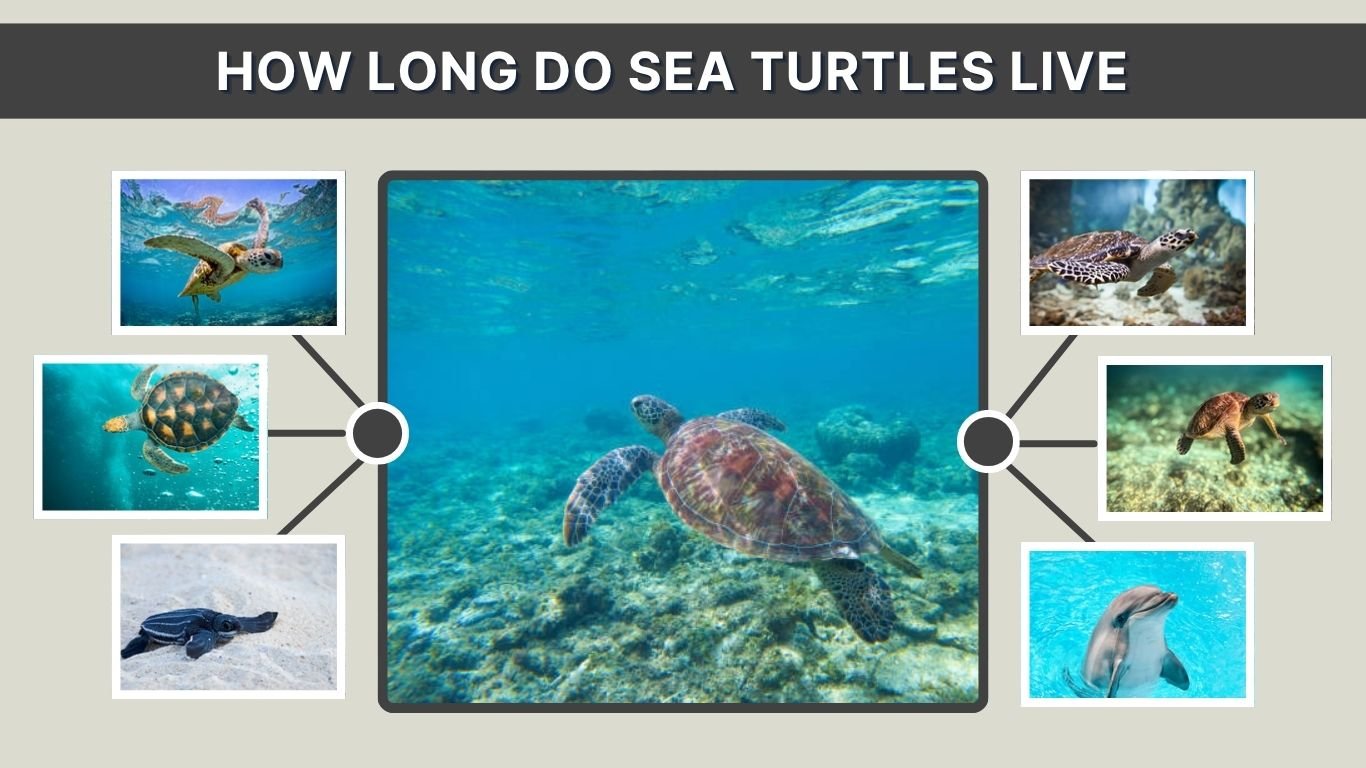
Sea turtles are among the oldest living creatures in the ocean, often associated with longevity and resilience. So, how long does a sea turtle live? In general, most sea turtles live between 50 and 100 years, with some species potentially reaching or even exceeding a century under ideal conditions.
However, their lifespan isn’t the same across all species, and many turtles never reach old age due to natural and human-related threats. In this article, we’ll explore the average lifespan of sea turtles, how it varies by species, and the biological and environmental factors that influence how long they live.
Average Lifespan of Sea Turtles
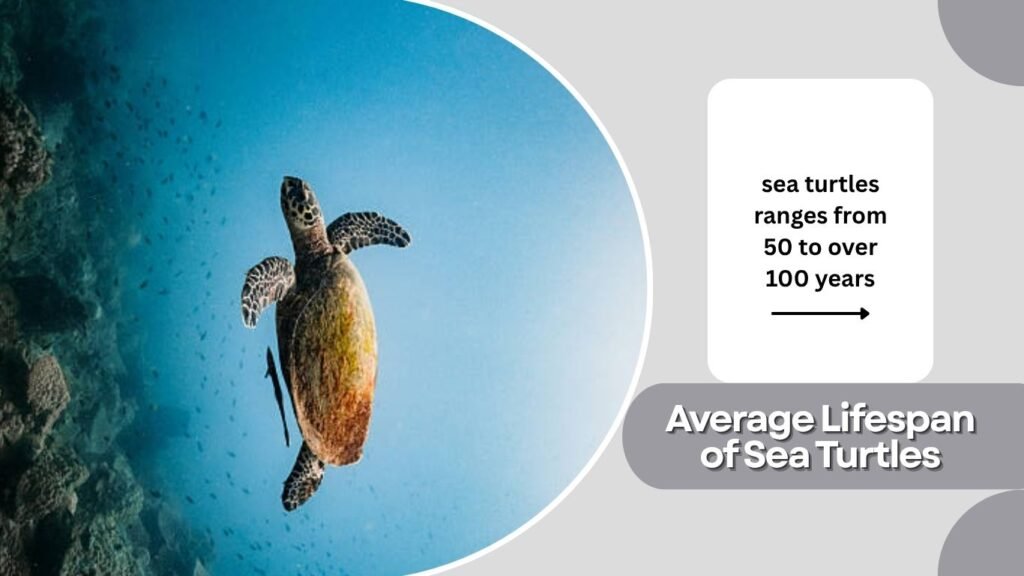
Sea turtles are considered long-lived marine reptiles. Scientists estimate that the average lifespan of sea turtles ranges from 50 to over 100 years, depending on the species and environmental conditions.
Compared to many other marine animals, this is relatively long. For example:
- Many fish species live only a few years to a couple of decades
- Dolphins typically live 20–60 years
- Some whales live longer, but sea turtles still rank among the more durable ocean dwellers
One important thing to understand is that determining the exact age of sea turtles is difficult. Unlike trees, they don’t have clear growth rings that scientists can easily count. As a result, much of what we know about their lifespan comes from observation, tagging studies, and comparisons with similar reptiles.
Despite their long potential lifespan, very few sea turtles survive to old age. The journey from egg to adulthood is extremely dangerous, and only a small percentage make it through all life stages.
Lifespan by Sea Turtle Species
There are seven species of sea turtles, and each has a slightly different lifespan. Below are some of the most well-known species and how long they typically live.
Green Sea Turtle
The green sea turtle is one of the most studied species. It typically lives around 70 to 80 years, although some individuals may live longer.
These turtles are herbivorous as adults and are commonly found in tropical and subtropical waters. Their relatively long lifespan is partly due to their size and reduced number of natural predators once they reach adulthood.
Loggerhead Turtle
Loggerhead turtles usually live between 50 and 70 years.
They are named for their large heads and powerful jaws, which help them crush hard-shelled prey like crabs and mollusks. Loggerheads are widely distributed and are often exposed to human-related threats, which can impact their lifespan.
Leatherback Turtle
The leatherback turtle is unique because it does not have a hard shell like other sea turtles. Instead, it has a flexible, leathery carapace.
Leatherbacks typically live around 45 to 60 years, although some scientists believe they may live longer. They are also the largest sea turtle species and can travel vast distances across oceans.
Hawksbill Turtle
Hawksbill turtles are known for their beautiful shells and are often found near coral reefs. Their lifespan is estimated to be around 50 to 60 years.
Unfortunately, they are critically endangered due to illegal trade and habitat destruction, which significantly affects their chances of reaching old age.
Olive Ridley Turtle
Olive ridley turtles are one of the smallest sea turtle species and generally live around 50 years.
They are famous for their mass nesting behavior, known as arribada, where thousands of females come ashore at the same time to lay eggs.
Why Do Sea Turtles Live So Long?
Sea turtles have several biological traits that contribute to their long lifespan.
One key factor is their slow metabolism. Animals with slower metabolic rates tend to age more slowly, which can extend their lifespan. Sea turtles also grow gradually and take many years—sometimes decades—to reach maturity.
Another reason is their marine lifestyle. Living in the ocean, especially in open waters, reduces exposure to some land-based predators and environmental extremes. Once they reach adulthood, sea turtles have relatively few natural predators, which increases their chances of long-term survival.
Additionally, sea turtles are the result of millions of years of evolution. Their bodies are well adapted to long-distance travel, deep diving, and surviving in a variety of ocean conditions—all of which support a longer life.
Life Cycle of a Sea Turtle
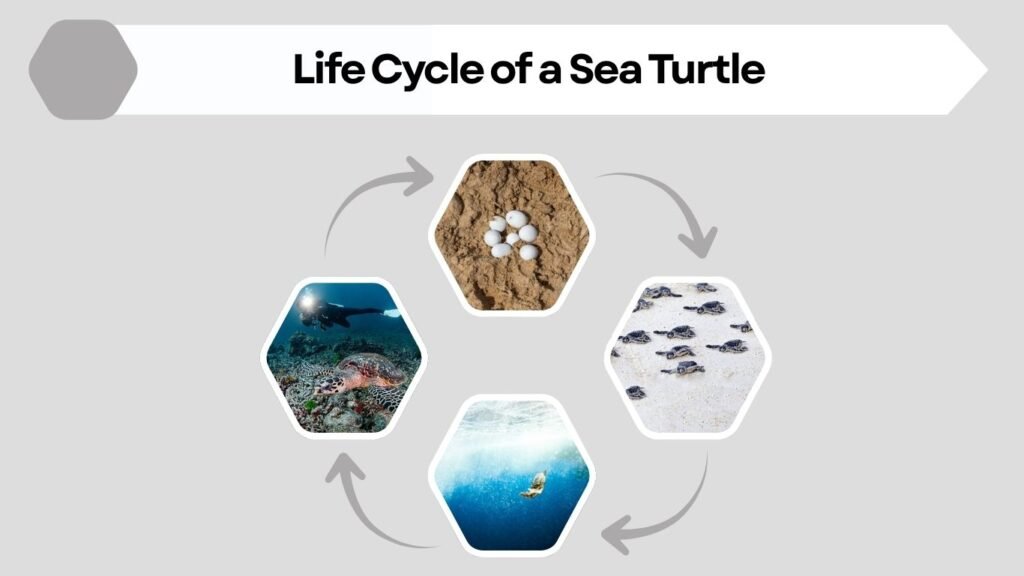
Understanding how long sea turtles live also requires looking at their life cycle, which is long and full of challenges.
Egg Stage
Female sea turtles return to sandy beaches to lay their eggs, often on the same beaches where they were born. A single nest can contain 50 to 200 eggs, buried in the sand for protection.
Hatchlings
After about two months, hatchlings emerge and make a dangerous journey to the ocean. This is the most vulnerable stage of their life.
Predators such as birds, crabs, and fish prey on them, and only about 1 in 1,000 hatchlings survive to adulthood. This extremely low survival rate is a major reason why so few sea turtles reach their full lifespan.
Juvenile Stage
Those that survive enter the juvenile stage, spending years drifting and growing in the open ocean. During this time, they gradually develop survival skills and increase in size, which helps reduce the number of predators that can harm them.
Adulthood
Sea turtles take a long time to mature—often 20 to 30 years before they can reproduce. Once they reach adulthood, their survival rate improves significantly, and they begin returning to nesting beaches to continue the cycle.
What Affects Sea Turtle Lifespan?
Although sea turtles have the potential to live for decades, many factors influence whether they actually reach old age.
Natural Threats
- Predators mainly affect eggs and hatchlings
- Sharks and large fish may prey on juveniles
Human-Related Threats
Human activity is the biggest danger to sea turtles today:
- Plastic pollution: Turtles often mistake plastic for food
- Fishing nets (bycatch): Many turtles get accidentally trapped and drown
- Coastal development: Destroys nesting habitats
- Illegal hunting and trade: Especially for shells and meat
Climate Change
Rising temperatures affect nesting beaches and even influence the gender of hatchlings, which can disrupt population balance. Sea-level rise also threatens nesting areas.
Sea Turtles in Captivity vs Wild
Sea turtles can live in both wild and protected environments, but their lifespan may differ.
In the wild, turtles face numerous threats, making survival uncertain despite their natural longevity.
In captivity, such as aquariums or conservation centers:
- They may live longer due to protection from predators
- They receive medical care and consistent food
- However, captivity can limit natural behaviors like migration
Overall, conservation-focused captivity can help extend lifespan while supporting species survival.
Oldest Sea Turtle Ever Recorded
Determining the exact age of the oldest sea turtle is challenging because scientists cannot easily track individuals throughout their entire life.
However, many researchers believe that some sea turtles can live over 100 years, especially large species like the green sea turtle. While verified records are rare, their biology strongly supports the possibility of century-long lifespans.
Conservation and Its Impact on Lifespan
Conservation efforts play a crucial role in helping sea turtles reach their full lifespan.
Key initiatives include:
- Protecting nesting beaches
- Reducing plastic pollution
- Using turtle-safe fishing gear
- Enforcing laws against illegal trade
Individuals can also help by reducing plastic use, supporting conservation programs, and protecting marine environments.
When threats are reduced, sea turtles have a much better chance of living long, healthy lives.
FAQs
Do sea turtles sleep, and how does it affect their lifespan?
Yes, sea turtles do sleep. They usually rest underwater for several hours and come up for air periodically. Proper rest helps maintain their health, which can contribute to a longer lifespan.
Where do sea turtles live the longest?
Sea turtles tend to live longer in clean, protected ocean environments with fewer human threats. Areas with strong conservation efforts often support longer lifespans.
What do sea turtles eat, and does diet affect lifespan?
Sea turtles have different diets depending on the species—some eat seagrass, while others eat jellyfish or crustaceans. A natural, balanced diet helps them stay healthy and can positively impact their lifespan.
Do sea turtles return to the same place their whole life?
Yes, many sea turtles return to the same beach where they were born to lay eggs. This behavior, called natal homing, is a key part of their life cycle.
Are larger sea turtles likely to live longer?
Generally, larger species like the green and leatherback turtles tend to live longer because they have fewer natural predators as adults and greater resilience in the ocean.
Conclusion
Sea turtles are remarkable creatures with lifespans that can stretch from 50 to over 100 years. However, their long life depends not just on biology, but on survival through each challenging stage of life.
From vulnerable hatchlings to resilient ocean travelers, only a few make it to old age. That’s why conservation efforts are so important—they give these ancient marine animals a better chance to live the full lives they are naturally capable of.