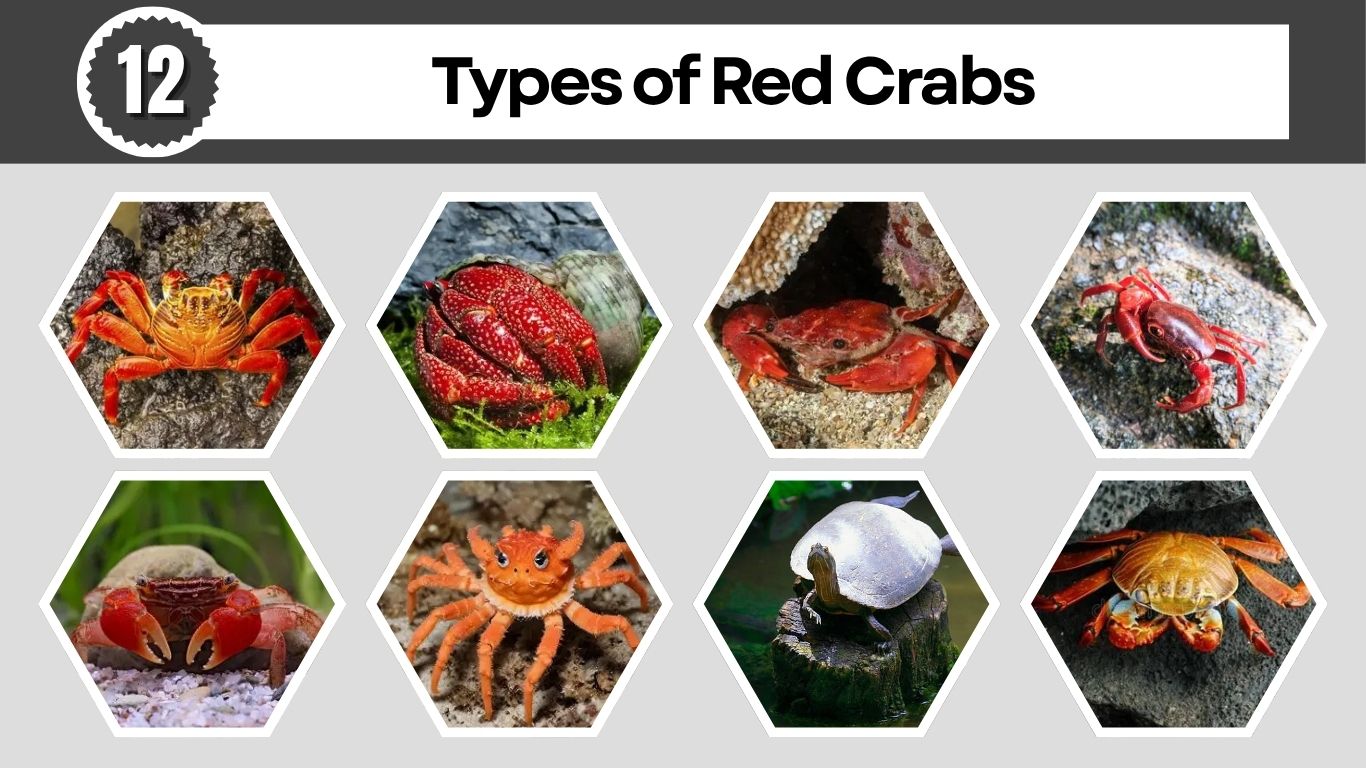
Red crabs are found in diverse habitats, ranging from tropical forests and mangrove swamps to rocky coastlines and deep ocean waters. Although many share reddish shells or legs, each species has unique characteristics, behaviors, and survival strategies. Some red crabs can swim rapidly, while others climb trees, burrow under sand, or migrate in enormous groups. Their diets may include algae, fallen fruit, molluscs, small animals, and decaying organic matter. This guide explores 12 fascinating types of red crabs, including their appearance, natural habitat, diet, behavior, and reproductive life cycle.
1. Christmas Island Red Crab
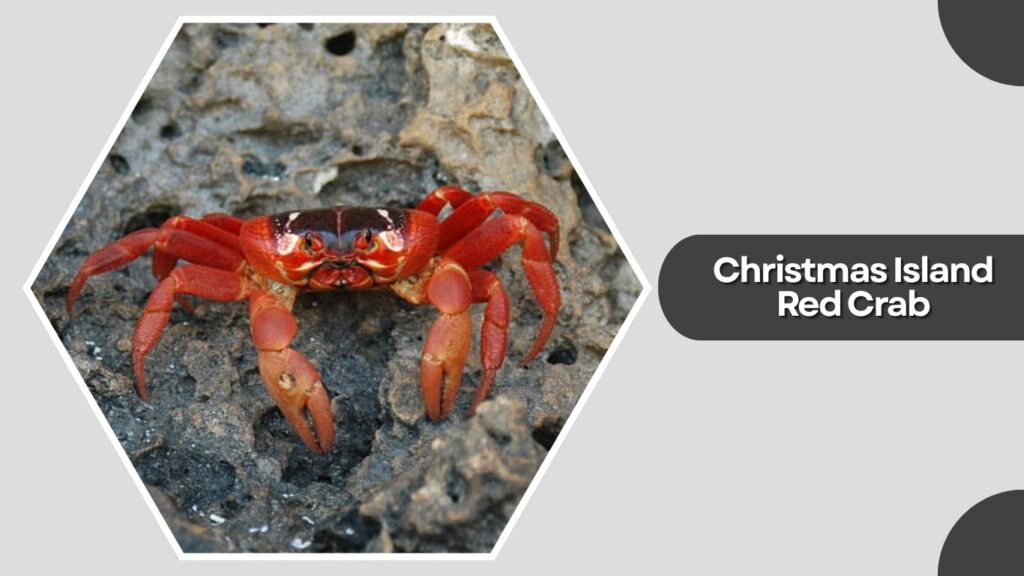
The Christmas Island red crab (Gecarcoidea natalis) is a striking land crab found naturally on Christmas Island, Australia. It is famous for its brilliant red shell and spectacular annual migration, during which millions of crabs travel from the forest to the ocean to reproduce.
Identification
Christmas Island red crabs have several recognizable features:
- Bright red or orange-red shell
- Rounded body measuring up to 12 cm wide
- Two strong claws of nearly equal size
- Eight sturdy walking legs
- Males are generally larger than females
Their vivid coloration and large numbers make them easy to recognize. Australian Museum
Habitat
These crabs mainly inhabit moist tropical forests. They dig burrows in shaded soil or shelter beneath rocks, tree roots, and fallen branches. Their burrows protect them from heat and help prevent moisture loss during dry weather.
Diet
Christmas Island red crabs are omnivores but primarily eat fallen leaves, fruits, flowers, seeds, and young plants. They may also consume dead animals and other organic material. By clearing leaf litter from the forest floor, they play an important role in nutrient recycling.
Migration and Reproduction
At the beginning of the wet season, millions of adult crabs leave the forest and migrate toward the coast. After mating, females release their eggs into the ocean. The larvae develop in seawater before young crabs return to land and travel inland.
2. Red King Crab
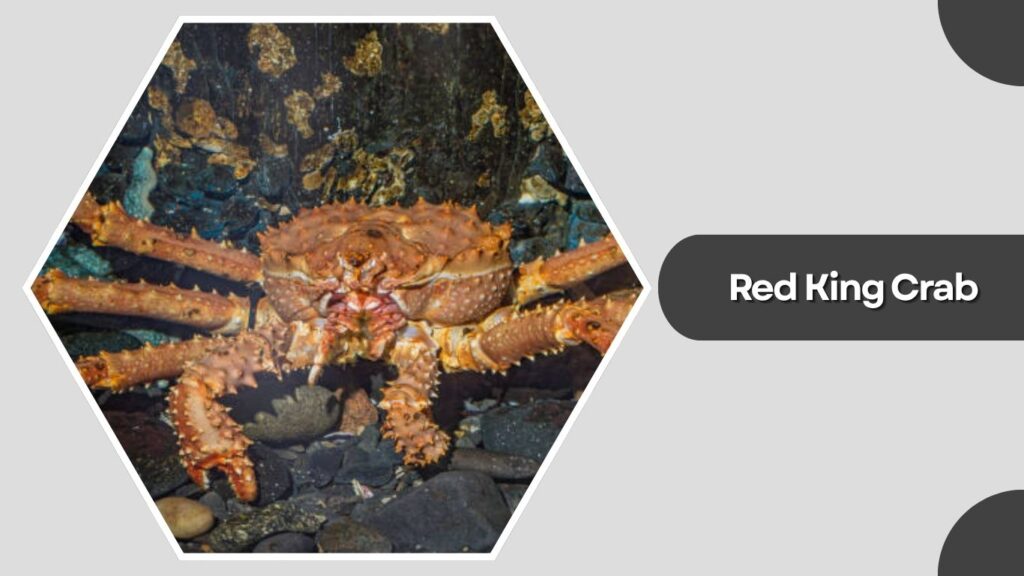
The red king crab (Paralithodes camtschaticus) is one of the world’s largest and most valuable crab species. It lives in cold northern waters and is well known for its enormous size, spiny shell, and long legs.
Identification
Red king crabs have several distinctive features:
- Large, fan-shaped body
- Hard shell covered with sharp spines
- Three pairs of visible walking legs
- One pair of powerful claws
- Deep reddish-brown outer coloration
Although called red king crabs, they usually appear burgundy or brown while alive. Their shells become bright red after cooking.
Habitat
These crabs naturally inhabit the cold waters of the North Pacific, especially around Alaska, Russia, and the Bering Sea. Adults typically live on muddy, sandy, or rocky seafloors. They may move into deeper water during particular seasons.
Diet
Red king crabs are opportunistic feeders. They eat clams, mussels, worms, snails, barnacles, small fish, brittle stars, and other bottom-dwelling creatures. Younger crabs generally consume algae and smaller organisms found along the seabed.
Size and Life Cycle
A large male may have a leg span approaching 1.8 metres and weigh more than 10 kilograms. Females carry fertilized eggs beneath their abdomens for nearly a year. After hatching, the larvae drift in the water before settling on the seafloor and developing into juveniles.
3. Atlantic Deep-Sea Red Crab
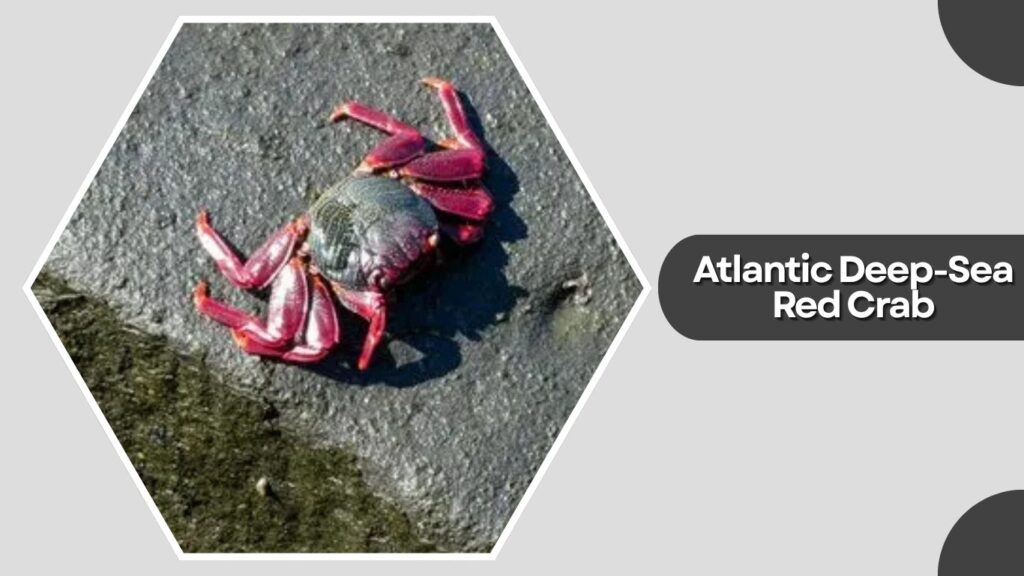
The Atlantic deep-sea red crab (Chaceon quinquedens) is a large marine crab found in the deep western Atlantic Ocean. Its intense red coloration, long legs, and ability to survive in cold, dark water distinguish it from shallow-water crabs.
Identification
The main identifying characteristics include:
- Deep orange-red or scarlet shell
- Broad, oval-shaped body
- Long, slender walking legs
- Two strong front claws
- Shell measuring up to about 18 centimetres wide
Males usually grow larger than females and possess longer claws.
Habitat
Atlantic deep-sea red crabs live along the continental slope from eastern Canada to the Gulf of Mexico. They are generally found at depths of roughly 200 to more than 1,800 metres. Their environment is cold, dark, and under intense water pressure.
Diet
These crabs search the seafloor for food. Their diet includes worms, molluscs, small crustaceans, fish remains, and other organic matter. They are both active predators and scavengers, allowing them to take advantage of limited food in deep water.
Reproduction and Behavior
Females carry large masses of eggs underneath their abdomens until they hatch. Water temperature and depth influence their distribution and reproductive activity. Atlantic deep-sea red crabs usually move slowly across soft sediment while using their claws to capture prey or collect edible remains.
4. Red Rock Crab
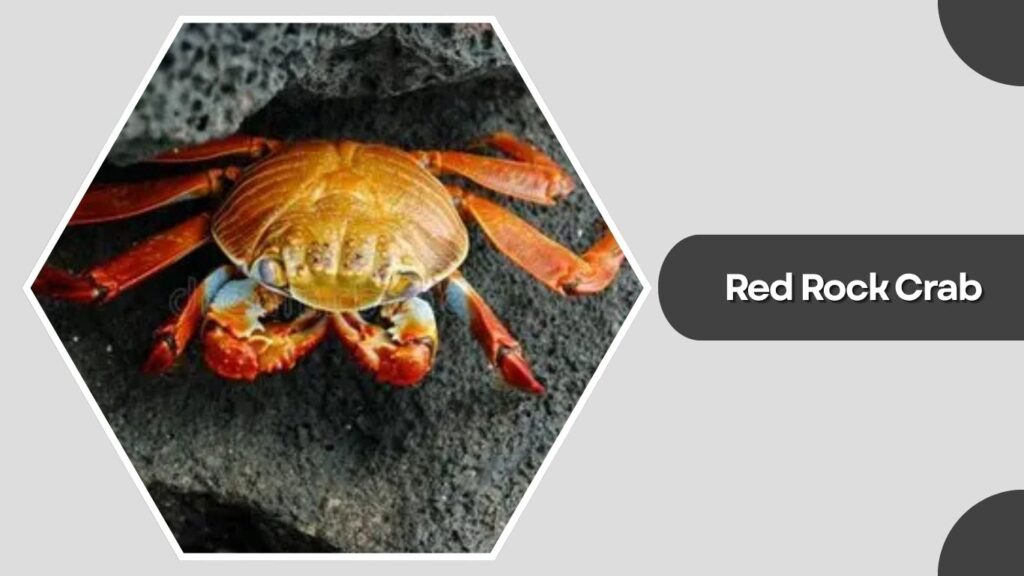
The red rock crab (Cancer productus) is a sturdy coastal crab native to the northeastern Pacific Ocean. It is commonly seen in rocky habitats and tide pools, where its reddish shell provides camouflage among stones, seaweed, and underwater surfaces.
Identification
A red rock crab can be recognized by its:
- Brick-red or dark reddish shell
- Broad, oval carapace
- Black-tipped claws
- Thick, powerful legs
- Shell measuring up to about 20 centimetres wide
Young individuals may have lighter coloration or patterns that become less noticeable as they mature.
Habitat
Red rock crabs occur along the Pacific coast of North America, from Alaska to Baja California. They inhabit rocky shorelines, tide pools, docks, reefs, and shallow coastal waters. Some adults may also be found at greater depths.
Diet
These crabs feed on barnacles, clams, snails, oysters, worms, smaller crustaceans, and dead marine animals. Their heavy claws can crush hard shells, allowing them to reach the soft tissue inside molluscs.
Behavior and Reproduction
Red rock crabs often hide beneath rocks or in crevices, especially when the tide is low. They can defend themselves aggressively with their claws when threatened. Females carry fertilized eggs beneath their bodies until hatching. The larvae initially float freely before settling and developing into young bottom-dwelling crabs.
5. Red Land Crab
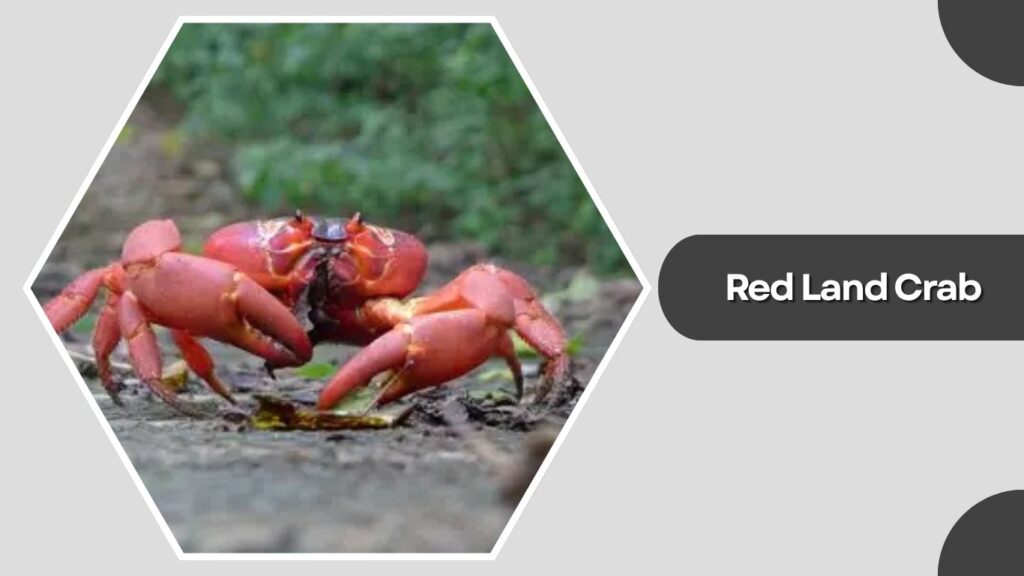
The red land crab (Gecarcinus lateralis), also called the blackback land crab, is a colorful terrestrial species found in warm coastal regions. It spends most of its adult life on land but must return to the sea to reproduce.
Identification
Common identifying characteristics include:
- Red-orange legs and sides
- Dark patch across the upper shell
- Rounded, slightly flattened body
- Two claws of similar size
- Strong legs adapted for walking on land
Color can vary between individuals, with some appearing orange, brown, or deep red.
Habitat
Red land crabs inhabit tropical and subtropical coastal areas of the western Atlantic. They can be found around the Caribbean, Florida, Central America, and parts of South America. They dig deep burrows in moist soil near beaches, forests, gardens, and coastal scrublands.
Diet
This crab mainly eats leaves, fruits, seeds, flowers, and other plant material. However, it may also consume insects, carrion, and animal remains when available. Its feeding activity helps break down vegetation and recycle nutrients.
Reproduction and Survival
Adults migrate toward the ocean during the breeding season. Females release their eggs into seawater, where the larvae begin developing. Young crabs eventually leave the water and adopt a land-based lifestyle. Despite living on land, adults need moisture to keep their respiratory surfaces functioning properly.
6. Red Frog Crab
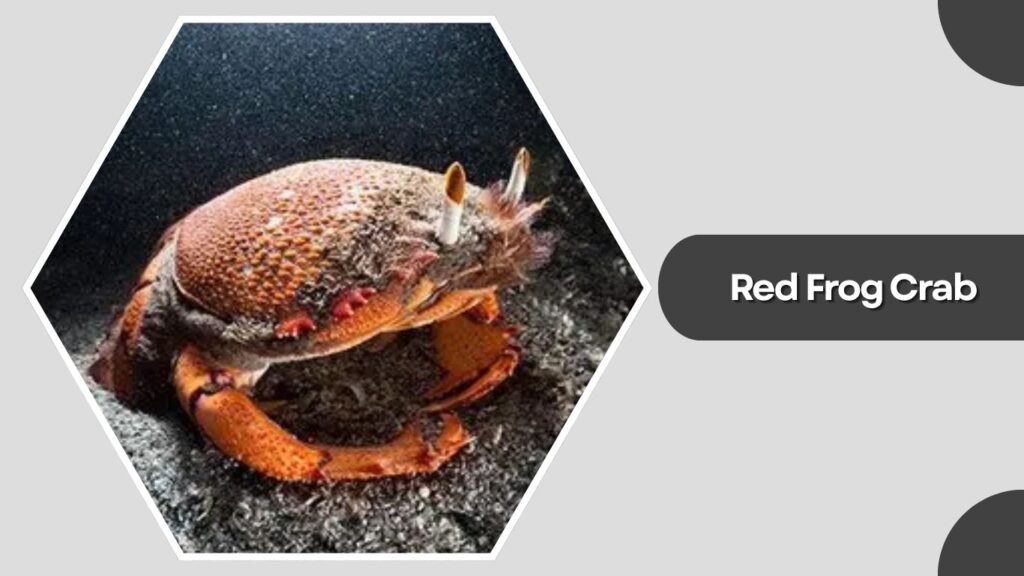
The red frog crab (Ranina ranina) is an unusual marine crab named for its frog-like shape and movements. It has an elongated red body and specialized legs that allow it to burrow rapidly beneath sand on the ocean floor.
Identification
The red frog crab has several notable features:
- Long, oval-shaped red shell
- Small white spots on the carapace
- Flattened legs designed for digging
- Short antennae near the eyes
- Broad front claws with toothed edges
Its body shape differs considerably from the wide, flat appearance of many familiar crabs.
Habitat
Red frog crabs live in warm waters across the Indo-Pacific region. They occur near Australia, Japan, Hawaii, East Africa, and several Pacific islands. These crabs prefer sandy seabeds, usually in shallow or moderately deep coastal waters.
Diet
Red frog crabs are predators and scavengers. They eat worms, molluscs, small fish, shrimp, and other crustaceans. A crab may remain partly buried in the sand and quickly seize small animals that move within reach.
Behavior and Reproduction
This species spends much of its time concealed beneath sand, leaving only its eyes or antennae exposed. Burrowing provides camouflage and protection from predators. Females carry eggs beneath their abdomens until they hatch. The larvae live temporarily in open water before settling onto suitable sandy habitat.
7. Red Swimming Crab
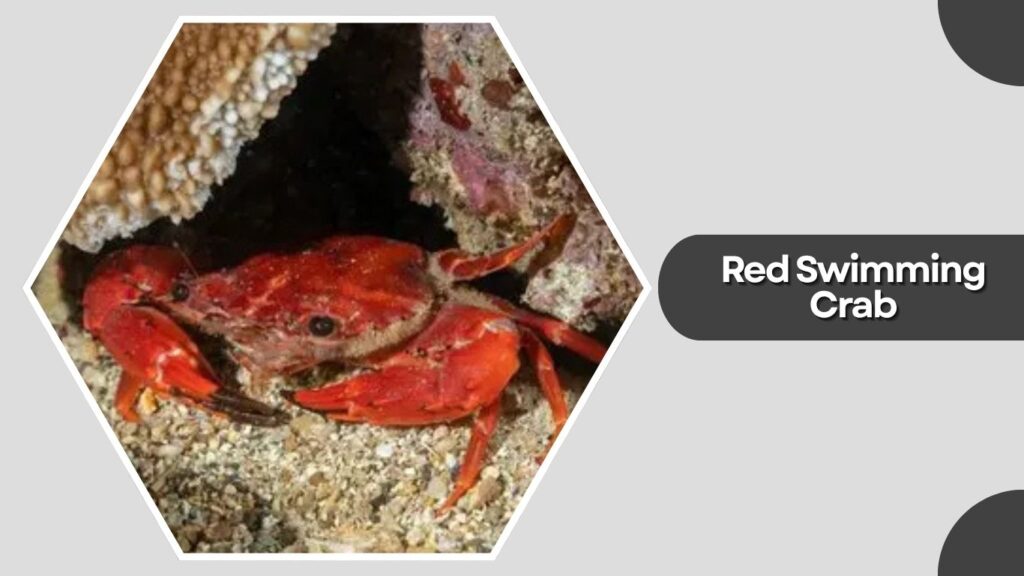
The red swimming crab (Cronius ruber) is a fast-moving marine crab found in warm coastal waters. Its flattened rear legs work like paddles, allowing it to swim efficiently instead of moving only along the seafloor.
Identification
The red swimming crab has several recognizable features:
- Reddish-brown or dark red shell
- Broad and slightly flattened body
- Sharp spines along the shell edges
- Powerful front claws
- Paddle-shaped rear legs
Its coloration may include lighter patches that help it blend into rocky and coral-covered environments.
Habitat
Red swimming crabs inhabit tropical and subtropical parts of the Atlantic Ocean. They are commonly found around rocky shores, reefs, shallow coastal waters, and sandy seabeds. During the day, they may shelter underneath rocks or inside narrow crevices.
Diet
These crabs are opportunistic omnivores. They feed on molluscs, worms, small crustaceans, fish remains, algae, and other organic material. Their strong claws help them capture prey, crush shells, and tear apart food.
Behavior and Reproduction
Red swimming crabs can move quickly through the water to catch food or escape predators. Females carry fertilized eggs beneath their abdomens until the eggs hatch. The larvae initially float in open water and pass through several developmental stages before settling on the seabed as young crabs.
8. Red-Clawed Crab
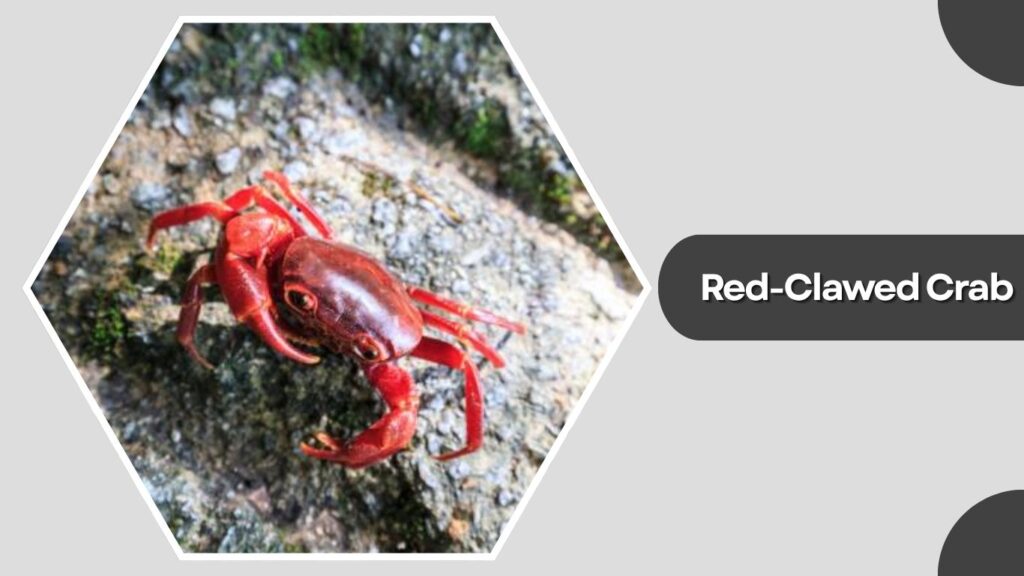
The red-clawed crab (Perisesarma bidens) is a small, semi-terrestrial crab known for its brightly colored claws. It naturally inhabits mangrove forests and brackish coastal areas but is also commonly kept in home aquariums.
Identification
Red-clawed crabs can be recognized by their:
- Bright red or orange claws
- Dark brown or grayish carapace
- Yellowish eyes
- Eight slender walking legs
- Shell measuring approximately 3–4 centimetres wide
Males normally have larger, more colorful claws, while females possess broader abdomens.
Habitat
This species originates from mangrove forests and estuaries in parts of Asia. It prefers brackish water, which contains a mixture of fresh water and seawater. Red-clawed crabs frequently climb onto exposed roots, rocks, and muddy banks.
Diet
Red-clawed crabs are omnivores that eat algae, fallen leaves, detritus, worms, insects, small aquatic animals, and dead organic matter. In captivity, they can consume sinking pellets, vegetables, and protein-rich foods.
Behavior and Care
These crabs are active climbers and skilled escape artists. They need access to both shallow brackish water and a dry resting area when kept in captivity. Males can become territorial, especially in crowded enclosures. Their eggs develop beneath the female’s abdomen before the larvae are released into brackish or marine water.
9. Red Mangrove Crab
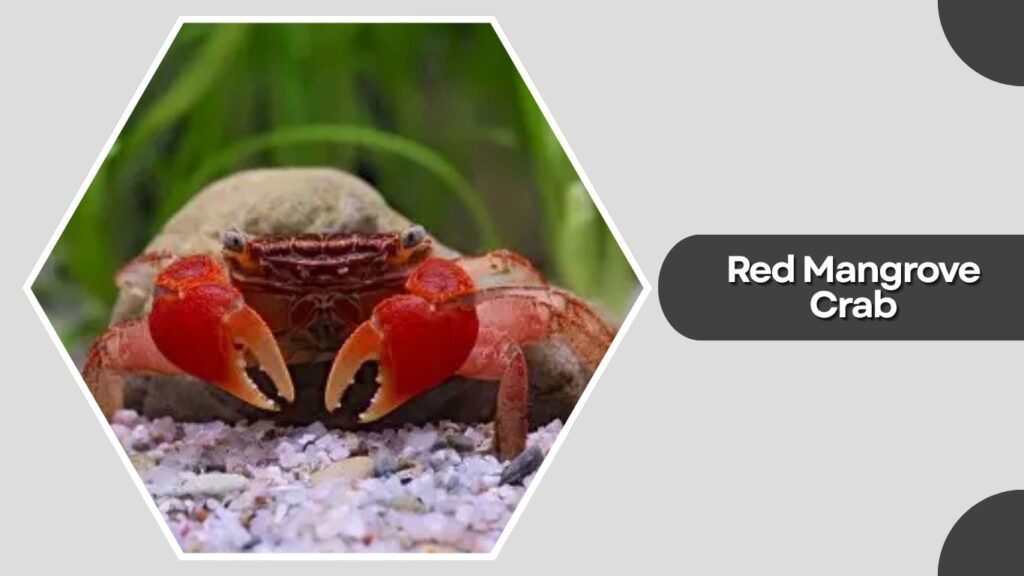
The red mangrove crab (Goniopsis cruentata) is a colorful coastal crab associated with tropical mangrove forests. It is an agile climber that moves across mud, tree roots, and low branches while searching for food.
Identification
Important identifying features include:
- Dark red or reddish-brown carapace
- Bright red, orange, or purple legs
- Strong claws with pale tips
- Square-shaped body
- Long legs suited to climbing
Its colorful markings may vary according to age, location, and environmental conditions.
Habitat
Red mangrove crabs live along the Atlantic coast of the Americas, including Florida, the Caribbean, Central America, and South America. They occupy muddy mangrove forests, estuaries, lagoons, and sheltered coastal wetlands.
Diet
These crabs eat fallen mangrove leaves, algae, fruits, insects, molluscs, dead fish, and other organic material. By breaking down leaves and animal remains, they help return valuable nutrients to the mangrove ecosystem.
Behavior and Reproduction
Red mangrove crabs are quick and alert. They often hide among roots, inside crevices, or beneath vegetation when danger appears. Females carry their eggs underneath their bodies and eventually release the larvae into nearby water. The young pass through free-swimming stages before becoming small crabs and returning to mangrove habitats.
10. Red Decorator Crab
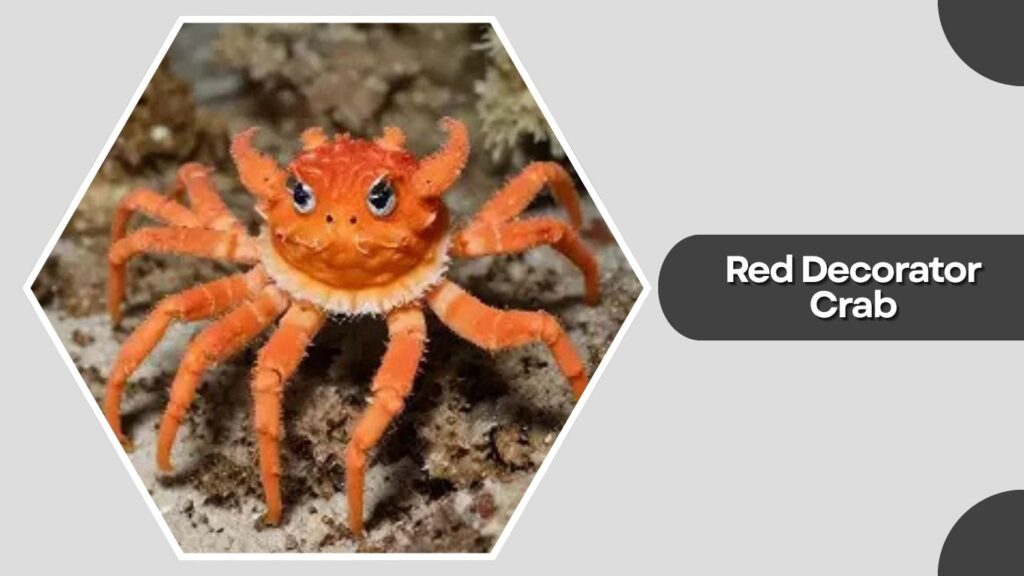
The red decorator crab is a small marine crab famous for attaching living and nonliving materials to its body. Its reddish shell is often concealed beneath algae, sponges, seaweed, or other objects collected from its surroundings.
Identification
Red decorator crabs generally possess:
- Red, orange, or reddish-brown shells
- Long, spider-like walking legs
- Small hooks or hairs on the body
- Narrow front claws
- Algae or sponges attached to the shell
The materials covering the body can make the crab difficult to recognize.
Habitat
These crabs inhabit rocky coastal waters, coral reefs, kelp forests, and areas covered with sponges or seaweed. They usually remain close to structures that offer both food and protection. Many species hide in crevices during daylight hours.
Diet
Red decorator crabs are omnivorous scavengers. They consume algae, plankton, worms, tiny crustaceans, dead animals, and pieces of organic matter. Some may also nibble on the organisms attached to their own shells when food is scarce.
Camouflage and Defense
The crab uses its claws to collect materials and place them onto hooked hairs covering its shell and legs. This natural decoration helps it blend into the environment and may discourage predators. As the crab grows and molts, it can remove useful materials from its old shell and attach them to its new body covering.
11. Sally Lightfoot Crab
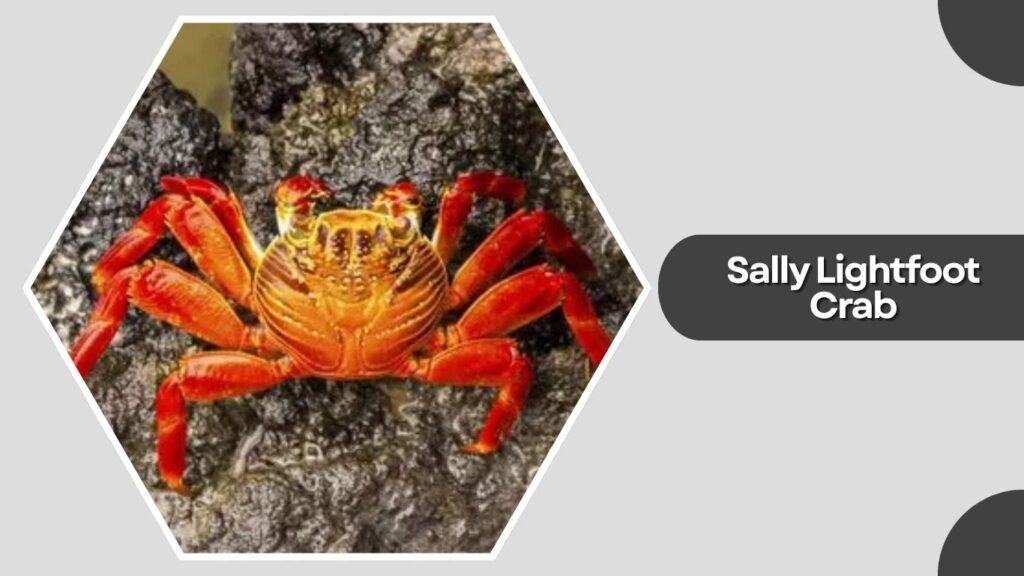
The Sally Lightfoot crab (Grapsus grapsus) is a brightly colored shore crab famous for its speed and agility. It is often photographed moving across volcanic rocks in the Galápagos Islands and along the Pacific coast of the Americas.
Identification
Adult Sally Lightfoot crabs display:
- Bright red or orange shells
- Yellow, blue, and pink markings
- Flattened bodies
- Long, strong walking legs
- Sharp claws used for feeding
Young crabs are usually darker brown or black, helping them remain concealed against wet rocks.
Habitat
These crabs inhabit rocky shorelines from Mexico to South America, including the Galápagos Islands. They live close to the water and prefer rocks repeatedly splashed by ocean waves. Their flattened bodies help them squeeze into narrow cracks.
Diet
Sally Lightfoot crabs primarily graze on algae growing across coastal rocks. They also eat dead fish, animal remains, small invertebrates, and organic debris. Their scavenging activity helps clean the shoreline.
Behavior and Reproduction
These crabs can run rapidly in several directions and leap between rocks when threatened. Their strong legs help them resist waves and cling to slippery surfaces. Females carry eggs beneath their abdomens before releasing the larvae into the sea. The larvae drift with ocean currents before settling in suitable coastal habitats.
12. Strawberry Hermit Crab
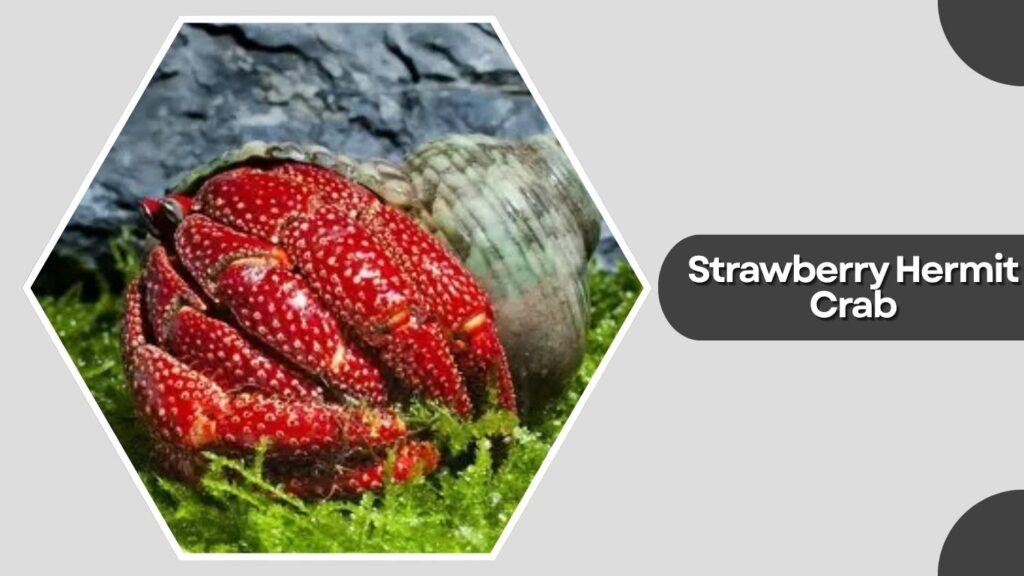
The strawberry hermit crab (Coenobita perlatus) is a beautiful land-dwelling hermit crab with a bright red body and small white spots. It protects its soft abdomen by occupying an empty sea-snail shell.
Identification
Strawberry hermit crabs have several distinctive characteristics:
- Bright strawberry-red body
- Small white spots
- Dark eyes on long stalks
- Strong front claws
- Empty snail shell covering the abdomen
Young individuals may appear pale orange before developing deeper red coloration.
Habitat
This species occurs across tropical parts of the Indo-Pacific. It lives near beaches, coastal forests, coral rubble, and humid areas close to the ocean. Although primarily terrestrial, it requires access to both fresh water and seawater.
Diet
Strawberry hermit crabs are omnivorous scavengers. They eat fallen fruit, leaves, seeds, algae, dead animals, fish remains, and other organic material. Calcium-rich foods help support the development of a strong exoskeleton.
Shell Use and Reproduction
As the crab grows, it must replace its shell with a larger one. Suitable shells provide essential protection against predators and dehydration. Females carry eggs beneath their bodies and migrate toward the coast to release them into seawater. After passing through aquatic larval stages, young crabs move onto land and begin using tiny abandoned shells.