
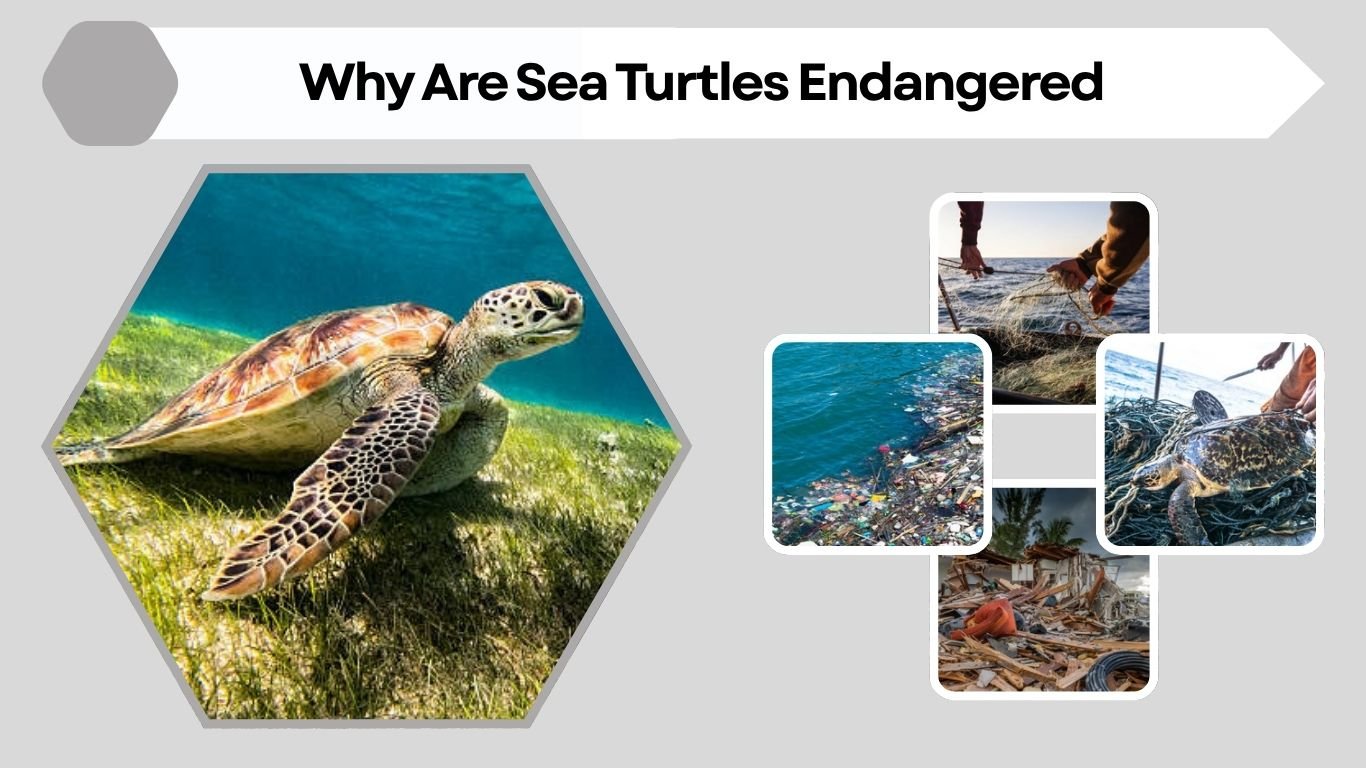
Sea turtles have been swimming in Earth’s oceans for more than 100 million years, surviving natural disasters and major changes in the planet’s climate. Despite their incredible resilience, many sea turtle species are now facing the threat of extinction.
So, why are sea turtles endangered? The simple answer is that human activities are the main cause. Pollution, fishing practices, climate change, and habitat destruction have all contributed to the rapid decline in sea turtle populations.
In this article, we’ll explore what “endangered” really means, the main threats facing sea turtles today, and why these ancient marine animals are especially vulnerable.
What Does “Endangered” Mean?
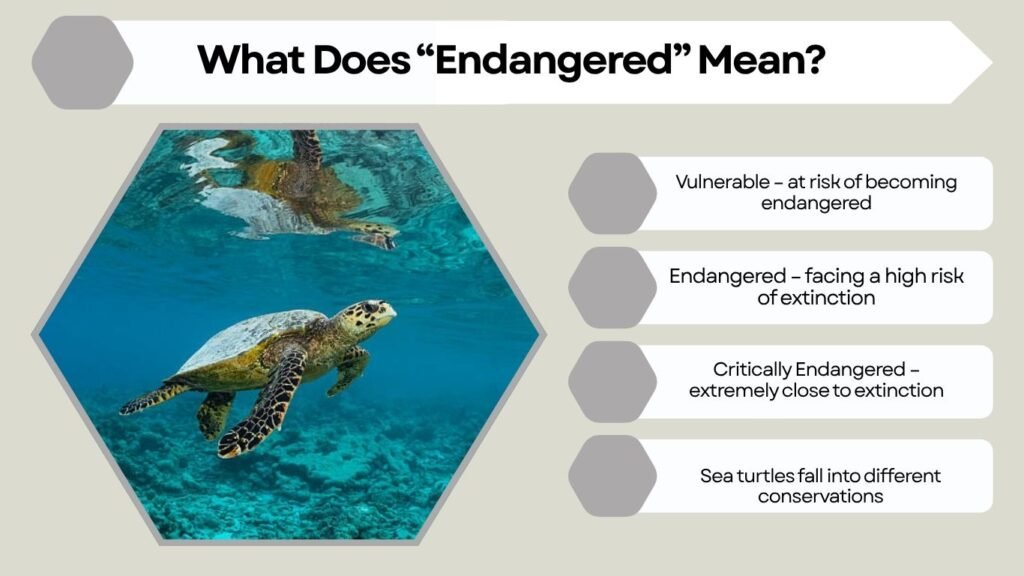
An endangered species is a type of animal or plant that is at serious risk of becoming extinct. This means that if current threats continue, the species may disappear completely from the wild.
Sea turtles fall into different conservation categories depending on the species:
- Vulnerable – at risk of becoming endangered
- Endangered – facing a high risk of extinction
- Critically Endangered – extremely close to extinction
For example, the hawksbill sea turtle is critically endangered, while others like the green turtle are classified as endangered. These classifications highlight how serious the situation has become.
Main Reasons Why Sea Turtles Are Endangered
Sea turtles face many threats, but most of them are directly or indirectly caused by humans. Below are the main reasons why their populations are declining.
Plastic Pollution
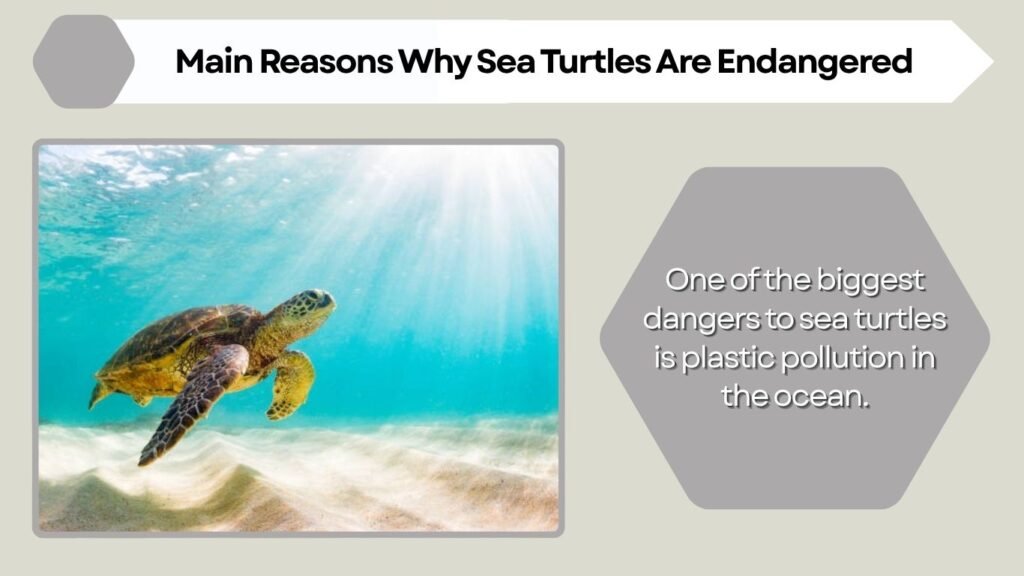
One of the biggest dangers to sea turtles is plastic pollution in the ocean.
Sea turtles often mistake plastic bags and other debris for food, especially jellyfish. When they eat plastic:
- It can block their digestive system
- Cause internal injuries
- Lead to starvation or death
Because plastic does not break down easily, it remains in the ocean for years, continuously posing a threat to marine life.
Fishing Nets and Bycatch
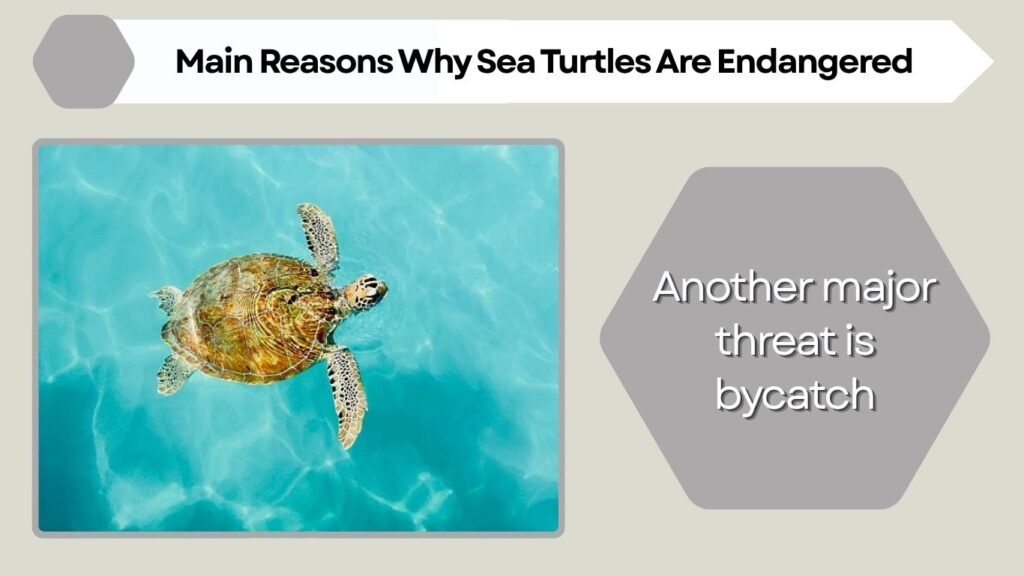
Another major threat is bycatch, which happens when sea turtles are accidentally caught in fishing gear.
Large fishing nets, longlines, and trawls can trap turtles while fishermen are targeting other species. Since sea turtles need to come to the surface to breathe, being trapped underwater can cause them to drown.
Bycatch is considered one of the leading causes of sea turtle deaths worldwide.
Habitat Destruction
Sea turtles rely heavily on specific beaches to lay their eggs. However, many of these nesting areas are being destroyed.
Common causes include:
- Coastal development (hotels, buildings, roads)
- Beach pollution
- Heavy tourism
Artificial lighting from buildings can also confuse hatchlings, causing them to move away from the ocean instead of toward it. This reduces their chances of survival.
Climate Change
Climate change is becoming an increasingly serious threat to sea turtles.
One unique issue is that the temperature of the sand determines the gender of hatchlings. Warmer temperatures produce more females, which can lead to an imbalance in the population over time.
Other effects include:
- Rising sea levels washing away nests
- Stronger storms destroying nesting beaches
- Changes in ocean currents affecting food availability
Illegal Hunting and Trade
Despite legal protections in many countries, sea turtles are still hunted illegally.
They are targeted for:
- Their shells (used in jewelry and decorations)
- Meat and eggs
- Traditional practices in some regions
This illegal trade reduces already vulnerable populations and makes recovery even more difficult.
Which Sea Turtle Species Are Endangered?
There are seven species of sea turtles, and most of them are currently at risk.
Some examples include:
- Hawksbill Turtle – Critically endangered due to illegal shell trade
- Green Turtle – Endangered due to habitat loss and hunting
- Loggerhead Turtle – Vulnerable, affected by fishing and pollution
- Leatherback Turtle – Vulnerable or endangered depending on region
Each species faces slightly different threats, but all are impacted by human activity in some way.
Why Sea Turtles Are Especially Vulnerable
Sea turtles are not just endangered because of external threats they are also naturally vulnerable due to their biology and life cycle.
One major factor is their slow growth and late maturity. Sea turtles can take 20 to 30 years to reach reproductive age. This means populations recover very slowly, even if conditions improve.
Another issue is their low survival rate early in life. Out of hundreds of eggs laid, only about 1 in 1,000 hatchlings survive to adulthood. This makes every adult turtle extremely important for maintaining the population.
Additionally, sea turtles depend on specific nesting beaches. If these beaches are destroyed or disturbed, turtles may struggle to reproduce successfully.
Impact of Human Activities
Human activities have dramatically increased the risks faced by sea turtles over the past century.
Industrial development has led to:
- Increased ocean pollution
- Destruction of coastal habitats
- Higher levels of noise and disturbance in marine environments
Global fishing industries also play a major role, as large-scale operations increase the chances of accidental capture.
Urban expansion near coastlines further reduces safe nesting areas, while tourism can unintentionally harm turtles through littering and disturbance.
In short, human influence affects nearly every stage of a sea turtle’s life—from hatchling to adult.
How We Can Help Save Sea Turtles
Although the situation is serious, there are many ways individuals and communities can help protect sea turtles.
Reduce Plastic Use
- Avoid single-use plastics like bags and straws
- Recycle properly
- Participate in beach cleanups
Support Conservation Programs
- Donate to marine wildlife organizations
- Volunteer in turtle conservation projects
- Spread awareness about sea turtle protection
Responsible Tourism
- Avoid disturbing nesting turtles or hatchlings
- Turn off lights near beaches at night
- Follow local wildlife protection rules
Sustainable Fishing Practices
- Support fisheries that use turtle-safe gear
- Choose sustainably sourced seafood
- Encourage responsible fishing policies
Conservation Efforts Around the World
Governments and organizations worldwide are working to protect sea turtles through various initiatives.
These include:
- Establishing marine protected areas
- Enforcing laws against illegal hunting and trade
- Monitoring nesting beaches and protecting eggs
- Using turtle excluder devices (TEDs) in fishing nets
In some regions, these efforts have already shown positive results, with certain sea turtle populations slowly recovering.
FAQs
Why are baby sea turtles at higher risk than adults?
Baby sea turtles face extreme danger because they are small, slow, and easy targets for predators like birds and fish. Combined with environmental threats, very few survive to adulthood.
How does temperature affect sea turtle populations?
Temperature plays a key role in determining the gender of hatchlings. Warmer sand produces more females, which can create an imbalance and threaten future reproduction.
Why do sea turtles need specific beaches to nest?
Sea turtles rely on certain beaches because they return to the same place where they were born. If these beaches are destroyed, it becomes difficult for them to reproduce successfully.
How do ships and boats harm sea turtles?
Ships and boats can injure or kill sea turtles through collisions. Noise and water pollution from vessels can also disrupt their natural behavior.
Do chemicals and oil spills affect sea turtles?
Yes, toxic chemicals and oil spills can poison sea turtles, damage their habitats, and affect their food sources, reducing their chances of survival.
Conclusion
Sea turtles are ancient survivors, but today they face threats unlike anything in their long history. From plastic pollution to climate change, human activities have pushed many species toward extinction.
However, there is still hope. By understanding why sea turtles are endangered and taking action to reduce these threats, we can help ensure that these incredible creatures continue to thrive in our oceans for generations to come.
Protecting sea turtles isn’t just about saving one species—it’s about preserving the health of our entire marine ecosystem.