
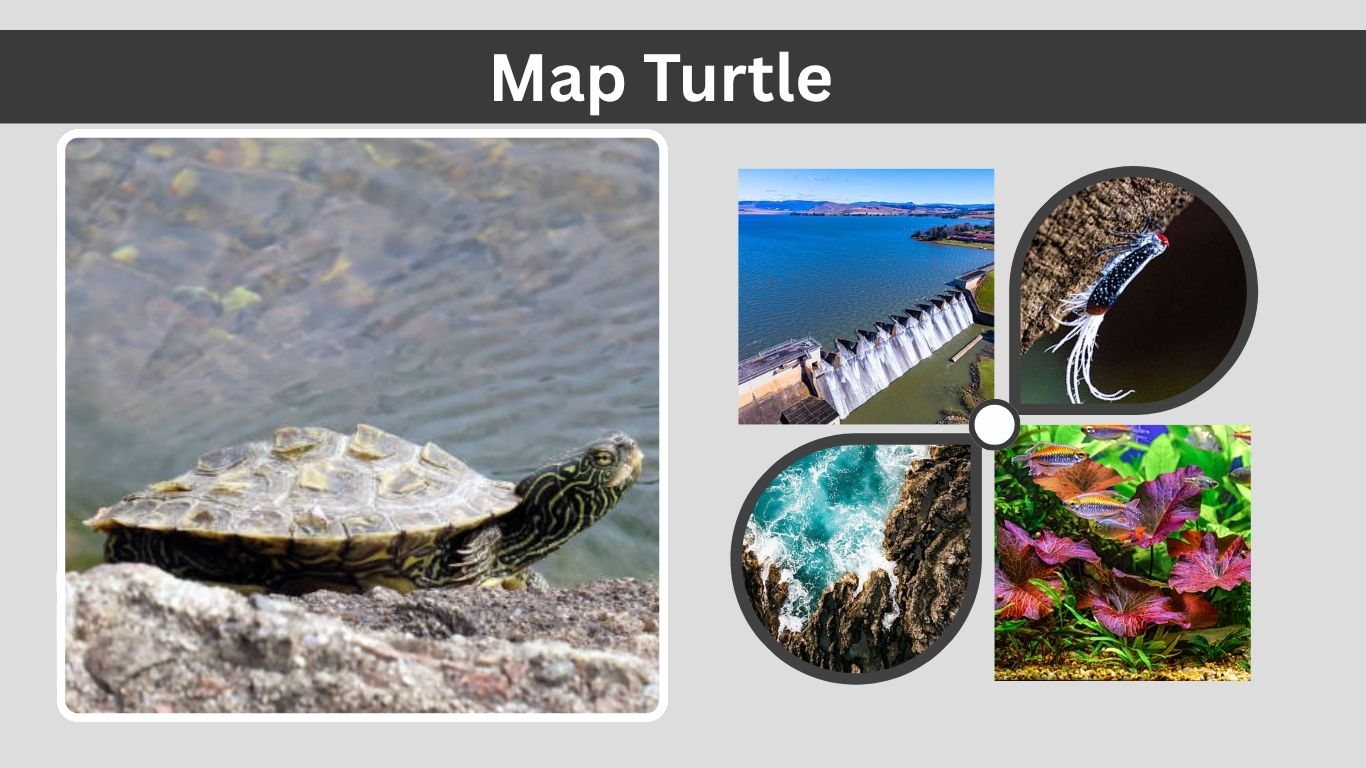
Map turtles are freshwater turtles known for the detailed line patterns on their shells that resemble contour lines on a map. These active aquatic turtles live mainly in rivers, lakes, and streams throughout North America. Popular species such as the Mississippi map turtle and northern map turtle are commonly kept as pets because of their attractive appearance and interesting behavior. Map turtles are excellent swimmers that require clean water, strong filtration, and proper basking areas to remain healthy. Understanding their habitat, diet, size, lifespan, and care needs is essential for responsible ownership.
What Is a Map Turtle?
A map turtle is a freshwater turtle belonging to the genus Graptemys. These turtles are named after the map-like markings covering their shells, which often include thin yellow or cream-colored lines.
Most map turtles spend the majority of their lives in water and are highly adapted for swimming in rivers and lakes. Their streamlined shells and strong limbs help them move efficiently through flowing water.
Key Facts About Map Turtles
- Native to North America
- Freshwater aquatic turtles
- Strong swimmers
- Named for map-like shell markings
- Require basking areas for health
Why Map Turtles Are Popular Pets
Map turtles are admired because of their unique shell patterns, active behavior, and manageable size. Many reptile keepers enjoy watching them swim, bask, and explore aquatic environments.
However, they require carefully maintained tanks with strong filtration systems because they produce a significant amount of waste in captivity.
What Does a Map Turtle Look Like?
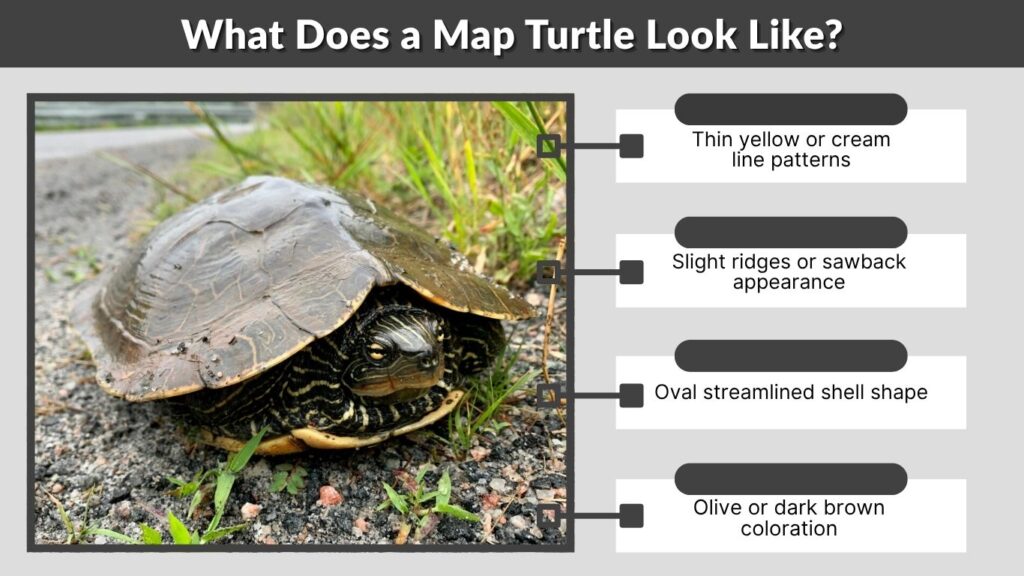
Map turtles have olive, brown, or dark green shells marked with thin yellow lines that resemble geographic maps. Many species also possess raised ridges or knobs along the center of the shell.
Their heads usually display bright yellow stripes that extend around the eyes and neck.
Map Turtle Shell Features
Several shell characteristics help identify map turtles.
- Thin yellow or cream line patterns
- Slight ridges or sawback appearance
- Oval streamlined shell shape
- Olive or dark brown coloration
Yellow and Knobbed Map Turtles
Some species, such as the black-knobbed map turtle and yellow-blotched map turtle, possess especially noticeable shell features.
These turtles may display:
- Prominent shell knobs
- Bright yellow shell markings
- Larger dorsal ridges
- Unique regional coloration
Such physical traits help distinguish species from one another.
Map Turtle Size
Map turtle size varies greatly depending on species and sex. Females are often much larger than males, especially in species such as the Mississippi map turtle.
Most map turtles remain medium-sized compared to large snapping turtles or softshell turtles.
How Big Do Map Turtles Get?
Typical size ranges include:
- Males around 3 to 6 inches
- Females around 6 to 12 inches
- Larger females in some river species
- Slow steady growth over several years
Mississippi Map Turtle Full Grown
Adult Mississippi map turtles often develop larger shells and stronger coloration as they mature.
Fully grown turtles may display:
- Bright yellow head markings
- Pronounced shell ridges
- Larger female body size
- Strong swimming ability
Healthy growth depends heavily on proper nutrition and enclosure quality.
Types of Map Turtles
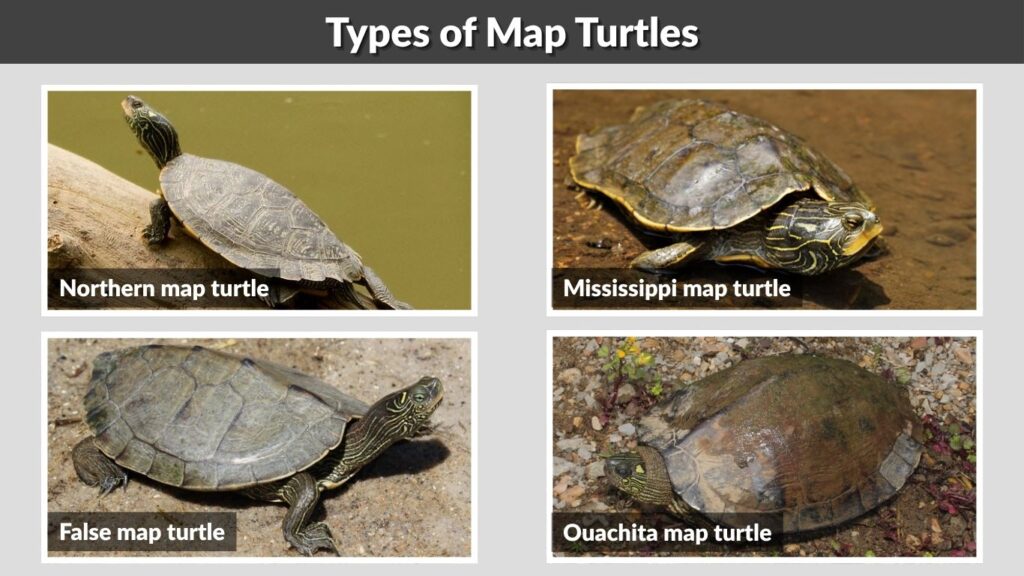
Several map turtle species live throughout the United States, each with unique shell patterns and habitat preferences. Some species inhabit large rivers, while others prefer smaller streams and lakes.
Although similar in appearance, careful observation helps identify different species.
Common Map Turtle Species
Popular map turtle species include:
- Northern map turtle
- Mississippi map turtle
- False map turtle
- Ouachita map turtle
- Texas map turtle
Rare and Regional Map Turtles
Some map turtle species have smaller geographic ranges and face conservation concerns.
Examples include:
- Barbour’s map turtle
- Pearl River map turtle
- Ringed map turtle
- Escambia map turtle
- Cagle’s map turtle
These turtles often depend on specific river systems for survival.
Northern Map Turtle
The northern map turtle is one of the most widespread map turtle species in North America. It commonly inhabits rivers, lakes, and reservoirs with plenty of basking sites.
Northern map turtles are shy and frequently dive into water when disturbed.
Northern Map Turtle Habitat
Northern map turtles prefer:
- Large rivers
- Slow-moving streams
- Freshwater lakes
- Areas with fallen logs
- Sunny basking locations
Northern Map Turtle Behavior
These turtles spend much of the day basking on rocks or logs to regulate body temperature. They are cautious animals and often escape quickly into the water if danger approaches.
Their strong swimming ability helps them survive in flowing river habitats.
Mississippi Map Turtle
The Mississippi map turtle is one of the most popular pet map turtle species because of its attractive markings and manageable size.
It is especially recognized for the crescent-shaped markings behind the eyes and its raised shell ridge.
Mississippi Map Turtle Size
Important size features include:
- Males remain relatively small
- Females grow significantly larger
- Adult females may exceed 10 inches
- Shell ridges become more noticeable with age
Mississippi Map Turtle Care
Mississippi map turtles require clean aquatic habitats with strong filtration and basking areas. Because they are active swimmers, larger tanks are strongly recommended for adults.
Proper care includes:
- UVB lighting
- Clean heated water
- Balanced diet
- Dry basking platform
- Spacious swimming area
False Map Turtle vs Map Turtle
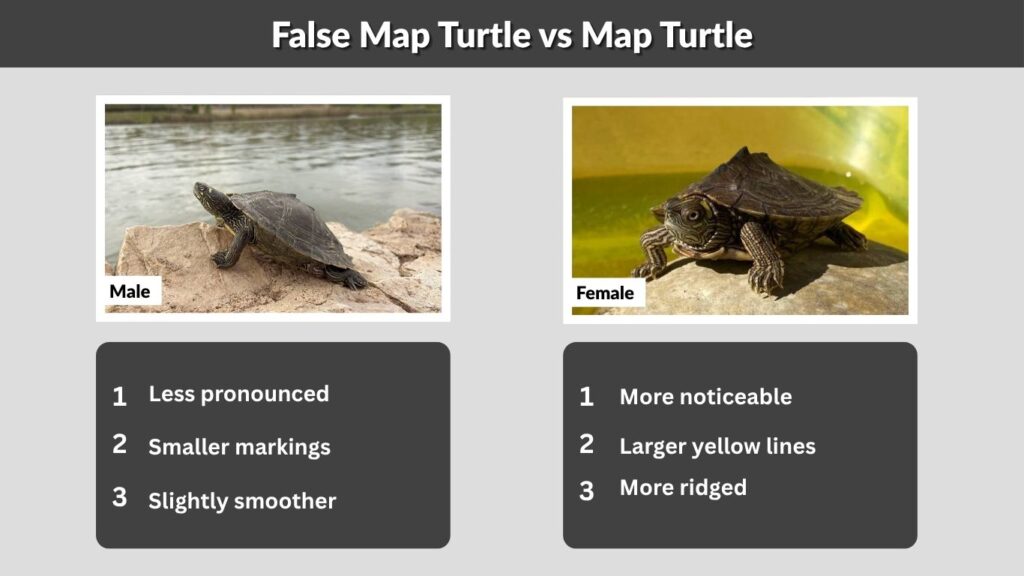
False map turtles closely resemble other map turtle species, which often causes confusion among reptile keepers and wildlife observers. While they share similar shell patterns and aquatic habits, subtle differences help distinguish them from true map turtles.
False map turtles usually have smoother shells and slightly different head markings compared to some other species.
Main Differences Between Species
| Feature | False Map Turtle | Common Map Turtle |
| Shell Ridge | Less pronounced | More noticeable |
| Head Markings | Smaller markings | Larger yellow lines |
| Shell Shape | Slightly smoother | More ridged |
| Habitat | Rivers and lakes | Rivers and streams |
Why Identification Matters
Correct species identification helps owners provide proper care because different map turtles may vary in size, habitat preference, and conservation status.
Accurate identification is also important for wildlife conservation and legal ownership regulations in certain regions.
Map Turtle Habitat
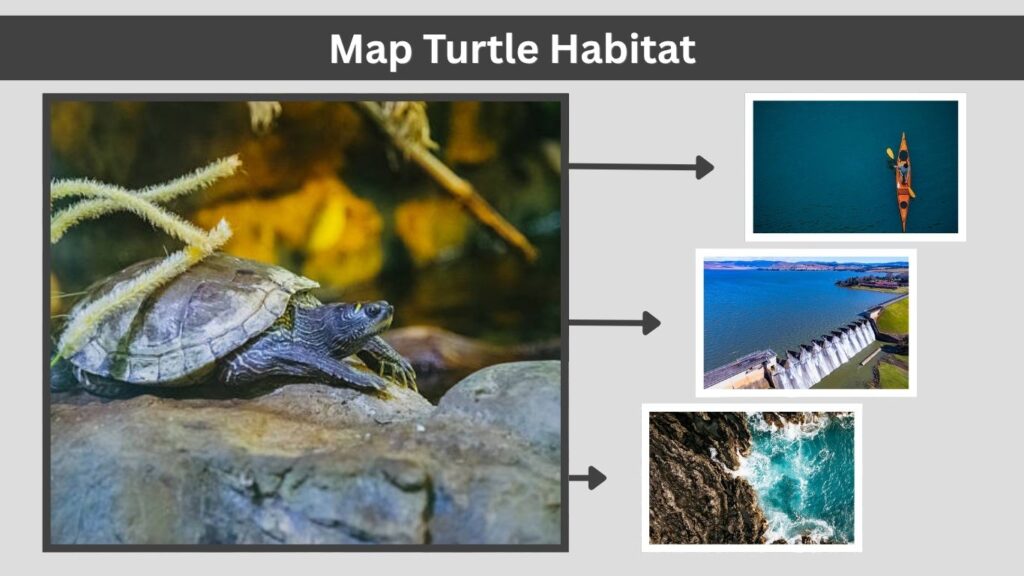
Map turtles naturally inhabit freshwater ecosystems throughout North America. Most species prefer rivers and lakes with clean water, strong currents, and plenty of basking opportunities.
Their aquatic lifestyle makes water quality one of the most important factors for long-term health and survival.
Where Map Turtles Live
Map turtles are commonly found in:
- Rivers
- Streams
- Reservoirs
- Freshwater lakes
- Wetland systems
Common Map Turtle Habitat Features
Healthy habitats usually include:
- Fallen logs for basking
- Aquatic vegetation
- Rocky shorelines
- Clean oxygen-rich water
- Moderate water flow
These environmental conditions help support feeding, nesting, and safe basking behavior.
What Do Map Turtles Eat?
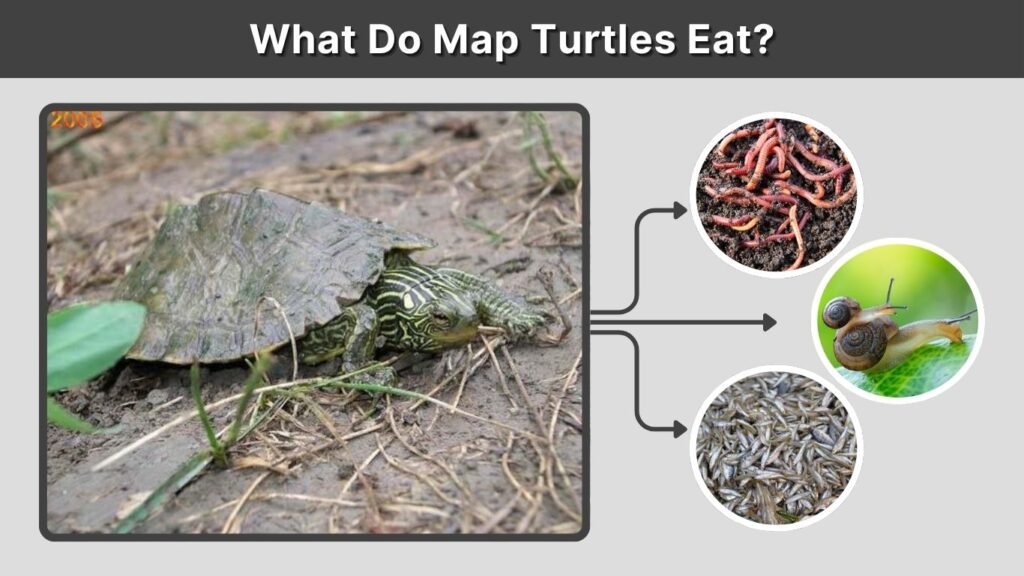
Map turtles are omnivores that feed on both plant and animal matter. Their diets vary depending on species, age, and habitat conditions.
Young turtles generally consume more protein, while adults may eat larger amounts of aquatic vegetation and mollusks.
Common Foods for Map Turtles
Map turtles commonly eat:
- Insects
- Snails
- Small fish
- Aquatic plants
- Commercial turtle pellets
Map Turtle Feeding Behavior
Map turtles often forage underwater and use strong jaws to crush snails and other hard-shelled prey. Females of some species develop broader heads and stronger jaws that help them consume mollusks more efficiently.
Captive turtles benefit from varied diets that provide balanced nutrition and healthy shell growth.
Map Turtle Care Guide
Map turtles require large aquatic enclosures with excellent filtration and proper basking conditions. Because they are active swimmers, cramped tanks may lead to stress and poor health.
Strong filtration systems are especially important because map turtles create significant waste in aquatic environments.
Map Turtle Tank Setup
A healthy enclosure should include:
- Large swimming area
- Powerful water filter
- UVB lighting
- Basking platform
- Water heater if needed
Water Quality and Lighting
Clean water and proper lighting are essential for preventing disease and shell problems.
Owners should maintain:
- Stable water temperatures
- Proper UVB exposure
- Regular water changes
- Dry basking areas
- Clean filtration systems
Poor water quality is one of the most common causes of illness in captive aquatic turtles.
Mississippi Map Turtle Care
Mississippi map turtles are popular pets because of their attractive markings and active behavior. However, they still require specialized aquatic setups and long-term commitment.
Their swimming habits make larger tanks extremely important as they mature.
Mississippi Map Turtle Care Sheet
Basic care recommendations include:
- Spacious aquarium
- Strong filtration
- Balanced diet
- UVB lighting
- Daily basking access
Full-Grown Mississippi Map Turtle Needs
Adult females especially require larger habitats because of their greater body size.
Large adults benefit from:
- Deep swimming water
- Large basking platforms
- High-quality filtration
- Stable temperatures
- Varied feeding routines
Providing enough swimming space greatly improves physical health and activity levels.
Map Turtle Lifespan
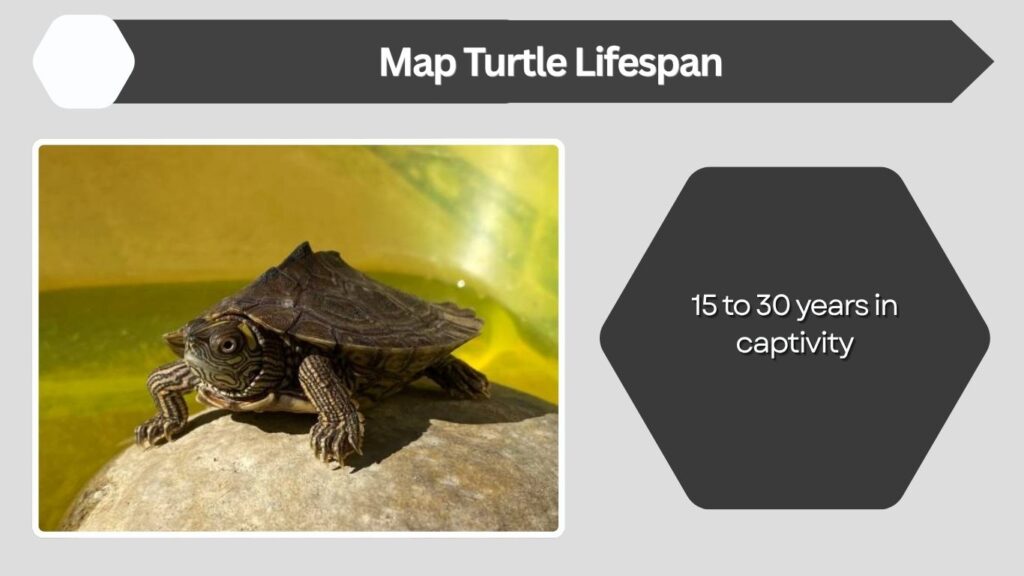
Map turtles are relatively long-lived reptiles that may survive for decades with proper care. Lifespan depends heavily on water quality, nutrition, enclosure size, and disease prevention.
Captive turtles often live longer than wild turtles because they face fewer predators and environmental threats.
How Long Map Turtles Live
Many map turtles may live:
- 15 to 30 years in captivity
- Several decades with proper care
- Longer in ideal conditions
Factors Affecting Lifespan
Important lifespan factors include:
- Clean water quality
- Proper diet
- UVB lighting
- Adequate tank size
- Veterinary care
Neglecting enclosure maintenance may lead to shell disease, respiratory infections, or nutritional deficiencies.
Map Turtle Behavior
Map turtles are active aquatic reptiles that spend much of their time swimming, basking, and searching for food. Many species are shy and quickly dive underwater when startled.
Their basking behavior is especially important because sunlight and heat help regulate metabolism and shell health.
Common Map Turtle Behaviors
Typical activities include:
- Basking on logs
- Swimming in currents
- Diving when frightened
- Searching for prey
- Resting underwater
Do Map Turtles Need Deep Water?
Yes, most map turtles are strong swimmers and benefit from relatively deep water areas. Unlike some terrestrial turtles, they are highly adapted to aquatic environments.
Deep water allows:
- Natural swimming behavior
- Exercise
- Better temperature regulation
- Reduced stress
Adequate swimming space is essential for healthy long-term care.
Common Health Problems in Map Turtles
Map turtles may develop health issues if water quality, diet, or lighting conditions are poor. Respiratory infections and shell problems are among the most common concerns in captivity.
Early treatment greatly improves recovery chances.
Signs of an Unhealthy Map Turtle
Warning signs include:
- Swollen eyes
- Soft shell areas
- Wheezing
- Poor appetite
- Unusual lethargy
Preventing Health Problems
Good husbandry practices include:
- Maintaining clean water
- Providing UVB lighting
- Offering balanced nutrition
- Monitoring temperatures
- Performing regular tank maintenance
Consistent care is the best way to support long-term turtle health.
FAQs
How big do map turtles get?
Map turtle size varies by species and sex. Males are usually much smaller, often reaching 3 to 6 inches, while females of larger species such as the Mississippi map turtle may grow over 10 inches long.
Are map turtles good pets?
Map turtles can make excellent pets for experienced reptile keepers because they are active, attractive, and interesting to observe. However, they require large aquatic enclosures, strong filtration, UVB lighting, and consistent water maintenance.
What do map turtles eat?
Map turtles are omnivores that eat insects, snails, aquatic plants, small fish, worms, and commercial turtle pellets. Young turtles usually consume more protein, while adults often eat larger amounts of plant matter and mollusks.
How long do map turtles live?
With proper care, many map turtles can live 15 to 30 years or longer in captivity. Lifespan depends on factors such as diet, water quality, tank size, lighting, and overall health care.
Do map turtles need deep water?
Yes, map turtles are strong swimmers and benefit from deep water areas that allow natural movement and exercise. Spacious aquatic environments help reduce stress and support healthy long-term development.