
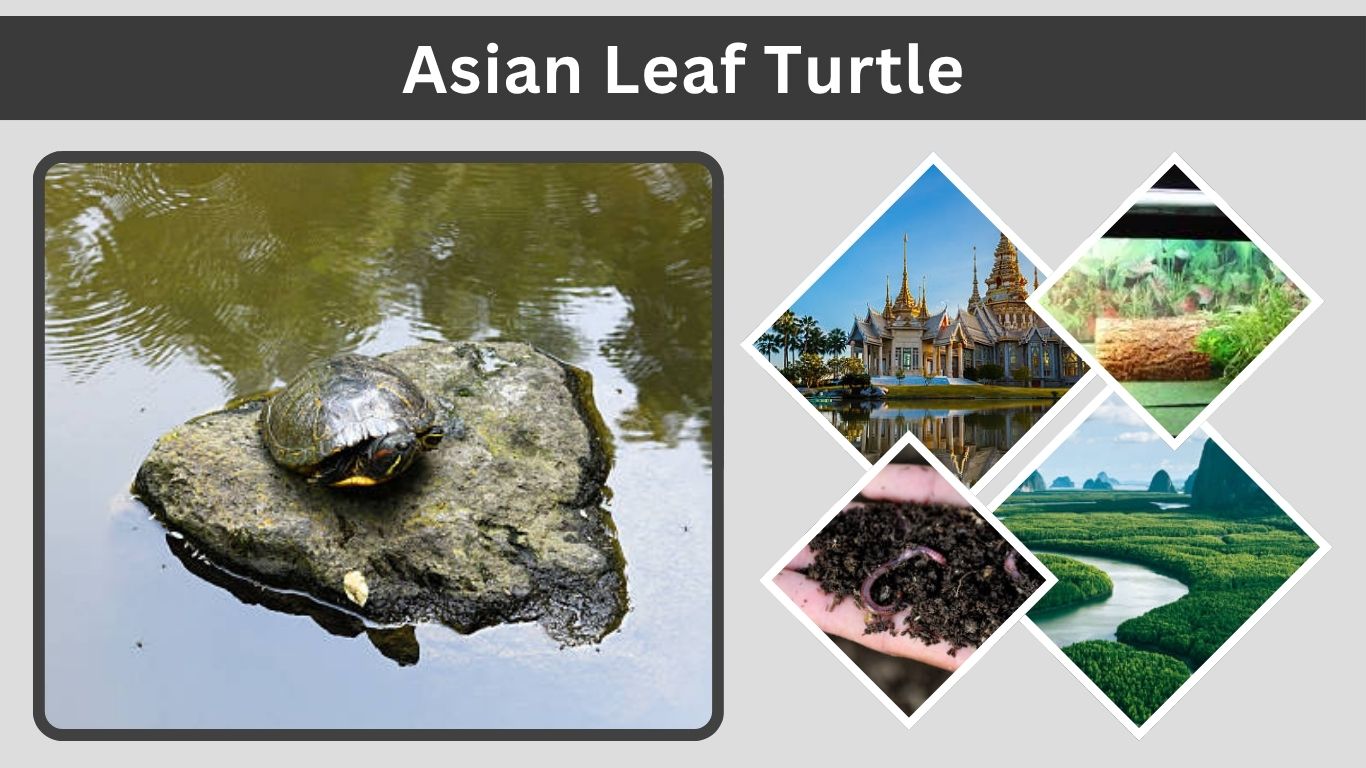
The Asian leaf turtle is a fascinating freshwater turtle known for its leaf-shaped shell, shy personality, and strong camouflage abilities. Native to tropical forests and wetlands across Southeast Asia, these turtles spend much of their time hiding among fallen leaves and dense vegetation. Asian leaf turtles are popular among reptile enthusiasts because of their unique appearance and manageable size, but they require specialized care and humid environments to remain healthy. Understanding their habitat, diet, lifespan, and behavior is essential for anyone interested in caring for these remarkable reptiles.
What Is an Asian Leaf Turtle?
The Asian leaf turtle belongs to a group of freshwater turtles commonly found in humid forest environments throughout Southeast Asia. These turtles are known for their flattened shells and earthy colors that help them blend naturally into leaf litter on the forest floor.
Unlike highly aquatic turtles, Asian leaf turtles spend much of their time walking through damp land habitats near streams, ponds, and marshy areas. Their secretive behavior makes them difficult to spot in the wild.
Key Facts About Asian Leaf Turtles
- Native to Southeast Asia
- Freshwater and semi-terrestrial turtles
- Excellent camouflage abilities
- Prefer warm humid environments
- Omnivorous feeding habits
Why They Are Called Leaf Turtles
Asian leaf turtles receive their name because their shells resemble fallen leaves. Their brown, olive, or golden shell coloration allows them to hide effectively among forest debris and avoid predators.
This camouflage is especially useful in tropical forests where dry leaves cover the ground year-round.
What Does an Asian Leaf Turtle Look Like?
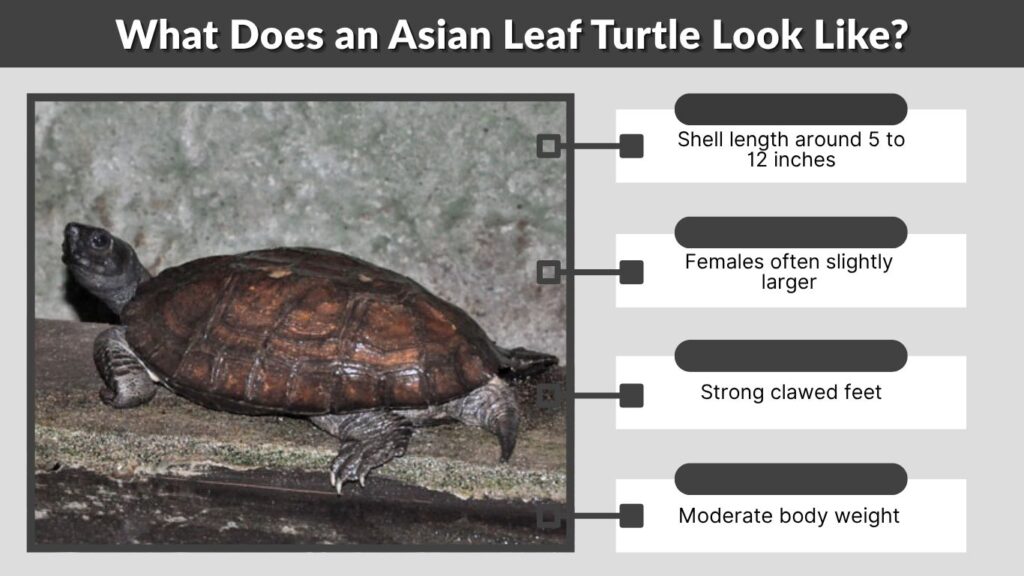
Asian leaf turtles have broad flattened shells with earthy patterns that help them blend into natural surroundings. Their shell texture and coloration vary depending on species, habitat, and age.
Most individuals display shades of brown, olive, tan, or dark green. Some species also have yellow or golden markings around the head and shell edges.
Asian Leaf Turtle Size
Asian leaf turtles are medium-sized turtles compared to many freshwater species.
Typical size features include:
- Shell length around 5 to 12 inches
- Females often slightly larger
- Strong clawed feet
- Moderate body weight
Giant Asian Leaf Turtle
Some larger species are referred to as giant Asian leaf turtles because of their broader shells and heavier bodies. These turtles require larger enclosures and more space in captivity than smaller leaf turtle species.
Despite their larger size, they still maintain the same shy and secretive behavior common among leaf turtles.
Types of Asian Leaf Turtles
Several species and regional variations of Asian leaf turtles exist throughout Asia. Although they share similar body shapes and forest habitats, differences in shell color, markings, and size help distinguish them.
Some species are more aquatic, while others spend more time walking across moist forest floors.
Asian Golden Leaf Turtle
The Asian golden leaf turtle is known for its brighter coloration and yellow-toned markings. These turtles are especially admired by reptile enthusiasts because of their attractive appearance.
Key characteristics include:
- Golden or yellow shell accents
- Dark brown shell background
- Strong camouflage patterns
- Humid forest habitat preference
Common Asian Leaf Turtle Species
Popular species include:
- Asian forest leaf turtle
- Golden leaf turtle
- Giant Asian leaf turtle
- Southeast Asian leaf turtle
Each species has slightly different environmental needs and care requirements.
Asian Leaf Turtle Habitat
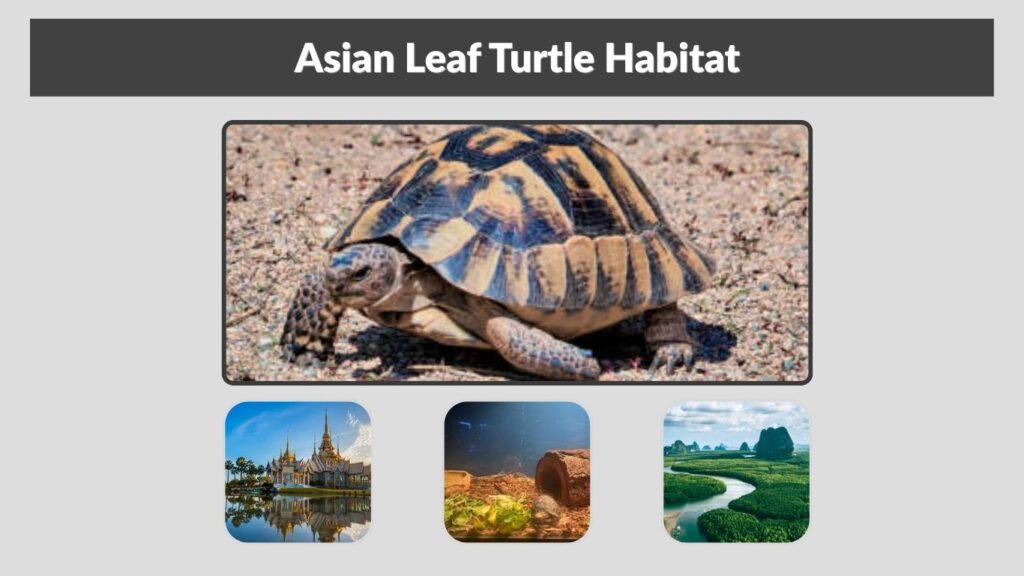
Asian leaf turtles naturally live in tropical forests, wetlands, marshes, and shallow freshwater environments. They prefer humid areas with plenty of vegetation and access to both land and water.
Most species are found near slow-moving streams or damp forest floors where hiding places are abundant.
Where Asian Leaf Turtles Live
Asian leaf turtles are commonly found in:
- Southeast Asia
- Forest wetlands
- Tropical riverbanks
- Humid jungle environments
- Shallow freshwater areas
Why Humidity Is Important
Humidity is one of the most important environmental factors for Asian leaf turtles. Dry conditions may lead to dehydration, shell problems, and respiratory illness.
Captive enclosures should provide:
- Moist substrate
- Access to shallow water
- Warm temperatures
- Hiding spaces
- Proper humidity control
Asian Leaf Turtle Diet
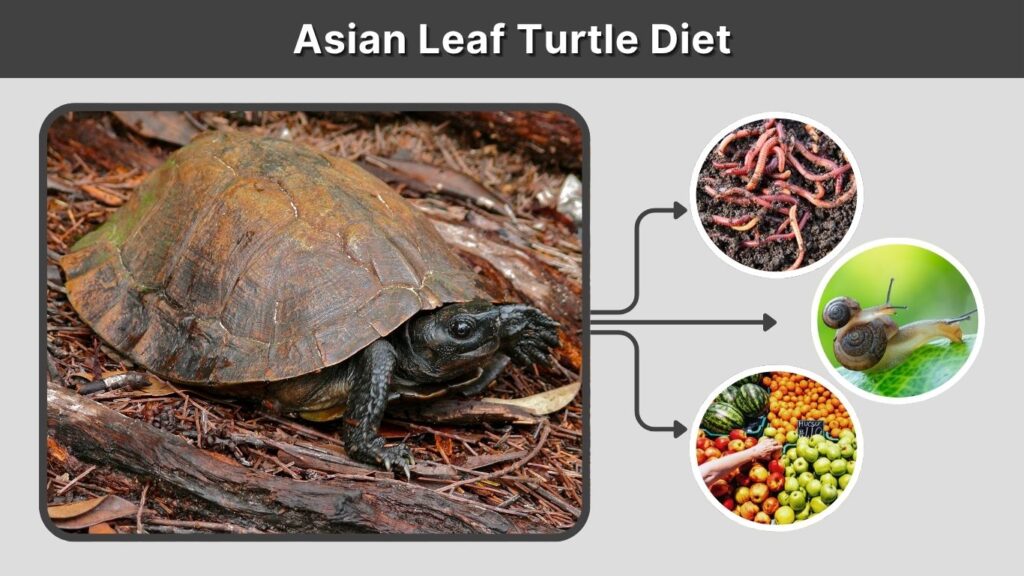
Asian leaf turtles are omnivores and eat a wide variety of foods in both wild and captive environments. Their diet changes depending on age, habitat, and food availability.
Young turtles often consume more protein, while adults may eat a broader mix of plant and animal matter.
Common Foods for Asian Leaf Turtles
Asian leaf turtles commonly eat:
- Worms
- Insects
- Snails
- Fruits
- Leafy vegetables
Asian Leaf Turtle Food in Captivity
Captive turtles benefit from balanced diets containing protein, plant matter, and commercial turtle pellets. Variety is important because poor nutrition can lead to shell deformities and health problems.
Fresh clean water should always be available for both drinking and soaking.
Asian Leaf Turtle Care Guide
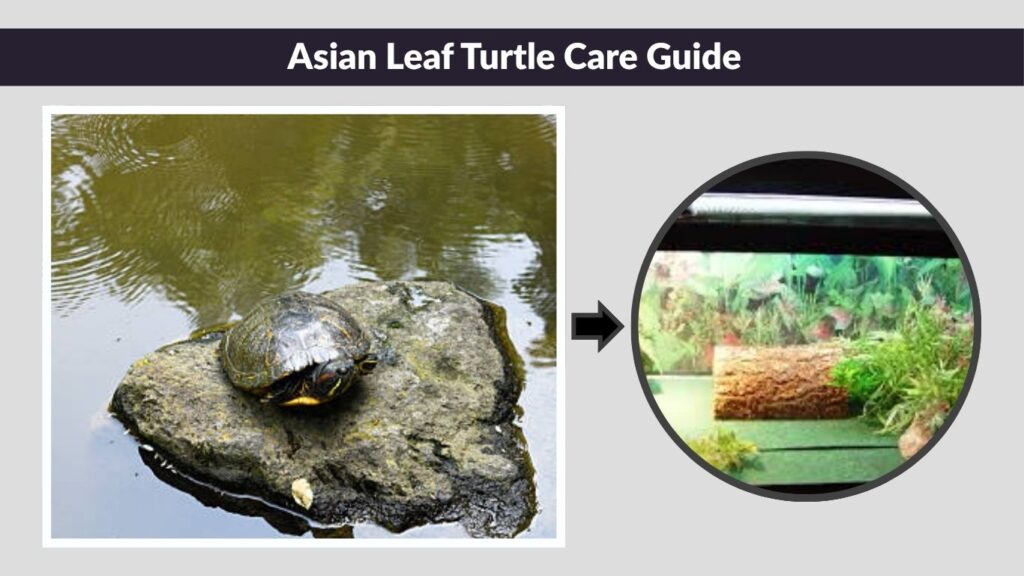
Asian leaf turtles require carefully maintained environments to remain healthy in captivity. Because they come from humid tropical regions, proper temperature and moisture control are extremely important.
Unlike some hardy turtle species, leaf turtles can become stressed easily if environmental conditions are poor.
Asian Leaf Turtle Care Sheet Basics
Important care requirements include:
- Warm humid enclosure
- Access to shallow water
- UVB lighting
- Soft natural substrate
- Secure hiding places
Caring for an Asian Leaf Turtle
Asian leaf turtles are shy reptiles that prefer quiet surroundings. Excessive handling may cause stress, especially in newly acquired turtles.
Owners should focus on:
- Stable humidity
- Proper diet
- Clean enclosure maintenance
- Limited disturbance
- Regular health monitoring
Baby Asian Leaf Turtle Care
Baby Asian leaf turtles are more delicate than adults and require extra attention during their early development. Young turtles are sensitive to dehydration, temperature changes, and poor nutrition, making proper enclosure setup extremely important.
Because hatchlings are naturally shy, they need secure hiding areas and stable environmental conditions to feel safe and remain healthy.
How to Care for a Baby Asian Leaf Turtle
Basic baby turtle care includes:
- Warm humid enclosure
- Shallow clean water
- Soft moist substrate
- Small hiding shelters
- Gentle temperature control
Baby Asian Leaf Turtle Diet
Young turtles require protein-rich foods to support healthy growth.
Common foods for hatchlings include:
- Small worms
- Tiny insects
- Soft vegetables
- Commercial turtle pellets
- Occasional fruit pieces
Feeding should occur regularly because baby turtles grow rapidly during their first months of life.
Asian Leaf Turtle Lifespan
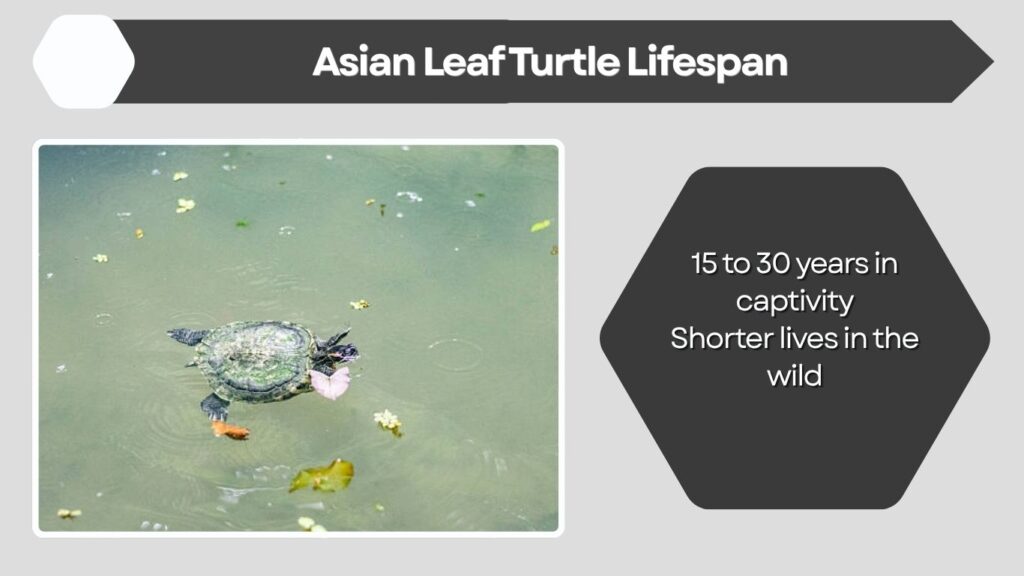
Asian leaf turtles can live for many years when provided with proper care and healthy living conditions. Lifespan varies depending on species, habitat quality, diet, and stress levels.
Captive turtles often live longer than wild turtles because they face fewer predators and environmental threats.
How Long Do Asian Leaf Turtles Live?
Most Asian leaf turtles may live:
- 15 to 30 years in captivity
- Shorter lives in the wild
- Longer with proper veterinary care
- Healthier lives with stable humidity
Factors That Affect Lifespan
Several conditions strongly influence turtle health and longevity.
Important factors include:
- Proper nutrition
- Humidity levels
- Clean enclosure conditions
- UVB exposure
- Stress reduction
Poor care may lead to shell disease, respiratory infections, or nutritional deficiencies that shorten lifespan.
Asian Leaf Turtle Eggs and Reproduction
Asian leaf turtles reproduce by laying eggs in soft moist soil or hidden nesting areas. Females carefully select safe locations where eggs remain protected from predators and environmental changes.
After mating, females dig shallow nests and deposit eggs before covering them with soil or vegetation.
Asian Leaf Turtle Eggs
Typical egg characteristics include:
- Oval white shells
- Small clutch sizes
- Moist incubation needs
- Fragile outer surfaces
Hatchling Development
Incubation times vary depending on species and environmental conditions. Warm stable temperatures help embryos develop properly before hatchlings emerge from the eggs.
Baby turtles instinctively search for water, shelter, and food shortly after hatching.
Asian Leaf Turtle Temperament and Behavior
Asian leaf turtles are naturally shy and secretive reptiles. In the wild, they spend much of their time hiding among leaves, roots, and dense vegetation to avoid predators.
Unlike highly active aquatic turtles, leaf turtles prefer calm quiet environments and may become stressed if disturbed frequently.
Common Asian Leaf Turtle Behaviors
Typical behaviors include:
- Hiding under leaves
- Soaking in shallow water
- Slowly exploring habitats
- Burrowing into moist substrate
- Resting during hot periods
Interaction With Humans
Asian leaf turtles usually tolerate limited handling but are not highly social pets. Excessive handling may increase stress and reduce feeding activity.
Owners should allow turtles plenty of quiet hiding spaces to encourage natural behavior.
Asian Leaf Turtle Price and Availability
Asian leaf turtles are sometimes available through reptile breeders and specialty exotic pet sellers. Prices vary depending on species rarity, size, coloration, and whether the turtle is captive-bred or wild-caught.
Captive-bred turtles are generally healthier and more ethical to purchase because wild populations already face environmental pressures.
Asian Leaf Turtle Price Range
Prices may vary based on:
- Species type
- Turtle age
- Breeder reputation
- Geographic location
- Availability
Asian Leaf Turtle for Sale Considerations
Before purchasing an Asian leaf turtle, owners should:
- Verify legal ownership rules
- Choose reputable breeders
- Avoid illegally collected turtles
- Inspect for signs of illness
- Prepare the enclosure beforehand
Responsible purchasing helps protect wild turtle populations from overcollection.
Are Asian Leaf Turtles Endangered?
Many Asian leaf turtle species face population declines because of habitat destruction, illegal wildlife trade, and environmental pollution. Wetland loss and forest clearing continue reducing suitable habitats across Southeast Asia.
Some species are protected under conservation programs and international wildlife regulations.
Asian Leaf Turtle IUCN Status
Conservation concerns include:
- Habitat loss
- Illegal pet trade
- Water pollution
- Overcollection
- Deforestation
Conservation Efforts
Organizations and wildlife groups work to protect Asian leaf turtles through:
- Captive breeding programs
- Habitat conservation
- Wildlife trade restrictions
- Public education
- Wetland restoration projects
Protecting natural habitats remains one of the most important conservation goals for these turtles.
Common Health Problems in Asian Leaf Turtles

Asian leaf turtles may develop health problems if enclosure conditions or diets are poor. High humidity and clean environments are essential for preventing disease.
Respiratory infections and shell problems are among the most common health concerns seen in captive turtles.
Signs of an Unhealthy Turtle
Warning signs include:
- Swollen eyes
- Soft shell areas
- Loss of appetite
- Wheezing or breathing trouble
- Unusual inactivity
Preventing Health Issues
Good care practices include:
- Proper UVB lighting
- Clean water supply
- Balanced nutrition
- Stable humidity
- Regular enclosure cleaning
Veterinary care from reptile specialists may be necessary if symptoms become severe.
Interesting Asian Leaf Turtle Facts
Asian leaf turtles possess several fascinating adaptations that help them survive in forest habitats.
Unique Facts About Asian Leaf Turtles
- Their shells resemble fallen leaves
- They are excellent at camouflage
- Most species prefer humid forests
- They are strong walkers on land
- Many species are shy and nocturnal
Why They Are Difficult to Spot
Their natural camouflage helps them blend perfectly into forest floors covered with leaves and soil. Predators often overlook them because their shell patterns closely resemble natural debris.
This camouflage also helps the turtles ambush insects and avoid danger in the wild.
FAQs
Are Asian leaf turtles good pets?
Asian leaf turtles can make good pets for experienced reptile keepers because they are calm and fascinating to observe. However, they require warm humid environments, specialized care, and carefully maintained enclosures to stay healthy.
What do Asian leaf turtles eat?
Asian leaf turtles are omnivores that eat worms, insects, snails, fruits, vegetables, and commercial turtle pellets. Young turtles usually need more protein, while adults benefit from a balanced mix of plant and animal foods.
How big do Asian leaf turtles get?
Most Asian leaf turtles grow between 5 and 12 inches in shell length depending on the species. Giant Asian leaf turtles may become larger and require more enclosure space than smaller species.
How long do Asian leaf turtles live?
With proper care, Asian leaf turtles may live 15 to 30 years in captivity. Lifespan depends on factors such as diet, humidity, enclosure quality, and overall health management.
Are Asian leaf turtles endangered?
Some Asian leaf turtle species face conservation threats because of habitat destruction, pollution, and illegal wildlife trade. Several species are protected through conservation programs and international wildlife regulations.