Sea turtles have lived in Earth’s oceans for more than 100 million years. Their life cycle is a remarkable journey that begins on sandy beaches and continues across vast oceans. From vulnerable eggs buried in nests to powerful adults that migrate thousands of miles, sea turtles experience several important stages of development. Understanding the sea turtle life cycle helps scientists protect these endangered marine reptiles and highlights the challenges they face throughout their lives in the wild.
What Is the Sea Turtle Life Cycle?
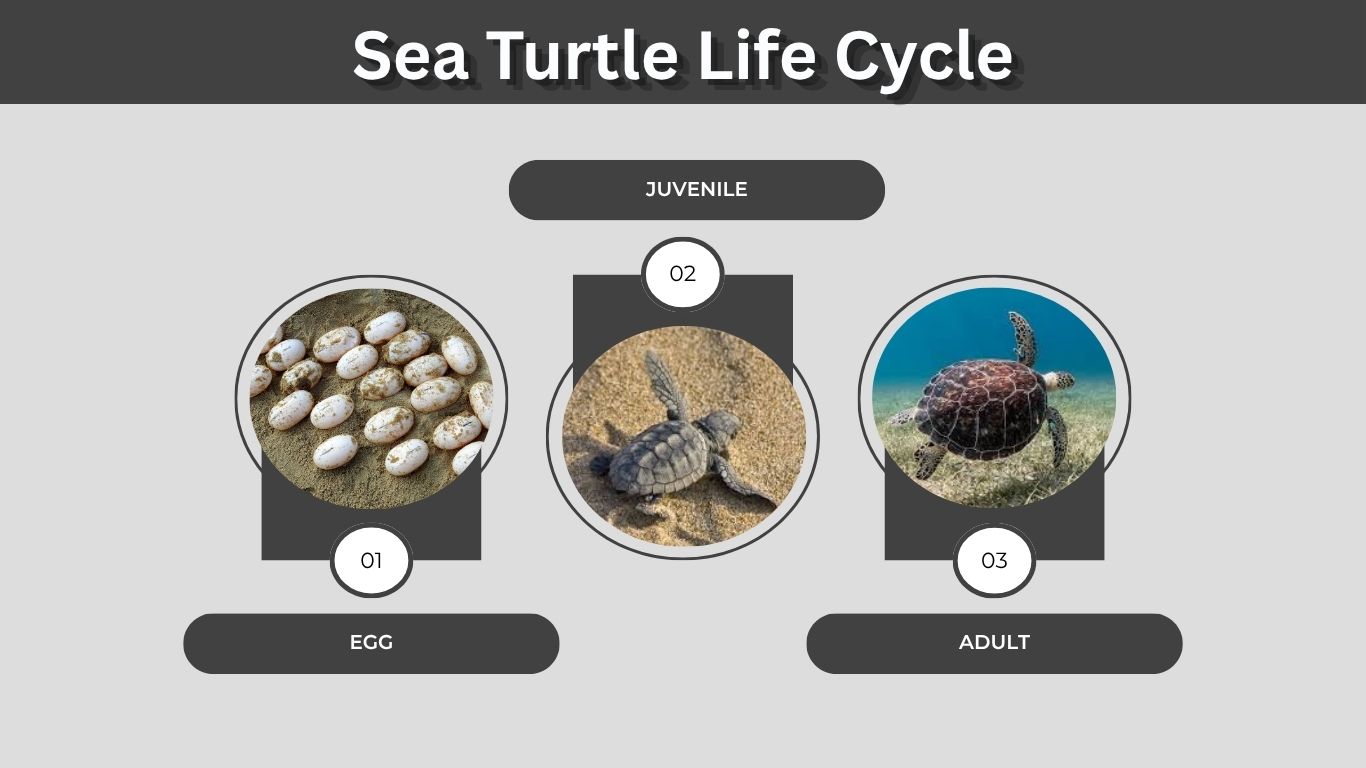
The sea turtle life cycle describes the stages a turtle goes through from the moment an egg is laid until it becomes a mature adult capable of reproducing. Although different species have unique characteristics, most sea turtles follow the same basic life cycle pattern. This journey can take decades and involves survival challenges at every stage.
Four Main Stages of the Sea Turtle Life Cycle
The life cycle of a sea turtle is generally divided into four stages:
- Egg
- Hatchling
- Juvenile
- Adult
Each stage plays a vital role in the turtle’s growth and survival. Only a small percentage of sea turtles successfully complete all stages and reach adulthood.
Why the Sea Turtle Life Cycle Is Unique
Sea turtles differ from many other reptiles because they spend most of their lives in the ocean. Female sea turtles return to land only to lay eggs, often on the same beaches where they hatched. Their ability to navigate across vast distances and survive for many decades makes their life cycle one of the most fascinating in the animal kingdom.
Stage 1: Egg
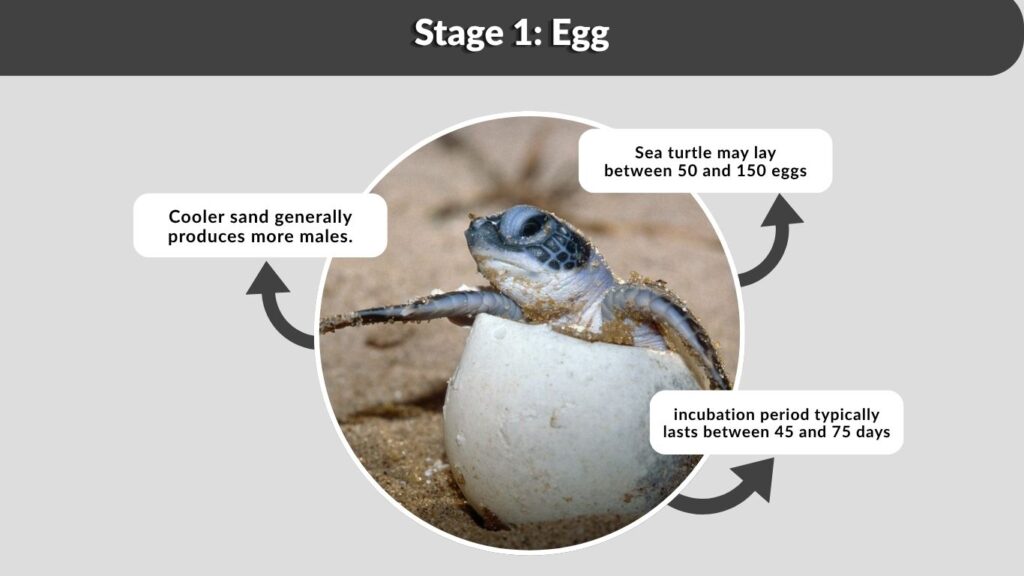
The egg stage marks the beginning of a sea turtle’s life. Female sea turtles come ashore during nesting season to lay their eggs on sandy beaches. Using their rear flippers, they dig a nest chamber above the high-tide line to protect the eggs from flooding.
Nesting and Egg Laying
A female sea turtle may lay between 50 and 150 eggs in a single nest, depending on the species. After laying the eggs, she carefully covers the nest with sand and returns to the ocean. The eggs are left to develop without parental care.
Incubation Period
The incubation period typically lasts between 45 and 75 days. During this time, the embryos grow inside the eggs and prepare for hatching. Environmental conditions, especially temperature, greatly influence their development.
Temperature Determines Gender
One of the most interesting facts about sea turtles is that nest temperature determines the sex of hatchlings.
- Warmer sand generally produces more females.
- Cooler sand generally produces more males.
- Extreme temperatures can reduce hatchling survival.
Scientists closely monitor nesting beaches because climate change can affect these temperature patterns.
Stage 2: Hatchling
The hatchling stage begins when young turtles break out of their eggs. Hatchlings usually emerge together at night, which helps increase their chances of avoiding predators.
Emerging From the Nest
After hatching, baby sea turtles work together to dig upward through the sand. This process can take several days. Once they reach the surface, they quickly move toward the brightest horizon, which is usually the ocean.
The Dangerous Journey to the Sea
The journey from the nest to the water is one of the most dangerous periods in a sea turtle’s life. Numerous predators wait for hatchlings as they cross the beach.
Birds, crabs, raccoons, and other animals often prey on young turtles before they reach the ocean. Artificial lights from buildings can also confuse hatchlings, causing them to move away from the sea instead of toward it.
Early Ocean Survival
Even after reaching the water, hatchlings face significant threats. Many become prey for fish and seabirds. As a result, only a small fraction survive their first few years of life. This low survival rate is one reason why female turtles lay so many eggs during nesting season.
Stage 3: Juvenile Sea Turtle
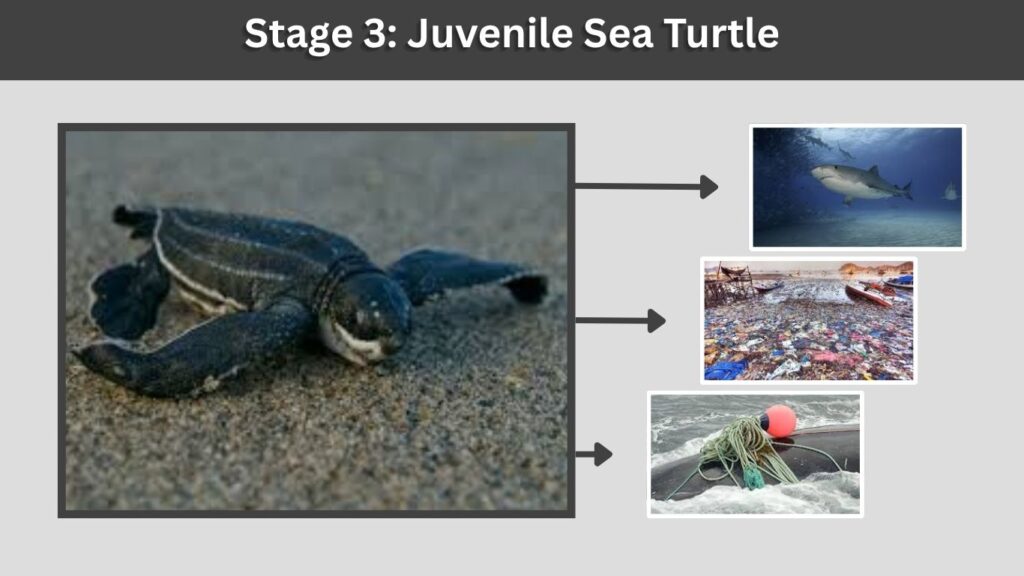
The juvenile stage begins after hatchlings enter the ocean and continues until they reach sexual maturity. This stage may last several years or even decades, depending on the species.
The Lost Years
Scientists often refer to the early juvenile period as the “lost years” because young turtles spend much of their time in the open ocean, making them difficult to study. During this stage, they drift with ocean currents and seek areas rich in food and shelter.
Growth and Development
As juvenile sea turtles grow, their diets may change. Some species eat jellyfish, while others consume seagrasses, algae, crustaceans, or small marine animals. Continuous feeding supports their rapid growth and prepares them for adulthood.
Challenges Faced by Juveniles
Juvenile sea turtles encounter many threats as they develop.
- Predation by sharks and large fish
- Plastic pollution in the ocean
- Entanglement in fishing gear
- Habitat degradation
Despite these challenges, surviving juveniles continue to grow stronger and eventually move into adult habitats, where they will spend the next stage of their lives.
Stage 4: Adult Sea Turtle
The adult stage is the final phase of the sea turtle life cycle. Depending on the species, sea turtles may take between 15 and 50 years to reach maturity. Once mature, they begin migrating to feeding and breeding areas, often traveling thousands of miles across the ocean.
Reaching Sexual Maturity
Adult sea turtles are fully developed and capable of reproduction. The age at which maturity occurs varies by species, food availability, and environmental conditions. Larger species generally take longer to mature than smaller ones.
Migration and Navigation
Sea turtles are famous for their remarkable navigation abilities. Scientists believe they use Earth’s magnetic field, ocean currents, and environmental cues to locate feeding grounds and nesting beaches.
Many adult turtles travel long distances between breeding and feeding habitats. These migrations are among the longest known movements of marine animals.
Reproduction and Nesting
During the breeding season, mature sea turtles return to nesting regions. Female turtles often return to the same beaches where they were born, a behavior known as natal homing.
After mating, females crawl onto beaches at night to lay eggs and begin a new generation. This completes the sea turtle life cycle and starts the process again.
Green Sea Turtle Life Cycle
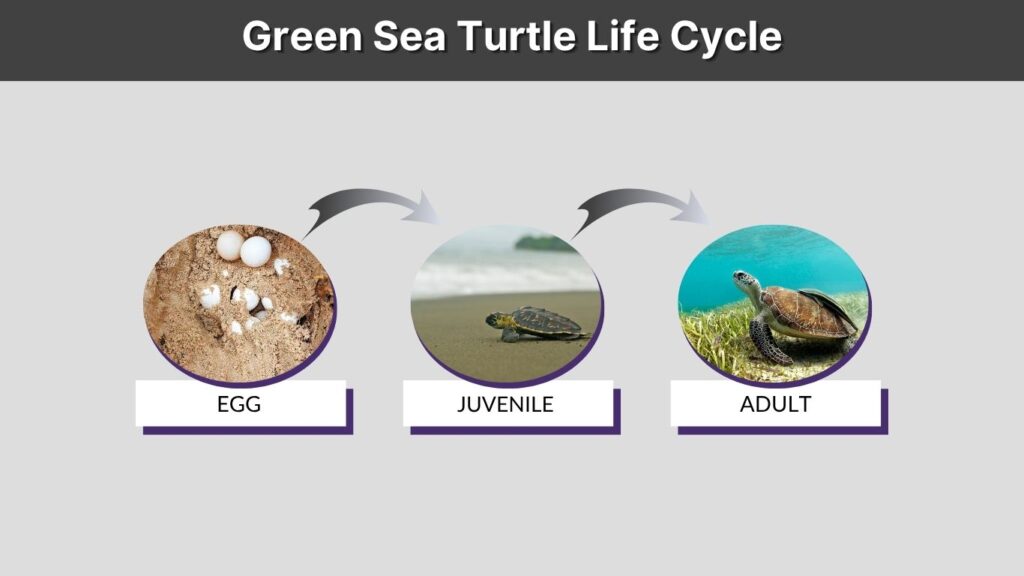
The green sea turtle is one of the most widely recognized sea turtle species. Its life cycle follows the same basic stages as other sea turtles but includes some unique characteristics.
Early Life and Growth
Green sea turtle hatchlings begin life as carnivores, feeding on small marine organisms. As they mature, they gradually shift to a diet dominated by seagrasses and algae.
This dietary change plays an important role in maintaining healthy seagrass ecosystems throughout tropical and subtropical waters.
Adult Green Sea Turtles
Adult green sea turtles can weigh more than 300 pounds and live for several decades. They migrate between feeding grounds and nesting beaches, contributing to the continuation of their species.
Because they rely heavily on coastal habitats, conservation efforts often focus on protecting seagrass beds and nesting areas used by green turtles.
Loggerhead and Leatherback Sea Turtle Life Cycles
Different sea turtle species share similar life cycle stages, but they also have unique traits that help them survive in diverse marine environments.
Loggerhead Sea Turtle Life Cycle
Loggerhead sea turtles are known for their large heads and powerful jaws. They feed on hard-shelled prey such as crabs, clams, and mollusks. Juveniles spend years in the open ocean before moving to coastal habitats where they continue growing until adulthood.
Female loggerheads return to nesting beaches every few years, laying multiple nests during a single breeding season.
Leatherback Sea Turtle Life Cycle
Leatherback sea turtles are the largest sea turtles in the world. Unlike other species, they do not have a hard shell. Instead, they possess a flexible, leathery carapace.
Leatherbacks spend much of their lives in the open ocean and can dive deeper than most marine reptiles. Their primary diet consists of jellyfish, making them important for maintaining balance within marine ecosystems.
Threats Throughout the Sea Turtle Life Cycle
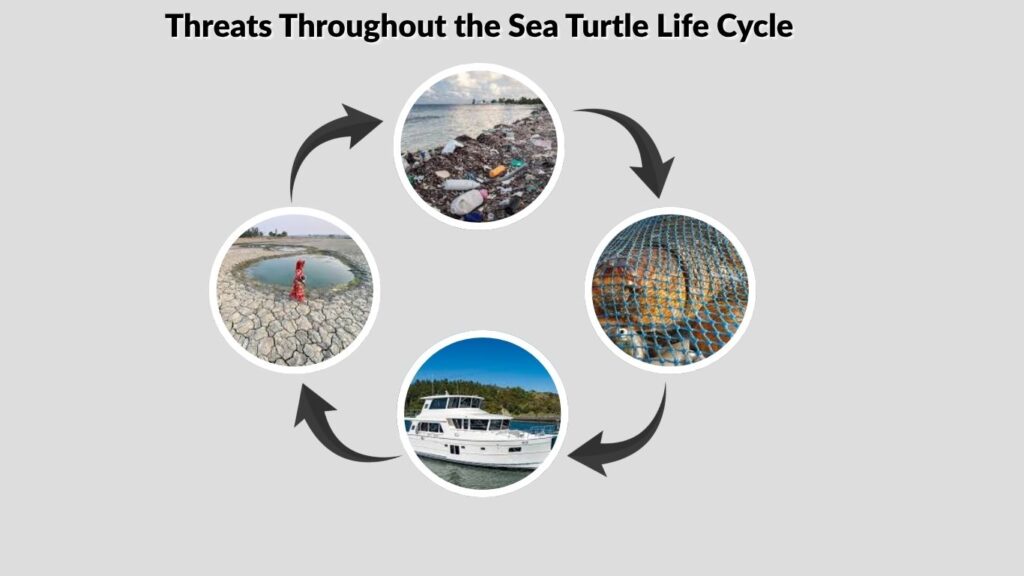
Sea turtles face numerous dangers during every stage of their lives. Human activities have increased many of these threats, making conservation efforts more important than ever.
Threats to Eggs and Hatchlings
Nesting beaches are vulnerable to environmental changes and human disturbances. Common threats include habitat loss, beach development, predators, and artificial lighting.
When hatchlings become disoriented by lights near the shore, they may move inland instead of toward the ocean, reducing their chances of survival.
Threats to Juveniles and Adults
As sea turtles grow older, they encounter additional challenges in marine environments.
- Plastic pollution and marine debris
- Accidental capture in fishing gear
- Boat strikes
- Climate change
- Ocean habitat degradation
These threats contribute to declining sea turtle populations around the world.
Sea Turtle Life Cycle Facts
The sea turtle life cycle includes many fascinating adaptations that have helped these reptiles survive for millions of years.
Interesting Facts About Sea Turtle Development
- Sea turtles have existed for more than 100 million years.
- Females often return to their birth beach to nest.
- Hatchling gender depends on nest temperature.
- Most hatchlings never reach adulthood.
- Some species migrate thousands of miles between feeding and nesting areas.
These remarkable traits demonstrate the resilience and complexity of sea turtle biology.
Sea Turtle Conservation and Protection
Protecting sea turtles requires cooperation among scientists, governments, conservation groups, and local communities. Because sea turtles depend on both marine and coastal habitats, conservation strategies must address threats across their entire life cycle.
Why Conservation Matters
Sea turtles play important roles in maintaining healthy marine ecosystems. They help regulate jellyfish populations, support seagrass growth, and contribute to nutrient cycling in coastal environments.
When sea turtle populations decline, these ecosystems can become unbalanced.
How People Can Help
Individuals can support sea turtle conservation through simple actions:
- Reduce plastic waste and recycle properly.
- Respect nesting beaches and wildlife regulations.
- Support marine conservation organizations.
- Choose sustainable seafood products.
- Participate in local beach cleanups.
Small actions can make a significant difference in protecting future generations of sea turtles.
FAQs
How long does the sea turtle life cycle take?
The sea turtle life cycle can last several decades. Most sea turtles take between 15 and 50 years to reach sexual maturity, depending on the species. Once they become adults, they can continue reproducing for many years and may live for 50 to 80 years or longer.
What are the four stages of the sea turtle life cycle?
The four main stages of the sea turtle life cycle are:
- Egg
- Hatchling
- Juvenile
- Adult
Each stage involves unique challenges, from surviving predators on the beach to navigating vast ocean habitats.
How many sea turtle hatchlings survive to adulthood?
Only a small percentage of sea turtle hatchlings survive to adulthood. Scientists estimate that approximately 1 in 1,000 hatchlings reaches maturity due to threats such as predators, pollution, habitat loss, and accidental capture in fishing gear.
Why do sea turtles return to the same beach to lay eggs?
Female sea turtles often return to the beach where they were born to lay their eggs. This behavior, known as natal homing, is believed to be guided by Earth’s magnetic field and other environmental cues that help turtles navigate across long distances.
What is the biggest threat to the sea turtle life cycle?
Human activities pose the greatest threat to sea turtles throughout their life cycle. Major dangers include plastic pollution, coastal development, climate change, fishing gear entanglement, boat strikes, and the destruction of nesting habitats. Conservation efforts are essential to improve sea turtle survival rates and protect future generations.