
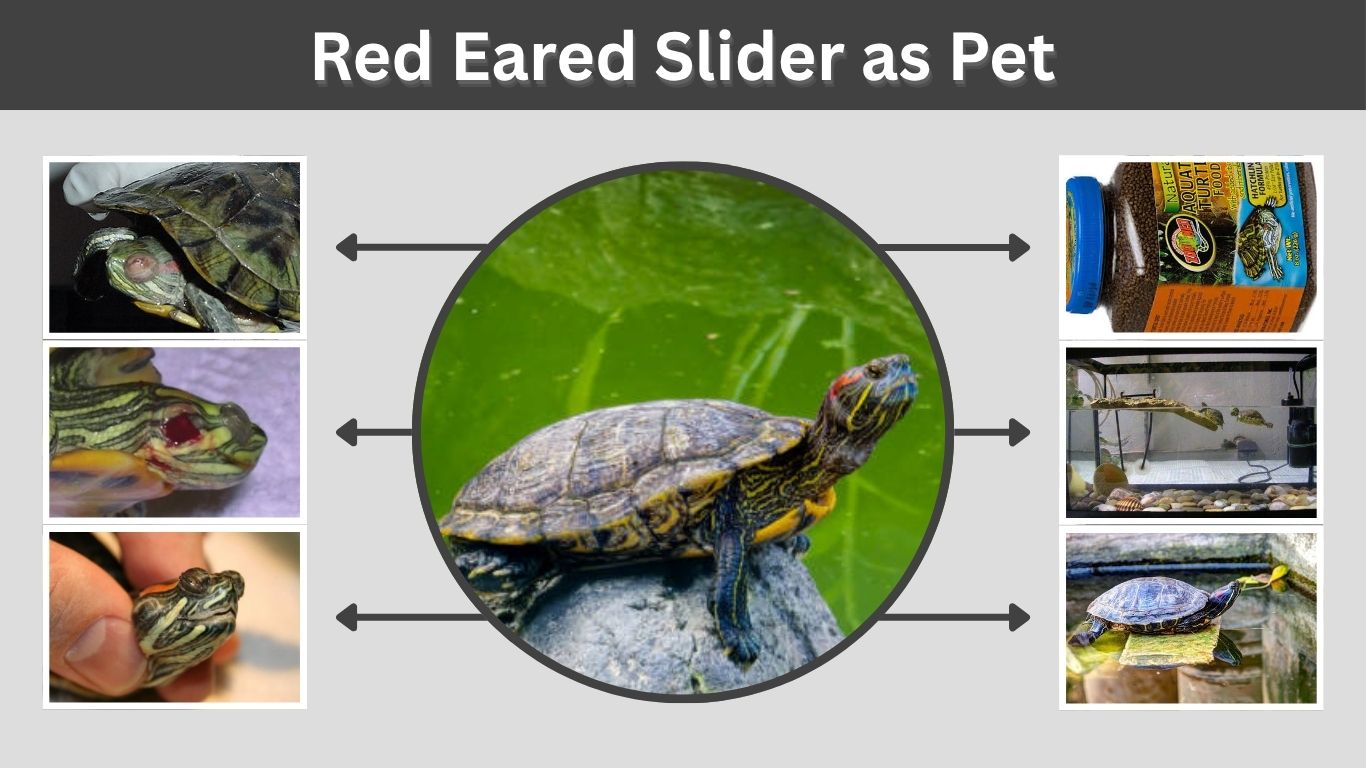
A red eared slider can be a fascinating pet, but it is not a low-maintenance animal. These turtles are often sold when they are small and cute, yet adults need a large tank, clean water, UVB lighting, heat, a proper diet, and long-term care. Before keeping a red eared slider as a pet, it is important to understand its size, lifespan, legal concerns, and daily care needs.
What Is a Red Eared Slider?
A red eared slider is a semi-aquatic turtle known for the red or orange stripe behind each eye. Its scientific name is Trachemys scripta elegans. It spends much of its time swimming, but it also needs a dry basking area where it can climb out of the water, warm up, and dry its shell.
Red eared sliders are one of the most common pet turtles in the world. They are popular because they are active, attractive, and widely available. However, they are also one of the most commonly abandoned turtles because many owners are not prepared for their adult size and care needs.
Are Red Eared Sliders Good Pets?
Red eared sliders can be good pets for responsible owners who are ready for a long-term reptile commitment. They are interesting to watch, can learn feeding routines, and may become comfortable with people nearby. However, they are not cuddly pets and should not be handled often.
They are best for people who enjoy observing aquatic reptiles and maintaining a proper habitat. They are not ideal for young children, busy owners, or anyone looking for a simple small-tank pet.
Red Eared Slider Pet Pros and Cons
A red eared slider may seem easy at first, but its care becomes more demanding as it grows. Understanding both the benefits and challenges can help you decide whether this turtle is right for you.
| Pros | Cons |
|---|---|
| Active and interesting to watch | Needs a large tank as an adult |
| Long lifespan with proper care | Can live for decades |
| Attractive markings and behavior | Requires UVB, heat, filtration, and basking area |
| Eats a varied diet | Produces a lot of waste |
| Can recognize feeding routines | Not a good pet for frequent handling |
| Widely known and studied | May be restricted or illegal in some areas |
Red Eared Slider Lifespan
A red eared slider can live for many years. With proper care, many live 20 to 30 years, and some may live longer. This means buying or adopting one is a long-term responsibility, not a short hobby.
Many people get a turtle when it is tiny without realizing it may still be alive when they move homes, change jobs, go to college, or start a family. Before getting one, think carefully about whether you can provide care for decades.
How Big Do Red Eared Sliders Get?
Red eared sliders start small, but they do not stay that way. Adult males are often smaller than females, while females can grow much larger. Many adults reach 8 to 12 inches in shell length.
A turtle that is only a few inches long may eventually need a 75 to 100+ gallon setup. This is one of the biggest reasons red eared sliders are harder to keep than many beginners expect.
Red Eared Slider Tank Setup
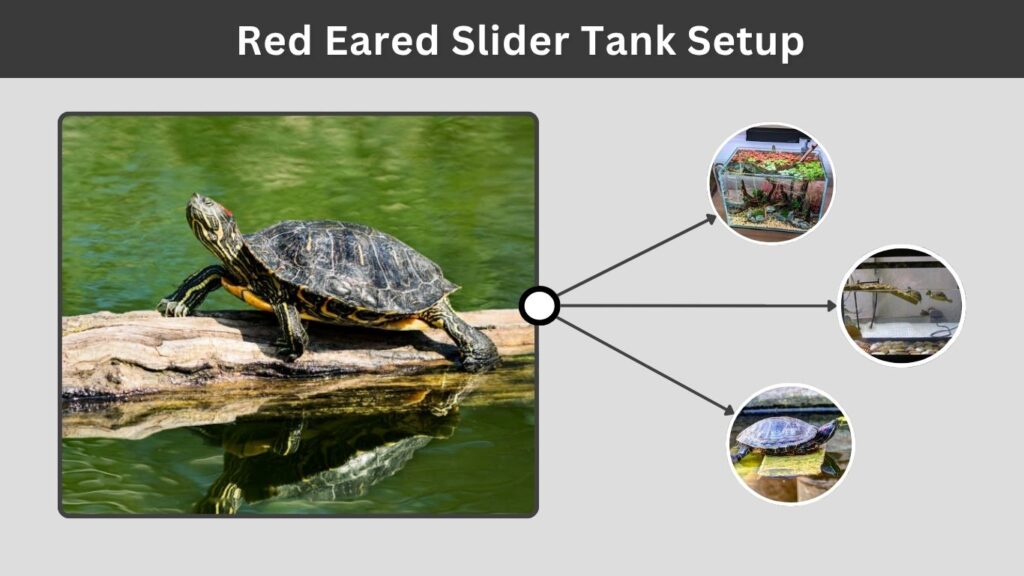
A proper tank setup is the most important part of red eared slider care. These turtles need enough water to swim, a strong filter, a safe basking dock, heat, UVB lighting, and clean water.
Small plastic bowls or tiny “turtle kits” are not suitable long-term homes. They may work only temporarily for a very young turtle, and even then, they usually lack the space and equipment needed for good health.
Tank Size
A common guideline is to provide about 10 gallons of water per inch of shell length. For example, a 5-inch turtle needs much more room than a small bowl or 10-gallon aquarium. Adult red eared sliders often need at least 75 gallons, and larger females may need 100 gallons or more.
Bigger tanks are easier to keep clean and give the turtle more room to swim. A cramped tank can lead to stress, poor water quality, shell problems, and unhealthy growth.
Water Depth
Red eared sliders are strong swimmers. The water should be deep enough for swimming and turning around comfortably. Young turtles should still be able to reach resting spots easily, but they should not be kept in shallow water forever.
The turtle should also have ways to rest near the surface, such as a sturdy dock or safe resting structure.
Basking Area
A red eared slider must have a dry basking area. This platform should allow the turtle to climb completely out of the water. Basking helps the turtle dry its shell, regulate body temperature, and absorb light needed for healthy bones and shell growth.
The basking area should be:
- Stable and easy to climb onto
- Large enough for the whole turtle
- Completely dry on top
- Positioned under heat and UVB lighting
- Safe, with no sharp edges or trapping spaces
If a turtle cannot fully dry off, it may be more likely to develop shell or skin problems.
Lighting and Heat
Red eared sliders need both heat and UVB lighting. A heat lamp warms the basking area, while UVB helps the turtle produce vitamin D3 and use calcium properly. Without UVB, turtles can develop serious bone and shell problems.
UVB Light
Use a reptile UVB bulb designed for turtles or reptiles. Place it over the basking area according to the bulb manufacturer’s instructions. UVB bulbs lose effectiveness over time, even if they still produce visible light, so they must be replaced regularly.
Do not rely on sunlight through a window. Glass blocks much of the useful UVB, and tanks near windows can overheat.
Heat Lamp
The basking area should be warmer than the water so the turtle is encouraged to climb out and bask. The exact temperature depends on age and setup, but many care guides recommend a warm basking zone and moderately warm water.
Use a thermometer for both the water and basking area. Guessing temperatures can lead to water that is too cold, too hot, or a basking spot the turtle avoids.
Filtration and Water Quality
Red eared sliders are messy animals. They eat in water, produce waste in water, and can quickly make a tank dirty. A strong filter is essential.
Many turtle keepers use canister filters rated for more water than the tank holds. This is because turtles produce more waste than most fish. Even with a good filter, regular water changes are still needed.
Cleaning Routine
A good cleaning routine may include:
- Removing uneaten food
- Checking the filter regularly
- Partial water changes
- Wiping algae from surfaces
- Cleaning the basking platform
- Testing or monitoring water quality
- Deep cleaning when needed
Clean water is not just about appearance. Poor water quality can contribute to eye irritation, shell rot, skin infections, and bad odor.
Red Eared Slider Diet
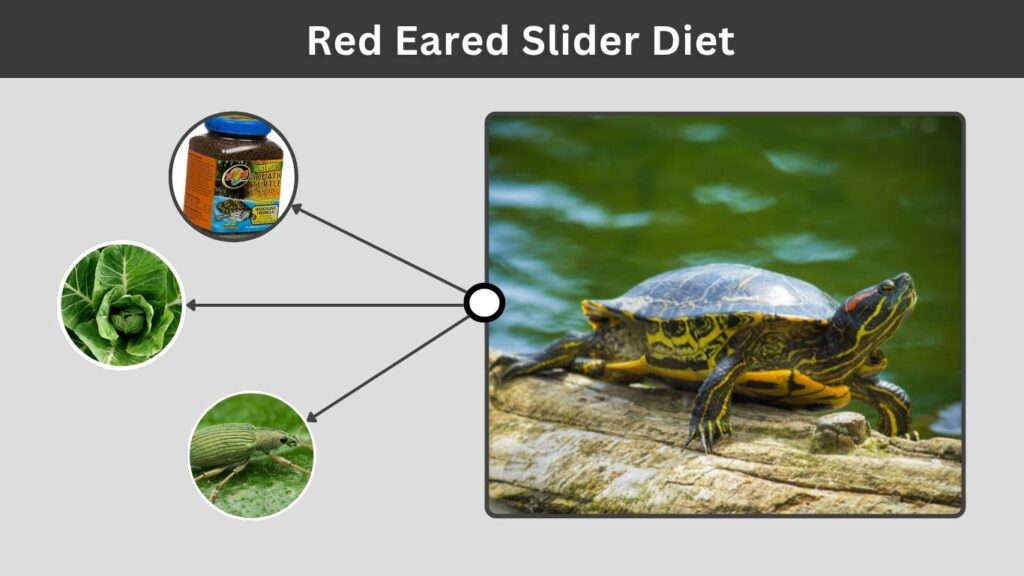
Red eared sliders are omnivores. They eat both animal-based foods and plant material. Young sliders usually need more protein, while adults should eat more leafy greens and aquatic plants.
A healthy diet should not be only dried shrimp or only commercial pellets. Pellets can be useful, but they should be part of a balanced diet.
Foods Red Eared Sliders Can Eat
A varied diet may include:
- Commercial aquatic turtle pellets
- Leafy greens such as romaine, dandelion greens, and collard greens
- Aquatic plants such as duckweed or water lettuce
- Occasional insects or worms
- Small amounts of suitable vegetables
- Calcium sources such as cuttlebone
Avoid feeding too much high-protein food to adult turtles. Overfeeding can cause obesity, poor shell growth, and water quality problems.
Foods to Avoid
Do not feed red eared sliders random human snacks. Avoid processed foods, salty foods, dairy, bread, candy, and seasoned meats. Also avoid feeding wild-caught insects or fish from polluted areas.
Iceberg lettuce has little nutrition and should not be a main food. Spinach should be limited because it can interfere with calcium use when fed too often.
Handling a Red Eared Slider
Red eared sliders are usually better for watching than handling. They may become used to their owner, but frequent handling can stress them. Some may kick, scratch, or bite when picked up.
If you must handle one, support its body securely with both hands. Keep it low over a safe surface so it cannot fall. Wash your hands before and after handling.
Do Red Eared Sliders Bite?
Yes, they can bite. A small turtle bite may be startling, but a large adult can bite hard enough to hurt. Most bites happen when the turtle is scared, mishandled, or mistakes fingers for food.
Do not hand-feed if it encourages the turtle to snap at fingers. Use feeding tongs if needed.
Health and Common Problems
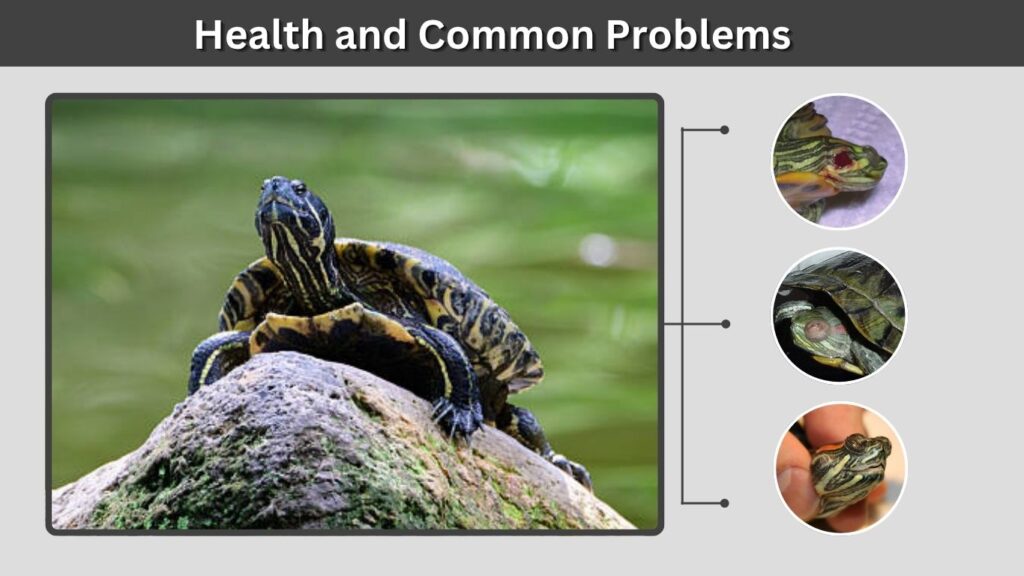
A healthy red eared slider should be alert, active, willing to eat, and able to swim and bask normally. Its eyes should be clear, and its shell should be firm and free from soft spots, deep pits, or bad smells.
Common health problems include:
- Shell rot
- Respiratory infections
- Swollen eyes
- Vitamin or calcium deficiency
- Overgrown claws or beak
- Poor appetite
- Abnormal floating or swimming
- Skin irritation
If your turtle is wheezing, floating sideways, refusing food, has swollen eyes, or has a soft shell, contact a reptile veterinarian.
Salmonella Safety
Turtles can carry Salmonella bacteria even when they look healthy. This is one reason turtle hygiene is important. Children, elderly people, pregnant people, and anyone with a weakened immune system are at higher risk from Salmonella infection.
Safety steps include:
- Wash hands after touching the turtle, tank, water, filter, or supplies.
- Do not clean turtle items in the kitchen sink.
- Do not let turtles roam on kitchen counters, beds, or dining areas.
- Keep turtle supplies separate from human food items.
- Supervise children around turtles.
- Do not kiss or cuddle a pet turtle.
In the United States, federal law bans the sale and distribution of turtles with shells under 4 inches as pets because small turtles have been linked to Salmonella illnesses.
Are Red Eared Sliders Legal as Pets?
Red eared slider laws vary by country, state, and local area. In some places, they are legal to own but restricted for sale. In other places, they may be banned because they are invasive or because of public health concerns.
Before buying or adopting one, check local rules. This is especially important if you live outside the turtle’s native range.
Never Release a Pet Red Eared Slider
Never release a pet red eared slider into a pond, lake, river, park, or wetland. Released sliders can compete with native turtles, spread disease, and damage local ecosystems. In many places, releasing a pet turtle is illegal.
If you can no longer care for your turtle, contact a reptile rescue, wildlife authority, exotic vet, or responsible turtle keeper. Rehoming is much better than release.
Red Eared Slider as a Beginner Pet
A red eared slider is often marketed as a beginner pet, but that can be misleading. It is hardy compared with some reptiles, but it still needs expensive equipment and consistent care.
It may be a suitable beginner reptile only for someone who is ready to invest in:
- A large tank or pond
- Strong filtration
- UVB and heat lighting
- Water changes
- A proper diet
- Veterinary care
- Decades of responsibility
For many beginners, the biggest challenge is not feeding the turtle; it is maintaining the habitat.
Cost of Keeping a Red Eared Slider
The turtle itself may be inexpensive, but the setup is not. A proper enclosure can cost much more than the animal.
Expected expenses may include:
- Large aquarium, stock tank, or pond setup
- Canister filter or strong turtle filter
- UVB bulb and fixture
- Heat lamp and fixture
- Basking dock
- Water heater if needed
- Thermometers
- Food and supplements
- Water conditioner
- Veterinary visits
Owners should plan for both upfront and ongoing costs.
Should You Get a Red Eared Slider?
A red eared slider can be a rewarding pet if you enjoy aquatic reptiles and are prepared for long-term care. It is not a good choice if you want a small, easy, low-cost pet that can live in a tiny tank.
Choose a red eared slider only if you can provide a large enclosure, clean water, proper lighting, safe handling, and responsible care for many years. When cared for properly, this turtle can be an active and fascinating companion to observe.
FAQs
Is a red eared slider a good pet?
A red eared slider can be a good pet for responsible owners who understand its needs. It requires a large aquatic tank, UVB lighting, heat, filtration, a basking area, and regular cleaning. It is better for observation than frequent handling and is not ideal for very young children.
How big of a tank does a red eared slider need?
A common rule is about 10 gallons of water per inch of shell length. Many adult red eared sliders need at least 75 gallons, and large females may need 100 gallons or more. Bigger tanks are better because they provide swimming space and help maintain water quality.
What do red eared sliders eat?
Red eared sliders eat a mix of commercial turtle pellets, leafy greens, aquatic plants, and occasional protein foods such as insects or worms. Young turtles eat more protein, while adults should eat more plant matter. Avoid processed human foods, bread, dairy, and salty snacks.
Can you hold a red eared slider?
You can hold a red eared slider when necessary, but frequent handling is not recommended. These turtles may become stressed and can scratch or bite. Always support the turtle securely with both hands, keep it low to avoid falls, and wash your hands afterward.
How long do red eared sliders live?
Red eared sliders can live 20 to 30 years or longer with proper care. This long lifespan makes them a serious commitment. Before getting one, make sure you can provide suitable housing, food, lighting, cleaning, and veterinary care for decades.