
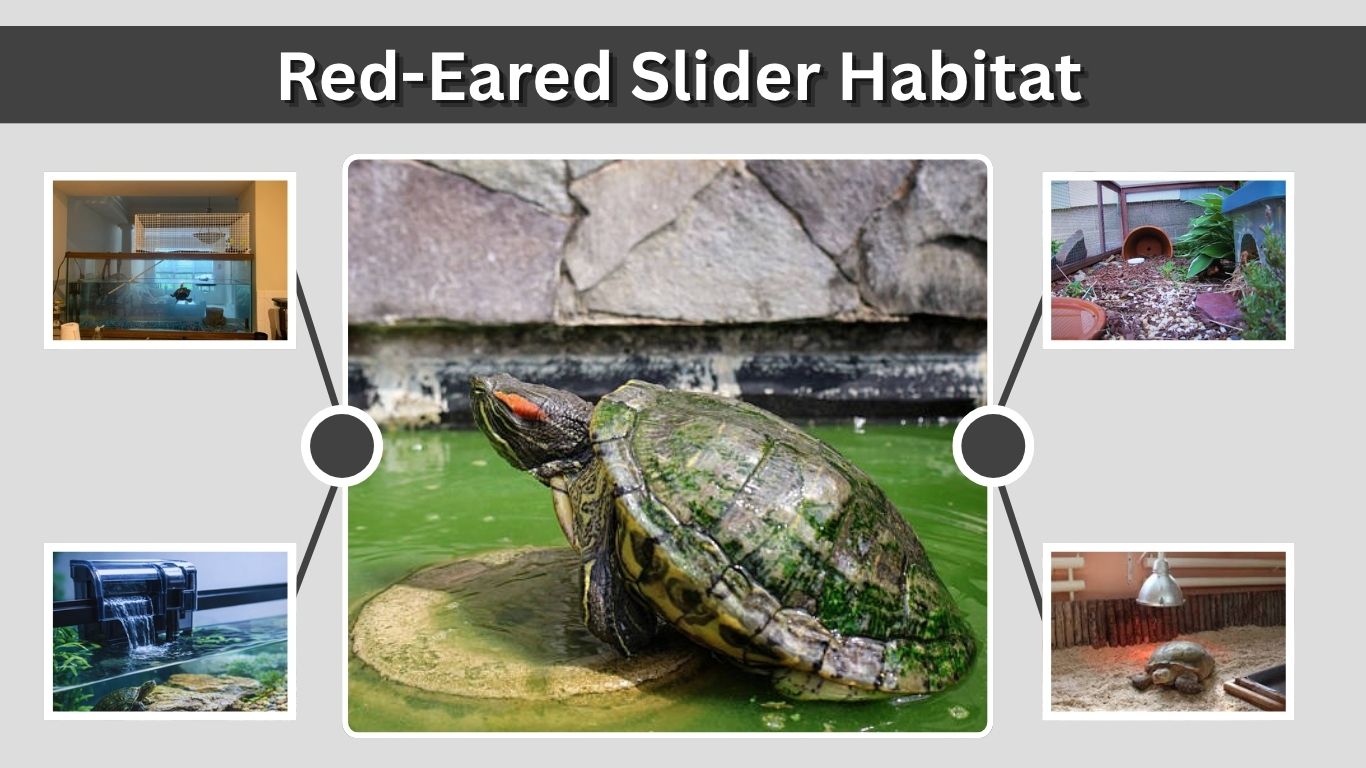
A red-eared slider habitat should provide clean water, dry basking space, heat, UVB lighting, and enough room for swimming. These turtles are semi-aquatic, which means they need both water and land areas to stay healthy. Whether you are planning an indoor tank, outdoor pond, or learning about their natural habitat, the right setup makes a major difference in their long-term health.
What Is the Natural Habitat of a Red-Eared Slider?
Red-eared sliders are freshwater turtles that naturally live in warm, slow-moving water. Their native habitat includes ponds, lakes, marshes, swamps, streams, and quiet river edges. They prefer places where they can swim easily, climb out to bask, and hide among plants or logs.
Red-Eared Slider Habitat in the Wild
In the wild, red-eared sliders spend much of their time in water but regularly climb onto rocks, logs, muddy banks, or floating plants to bask in the sun. Basking helps them warm their bodies, dry their shells, and support healthy shell growth.
A good wild habitat usually includes:
- Slow-moving or still freshwater
- Muddy or soft bottoms
- Aquatic plants
- Logs, rocks, or banks for basking
- Sunny areas
- Hiding places from predators
- Access to food such as plants, insects, fish, and small aquatic animals
These turtles are adaptable, which is one reason they are found in many areas outside their native range. However, pet red-eared sliders should never be released into the wild because they can become invasive and harm local turtle populations.
Red-Eared Slider Native Habitat
The red-eared slider’s native habitat is mainly in the south-central United States and parts of northern Mexico. In these areas, they live in warm freshwater environments with plenty of sun and vegetation.
Their ability to survive in many types of water bodies makes them hardy turtles, but that does not mean they can live in poor pet conditions. A captive habitat still needs proper lighting, water quality, space, and temperature control.
Red-Eared Slider Habitat Needs
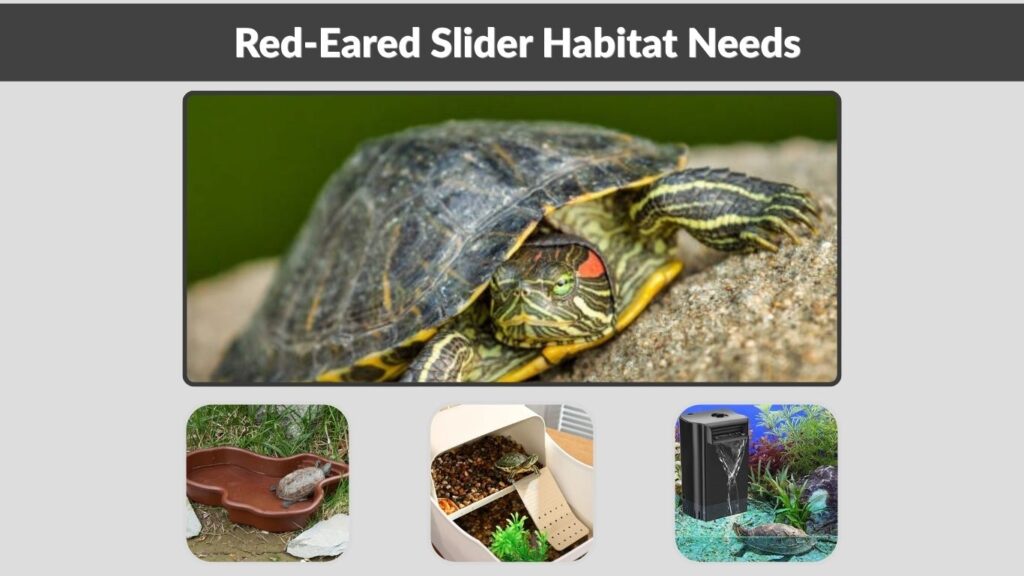
A proper red-eared slider turtle habitat must copy the most important parts of its natural environment. The goal is to create a safe space where the turtle can swim, bask, eat, rest, and behave naturally.
Basic Habitat Requirements
Every red-eared slider habitat should include:
- A large water area for swimming
- A dry basking platform
- A heat lamp over the basking area
- A UVB light for shell and bone health
- A strong water filter
- Safe water temperature
- Clean, treated water
- Space to turn, dive, and explore
- A secure lid or barrier to prevent escape
Red-eared sliders are active turtles. A small bowl, shallow container, or tiny starter kit is not suitable for long-term care. Baby turtles may look small, but they grow quickly and eventually need a much larger habitat.
Ideal Habitat Conditions
| Habitat Feature | Recommended Setup | Why It Matters |
|---|---|---|
| Water depth | Deep enough for swimming and diving | Supports exercise and natural behavior |
| Tank size | About 10 gallons per inch of shell length | Prevents crowding and stress |
| Basking area | Fully dry platform | Helps shell dry and prevents health issues |
| UVB light | Reptile-safe UVB bulb | Supports calcium use and shell strength |
| Filtration | Strong aquarium or pond filter | Keeps water cleaner and safer |
| Temperature | Warm water and warmer basking spot | Helps digestion, activity, and immunity |
Indoor Red-Eared Slider Habitat
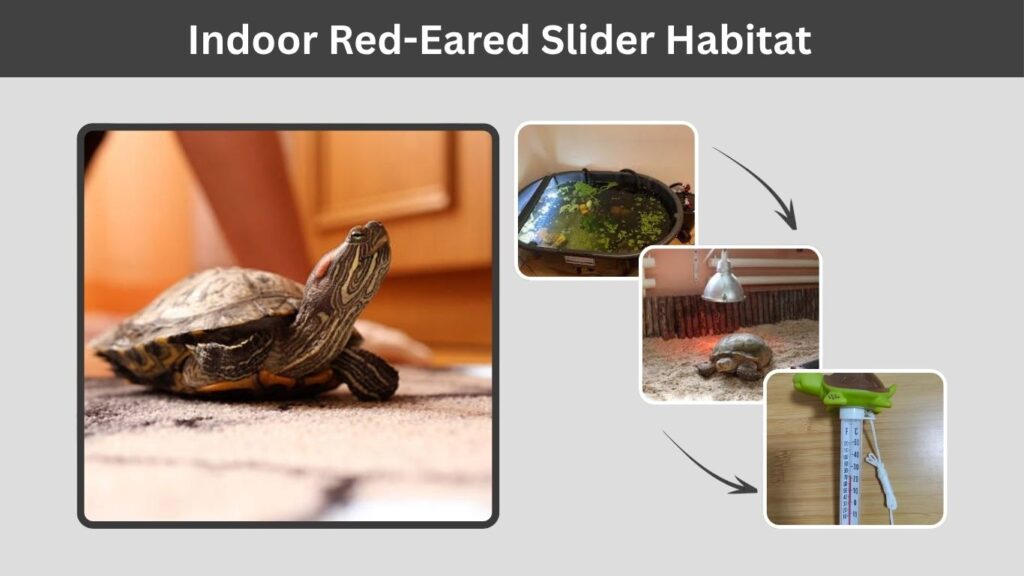
An indoor red-eared slider habitat is usually built in a large aquarium, stock tank, or indoor turtle tub. This is the most common option for pet owners because it allows better control over lighting, temperature, and water quality.
Red-Eared Slider Habitat Tank Setup
A red-eared slider habitat tank should be large enough for the turtle’s current and future size. A useful rule is about 10 gallons of water for every inch of shell length. For example, a 6-inch turtle should have around 60 gallons of water, while a 10-inch adult may need about 100 gallons.
The tank should include a basking platform where the turtle can climb completely out of the water. The platform should be stable, easy to access, and large enough for the turtle’s whole body.
A proper indoor setup should include:
- Large aquarium, tub, or stock tank
- Water heater if the room is cool
- UVB lamp
- Heat lamp
- Basking dock or platform
- External canister filter or strong internal filter
- Thermometer for water
- Thermometer for basking area
- Safe ramp or access point
- Secure cover if needed
Glass aquariums are popular because they allow easy viewing, but large plastic stock tanks can also work well. The most important thing is that the habitat is spacious, safe, and easy to clean.
Indoor Habitat Lighting
Lighting is one of the most important parts of a red-eared slider indoor habitat. Turtles need both heat and UVB. A heat lamp warms the basking area, while UVB helps the turtle process calcium.
Without UVB, red-eared sliders can develop weak bones, soft shells, deformities, and other serious health problems. UVB bulbs also lose strength over time, so they should be replaced according to the manufacturer’s instructions.
Water Quality in an Indoor Habitat
Red-eared sliders produce a lot of waste, so clean water is essential. A weak filter may not be enough for an adult turtle. Many owners use filters rated for tanks larger than the actual habitat because turtles are messier than fish.
Partial water changes should be done regularly. Leftover food, waste, and debris should be removed before they affect water quality. Dirty water can lead to shell rot, skin problems, eye irritation, and bad odors.
Outdoor Red-Eared Slider Habitat
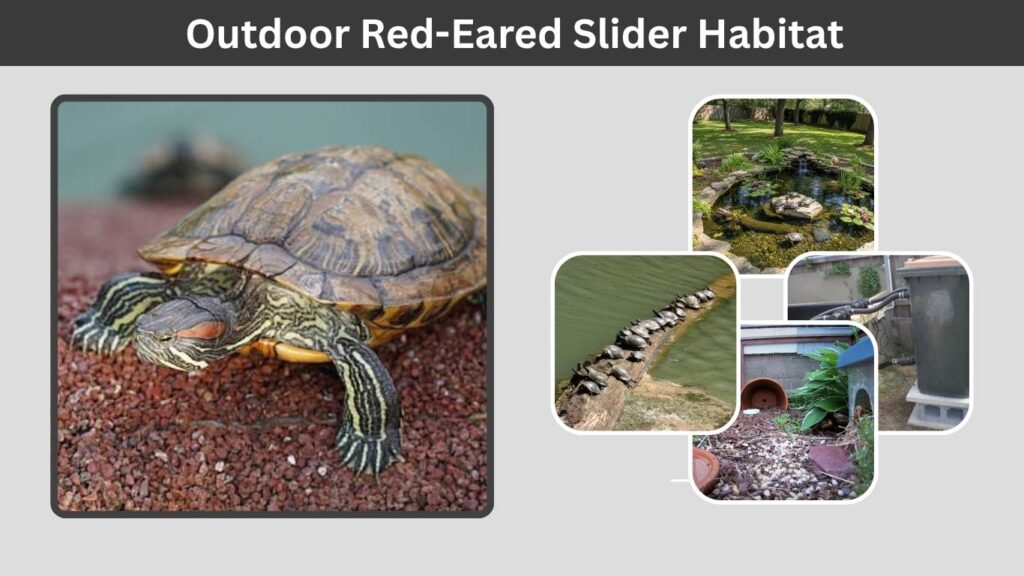
An outdoor red-eared slider habitat can be a great option in warm climates. Outdoor ponds give turtles more natural sunlight, swimming space, and enrichment. However, they must be designed carefully to protect the turtle from predators, escape, and extreme weather.
Outdoor Red-Eared Slider Turtle Habitat Setup
A safe outdoor habitat should include deep water, shallow resting areas, basking spots, plants, and secure fencing. The pond should be large enough for swimming and deep enough to help regulate temperature.
Outdoor habitats often work best when they include:
- A secure pond or water garden
- Fencing around the habitat
- Basking logs, rocks, or platforms
- Aquatic plants for cover
- Shaded areas
- Predator protection
- A pond filter
- Safe entry and exit points
- Barriers that prevent digging or climbing out
Red-eared sliders are good climbers and may escape if the edges are not secure. The fence should be tall enough and placed in a way that prevents the turtle from pushing through or digging under it.
Outdoor Habitat Safety
Outdoor turtle habitats must protect against raccoons, dogs, cats, birds, and other animals. Even adult turtles can be injured by predators. Hatchlings and small juveniles are especially vulnerable.
Weather is another concern. In very hot areas, turtles need shade to avoid overheating. In colder climates, outdoor housing may not be safe year-round unless the owner understands proper overwintering and local conditions.
Baby Red-Eared Slider Habitat
A baby red-eared slider habitat can be smaller than an adult setup, but it still needs proper equipment. Many baby turtles are kept in poor conditions because owners assume small turtles need only a small container.
Baby Habitat Setup
Baby red-eared sliders need clean water, warmth, UVB lighting, and a safe basking area just like adults. Their habitat should allow swimming but also make it easy for them to reach the surface and bask.
A baby turtle habitat should include:
- Starter tank of at least 20 to 30 gallons
- Shallow areas or resting spots
- Gentle access to the basking dock
- Water heater if needed
- UVB light
- Heat lamp
- Filter suitable for the tank
- Clean water
- Safe decorations with no sharp edges
As the turtle grows, the habitat must be upgraded. A setup that works for a hatchling will not be enough for a juvenile or adult red-eared slider.
Common Baby Habitat Mistakes
One common mistake is using a tiny plastic bowl with a small palm tree decoration. These containers do not provide enough space, filtration, heat, or UVB. Another mistake is keeping the water too shallow. While babies need safe access to the surface, they are still aquatic turtles and need room to swim.
DIY Red-Eared Slider Habitat Ideas
A DIY red-eared slider habitat can work well if it meets the turtle’s needs. The design does not have to be expensive or fancy, but it must be safe, spacious, and easy to maintain.
Indoor DIY Habitat Ideas
Some owners use large storage tubs, stock tanks, or custom-built enclosures instead of glass aquariums. These can provide more space at a lower cost. Above-tank basking areas are also popular because they give the turtle more swimming room below.
Good DIY ideas include:
- Stock tank turtle habitat
- Above-tank basking platform
- Large indoor turtle tub
- Custom basking dock
- Floating cork bark basking area
- Planted turtle-safe tank
- Separate feeding tub to reduce mess
Any DIY material used in the habitat should be non-toxic and safe in water. Avoid sharp rocks, small gravel that can be swallowed, treated wood, or unstable platforms.
Outdoor DIY Habitat Ideas
Outdoor DIY habitats can include pond liners, preformed ponds, stock tanks, or large container ponds. These setups should include filtration, basking areas, secure fencing, and protection from predators.
A good outdoor DIY red-eared slider habitat should be planned before the turtle is moved outside. The habitat should be tested for temperature, water quality, and escape risks.
Best Habitat for a Red-Eared Slider Turtle
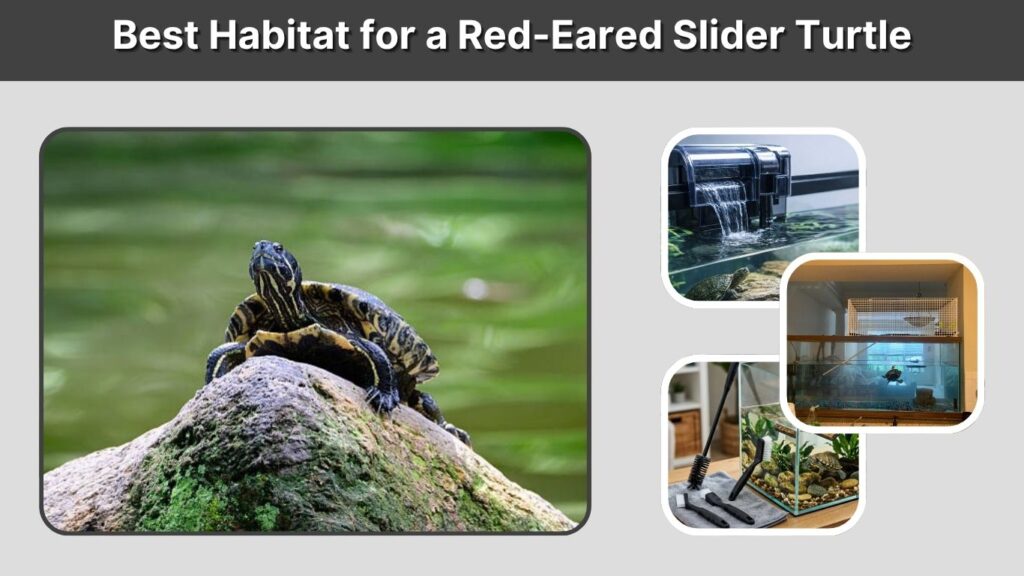
The best habitat for a red-eared slider turtle is one that gives it room to swim, a warm dry place to bask, clean water, and proper lighting. Whether indoors or outdoors, the habitat should support natural behavior and long-term health.
Proper Red-Eared Slider Habitat Checklist
Before keeping a red-eared slider, make sure the habitat has:
- Enough water volume for the turtle’s size
- A strong filter
- A fully dry basking area
- UVB lighting
- Heat lighting
- Safe water temperature
- Regular cleaning schedule
- Space for adult growth
- Escape-proof design
- Safe decorations and surfaces
A red-eared slider can live for decades, so its habitat should be planned as a long-term setup. Buying only a small starter tank may lead to expensive upgrades later.
FAQs
What is the best habitat for a red-eared slider?
The best habitat for a red-eared slider includes a large swimming area, dry basking platform, UVB light, heat lamp, strong filtration, and clean water. The setup should be large enough for the turtle’s adult size, not just its baby size.
What is the natural habitat of a red-eared slider turtle?
The natural habitat of a red-eared slider turtle includes ponds, lakes, marshes, swamps, streams, and slow-moving rivers. They prefer warm freshwater areas with plants, muddy bottoms, sunny basking spots, and places to hide from predators.
Can red-eared sliders live in an outdoor habitat?
Yes, red-eared sliders can live in an outdoor habitat in suitable climates. The pond must be secure, clean, and protected from predators. It should include deep water, basking areas, shade, plants, filtration, and fencing to prevent escape.
What size tank does a red-eared slider habitat need?
A red-eared slider habitat usually needs about 10 gallons of water per inch of shell length. A small juvenile may need 40 to 75 gallons, while an adult often needs 75 to 125 gallons or more, depending on size and sex.
How do you make a red-eared slider habitat?
To make a red-eared slider habitat, start with a large tank or pond, add clean water, install a strong filter, create a dry basking area, and provide UVB and heat lighting. The habitat should be safe, escape-proof, and easy to clean.