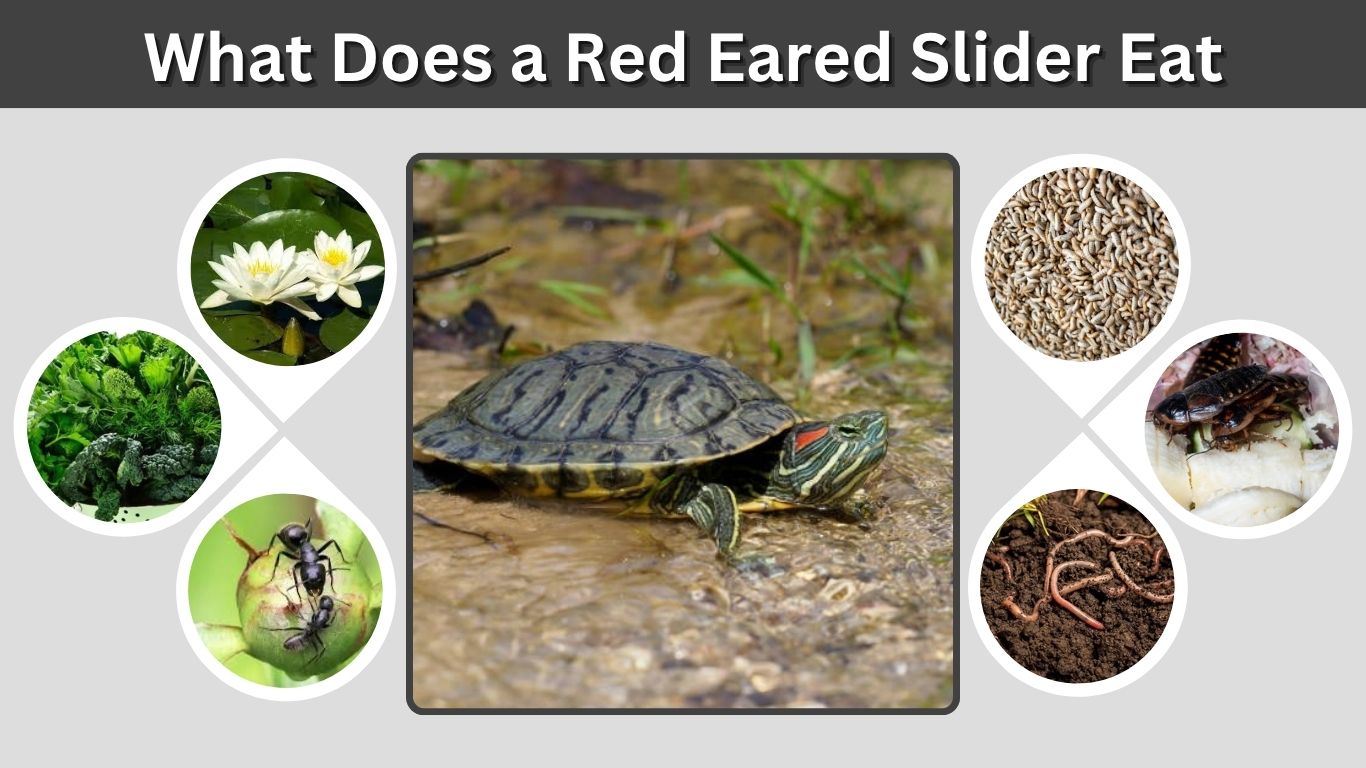
Red eared slider turtles eat a mix of aquatic plants, leafy greens, vegetables, insects, worms, small fish, and commercial turtle pellets. As pets, they need a balanced diet that changes with age. Young red eared sliders eat more protein, while adult sliders should eat more plant-based foods. Feeding the right foods helps support healthy growth, strong shells, good energy, and long-term health.
What Do Red Eared Slider Turtles Eat as Pets?
Red eared sliders are omnivores, which means they eat both animal and plant foods. In captivity, the best diet usually includes high-quality aquatic turtle pellets, leafy greens, aquatic plants, and occasional protein foods.
A common mistake is feeding only dried shrimp, only pellets, or too much fruit. These foods may be accepted eagerly, but they do not create a complete diet on their own. Variety is important because red eared sliders need protein, calcium, vitamins, fiber, and proper minerals.
Main Foods for Pet Red Eared Sliders
Good staple foods include:
- Commercial aquatic turtle pellets
- Romaine lettuce
- Dandelion greens
- Collard greens
- Mustard greens
- Turnip greens
- Duckweed
- Water lettuce
- Earthworms
- Crickets
- Mealworms in moderation
- Occasional feeder insects
- Calcium sources such as cuttlebone
Pellets are convenient, but they should not be the only food. Leafy greens and aquatic plants are especially important for adult turtles.
Red Eared Slider Diet by Age
A red eared slider’s diet should change as it grows. Baby and juvenile sliders are usually more carnivorous because they need protein for growth. Adults naturally shift toward a more plant-heavy diet.
| Age/Stage | Best Diet Focus | Feeding Notes |
|---|---|---|
| Hatchling | More protein with some greens | Feed small portions daily |
| Juvenile | Balanced protein, pellets, and plants | Offer variety early |
| Adult | More leafy greens and aquatic plants | Protein should be occasional |
| Senior | Plant-heavy, moderate pellets | Avoid overfeeding |
Baby Red Eared Slider Diet
Baby red eared sliders need more protein than adults. They may eat turtle pellets, small insects, worms, and finely chopped greens. Even if they prefer protein, offer greens early so they learn to accept plant foods.
Avoid feeding large chunks of food. A baby turtle should receive small, manageable pieces that fit easily in its mouth.
Adult Red Eared Slider Diet
Adult sliders should eat more greens, aquatic plants, and vegetables. Protein foods can still be offered, but not every day. Too much protein in adult turtles may contribute to obesity, poor water quality, and shell problems.
Adults often become enthusiastic eaters and may beg for food whenever they see you. Begging does not always mean hunger. It often means the turtle has learned that people bring food.
What Do Red Eared Slider Turtles Eat in the Wild?
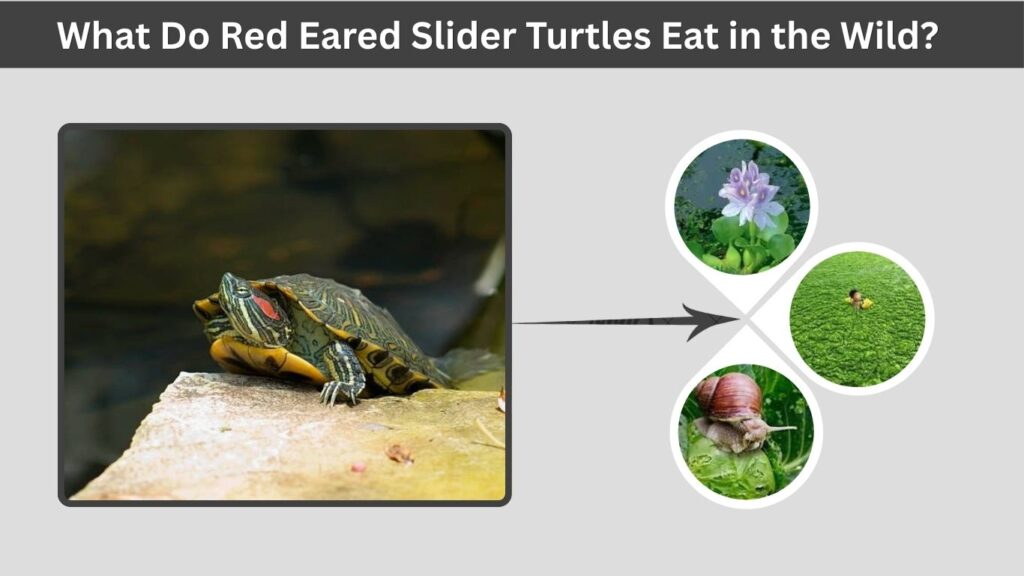
Wild red eared sliders eat whatever is available in ponds, lakes, slow rivers, marshes, and wetlands. Their wild diet may include aquatic plants, algae, insects, snails, worms, small fish, tadpoles, carrion, and other small aquatic animals.
Young wild sliders tend to eat more animal-based foods. Adults often eat more vegetation. This natural shift is one reason pet sliders should not be fed a protein-heavy diet for their whole lives.
Wild Diet Examples
In the wild, red eared sliders may eat:
- Aquatic plants
- Algae
- Insects and insect larvae
- Worms
- Snails
- Tadpoles
- Small fish
- Dead fish or carrion
- Soft plant material
- Small crustaceans
A pet diet should copy this variety in a safe and controlled way.
What Vegetables Can Red Eared Sliders Eat?
Vegetables and greens are important, especially for adult red eared sliders. Dark leafy greens are usually better than watery, low-nutrient vegetables.
Good Vegetables and Greens
Safe options include:
- Romaine lettuce
- Red leaf lettuce
- Green leaf lettuce
- Dandelion greens
- Collard greens
- Mustard greens
- Turnip greens
- Carrot shreds
- Squash
- Bell pepper
- Endive
- Escarole
- Aquatic plants
Cabbage and broccoli should be fed only occasionally, not as daily staples. Spinach should also be limited because it can interfere with calcium absorption when fed too often.
Can Red Eared Sliders Eat Lettuce?
Yes, red eared sliders can eat lettuce, but not all lettuce is equally useful. Romaine, red leaf, and green leaf lettuce are better than iceberg lettuce. Iceberg lettuce is mostly water and has little nutritional value, so it should not be a main food.
Can Red Eared Sliders Eat Carrots?
Yes, red eared sliders can eat carrots in small amounts. Shredded carrot is easier to eat than large hard chunks. Carrots can add variety, but they should not replace leafy greens.
Can Red Eared Sliders Eat Cucumbers?
Yes, they can eat cucumber occasionally, but it is mostly water. It is not harmful as a treat, but it should not be a staple food. Dark leafy greens are much more nutritious.
What Fruits Can Red Eared Slider Turtles Eat?
Fruit should be treated as an occasional treat, not a daily food. Red eared sliders may enjoy fruit, but too much can upset their digestion and add too much sugar.
Safe Fruits in Small Amounts
Red eared sliders can occasionally eat:
- Strawberries
- Blueberries
- Apple pieces without seeds
- Banana
- Watermelon
- Grapes cut into small pieces
- Mango
- Melon
Fruit should be washed, chopped, and offered in small portions. Remove uneaten fruit quickly because it can dirty the water.
Can Red Eared Sliders Eat Strawberries?
Yes, red eared sliders can eat strawberries as an occasional treat. Cut them into small pieces and do not feed them too often. Strawberries should not replace pellets, greens, or aquatic plants.
Can Red Eared Sliders Eat Bananas?
Yes, but only rarely. Bananas are soft and sweet, so many turtles like them, but they are not ideal as a regular food. Feed a tiny piece occasionally.
Can Red Eared Sliders Eat Apples?
Yes, red eared sliders can eat small pieces of apple, but remove the seeds first. Apple should be a treat, not a main part of the diet.
Can Red Eared Sliders Eat Grapes?
Yes, but grapes should be cut into small pieces to reduce choking risk. Like other fruits, grapes are sugary and should be offered only once in a while.
Can Red Eared Sliders Eat Watermelon?
Yes, watermelon is safe as an occasional treat. It contains a lot of water and sugar, so it should not be used as a major food source.
Do Red Eared Slider Turtles Eat Fish?
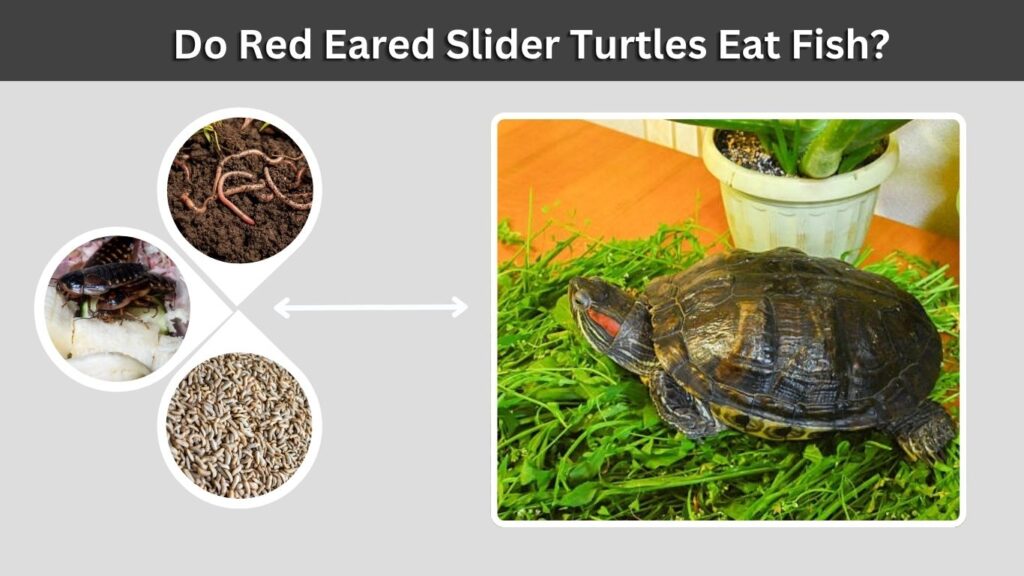
Yes, red eared sliders may eat fish in the wild and may chase fish in a tank or pond. However, feeder fish should not be the main diet for pet sliders.
Feeding fish too often can create problems. Some feeder fish may carry parasites or disease. Fatty fish can also lead to poor nutrition if overused. Goldfish are not a good regular feeder choice.
Better Protein Options
Instead of relying heavily on fish, use safer protein variety such as:
- Earthworms
- Crickets
- Dubia roaches
- Black soldier fly larvae
- Occasional mealworms
- Commercial turtle pellets
- Small amounts of cooked plain protein only if advised by a reptile vet
Protein should be age-appropriate. Juveniles need more than adults.
What Human Food Can Red Eared Sliders Eat?
Some human foods are safe only because they are plain fruits or vegetables, but most human food is not appropriate for red eared sliders. Turtles should not eat seasoned, processed, salty, sugary, or fatty foods.
Avoid These Foods
Do not feed:
- Bread
- Pasta
- Crackers
- Chips
- Candy
- Dairy
- Cheese
- Processed meat
- Bacon
- Sausage
- Cooked seasoned food
- Fried food
- Dog or cat food as a staple
- Raw grocery-store meat
Human snacks can cause poor nutrition, obesity, digestive problems, and dirty water.
How Often Do Red Eared Slider Turtles Eat?
Feeding frequency depends on age, size, temperature, activity, and health. Young turtles usually eat more often than adults. Adults do better with measured meals instead of unlimited feeding.
General Feeding Schedule
A simple feeding routine:
- Hatchlings: small meals daily
- Juveniles: daily or near-daily meals with balanced foods
- Adults: pellets or protein a few times per week, greens offered regularly
- Treats: fruit or extra protein only occasionally
Do not leave large amounts of food floating in the tank. Uneaten food quickly pollutes the water.
How Much Should a Red Eared Slider Eat?
A common method is to feed an amount of pellets roughly the size of the turtle’s head, not including the neck. Greens can be offered more generously, especially for adults. Protein treats should be smaller and less frequent.
Overfeeding is common because red eared sliders often act hungry. Too much food can lead to obesity and dirty water.
How Long Can a Red Eared Slider Go Without Eating?
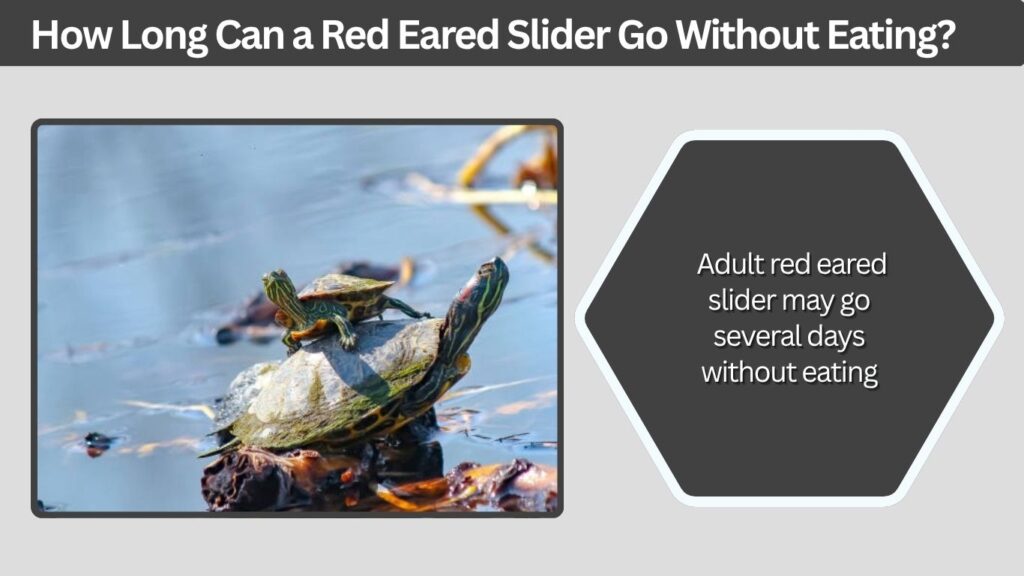
A healthy adult red eared slider may go several days without eating and sometimes longer during cooler seasonal periods. However, this does not mean it is safe to ignore appetite loss. Young turtles, sick turtles, and underweight turtles are more vulnerable.
If a red eared slider refuses food for more than a few days and also seems weak, inactive, swollen-eyed, floating oddly, or breathing strangely, contact a reptile veterinarian.
Why Is My Red Eared Slider Not Eating?
A red eared slider may stop eating for many reasons. Some are simple, while others are serious.
Common causes include:
- Water is too cold
- Basking area is not warm enough
- No proper UVB lighting
- Stress from a new home
- Dirty water
- Illness
- Respiratory infection
- Swollen eyes
- Poor diet variety
- Brumation or seasonal slowdown
- Bullying from another turtle
- Egg-laying issues in females
Check temperature, lighting, water quality, and behavior. Appetite problems are often connected to habitat problems.
Red Eared Slider Eating Rocks
If a red eared slider is eating rocks, gravel, or tank substrate, remove small loose stones immediately. Turtles may swallow gravel by mistake while searching for food. Ingested rocks can cause blockage, which may become dangerous.
Use large river stones that are too big to swallow, bare-bottom tanks, or safe turtle-friendly substrate. If you suspect your turtle swallowed rocks and is not eating or passing waste, contact a reptile veterinarian.
Feeding Tips for Clean Water
Red eared sliders are messy eaters. Food pieces can break apart, sink, and rot in the tank. A strong filter helps, but feeding habits also matter.
Helpful feeding tips:
- Remove uneaten food after feeding.
- Use a separate feeding tub if your turtle tolerates it.
- Avoid overfeeding pellets.
- Rinse vegetables before feeding.
- Keep fruit portions tiny.
- Do regular partial water changes.
- Use a strong filter rated for turtles.
Cleaner water supports better health and reduces odor.
Can You Eat Red Eared Slider Turtles?
Some people search whether red eared slider turtles or their eggs can be eaten. From a pet-care and safety perspective, pet red eared sliders should not be treated as food. They may carry Salmonella and other germs, and laws may restrict capture, possession, or killing of turtles depending on location.
If the turtle is a pet, it should be cared for responsibly or rehomed through a rescue if the owner can no longer keep it. Never release a pet slider into the wild, because it can become invasive and harm local ecosystems.
Best Diet Plan for a Healthy Red Eared Slider

The best diet is balanced, age-appropriate, and varied. Use turtle pellets as one part of the diet, but include leafy greens, aquatic plants, and safe protein foods. Fruits should be rare treats, not daily foods.
A good adult feeding plan may include leafy greens most days, pellets several times per week, and protein once or twice weekly. A young slider may need more frequent protein and pellets while still being introduced to greens.
FAQs
What do red eared slider turtles eat?
Red eared slider turtles eat commercial turtle pellets, leafy greens, aquatic plants, insects, worms, and occasional small fish. Young sliders need more protein, while adults should eat more plant-based foods. A varied diet is healthier than feeding only pellets or dried shrimp.
Can red eared slider turtles eat strawberries?
Yes, red eared sliders can eat strawberries, but only as an occasional treat. Strawberries are sweet and should not be part of the daily diet. Cut them into small pieces and remove leftovers quickly so they do not foul the water.
How often should a red eared slider eat?
Hatchlings and juveniles usually eat small meals daily, while adults can eat measured meals every few days with greens offered regularly. Feeding depends on age, size, temperature, and health. Avoid overfeeding, because adult sliders often beg even when they do not need more food.
Why is my red eared slider not eating?
A red eared slider may stop eating because the water is too cold, the basking area is not warm enough, the tank is dirty, lighting is poor, or the turtle is stressed or sick. If appetite loss continues with weakness, swollen eyes, odd swimming, or breathing problems, contact a reptile veterinarian.
Can red eared sliders eat bananas, apples, or grapes?
Yes, red eared sliders can eat small amounts of banana, apple, or grapes as occasional treats. Remove apple seeds and cut grapes into small pieces. Fruit should be rare because it is sugary and less important than greens, aquatic plants, pellets, and appropriate protein.