
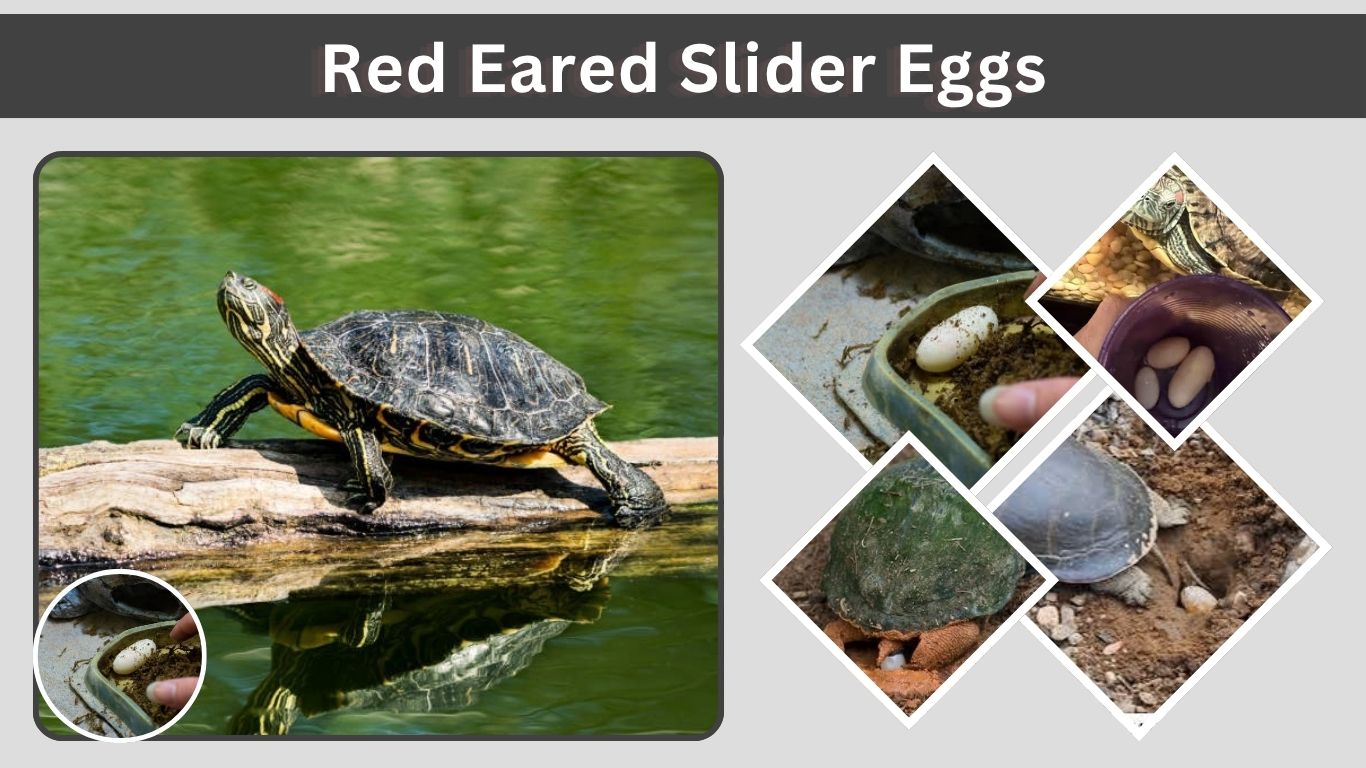
Finding red eared slider eggs can be exciting, confusing, and stressful—especially if your turtle laid them unexpectedly. Female red-eared sliders can lay eggs even without mating, and not every egg will hatch. Understanding what the eggs look like, how laying works, and when to worry helps you protect your turtle’s health and make responsible choices about the eggs.
What Do Red Eared Slider Eggs Look Like?
Red eared slider eggs are small, oval, and usually white or off-white. They look different from bird eggs because their shells are not hard and brittle. Instead, turtle eggs often feel slightly leathery or flexible. A healthy egg may look smooth, full, and evenly shaped, although some eggs can appear slightly dented when first laid.
Red Eared Slider Egg Size
A red eared slider egg is usually around 1 to 1.5 inches long, though size can vary depending on the female’s age, body size, nutrition, and overall health. Larger females often produce larger clutches, but egg size itself is usually fairly consistent within a healthy clutch.
Are Red Eared Slider Eggs Soft or Hard?
Red eared slider eggs are usually soft-shelled compared with chicken eggs. They have a flexible, leathery shell that protects the developing embryo while allowing gas exchange. If the egg is extremely collapsed, leaking, discolored, or foul-smelling, it may be damaged, infertile, or no longer viable.
Do Red Eared Slider Turtles Lay Eggs Without Mating?
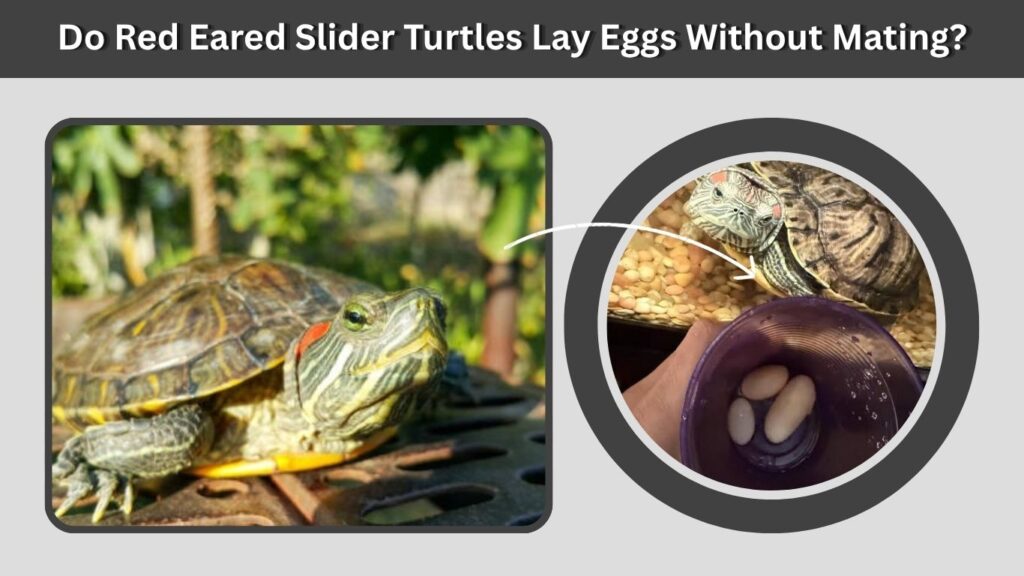
Yes, female red eared slider turtles can lay eggs without mating. These are unfertilized eggs, which means they will not hatch into baby turtles. This surprises many owners because they assume eggs only appear after a male and female have bred.
A female may produce eggs as part of her natural reproductive cycle. If she has never been with a male, the eggs should be treated as infertile. If she has mated in the past, fertility may still be possible because female turtles can sometimes retain sperm for a period of time.
Unfertilized Red Eared Slider Eggs
Unfertilized eggs may look almost the same as fertile eggs at first. They are often white, oval, and soft-shelled. Over time, however, infertile eggs may collapse, mold, discolor, or fail to show any signs of development. Because appearance alone is not always reliable, owners often use candling to check for fertility.
How to Tell If Red Eared Slider Eggs Are Fertile
Fertile turtle eggs may develop visible veins when carefully candled after some time has passed. Candling means shining a small light behind the egg in a dark room to look for signs of embryo development. However, eggs should be handled as little as possible, and they should never be rotated once their position has been set.
When Do Red Eared Slider Turtles Lay Eggs?
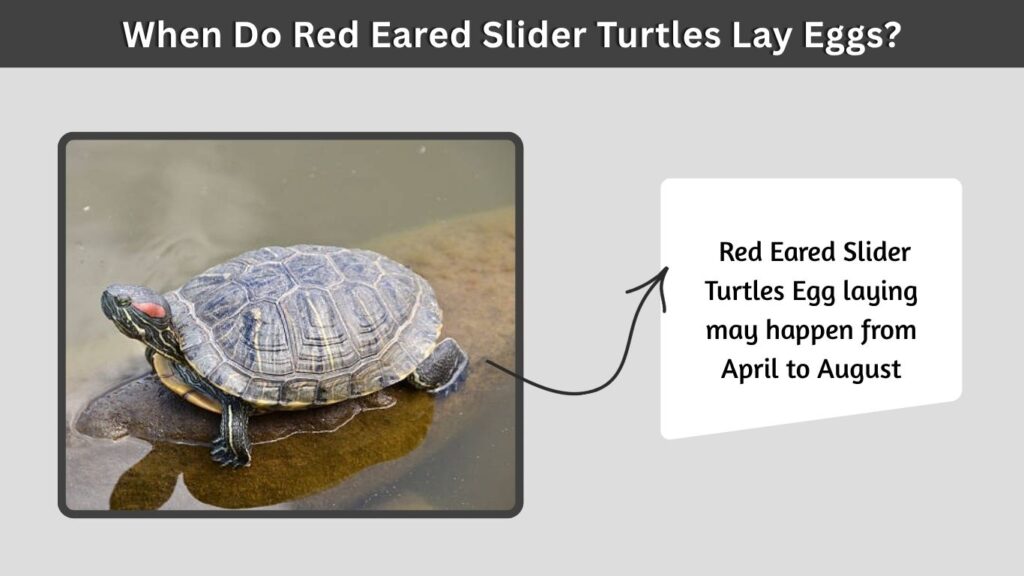
Red eared sliders usually lay eggs during the warmer months, often from spring through summer. In many areas, egg laying may happen from April to August, with peak nesting commonly occurring in late spring or early summer. Indoor turtles may not follow the exact same seasonal pattern because artificial lighting, temperature, and diet can affect their cycle.
Red Eared Slider Egg-Laying Age
Female red eared sliders can become capable of laying eggs once they reach sexual maturity. Age varies based on growth rate, diet, environment, and size. Some females may begin producing eggs at a few years old, while others take longer. A turtle’s body size is often a better clue than age alone.
Red Eared Slider Egg-Laying Behavior
Before laying eggs, a female red eared slider may act restless or unusual. She may try to escape her enclosure, dig with her back legs, refuse food, spend more time basking, or seem uncomfortable. Some turtles repeatedly move around the tank or scratch at surfaces because they are looking for a suitable nesting spot.
How Many Eggs Does a Red Eared Slider Lay?
Red eared sliders usually lay multiple eggs in one clutch. The exact number depends on the turtle’s size, age, nutrition, and health. Some clutches may contain only a few eggs, while others can contain many more.
| Topic | Typical Answer |
|---|---|
| Eggs per clutch | Often around 2–30 eggs |
| Average clutch size | Commonly around 6–13 eggs |
| Clutches per year | Often multiple clutches in a season |
| Hatching time | Usually around 60–90 days |
| Egg type | Oval, white, leathery-shelled |
How Often Do Red Eared Slider Turtles Lay Eggs?
A female may lay more than one clutch in a single season. Some females produce several clutches per year, especially in warm conditions. Clutches may be separated by a few weeks. This is why a nesting area is important even after one clutch has already been laid.
Can a Red Eared Slider Lay Only One Egg?
Yes, it is possible for a red eared slider to lay only one egg, but it is less common than laying a clutch. If your turtle lays one egg and still acts restless, refuses food, strains, or keeps digging, she may have more eggs to lay. Continued discomfort can be a warning sign that she needs veterinary help.
Where Do Red Eared Slider Turtles Lay Their Eggs?
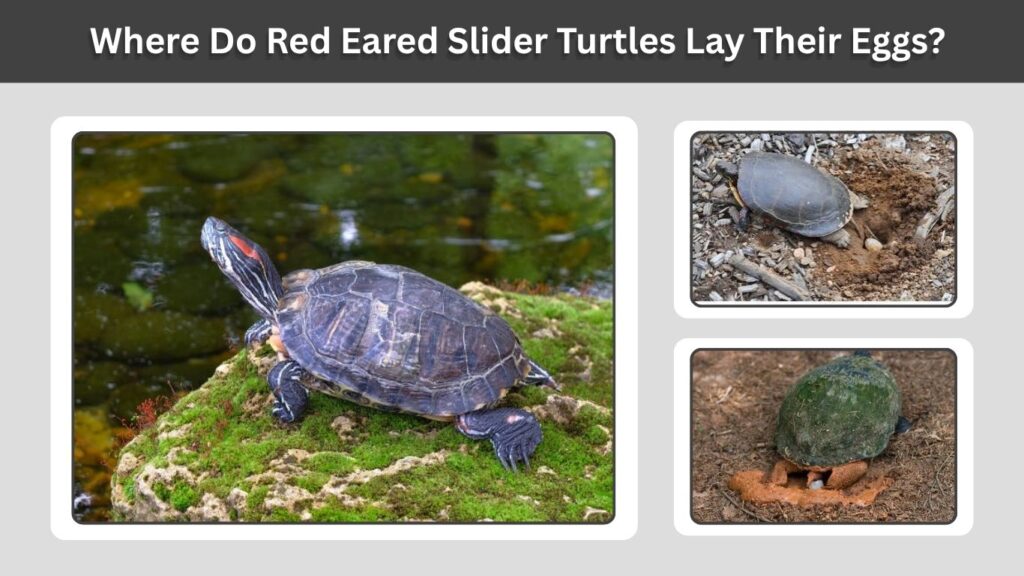
Red eared sliders lay eggs on land, not in water. In the wild, females leave the water and search for loose soil, sand, or soft ground where they can dig a nest. They use their back legs to dig a hole, deposit the eggs, cover the nest, and leave.
Red Eared Slider Egg Nest
A proper nest should allow the turtle to dig and deposit eggs safely. For pet turtles, owners can provide a nesting box with slightly damp soil, sand, or a safe soil-sand mix. The substrate should hold its shape when squeezed but should not be wet or muddy.
Red Eared Slider Laid Eggs in My Yard
If a red eared slider laid eggs in your yard, avoid digging them up unless necessary. If the nest is in a safe location, you can leave it undisturbed and protect it from predators. If the turtle is a non-native or invasive species in your area, check local wildlife rules before trying to incubate or release hatchlings.
What to Do If Your Red Eared Slider Laid Eggs
If your red eared slider laid eggs, first check the turtle. Make sure she is active, breathing normally, and not straining. Offer clean water, proper basking heat, UVB lighting, and calcium-rich food after laying because egg production uses a lot of energy and minerals.
What to Do With Red Eared Slider Eggs
What you do with the eggs depends on whether they are fertile, legal to hatch in your area, and whether you are prepared to care for hatchlings. Red eared sliders are long-lived turtles and can become invasive when released. Never release unwanted turtles or hatchlings into the wild.
You can:
- Leave outdoor eggs undisturbed if legal and appropriate
- Dispose of clearly infertile eggs safely
- Contact a reptile veterinarian or wildlife authority for advice
- Incubate fertile eggs only if you can legally and responsibly care for hatchlings
Red Eared Slider Eggs in Water
Eggs laid in water are usually at high risk. Red eared slider eggs need air exchange and stable, moist conditions—not submersion. If eggs are laid in water, they may drown or fail to develop, especially if they remain underwater for long. Remove them gently if you plan to evaluate them, but avoid rotating them.
How to Care for Red Eared Slider Eggs
Red eared slider egg care begins with gentle handling. Turtle eggs are delicate, and turning them can harm a developing embryo. If you move an egg, mark the top lightly with a pencil before lifting it so the same side stays facing upward.
How to Incubate Red Eared Slider Eggs
To incubate eggs, place them in a container with a moist incubation medium such as vermiculite or perlite. The eggs should sit partly buried, not soaked. The container needs humidity, warmth, and some air exchange. Many keepers use a reptile incubator to maintain stable conditions.
Important incubation tips include:
- Do not rotate or shake the eggs
- Keep the medium damp, not wet
- Avoid direct water contact on the eggs
- Maintain stable temperature
- Watch for mold, collapse, or bad odor
- Check local laws before hatching eggs
Red Eared Slider Egg Incubation Temperature
Incubation temperature affects development. Warmer conditions usually lead to faster development, while cooler temperatures slow the process. Extreme temperatures can kill embryos or cause poor development. Stable conditions are safer than frequent changes.
Red Eared Slider Egg Incubation Time
Red eared slider eggs usually take around 60 to 90 days to hatch, although timing can vary. Temperature, humidity, egg health, and fertility all influence the hatching period. Some eggs may hatch earlier or later than expected.
How Long Do Red Eared Slider Eggs Take to Hatch?
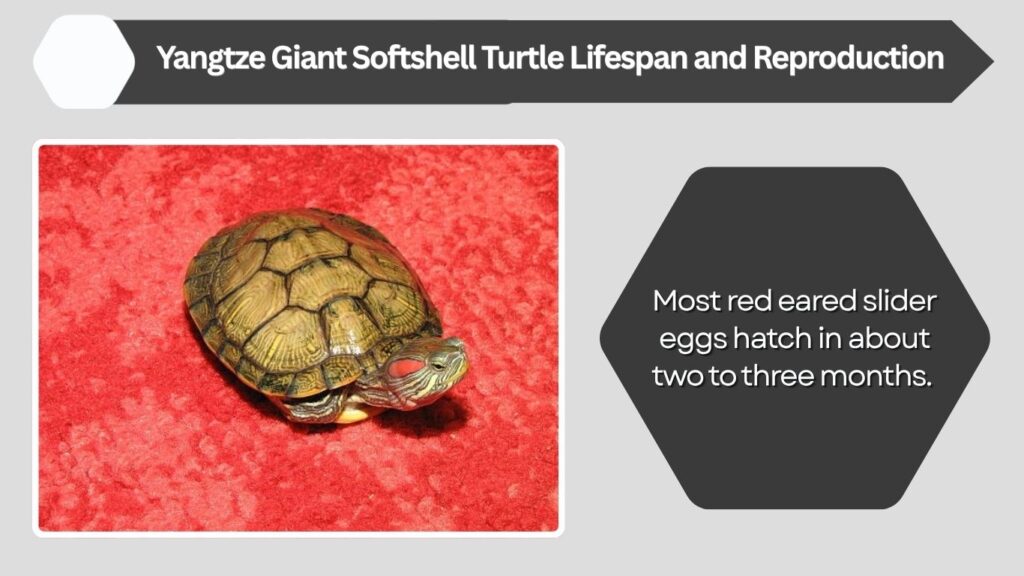
Most red eared slider eggs hatch in about two to three months. If conditions are slightly cooler, incubation may take longer. If conditions are warmer, hatching may happen sooner. However, faster is not always better, because overly high heat can be dangerous.
Red Eared Slider Eggs Hatching
When eggs begin hatching, baby turtles use a small egg tooth to break the shell. This process can take time. Do not pull a hatchling out of the egg, because it may still be absorbing its yolk sac. Hatchlings should be allowed to emerge naturally unless a qualified reptile professional advises otherwise.
Red Eared Slider Turtle Eggs Hatch Time
Hatch time is not the same for every egg in the clutch. Some hatchlings may emerge before others. It is normal for eggs from the same clutch to hatch over a short range of days. Keep conditions stable and avoid disturbing the eggs during this stage.
Egg-Bound Red Eared Slider: When to Worry
Egg binding happens when a female turtle cannot lay her eggs properly. This can become serious and may require veterinary care. It may happen because of poor nesting conditions, low calcium, dehydration, stress, oversized eggs, illness, or reproductive complications.
Signs of Egg Binding
A possibly egg-bound red eared slider may show repeated digging without laying, straining, swollen back legs, loss of appetite, lethargy, or spending unusual time in or out of the water. She may also seem weak or unable to settle.
Watch for these warning signs:
- Straining with no eggs produced
- Refusing food for an extended period
- Swollen or tense rear body area
- Weakness or unusual inactivity
- Repeated escape attempts
- Eggs laid in water followed by continued distress
What to Do for an Egg-Bound Turtle
Provide a proper nesting area immediately, but do not force the turtle to lay. Make sure she has privacy, warmth, hydration, and a suitable digging substrate. If she continues to strain, becomes weak, or does not lay after showing strong symptoms, contact a reptile veterinarian.
Should You Hatch Red Eared Slider Eggs?
Hatching red eared slider eggs is a serious responsibility. Baby turtles require proper housing, filtration, heat, UVB lighting, diet, and long-term care. Red eared sliders can live for decades and grow much larger than many new owners expect.
In many places, red eared sliders are also considered invasive. Releasing hatchlings into ponds, lakes, canals, or parks can harm native wildlife. Before incubating eggs, make sure it is legal where you live and that you have a responsible plan for every hatchling.
FAQs
Do red eared slider turtles lay eggs?
Yes, female red eared slider turtles lay eggs once they are mature. They can lay eggs even if no male is present. Eggs produced without mating are unfertilized and will not hatch, but the female still needs a safe nesting area to lay them.
How many eggs do red eared slider turtles lay?
A red eared slider may lay anywhere from a few eggs to several dozen in one clutch. Many clutches fall around 6 to 13 eggs, but larger females may produce more. Some females lay multiple clutches during one breeding season.
How long do red eared slider eggs take to hatch?
Red eared slider eggs usually hatch in about 60 to 90 days. The exact timing depends mostly on incubation temperature and egg condition. Cooler temperatures can slow development, while warmer temperatures can shorten the incubation period.
Can red eared slider eggs hatch in water?
Red eared slider eggs generally should not hatch in water. Eggs laid underwater are at high risk because they need air exchange and moist, not submerged, conditions. If eggs are found in water, they may already be damaged, especially if they have been underwater for long.
What should I do if my red eared slider laid eggs?
Check your turtle first to make sure she is not weak, straining, or still restless. Provide clean water, basking heat, UVB, calcium, and a nesting area in case more eggs are coming. If the eggs may be fertile, confirm local laws and prepare proper incubation before trying to hatch them.