
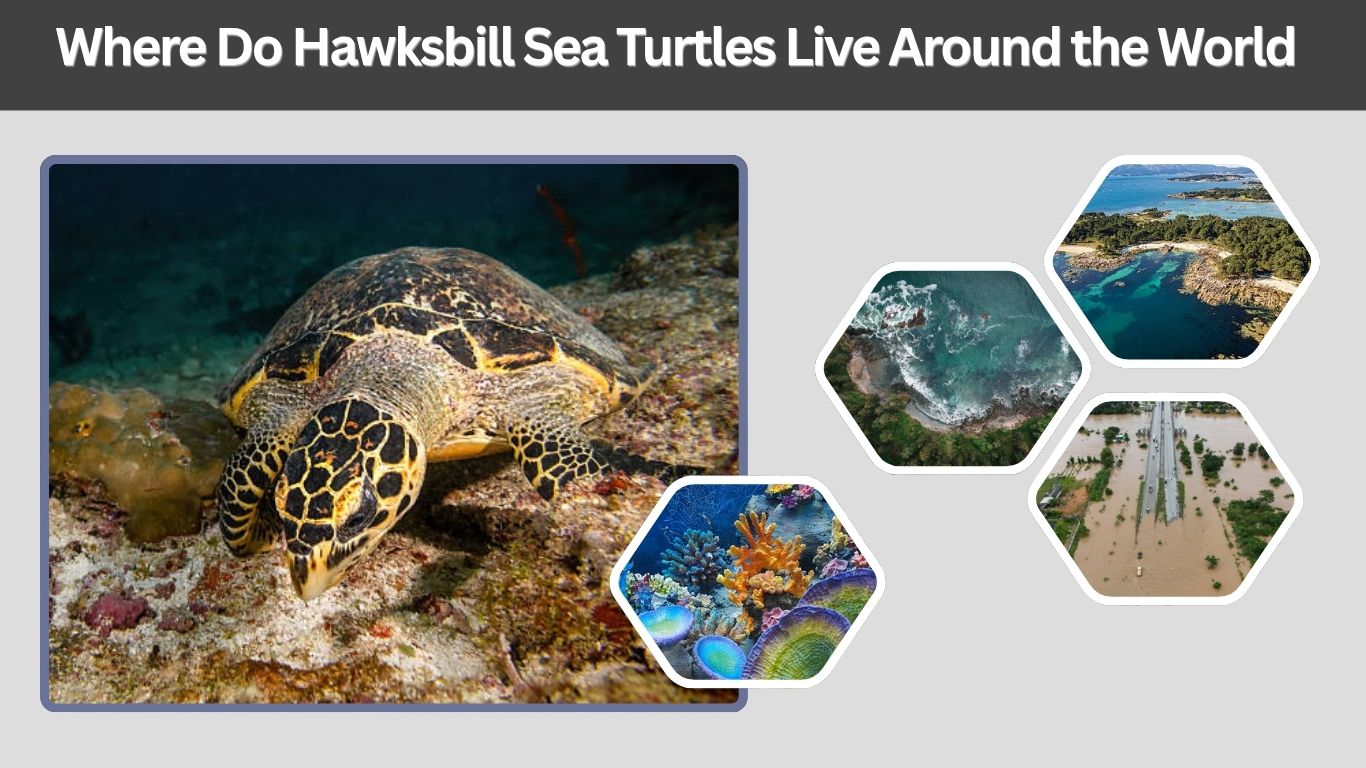
Hawksbill sea turtles live in warm tropical and subtropical oceans around the world. They are most often found near coral reefs, rocky coastlines, lagoons, and shallow coastal waters where they can feed and rest. Unlike some sea turtles that spend much of their lives in the open ocean, hawksbills are strongly connected to reef habitats, making coral reef health essential to their survival.
Where Do Hawksbill Sea Turtles Live in the World?
Hawksbill sea turtles live across the Atlantic, Pacific, and Indian Oceans. Their range includes the Caribbean, Central America, South America, Africa, Southeast Asia, Australia, and many tropical island regions. They are one of the more tropical sea turtle species and are usually associated with warm marine environments.
Although they can travel long distances, adult hawksbills are commonly linked to coastal areas with reefs, ledges, caves, and sponge-rich habitats. These areas give them food, shelter, and places to hide from predators.
Main Regions Where Hawksbills Are Found
Hawksbill sea turtles may live in or migrate through:
- Caribbean Sea
- Gulf of Mexico
- Western Atlantic Ocean
- Eastern Pacific Ocean
- Indian Ocean
- Southeast Asian waters
- Great Barrier Reef region
- Red Sea
- Coastal areas of Africa
- Tropical island chains
Their exact distribution depends on age, food availability, nesting beaches, ocean temperature, and habitat quality.
What Habitat Do Hawksbill Sea Turtles Prefer?
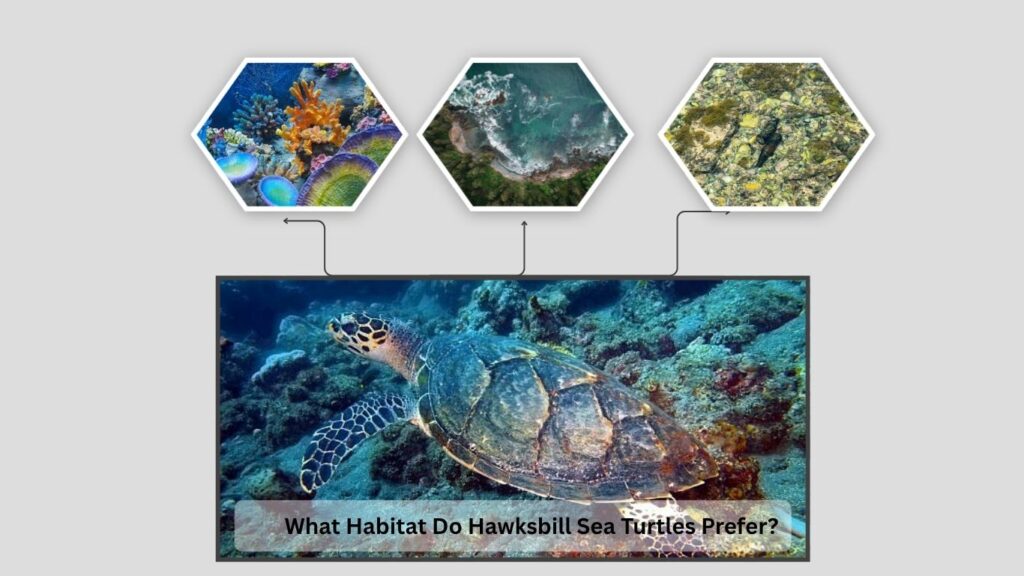
Hawksbill sea turtles prefer habitats with structure. Coral reefs are especially important because they provide food, hiding places, and resting spaces. Hawksbills often wedge themselves into reef crevices or rest under ledges.
They are also found in seagrass beds, mangrove-lined bays, lagoons, estuaries, and rocky coastal areas. Young hawksbills may spend time in floating seaweed mats before moving into nearshore habitats as they grow.
Hawksbill Sea Turtle Habitat Table
| Habitat Type | Why Hawksbills Use It |
|---|---|
| Coral reefs | Main feeding and resting habitat |
| Rocky coastlines | Shelter, crevices, and sponge growth |
| Lagoons | Calm shallow water with food sources |
| Mangroves | Protection for young turtles |
| Seagrass beds | Foraging and coastal shelter |
| Sandy beaches | Nesting sites for adult females |
Do Hawksbill Sea Turtles Live in Tropical Waters?
Yes, hawksbill sea turtles mainly live in tropical waters. They prefer warm ocean regions and are commonly found near tropical reefs. They can also occur in subtropical waters, but they are less associated with cold or temperate seas than some other sea turtle species.
Their tropical lifestyle is closely tied to coral reefs. Reefs support the sponges and other small marine animals that hawksbills eat. This is why reef damage, coral bleaching, pollution, and coastal development can reduce suitable hawksbill habitat.
What Climate Do Hawksbill Sea Turtles Live In?
Hawksbill sea turtles live in warm marine climates. They are most common in areas with:
- Warm ocean temperatures
- Coral reef systems
- Sandy nesting beaches
- Clear coastal waters
- Tropical or subtropical coastlines
- Abundant sponge populations
They need both ocean feeding areas and safe nesting beaches. A region may have good feeding habitat but poor nesting habitat, or the reverse.
Where Do Hawksbill Sea Turtles Live in Florida?
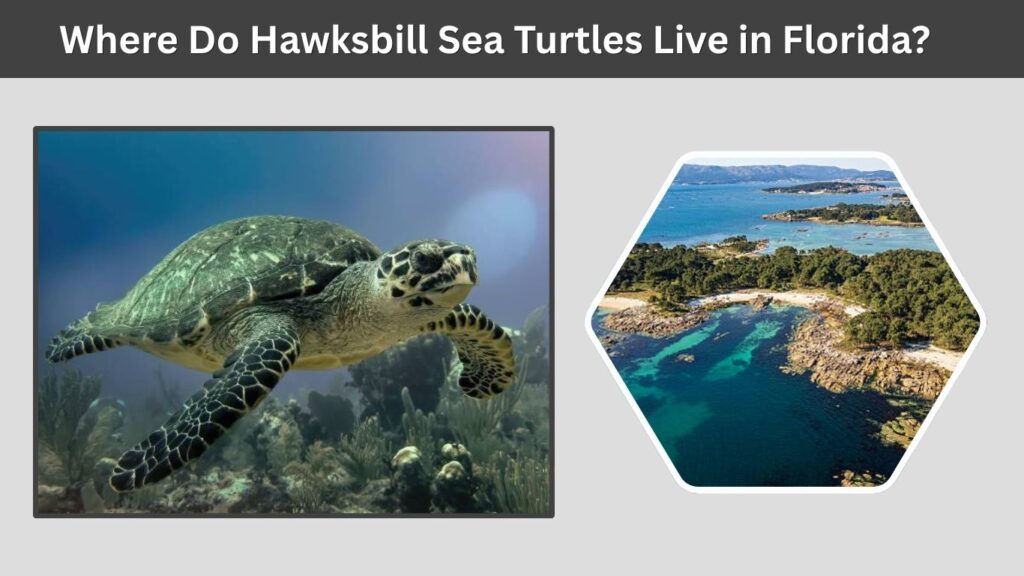
In Florida, hawksbill sea turtles are uncommon compared with loggerhead and green sea turtles. They may be found around coral reef habitats, especially in the Florida Keys and southeastern Florida waters. These areas offer reef structures and sponge-rich environments that fit hawksbill feeding habits.
Hawksbill nesting in Florida is rare, but individuals may be seen in coastal reef areas. Because they are protected, anyone who sees a hawksbill should observe from a distance and avoid touching, chasing, feeding, or disturbing it.
Best Florida Habitats for Hawksbills
In Florida, hawksbills are most likely around:
- Florida Keys reefs
- Southeast Florida reef tracts
- Coral ledges
- Rocky reef areas
- Warm shallow coastal waters
They are not usually a common beach nesting species in Florida, so sightings are more likely underwater than on shore.
Map of Where Hawksbill Sea Turtles Live
A map of where hawksbill sea turtles live would show a broad belt around the world’s tropical and subtropical oceans. Their range would appear around warm coastlines, island chains, coral reef systems, and tropical nesting beaches.
The densest habitat areas are usually near coral reefs and warm coastal zones rather than cold open oceans.
Distribution by Ocean
In the Atlantic Ocean, hawksbills occur in the Caribbean, Gulf of Mexico, parts of Central and South America, and tropical western Africa.
In the Pacific Ocean, they live near tropical islands, Central America, Southeast Asia, northern Australia, and reef regions such as the Great Barrier Reef.
In the Indian Ocean, hawksbills are found near East Africa, the Red Sea, the Arabian region, island nations, India, Sri Lanka, Southeast Asia, and western Australia.
Do Hawksbill Sea Turtles Live Alone or in Groups?
Hawksbill sea turtles mostly live alone. They are generally solitary animals when feeding, resting, and migrating. A hawksbill may share a reef area with other turtles, but it does not live in a social group like dolphins or some fish.
However, hawksbills can gather in certain situations. For example, multiple turtles may use the same feeding reef, and females may come to the same nesting beach during nesting season. These are not true social groups; they are shared habitat use.
When They May Be Seen Together
Hawksbill sea turtles may appear near each other:
- Around rich feeding reefs
- Near nesting beaches
- During mating season
- In protected marine areas
- Where sponge food sources are abundant
Most of the time, each turtle moves, feeds, and rests independently.
How Long Do Hawksbill Sea Turtles Live?
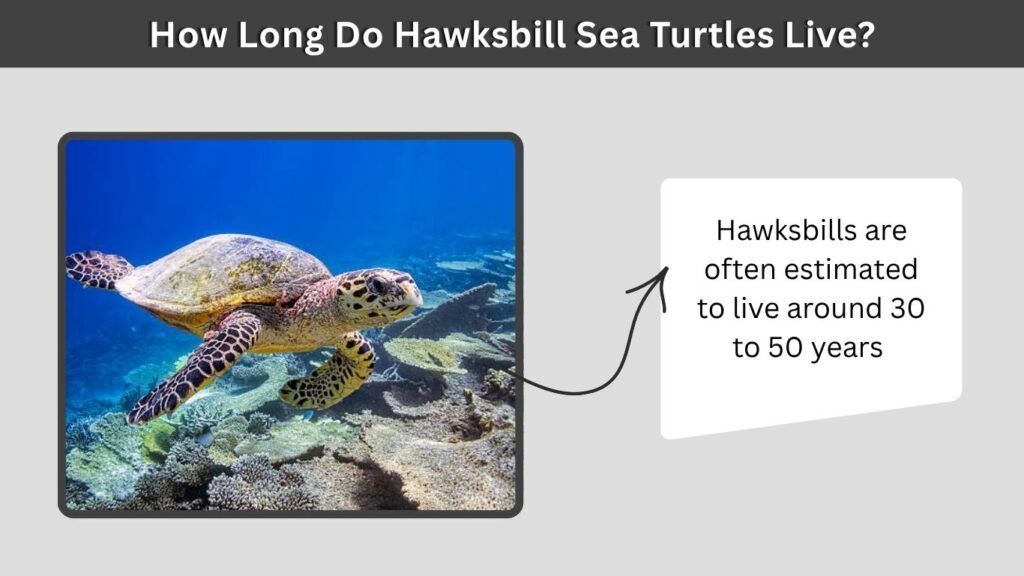
Hawksbill sea turtles are long-lived animals. Their exact lifespan in the wild is difficult to measure, but many sea turtles can live for several decades. Hawksbills are often estimated to live around 30 to 50 years or more, and some may live longer under favorable conditions.
They also take many years to mature. This slow life cycle makes population recovery difficult. If adult turtles are killed or nesting beaches are damaged, it can take decades for populations to rebound.
Why Lifespan Matters
Long lifespans help hawksbills survive in the ocean, but slow maturity makes them vulnerable to human threats. A female may not begin nesting until many years after hatching. That means protecting hatchlings, juveniles, adults, and nesting beaches all matters.
What Do Hawksbill Sea Turtles Eat Where They Live?
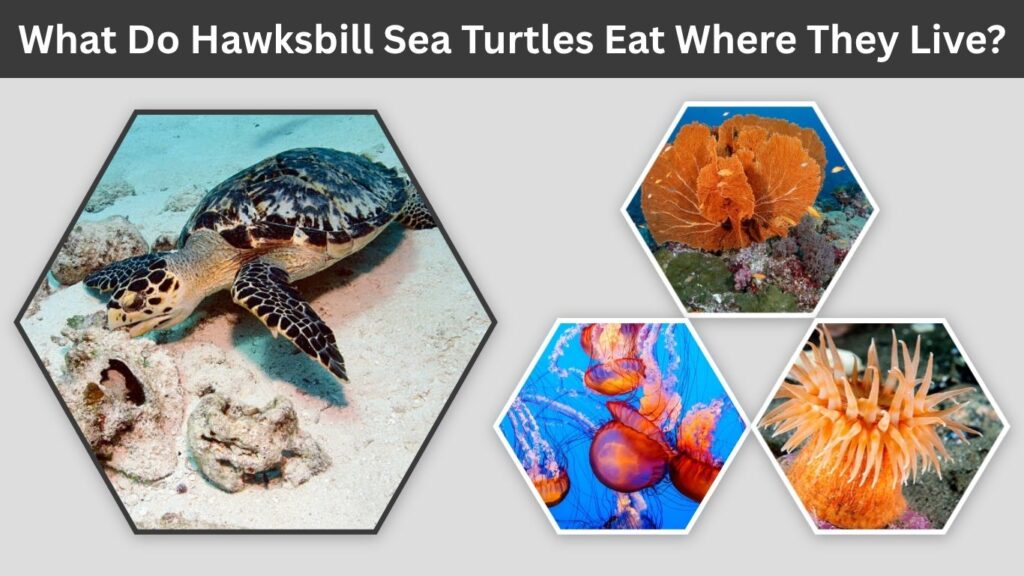
Hawksbill sea turtles are famous for eating sponges. Their narrow, pointed beak helps them reach into cracks and crevices in coral reefs. This beak shape is one reason they are called “hawksbill” turtles.
They may also eat other small reef animals and marine plants, but sponges are a major part of their diet in many areas.
Common Foods
Hawksbills may feed on:
- Sea sponges
- Soft corals
- Anemones
- Jellyfish
- Small invertebrates
- Algae
- Other reef organisms
By eating sponges, hawksbills help maintain space on reefs for corals and other marine life. This makes them important for reef balance.
Why Hawksbill Habitat Is Important
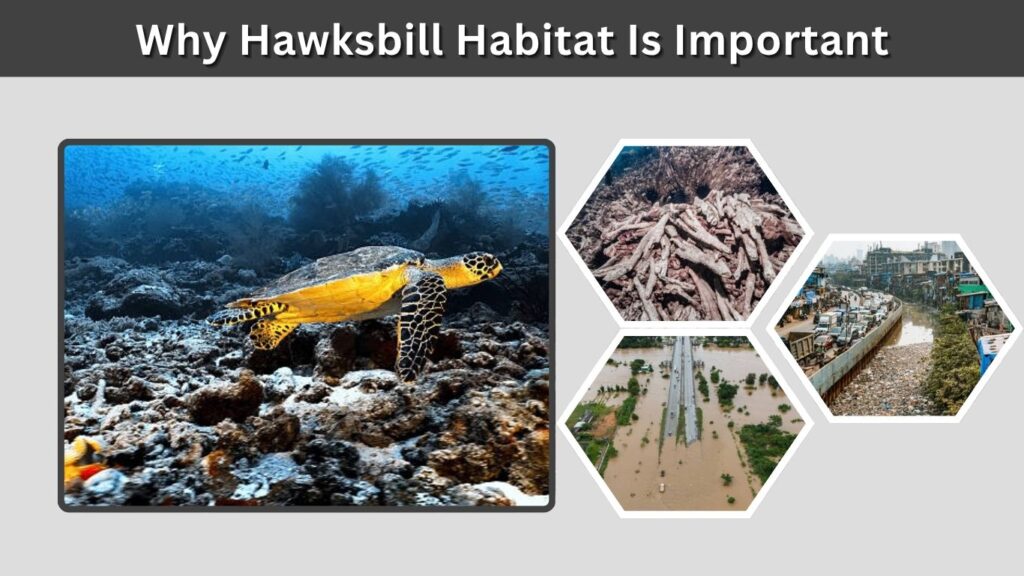
Hawksbill sea turtles are closely connected to coral reefs. When reefs decline, hawksbills lose food and shelter. When nesting beaches are disturbed, females may have fewer safe places to lay eggs.
Their habitat needs are complex because they use different places at different life stages. Hatchlings need safe beaches and nearshore waters. Juveniles need shelter and food. Adults need healthy reefs and nesting beaches.
Threats to Where Hawksbills Live
Major threats to hawksbill habitat include:
- Coral reef damage
- Climate change
- Coastal development
- Plastic pollution
- Fishing gear entanglement
- Illegal shell trade
- Nesting beach disturbance
- Artificial beach lighting
- Egg collection and poaching
Hawksbills are critically endangered, and habitat loss is one of the reasons their populations remain at risk. Protecting reef habitats and nesting beaches is essential for their future.
How People Can Help Protect Hawksbill Habitats
Protecting where hawksbill sea turtles live means protecting both oceans and beaches. Even people who live far from the coast can help by reducing plastic use and supporting responsible seafood and conservation programs.
Helpful actions include:
- Avoid touching or chasing sea turtles while swimming or diving
- Keep beaches clean
- Reduce single-use plastics
- Choose reef-safe tourism operators
- Avoid buying tortoiseshell products
- Support marine protected areas
- Turn off bright lights near nesting beaches
- Report injured or stranded turtles to local wildlife authorities
Small actions matter because hawksbills face threats at every life stage.
FAQs
Where do hawksbill sea turtles live?
Hawksbill sea turtles live in tropical and subtropical oceans worldwide. They are most common near coral reefs, rocky coastlines, lagoons, and shallow coastal habitats. Their range includes the Atlantic, Pacific, and Indian Oceans, especially around warm islands and reef systems.
Do hawksbill sea turtles live in tropical waters?
Yes, hawksbill sea turtles mainly live in tropical waters. They prefer warm marine climates and are strongly associated with coral reefs. They may also occur in subtropical areas, but they are less common in cold or temperate waters.
Where do hawksbill sea turtles live in Florida?
In Florida, hawksbill sea turtles are most likely found around coral reef habitats in the Florida Keys and southeastern Florida. They are uncommon compared with other sea turtles, and nesting in Florida is rare. Most sightings occur in warm reef areas.
How long do hawksbill sea turtles live?
Hawksbill sea turtles can live for several decades. Their exact lifespan in the wild is difficult to measure, but they are often estimated to live around 30 to 50 years or more. Their slow growth makes conservation especially important.
Do hawksbill sea turtles live alone?
Yes, hawksbill sea turtles usually live alone. They may share feeding reefs or nesting beaches with other turtles, but they do not live in organized social groups. Most adults feed, rest, and migrate independently.